
Navigate Georgia’s unique deregulated energy market and set up your essential services with this step-by-step guide.
Key Takeaways
- Georgia has a deregulated natural gas market, meaning you must choose a specific marketer to set up service in most areas.
- Your electric provider is determined by your location, serving you through either Georgia Power, a municipal system, or an Electric Membership Corporation (EMC).
- Start the setup process at least two weeks before your move to account for credit checks, deposits, and potential equipment installation delays.
Relocating to Georgia comes with plenty of to-dos, but scrambling to turn on the lights and heat shouldn’t be one of them. Because Georgia mixes a deregulated natural gas market with fixed electric territories, it can be confusing to know who to call and when. This guide gives you clear, Georgia-specific steps and a 10-day checklist so your power, gas, water, and internet are ready the day you move in.
Understanding Georgia’s Unique Utility Landscape
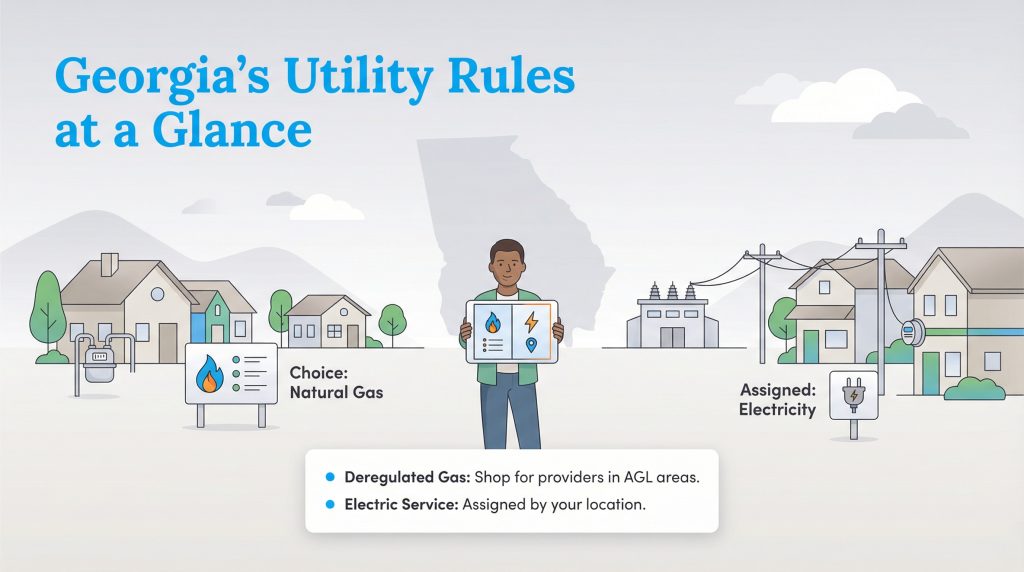
Before you start dialing customer service numbers, it is helpful to understand why Georgia’s system operates differently than many other states. You essentially face two different sets of rules depending on the energy source. The first concept is deregulation, which primarily applies to the natural gas market in the Atlanta Gas Light territory. This means you have the power to shop around for your gas provider.
The second concept is territorial rights, which applies to electricity. Unlike gas, you generally cannot choose who delivers your power; it is assigned based on where your property sits on the map. Navigating this mix of choice and assignment can be tricky for new residents compiling a Georgia utility companies list. We will break down exactly how to handle both systems so you aren’t left in the dark.
Quick Reference: Georgia Utilities at a Glance
| Utility Type | Who Usually Provides It | How to Find Your Provider | Eco / Budget Tip |
|---|---|---|---|
| Electricity | Georgia Power, EMCs, or Municipal Systems | Check the meter, search your zipcode, or ask your landlord/realtor | Sign up for “Green Energy” riders if available |
| Natural Gas | Private Marketers (in AGL territory) or Municipal/None | Check the PSC Marketer List or search your zip code | Lock in fixed rates during spring or fall |
| Water/Sewer | City or County Department | Search “[City] Water Dept” online or search your zip code | Check for leaks immediately upon move-in |
| Trash | City, County, or Private Hauler | Check lease or county website | Verify if recycling is included in taxes |
Electricity: Choosing Between Georgia Power and EMCs
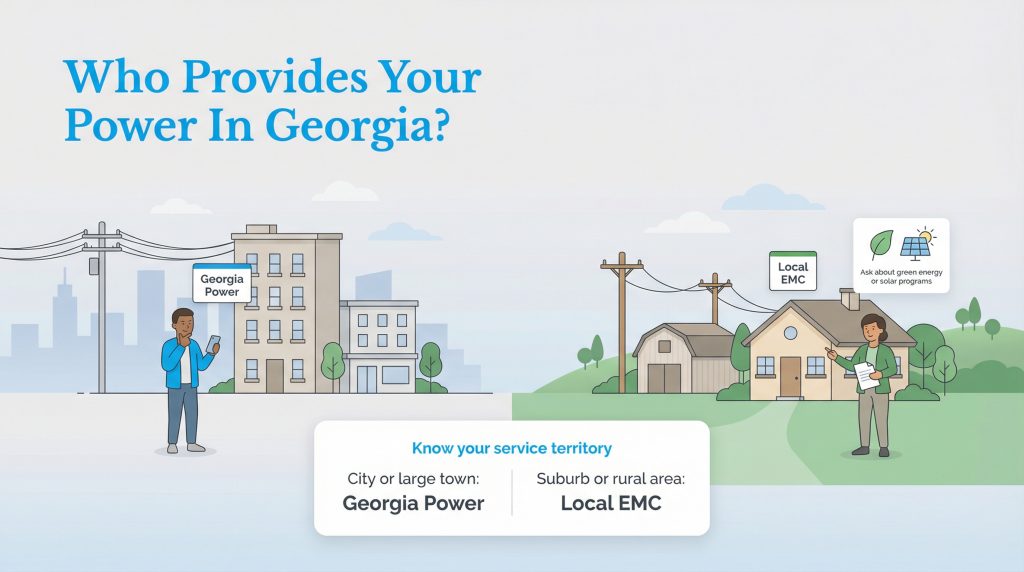
In the Peach State, your electric provider is tied to your geography. You typically cannot switch providers just because you found a lower rate elsewhere. The state is divided into service territories managed by one of three types of entities: an investor-owned utility (Georgia Power), municipal electric systems, or Electric Membership Corporations (EMCs).
Georgia Power
Georgia Power is the largest provider in the state, serving most urban centers, including the majority of Atlanta, Savannah, and Macon. If you are moving into a major city, you will likely need to Georgia Power start service. You can usually initiate this online, but you should verify your address on their service map first.
Electric Membership Corporations (EMCs)
If you are moving to the suburbs or a rural area, your home is likely served by an EMC. These are non-profit cooperatives owned by the members they serve. There are over 40 EMCs in the state. You can use the Georgia EMC website’s service area lookup (or your closing documents/lease) to confirm which EMC serves your address.
How to Confirm Your Provider
Since you cannot choose, the fastest way to confirm your provider is to ask your realtor or landlord. Alternatively, look at the electric meter on the side of the house; the company logo is almost always printed on the face of the meter.
While you may not have a choice in provider, many EMCs and Georgia Power offer sustainable options. You can often sign up for “Green Energy” riders or community solar programs that allow you to support renewable energy generation without installing panels on your roof. Additionally, enrolling in time-of-use plans can be a smart way to save on your electric bill while reducing strain on the grid.
Natural Gas: Navigating the Deregulated Market
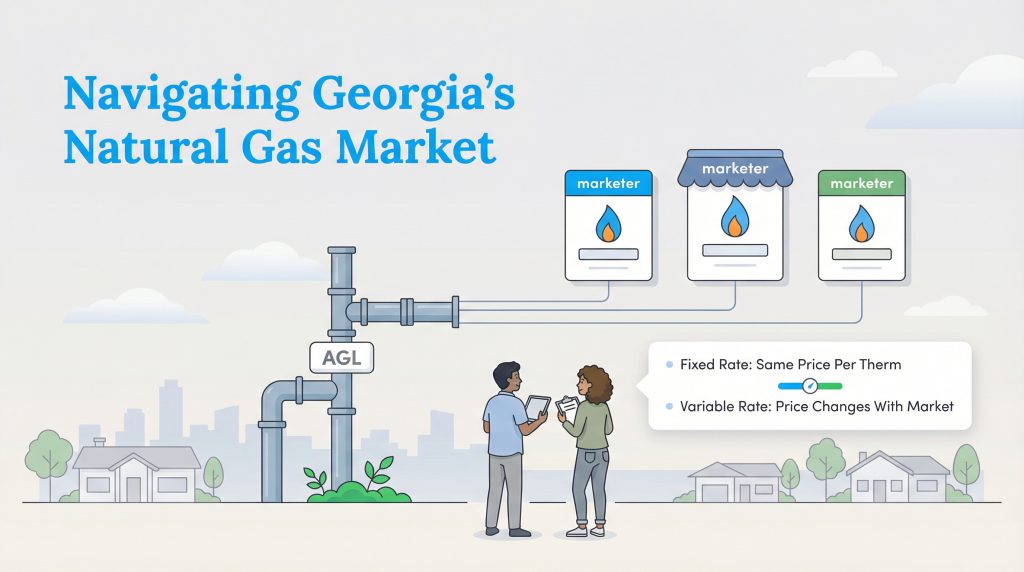
The most confusing aspect of setting up utilities in Georgia is often the natural gas market. Most of the state, particularly the greater Atlanta area, sits on pipelines owned by Atlanta Gas Light (AGL). However, AGL does not sell gas to consumers. This brings us to the topic of Atlanta Gas Light vs Marketers.
AGL maintains the pipes, fixes leaks, and manages the infrastructure. However, you must buy the actual gas from a “Marketer.” These are private companies that compete for your business. Because of this, you will receive your bill from the marketer, not AGL.
A common point of confusion for new Georgia residents is the “AGL Pass-Through Charge” found on every gas bill. This is the base cost for delivering gas to your home. No matter which gas marketer you choose, this charge will remain the same and cannot be negotiated.
Example: Moving to Atlanta Utilities
If you are moving specifically to the Atlanta metro area, your utility mix will likely look like this:
- Electricity: Usually Georgia Power.
- Natural Gas: Served by Atlanta Gas Light lines, meaning you must choose a marketer.
- Water/Sewer: Typically the City of Atlanta Department of Watershed Management.
This mix is common in the city, but always verify your specific address, as boundaries can change just a few blocks away.
Choosing a Marketer
You will need to shop around for Georgia natural gas providers. Common options include companies like Gas South, SCANA Energy, and Xoom Energy. Because they compete, they offer different perks, contract lengths, and rate structures. It is vital to compare “fixed rates” (where the price per therm stays the same for a set period) versus “variable rates” (where the price fluctuates with the market).
For a comprehensive list of approved providers and their current offers, you can visit the Georgia Public Service Commission’s marketer list. This is the most authoritative source for verifying which companies are licensed to operate in your area.
See our list of Best Natural Gas Marketers in Georgia
Water, Sewer, and Waste Management
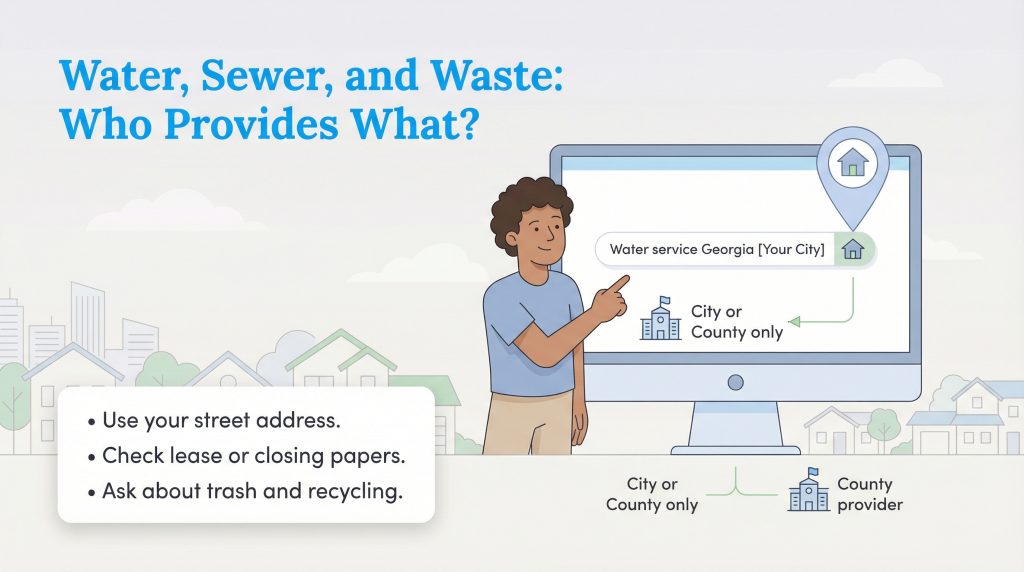
Unlike gas, water and sewer services are almost always managed at the municipal level by the city or county. This means you generally have a single provider and no option to shop around. To find your specific provider, a simple search for Water service Georgia [City Name], replacing the bracketed text with your actual city, will usually direct you to the correct government department or search your zip code to see our list of providers.
If you are moving to Atlanta, you will likely deal with the Department of Watershed Management. In other areas, it might be the county water authority. When setting up water, ask about waste management as well. In some Georgia counties, trash pickup and recycling are included in your property taxes. Before you call around, check your lease or closing documents. In some apartments and HOAs, water, sewer, or trash are included in your monthly payment, and you only need to set up electric and gas.
People often search for Utilities in Georgia by zip code, but keep in mind that zip codes can cross city and county lines. It is always safer to check using your specific street address to ensure you are contacting the correct water authority.
Internet and Cable Connectivity
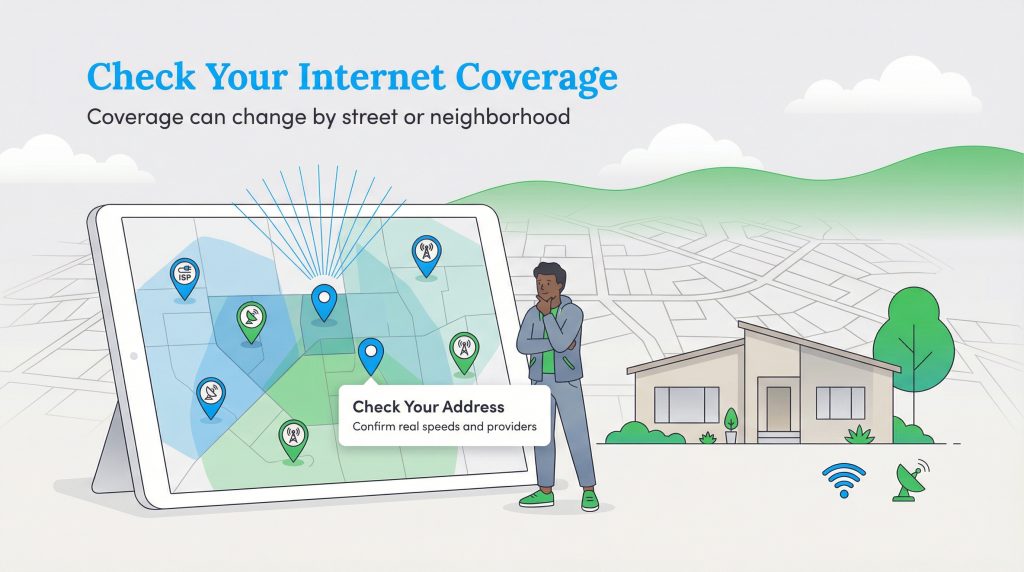
Staying connected is a priority for most households. Major internet service providers like AT&T, Comcast/Xfinity, Spectrum, and Google Fiber cover large portions of the state. However, coverage can vary wildly even within the same neighborhood.
If you are moving to a rural area, your options might be more limited, potentially relying on satellite internet or fixed wireless solutions. We recommend checking the FCC National Broadband Map to verify the reported speeds and available providers at your specific new address. This can help you avoid surprises if you work from home or rely on high-speed streaming.
Your 10-Day Moving to Georgia Utilities Checklist
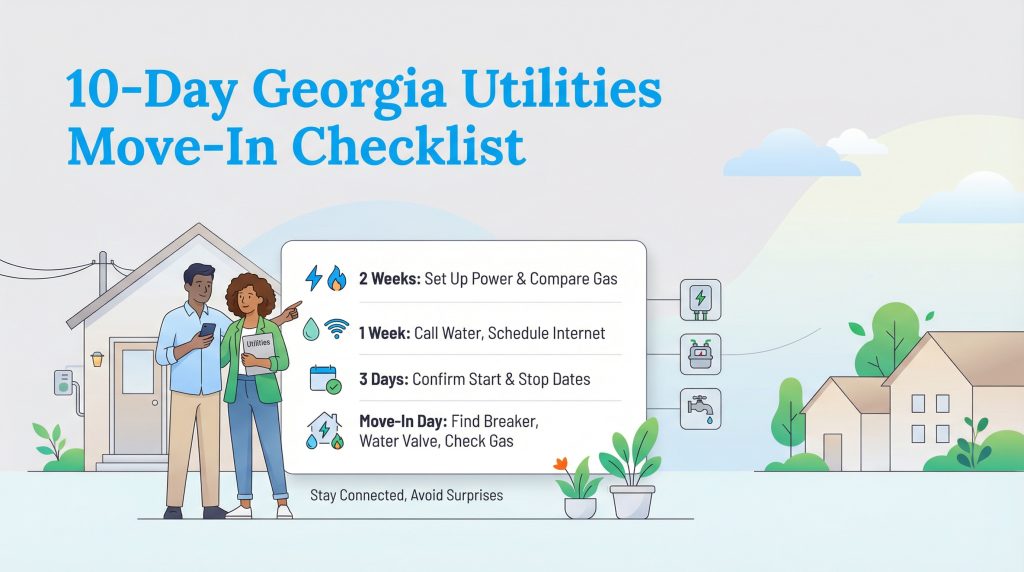
Timing is everything when transferring services. Use this Georgia utilities checklist to ensure you aren’t left without power or hot water on move-in day.
2 Weeks Before Moving Day
Contact your electric provider immediately. Whether it is Georgia Power or a local EMC, setting up a new account can sometimes require a credit check or a deposit, which takes time to process. Simultaneously, start researching natural gas marketers. Compare rates and read reviews so you can make an informed decision rather than a rushed one.
1 Week Before Moving Day
Call your local water and sewer department. These municipal offices usually have a quick turnaround, but it is better to be safe than thirsty. This is also the right time to schedule your internet installation. Technician slots fill up fast, especially at the beginning and end of the month.
3 Days Before Moving Day
Confirm the disconnection dates for the utilities at your old home. You don’t want to pay for electricity in an empty house. Double-check your confirmation emails for your new services to ensure the dates match your arrival.
Move-In Day
Once you arrive, locate the breaker box and the main water shut-off valve immediately so you know where they are in an emergency. Check your gas meter; if it is locked, you will need a technician to come out and unlock it. Do not attempt to unlock it yourself.
Setting Up Your New Home for Success
While the mix of regulated electricity and deregulated gas might seem complicated at first, breaking the process down into individual steps makes it far more manageable. If you follow the 10-day checklist and confirm each provider before you pack the truck, you’ll avoid last-minute surprises and extra fees. Taking the time to set up your electric, natural gas, and water services correctly ensures that your first night in your new Georgia home is comfortable and worry-free. As you settle in, consider checking your appliances, choosing ENERGY STAR models is an environmentally mindful choice that will keep your new home efficient for years to come.
FAQs About Moving to Georgia Utilities
How do I transfer utilities in Georgia?
How much are utility deposits in Georgia?
Can I choose my electric provider in Atlanta?
Who do I call if I smell gas?
What if I am moving to a rural area?
About the Author

David has been an integral part of some of the biggest utility sites on the internet, including InMyArea.com, HighSpeedInternet.com, BroadbandNow.com, and U.S. News. He brings over 15 years of experience writing about, compiling and analyzing utility data.