

An electric membership corporation is a not-for-profit, member-owned utility that returns margins to customers and prioritizes local service.
Key Takeaways
- Electric Membership Corporations (EMCs) are not-for-profit utilities owned by the people they serve rather than outside investors.
- Capital credits are a unique financial benefit where members receive a share of the co-op’s excess revenue over time.
- Member-owners have democratic control, meaning you can vote for board members and influence local energy policies.
Moving to a new home brings plenty of exciting changes, but navigating unfamiliar utility companies shouldn’t catch you off guard. If you are wondering what is an electric membership corporation, it is fundamentally a member-owned, not-for-profit electric utility that prioritizes reliable local service over generating corporate profits. We are here to clear up any confusion about this unique structure so you can understand exactly what this means for your everyday life. This guide details the core benefits of cooperative membership, explains how your monthly electricity payments turn into future financial returns, and walks you through setting up your EMC electric provider utility service.
How Does an Electric Membership Corporation Work?
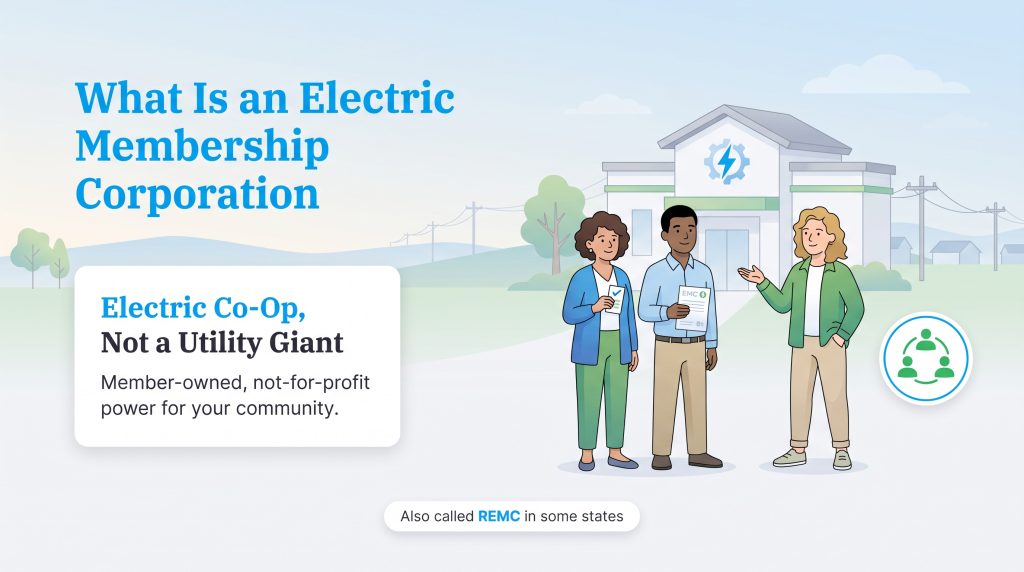
To fully grasp how do electric cooperatives work, it helps to look back at the Rural Electrification Act of 1936. This crucial legislation empowered everyday citizens to form rural electric cooperatives, building their own grids to bring life-changing power to communities that standard commercial utilities intentionally ignored because they weren’t profitable enough.
Today, these utilities continue to operate as a member-owned utility company. Any homeowner or renter paying for service automatically becomes a partial owner with voting rights, meaning you aren’t just a passive customer paying a monthly bill — you are a vested member-owner. You exercise democratic control over the organization, ensuring that all operational decisions, from infrastructure upgrades to daily maintenance, are guided by an elected board of directors who live in your community and prioritize reliable service over maximizing quarterly payouts.
📌 Quick Fact: “REMC” (Rural Electric Membership Corporation) is a widely used variation of the name found in many states, but it functions exactly the same way as a standard EMC.
Electric Membership Corporation Vs Investor-Owned Utility (IOU)
The fundamental difference when comparing an electric cooperative vs investor-owned utility lies in their ownership structure, profit motives, and overall governance. Investor-Owned Utilities (IOUs) are massive, publicly traded corporations that exist primarily to generate maximum financial returns for their shareholders. Because of this profit-driven structure, their decisions regarding service rates, grid investments, and customer support are heavily influenced by stock market performance. While you might be used to shopping around for retail electric providers in areas with energy deregulation, cooperatives offer a built-in alternative to corporate monopolies.
In stark contrast, an electric membership corporation operates entirely as a not-for-profit electric utility. Without the relentless pressure of outside investors demanding a financial payout, your local provider can prioritize rate stability and long-term community reliability.
| Feature | Electric Membership Corporation (Co-op) | Investor-Owned Utility (IOU) |
|---|---|---|
| Ownership Structure | Owned directly by customers (Member-owners) | Owned by external investors and shareholders |
| Profit Motive | Reliable local service and rate stability | Maximum financial profit for shareholders |
| Rate Setting | Set locally by an elected board to safely cover actual operating costs | Regulated heavily, but designed to maximize profit margins |
| Leadership Accountability | Democratic voting (One member = One vote) | Shareholder voting power (Based on stock shares) |
Financial and Community Benefits of an EMC
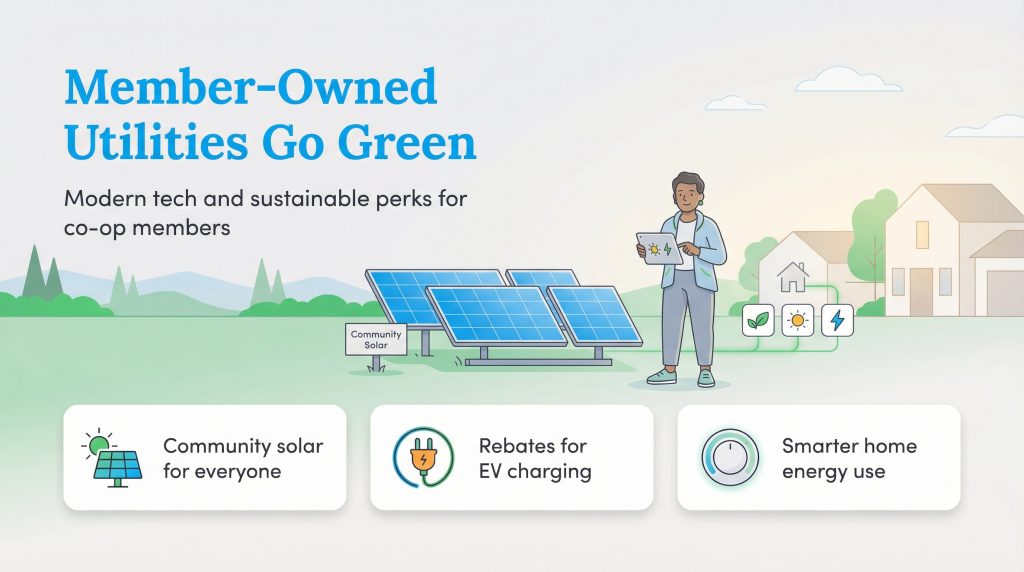
Moving into a cooperative territory unlocks several distinct financial and community benefits that you simply won’t find with standard, for-profit providers. Because not-for-profit electric utilities focus entirely on their residents, the advantages extend far beyond just keeping the lights on.
- Localized Customer Service: When you call to report an issue or inquire about your latest statement, you speak directly with local staff who live and work in your area, drastically improving response times.
- Sustainable Energy Incentives: Driven by community needs rather than profit margins, many co-ops provide generous incentives for eco-conscious upgrades. You can often access localized community solar energy options, electric vehicle (EV) charger rebates, and instant discounts on smart thermostats.
- Stable Energy Rates: Operating at cost helps insulate members from sudden market price spikes, ensuring long-term utility affordability for your household.
Earning Capital Credits
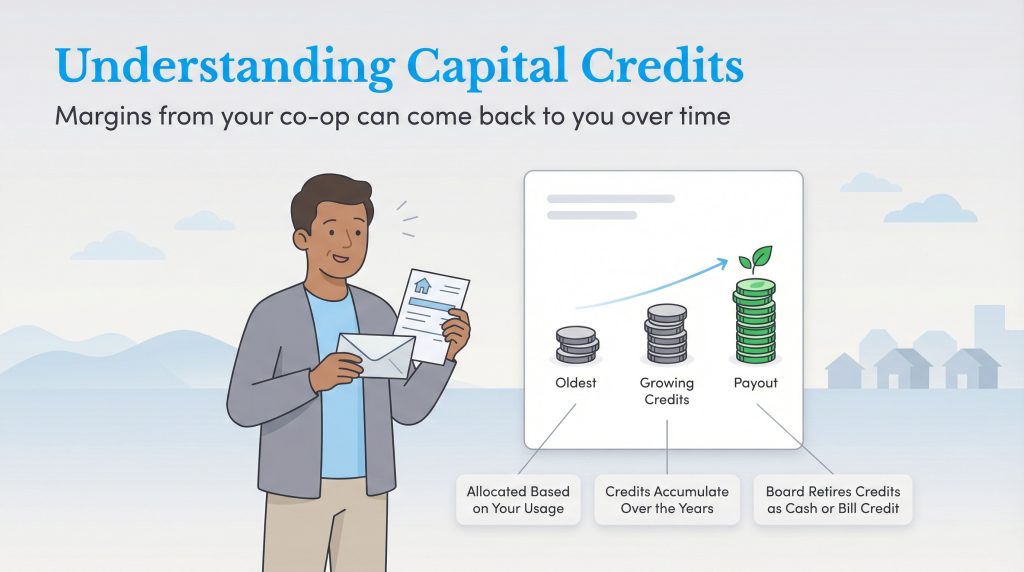
If you find yourself asking what are capital credits electric co-op, you are discovering one of the most rewarding perks of your new service. Because your cooperative operates strictly as a not-for-profit electric utility, it only collects enough revenue to safely cover actual operating costs, vital infrastructure maintenance, and necessary emergency reserves. Any extra revenue left over at the end of the fiscal year is officially classified as a margin.
Instead of pocketing this excess cash, the cooperative meticulously tracks exactly how much electricity your household consumes. At the end of the fiscal year, your specific share of the surplus revenue is proportionally allocated to your account. Once the cooperative achieves strong financial stability, the board votes to retire a portion of these accumulated credits, typically sending you a physical check or applying a direct monetary credit to your monthly bill. This unique system ensures your payments are effectively a long-term investment, offering a fantastic way to eventually save on your electric bill.
💸 Money-Saver: Keep your current mailing address updated with your cooperative even after you move out of their territory. Because capital credits operate on a delayed payout schedule, you are still legally entitled to those checks years after you relocate!
Voting Rights and the Board of Directors
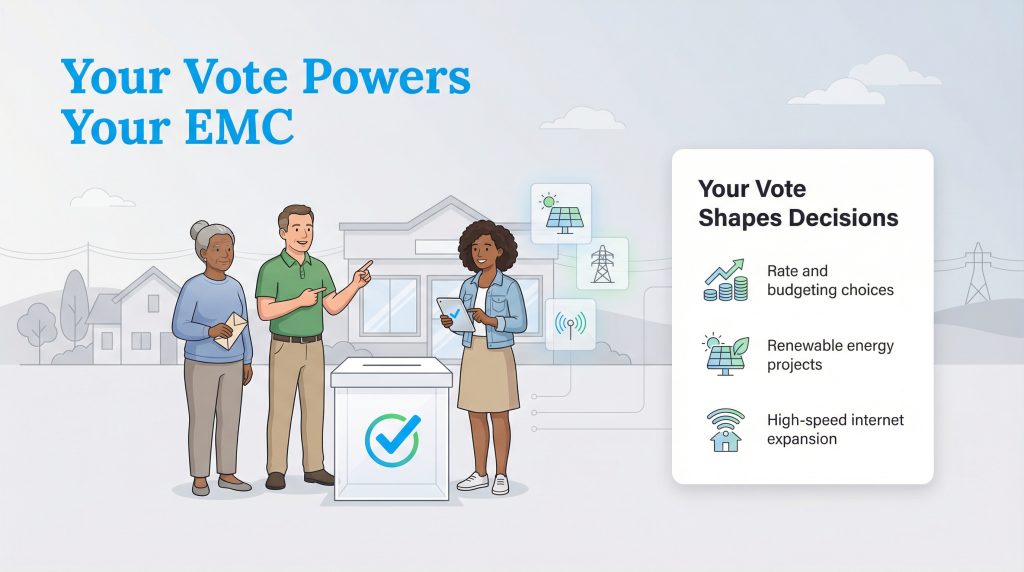
Every single member has an equal voice in how the utility operates. You get to cast a ballot for the electric membership corporation board of directors, meaning you have a tangible say in local energy policies, future rate adjustments, and the expansion of modern utility options like high-speed internet. By voting for community leaders who share your priorities, you ensure the cooperative remains focused on the sustainable development and long-term health of your neighborhood.
Operation Round Up and Community Grants
Many cooperatives actively champion local growth through community investment initiatives. When you opt into the Operation Round Up electric bill program, the cooperative will automatically round your monthly utility charge up to the next whole dollar. Those spare cents are pooled together with contributions from your neighbors to fund essential local scholarships, emergency response services, and vital community development projects. It is a seamless, low-impact way to make a significant charitable difference in your own community.
🌱 Eco Edge: Participating in your cooperative’s smart device rebate programs not only lowers your personal energy consumption but also reduces the overall peak demand on the local grid, creating a greener community for everyone.
How to Set Up Service With an EMC Provider
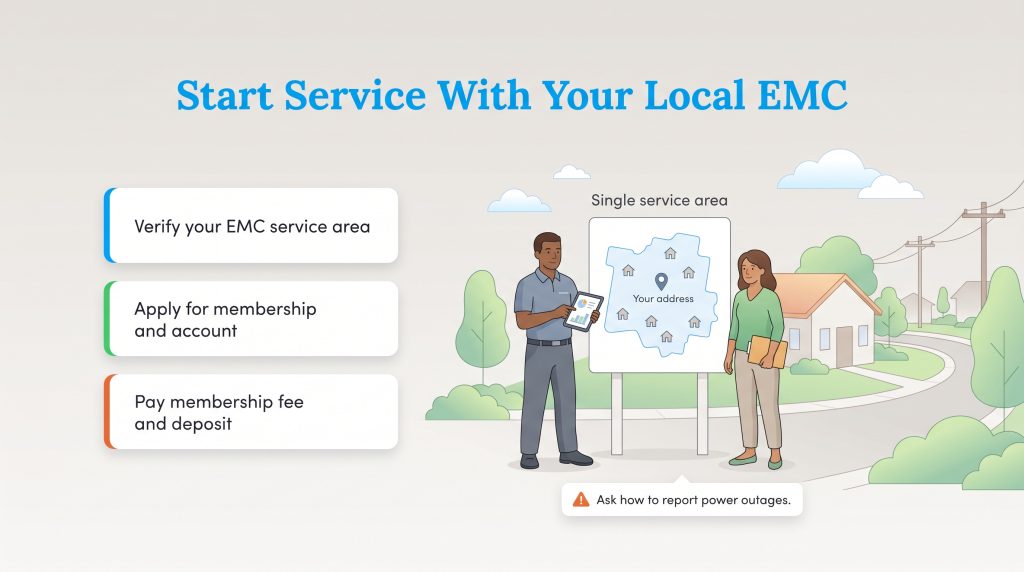
Setting up your utility service requires a slightly different process than establishing an account with a massive, for-profit provider. Because you are officially establishing your formal membership to initiate power rather than simply purchasing electricity, electric cooperatives generally operate in specific, single-service territories assigned by state law. This guarantees affordable infrastructure maintenance in less densely populated areas.
To guarantee a smooth transition, follow these three essential steps to set up your account:
- Check Local Territory Maps: Confirm exactly which cooperative handles your new address by consulting your real estate agent, checking your state’s public utilities commission website, or exploring our electric resources.
- Apply for Membership: Call your local provider or navigate to their online portal to formally apply for your new account and establish your voting rights. Have your driver’s license, your Social Security number, and your exact new service address ready for verification.
- Pay the Initial Membership Fee or Deposit: Have a valid credit card or checking account ready to cover your one-time membership fee, which usually ranges from $5 to $25 and officially registers your ownership stake. Depending on a soft credit check, you might also need to pay a standard security deposit before the grid can be turned on.
🚩 Heads Up: Be sure to ask the representative about the proper protocol for reporting power outages during your initial call, ensuring you know exactly which mobile app or hotline to use if a severe storm rolls through your new neighborhood.
Maximizing Your EMC Membership
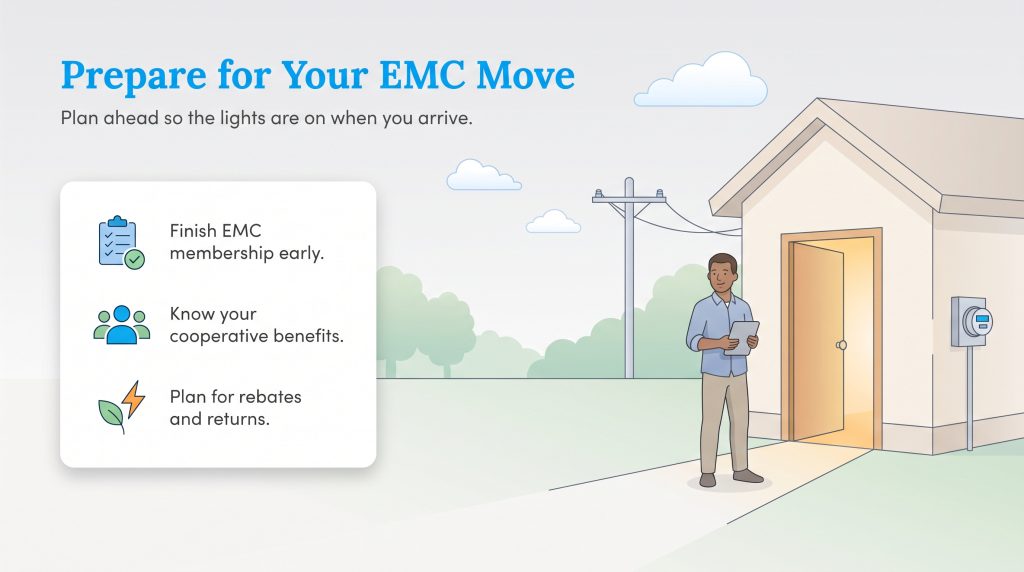
Moving into a new residence is stressful enough without facing last-minute utility setup headaches. By proactively tackling your membership application and understanding the unique benefits of your cooperative, you guarantee a seamless transition into your new member-owned community. Early planning is your absolute best defense against unexpected power delays, ensuring your lights are on the moment you walk through the front door of your new home. Embracing your role as an active member-owner empowers you to take full advantage of democratic voting rights, valuable financial returns, and sustainable community programs.
To truly get the most out of your new cooperative utility, make sure to take these three immediate actions:
- Download the local EMC app: Many cooperatives offer robust mobile applications that allow you to easily track your daily energy usage, quickly pay your bill, and monitor real-time outage maps.
- Attend the annual meeting to vote: Mark your calendar for the cooperative’s yearly gathering so you can cast your vote for the board of directors and stay fully informed on upcoming community projects.
- Opt into free residential energy-saving audits: Take advantage of complimentary home energy assessments offered by the cooperative to identify drafts, check insulation levels, and discover actionable ways to reduce your environmental footprint.
Frequently Asked Questions About Electric Membership Corporations
What is the difference between an EMC and an electric cooperative?
There is no functional difference between an EMC and an electric cooperative. “Electric Membership Corporation” is simply the formal, legal term used for an electric cooperative in many states. Both terms refer to the exact same not-for-profit, member-owned utility structure.
Do I have a choice in using an electric membership corporation?
Generally, no. Electric cooperatives operate in exclusive, single-service territories established by state law. This structure guarantees they maintain a stable local customer base, allowing them to fund the highly expensive infrastructure required to reliably serve less densely populated rural areas without dramatically increasing your rates.
Do electric membership corporations run for profit?
No, electric membership corporations strictly operate as not-for-profit organizations. They function at cost, meaning they only collect enough revenue to cover daily operations and necessary grid maintenance. Any excess margins generated throughout the year are allocated right back to the members in the form of capital credits.
What happens to my capital credits if I move out of the EMC service area?
If you move out of the cooperative’s territory, your accumulated capital credits remain yours. The cooperative will continue to track your account and mail you a check when the board of directors officially retires the credits for the years you were an active member. Always make sure to leave a forwarding address on file so your payouts can reach you.
Do I have to join the electric membership corporation to get power at my home?
Yes. Because cooperatives operate in exclusive service territories to ensure reliable infrastructure, you must become a formal member to receive electricity at any home located within their designated boundaries.
How much does an EMC membership fee usually cost?
The initial membership fee is generally very affordable, typically ranging from $5 to $25 depending on your specific cooperative. This one-time payment officially registers your partial ownership and is fully refundable if you eventually move out of the service territory.
Are electric membership corporations tax-exempt?
Most electric membership corporations qualify for federal tax-exempt status under section 501(c)(12) of the Internal Revenue Code. To maintain this status, the cooperative must collect at least 85% of its annual income directly from its members for the sole purpose of covering ongoing operational costs and essential infrastructure maintenance.
Who regulates electric membership corporations?
EMCs are locally governed by member-elected boards that establish service rates and operational policies. However, they remain heavily subject to state utility laws and essential oversight. They must strictly adhere to state and federal safety regulations, including critical standards from the Department of Energy and best practices from the National Rural Electric Cooperative Association (NRECA).
About the Author

LaLeesha has a Masters degree in English and enjoys writing whenever she has the chance. She is passionate about gardening, reducing her carbon footprint, and protecting the environment. She also recently served as President of the Board for City Sprouts (a community garden).

David has been an integral part of some of the biggest utility sites on the internet, including InMyArea.com, HighSpeedInternet.com, BroadbandNow.com, and U.S. News. He brings over 15 years of experience writing about, compiling and analyzing utility data.