

Implementing Simple Habit Changes and Affordable Plumbing Upgrades Can Significantly Lower Your Monthly Water Expenses While Conserving Natural Resources
Key Takeaways
- Identifying hidden leaks in your plumbing system is one of the fastest ways to dramatically lower your monthly utility costs.
- Upgrading to water-efficient appliances and fixtures provides a long-term return on investment for homeowners.
- Renters and budget-conscious individuals can reduce water consumption at home through completely free, everyday habit changes.
Opening your monthly utility statement shouldn’t be stressful. In this comprehensive guide, you will learn exactly how to save on your water bill by identifying hidden leaks, upgrading to efficient fixtures, and adopting smarter daily habits. According to the EPA, the average family wastes a staggering 9,400 gallons of water annually due to silent household leaks and inefficient routines. Whether you rent an apartment or own a house, reducing your consumption is highly achievable, and we are here to walk you through the absolute best ways to lower your costs today.
How Much Does the Average Water Bill Cost?
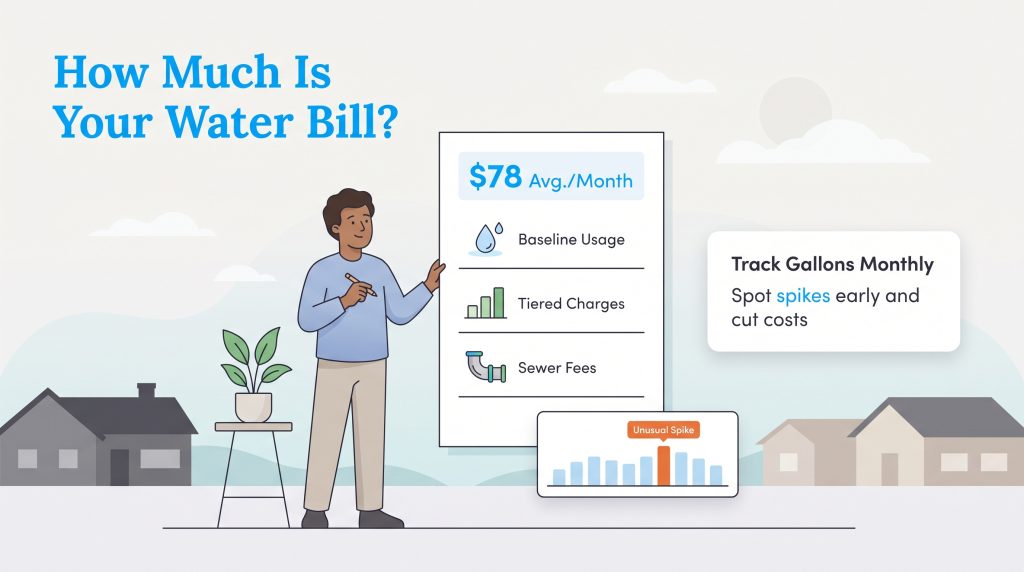
Before you can begin trimming your budget, it is helpful to establish a baseline. You might be wondering about the average water bill cost across the country. While rates fluctuate heavily based on your geographical location and municipal rate structures, the average monthly water bill for an American family typically hovers around $78. This number is steadily rising as local utilities pass on the costs of upgrading aging infrastructure and battling inflation.
Your unique statement likely includes a combination of baseline usage fees, tiered volumetric charges, and fixed local sewer rates. By understanding your water bill and tracking your monthly consumption in gallons, you can quickly spot unusual spikes and take immediate action to lower your monthly expenses.
1. Find and Fix Silent Plumbing Leaks
If you find yourself frequently asking why your statement is so high, pinpointing invisible plumbing issues is absolutely essential. Tracking down these silent drains is one of the fastest ways to dramatically lower your water bill. A constantly running toilet or a dripping outdoor spigot can quietly waste hundreds of gallons per day, instantly wiping out your budget.
Because many leaks happen entirely out of sight, checking your meter regularly ensures you catch the problem before the utility company sends a massive bill. The process takes minimal effort but offers incredible financial peace of mind for any homeowner.
How to Check Your Water Meter for Leaks
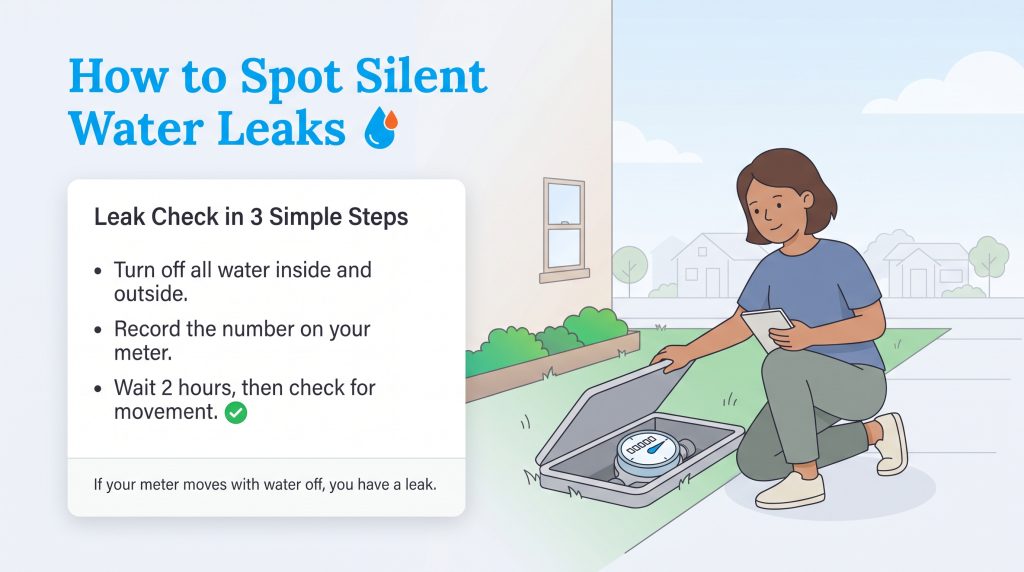
Reading your home’s water meter is a foolproof way to empower yourself and catch silent drains before they cost you hundreds of dollars. Many homeowners overlook this simple diagnostic method, but it is incredibly easy to execute. Follow this straightforward step-by-step test to confirm if a hidden leak exists on your property:
- Turn off all water sources inside and outside your house, ensuring washing machines, dishwashers, and outdoor sprinklers are completely powered down.
- Locate your water meter — usually found in a covered curb box near the street or on the side of your house — and record the current number or mark the exact position of the dial.
- Leave the water off and wait exactly two hours without using any plumbing fixtures, then check the meter dial again. If the dial or the numbers have moved, you have an active plumbing leak that requires immediate attention.
- For real-time protection without the manual labor, consider installing a smart water monitor. These innovative devices strap directly to your meter and send instant alerts to your smartphone the moment an abnormal flow is detected.
2. Upgrade to Water-Saving Fixtures and Appliances
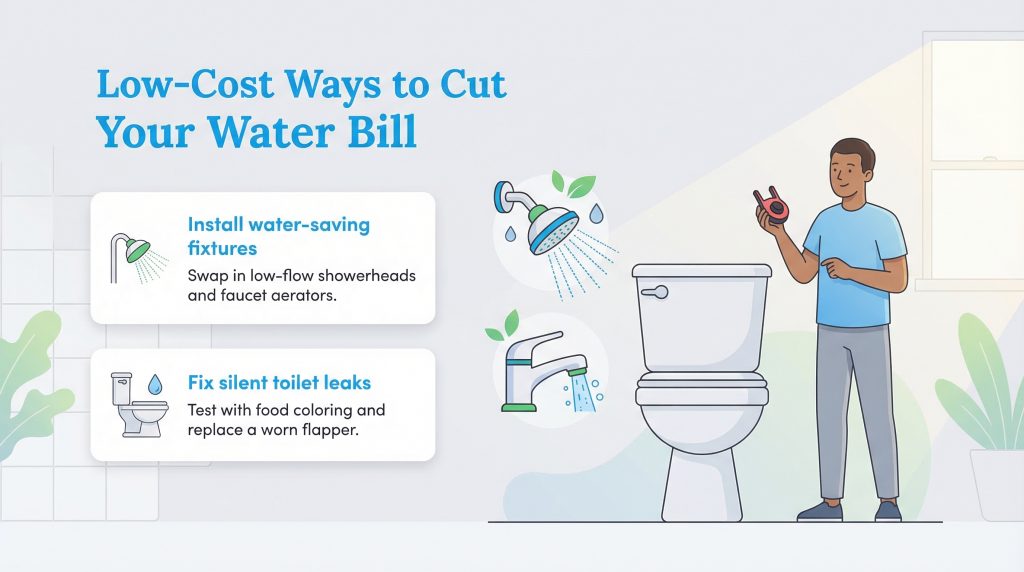
If you are serious about optimizing your home water systems, transitioning to modern, highly efficient hardware is a smart move. These affordable updates are perfect for budget-conscious homeowners because they deliver significant, reliable returns every single month.
Start with the bathroom and kitchen, as these spaces typically account for the vast majority of your indoor usage. To maximize your savings, follow these actionable upgrade instructions:
- Install water-saving showerheads: Standard older models pump out roughly 2.5 gallons per minute (GPM). When you unscrew your old fixture and twist on an EPA WaterSense certified 1.5 GPM model, you immediately achieve a massive 40% reduction in water volume without sacrificing pressure.
- Invest in low-flow toilets: Older toilets can use up to 6 gallons per flush. Upgrading to a modern WaterSense labeled toilet reduces that volume to just 1.28 gallons per flush, saving an average family roughly 13,000 gallons of water annually.
- Fix leaky faucets: A sink that drips just once per second can waste over 3,000 gallons a year. Grab a wrench and replace the worn internal rubber washer or O-ring to stop the drip instantly. You can also add cheap faucet aerators, which inject tiny bubbles of air into the stream to maintain high pressure while using less water.
- Purchase a high efficiency washing machine: When shopping for new laundry hardware, upgrading to ENERGY STAR certified clothes washers is a brilliant move. These highly efficient front-loaders tumble your garments through a much smaller pool of water, getting them incredibly clean while using a fraction of the volume. By disabling the “permanent press” cycle and sticking to eco-friendly settings, you will actively reduce your overall electric bill and water usage simultaneously.
3. Change Your Daily Indoor Habits
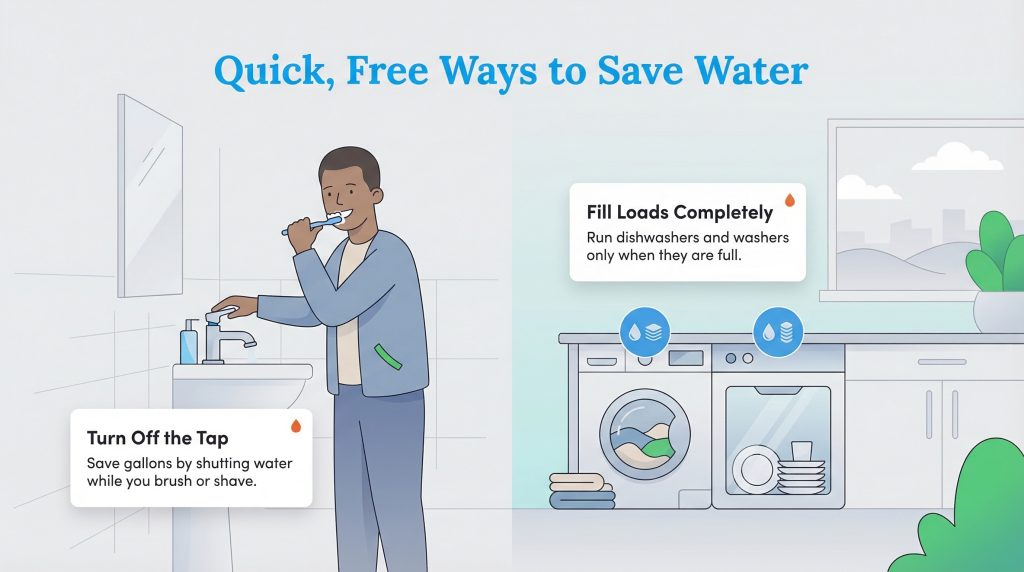
You absolutely do not need to spend a fortune on fancy gadgets to start seeing immediate savings. Learning how to conserve water in apartments or rental homes is incredibly easy because it relies entirely on free, behavioral shifts.
If you want to reduce water usage at home, you must critically examine your daily routines in the bathroom and kitchen. Taking just a few minutes to audit your family’s water usage will uncover numerous opportunities to save.
High-Impact Bathroom and Kitchen Adjustments
Making strategic adjustments to your daily habits can drastically cut down on unnecessary waste. Focus on these specific actions to lower your usage today:
- Bathroom: Turn off the tap while brushing. Leaving the water running while you brush your teeth wastes up to 4 gallons a minute. Simply turning it off can save up to 8 gallons of water per day for a single person.
- Bathroom: Take shorter showers. Trimming just two minutes off your daily shower routine can save up to 1,750 gallons per person annually, directly reducing the strain on your hot water heater.
- Kitchen: Only run full dishwasher loads. Running a half-empty appliance wastes the exact same amount of resources as a packed one. By waiting until the dishwasher is completely full, you can save an average of 10 to 20 gallons of water compared to washing those same dishes by hand.
- Kitchen: Use a basin for washing produce. Instead of rinsing vegetables under a continuously running faucet, fill a small bowl with water to scrub your produce. This simple swap saves roughly 3 to 4 gallons per meal prep session.
4. Optimize Outdoor Water Use and Landscaping
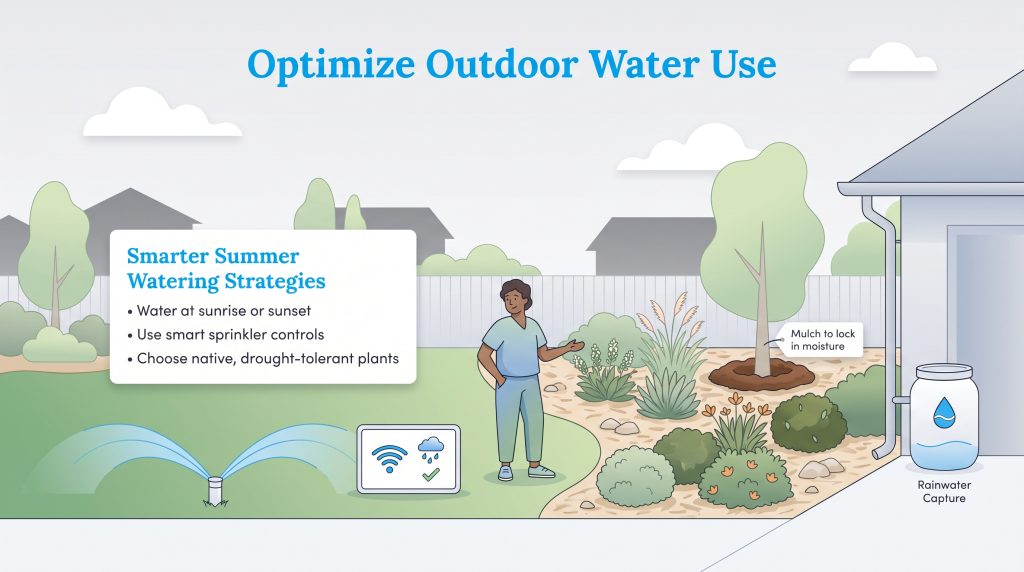
During the sweltering summer months, outdoor irrigation can easily account for up to 70% of a household’s total water usage. Reevaluating your landscaping approach and practicing proven summer water conservation tips can lead to massive monthly savings while keeping your property beautiful.
To eliminate outdoor waste, implement these highly effective landscaping and irrigation strategies:
- Water during optimal hours: Always water your lawns and flowerbeds during the early morning or late evening. Watering during the heat of the midday sun leads to rapid evaporation, preventing the moisture from soaking deep into the grassroots.
- Install a smart sprinkler controller: These intuitive outdoor devices connect directly to your home Wi-Fi and pull real-time local weather data. If rain is in the forecast or the soil is already adequately damp, a smart sprinkler controller automatically skips the scheduled watering session, preventing damaging overwatering entirely.
- Plant drought-resistant native vegetation: We highly recommend exploring xeriscaping — replacing thirsty turf grass with deep-rooted, drought-tolerant native plants. Because these plants naturally thrive in your local climate, they require very little supplemental watering to survive.
- Capture free rainwater: By installing simple rain barrels at the base of your gutter downspouts, you can store free rainwater runoff to hydrate your flowerbeds, completely removing that burden from your municipal tap.
Financial Breakdown of Water Upgrade ROI
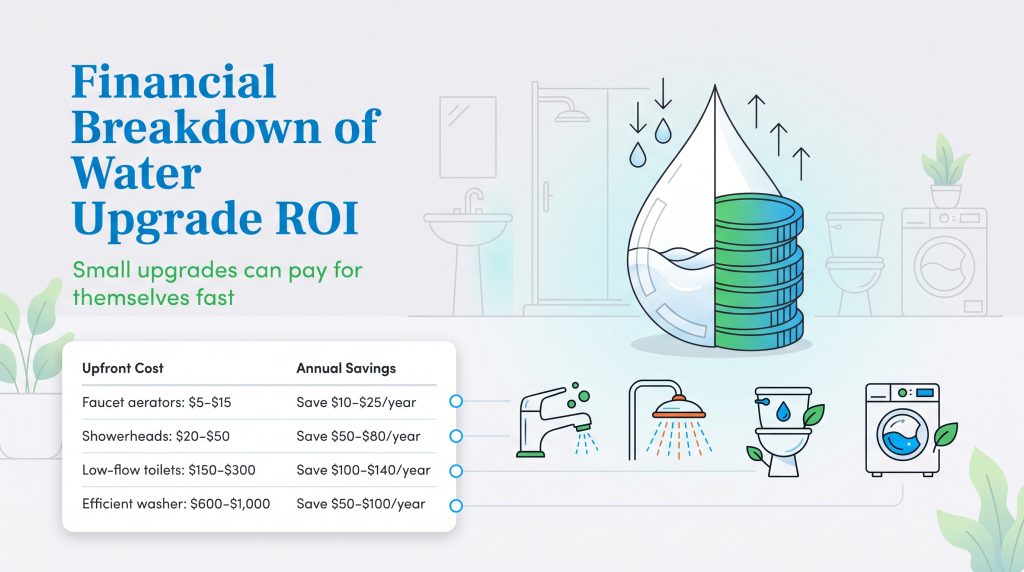
We know that managing a household budget requires constant vigilance, but tackling your utility costs does not have to be a painful chore. Upgrading your home’s hardware is a smart investment that yields a reliable, compounding return on investment (ROI) every single month. By calculating the exact financial benefits, it becomes clear that these efficiency upgrades quickly pay for themselves.
Review this straightforward financial breakdown to see exactly how much you can save by replacing outdated plumbing fixtures:
| Upgrade Type | Average Upfront Cost | Gallons Saved Annually | Estimated Annual Savings |
|---|---|---|---|
| Faucet Aerators | $5 to $15 | 700 to 1,500 gallons | $10 to $25 |
| Water-Saving Showerheads | $20 to $50 | 2,700 to 2,900 gallons | $50 to $80 (including energy) |
| Low-Flow Toilets | $150 to $300 | 13,000 gallons | $100 to $140 |
| High Efficiency Washing Machine | $600 to $1,000 | 3,000 to 4,000 gallons | $50 to $100 (including energy) |
Maximizing Your Utility Savings
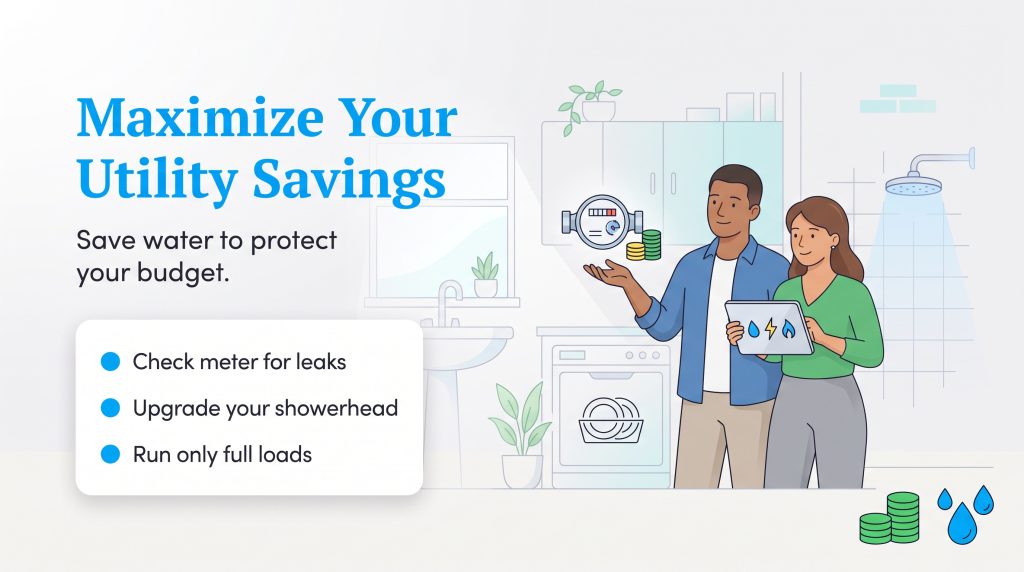
If you truly want to lower your monthly expenses, you must take action. Don’t wait for your next unexpectedly high bill to arrive in the mail. By taking proactive control of your plumbing systems, you set your household up for long-term financial health and actively contribute to a much more sustainable future.
To maximize your savings today, we strongly urge you to execute the top three fastest actions from this guide: check your water meter for silent leaks, swap out your old bathroom showerhead, and commit to only running full loads in the dishwasher. Every single drop saved keeps hard-earned money exactly where it belongs: in your bank account. For even more ways to protect your budget, explore our complete guides on optimizing your electric usage and lowering your natural gas bill.
Frequently Asked Questions About Saving on Your Water Bill
What uses the most water in a house?
What is the average water bill per month?
How much money can a low-flow showerhead actually save?
Does running the dishwasher save more water than hand washing dishes?
How do I know if my toilet has a silent leak?
How do I know if I have a hidden water leak?
Do water companies offer rebates for efficient appliances?
Can planting native plants reduce my water bill?
About the Author

David has been an integral part of some of the biggest utility sites on the internet, including InMyArea.com, HighSpeedInternet.com, BroadbandNow.com, and U.S. News. He brings over 15 years of experience writing about, compiling and analyzing utility data.

Claudio is a sustainability-focused writer with a background in Anthropology and Psychology from NC State University. He has spent over 15 years working in writing, interpretation, and translation, driven by a deep interest in how human culture shapes the environment. Today, he shares his curiosity with readers by writing about sustainable living solutions and the connection between everyday choices and environmental impact.