

Using simple water-saving habits at home can significantly reduce your utility costs while protecting vital natural resources.
Key Takeaways
- Upgrading to water-efficient fixtures like ENERGY STAR appliances and WaterSense showerheads can save thousands of gallons of water each year.
- Adjusting your outdoor watering schedule to early mornings prevents daytime evaporation and stretches your landscaping budget.
- Routine maintenance and leak detection are free, simple ways to stop hidden water waste and prevent unexpected spikes in your summer water bill.
Opening your utility statement during the hottest months often brings an unpleasant wave of bill shock, largely because average household water usage can double during the summer. Keeping your yard green and your family cool requires a massive amount of hydration, which quickly drives your monthly costs through the roof if left unchecked. Fortunately, utilizing practical summer water conservation tips protects both your monthly budget and local reservoirs. Our guide covers everything from completely free behavioral changes to smart utility upgrades, helping you find actionable ways to manage consumption and lower your utility bill this season without sacrificing comfort.
Why Summer Water Use Spikes (And How It Impacts Your Wallet)
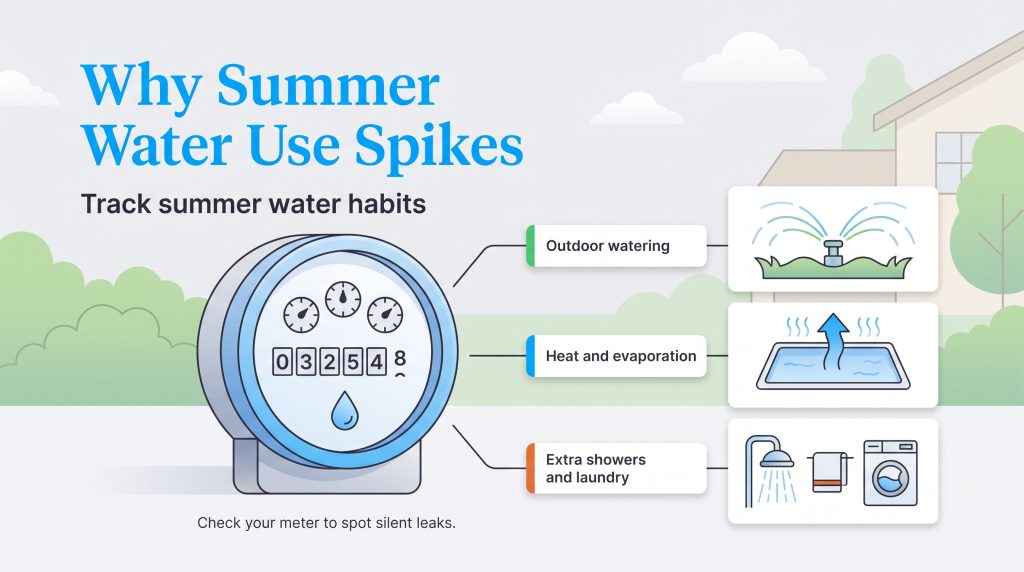
Rising temperatures naturally change our daily routines, leading to a massive surge in household consumption. Tracking down exactly where your money goes is the first step toward lasting utility savings. We recommend diving into understanding your home water utility to spot unusual seasonal patterns. According to the EPA WaterSense program, household leaks alone can waste nearly 10,000 gallons of water each year. However, the most predictable utility spikes come directly from three main seasonal shifts:
- Temperature increases: Blistering heat means moisture evaporates rapidly from the soil and swimming pools. You will find yourself constantly refilling these areas just to maintain baseline levels.
- Lawn maintenance: Sprinklers run longer and harder to fight off the intense sun. Outdated systems often devour hundreds of gallons a day just to keep your turf green.
- Recreational water use: Kids take extra showers after playing outside in the heat. Frequent loads of damp pool towels push washing machines to their absolute limits.
Outdoor Water Saving Tips
Your lawn and garden demand massive amounts of hydration to survive the midday heat, accounting for a huge portion of your seasonal utility spikes. Reviewing spring yard water conservation tips early on helps you maintain vibrant landscaping into the summer without draining local reservoirs. Making a few environmentally mindful choices outside instantly transforms your yard into an eco-conscious, money-saving space.
Optimize Lawn Care Practices
Blasting your sprinklers at noon is a guaranteed way to waste money, as the intense sun quickly evaporates moisture before it even reaches the roots. Instead, you need to rethink exactly how and when you maintain your turf. Most healthy grass only needs about one inch of water per week, including natural rainfall. By watering deeply but less frequently, you encourage your lawn to develop strong root systems that naturally survive hot stretches better than shallowly watered grass.
Smart Irrigation Systems and Upgrades
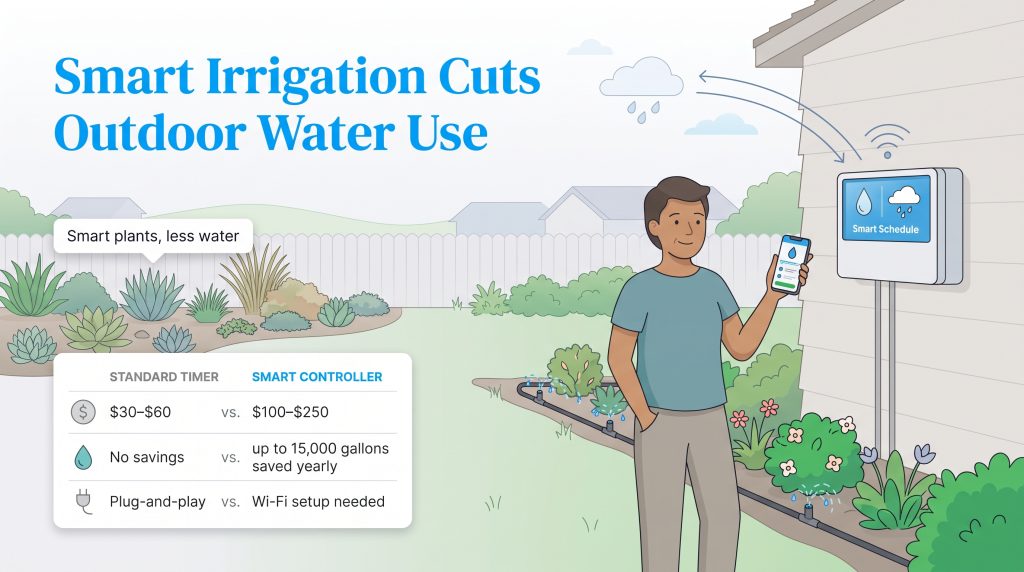
Upgrading your standard timer to a weather-based irrigation controller is one of the most effective ways to lower your monthly utility bill. Traditional timers run blindly on a set schedule, often watering your grass during rainstorms or immediately after heavy showers. In contrast, smart irrigation systems connect to your home Wi-Fi and pull real-time, local weather data to adjust schedules automatically. Investing in this technology provides several immediate benefits:
- Smart sprinkler controllers: Automatically calculate evaporation rates and recent rainfall so your yard gets exactly what it needs without overwatering.
- Soil moisture sensors: Communicate directly with your main controller to halt scheduled watering if the ground is already fully saturated.
- Rain shut-off devices: Provide an affordable override switch that instantly stops your sprinklers when active rain is detected.
| Feature | Standard Sprinkler Timer | Smart Sprinkler Controller |
|---|---|---|
| Average Cost | $30 – $60 | $100 – $250 |
| Water Saved | None (static schedule) | Up to 15,000 gallons annually |
| Ease of Installation | Simple plug-and-play | Moderate (requires Wi-Fi setup) |
Transition to Drought-Resistant Landscaping
Replacing thirsty, non-native plants with hardier varieties drastically lowers your reliance on the garden hose. This strategy, known as xeriscaping, involves designing a landscape that requires little to no supplemental irrigation. Creating a drought-resistant landscaping plan focuses on selecting flora that naturally thrives in your specific climate. To further lock in soil moisture, you should always apply a two-inch layer of organic mulch around the base of your plants. When planning your new eco-conscious yard, consider incorporating these low-water plant categories to replace high-maintenance turf grass:
- Succulents and Cacti: These plants require minimal watering because they naturally store moisture, making them perfect for intense heat.
- Ornamental Grasses: Deep root systems allow these native grasses to remain incredibly robust during long dry spells.
- Drought-Tolerant Shrubs: Hardier shrubs provide excellent, low-maintenance privacy borders that survive entirely on natural rainfall.
- Native Perennials: These colorful options are naturally adapted to your local climate and require very little seasonal upkeep.
Master Pool Water Conservation
Backyard swimming pools offer incredible relief during heatwaves, but they also lose thousands of gallons of water each season to natural evaporation and splashing. Practicing proactive pool water conservation prevents you from constantly refilling the basin. Follow this three-step guide to command total control over your pool usage and protect your utility budget:
- Use a pool cover. Always cover your pool whenever it is not in active use. A high-quality cover can reduce water loss by up to 90% while keeping the basin clean.
- Lower the water level. Keep your pool’s water level about an inch lower than usual to prevent massive splash-out when people jump in.
- Check the pump system for leaks. Inspect the area around your pool pump and filter for lingering damp spots. Even a minor drip in your filtration system wastes hundreds of gallons every single week.
Maximize Rainwater Harvesting Benefits
One of the most overlooked outdoor strategies is capturing natural precipitation before it runs off into the storm drain. Maximizing rainwater harvesting benefits allows you to water your garden completely for free, drastically reducing your summer water bill. Installing a simple rain barrel beneath your gutter downspouts effortlessly collects runoff from your roof during sudden summer storms. You can then use this stored, untreated water for your flower beds, shrubs, and drought-resistant landscaping without turning on a single faucet.
Indoor Strategies to Reduce Your Summer Water Bill
While your thirsty yard grabs most of the attention, indoor cooling and washing activities quietly devour a huge portion of your seasonal supply. Upgrading the fixtures and machines inside your house creates a continuous, automated barrier against excessive waste. Taking action indoors ensures your household runs as efficiently as possible, lowering both your monthly statement and environmental impact.
Detect Hidden Water Leaks
A running toilet or a dripping pipe is notorious for causing unexpected bill shock. While a leaky sink faucet is obvious, internal plumbing failures are often completely silent. You must proactively detect hidden water leaks to stop this silent waste from inflating your costs.
Start by reading your main water meter and writing down the exact number. Avoid using any water inside or outside for two full hours, then check the meter again; if the dial moved, you have an active leak. For the bathroom, perform a simple step-by-step toilet dye test by placing a few drops of food coloring directly into the tank. Wait 15 minutes without flushing. If the color seeps into the bowl, you have a broken flapper valve that can silently waste up to 200 gallons of water per day.
Upgrade to High-Efficiency Plumbing Fixtures
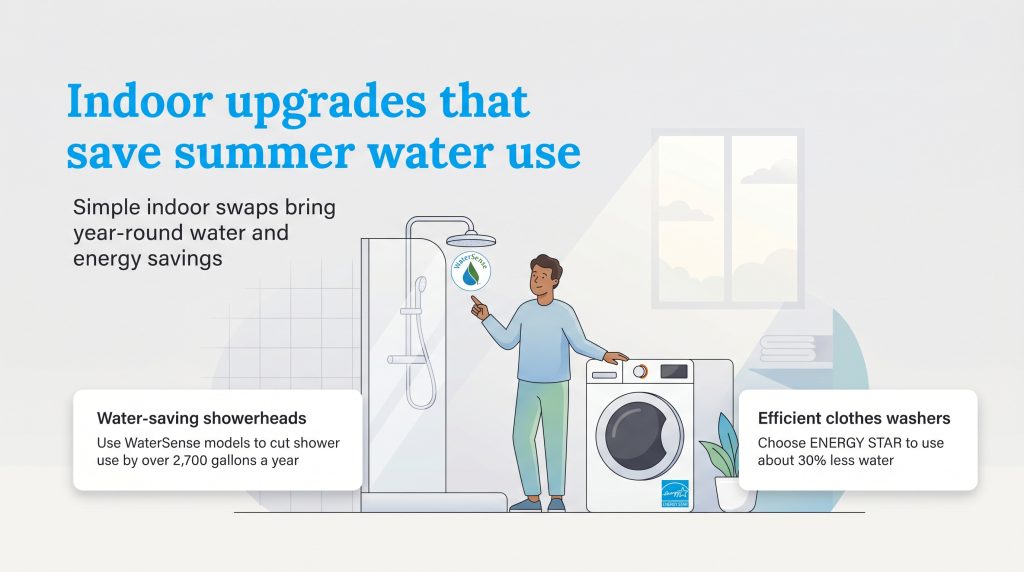
Cooling off with multiple daily showers quickly inflates your utility statement if you rely on outdated hardware. Swapping out old models for high-efficiency plumbing fixtures delivers immediate financial savings without sacrificing water pressure. When shopping for bathroom upgrades, always look for the EPA’s WaterSense label.
These certified products use at least 20% less water than standard models, and replacing a single showerhead can save over 2,700 gallons of water per year. Additionally, upgrading your heavily used summer machines to energy star appliances significantly cuts down on household waste. ENERGY STAR certified clothes washers, for example, use about 20% less energy and 30% less water than traditional models. Review the table below to see how modern upgrades compare to older, outdated fixtures in your home.
| Fixture / Appliance | Standard Outdated Models | WaterSense / Energy Star Models |
|---|---|---|
| Toilet | 3.5 – 7.0 Gallons Per Flush (GPF) | 1.28 Gallons Per Flush (GPF) |
| Showerhead | 2.5+ Gallons Per Minute (GPM) | 2.0 Gallons Per Minute (GPM) or less |
| Dishwasher | 10 – 15 Gallons Per Cycle | 3.5 – 5.0 Gallons Per Cycle |
Preparing Your Home for Peak Drought Season
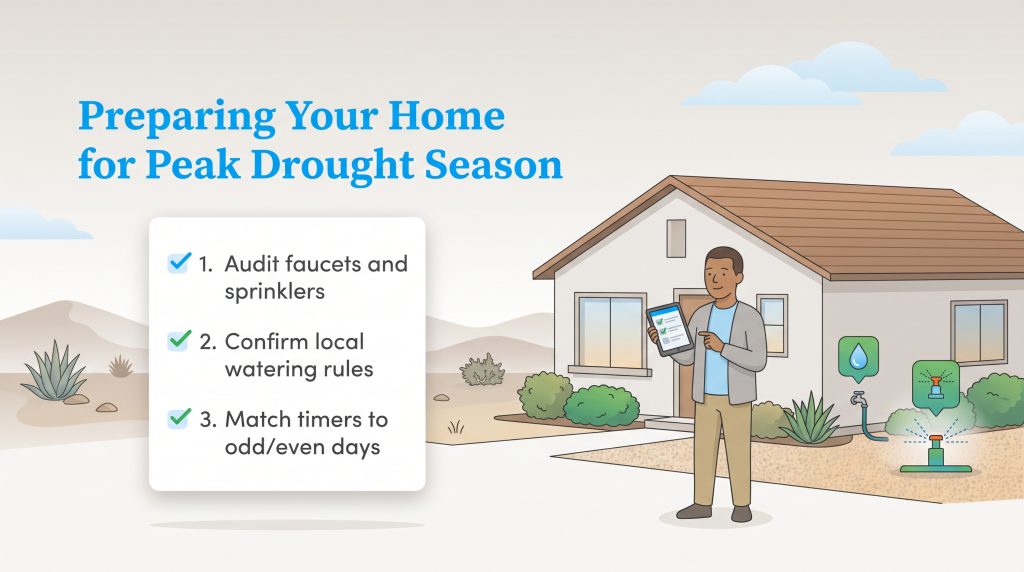
Living in arid regions or drought-prone communities requires an extra layer of vigilance during peak heatwaves. Following community-wide protocols protects the broader infrastructure and prevents severe shortages that impact emergency services. To ensure your household stays compliant and cost-effective, follow this simple three-step checklist to audit your usage before July hits:
- Audit your hardware: Inspect all indoor and outdoor faucets for drips, and check your sprinkler heads for misaligned sprays that waste water on concrete.
- Look up local watering restrictions: Check your municipal utility website to learn your community’s designated watering hours and current drought stage.
- Adhere to odd or even schedules: Adjust your sprinkler timers to perfectly match your required odd/even watering days to avoid hefty municipal fines. If you rent, be sure to review your lease terms or moving guidelines before altering the landscape.
Make Your Summer Water Savings Last Beyond August
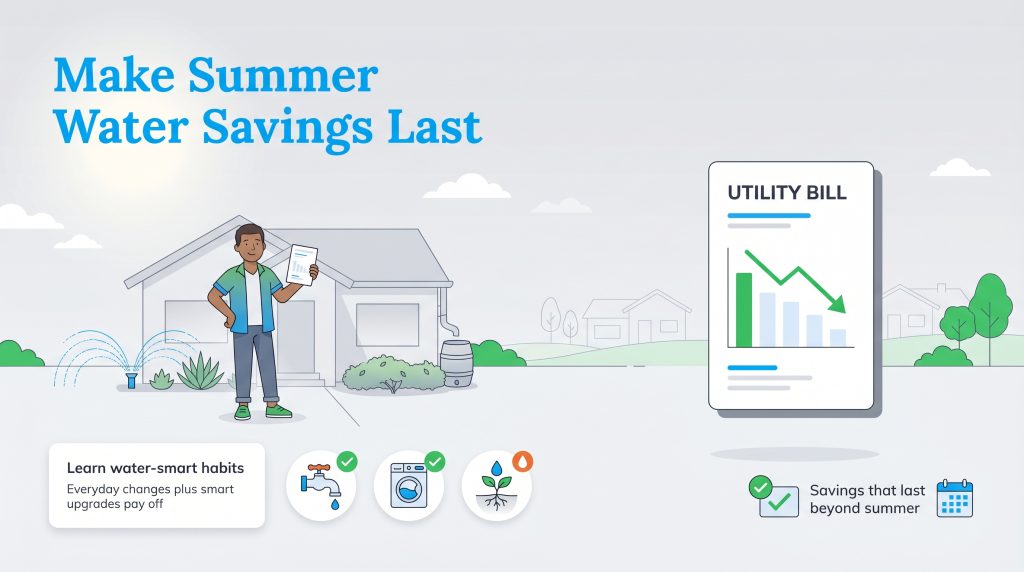
Pairing mindful daily habits with strategic, eco-conscious upgrades creates a powerful defense against seasonal price hikes. Fixing tiny leaks, modernizing your laundry routine, and reevaluating your landscaping choices will completely transform your home’s resource management. Embracing these sustainable adjustments does more than just protect local reservoirs during a heatwave — it structurally lowers your household operating costs for years to come. You will genuinely appreciate the financial relief and peace of mind when that next, much lighter utility bill arrives in your mailbox.
Frequently Asked Questions About Summer Water Conservation
Summer water savings can look different depending on your home, yard, and local restrictions. These answers cover the most common questions homeowners and renters ask when they are trying to lower seasonal water use.
How can I reduce my summer water bill?
What is the best time of day to water the lawn in summer?
How do I check for hidden water leaks in my home?
Do water-saving showerheads actually make a difference?
What is the most eco-conscious alternative to a traditional sprinkler system?
About the Author

LaLeesha has a Masters degree in English and enjoys writing whenever she has the chance. She is passionate about gardening, reducing her carbon footprint, and protecting the environment. She also recently served as President of the Board for City Sprouts (a community garden).

David has been an integral part of some of the biggest utility sites on the internet, including InMyArea.com, HighSpeedInternet.com, BroadbandNow.com, and U.S. News. He brings over 15 years of experience writing about, compiling and analyzing utility data.