
Adopt Eco-Friendly Lawn Maintenance Habits To Keep Your Outdoor Space Thriving Through The Heat Without Driving Up Your Water Bill
Key Takeaways
- Use WaterSense-labeled smart irrigation controllers to adjust watering schedules based on weather, soil conditions, or landscape needs.
- Raise your mower blade during hot months to encourage deeper roots, shade the soil, and reduce moisture loss.
- Add drought-tolerant native plants to create a resilient yard that usually needs less water once established.
Summer heat can be incredibly punishing on your yard and your monthly utility statement, but transforming your outdoor space into a resilient oasis is entirely possible. By adopting a few effective Summer Sustainable Yard Care Tips, you don’t have to choose between a lush green landscape and a cost-effective, environmentally mindful home. Upgrading your routine with smarter watering schedules, strategic mowing, and native plant integrations will drastically reduce resource waste. Whether you want to slash your utility costs or simply maintain a gorgeous, thriving yard through the hottest months of the year, these actionable eco-friendly summer lawn care strategies will help you protect your property and the planet simultaneously.
Why Sustainable Yard Care Matters In The Summer
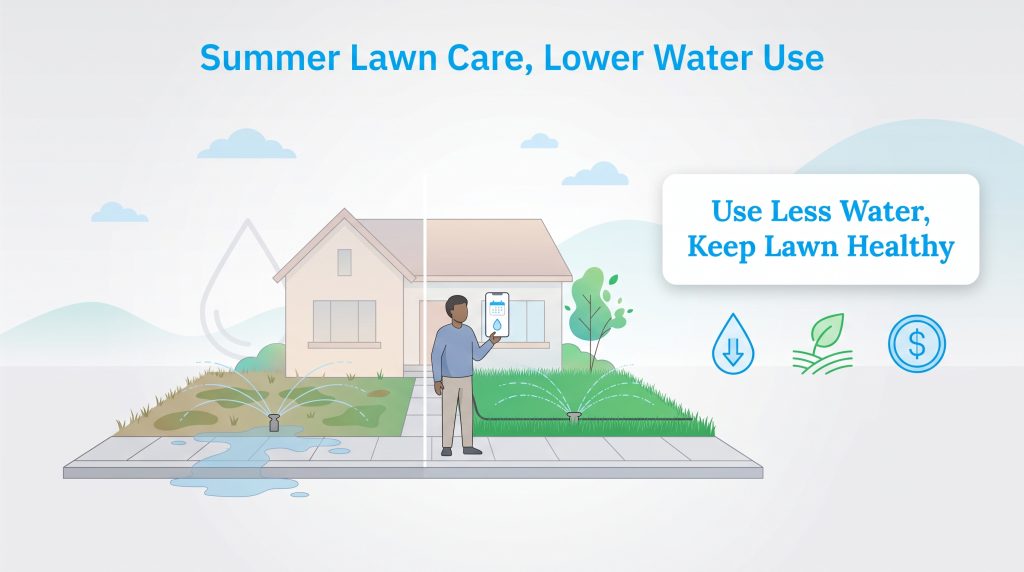
Maintaining a lush green space during July and August takes a heavy toll on natural resources, often translating to a shocking spike in your monthly bills. According to EPA WaterSense outdoor water guidance, outdoor water use accounts for more than 30% of household water use on average, and it can reach about 60% in arid regions. Giving up on your lawn entirely isn’t necessary, though. A dense, healthy turf effectively filters rainwater, prevents soil erosion, and absorbs airborne pollutants. Getting strategic about managing your home’s water consumption outside directly impacts your bottom line inside. Before changing your schedule, always check your city or water utility’s summer watering rules, as many communities limit irrigation during drought conditions.
💸 Money-Saver: EPA WaterSense estimates that replacing a standard clock-based irrigation timer with a WaterSense-labeled controller can save the average home thousands of gallons of water each year. Your dollar savings will depend on your local water rates and how much you currently irrigate.
Smart Summer Water Conservation Tips
We often assume that more water equals a healthier yard, but timing and precise quantity matter much more than sheer volume. Integrating summer water conservation tips prevents expensive waste and actively encourages robust root development.
Implement Early Morning Deep Watering
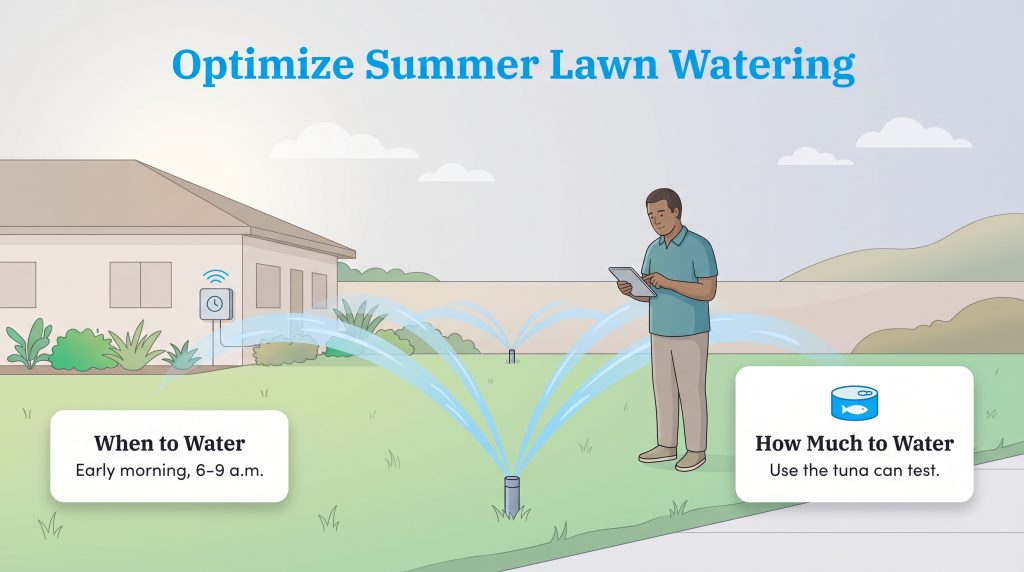
Set your sprinklers to run early in the morning, specifically between 4 a.m. and 8 a.m. Watering before the sun reaches its peak ensures the moisture soaks deep into the soil rather than evaporating rapidly into the hot summer air. Avoid evening watering, as moisture lingering on grass blades overnight creates a breeding ground for fungal diseases. Your grass generally needs exactly 1 inch of water per week, including natural rainfall. To ensure your system is hitting this metric, try the DIY “tuna can test.”
- Place three to five empty tuna cans at varying distances from your sprinkler.
- Run your irrigation system for exactly 15 minutes.
- Measure the depth of the water in each can using a ruler.
- Calculate the average depth, then multiply by four to determine your hourly water output.
Install Rain Barrels And Smart Sprinklers
Capturing free rainwater is one of the smartest ways to slash your utility costs. Following a few summer rain barrel tips when setting up a rain barrel system provides an excellent water reserve for your garden beds when the dry season hits.
- Place the rain barrel on a sturdy, elevated surface (like cinder blocks) to improve water pressure for your hose.
- Connect the diverter directly into your home’s gutter downspout.
- Secure a fine mesh screen over the barrel opening to keep mosquitoes and debris out.
If you rely on an automatic system, an EPA WaterSense-labeled irrigation controller can help modernize how you manage outdoor moisture. Configure your smart sprinkler with these efficient settings:
- Enable the “weather skip” function to automatically pause scheduled watering when rain is in the forecast.
- Input your specific soil type (clay vs. sandy) so the device accurately adjusts absorption rates.
- Turn on the “cycle and soak” setting to break watering sessions into intervals, preventing runoff on sloped or compacted lawns.
Eco-Friendly Summer Lawn Care And Mowing Techniques

Adjusting your mowing habits and reusing yard waste are simple ways to strengthen your turf. Implementing these eco-friendly summer lawn care techniques helps your grass withstand severe heatwaves.
Maximize Grass-Cycling Benefits
You can effortlessly feed your lawn by maximizing grass-cycling benefits in the summer. Grass-cycling simply means leaving your clippings directly on the lawn after mowing instead of bagging them up and throwing them away. Because these fresh clippings consist of roughly 80% water, they act as a natural, hydrating mulch. As they break down rapidly in the summer heat, they return vital moisture and nitrogen straight back to the soil, giving you an entirely free dose of fertilizer. Adopting this method requires no extra equipment — just a shift in habit.
Adjust To Optimal Mowing Heights For Heat Resistance
Heatwaves stress your turf, so how you mow plays a pivotal role in its survival. Resist the urge to scalp the lawn. Command your turf’s resilience by raising your mower blades to leave the grass roughly 3 to 4 inches tall. Taller blades cast tiny shadows over the soil beneath them, which radically reduces surface evaporation and actively blocks sunlight from reaching thirsty weed seeds. As a general summer rule, avoid removing more than one-third of the grass blade at a time.
💡 Pro Tip: Keep your mower blades sharp throughout the season. Dull blades tear the grass rather than cutting it cleanly, which forces the plant to lose moisture rapidly and increases its vulnerability to disease.
Soil Health And Natural Lawn Fertilizers
Knowing where to start with soil and yard upgrades can feel overwhelming, but improving your outdoor efficiency doesn’t have to drain your savings. We put together a simple breakdown to help you prioritize sustainable changes based on budget, effort, and utility-saving potential.
| Sustainable Yard Upgrade | Cost Level | Best For | Utility-Saving Potential |
|---|---|---|---|
| Raise mower height | $0 | Most lawns | Low to moderate |
| Use the tuna can test | $0 | Sprinkler users | Moderate |
| Add mulch | Low | Garden beds and trees | Moderate |
| Install a WaterSense controller | Medium | Automatic irrigation systems | Moderate to high |
| Replace turf with native plants | Medium to high | Dry or high-maintenance areas | High over time |
Execute Core Aeration And Composting
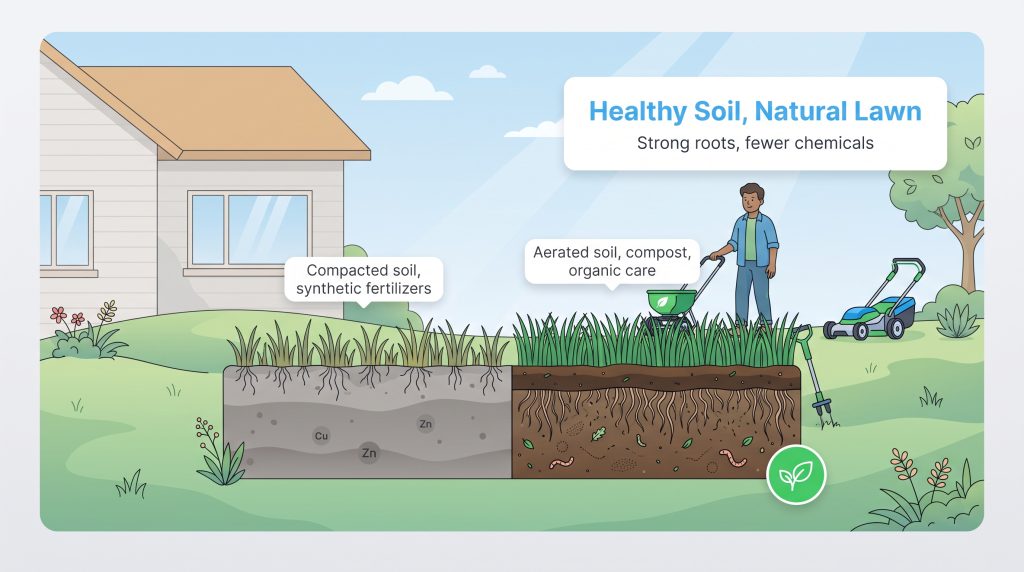
Stop reaching for synthetic lawn foods to keep your yard green. Many commercial synthetic fertilizers contain dangerous heavy metals like copper and zinc. These metals can build up in your soil over time, ultimately washing away and contaminating local groundwater. Instead, command your lawn’s health by executing core aeration — puncturing small holes into compacted earth — followed by top-dressing with organic compost. Following proper summer composting tips ensures your natural lawn fertilizers safely enrich the soil microbiome without harsh chemical runoff.
Executing these soil treatments is the perfect time to evaluate the equipment resting in your garage. Transitioning from noisy, gas-guzzling spreaders and mowers to battery-powered electric tools drastically reduces localized emissions. Understanding how modern, efficient devices impact your overall electric consumption ensures you aren’t just trading one high utility bill for another as you explore energy efficient home improvements.
Apply Organic Weed Control Summer Strategies
A thick, deeply rooted lawn naturally chokes out invading weeds, proving that good maintenance is your best defense. When invaders do pop up, skip the harsh synthetic herbicides. Spot-pulling broadleaf weeds manually is highly effective if you catch them early. Corn gluten meal also acts as a fantastic organic weed control summer pre-emergent when applied at the correct time. If you are exploring deeper sustainable living practices indoors and out, ditching toxic pesticides provides immediate peace of mind for your family and pets.
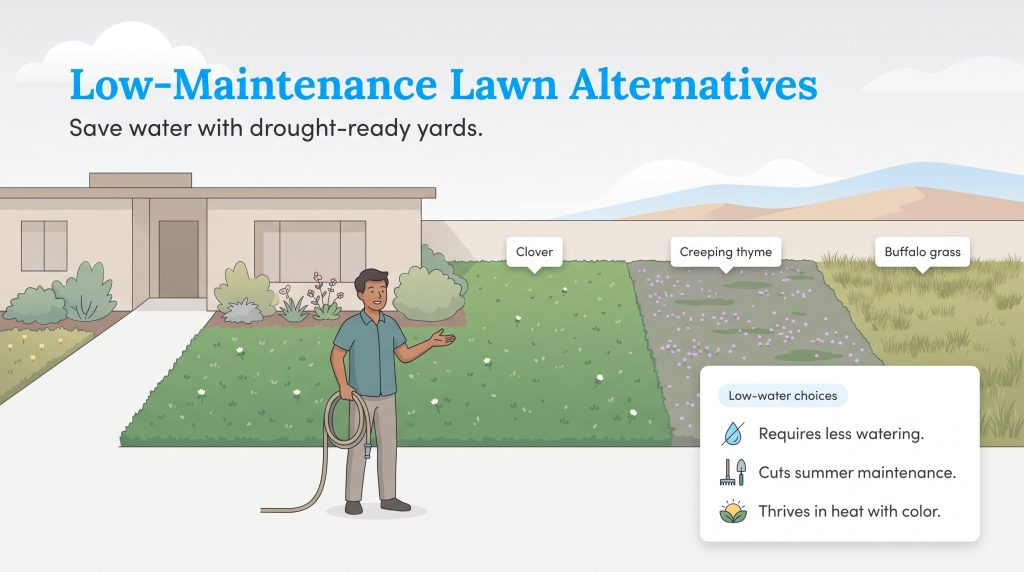
Low-Maintenance Lawn Alternatives
If you’re tired of battling the heat, it’s time to rethink the traditional grassy rectangle. Thirsty turf requires endless watering and maintenance. Exploring low-maintenance lawn alternatives provides fantastic drought-resistant yard maintenance options:
- Clover: Fixes nitrogen in the soil naturally and stays vibrant green with minimal water.
- Creeping Thyme: Creates a beautiful, low-growing mat that tolerates light foot traffic and emits a pleasant fragrance.
- Buffalo Grass: A native, warm-season grass that requires a mere fraction of the water standard fescue or Kentucky bluegrass needs.
Integrate Xeriscaping Summer Tips
Embracing xeriscaping greatly diminishes how much supplemental irrigation you have to provide. Xeriscaping doesn’t mean turning your yard into a barren gravel lot. Use this 3-step mini-guide to design your landscape:
- Map Your Zones: Identify the hot, dry spots in your yard and group plants with similar low-water needs together.
- Lay the Foundation: Remove thirsty turf and apply a 3-inch layer of organic mulch or decorative rocks to lock in soil moisture.
- Plant Strategically: Introduce low-water succulents or regional drought-resistant native plants that naturally thrive in your local climate.
As you implement these xeriscaping summer tips, remember that bare soil between your new succulents can attract unwanted sprouts. Maintaining your drought-resistant beds still requires diligent organic weed control — like manual spot-pulling — to keep the landscape pristine and weed-free.
Transition To Native Plant Gardening Summer
When researching energy-efficient landscaping strategies, applying summer sustainable gardening tips and prioritizing native plant upgrades should sit at the top of your priority list. Native flora naturally thrives in your specific climate and usually needs less supplemental water, fertilizer, and maintenance once established.
🌱 Eco Edge: Choosing native plants does more than save water; it provides a vital sanctuary for local pollinators like bees and butterflies that struggle to find resources during intense heatwaves.
- Succulents and cacti (perfect for arid, sun-drenched environments)
- Ornamental grasses (excellent for adding visual texture and deep-root resilience)
- Drought-tolerant perennials (such as lavender, coneflower, or Russian sage for seasonal color)
Essential Summer Landscaping Checklist
Keeping track of seasonal yard chores ensures your sustainable landscaping ideas actually succeed. Follow this simple checklist to stay ahead of the sweltering heat.
| Early Summer | Mid-Summer | Late Summer |
|---|---|---|
| Adjust sprinkler timers for heat | Apply organic compost | Begin core aeration |
| Install a rain barrel system | Inspect irrigation for leaks | Plan autumn native plant additions |
| Raise mower blade to 4 inches | Spot-pull weeds manually | Reduce watering frequency as temps cool |
Transitioning Your Sustainable Yard For Autumn
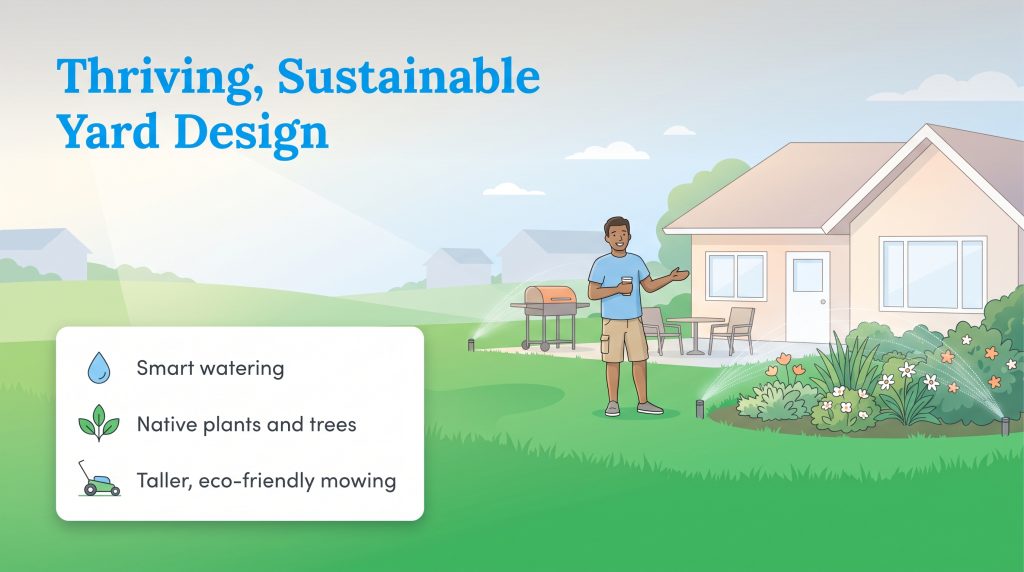
Cultivating a gorgeous outdoor living space doesn’t mean you have to deal with high utility costs or cause environmental strain. By tweaking how you water, rethinking your mowing heights, and integrating native vegetation, you build a resilient ecosystem right outside your front door. Implementing these practical adjustments allows you to kick back and actually enjoy the warm weather. You can confidently host those barbecues knowing your yard is as sustainable and efficient as it is beautiful.
Frequently Asked Questions About Summer Sustainable Yard Care
Summer yard care can get confusing when intense heat, water restrictions, and rising utility costs collide. These answers cover the most common questions homeowners have about keeping a yard healthy without wasting resources.
How often should I water my lawn during a summer heatwave?
What is grasscycling and why is it beneficial?
Are smart sprinkler controllers worth the investment?
What are the most drought-resistant plants for summer landscaping?
How can I naturally control weeds in my grass?
Does cutting grass shorter save water?
Should I follow local watering restrictions even if my lawn looks dry?
Is xeriscaping the same as using only rocks and cactus?
Do native plants need watering in the first year?
What is the best time of day to water my lawn in the summer?
How do I keep my grass green without using chemical fertilizers?
Does leaving grass clippings on the lawn cause thatch?
About the Author

LaLeesha has a Masters degree in English and enjoys writing whenever she has the chance. She is passionate about gardening, reducing her carbon footprint, and protecting the environment. She also recently served as President of the Board for City Sprouts (a community garden).