

Use These Spring Composting Tips to Revive Your Winter Bin and Reduce Household Waste
Key Takeaways
- Restarting your compost bin in spring begins with harvesting mature compost from the bottom of the bin before mixing and balancing your remaining carbon and nitrogen materials.
- Maintaining a 2:1 browns to greens compost ratio prevents soggy piles and neutralizes unpleasant odors after the winter thaw.
- Using your finished compost helps reduce your household waste footprint and lowers the need for store-bought fertilizers or excessive watering.
As the winter freeze yields to the spring thaw, your garden is finally ready to wake up — and so is your organic waste. We know managing seasonal yard chores can feel overwhelming, but utilizing a few reliable Spring Tips for Composting makes the transition much easier. Reviving your outdoor bin right now not only enriches your upcoming flower beds, it also actively lowers your household waste footprint all season long. Let’s look at how to restart your compost bin after winter so you can reap the immediate environmental and financial rewards before transitioning to summer composting tips for the busy growing season.
Why Waking Up Your Compost Pile in Spring Matters
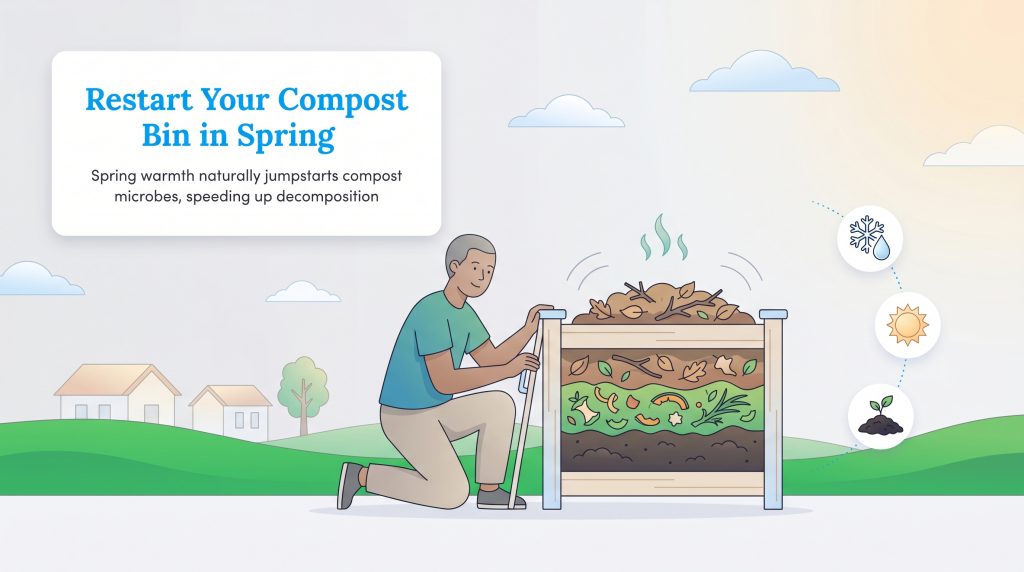
Understanding the science behind waking up your compost pile and refreshing a dormant compost bin comes down to a little basic biology. Over the long winter months, freezing temperatures naturally pause the microbial activity that turns your kitchen scraps into soil. However, those same freeze-thaw cycles actually work in your favor by expanding the water inside organic scraps, shattering cell walls and helping break down tougher fibrous materials. Once spring temperatures steadily rise and the stronger sun hits your pile, dormant microbes begin to multiply rapidly. Specifically, this warmth awakens thermophilic bacteria, which are heat-loving microorganisms that thrive between 110 and 160 degrees Fahrenheit and break down tough organic matter at top speed. This natural biological jumpstart makes spring the optimal window to refresh your pile, especially if you’re in the middle of evaluating your sustainable living habits for a brand new growing season. Taking full advantage of the warming weather significantly speeds up decomposition, ensuring you have rich, loamy soil ready for summer planting.
Eco Edge: Restarting your compost bin early in the season successfully diverts heavy organic waste from local landfills, which actively helps lower harmful municipal methane emissions.
7 Essential Spring Tips for Composting
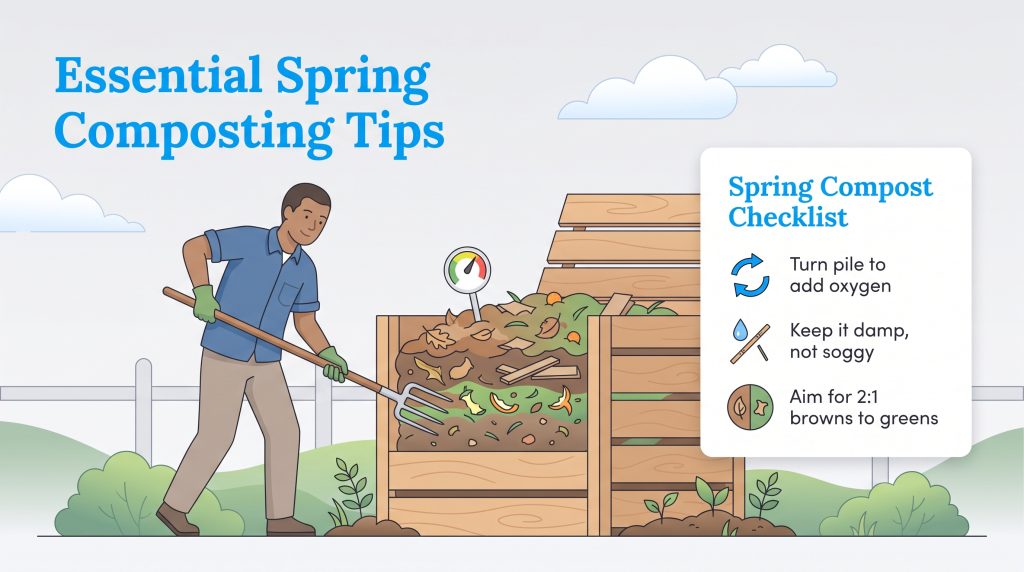
Navigating the messiness of a recently thawed waste pile is usually the least glamorous part of seasonal yard work. Still, establishing a reliable spring maintenance routine is crucial before you start tossing in fresh kitchen scraps. A healthy, active pile in the spring should smell earthy, not sour, and look like dark, crumbly dirt. Grab your favorite pair of sturdy gardening gloves and follow these seven targeted steps to get your bin cranking again.
1. Harvest Mature Compost From the Bottom First
Before you start mixing up your winter pile, always inspect the very bottom of your bin. Even though microbial activity slows down significantly during freezing weather, the oldest material resting at the base has likely spent months maturing into dark, crumbly, soil-like humus. Harvesting mature compost in spring before you aerate prevents you from accidentally blending this finished “black gold” back into raw, undecomposed kitchen scraps from January.
If your stationary bin features a lower access hatch, simply slide it open and scoop out the finished layer with a hand trowel or flat shovel. If you use an open heap or a single-chamber bin, fork the uncomposted top layers aside onto a tarp to reach the rich soil underneath. Spread this nutrient-dense compost directly over your raised beds and bare garden soil right away to suppress early spring weeds and boost natural moisture retention.
2. Turn the Pile to Introduce Oxygen
Once you have checked for and harvested any finished compost at the very bottom of the bin, turning compost in spring is a non-negotiable step for healthy soil development. Winter snow and ice pack materials down tightly, squeezing out the air pockets your beneficial bacteria and microbes need to breathe. Grab a sturdy pitchfork and mix the remaining pile from the bottom up, breaking apart any compacted layers of matted leaves or slimy food scraps. If you work with a narrow, enclosed plastic bin where swinging a pitchfork feels awkward, use a wing-tipped or corkscrew compost aerator tool to easily pull bottom materials upward. Proper aeration from the ground up prevents the base from turning into an airless, smelly sludge as you stack heavier, wetter greens on top.
3. Manage Moisture Levels and Insulate Against Cold Snaps
Heavy downpours frequently turn dormant outdoor heaps into waterlogged messes. It is critical to monitor your compost moisture level throughout the rainy season so the pile doesn’t suffocate. Ideally, your organic matter should feel like a wrung-out damp sponge — moist to the touch without dripping excess water when squeezed. If your bin gets overly saturated, mix in extra dry browns like shredded cardboard or straw to soak up the puddle. Because early spring weather fluctuates wildly between warm sunny afternoons and freezing nights, you also need to protect your microbes from sudden temperature drops. Add a thick top insulating layer of dry straw, autumn leaves, or flat cardboard directly over your heap, and secure a heavy tarp on top. This dual barrier shields your newly turned pile from relentless spring showers while trapping vital heat to protect your thermophilic bacteria from unexpected nighttime frosts.
4. Rebalance Your Browns to Greens Ratio
Building a thriving, odor-free pile means mastering your browns to greens compost ratio before dumping in fresh spring waste. Instead of getting bogged down in complex soil chemistry, focus on properly layering your basic carbon and nitrogen materials. To kickstart decomposition after the winter thaw, aim for a 2:1 carbon-to-nitrogen ratio by volume. “Browns” act as your carbon source, providing structural bulk and necessary airflow, while “greens” deliver the moist nitrogen needed to heat the pile up. Striking this balance keeps your heap smelling like a forest floor rather than a garbage can.
- Stockpile your dry browns early: Bag up extra dry autumn leaves, shredded office paper, and broken-down cardboard boxes in a dry garage or shed now so you have plenty of carbon “bulking material” ready when nitrogen-heavy spring grass clippings and weeds become abundant.
To make your daily routine even easier, keep our handy reference chart nearby when sorting your kitchen and yard waste.
| Material Type | Examples | Purpose |
|---|---|---|
| Browns (Carbon) | Dry autumn leaves, non-glossy newsprint, cardboard rolls, straw, untreated sawdust or wood chips | Provides structural bulk, aeration, and carbon for microbial energy. |
| Greens (Nitrogen) | Coffee grounds, fruit peels, vegetable peelings, fresh grass clippings, chicken or herbivore manure | Supplies essential nitrogen and moisture to heat the pile and feed bacteria. |
5. Supercharge Decomposition With Natural Compost Activators
If your overwintered pile consists mostly of dry twigs and stubborn oak leaves, it might need an extra nudge to get cooking. You don’t need to waste money on synthetic store-bought chemical starters. Instead, you can jumpstart a sluggish, carbon-heavy winter pile using natural compost activators that flood the bin with concentrated nitrogen and beneficial microbes. Dig a small hole in the center of your pile, mix in one of these organic accelerators, and bury it under a layer of browns:
- Fresh grass clippings: The clippings from your very first spring lawn mow are packed with nitrogen and moisture that rapidly heat up a cold bin.
- Herbivore manure: Rotted chicken, horse, rabbit, or cow manure mixed with soiled straw bedding introduces massive colonies of active bacteria.
- Alfalfa meal or blood meal: A few cups of organic alfalfa pellets or blood meal watered into the pile provide an immediate, high-protein feast for dormant microorganisms.
- Bokashi fermented food scraps: Burying pre-fermented kitchen waste from an indoor Bokashi bucket injects powerhouse beneficial fungi directly into the core of your outdoor heap.
Avoid Contamination: Never use manure from livestock fed with herbicide-treated hay (such as Aminopyralid or Clopyralid) or recent worming and antibiotic medications, as these persistent chemicals survive the composting process and will deform or kill your garden plants.
6. Utilize Spring Yard Waste Safely (And Protect Wildlife)
A thorough seasonal reset isn’t limited exclusively to kitchen scraps. Complementing your daily recycling routine by correctly managing spring yard waste composting keeps unnecessary yard debris out of your local landfill. When it comes to outdoor cleanup, remember that particle size dictates decomposition speed. Chop up pruned tree branches, ornamental grasses, and early yard debris into small, two-inch pieces with pruners or run them over with a lawnmower before tossing them in. Smaller fragments provide a much larger surface area for hungry microbes, accelerating the biological breakdown process. Keep diseased plants or heavily insect-infested clippings out of your pile, as most backyard setups don’t get consistently hot enough to kill harmful fungal pathogens.
Before you aggressively clear your yard and disturb your open compost heap, take a moment to check for wildlife. Delay cutting back dead hollow stems, flower stalks, and undisturbed leaf litter in your garden beds until daytime temperatures consistently stabilize above 50 degrees Fahrenheit. Native bees, fireflies, and other beneficial garden insects rely on those hollow stalks to overwinter, while toads and small mammals often nest inside warm, dormant compost bins until mid-spring.
7. Monitor Microbial Activity and Internal Temperature
Once you balance your inputs, add an activator, and aerate the pile, the internal temperature should start climbing within days. Monitoring this heat is the easiest way to confirm that your thermophilic bacteria compost cycle has officially resumed. A thriving pile can reach internal temperatures between 130 and 150 degrees Fahrenheit. When you open the lid on a cool spring morning, you may even see steam rising from the center. If the core still feels cold after two weeks, your microbes either need another dose of nitrogen-rich greens, a light misting of water, or a thorough turning to bring the outer edges into the warm center.
4-Week Spring Compost Schedule for Beginners
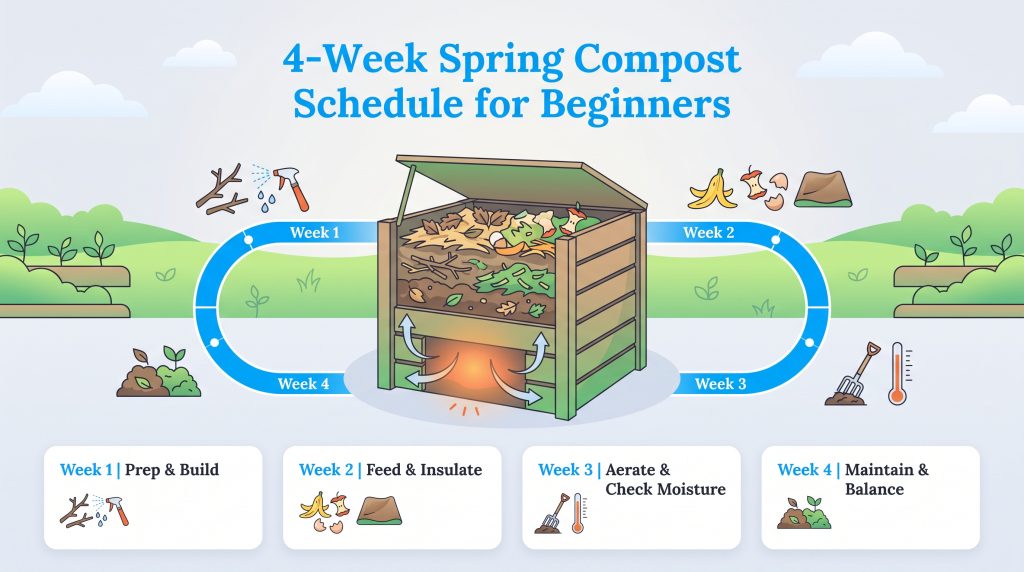
Getting back into the rhythm of outdoor yard maintenance is much easier when you break the workload down into bite-sized weekly tasks. Following a structured spring compost schedule prevents you from dumping too much wet waste into a sluggish bin all at once. Use this four-week startup routine to transition your pile from winter dormancy to peak summer production.
| Timeline | Primary Focus | Action Steps |
|---|---|---|
| Week 1 | Prep & Build | Harvest mature bottom compost for garden beds; lay a three-inch base of small twigs or straw for bottom airflow; layer two parts dry browns to one part fresh greens until the pile reaches at least three cubic feet; mist lightly with water. |
| Week 2 | Feed & Insulate | Add collected kitchen scraps and chopped spring yard trimmings; mix in a natural compost activator; bury food waste deep in the center under a thick layer of browns; cover the pile with straw and a tarp to trap heat. |
| Week 3 | Aerate & Check Moisture | Turn the pile thoroughly by moving outer edges into the center; perform the “damp sponge” squeeze test to check moisture; check the internal core temperature with a long-stemmed soil thermometer. |
| Week 4 | Maintain & Balance | Continue adding daily kitchen scraps with a strict 2:1 brown-to-green ratio; break up any matted layers of fresh grass clippings with a pitchfork; turn the pile every two to three weeks moving forward. |
Essential Tools for Spring Composting
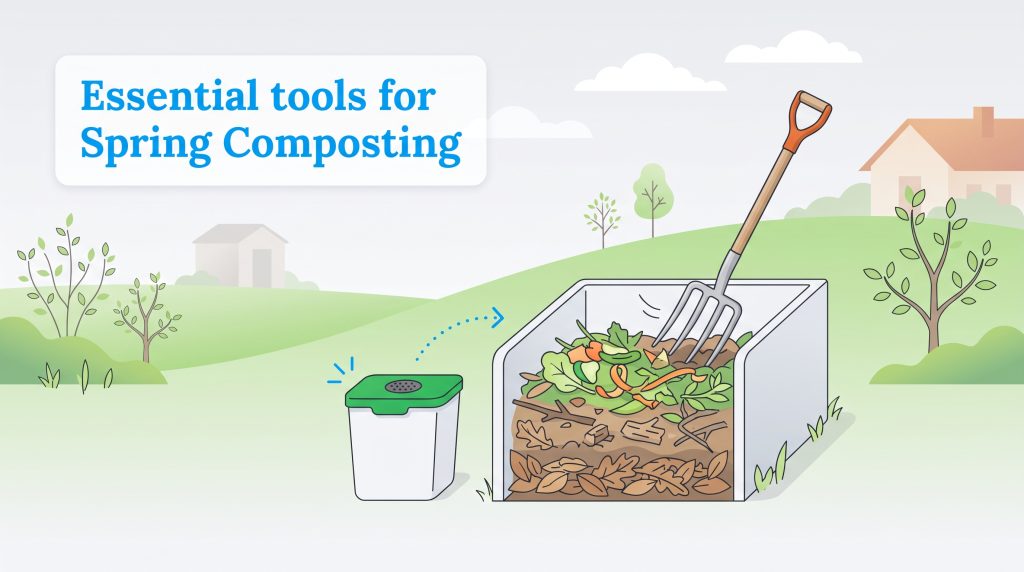
Establishing an efficient workflow is much easier when you have the right equipment on hand. Having a few dedicated tools ready for the spring thaw not only speeds up your yard chores, it also prevents a messy, back-breaking experience. Whether you’re starting a brand new pile or upgrading your current setup, consider adding these six essential tools to your gardening shed:
- Sturdy compost pitchfork: A heavy-duty, four- or five-tined pitchfork is essential for turning heavy, wet open piles. It easily pierces through compacted layers of matted winter leaves far better than a flat garden shovel.
- Countertop kitchen collection caddy: Simplify your daily food waste routine by keeping a small, odor-blocking caddy on your counter. Emptying this indoor container into your outdoor bin every two to three days keeps annoying fruit flies out of your kitchen.
- Heavy waterproof tarp: Protecting your outdoor heap from relentless spring downpours is crucial. A thick, durable tarp fastened over the pile prevents it from becoming waterlogged while retaining vital heat during unexpected cold snaps.
- Long-stemmed soil thermometer: A 20-inch compost thermometer allows you to accurately monitor internal core temperatures, letting you know exactly when microbial activity is peaking and when the pile needs to be turned again.
- Compost aerator or crank tool: Specifically useful for enclosed plastic bins and tumblers where a full-sized pitchfork won’t fit, a corkscrew crank or winged aerator tool lets you plunge deep into the pile and pull bottom materials up with minimal effort.
- Compost sifter or screen: A quarter-inch wire mesh sifter frame sits neatly over your wheelbarrow, allowing you to quickly separate undecomposed woody twigs, fruit pits, and walnut shells from your finished spring compost before top-dressing your lawn.
Pro Tip: Invest in a small countertop kitchen bin featuring a replaceable charcoal filter to completely eliminate indoor odors before you transfer your food scraps outside.
Spring Compost Troubleshooting Guide
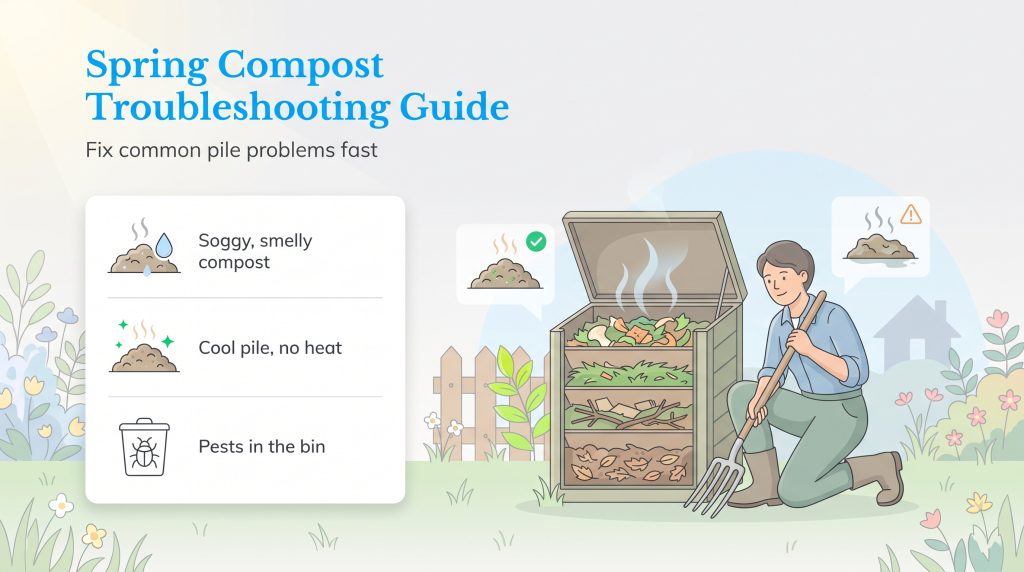
Even the most experienced gardeners run into occasional hiccups when executing their seasonal maintenance. The transition from freezing temperatures to wet, warmer days often disrupts the delicate ecosystem inside your bin. If you need quick soggy compost troubleshooting or want to eliminate an unpleasant anaerobic smell, use this reference table to diagnose the problem and get decomposition back on track.
| Problem | Cause | Solution |
|---|---|---|
| Soggy pile | Compaction from heavy spring rains and excess greens. | Add dry browns (shredded cardboard, dry leaves) and deeply turn the pile to introduce oxygen. |
| Strong ammonia odor | Too much nitrogen or poor aeration causing an anaerobic environment. | Turn the pile immediately and aggressively blend in extra carbon materials to absorb the excess nitrogen. |
| Pile lacks heat | Insufficient nitrogen, pile is too small, or too much cold exposure. | Bury fresh greens deep in the center, ensure the pile is at least 3 cubic feet, and cover with a tarp. |
| Pests invading the bin | Exposed food scraps or adding prohibited items (meat/dairy). | Bury fresh greens deep in the center, cover with a thick layer of browns, and secure the bin lid. |
| Matted, slimy layers | Dumping thick layers of wet spring grass clippings all at once. | Break apart clumps with a pitchfork and mix thoroughly with a 2:1 ratio of bulky dry browns like wood chips or shredded cardboard. |
How Composting Reduces Home Utility Costs
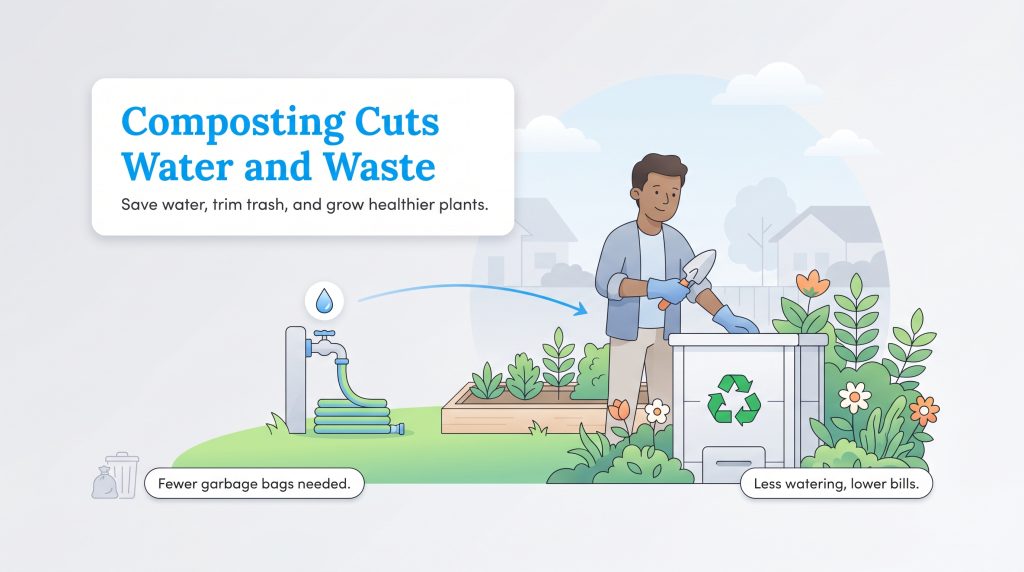
We firmly believe that eco-conscious habits should also directly benefit your household budget. When you regularly amend your garden beds with rich organic matter harvested in the spring, the soil’s natural water retention improves dramatically. According to the USDA Natural Resources Conservation Service, every 1% increase in soil organic matter can help soil hold up to 20,000 gallons of additional water per acre. Acting like a giant underground sponge, compost-enriched soil keeps moisture locked right around plant roots instead of letting it evaporate or run off into the street. This remarkable water retention means you won’t have to run your garden hose or sprinkler system nearly as often, actively lowering your municipal water bills during the scorching summer months.
Beyond water savings, reviving your outdoor bin cuts down on indoor utility wear and tear. Tossing vegetable peelings and coffee grounds into a compost caddy instead of running your under-sink garbage disposal saves both electricity and water while preventing costly kitchen pipe clogs. Buying fewer plastic trash bags — and potentially qualifying for a smaller, cheaper municipal waste bin in cities with “Pay-As-You-Throw” trash collection programs — adds another financial perk when you divert heavy, wet food scraps and spring yard trimmings away from the curb.
Money-Saver: Using your homemade compost greatly reduces the need for expensive synthetic garden fertilizers, keeping more of your hard-earned money safely inside your wallet.
Preparing for the Summer Growing Season
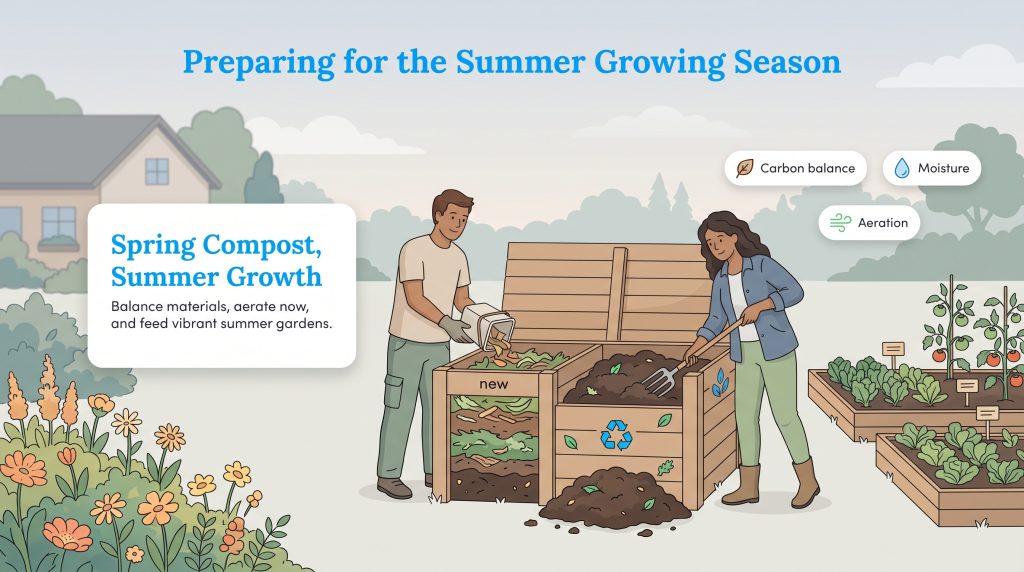
Wrapping up your spring transition process early sets you up for a productive, low-stress growing season. By harvesting your overwintered humus first, balancing your carbon inputs, managing moisture, and thoroughly aerating the damp pile now, you reset your entire organic waste management system. The rich soil amendment you pull from your bin this spring forms the foundation for strong root systems in your summer vegetable gardens and flower beds. As the summer heat approaches, simply stick to your daily kitchen scraps routine and review our summer sustainable gardening guide to keep your landscape thriving. By utilizing your compost correctly, you directly support the federal guidelines for home composting. Enjoy the tangible rewards of a lush backyard while running a more energy-saving, eco-conscious home.
Frequently Asked Questions About Spring Composting
Should I add water to my compost bin in the spring?
How do I fix a soggy compost pile after heavy spring rains?
Is it safe to compost early spring grass clippings?
How long does it take to make finished compost in the spring?
Can I compost weeds pulled from my spring garden?
Can I add fireplace wood ash to my spring compost bin?
What is the best natural activator to wake up a dormant compost pile?
About the Author

LaLeesha has a Masters degree in English and enjoys writing whenever she has the chance. She is passionate about gardening, reducing her carbon footprint, and protecting the environment. She also recently served as President of the Board for City Sprouts (a community garden).

David has been an integral part of some of the biggest utility sites on the internet, including InMyArea.com, HighSpeedInternet.com, BroadbandNow.com, and U.S. News. He brings over 15 years of experience writing about, compiling and analyzing utility data.