

Simple Strategies to Reduce Waste and Keep Your Recycling Bin Contamination-Free
Key Takeaways
- Clean and dry your recyclables to prevent food residue from contaminating the entire bin.
- Never bag your recyclables in plastic liners, as they can tangle in sorting machinery.
- Check local guidelines since accepted materials vary significantly by city and provider.
Mastering proper recycling tips is one of the most effective ways to streamline your household waste management, especially when moving into a new home. Tossing unverified materials into your bin causes severe recycling contamination, which heavily damages local sorting machinery and drives up your community’s municipal utility costs. By learning how to decode plastic numbers, properly prepare materials, and establish an organized indoor sorting system, you can keep your local waste facilities running efficiently and minimize your environmental footprint.
Why Proper Recycling Matters Now More Than Ever
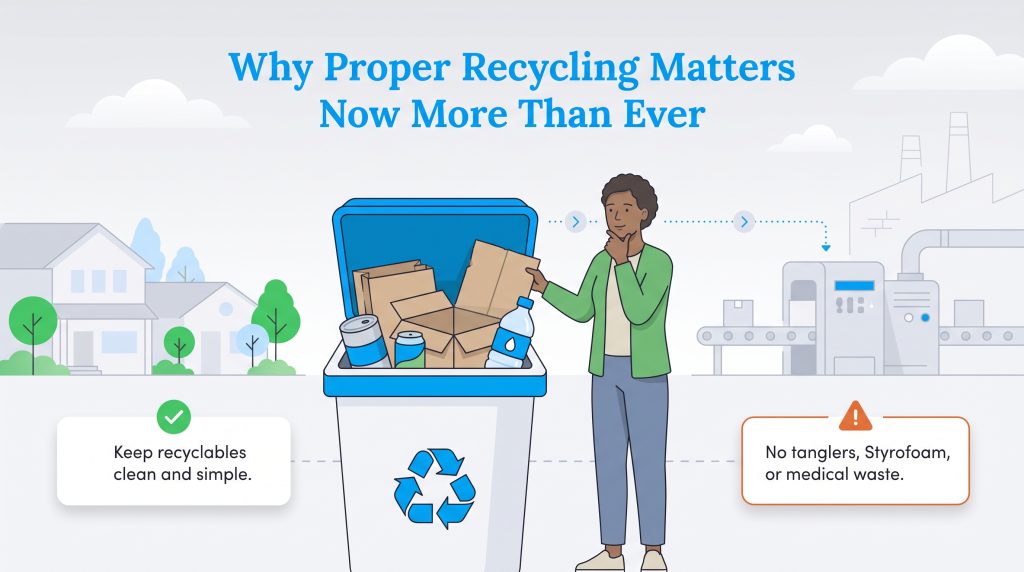
Establishing smart recycling habits early directly affects your monthly household expenses and local infrastructure. When entire neighborhoods throw the wrong materials into their curbside bins, waste management companies are forced to spend millions repairing jammed machinery and rerouting contaminated bales to landfills. These massive operational costs eventually trickle down to homeowners through increased municipal utility fees.
Beyond the financial impact, maintaining a clean recycling stream ensures that valuable commodities like aluminum, cardboard, and rigid plastics are successfully repurposed. Taking a few extra seconds to follow the established rules guarantees your everyday household efforts translate into real, measurable community benefits.
The Golden Rules of Curbside Recycling
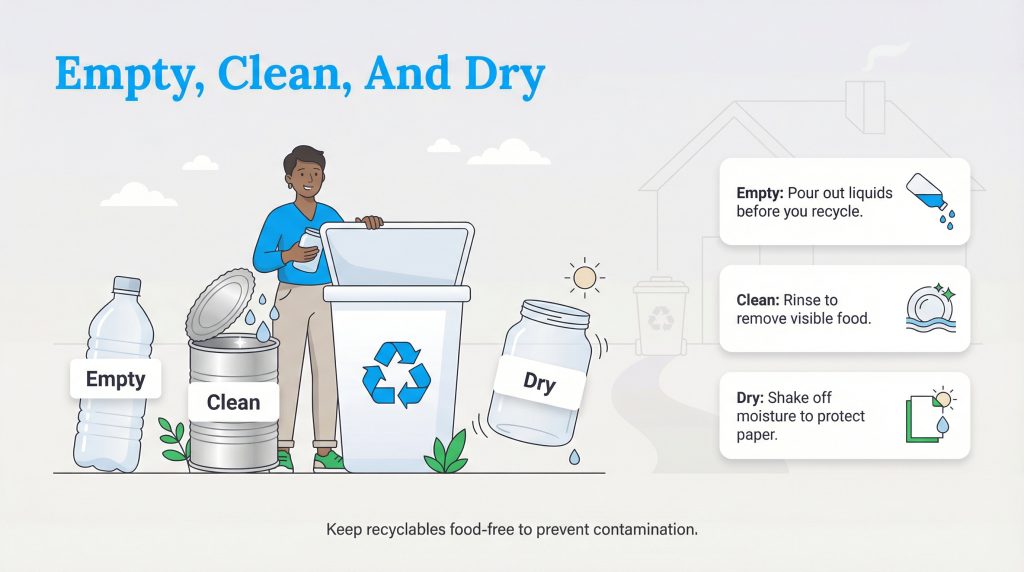
Mastering how to recycle properly at home requires total commitment to a few non-negotiable guidelines. Following these strict baseline rules prevents cross-contamination and actively protects sanitation workers from handling dangerous or decaying materials on the sorting line.
- Follow the Empty, Clean, and Dry mandate: You must remove all food residue and liquid from your containers. Moisture and grease instantly ruin surrounding paper fibers, turning a valuable batch of cardboard into landfill waste.
- Never bag your recyclables: Tossing your paper and plastic into a plastic garbage bag is the fastest way to get your recycling thrown in the trash. Do not bag your items. Workers do not have the time or safety clearance to rip open mystery bags on a fast-moving conveyor belt.
- Break down your cardboard boxes: Flatten all delivery and moving boxes completely. This maximizes bin space and allows your municipal collection trucks to haul heavier, more efficient loads through your neighborhood.
- Keep 3D shapes intact: Avoid crushing your plastic bottles and aluminum cans. Automated optical scanners and sorting screens rely on their natural shape to successfully separate them from flat paper products.
💡 Pro Tip: You do not need to run your containers through a full dishwasher cycle. A quick rinse with warm water to remove visible food particles is perfectly sufficient to meet the empty, clean, and dry requirement.
Decoding Plastic Recycling Numbers
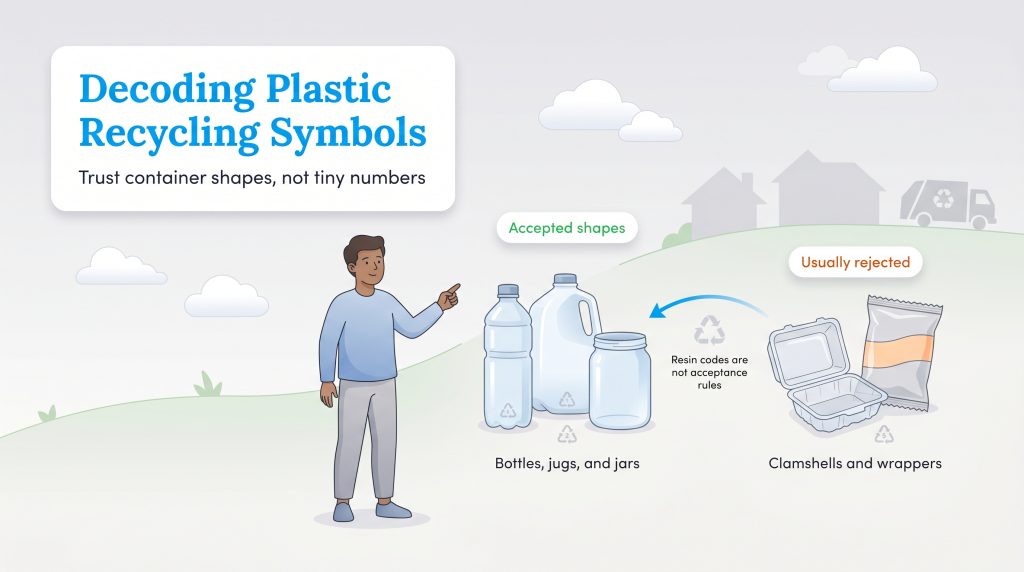
Many homeowners assume that seeing the chasing arrows symbol guarantees an item belongs in the curbside bin. Unfortunately, that familiar triangle only identifies the specific chemical resin code used to manufacture the product, not its actual recyclability. Utilizing a reliable plastic recycling numbers guide helps you decode these confusing symbols and sort your waste accurately.
While resins labeled #1 and #2 are universally accepted by almost all local haulers, the higher numbers frequently require specialized drop-off facilities. For a deeper dive into specific materials, the EPA offers valuable resources on how to recycle common recyclables properly. Refer to the table below to quickly identify common household plastics and evaluate their general curbside eligibility.
| Plastic # | Common Items | Recyclable Curbside? |
|---|---|---|
| 1 – PETE | Water bottles, soda bottles, peanut butter jars | Yes |
| 2 – HDPE | Milk jugs, laundry detergent bottles, shampoo bottles | Yes |
| 3 – PVC | Plumbing pipes, vinyl siding, medical tubing | No |
| 4 – LDPE | Plastic grocery bags, bread bags, bubble wrap | Check Local (Drop-off only) |
| 5 – PP | Yogurt containers, syrup bottles, medicine bottles | Check Local |
| 6 – PS | Styrofoam cups, takeout containers, packing peanuts | No |
| 7 – Other | Sunglasses, computer cases, large water cooler jugs | No |
How to Stop Wishcycling and Reduce Contamination
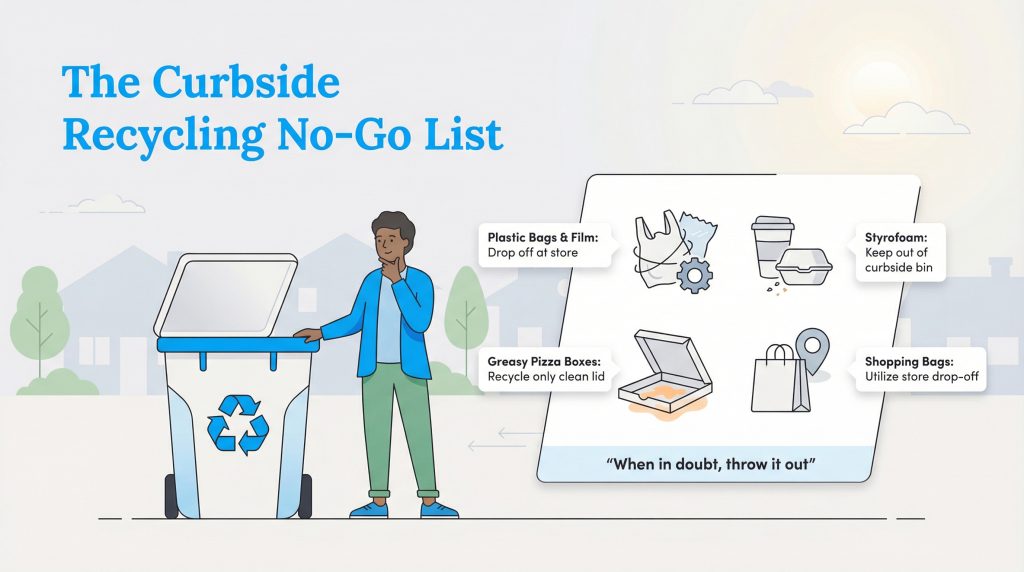
Wishcycling is the well-intentioned but destructive habit of tossing unverified items into your bin, hoping they somehow get recycled. Instead of helping the planet, these non-recyclable materials contaminate good batches and severely clog mechanical sorting equipment. If you want to run a zero waste home successfully, you must immediately eliminate the following items from your curbside cart:
- Greasy pizza boxes: Tear off and discard the oil-soaked bottom halves of your pizza boxes in the trash, but confidently recycle the clean, untouched cardboard tops.
- Plastic grocery bags: Bundle clean, dry grocery bags tightly and take them to specialized retail drop-off locations at your local grocery store instead of throwing them curbside.
- Tanglers (hoses, wires, cords): Put garden hoses, extension cords, and string lights straight into the garbage. These items wrap violently around facility sorting gears and force entire plants to shut down for manual repairs.
🚩 Heads Up: Glass recycling rules vary wildly by municipality. Some cities confidently accept glass jars at the curb, while others strictly forbid them to prevent dangerous breakage. Always check your local hauler’s website first.
Familiarizing yourself with the exact materials your city rejects is critical. When in doubt, throw it out. It is always better to send one confusing item to the landfill than to risk contaminating an entire truckload of clean recyclables.
Handling Hard-to-Recycle Items (E-Waste, Batteries, and Textiles)
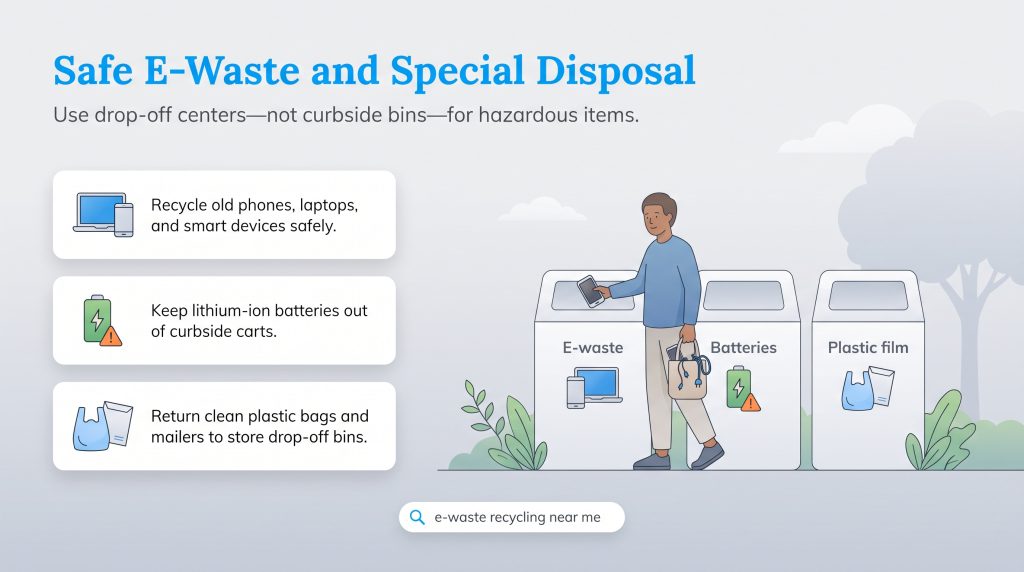
Safely disposing of specialized waste must be a core component of your home safety plan. As we increasingly rely on smart home devices, understanding how to manage hazardous electronics correctly prevents dangerous, costly facility fires. You can easily find a drop-off location designed for hazardous waste by using trusted national directories.
- Isolate volatile lithium-ion batteries: Keep rechargeable batteries far away from standard bins. They easily spark and cause dangerous, fast-moving fires when crushed in collection trucks. Use retail take-back programs at major hardware stores.
- Manage e-waste responsibly: Locate specialized municipal drop-off centers or mail-in programs that safely dismantle old cell phones, laptops, and obsolete smart home devices.
- Donate or recycle old textiles: Never throw old clothing or worn-out bed sheets in the recycling bin. They act as massive tanglers. Instead, donate gently used items or utilize textile recycling drop-boxes for unwearable fabrics.
Preparing for Pickup Day
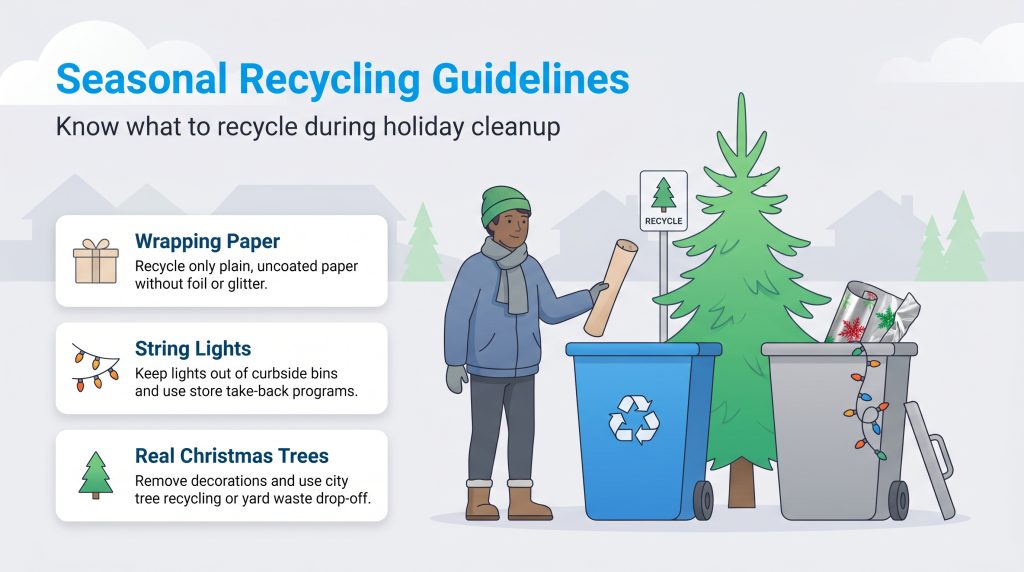
Setting your bins out properly the night before pickup is the final step in a successful waste management routine. The volume of household waste skyrockets during the holidays or after a big move, making it a critical time to secure your materials. Overfilled bins invite pests and create severe litter problems when high winds blow loose cardboard and lightweight plastics down the street.
Always ensure your bin lid closes completely. If you have excess moving boxes or seasonal waste — like uncoated wrapping paper or cardboard packaging — hold them back for the next collection cycle rather than balancing them precariously on top of the cart. For seasonal tanglers like burnt-out string lights, utilize specialized hardware store drop-off programs instead of tossing them into your curbside bin.
Setting Up Your Home Recycling System
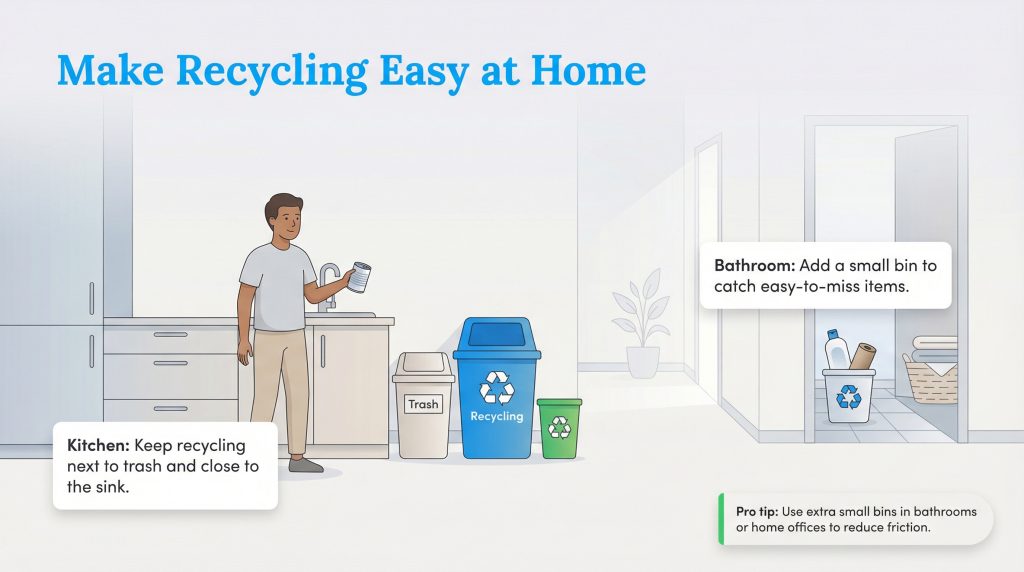
When you are settling into your new home, establishing a smart indoor processing system early helps the habit stick seamlessly. The easier you make it to sort materials at the exact point of disposal, the less likely your family is to mix up the trash and recycling. Use this rapid-fire checklist to outfit your new residence correctly:
- Place a secondary bin in the bathroom: Capture highly recyclable items like clean shampoo bottles, toilet paper tubes, and empty medicine bottles before they accidentally end up in the trash.
- Use a designated kitchen tote: Carry your indoor recyclables out to the main collection cart using a sturdy, washable bin rather than relying on a single-use trash liner.
- Create a dedicated mail station: Place a small paper recycling basket directly below where you open your mail to instantly catch envelopes, flyers, and clean office paper.
Mastering Your Local Recycling Rules
Because municipal capabilities shift based on available funding and technology, establishing your utility accounts at a new address is the perfect time to review local waste management guidelines. Instruct your family to visit the local sanitation website or download your provider’s community app to access an updated list of accepted materials.
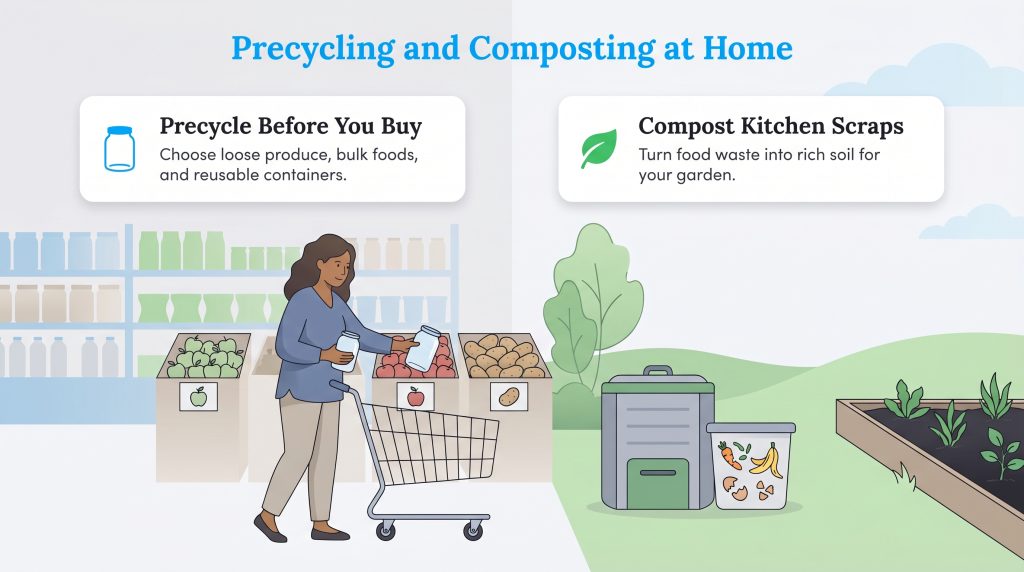
Most importantly, you must verify if your new neighborhood uses a single-stream or multi-stream collection system. Single-stream allows you to place all approved paper, plastic, and metal into one cart, while multi-stream requires strict separation of materials into multiple bins. Additionally, check if your municipality offers specialized yard waste or organic collection. Keeping heavy food waste out of landfills is a powerful sustainable living strategy. Organic food scraps create potent greenhouse gases when trapped in a compacted landfill, but following basic composting tips allows you to turn those scraps into rich garden soil.
🌱 Eco Edge: Stop waste before it starts by embracing practical precycling habits. Choose loose produce, practice zero waste grocery shopping by filling reusable jars at bulk bins, and deliberately select glass or aluminum packaging over plastic alternatives.
Taking Charge of Your Household Waste System
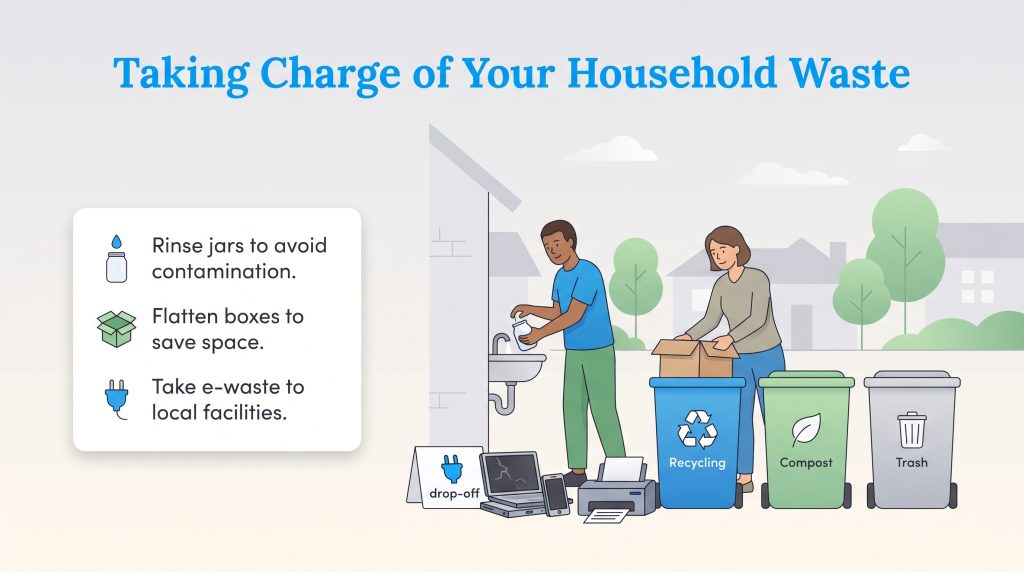
Mastering these essential recycling tips empowers you to run a cleaner, more efficient, and highly sustainable household. Taking a few extra seconds to thoroughly rinse a jar, flatten a moving box, or locate a community drop-off bin prevents widespread contamination across your neighborhood. By proactively reducing your reliance on single-use packaging and avoiding the costly pitfalls of wishcycling, you directly protect your local infrastructure and keep your utility costs manageable for years to come.
Frequently Asked Questions About Recycling Rules
Do I really need to wash my recycling?
Can I put recyclables in a plastic trash bag?
What is the easiest way to find my local recycling rules?
What do the recycling numbers on the bottom of plastic mean?
Do I need to remove labels from glass jars and aluminum cans?
Can I recycle pizza boxes?
Should I crush my aluminum cans and plastic bottles before recycling?
About the Author

LaLeesha has a Masters degree in English and enjoys writing whenever she has the chance. She is passionate about gardening, reducing her carbon footprint, and protecting the environment. She also recently served as President of the Board for City Sprouts (a community garden).

David has been an integral part of some of the biggest utility sites on the internet, including InMyArea.com, HighSpeedInternet.com, BroadbandNow.com, and U.S. News. He brings over 15 years of experience writing about, compiling and analyzing utility data.