

Understanding the numbers on plastic helps you sort waste correctly and avoid recycling contamination in your new home
Key Takeaways
- The chasing arrows symbol does not automatically mean an item is accepted in your local curbside bin.
- Plastic recycling numbers 1 and 2 are the most widely accepted and commonly recycled household plastics across the United States.
- Checking your local municipal guidelines is the only guaranteed way to know exactly what waste is accepted at your home.
Moving into a new home often brings a wave of unexpected chores, and figuring out your local trash and recycling setup is usually near the top of that list. Staring at an empty milk jug or takeout container can easily leave you scratching your head, especially when you are actively trying to do the right thing for the environment. To help you sort your household waste confidently and avoid rejected bins, we are breaking down the exact recycling symbols meaning so you know exactly what belongs on the curb. While the original chasing arrows logo dates back to the first Earth Day in 1970, modern packaging labels have grown incredibly complex since then. By demystifying these little triangles and numbers, you can set up an efficient, eco-conscious routine that keeps your community clean and your recycling stream completely uncontaminated.
What Are Recycling Symbols and Why Do They Matter?
Most of us grew up believing that the iconic triangle of arrows stamped on the bottom of a container guarantees it belongs in the blue bin. Unfortunately, grasping the true intent behind these logos requires breaking that long-held household myth. The numbered plastic resin identification codes were officially introduced by the Society of the Plastics Industry in 1988.
These markings were designed to identify the specific type of plastic resin used in a product, helping processing plants sort materials efficiently. They were never intended to serve as a direct instruction manual for consumers. While it might seem a bit misleading, recognizing that the arrows merely indicate what the item is made of is the first major step toward effectively managing your home’s environmental footprint.
The most important rule of waste management is that local municipal guidelines always supersede general packaging symbols. Just because an item boasts a recyclable logo does not guarantee your specific neighborhood program handles it. Sorting facilities operate locally, meaning the types of materials accepted can change dramatically even between neighboring towns.
The Mobius Loop & General Packaging Recycling Logos
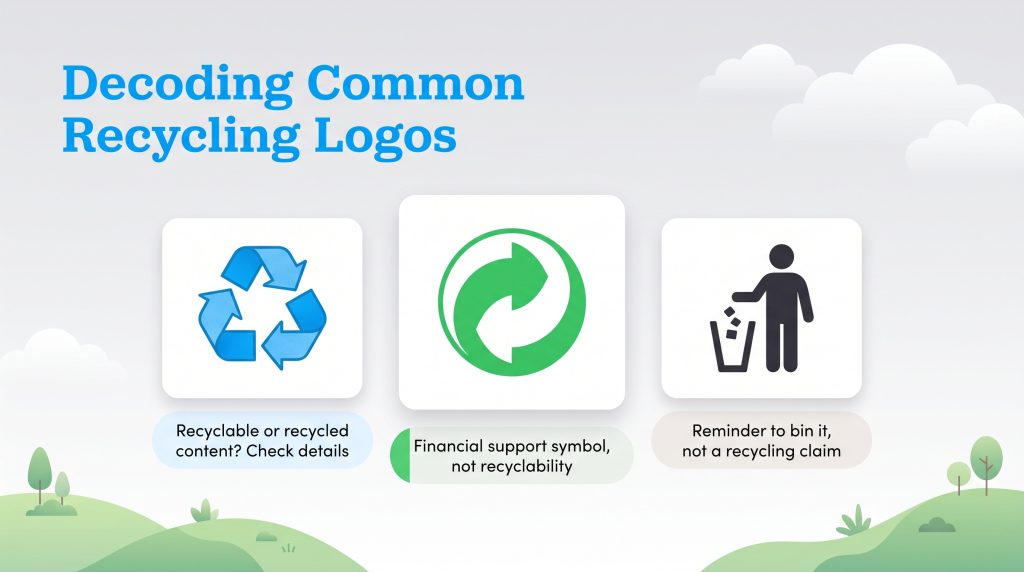
Beyond plastic resins, several universal icons dictate how we handle everyday waste. Understanding these basic logos can help clear up the immediate confusion surrounding items that are theoretically recyclable versus items made of recycled materials.
The Mobius Loop Symbol (Recyclable Vs. Recycled Content)
The classic Mobius loop is the simple, continuous triangle of chasing arrows without a number inside. This universal logo indicates that an item is theoretically capable of being recycled, though you still need to verify your local curbside acceptance. However, if you see a percentage sitting inside the loop — or if the arrows sit inside a solid black circle — the meaning changes entirely. That specific variation indicates that the packaging was made from a percentage of previously recycled materials rather than raw resources.
The Green Dot Symbol Meaning
Many eco-conscious consumers confuse the Green Dot symbol — two interlocking arrows in a circle, often green and white — with a guarantee of recyclability. In reality, the green dot symbol meaning is purely financial. It signifies that the manufacturer has paid a financial contribution to a national packaging recovery organization, primarily operating in European markets. It does not mean the packaging itself is recyclable in your residential bin.
The Tidyman Logo
The Tidyman logo features a straightforward stick figure dropping an item into a waste bin. This classic icon serves as a friendly reminder to dispose of the item responsibly rather than littering. It carries no specific recycling weight and simply encourages good civic behavior to keep public spaces and neighborhoods clean.
Plastic Recycling Numbers: Resin Identification Codes 1-7
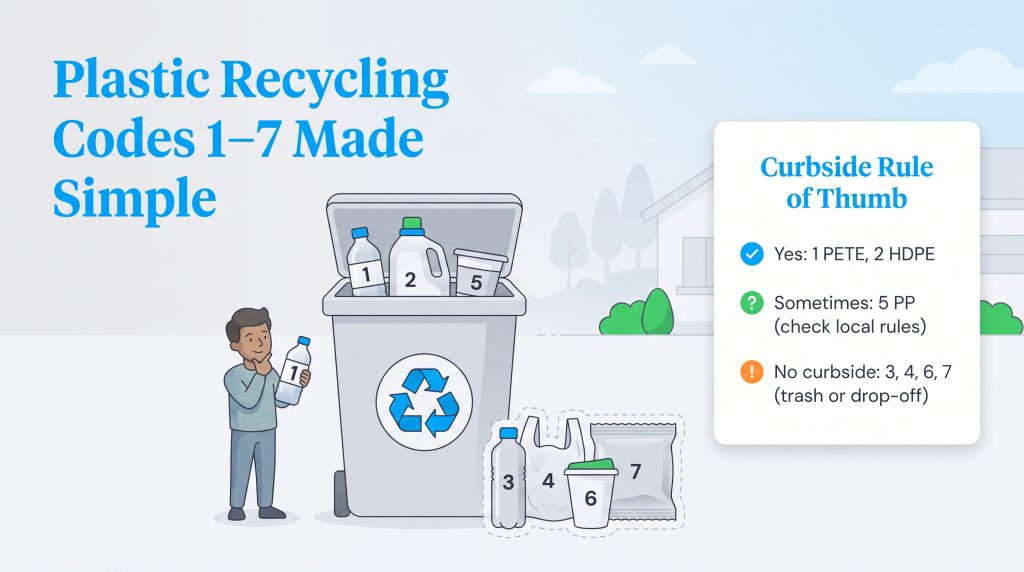
If you have ever squinted at the bottom of a container and wondered exactly what those numbers signify, you are certainly not alone. Decoding plastic recycling numbers 1-7 is essential for keeping non-recyclables out of your local processing system.
| Code (1-7) | Material Abbreviation | Curbside Recyclability |
|---|---|---|
| 1 | PETE | High |
| 2 | HDPE | High |
| 3 | PVC | Low |
| 4 | LDPE | Low (Often Store Drop-Off) |
| 5 | PP | Medium |
| 6 | PS | Low |
| 7 | OTHER | Low |
1 – PETE Plastic Recycling (Polyethylene Terephthalate)
- Acronym: Polyethylene Terephthalate (PETE or PET)
- Common Uses: Single-use water bottles, soda bottles, clear salad dressing containers
- General Recyclability Status: High. Widely accepted in almost all residential curbside programs.
PETE is one of the most common and easily processed plastics on the global market. Manufacturers love this resin for its clarity and lightweight strength, making it the go-to material for everyday beverage containers. Because it is highly valuable to recyclers, you can confidently toss clean number 1 plastics into almost any municipal blue bin.
2 – HDPE Plastic Meaning (High-Density Polyethylene)
- Acronym: High-Density Polyethylene (HDPE)
- Common Uses: Milk jugs, opaque laundry detergent tubs, shampoo bottles
- General Recyclability Status: High. Universally accepted in curbside bins.
The HDPE plastic meaning often translates to sheer durability. This sturdy, opaque plastic is designed to hold heavier household liquids without bursting. Like PETE, number 2 plastics are heavily in demand and are easily broken down to create new, long-lasting products like outdoor lawn chairs, fencing, or drainage pipes.
3 – PVC (Polyvinyl Chloride)
- Acronym: Polyvinyl Chloride (PVC)
- Common Uses: Plumbing pipes, rigid blister packaging, some clear food wrap
- General Recyclability Status: Low. Rarely accepted in household recycling programs.
PVC contains chlorine and other chemical additives that can instantly contaminate entire batches of otherwise clean recycling. Its unique melting point causes severe issues for standard processing machinery. You should intentionally keep these items out of your curbside bin to protect your local facility.
4 – LDPE (Low-Density Polyethylene)
- Acronym: Low-Density Polyethylene (LDPE)
- Common Uses: Grocery bags, bread bags, squeezable condiment bottles
- General Recyclability Status: Low for curbside; High for specialized store drop-off.
While rigid squeezable bottles made of LDPE might occasionally be accepted curbside, thin film packaging like grocery bags are notorious for tangling in sorting gears. This forces recycling plants to halt operations to cut the plastic out of their machines. Always return number 4 plastic bags to designated supermarket collection bins instead of tossing them on the curb, or explore zero waste grocery shopping to help eliminate these flimsy plastics entirely.
5 – PP (Polypropylene)
- Acronym: Polypropylene (PP)
- Common Uses: Yogurt tubs, rigid takeout containers, empty medicine bottles
- General Recyclability Status: Medium. Increasingly accepted, but still varies by municipality.
A frequent question that pops up in kitchens across the country is whether number 5 plastic is truly recyclable. While Polypropylene is a highly recyclable material prized for being heat-resistant, its acceptance in residential curbside bins varies wildly from one city to the next. Upgrading equipment to process this specific resin requires significant financial investment. Always check your local municipal website or the federal guidelines on recycling common household items before tossing that hummus tub into the bin.
6 – PS (Polystyrene)
- Acronym: Polystyrene (PS)
- Common Uses: Foam cups, foam egg cartons, packing peanuts, meat trays
- General Recyclability Status: Low. Almost never accepted curbside.
Polystyrene, widely recognized by the brand name Styrofoam, consists mostly of air. It breaks apart easily into tiny beads that are incredibly difficult to process or contain efficiently. Unless you have access to a highly specialized local drop-off center, these lightweight items belong strictly in the household trash.
7 – Other (Miscellaneous Plastics)
- Acronym: Other (Polycarbonate, Acrylic, Nylon, Multilayer Plastics)
- Common Uses: Large water cooler jugs, CDs, multilayer snack packaging
- General Recyclability Status: Low. Rarely accepted in standard residential bins.
The number 7 serves as a catch-all category for plastics that don’t fit into the first six groups, or items made by fusing multiple resin types together. Because separating these blended resins is practically impossible for standard sorting facilities, number 7 plastics generally head straight to the landfill.
Symbols for Paper, Glass, and Metal Packaging
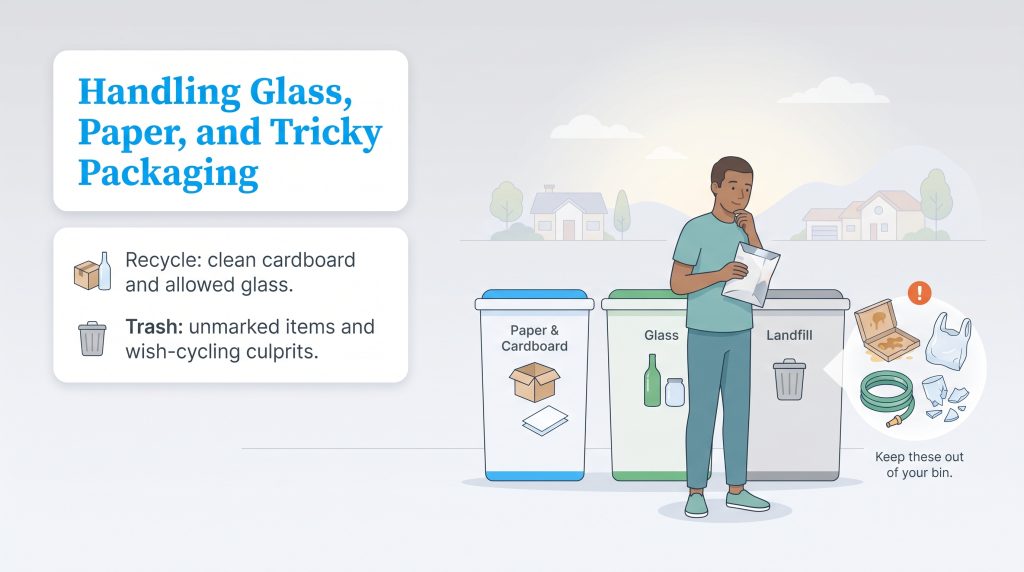
While plastic tends to cause the most frustration, understanding the symbols on glass, paper, and metal packaging is equally vital. In recent years, specialized labeling systems like the How2Recycle program have made things slightly easier for consumers. These modernized labels clearly state if an item is widely accepted, requires specialized store drop-off, or simply cannot be recycled at all.
Most curbside programs eagerly accept clean, corrugated cardboard, but glass processing rules vary more than people expect. Some cities seamlessly collect glass curbside, while others require you to transport it to community drop-off spots because broken glass shards easily contaminate paper bundles and wear down machinery. Metal packaging like aluminum soda cans and steel soup cans are almost universally welcomed, but aerosol cans usually require hazardous waste handling if they are not completely empty.
When you encounter an item with no markings whatsoever, the golden rule of waste management applies: when in doubt, throw it out. Attempting to recycle an unmarked item just because you hope it gets processed is a well-intentioned but harmful habit known as wish-cycling. This practice damages expensive sorting machinery, drastically delays processing times, and ultimately drives up utility costs for your entire community.
The Compostable Packaging Symbol and Biodegradable Tags
As major brands shift toward more sustainable materials, you may notice an uptick in certified compostable labels and biodegradable tags on takeout containers or disposable cutlery. While these sound like excellent environmentally mindful choices, they rarely belong in your standard recycling bin.
The compostable packaging symbol usually indicates that the item requires an industrial composting facility to break down properly. These specialized commercial plants maintain exceptionally high temperatures that you simply cannot reach when composting at home. If you toss compostable bioplastics into your regular blue bin, they act as contaminants that melt at different temperatures and ruin batches of traditional plastic. Always verify if your local utility provider offers a separate green bin for organics before acquiring these items.
Preparing Your Household Waste for the Bin
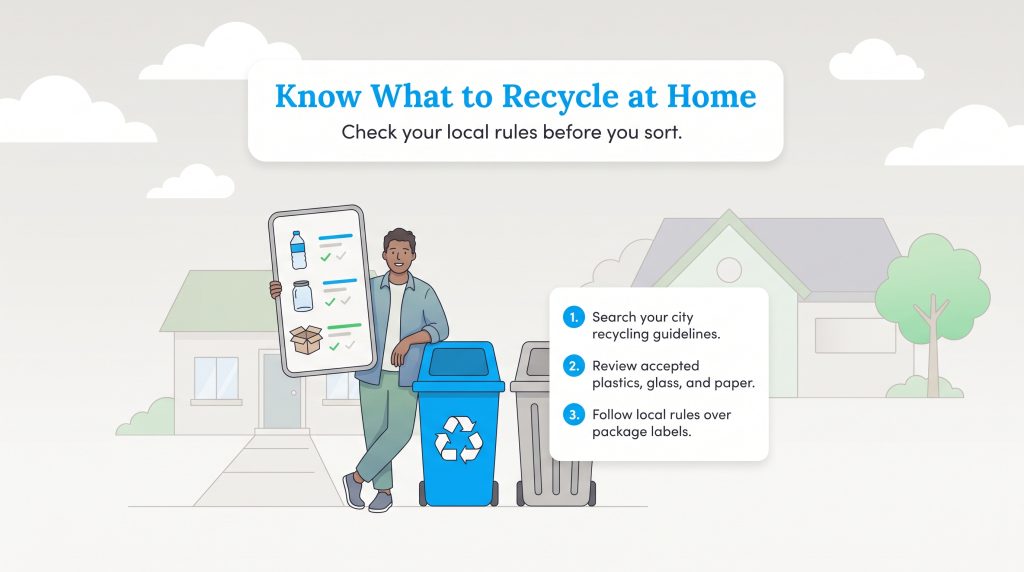
Memorizing every single recycling icon is a tall order, but learning how to recycle properly at home can drastically improve your waste management habits. Whether you are establishing a collection routine for the first time or simply auditing your home after setting up utilities after a move, checking the exact parameters for your local program ensures you do things right the first time.
To ensure your materials actually get processed rather than rejected, follow this simple 3-step checklist to sort your waste correctly:
- Rinse dirty containers: A quick wash prevents lingering food residue from ruining an entire truckload of perfectly clean paper and cardboard.
- Remove non-recyclable lids or film: Take off any flimsy plastic film, loose wrappers, or mismatched caps that could easily jam delicate sorting gears at the plant.
- Check local council guidelines: Always confirm your specific municipality’s rules, as the ultimate authority on what goes in your bin is your local utility provider, not the package label itself.
Additionally, always remember to keep tanglers out of the system. Never put garden hoses, extension cords, or wire hangers in your curbside bin. Finally, don’t bag your recyclables. Keep items loose so the sorting facility can safely process them — otherwise, they often throw closed garbage bags straight into the landfill for safety reasons.
Making Smart Waste Choices in Your New Home
Taking just a few minutes to decode those tiny numbers on your packaging empowers you to manage your household waste efficiently and sustainably. We know that navigating residential utilities can sometimes feel like a daunting chore, but mastering your recycling routine is a simple, highly effective way to shrink your home’s carbon footprint. Every time you sort an item correctly, you are actively protecting local sorting machinery, conserving valuable natural resources, and making an environmentally mindful choice that benefits your entire community. Taking these extra steps is a fantastic way to start building sustainable living habits right from day one.
Frequently Asked Questions About Recycling Symbols Meaning
Recycling labels can be confusing because packaging symbols, local rules, and actual facility capabilities do not always line up perfectly. These quick answers cover the questions you are most likely to run into while sorting waste at home.
Does the recycling symbol mean an item is definitely recyclable?
What does the number inside the recycling triangle mean?
Are all plastics with recycling codes 1-7 accepted in curbside bins?
What does the recycling symbol with a line through it mean?
Are all plastics with the chasing arrows recyclable?
What do the numbers on plastic mean for food safety?
Can I recycle plastic grocery bags in my home bin?
Why do recycling rules vary so much by city?
About the Author

LaLeesha has a Masters degree in English and enjoys writing whenever she has the chance. She is passionate about gardening, reducing her carbon footprint, and protecting the environment. She also recently served as President of the Board for City Sprouts (a community garden).

David has been an integral part of some of the biggest utility sites on the internet, including InMyArea.com, HighSpeedInternet.com, BroadbandNow.com, and U.S. News. He brings over 15 years of experience writing about, compiling and analyzing utility data.