

Switching to eco-friendly packing materials can save you money and reduce harmful plastic waste during your move.
Key Takeaways
- Swap plastic bubble wrap for accessible, cost-effective alternatives like honeycomb packing paper or items you already own.
- Pack fragile items safely using sustainable household goods like old towels, clothing, and newspaper to fill empty box space.
- Lower your moving footprint by opting for recyclable, biodegradable, or reusable packaging over single-use plastics.
Moving comes with tight deadlines, long to-do lists, and more packing waste than most people expect. If you want to protect your fragile belongings without contributing to unnecessary landfill waste, finding reliable bubble wrap alternatives for moving is a practical first step. We understand that shifting your entire life is stressful enough without having to hunt down sustainable supplies, so we gathered practical, accessible, and cost-effective packing solutions. By swapping traditional plastics for simple bubble wrap alternatives, you can confidently secure your valuables while keeping more money in your pocket and unnecessary waste out of the environment.
The Real Cost of Plastic Packing Materials
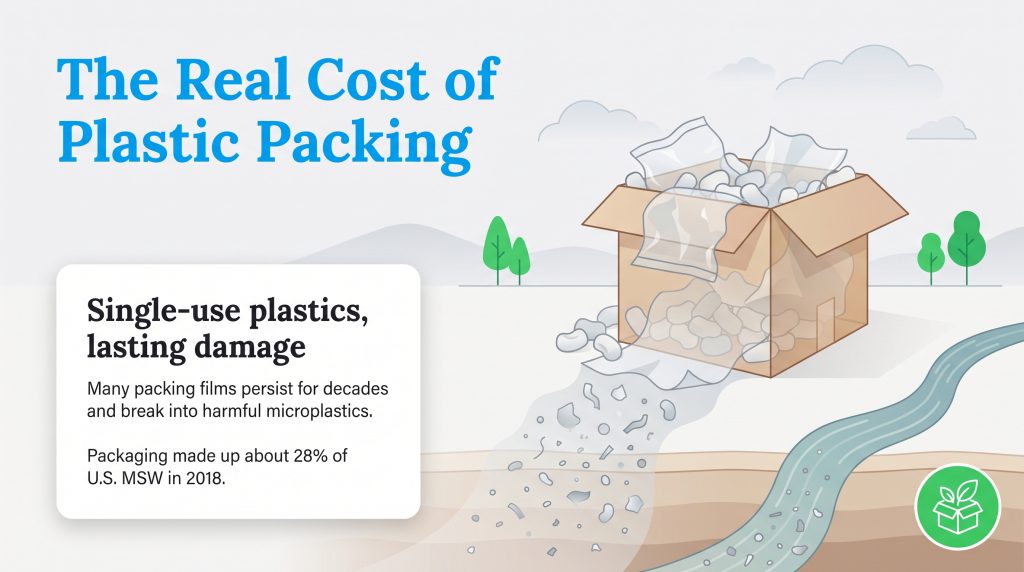
Traditional packing materials carry a steep environmental price tag long after the last box gets unpacked. Many plastic packing films can persist for decades or longer, especially in landfills where sunlight and oxygen are limited. When considering the impact of single-use plastics, it becomes clear that momentary convenience leads to long-term ecological damage. As these materials slowly degrade, they break down into microplastics that infiltrate soil and waterways.
According to EPA municipal solid waste data, containers and packaging accounted for 82.2 million tons of waste in 2018, or about 28.1% of total MSW generation. Choosing sustainable methods helps curb this relentless cycle of consumption and disposal. We can actively lower our carbon footprint by simply rethinking how we cushion our delicate household items.
🌱 Eco Edge: Keep in mind that some plastics marketed as “green” or “degradable” just break apart faster into dangerous microplastics rather than fully composting into natural elements.
8 Practical Bubble Wrap Alternatives for Moving
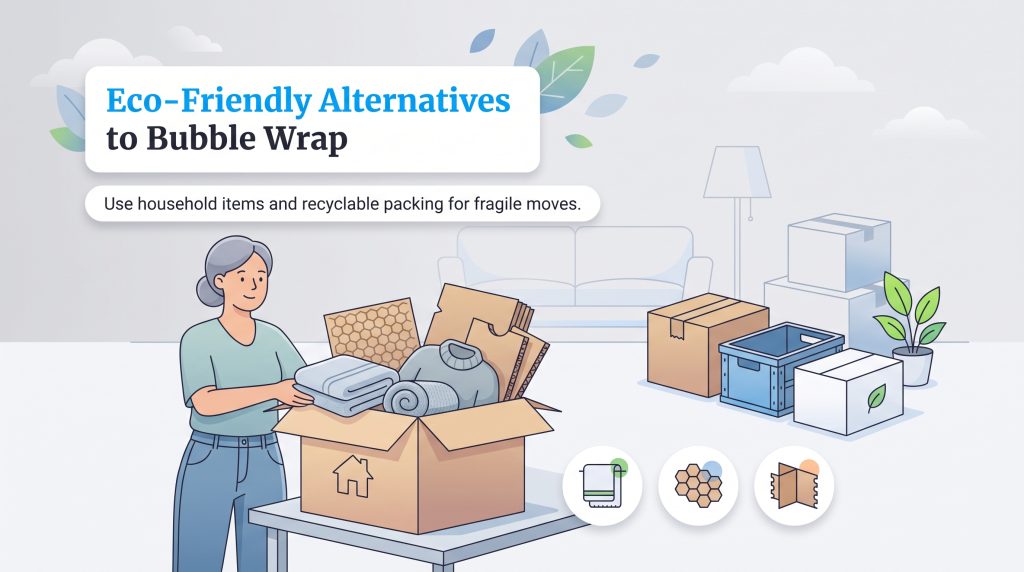
Before you purchase massive rolls of petroleum-based plastic, explore the reliable household goods already sitting in your closets. Finding a practical alternative to bubble wrap is surprisingly simple when you approach packing with a little creativity. Incorporating eco-friendly packing materials not only protects your fragile belongings but also streamlines the chaotic job of organizing your moving process.
| Alternative | Best For | Protection Level | Cost | Sustainability Note |
|---|---|---|---|---|
| Towels and linens | Dishes, lamps, mirrors | High | Free | Reusable and zero-waste |
| Honeycomb paper | Glassware, ceramics, vases | Medium-high | Medium | Widely recyclable if clean |
| Clothing and socks | Cups, mugs, small items | Medium | Free | Saves box space |
| Corrugated cardboard | Plates, picture frames | High | Free to low | Recyclable if clean |
| Biodegradable peanuts | Void fill | Medium | Medium | Check disposal instructions |
| Reusable plastic crates | Local moves, heavy items | High | Medium (rental) | Highly reusable |
Honeycomb Packing Paper
This die-cut kraft paper expands into a cushioned 3D structure that often holds itself in place, reducing the need for plastic packing tape. Using honeycomb packing paper provides excellent cushioning for ceramics, vases, and glassware, and it is widely recyclable if it stays clean and dry.
Old Towels and Linens
Repurposing your existing washcloths, bath towels, and bedsheets offers a lower-waste method for padding delicate items. Wrapping large electronics or mirrors in thick blankets ensures they arrive unscathed without requiring extra plastic wrapping. These soft linens are best used for bulky items, lamps, and framed art.
💸 Money-Saver: Using your own linens acts as double-duty packing, drastically reducing the number of expensive moving boxes and protective materials you need to buy.
Newspapers and Packing Paper
Crinkled paper acts as an excellent shock absorber and void fill for the empty corners of your moving boxes. When weighing packing paper vs bubble wrap, remember that clean, uncoated packing paper is usually affordable, recyclable, and compostable in many areas.
Your Own Clothing
Your wardrobe can double as free padding for cups, mugs, and small decor. Roll delicate drinking glasses in clean socks, or wrap your small household items securely inside bulky winter sweaters and thick sweatpants to prevent surface scratches.
Corrugated Cardboard Scraps
Instead of throwing away extra delivery boxes, cut them up to create rigid, customized dividers. Thick cardboard panels slip perfectly between plates, mirrors, and delicate picture frames to prevent them from colliding during transit, making them best for flat, fragile objects and box reinforcement.
Biodegradable Packing Peanuts
Unlike expanded polystyrene foam peanuts, which can linger in landfills and are rarely accepted in curbside recycling, many starch-based alternatives are designed to biodegrade more readily. These cushions often dissolve completely in water and can be composted or disposed of with less environmental impact. They work best as void fill to keep items from shifting.
Mushroom Packaging
This emerging, environmentally mindful choice is typically made by growing mycelium around agricultural byproducts, creating a rigid, compostable cushioning material. Mushroom packaging offers a highly sustainable, custom-fit cushioning solution. Some mushroom packaging is home compostable, but you should confirm the manufacturer’s disposal instructions before adding it to a backyard compost pile.
Reusable Plastic Moving Crates
Many local moving companies now allow you to rent hard plastic bins instead of purchasing flimsy cardboard boxes. Opting for these heavy-duty crates drastically reduces the need for packing tape and protective wrap, keeping your possessions safe. They are an excellent option for local moves, heavy books, and bulky pantry items.
Packing Paper vs. Bubble Wrap: Which Should You Use?
Deciding between packing paper and plastic bubble wrap often comes down to what you are trying to protect. Packing paper is the clear winner for everyday household items like dishware, glasses, and home decor. It is cost-effective, easy to crumple into tight spaces, and widely recyclable.
However, traditional bubble wrap still holds an edge when transporting extremely heavy, sharply pointed, or highly fragile items that require intense impact resistance. If you must use plastic wrap, try to source it secondhand from local community groups or save it for reuse rather than buying new rolls.
How to Pack Fragile Items Without Bubble Wrap
Figuring out exactly how to pack fragile items without bubble wrap might seem daunting initially, but the technique is quite straightforward. The key lies in layering your sustainable materials and ensuring there is zero wiggle room inside the moving box.
Let us walk through the process of safely packing a delicate ceramic plate or glass bowl using only the eco-friendly resources we highlighted earlier.
- Start by lining the bottom of your sturdy cardboard box or reusable crate with a thick, folded towel to create a soft foundational bumper.
- Wrap each individual ceramic plate entirely in honeycomb packing paper, making sure the interlocking edges catch and hold the paper tight without using tape.
- Place a square scrap of corrugated cardboard between every single wrapped plate to serve as a rigid shock absorber.
- Fill any remaining gaps or empty corners in the box tightly with crinkled newspaper, clean socks, or biodegradable packing peanuts so the plates cannot shift during transit. Be sure to label the box as fragile and gently shake it to test for movement. If you hear shifting, add more void fill.
- Top the box off with another folded linen or thick sweater before sealing it securely.
When packing stemware and delicate drinking glasses, use a slightly different approach. Gently stuff the inside of each glass with crinkled packing paper to support the structure, then wrap the outside securely in honeycomb paper or soft socks before standing them upright in your box.
💡 Pro Tip: Always pack plates vertically rather than stacking them flat — they absorb shock better and are much less likely to shatter.
What to Do With Packing Materials After You Unpack
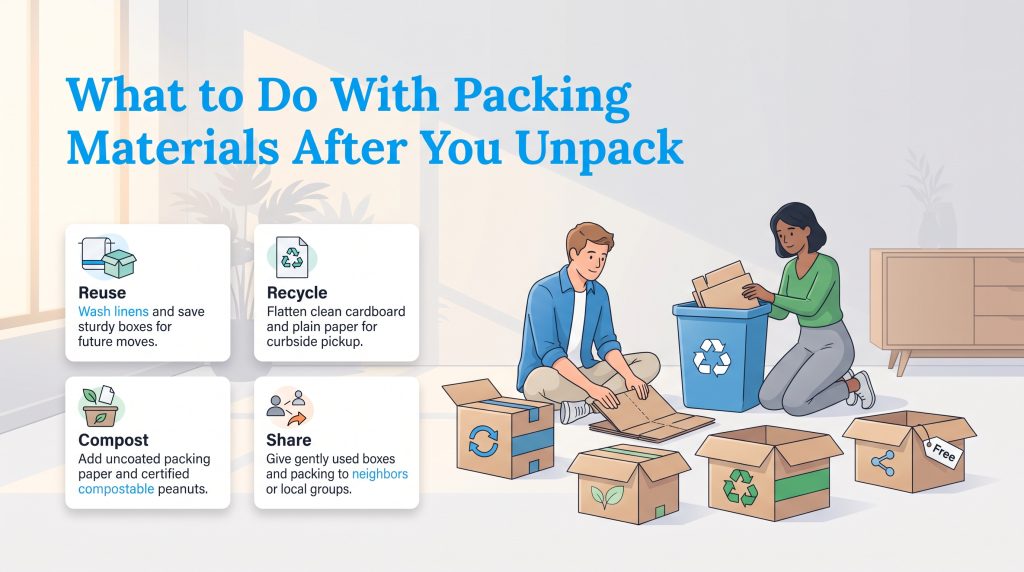
A truly sustainable moving process involves properly handling your supplies once you arrive at your new home. By taking a few extra minutes to sort your materials, you can prevent usable goods from entering the landfill.
- Reuse: Wash any towels, linens, and clothing you used for padding. Break down cardboard boxes to store for future use, or return your rented plastic moving crates.
- Recycle: Place clean corrugated cardboard and dry kraft paper in your curbside recycling bin. Avoid recycling any paper or cardboard covered in heavy tape or food residue.
- Compost: Add uncoated packing paper or specific biodegradable packing peanuts to your compost pile, provided they are labeled as home compostable.
- Share: Offer gently used boxes, leftover honeycomb paper, and moving supplies to neighbors through local community marketplaces or social media groups.
Build a Lower-Waste Move From the First Box
Swapping petroleum-based plastics for your upcoming move is a practical way to shield your delicate belongings while actively reducing environmental harm. Utilizing simple household goods and compostable materials saves you cash, streamlines your unpacking phase, and keeps excess waste out of our vulnerable ecosystems. Once the last box is unpacked, you can keep that lower-waste mindset going by setting up efficient home services. Whether you are exploring energy-saving electric plans or navigating the logistics of setting up natural gas, making sustainable choices helps you build a greener, more efficient home from day one.
Frequently Asked Questions About Bubble Wrap Alternatives
Still sorting through your packing options? These quick answers can help you choose safer, lower-waste materials before moving day.
What is the best cheap alternative to bubble wrap?
How does packing paper vs bubble wrap compare for moving?
Is biodegradable bubble wrap actually compostable?
How do you safely pack electronics without bubble wrap?
What should I use instead of packing peanuts?
Are reusable moving crates worth the investment?
Can newspaper stain dishes or glassware during a move?
About the Author

LaLeesha has a Masters degree in English and enjoys writing whenever she has the chance. She is passionate about gardening, reducing her carbon footprint, and protecting the environment. She also recently served as President of the Board for City Sprouts (a community garden).

Claudio is a sustainability-focused writer with a background in Anthropology and Psychology from NC State University. He has spent over 15 years working in writing, interpretation, and translation, driven by a deep interest in how human culture shapes the environment. Today, he shares his curiosity with readers by writing about sustainable living solutions and the connection between everyday choices and environmental impact.