

A zero-waste move can reduce your environmental impact while keeping your relocation budget under control.
Key Takeaways
- Decluttering responsibly before you pack significantly reduces the volume of items transported, cutting down on carbon emissions and moving costs.
- Swapping bubble wrap for sustainable packing materials you already own, like towels and clothing, minimizes single-use plastic waste.
- Choosing eco-friendly utility setups in your new home, such as green energy plans and smart thermostats, extends your sustainable impact long after moving day.
Let’s face it: Moving brings enough stress with packing supplies, truck rentals, and utility transfers, so throwing sustainability into the mix might seem overwhelming. However, executing a zero waste relocation doesn’t mean you have to be perfect. If you need a few strips of heavy-duty plastic tape to ensure your grandmother’s heirloom dishes survive transit intact, that is perfectly fine. The goal of a zero-waste move is to creatively reduce, reuse, recycle, and donate your way through the transition. By relying on smart zero waste moving tips, you can significantly reduce waste while moving, lower your relocation expenses, and smoothly establish a lower-impact home with far less stress.
What Is a Zero Waste Move?
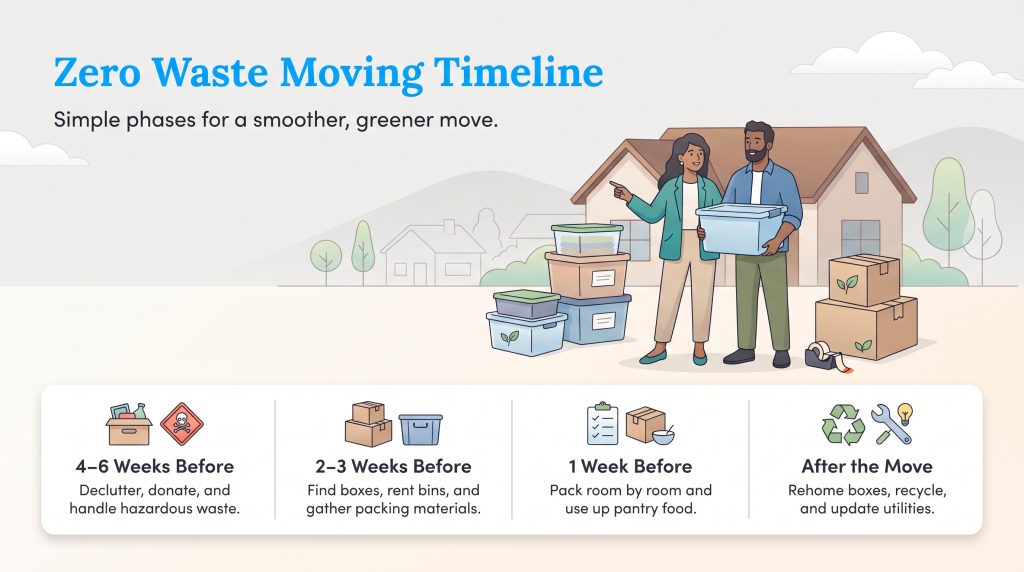
A zero-waste move focuses on minimizing the amount of physical trash sent to municipal landfills during a relocation. It relies on a mindful approach to the items you own, ensuring you use fewer raw materials and divert as much waste as possible from the garbage bin. Breaking this transition into manageable phases makes it much easier to stick to your goals without feeling overwhelmed. We recommend following a simple timeline to keep your waste-reduction efforts on track:
- Four to six weeks before moving: Declutter, donate, sell, and schedule hazardous waste drop-offs.
- Two to three weeks before moving: Source boxes, rent bins, and collect packing materials.
- One week before moving: Pack room by room, label reusable materials, and plan meals to use up pantry items.
- After moving: Rehome boxes, recycle damaged cardboard, and update utility plans.
1. Declutter Sustainably Before Packing
Figuring out how to declutter sustainably before a move is an excellent starting point for any relocation. When we pare down our belongings, we reduce the volume of items needing transit. This can help you rent a smaller truck, use fewer supplies, and significantly lower moving costs. Instead of tossing unwanted clothes, furniture, or kitchen gadgets into a dumpster, tap into community-driven ecosystems. Before dropping items off, check the organization’s rules so unusable furniture, damaged textiles, or outdated electronics don’t become someone else’s disposal problem.
We highly recommend utilizing these responsible donation channels to rehome your possessions:
- Buy Nothing groups: Local neighborhood networks are perfect for giving away odd items, half-open pantry goods, or cleaning supplies that traditional charities simply won’t accept.
- Local thrift stores: Drop off gently used clothing, shoes, and home decor to give them a second life while supporting important community programs.
- Electronic recycling centers: Old cables, broken televisions, and dead batteries should go to certified e-waste facilities rather than municipal landfills.
2. Swap Cardboard for Reusable Moving Bins
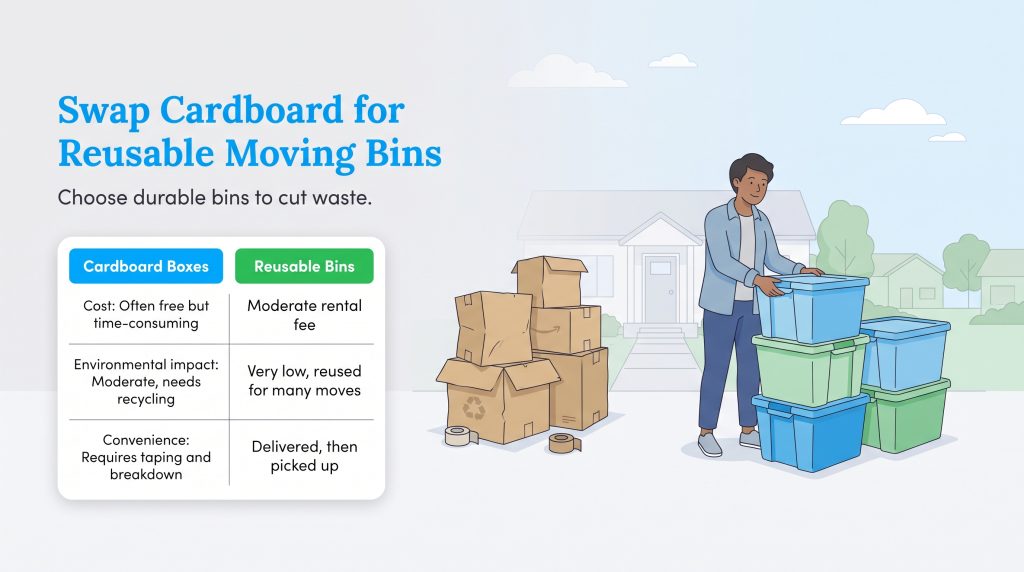
A typical move can burn through dozens of cardboard boxes, especially for a multi-room household. Procuring brand-new supplies for a single relocation generates an immense amount of waste, especially if those materials are tossed immediately after unpacking. To combat this, one of the most effective strategies is to ditch single-use containers and rely on reusable moving bins.
Not only are zero waste moving boxes far sturdier than standard cardboard, but rental services typically drop off the durable, hard-plastic crates directly at your current residence. Once you finish unpacking at your new home, they swing by to pick them up. It eliminates the hassle of breaking down cardboard altogether while completely dodging the waste stream.
| Feature | Cardboard Boxes | Reusable Moving Bins |
|---|---|---|
| Cost | Often free if sourced locally but time-consuming to hunt down. | Moderate upfront rental fee depending on the number of bins. |
| Environmental Impact | Moderate — requires energy to recycle and process afterward. | Very low — crates are reused hundreds of times across many moves. |
| Durability | Prone to crushing, tearing, and severe water damage. | Highly durable, crush-proof, and completely weather-resistant. |
| Convenience | Requires heavy assembly, taping, and breaking down. | Delivered ready to pack and picked up when finished. |
3. Use Eco-Friendly Packing Materials You Already Own
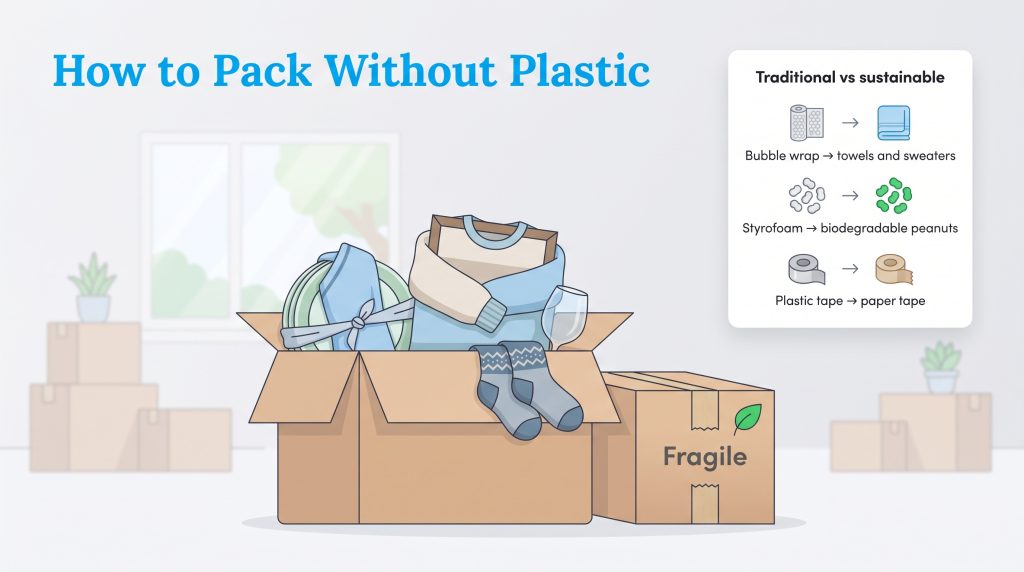
Mastering how to move without plastic often boils down to a clever “use what you have” strategy. Your home is already full of soft, protective fabrics just waiting to be repurposed as eco-friendly bubble wrap alternatives. Relying on domestic items not only saves you money but also reduces the synthetic waste that usually accompanies a major transition. When navigating your packing strategy, organize your existing textiles into two distinct categories:
- Use for Wrapping Fragiles: Slip delicate wine glasses inside thick winter socks, wrap your favorite dinner plates in kitchen tea towels, and fold bulky sweaters around picture frames to prevent scratches.
- Use for Padding: Line the bottom of your boxes with heavy blankets to absorb transit shocks, stuff bed pillows into the gaps between large items to prevent shifting, and drape bath towels over the top layer of a box for a final cushion.
Fortunately, you can still lean on high-quality sustainable moving supplies when you finally run out of blankets and sweaters. If you have a massive box of heavy tools, resorting to a strip of standard packing tape ensures the bottom won’t burst mid-transit. Balancing eco-consciousness with structural integrity is key.
| Traditional Item | Sustainable Alternative | The Eco-Benefit |
|---|---|---|
| Plastic Bubble Wrap | Thick Towels and Winter Sweaters | Utilizes items you already own, completely bypassing single-use plastics and reducing purchase costs. |
| Styrofoam Packing Peanuts | Biodegradable Packing Peanuts | Many starch-based packing peanuts dissolve in water and can reduce plastic waste, but always check the product’s disposal instructions. |
| Standard Plastic Packing Tape | Water-Activated Kraft Paper Tape | Paper tape can make boxes easier to recycle in many local programs, but check your recycler’s rules before assuming all taped boxes are accepted. |
4. Hire a Green Moving Company
If a DIY relocation is out of the question, you can still maintain an environmentally mindful approach by specifically seeking out green moving companies. Vetting professional movers requires a bit of upfront research, as you want to ensure their eco-friendly claims go beyond simple marketing buzzwords. A truly green moving company actively implements verifiable logistical operations designed to minimize emissions and waste.
Look for these specific sustainability criteria before signing a contract:
- Biodiesel trucks: Some moving fleets run on alternative fuels to significantly cut down on the carbon emissions generated during transit.
- Reusable crate rentals: Top-tier companies provide hard-plastic bins and insulated commercial bags instead of forcing you to purchase new cardboard.
- Corporate carbon offset programs: Many sustainable movers calculate the emissions of your specific trip and invest in environmental initiatives to balance their impact.
5. Furnishing Your New Home Secondhand
Once you’ve moved your belongings, the desire to fill empty rooms with fresh decor can be overwhelmingly tempting. However, avoiding fast furniture — cheaply made, mass-produced items designed for short lifespans — is crucial for maintaining your eco-friendly moving momentum. These items frequently break down and end up in landfills after just a few years. Instead, embrace the character and durability of secondhand pieces. You can easily find high-quality, pre-loved furnishings by checking out three local platforms:
- Facebook Marketplace: A massive local network where neighbors frequently sell solid wood dressers and vintage couches at a fraction of their retail price.
- Craigslist: Ideal for hunting down free or heavily discounted bulky items from folks desperate to clear out their own homes before a move.
- Habitat for Humanity ReStore: These nonprofit home improvement stores sell gently used furniture and building materials, with proceeds supporting affordable community housing.
6. Set Up Sustainable Utilities
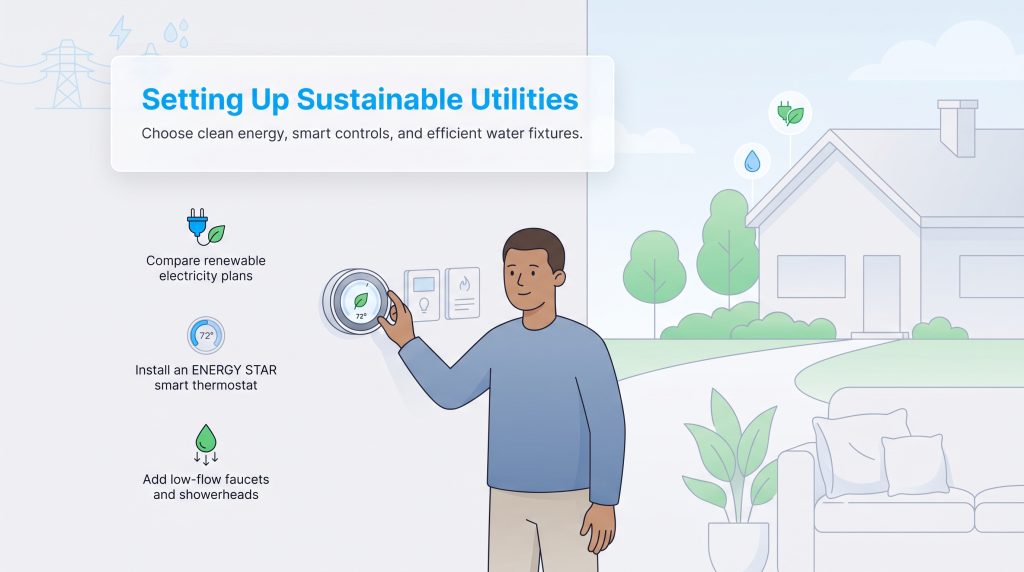
Beyond decorating, establishing the infrastructure of your house is the next crucial step. Once the physical logistics of loading and unloading the truck are behind you, the focus quickly shifts to activating your new living space. Transferring and establishing utilities presents a major opportunity to implement an eco-conscious mindset right from day one. Instead of simply porting over your old plans, take a moment to evaluate your current providers. If you’re moving into a state with energy choice, compare renewable electricity plans and check whether they’re backed by renewable energy certificates, direct clean energy procurement, or both. Exploring these renewable energy options is a practical way to lower your household’s carbon footprint.
Beyond choosing a cleaner energy plan, a few early home upgrades can reduce energy and water use for years. We suggest following a new home energy audit checklist and tackling these quick utility action steps shortly after moving in:
- Compare electric providers to secure a competitive rate if your state allows energy choice.
- Ask whether your prospective renewable plans are REC-backed or directly sourced.
- Install an ENERGY STAR certified smart thermostat to optimize heating and cooling.
- Review your home’s water usage and install low-flow water fixtures.
- Set up paperless billing and autopay to reduce mail waste and late fees.
Before you unpack your first box, consider swapping out the outdated temperature controls for modern, automated technology. Installing an ENERGY STAR certified smart thermostat optimizes heating and cooling efficiency by learning your family’s schedule and adjusting the climate accordingly. Setting up these intelligent systems early on ensures you never heat an empty house. Combined with mindful habits, this simple technological upgrade plays a massive role in saving on your electric bill month after month.
Completing Your Lower-Waste Relocation
Reaching the end of a long relocation feels incredibly rewarding, especially when you know you tackled the process with the planet in mind. Undertaking a plastic-free move is truly about making mindful, incremental choices rather than achieving absolute perfection. To ensure you stay on track, follow this crucial three-step checklist roughly 30 days prior to your move:
- Declutter aggressively: Sort through every room and finalize your donation runs so you aren’t packing items you no longer need.
- Reserve your rental bins: Secure your reusable moving crates early to ensure they arrive well before you begin packing up the kitchen.
- Audit your utilities: Research renewable energy providers in your new zip code so clean power is flowing right on move-in day.
Whether you swapped cardboard for plastic bins, wrapped your mugs in winter scarves, or secured a renewable energy plan, every positive shift matters. As you settle into your new routine, you’ll know your move created less waste, used fewer throwaway materials, and successfully set your home up for sustainable living.
Frequently Asked Questions About Zero Waste Moving
What can I use instead of bubble wrap for moving?
Where can I rent reusable moving boxes?
How do I dispose of cardboard moving boxes sustainably?
Are reusable moving bins cheaper than cardboard boxes?
How do I find a truly green moving company?
How can I make my new home’s utilities more eco-friendly?
Is a zero-waste move realistic for a large household?
About the Author

LaLeesha has a Masters degree in English and enjoys writing whenever she has the chance. She is passionate about gardening, reducing her carbon footprint, and protecting the environment. She also recently served as President of the Board for City Sprouts (a community garden).

Claudio is a sustainability-focused writer with a background in Anthropology and Psychology from NC State University. He has spent over 15 years working in writing, interpretation, and translation, driven by a deep interest in how human culture shapes the environment. Today, he shares his curiosity with readers by writing about sustainable living solutions and the connection between everyday choices and environmental impact.