

Establishing Sustainable Grocery Routines In A New Home Saves Money And Reduces Waste
Key Takeaways
- Preparation is key when setting up a zero-waste pantry and kitchen in your new home.
- You can save money on some pantry staples by comparing unit prices and upcycling containers you already own.
- Reducing food waste at home lowers trash volume and protects your kitchen systems from unnecessary wear.
Did you know that single-use food packaging makes up a massive portion of municipal solid waste, clogging up local landfills and waterways? Beyond utilizing zero waste moving tips for the actual relocation, setting up a new home is one of the best times to rethink your daily habits and tackle this environmental issue head-on, mostly because your cabinets, fridge, and storage systems are already getting a total reset. To help you make the switch effortlessly, we have put together the ultimate guide to zero waste grocery shopping. By the end of this step-by-step guide, you will know exactly how to shop package-free, confidently calculate tare weights in the bulk aisle, locate the best eco-friendly stores near you, and build a sustainable pantry that keeps your groceries fresh and your budget fully intact.
What Is Zero Waste Grocery Shopping?
Zero waste grocery shopping is the mindful practice of purchasing food and household items without acquiring any single-use plastics or disposable packaging. Instead of relying on flimsy plastic produce bags, shrink-wrapped foam meat trays, or unrecyclable snack wrappers, you bring your own reusable containers to transport loose produce, bulk dry goods, and deli items. It is an intentional approach that prioritizes fresh, unpackaged ingredients and emphasizes reusing what you already own over constantly buying new items.
Embracing a plastic-free grocery shopping routine does not require perfection or a shopping cart full of expensive, matching aesthetic jars. It is simply a gradual transition focused on making smarter, more sustainable choices whenever possible. Whether you are picking up naked produce at the neighborhood farmers market or filling a humble cloth sack with lentils from a supermarket bulk bin, every small swap drastically reduces the amount of trash your household produces each week.
How To Prepare For A Plastic-Free Grocery Run
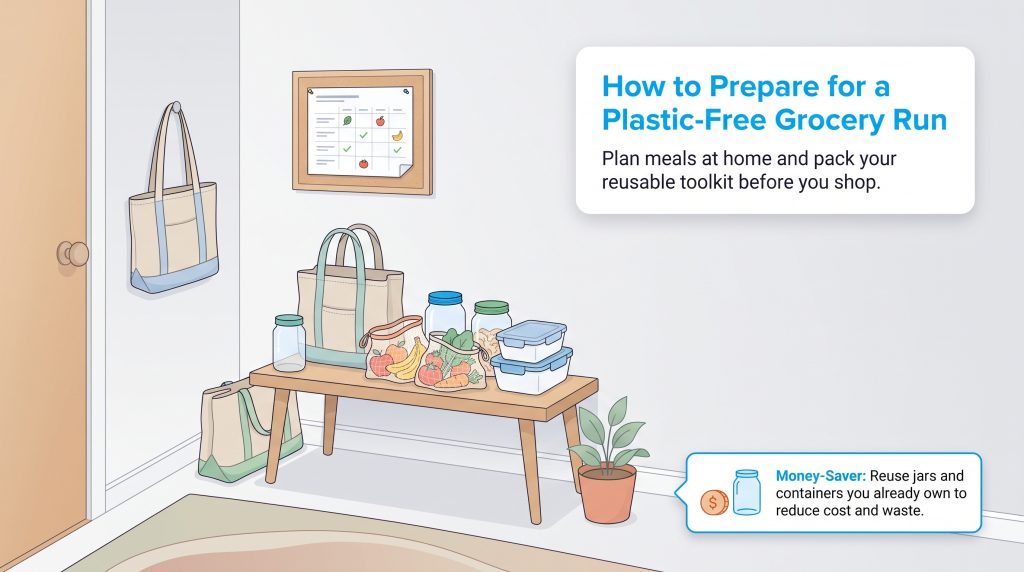
Before you even grab your car keys to head to the store, taking a few minutes to prepare sets the foundation for sustainable success. A truly eco-minded routine begins at home with proper planning, giving you a clear picture of what you actually need to buy before navigating the aisles.
Create A Zero Waste Meal Plan
A sustainable grocery shopping trip always begins with a solid strategy. Start by reviewing the ingredients you already have on hand in your fridge and cupboards to avoid overbuying, which is one of the biggest contributors to household food waste. Once you know what you have, plan your upcoming meals around seasonal produce and versatile bulk items like rice, oats, pasta, and beans.
When you map out a dedicated zero waste meal plan in advance, you can determine exactly which containers, jars, and bags you need to bring along. This foresight ensures you are fully prepared to collect your package-free groceries without having to compromise and reach for wrapped items at the store.
Assemble Your Reusable Shopping Toolkit
Bringing the right gear to the supermarket guarantees you never have to rely on flimsy plastic bags or single-use containers. Plastic-free grocery shopping is infinitely easier when you keep a dedicated, reusable toolkit ready to go. Assemble these essentials in one grab-and-go spot near your front door or in the trunk of your car:
- Sturdy canvas totes: Bring reliable, heavy-duty canvas bags for carrying heavy items like canned goods, root vegetables, and glass jars.
- Reusable produce bags: Pack several lightweight, washable cloth or mesh reusable produce bags for gathering loose fruits, vegetables, and dry bulk items.
- Clean glass jars: Upcycle existing pasta, pickle, or jam jars to transport wet ingredients, deli salads, or sticky items like peanut butter.
- Food-grade Tupperware: Bring clean, lightweight containers for the deli counter or meat department.
- Washable wax pencil or marker: Carry a dry-erase marker or wax pencil so you can easily write tare weights directly on your glass containers before filling them.
Executing Your Trip: Navigating The Supermarket
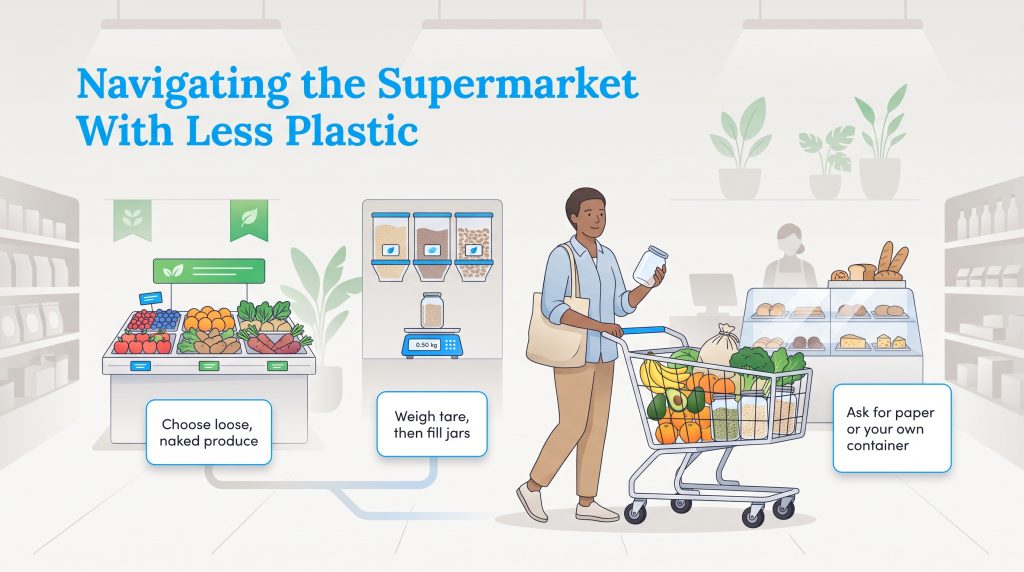
Once you step through the automatic doors, sticking to your zero waste plan is all about making mindful choices in each department. By approaching the store strategically, you can bypass the aisles lined with heavy plastics and focus on the fresh, package-free perimeters.
The Produce Section: Buying Naked Produce
When you enter the store, the produce section is often your first stop and the absolute easiest place to eliminate plastic from your cart.
- Choose loose, naked produce instead of grabbing items wrapped in plastic film or sitting on styrofoam trays.
- Avoid pulling those flimsy plastic tear-off bags provided in the aisles; they are difficult to recycle and often tear before you even get home.
- Bring your own reusable produce bags to safely bundle smaller, loose items like green beans, mushrooms, or Brussels sprouts.
If a particular fruit or vegetable has its own thick, natural skin — like bananas, oranges, avocados, or melons — you can simply place it directly into your cart without using any bag at all. Just be sure to wash your produce thoroughly when you get home.
Bulk Bin Shopping 101: How To Calculate Tare Weights
Many shoppers feel intimidated by the bulk aisles, but mastering this area is the true secret to zero waste food shopping. If you are new to package-free shopping, start with shelf-stable staples that are easy to measure, like rice, oats, lentils, beans, pasta, and flour. The most important concept to learn is how to calculate a tare weight, which is simply the weight of your empty container. You certainly do not want to pay for the heavy weight of your glass jar when buying lightweight spices.
Follow this simple 3-step list to calculate your tare weight like a pro:
- Weigh your empty container: Locate the digital scale provided in the bulk aisle. If there isn’t a customer scale available, bring your empty containers to the customer service desk or a cashier to have them quickly weighed before you start shopping.
- Label the tare weight: Using your washable wax pencil or dry-erase marker, write the exact empty weight (the tare weight) directly on the bottom or lid of your glass jar.
- Fill and checkout: Fill up your container with the desired bulk food, note the product’s PLU code on the jar, and present it at the register. The cashier will manually subtract the tare weight from the total weight so you only pay for the delicious food inside.
Navigating The Deli, Meat, And Bakery Counters
Buying animal proteins and freshly baked goods without plastic wrap might require a brief, friendly conversation with the supermarket staff, but the environmental payoff is highly rewarding. Ask the butcher or deli clerk to place your requested cuts of meat, cheese, or fish directly into your clean Tupperware containers. If store policy prevents them from accepting outside containers behind the counter, gently request that they wrap your items in compostable butcher paper instead of plastic film. Finally, bring a cloth sack to the bakery counter to carry home fresh loaves of bread or bagels, completely bypassing the standard plastic clamshells.
How To Find A Zero Waste Grocery Store Near You
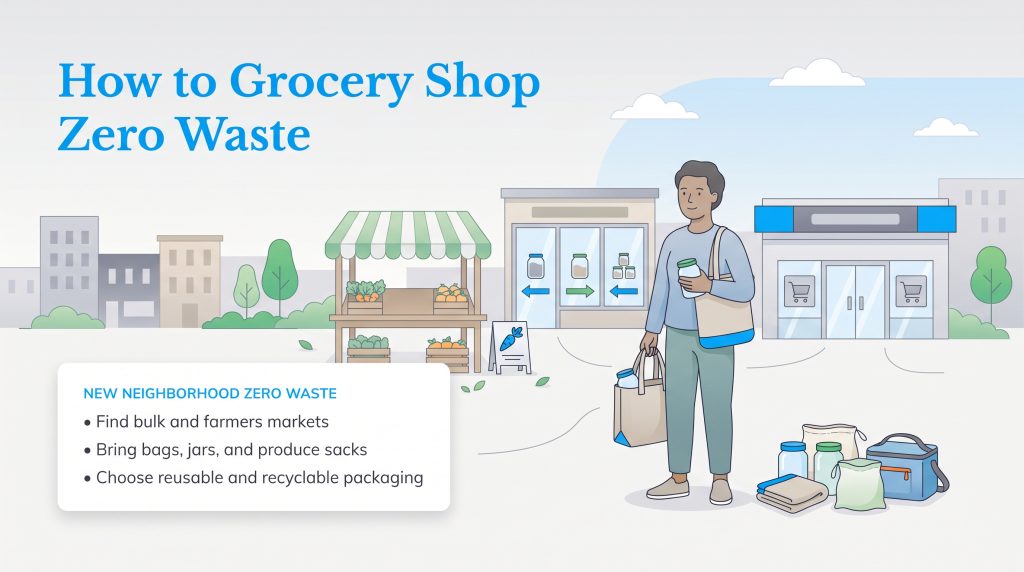
Moving to a brand-new city or neighborhood means you get to explore exciting local markets and fresh grocers. While you can certainly practice plastic-free habits at a traditional supermarket, locating dedicated bulk stores makes the process significantly smoother. If you find yourself searching for a “zero waste grocery store near me,” leverage modern tools to map out your most convenient local options. Try these excellent online directories and apps to locate refill stations, bulk stores, and farmers markets in your area:
- Litterless: An excellent online directory that lists zero-waste grocery stores, sustainable cafes, and compost drop-offs by state and city.
- The Eco Rate App: A community-driven mobile app that helps you discover and review local businesses based specifically on their sustainable practices and package-free options.
- Local Co-op Finders: Websites like the National Co+op Grocers (NCG) directory point you toward community-owned food markets that traditionally prioritize local sourcing and extensive bulk bins.
If you happen to be setting up utilities in Houston or another major metro area, you can often find local sustainability groups or community boards pointing you toward the best package-free shopping spots.
| Store Type | Best For | What to Watch For |
|---|---|---|
| Bulk food store or co-op | Dry goods, spices, nuts, grains, refill products | Compare unit prices before buying |
| Farmers market | Produce, bread, eggs, local goods | Bring your own bags and containers |
| Standard grocery store | Large-format staples, recyclable packaging | Choose glass, cardboard, or aluminum when practical |
| Online refill shop | Hard-to-find household refills | Watch shipping materials and costs |
Building A Sustainable, Zero Waste Pantry At Home
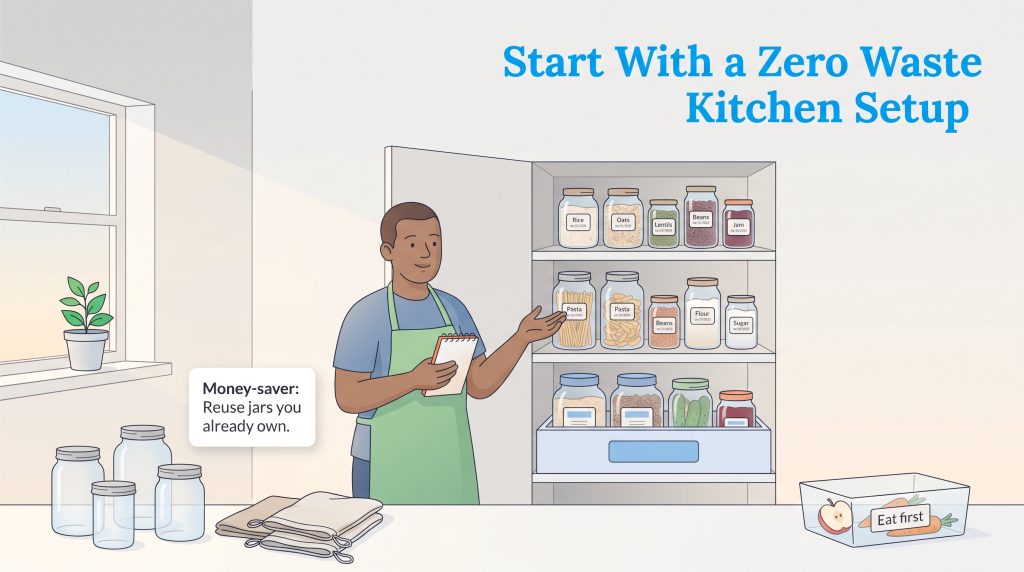
Once you return home from your successful zero waste food shopping trip, you need to store your unpackaged produce and bulk dry goods properly to extend their shelf life. A beautiful, functional zero waste pantry relies on smart, airtight storage to prevent food waste and keep pests out.
Transfer your newly purchased bulk staples — like rice, lentils, and flour — into large, upcycled glass jars. Keeping your ingredients visible and orderly prevents you from accidentally buying duplicates. When arranging your shelves, always practice the “First In, First Out” method, where the oldest food gets brought right to the front so it gets eaten first. For unpackaged produce, bypass the cling film completely. Switch to reusable beeswax wraps to securely seal in moisture on half-cut avocados or lemons, and utilize heavy-duty silicone bags to store chopped veggies or freeze leftovers.
Your daily grocery habits tie directly back to how smoothly your home’s internal systems operate. Mindful shopping dramatically reduces the amount of food you end up throwing away, which means you put significantly less organic matter down your kitchen drain. Reducing food waste and practicing composting tips helps lower trash volume and makes your kitchen systems easier to maintain. Less food going down the sink means a lower strain on your garbage disposal and plumbing, making it easier than ever to prioritize home water service and conservation resources.
When you intentionally reduce food waste at home, you protect your infrastructure while keeping extra money in your wallet. If you are curious about implementing broader strategies, reviewing the EPA guidelines on preventing wasted food can give you practical insights into keeping leftovers out of the local landfill. Pair this smart food placement with upgrading to an ENERGY STAR certified refrigerator — which is designed to use less energy than standard models — and you will be taking a meaningful step toward lowering your electric bill each month.
Mastering Your Long-Term Eco-Friendly Shopping Routine
Your sustainable journey at the grocery store isn’t just about food; it seamlessly connects to your ongoing home maintenance. As you get comfortable with bulk bins, you can expand your zero waste habits into other aisles. Many local bulk stores now feature dedicated refill stations where you can stock up on household necessities like laundry detergent, dish soap, and all-purpose cleaners using your own bottles.
Transitioning to package-free living doesn’t happen overnight, but moving into a new space provides the perfect blank slate to establish a fresh, green routine. Zero waste grocery shopping is a gradual process of learning what works best for your family, uncovering the best local shops, and simply remembering to bring those trusty canvas bags along for the ride. It isn’t about perfection. If the unpackaged option is too expensive, unavailable, or likely to spoil before you use it, choose the option that works best for your household and try again next trip. We hope these strategies empower you to build a sustainable kitchen that honors your budget, protects the environment, and makes your new house feel like a welcoming home.
Frequently Asked Questions About Zero Waste Grocery Shopping
Does zero waste grocery shopping cost more money?
What is a tare weight and why does it matter?
How do I buy meat and cheese without plastic packaging?
Can I do zero waste grocery shopping at a regular supermarket like Walmart or ALDI?
What if I can’t find a zero waste grocery store near me?
Can I freeze food in glass jars to reduce food waste?
Are reusable grocery bags actually better for the environment?
About the Author

LaLeesha has a Masters degree in English and enjoys writing whenever she has the chance. She is passionate about gardening, reducing her carbon footprint, and protecting the environment. She also recently served as President of the Board for City Sprouts (a community garden).

David has been an integral part of some of the biggest utility sites on the internet, including InMyArea.com, HighSpeedInternet.com, BroadbandNow.com, and U.S. News. He brings over 15 years of experience writing about, compiling and analyzing utility data.