

Learn How to Host an Unforgettable Energy-Efficient Summer Party That Helps the Planet and Lowers Your Utility Costs
Key Takeaways
- Swap traditional string lights for solar LEDs to reduce electricity use during evening gatherings.
- Transition your menu by sourcing local ingredients and integrating plant-based barbecue options to lower the carbon footprint of your cookout.
- Manage your home’s cooling efficiently by establishing indoor and outdoor zones to prevent your air conditioning from overworking.
Hosting a summer gathering often means cranking the air conditioning and stacking up trash bags, leading to high utility bills and excess waste, but throwing an eco-conscious bash is actually easy and budget-friendly. We know you want to celebrate Independence Day without dreading your next electricity statement or feeling guilty about your environmental footprint. Whether you are hosting a sprawling neighborhood block party or a quiet family cookout on the back deck, integrating sustainable choices into your event planning creates a more meaningful experience for your guests. By following a few practical tips for a sustainable 4th of July, you can host a memorable backyard hangout that protects both the planet and your wallet. These minor adjustments — from rethinking your menu and sourcing local ingredients to transforming your patio lighting — prove that you do not have to sacrifice fun to host an incredible, energy-efficient summer party.
1. Illuminate the Yard with Sustainable Outdoor Lighting
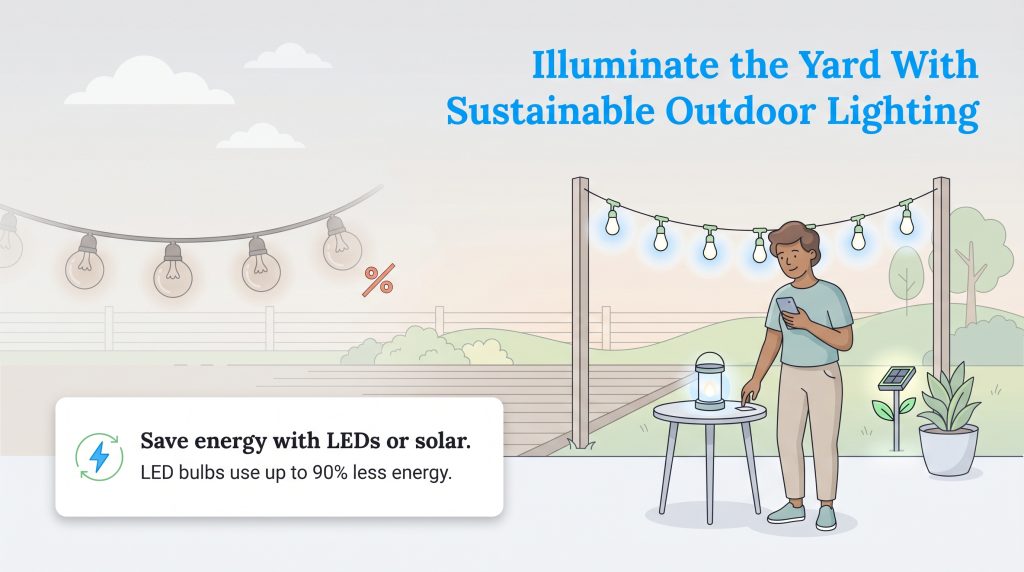
Stringing up rows of incandescent patio bulbs certainly sets a festive mood, but those older strings pull a surprising amount of power. If you leave them running from dusk until the last guest heads home, you will definitely notice the spike on your next electricity bill. Older bulbs also generate unnecessary heat, which is the last thing your guests need on a sweltering summer evening. Upgrading your backyard aesthetic is one of the easiest ways to bring down those summer utility costs while creating a beautiful atmosphere for your friends and family.
Instead of plugging heavily into the grid, try incorporating sustainable outdoor lighting into your patio design. Swapping out your old strands for energy-efficient LED lighting or solar-powered lanterns drastically reduces your power consumption. According to the U.S. Department of Energy, LED lighting uses up to 90% less energy and lasts up to 25 times longer than incandescent lighting. You can even find smart LEDs that let you switch the colors to red, white, and blue for the holiday without needing to buy specialty bulbs. Adding a timer or smart plug to your setup is another excellent energy-saving option that ensures the lights turn off automatically once the party winds down. By making these swaps, or exploring solar energy options for your home, you enjoy long-term cost savings while keeping your backyard brightly illuminated.
2. Be Strategic About Your Air Conditioning
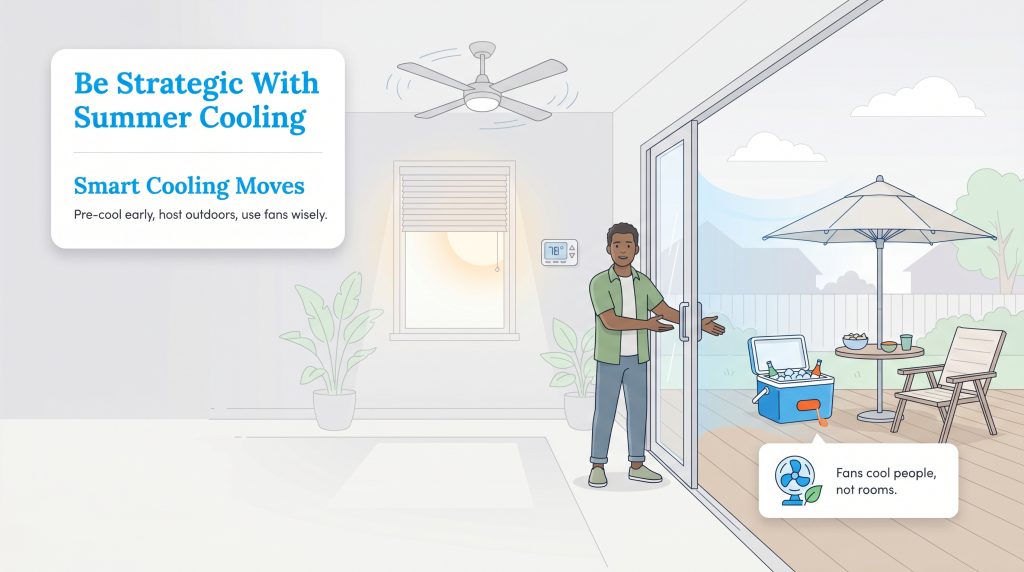
When friends and family are constantly opening and closing the back door to grab drinks from the kitchen, your home’s air conditioning system has to work overtime. All that cooled air escapes right out onto the patio, forcing your HVAC unit to burn through electricity just to maintain a comfortable indoor temperature. If left unchecked, a single afternoon of heavy foot traffic can unnecessarily increase your utility costs and put tremendous strain on your system’s mechanical components, highlighting the need for proper summer cooling maintenance during the hottest part of the year.
To save on your electric bill, you need to establish a clear cooling strategy before guests arrive. Pre-cool your home earlier in the day when electricity rates might be lower, and close your blinds or curtains during peak afternoon heat to block out solar radiation. Encourage everyone to stay outside by setting up coolers, appetizers, and comfortable seating directly on the deck under shade sails or umbrellas. For the folks hanging out inside, bump your thermostat up a few degrees higher than normal and turn on your ceiling fans — ensuring they rotate counterclockwise — to circulate the air efficiently. Ceiling fans help people feel cooler by creating a wind-chill effect, but they do not lower the actual room temperature, so turn them off in empty rooms to avoid wasting electricity. This simple adjustment keeps everyone comfortable without pushing your cooling system to its breaking point.
3. Transition to an Energy-Efficient Grill
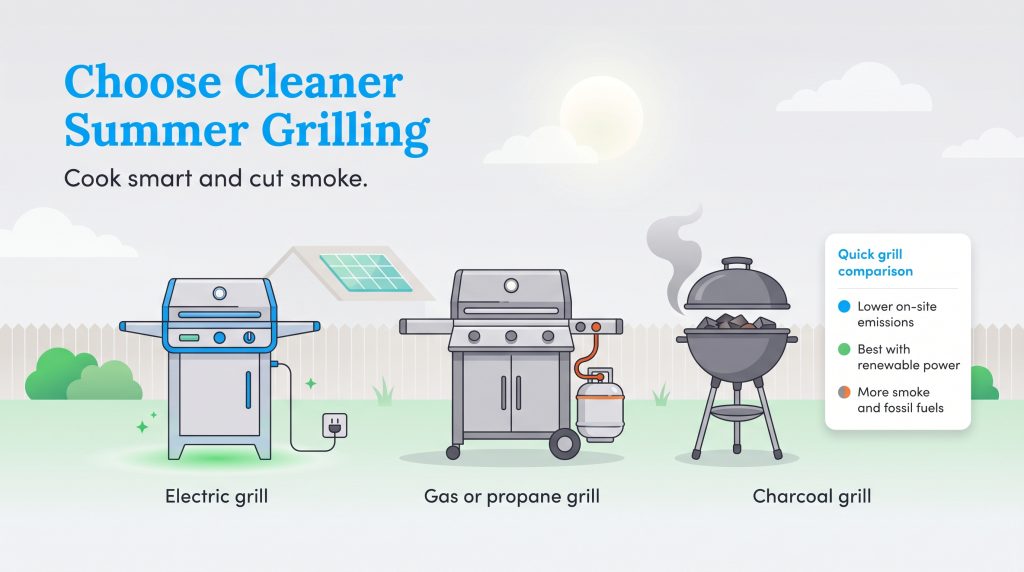
Feeding a crowd is central to any holiday celebration, but the way you cook those classic summer meals significantly impacts your overall carbon footprint. Heavy charcoal usage produces a high amount of localized emissions and fine particulate matter, while older propane setups rely entirely on non-renewable fossil fuels. Planning an energy-efficient summer party means thinking beyond the grocery list and carefully considering the environmental cost of your outdoor cooking methods.
Electric grills produce no direct combustion emissions where you are cooking, and they can be an exceptionally clean choice if your home utilizes renewable electricity. Gas and propane grills still rely on fossil fuels, while charcoal can create more smoke and particulate pollution that degrades your backyard air quality. While any cooking method can still create smoke or food odors, transitioning to an electric grill or even experimenting with a solar oven offers an environmentally mindful choice. Electric grills provide consistent, even heating without the flare-ups, and they are an especially good option for apartment balconies or smaller gatherings. If your home is powered by a renewable energy plan, cooking with electricity actively reduces your reliance on fossil fuels. We put together a quick breakdown of how these popular grilling methods compare:
| Factor | Gas or Propane Grills | Electric Grills |
|---|---|---|
| Energy Source | Fossil fuels like propane or natural gas. | Household electricity, which can be sourced from renewables. |
| Direct Emissions | Produces combustion emissions on-site directly into your backyard. | Produces no direct fuel-combustion emissions at the grill, though cooking can still create smoke. |
| Cost Considerations | Requires refilling or exchanging propane tanks. | Requires electricity, but often causes minimal impact on your monthly electric bill. |
| Best Fit | Larger cookouts and high-heat grilling needs. | Smaller patios, apartments where allowed, and homes with renewable electricity plans. |
4. Serve Earth-Friendly, Plant-Based BBQ Eats
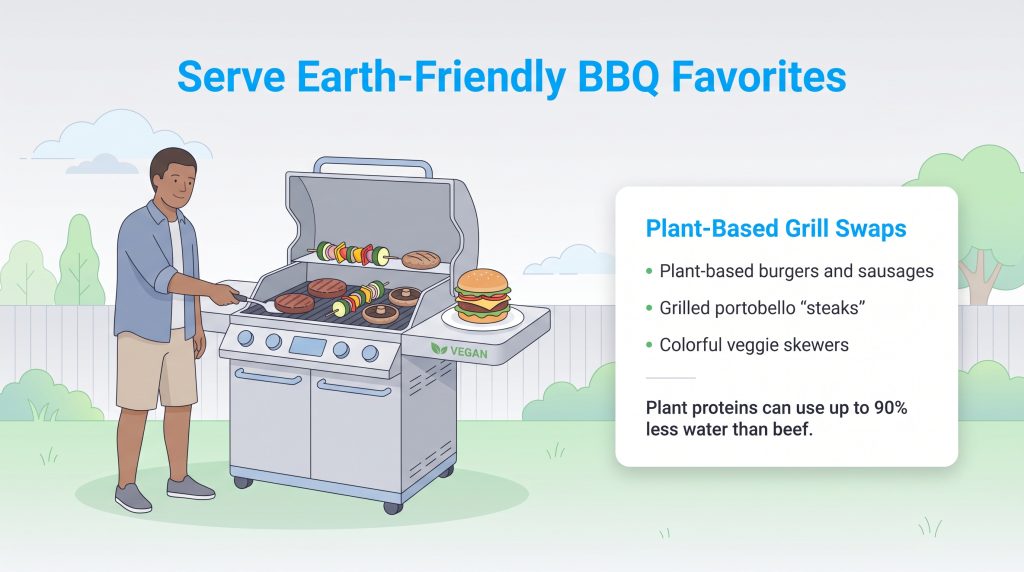
Food is the centerpiece of any great holiday gathering, but the environmental impact of what you put on the grill is often overlooked. Traditional beef burgers and hot dogs carry a heavy carbon footprint due to the massive amounts of water, land, and feed required for cattle farming, alongside significant methane emissions. Shifting your menu to prioritize sustainable BBQ ideas is an incredibly effective way to lower the overall environmental cost of your celebration. You do not have to completely eliminate meat to make a meaningful difference; simply swapping out a portion of your menu for plant-based barbecue options drastically reduces greenhouse gas emissions and introduces your guests to exciting new flavors.
Modern meat alternatives have evolved significantly, offering the same savory, smoky experience as traditional cookout staples without the heavy environmental toll. When planning your spread, look for robust ingredients that hold up well over an open flame and absorb your favorite summer marinades. Try incorporating these delicious, eco-conscious swaps into your holiday menu to keep everyone well-fed and satisfied:
- Plant-based burgers and sausages: These accessible alternatives sizzle beautifully on the grates and offer the classic cookout texture your guests expect.
- Grilled portobello mushrooms: A thick, marinated mushroom cap serves as a hearty, earthy alternative to a traditional beef patty.
- Vegetable skewers: Threading zucchini, bell peppers, and red onions onto reusable metal skewers is visually appealing and entirely plant-based.
- Vegan cheese alternatives: Offer dairy-free slices for your guests to melt over their burgers, which reduces the dairy industry’s footprint on your event.
5. Source Local and Seasonal Ingredients
Once you decide on your menu, where you buy those ingredients plays a major role in the sustainability of your gathering. The concept of “food miles” refers to the distance your food travels from the farm to your plate. When you purchase items shipped from across the country or imported from overseas, the transportation process burns substantial amounts of fossil fuels. To instantly lower the carbon footprint of your event, focus on sourcing organic local summer produce from your community.
We strongly recommend visiting local farmer’s markets in the days leading up to your party to pick up your sweet corn, crisp watermelon, and side dish ingredients. Purchasing directly from regional growers supports the local economy and guarantees that your food is exceptionally fresh. Seasonal produce naturally tastes better because it is harvested at peak ripeness rather than being picked early to survive a long cross-country truck ride. By building your side dishes around what is currently thriving in your region, you celebrate the local agricultural community while dramatically reducing the transportation emissions associated with your holiday feast.
6. Decorate with Upcycled and Natural Elements
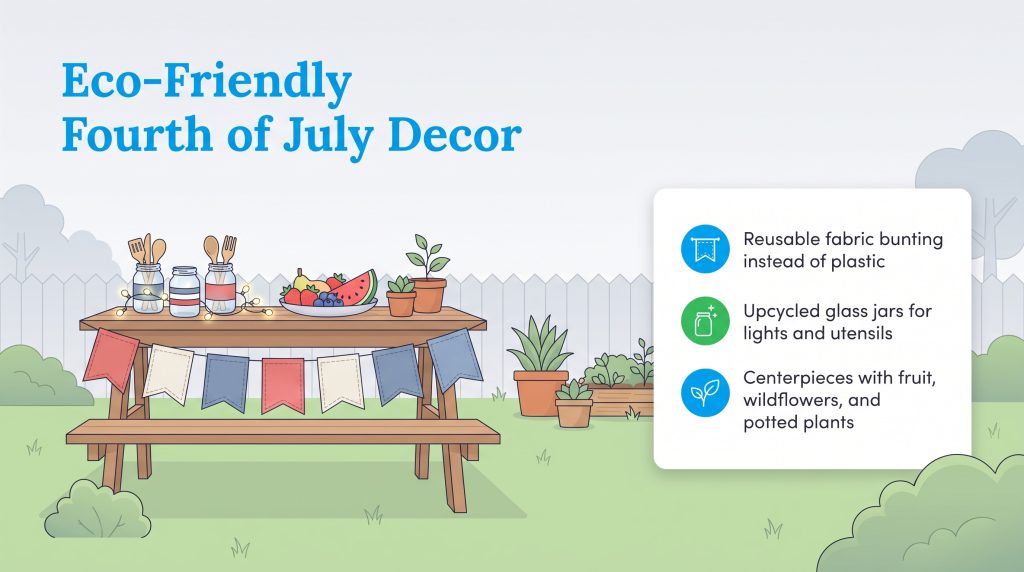
Decorating the backyard is part of the holiday fun, but grabbing cheap, plastic decorations from the dollar store guarantees that those items will be sitting in a landfill by the end of the weekend. Hosting a green Independence Day requires a shift in how you view party aesthetics. You must skip the single-use plastic streamers, flimsy disposable tablecloths, and tiny plastic flags that easily break or blow away into local waterways. These items require petroleum to manufacture and take hundreds of years to break down in the environment.
Instead, focus on sustainable outdoor decorations that you can reuse year after year. Swap out plastic banners for durable, reusable fabric bunting made from cotton or canvas. You can easily craft your own decorations using upcycled materials, like painting clean, empty glass jars in patriotic colors to hold utensils or solar fairy lights. For centerpieces, skip the plastic confetti and rely on natural elements. Foraging for local wildflowers, arranging seasonal fruit bowls, or utilizing potted plants from your garden creates a vibrant, authentic aesthetic that aligns perfectly with a low-impact celebration.
7. Explore Eco-Friendly Fireworks Alternatives
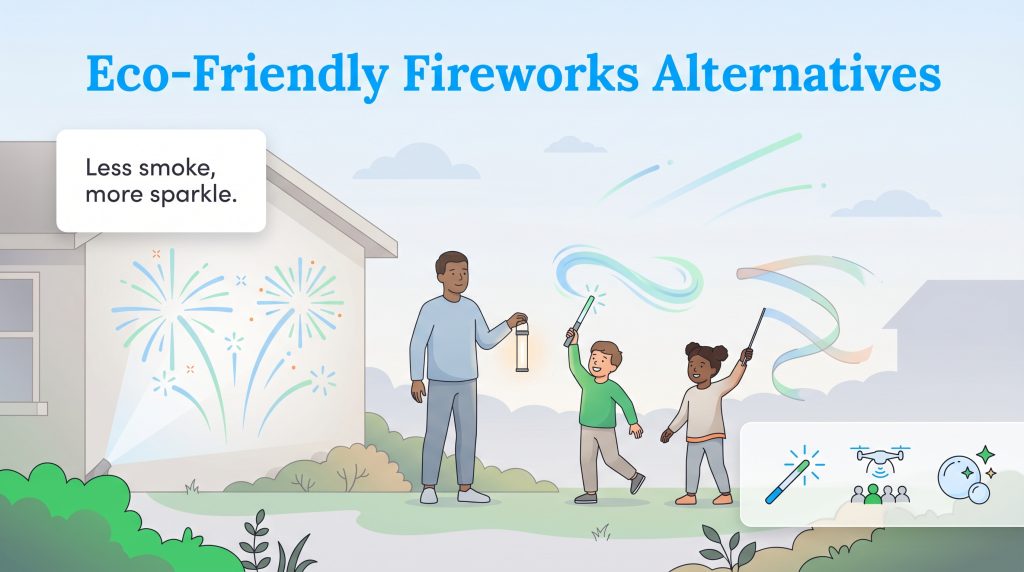
Eco-friendly fireworks alternatives are quickly becoming the go-to choice for communities looking to celebrate without the lingering smoke and noise. Traditional fireworks undeniably create temporary air pollution, as fireworks can temporarily increase fine particle pollution, release heavy metals, and leave behind toxic, chemical-laced debris that frequently washes into local storm drains. Beyond the severe environmental damage to our air and water systems, the loud booms routinely distress veterans, neighborhood pets, and local wildlife.
Instead of lighting the fuse on conventional pyrotechnics, try renting an LED projector to cast a colorful backyard laser show right onto the side of your house. It draws very little electricity and offers hours of entertainment without any smoke. You can also hand out reusable LED wands, rechargeable lanterns, ribbon dancers, bubbles, or reflective streamers to the kids. If you still want a massive visual spectacle, skip the personal display entirely by heading out to a community drone show. These visually stunning options reduce smoke, debris, and loud explosions, while still giving guests something bright and festive to enjoy together.
8. Aim for a Zero Waste 4th of July
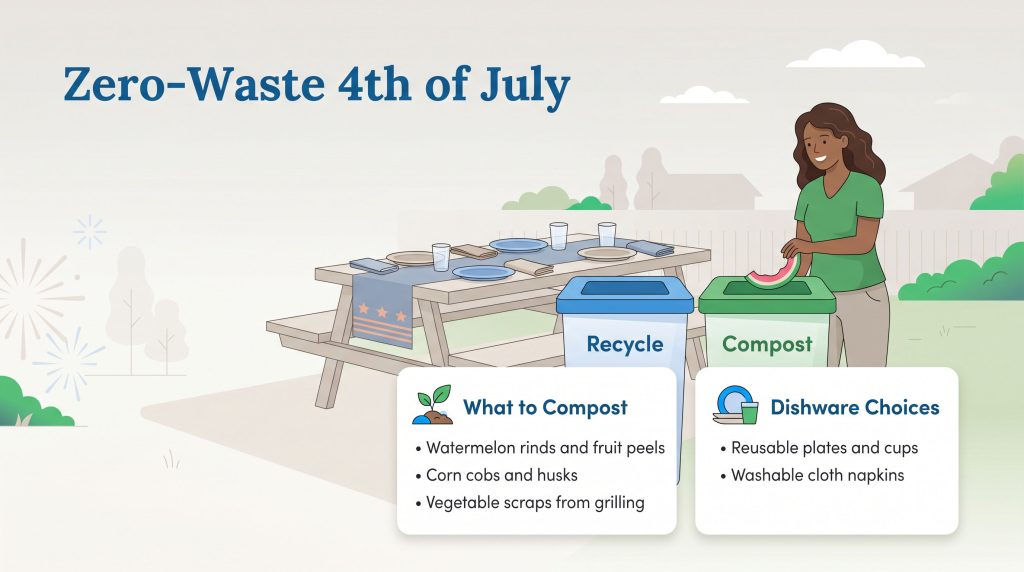
When the party winds down, you shouldn’t be left hauling five giant bags of garbage to the curb. Hosting a zero waste July 4th party requires a bit of upfront planning to swap out disposable habits for mindful, sustainable solutions. You must mandate the use of reusable party supplies wherever possible to dramatically slash your household waste. Ditch the flimsy single-use plastic cups, and opt for your everyday dishware, durable melamine plates, or certified compostable alternatives. Washable cloth napkins are also often a better first choice than compostable paper options, as they elevate the look of your gathering while preventing unnecessary paper waste.
| Instead of This | Try This |
|---|---|
| Single-use plastic cups | Reusable cups or labeled mason jars |
| Plastic cutlery | Stainless flatware or accepted compostable utensils |
| Foil-heavy serving trays | Reusable platters or washable containers |
| Tiny snack bags | Bulk snacks in refillable bowls |
You can also vastly reduce your trash output by setting up a dedicated bin for food scraps right next to your recycling station. Directing organic material away from the landfill prevents methane emissions — a potent greenhouse gas — and creates nutrient-rich soil for your garden. If you are new to the process, check out the EPA guidelines for composting at home to get started safely. To help your guests sort their leftovers without confusion, post a quick cheat sheet above the bin detailing exactly what not to put in compost. Make sure to check your local recycling and composting rules, as community requirements vary widely.
- Watermelon rinds and fruit peels
- Corn cobs and husks
- Vegetable scraps from grilling
- Plain paper napkins that aren’t coated, glittery, or soaked with grease or cleaning chemicals
- Compostable plates and cutlery only if your local composting program accepts them. Many plant-based plastics, including PLA, do not break down well in backyard compost piles.
9. Conserve Water During Party Prep and Cleanup
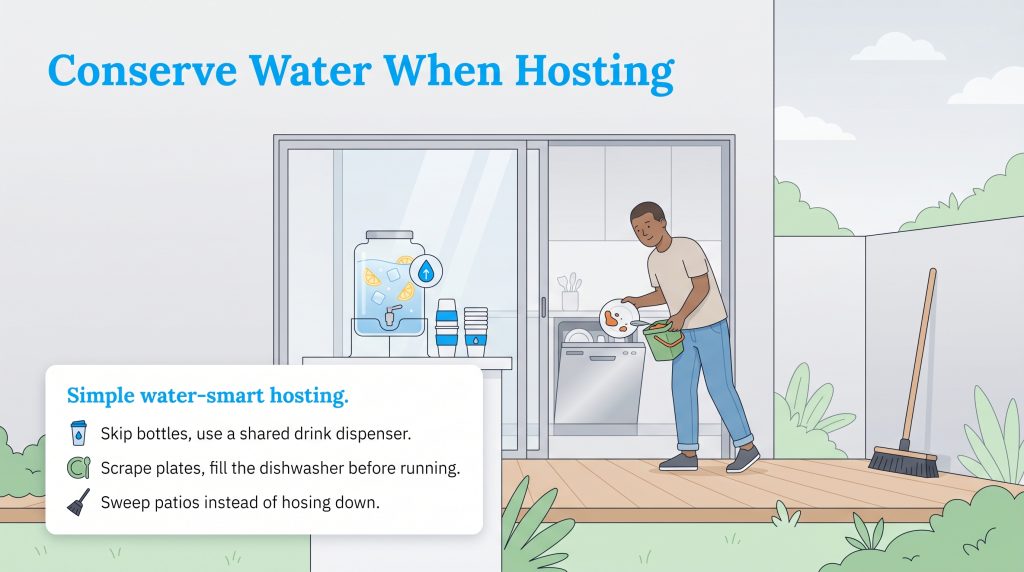
Hosting a crowd inevitably involves lots of dirty dishes and thirsty guests, but you don’t have to watch your utility meter spin out of control. Thoughtful habits during both party prep and the inevitable cleanup phase go a long way in managing your home water usage effectively. The hidden water footprint of a party adds up quickly, especially when you factor in lawn sprinklers and hand-washing platters. Simply skipping the individual plastic water bottles in favor of a large beverage dispenser filled with ice water cuts down on manufacturing waste and keeps everyone hydrated with refreshing tap water.
When it is time to tackle the towering stack of plates in the sink, skip the heavy pre-rinse under a running faucet. Modern dishwashers are incredibly efficient at breaking down stuck-on food, so a quick scrape into the compost bin is all you need before loading them up. If you need to hand-wash large, awkward items, use a tub or basin instead of running the tap continuously. Just remember to wait until the machine is completely full before pressing start, which maximizes the water and energy efficiency of every single cycle. For outdoor cleanup, sweep patios and decks with a sturdy broom instead of spraying them down with a hose unless there is a sticky spill that truly needs water.
10. Coordinate Carpooling or Public Transit for Guests
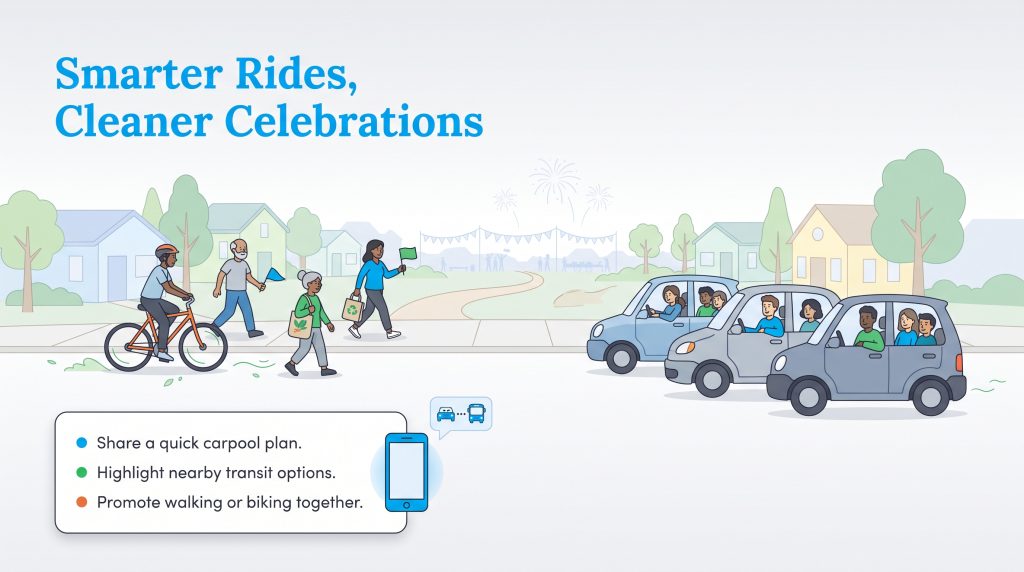
If your friends are gathering at your place before heading out to a local public fireworks display or parade, encourage everyone to travel together. Coordinating a quick carpool, hopping on local public transit, or simply walking as a group instantly cuts down on overall vehicle emissions. Send guests a quick message before the party with parking notes, transit options, and a suggestion to carpool with anyone coming from the same area. For neighborhood events, setting up a “walking bus” or bike train is an incredible way to safely move the whole group without firing up a single engine. It turns the transit time into a fun continuation of the party rather than a frustrating, isolated chore.
Consolidating rides also solves the massive parking headaches that usually plague popular holiday events. Your guests will appreciate saving money on gas and expensive parking fees, and your community benefits from having fewer cars crowding the streets. Keeping local traffic down also creates a safer environment for pedestrians and children celebrating in the neighborhood.
Biggest Impact Swaps for a Sustainable 4th of July
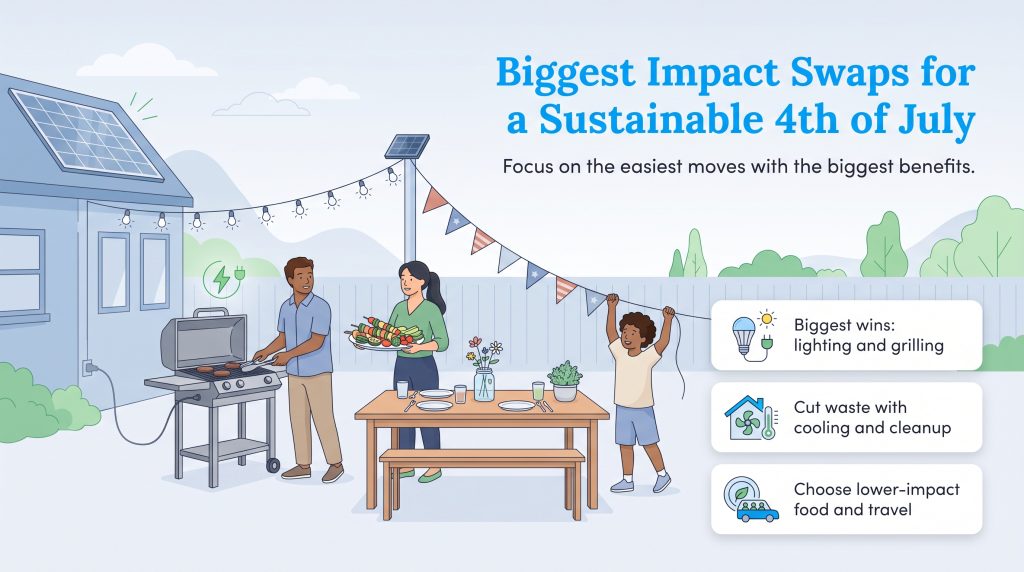
If you only have time to make a few changes this year, focusing on the highest-impact areas can make the biggest difference for your utility costs and carbon footprint. Attempting to overhaul your entire holiday tradition overnight can feel overwhelming, so start with the categories that immediately eliminate single-use plastics or reduce fossil fuel consumption. Here is a quick breakdown of where to start if you want maximum sustainability with minimal stress:
| Category | Best Swap |
|---|---|
| Lighting | Replace incandescent string bulbs with solar-powered or LED options. |
| Cooling | Pre-cool your home, raise the thermostat slightly during the party, and use ceiling fans. |
| Grilling | Use an electric grill powered by renewable energy instead of charcoal or fossil fuels. |
| Food | Serve plant-based barbecue options and source organic local summer produce for your menu. |
| Decorations | Skip single-use plastics and decorate with reusable fabric bunting or upcycled natural elements. |
| Fireworks | Attend community drone or laser shows to avoid localized fine particle pollution. |
| Cleanup | Use reusable dishware and wait for a full dishwasher load before running it. |
| Transportation | Encourage guests to carpool or take public transit to group events. |
Preparing for a Greener Independence Day
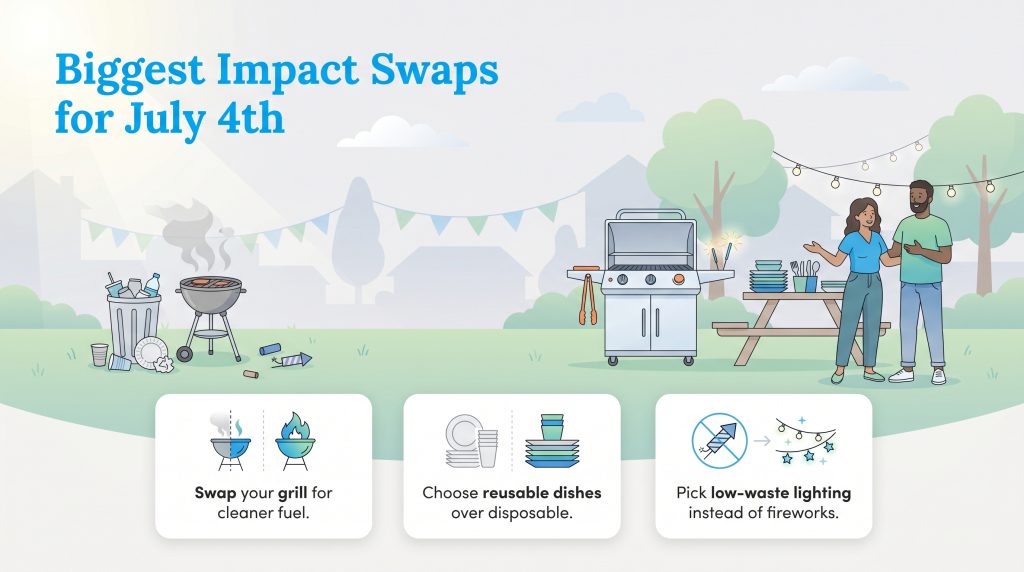
Throwing a memorable bash does not require a massive budget, excessive electricity usage, or a towering pile of trash at the end of the night. Being an environmentally mindful host simply means making a few smart swaps, from tracking your cooling habits to rethinking your menu and lighting choices. Incorporating local produce, minimizing plastic waste, and optimizing how you manage your home’s utilities all contribute to a dramatically lighter environmental footprint. You can pull off an incredible holiday celebration that results in less waste, lower energy use, and lower utility costs while proudly protecting the planet for all the vibrant summers to come.
Frequently Asked Questions About Sustainable 4th of July Celebrations
How can I keep my utility bills down while hosting a summer party?
What are some sustainable BBQ ideas for a July 4th menu?
What are the best eco-friendly fireworks alternatives for kids?
How do I set up a zero waste 4th of July barbecue?
How can I decorate for a green Independence Day without using plastic?
Do solar string lights last long enough for an evening party?
Is it more energy efficient to use a gas or electric grill?
Are plant-based barbecue options better for the environment?
Can compostable plates go in my backyard compost bin?
About the Author

LaLeesha has a Masters degree in English and enjoys writing whenever she has the chance. She is passionate about gardening, reducing her carbon footprint, and protecting the environment. She also recently served as President of the Board for City Sprouts (a community garden).

Claudio is a sustainability-focused writer with a background in Anthropology and Psychology from NC State University. He has spent over 15 years working in writing, interpretation, and translation, driven by a deep interest in how human culture shapes the environment. Today, he shares his curiosity with readers by writing about sustainable living solutions and the connection between everyday choices and environmental impact.