

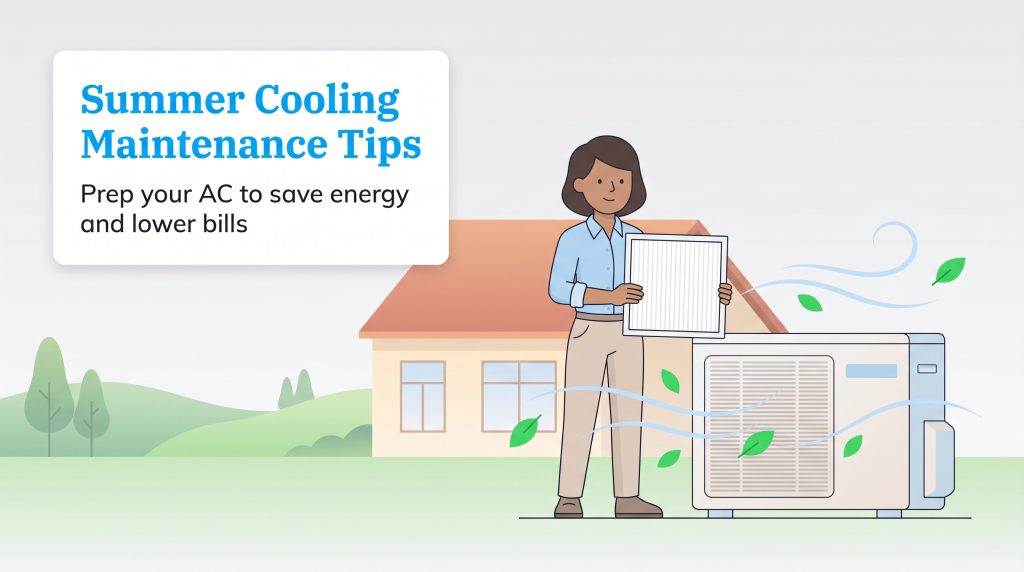
Routine cooling maintenance can help lower your summer electric bills, improve comfort, and reduce wasted energy.
Key Takeaways
- Replacing a dirty, clogged HVAC filter with a clean one can lower your air conditioner’s energy use by 5% to 15%.
- Clearing debris from your outdoor condenser ensures optimal airflow, preventing unnecessary mechanical strain and extending the life of your unit.
- Many smart thermostats help automate your cooling schedule to maximize both eco-efficiency and indoor comfort.
Watching your electric bill skyrocket during a fierce summer heatwave is a frustrating experience for any household. However, performing routine summer AC prep doesn’t just improve your daily comfort — it directly lowers your utility costs and reduces your home’s carbon footprint. In fact, the U.S. Department of Energy notes that simply replacing a clogged filter can lower your air conditioner’s energy consumption by 5% to 15%. Whether you own your house or rent an apartment, finding a solid balance between staying cool and embracing sustainable living is easier than you might think. By utilizing proper summer cooling maintenance tips, you can eliminate wasted energy, spot the early signs of AC failure, and keep more money in your pocket this season.
Why Proactive Summer AC Maintenance Matters
Being proactive about your air conditioning system is the most effective way to prevent mid-summer breakdowns. When dirt, debris, and neglect force your HVAC unit to work harder, it draws significantly more electricity from the grid. This wasted power inflates your monthly bills and contributes to unnecessary environmental strain. By following a structured maintenance plan, you extend the lifespan of your equipment while ensuring your living space remains a cool, eco-conscious sanctuary.
| DIY Maintenance Tasks | Professional HVAC Tasks |
|---|---|
| Replacing air filters (every 30 to 90 days) | Checking refrigerant levels and fixing leaks |
| Clearing debris around the outdoor unit | Conducting detailed electrical diagnostics |
| Optimizing smart thermostat schedules | Deep-cleaning evaporator and condenser coils |
| Checking the condensate drain line | Sealing and repairing major ductwork |
| Sealing visible window and door gaps | Inspecting blower motors and internal mechanics |
DIY Summer Cooling Maintenance Checklist
Knowing which tasks to tackle yourself and which ones require a professional is key to maintaining your system safely. Roll up your sleeves and knock out these simple, DIY-friendly chores to keep your AC running efficiently all summer long.
1. Replace or Clean Air Filters Regularly
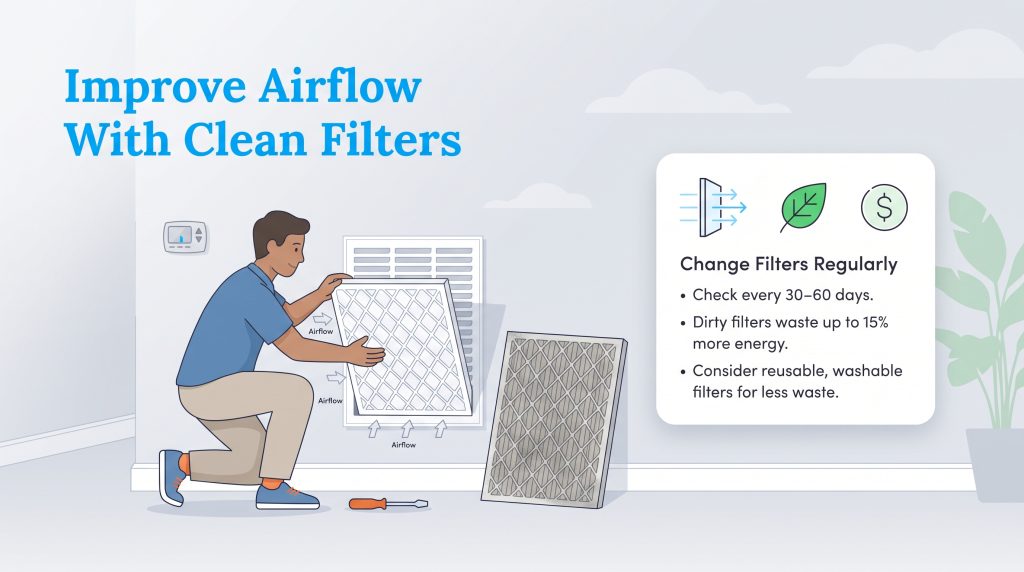
The quickest way to restrict your HVAC system is by simply ignoring the indoor air filter. A clogged, dirty filter chokes off airflow, forcing your system to work significantly harder and wasting electricity just to push air into your living spaces. During the peak summer season, when your unit runs almost continuously, we strongly recommend checking and replacing this vital component every 30 to 90 days. Taking five minutes to ensure proper sizing and a clean material makes a noticeable difference in your home’s energy efficiency. When shopping for replacements, pay close attention to the MERV (Minimum Efficiency Reporting Value) rating. A rating between 8 and 13 usually provides the best balance between capturing allergens and maintaining an eco-friendly airflow.
2. Clear Debris Around the Outdoor Condenser Unit
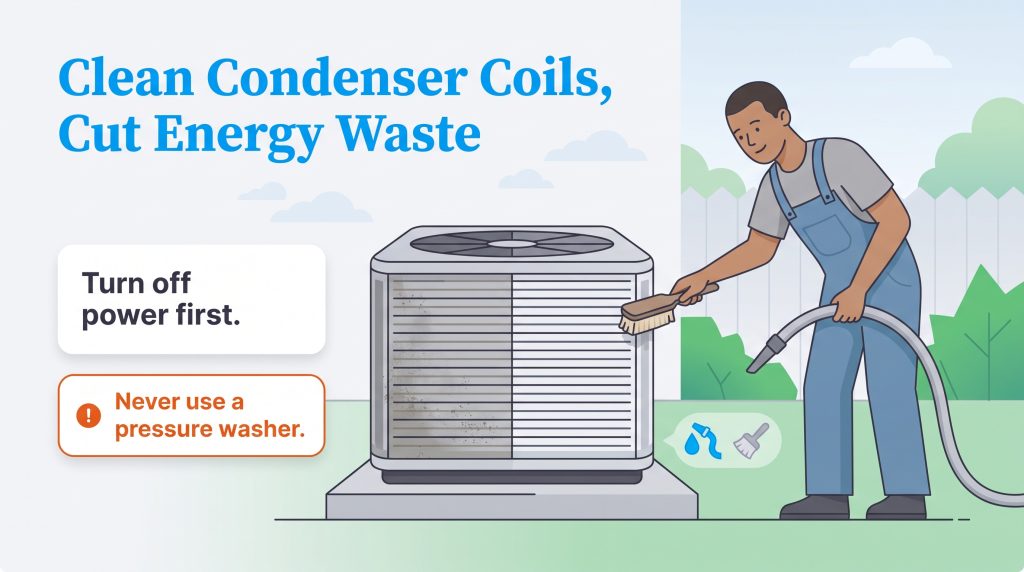
Heading outdoors to inspect your external unit is a vital step in any DIY air conditioner maintenance routine. Over the course of a year, the outdoor condenser gathers dirt, pollen, and thick grime. This buildup restricts crucial heat transfer and forces the entire unit to consume much more power. To safely maintain your outdoor unit, follow these three simple steps:
- Turn off the power at the main breaker, then carefully trim back overgrown bushes and tall grass to ensure unobstructed airflow.
- Gently brush away loose leaves, cobwebs, and dirt from the exterior fins using a soft-bristle brush.
- Wash the exterior down gently with a standard garden hose to clear the fins without bending them, always avoiding high-pressure nozzles.
3. Optimize Your Smart Thermostat Settings
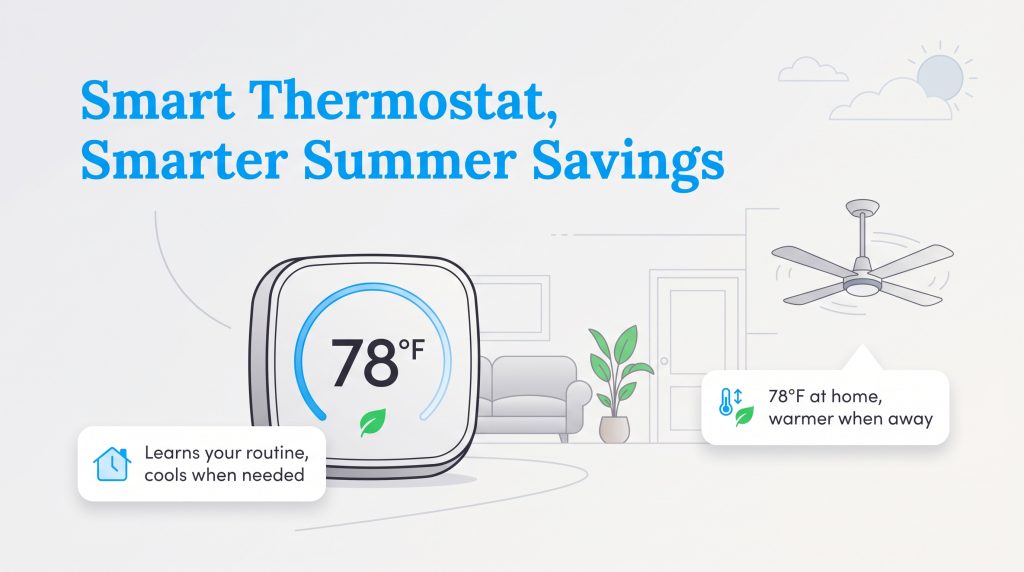
Integrating smart home technology is one of the easiest energy-efficient cooling tips you can tackle. Many smart thermostats learn your daily routine and automate your schedule to reduce cooling when no one is home. To maximize your savings, set your thermostat around 78°F when you are in the house, and program it to automatically adjust 7 to 10 degrees higher when you are away at work or out of town. This specific temperature shift directly lowers your utility bills by preventing your system from needlessly cooling an empty home. Over time, this hands-off optimization plays a major role in reducing your overall summer electric costs while keeping you comfortably cool the moment you walk through the front door.
4. Check and Clear the Condensate Drain Line
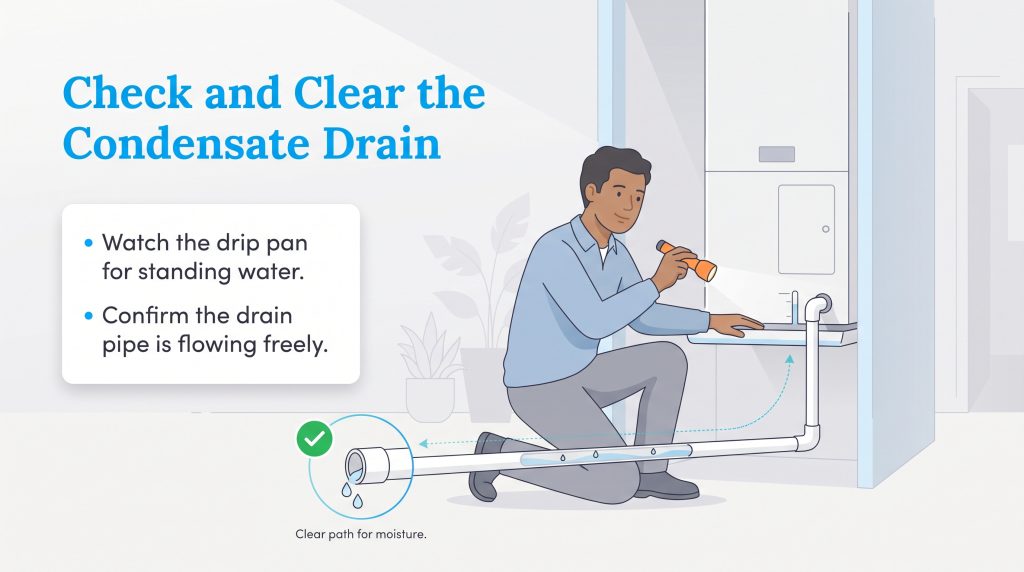
Your air conditioner pulls a massive amount of humidity out of your indoor air, and that moisture needs a clear path to exit your home safely. The condensate drain line can easily become clogged with algae, mold, or dust during the sticky summer months. A blocked line can cause water to back up rapidly, leading to unexpected water damage and sudden system shutdowns. Periodically check your indoor drip pan and the end of the outdoor drain pipe to ensure water is flowing freely, stepping in to clear minor clogs before they disrupt your comfort.
5. Seal Door and Window Gaps
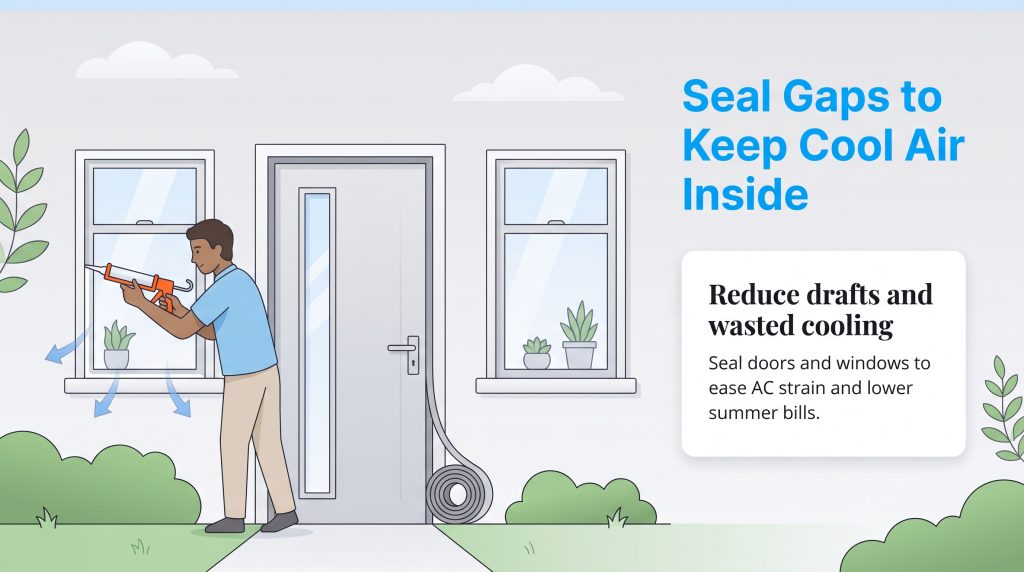
Understanding how to prepare your AC for summer isn’t just about tweaking the machine itself — you also have to secure your home’s entire thermal envelope. Even the most highly efficient air conditioner will struggle to keep up if all that cold air is constantly slipping out through drafty windows and poorly sealed doors. Take an afternoon this weekend to carefully inspect the perimeter of your house. Applying fresh weather stripping to exterior doors and running a precise bead of caulk around leaky window frames locks the cooled air inside where it belongs. Implementing these summer home weatherization tips ensures your AC won’t have to run as often to replace lost air.
When to Call an HVAC Professional
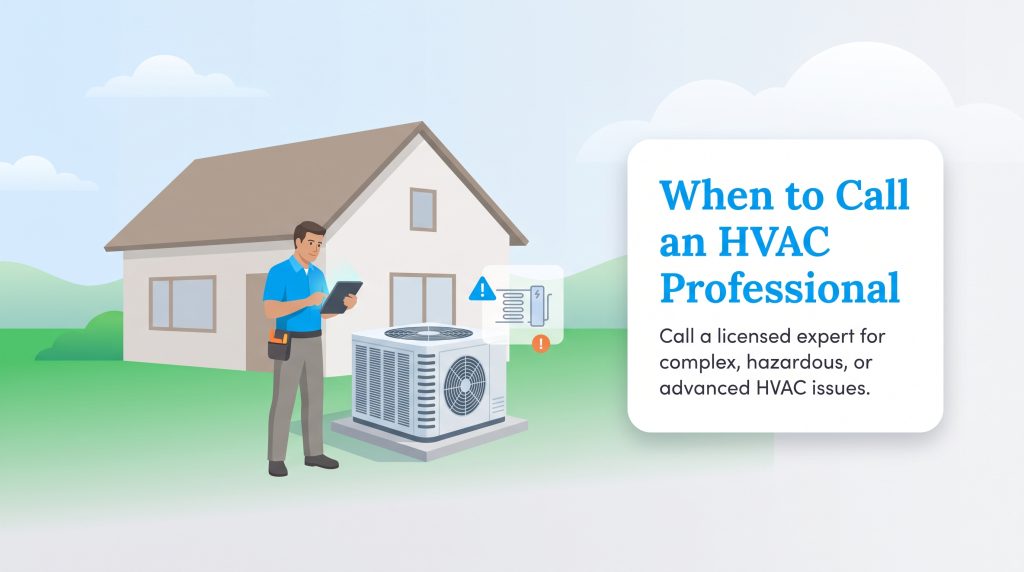
While tackling proactive DIY tasks gives you control over your household energy usage, some jobs require a certified expert. Complex components and hazardous materials must be left to a licensed professional to ensure your absolute safety and the longevity of your cooling equipment.
6. Inspect and Clean Coil Systems
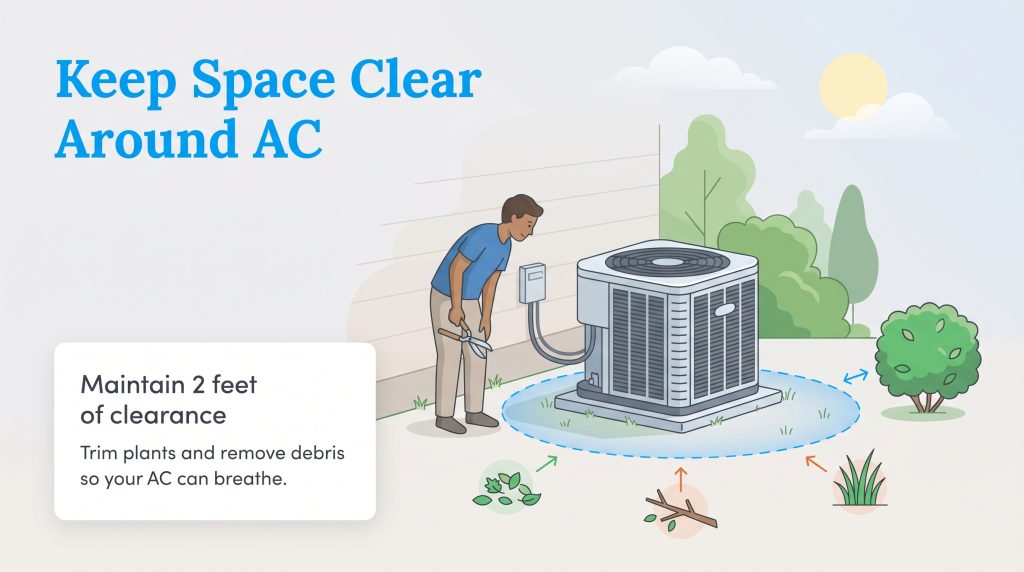
Before a professional arrives to inspect and deep-clean your internal coils, ensure you have maintained a two-foot clearance around the exterior unit so they can easily access the panels. Deep-cleaning the delicate internal evaporator and condenser coils is a job best left to a pro. Over time, heavily packed grime acts as an unwanted layer of insulation inside the system, restricting crucial heat transfer. An HVAC technician possesses the specialized chemicals and tools needed to safely dissolve this buildup without damaging the fragile aluminum fins. Regular professional cleaning ensures your system releases heat rapidly, dramatically improving its overall efficiency.
7. Check Refrigerant Levels
Your air conditioner relies on a precise charge of refrigerant to actively cool your home. If you notice a hissing noise near the unit, see ice forming on the copper coils, or feel warm air blowing from your vents, you are likely dealing with the early signs of AC failure due to a refrigerant leak. Handling, recovering, or topping off refrigerant is strictly illegal without proper EPA certification due to its severe environmental hazards. If you suspect a leak, you must mandate calling a professional for a comprehensive AC inspection rather than trying to fix it yourself.
8. Seal and Repair Ductwork
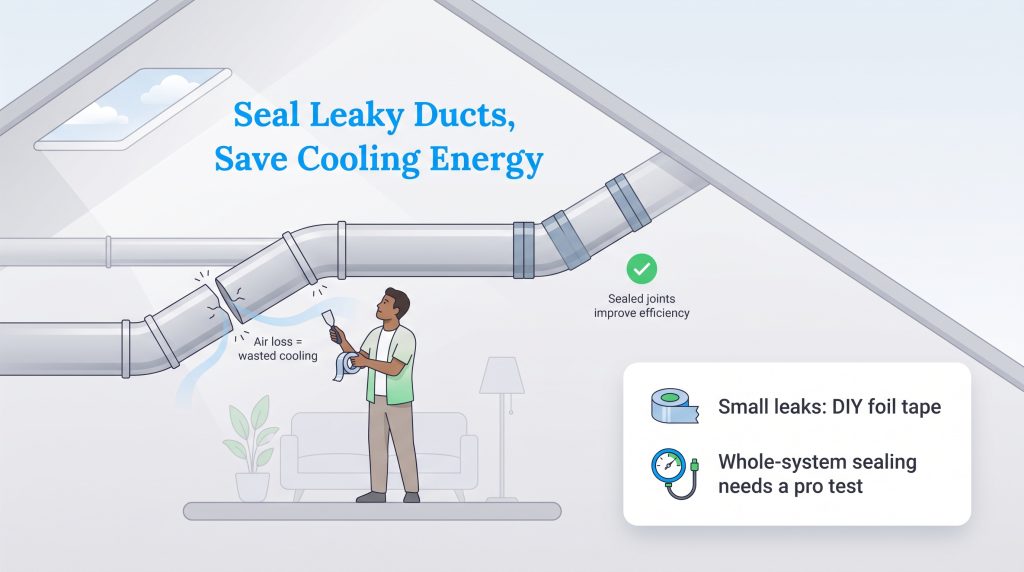
For homes equipped with central air, hidden inefficiencies in the exposed ductwork across your attic, basement, or crawlspace can ruin your cooling budget. Small holes or loose joints allow perfectly conditioned air to escape before it ever reaches your living room. The U.S. Department of Energy recommends sealing and insulating ducts to improve indoor comfort and reduce wasted cooling energy. While you can patch small visible leaks with proper foil tape, sealing an entire deteriorated duct system requires a professional diagnostic pressure test and commercial-grade mastic sealant to locate and fix the hidden gaps behind your walls.
Passive Cooling Strategies to Reduce AC Strain
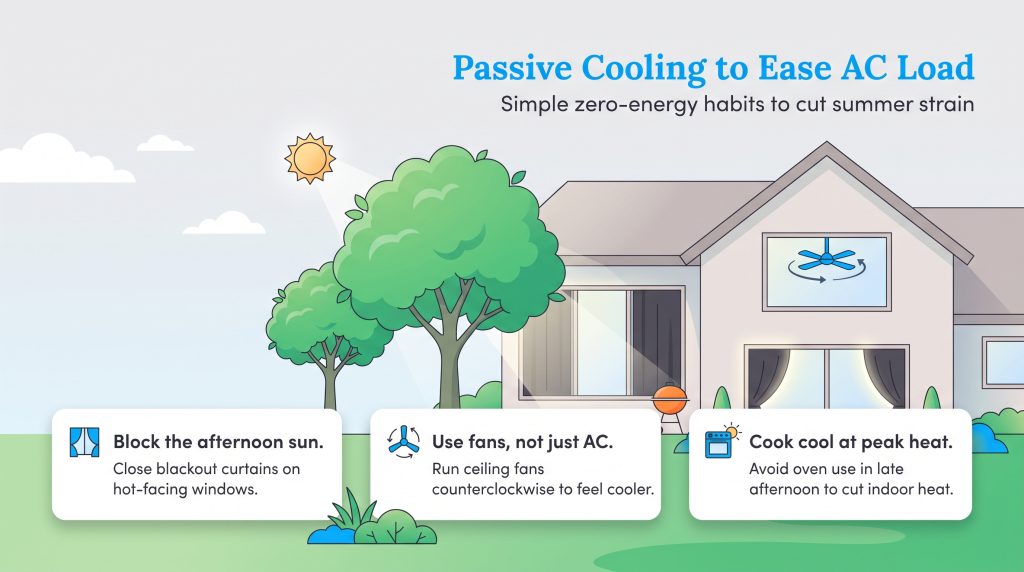
Sometimes the very best eco-friendly HVAC maintenance involves using absolutely zero electricity. Harnessing non-mechanical cooling hacks is a phenomenal way to lean heavily into household sustainability without spending a dime. By implementing a few straightforward habits, you can take a tremendous amount of strain off your mechanical cooling systems:
- Install blackout curtains: Pulling thick thermal shades closed on your south-facing windows blocks out the intense afternoon sun, drastically reducing the natural heat gain inside your home.
- Run ceiling fans counterclockwise: Set your fans to spin counterclockwise to push air straight down. This creates a brisk wind-chill effect, allowing you to feel cooler without touching the thermostat.
- Limit oven usage during peak hours: Baking or roasting in the late afternoon introduces massive amounts of heat into your kitchen. Opt for outdoor grilling or use smaller countertop appliances to keep the indoor temperature stable.
Preparing Your Home for Peak Summer Heat
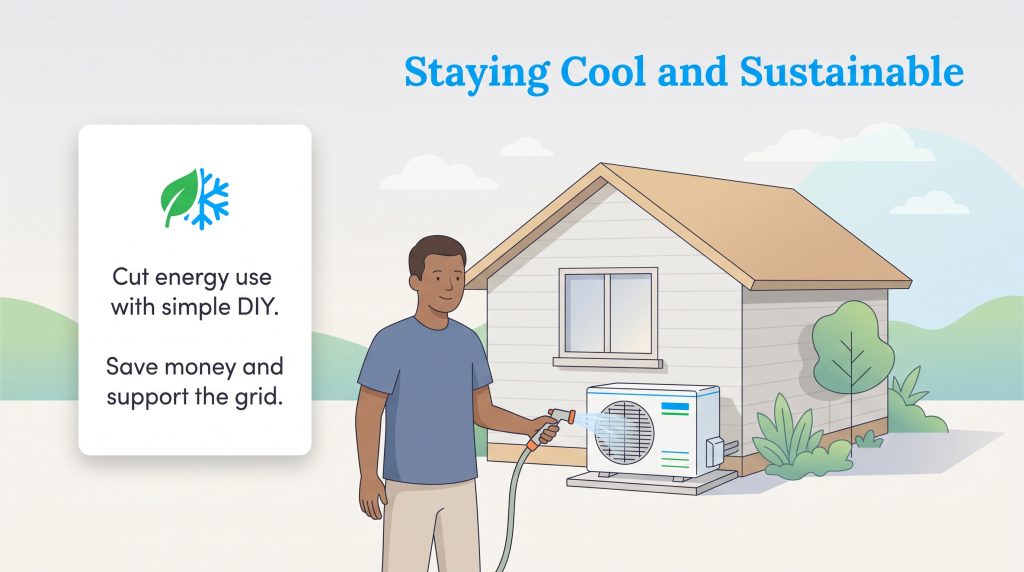
Keeping your household comfortable through the hottest parts of the year does not require a harsh compromise on your environmental values. A well-maintained cooling system heavily benefits both your wallet and the local power grid. By checking off these summer cooling maintenance tips, you can extend the life of your equipment and catch minor issues before they become expensive emergencies.
We strongly encourage you to grab some fresh filters, optimize your smart thermostat, and schedule that professional tune-up today. Taking a few hours this weekend to prep your AC guarantees a stress-free season ahead. If you are eager to keep optimizing your space, explore more ways to embrace sustainable living in your new home.
Frequently Asked Questions About Summer AC Maintenance
These quick answers cover the most common summer AC maintenance questions, from thermostat settings to refrigerant warning signs. Use them as a starting point, and always call a licensed HVAC technician when a task involves electrical components, refrigerant, or internal repairs.
How often should I service my AC in the summer?
What are the early signs of AC failure?
Can pouring vinegar down the AC condensate line prevent clogs?
What are the best thermostat settings for summer to save money?
Can I perform DIY air conditioner maintenance if I live in an apartment?
Does eco-friendly home cooling actually lower my electric bill?
How can I tell if my AC is using too much electricity?
About the Author

LaLeesha has a Masters degree in English and enjoys writing whenever she has the chance. She is passionate about gardening, reducing her carbon footprint, and protecting the environment. She also recently served as President of the Board for City Sprouts (a community garden).

Jared Evans is a licensed electrician and the owner of Full Circuit Electric in Omaha, Nebraska. As an expert reviewer for UtilitiesForMyHome.com, Jared uses his 10+ years of hands-on experience to ensure our electrical advice is safe, accurate, and easy to follow. Whether he's troubleshooting a complex wiring issue or sharing tips on green energy upgrades, Jared is dedicated to helping you power your home efficiently — and safely.