

Simple, Energy-Efficient Cooling Strategies Can Help You Stay Comfortable While Lowering Your Summer Utility Costs
Key Takeaways
- Set your thermostat near 78 degrees when you’re home to balance indoor comfort with better energy savings.
- Set your ceiling fan direction to run counterclockwise when viewed from below, creating a wind-chill effect that makes the room feel cooler.
- Use natural home cooling methods like cross-ventilation and thermal curtains to meaningfully reduce your reliance on air conditioning.
As summer heat waves intensify across the country, relying solely on your central air conditioner to battle the soaring temperatures is a guaranteed way to watch your monthly utility bill climb. Fortunately, implementing actionable summer home cooling tips helps you optimize your HVAC system and beat the heat without sacrificing your personal comfort. Whether you want to explore eco-friendly summer cooling solutions or you are trying to figure out how to lower your AC bill in summer, this comprehensive guide provides proven, cost-saving strategies. By blending proactive natural ventilation techniques with highly efficient mechanical adjustments, you can keep your living space perfectly chilled, reduce your household energy consumption, and keep more cash in your wallet this season.
1. Optimize Your Air Conditioning Efficiency
Even when you implement the best passive cooling strategies, your central air conditioner remains the primary workhorse of your household during a sweltering July afternoon. Maximizing the mechanical efficiency of this system guarantees that it uses the least amount of electricity possible while aggressively combatting indoor humidity.
Schedule Annual HVAC Maintenance
A neglected central air system severely restricts the essential airflow moving through your ductwork, forcing the compressor to work considerably harder and draw excessive power. We highly recommend scheduling a comprehensive professional tune-up early in the spring before the heavy heat arrives. A certified HVAC technician will check your refrigerant levels, clean the intricate internal components, and spot minor wear and tear before it turns into an expensive emergency repair on a 100-degree day.
Replace Air Filters Regularly
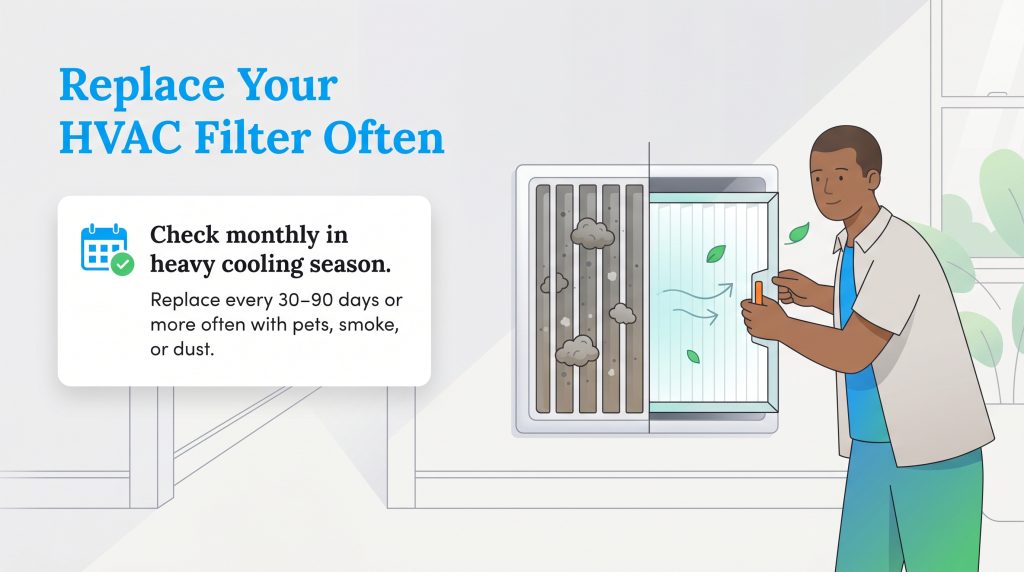
Following essential summer AC maintenance tips is incomplete without addressing your indoor air filters. When your filter is caked in heavy dust and pet dander, your blower motor struggles to circulate chilled air throughout the property. You must stick to exact replacement timelines based on the specific type of filter you purchase. If you use basic fiberglass filters, slide out the dirty unit and insert a fresh one every 30 days during the peak cooling season. If you upgrade to thicker, high-efficiency pleated filters, you can safely replace them every 60 to 90 days to maintain unhindered airflow.
Clear Condenser Coils and Vents
Your outdoor condenser unit requires ample room to breathe so it can exhaust the heavy heat it pulls from inside your home. Grab a pair of gardening shears and trim back any encroaching bushes, chop down tall ornamental grass, and rake away fallen branches to maintain at least two feet of strict spatial clearance around the entire exterior machinery. Inside the house, vacuum the dust from your supply and return grilles, ensuring that heavy furniture or decorative rugs aren’t accidentally blocking the vents and trapping your cold air.
2. Upgrade to Smart Cooling Technology
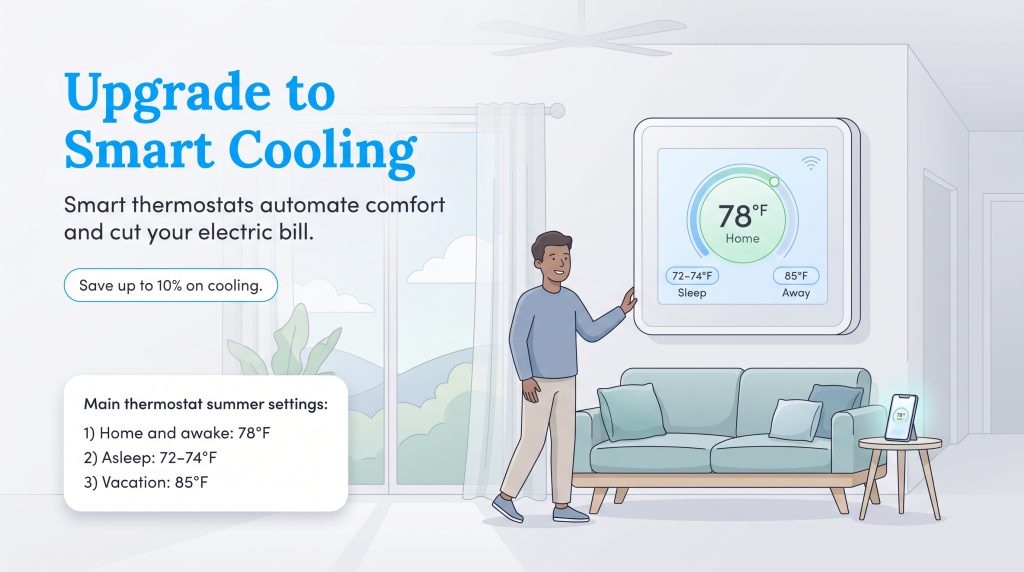
Taking advantage of smart thermostats for home cooling is one of the easiest ways to slash your utility costs without lifting a finger. These modern devices learn your daily schedule and optimize your HVAC cycles, preventing your system from running constantly while nobody is home.
Install a Smart Thermostat
Upgrading your outdated manual dial to a Wi-Fi-enabled smart thermostat provides unparalleled control over your energy consumption. These devices allow you to adjust your home’s climate directly from your smartphone, ensuring you never accidentally leave the AC blasting while you are at work. Many local utility companies even offer significant rebates for installing an ENERGY STAR-certified smart thermostat, essentially covering the initial purchase price while delivering years of automated savings. Exploring this upgrade is a proven strategy when researching how to save on your electric bill.
Program the Best Thermostat Settings for Summer
To master energy efficient home cooling, you must configure your device to match your family’s routine. Program your system with these exact thermostat settings to maximize your relief and minimize your overhead:
- When you are home and awake: Program the thermostat to 78°F. This establishes a highly comfortable indoor baseline that prevents your compressor from constantly cycling on and off during the hottest parts of the afternoon.
- When you are asleep: Adjust the temperature to rest between 72°F and 74°F. While older advice suggested warmer nighttime temperatures, modern sleep science shows that a cooler environment deeply improves your rest, especially when you pair it with a ceiling fan.
- When you are away on vacation: Set the system back to 85°F. You should never turn your HVAC system entirely off during a summer trip. Allowing your house to bake uncontrollably can damage hardwood floors, warp expensive cabinetry, and cause severe indoor humidity issues.
3. Utilize Strategic Natural Cooling
Learning how to keep a house cool without AC requires embracing passive, natural ventilation strategies. By manipulating airflow and blocking out the harsh sun, you drastically lower your household carbon footprint and ease the strain on the local electrical grid.
Adjust Ceiling Fan Direction
A highly searched query every summer revolves around the proper ceiling fan direction in summer. Operating your fan correctly radically alters how comfortable your living room feels without demanding extra work from your air conditioner. You must set your ceiling fan to rotate counterclockwise during the summer. Here is how to adjust it safely:
- Turn off the ceiling fan and wait for the blades to come to a complete, safe stop.
- Use a sturdy stepladder to locate the small directional toggle switch on the side of the motor housing.
- Flip the switch to the opposite position so the blades spin counterclockwise.
- Turn the fan back on; you should immediately feel a distinct, refreshing downward breeze.
By spinning in this specific direction, the angled blades physically push cool air straight down toward the floor. This rapid downward draft creates a refreshing wind-chill effect that evaporates moisture directly from your skin. Because fans cool people rather than physical rooms, always remember to turn them off when leaving the area to conserve electricity.
Block Heat with Reflective Window Treatments
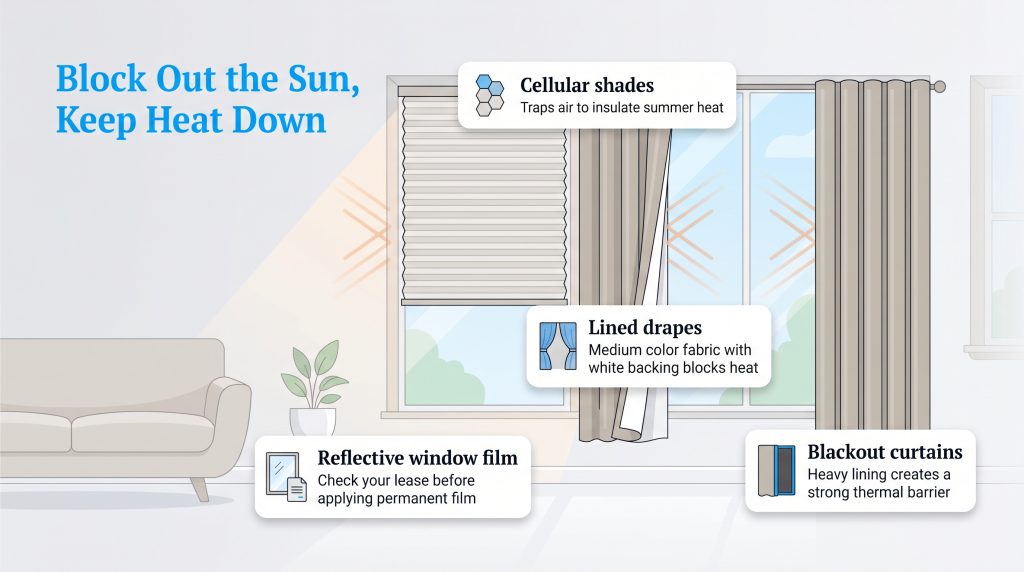
Uncovered glass acts like a magnifying glass for intense summer sunlight, transferring massive amounts of radiant heat directly into your home. Simply closing cheap plastic blinds won’t do much to stop this aggressive thermal intrusion. If you want to successfully start blocking heat from windows, you need to upgrade to specialized materials that physically reject UV rays before they warm your indoor air.
- Thermal-backed blackout curtains: Heavily lined drapes create a thick physical barrier against visible light and trap infrared radiation.
- Reflective window films: Applying these low-cost adhesive films directly to your glass provides excellent heat rejection and glare reduction.
- Cellular shades: The unique honeycomb structure traps air inside the material, forming an insulating layer that shields your room from the hot windowpane.
Implementing these sustainable living practices creates a formidable defense against afternoon sun exposure. You can explore more detailed options through the Department of Energy’s guide on energy-efficient window coverings.
Leverage Nighttime Cross-Ventilation
One of the most reliable AC-free methods involves establishing strong cross-ventilation during the cooler evening hours. Once the outdoor temperature drops below your indoor baseline, open windows on opposite sides of your living space to pull a crisp breeze completely through the property. Positioning a box fan blowing inward on the cooler, shaded side of the house, and another fan blowing outward on the warmer side forces stale heat out while drawing fresh air indoors. You must remain diligent about shutting those windows and drawing the reflective curtains first thing in the morning to trap that chilled air safely inside.
4. Improve Home Insulation and Sealing
Even the most advanced ENERGY STAR cooling appliances will struggle if your precious chilled air immediately seeps outside through structural cracks and gaps. Proper home weatherization keeps the sweltering outdoor humidity at bay and significantly reduces the overall runtime of your compressor.
Draft-Proof Doors and Windows
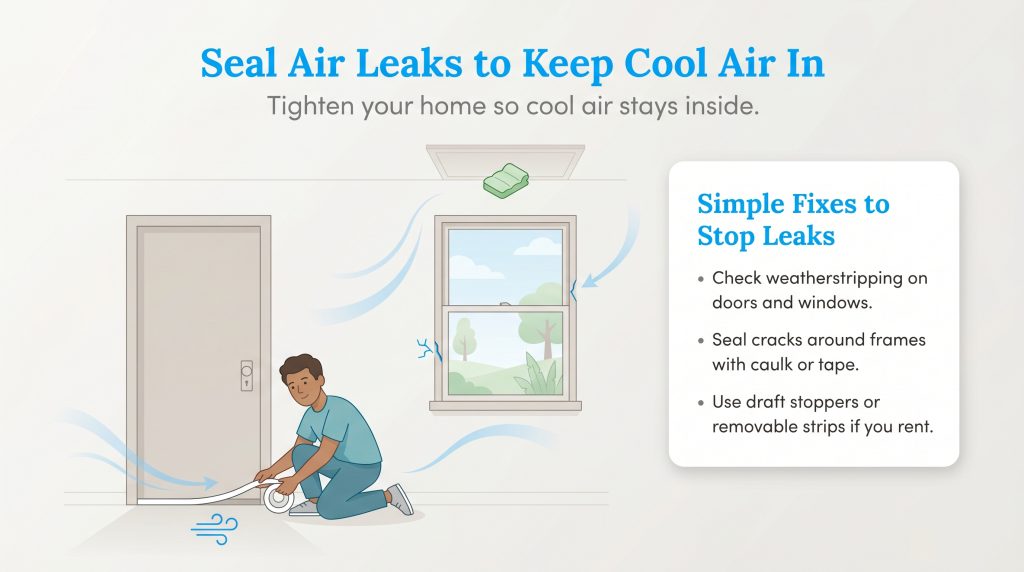
Finding and sealing common air leaks is a highly effective, low-cost weekend project. By locking out the hot summer air, your mechanical equipment works far less to maintain your target 78°F setting. Use this quick checklist for locating and sealing common household drafts:
- Inspect door frames: Wait for a bright, sunny afternoon and stand inside a dark hallway. If you can see daylight peeking around the edges of your exterior doors, you have a draft. Apply thick weatherstripping tape along the jambs to seal the gap completely.
- Check window sashes: Slowly trace your hand around the perimeter of your window frames on a windy day to feel for moving air. Use a reliable silicone caulk to fill in any structural gaps between the window casing and your drywall.
- Examine utility penetrations: Look beneath your kitchen and bathroom sinks where plumbing pipes enter the wall. Fill these hidden voids with expanding foam to stop warm, unconditioned air from infiltrating your living space.
5. Transition to Heat Pumps for Efficient Cooling
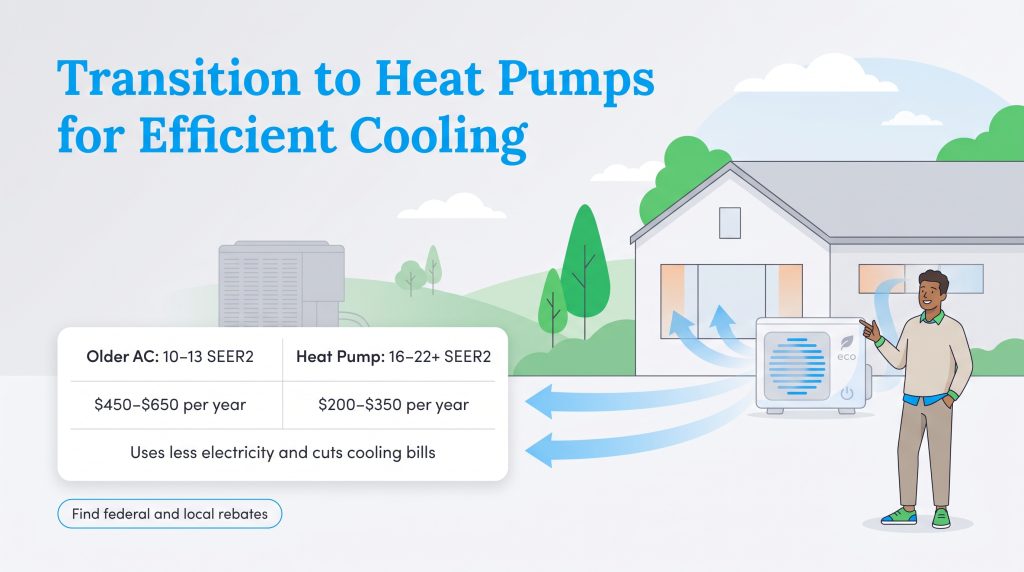
If your aging central air conditioner requires constant repairs and struggles to keep up with intense July weather, transitioning to an electric heat pump offers unmatched year-round efficiency. Don’t let the name confuse you; heat pump summer cooling is incredibly powerful. These robust mechanical systems utilize a specialized reversing valve to pull hot, stale air out of your house and dump it directly outside. They operate identically to a standard air conditioner but deliver vastly superior energy performance.
Transitioning to a modern heat pump is an environmentally mindful choice that directly supports your broader sustainability goals while capturing substantial long-term utility savings. Because they transfer heat rather than generating it, they consume significantly less electricity than traditional models. We organized this comparison table demonstrating the average energy consumption and cost savings of a standard AC unit versus a high-efficiency heat pump.
| Cooling System Type | Average Energy Efficiency (SEER2) | Estimated Annual Cooling Cost |
|---|---|---|
| Standard Air Conditioner (Older Model) | 10 to 13 SEER2 | $450 to $650+ |
| Modern Electric Heat Pump | 16 to 22+ SEER2 | $200 to $350 |
Many local utility companies and federal programs offer aggressive financial incentives to help homeowners transition to these eco-friendly cooling solutions. Upgrading your equipment is one of the best ways to lower summer electric bills while increasing your home’s baseline value.
6. Prepare Your Home for Peak Summer Heat
Extreme summer heat waves require more than just minor daily adjustments. When a massive heat dome targets your region, you need to proactively prepare your property to weather the soaring temperatures without pushing your HVAC system to the breaking point. Taking early action guarantees that your family remains comfortable while avoiding unnecessary spikes in your energy usage.
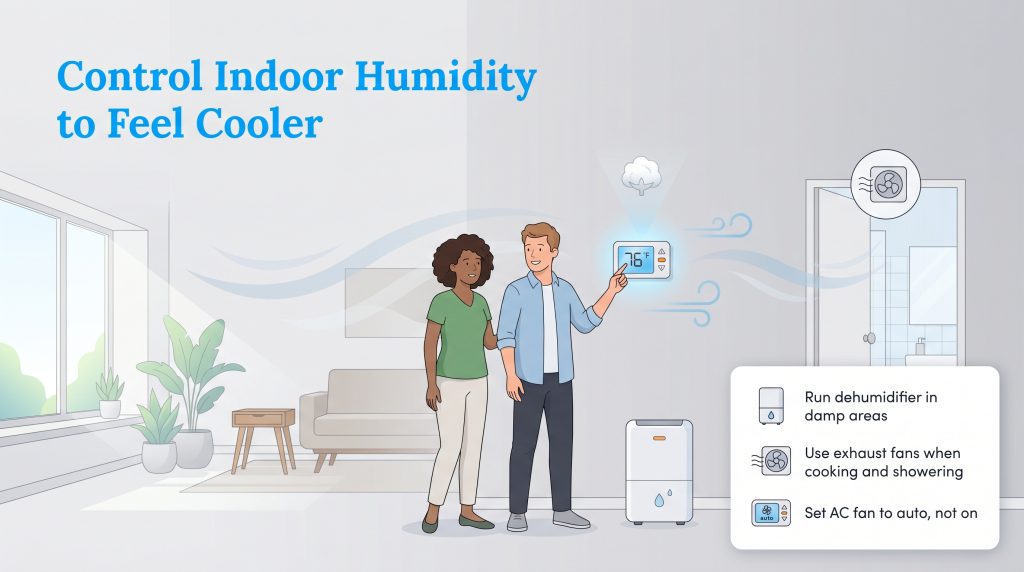
Start by diligently avoiding activities that generate additional indoor heat during the day. Wait until the cooler evening hours to run the dishwasher or toss a heavy load of laundry into the dryer. Instead of baking dinner in a hot oven, use a small microwave, operate a countertop air fryer, or fire up your outdoor grill. Properly understanding your home electricity usage throughout sweltering afternoons prevents unnecessary thermal build-up inside your busy kitchen. You should also actively manage indoor humidity by running exhaust fans when showering, which makes your ambient air feel much cooler without needing to touch the thermostat.
Follow this rapid-fire checklist 48 hours before a major heatwave hits to secure your comfort:
- Pre-cool your living space: Drop your thermostat setting by two or three degrees the night before the heatwave arrives. Cooling the home’s physical structure — including walls, floors, and heavy furniture — gives your AC a powerful head start before the afternoon sun peaks.
- Shut down heat-generating appliances: Postpone using the oven, dishwasher, or clothing dryer until the extreme weather entirely passes.
- Draw all blackout curtains: Go through every single room and completely seal your thermal window treatments, paying special attention to south and west-facing windows to block punishing UV radiation.
By blending intelligent mechanical practices with proven natural ventilation strategies, you take total control over your indoor environment. We hope you use these practical, everyday adjustments to enjoy a wonderfully relaxed, budget-friendly, and highly sustainable summer season in your home.
Frequently Asked Questions About Summer Home Cooling
What is the best thermostat setting for summer?
Does leaving a ceiling fan on cool a room if I am not in it?
How can I efficiently cool a room without air conditioning?
Does opening windows during the day help cool a house?
What is the most energy-efficient cooling method for a home?
How often should I service my air conditioner in the summer?
Why is my upstairs so much hotter than my downstairs in the summer?
About the Author

LaLeesha has a Masters degree in English and enjoys writing whenever she has the chance. She is passionate about gardening, reducing her carbon footprint, and protecting the environment. She also recently served as President of the Board for City Sprouts (a community garden).

Jared Evans is a licensed electrician and the owner of Full Circuit Electric in Omaha, Nebraska. As an expert reviewer for UtilitiesForMyHome.com, Jared uses his 10+ years of hands-on experience to ensure our electrical advice is safe, accurate, and easy to follow. Whether he's troubleshooting a complex wiring issue or sharing tips on green energy upgrades, Jared is dedicated to helping you power your home efficiently — and safely.