

Learn how electric heat pumps move heat instead of making it so you can cut energy use while staying comfortable year-round.
Key Takeaways
- Heat pumps do not generate heat like a furnace; they simply move existing heat from one place to another using electricity and refrigerant.
- It acts like a reversible air conditioner, capable of cooling your home in summer and reversing the process to bring warmth inside during winter.
- Modern heat pumps are effective in freezing temperatures, using advanced technology to extract heat energy from outside air even when it feels cold to you.
If you want to understand exactly how an electric heat pump works, the most important thing to know is that these highly efficient devices move existing heat from one place to another rather than generating it from scratch. By shifting thermal energy instead of burning fossil fuels, this all-in-one system handles both your summer cooling and winter heating needs. We are here to break down the mechanics behind this eco-conscious alternative so you can easily decide if it is the right energy-efficient home heating option for your household.
What Is an Electric Heat Pump?
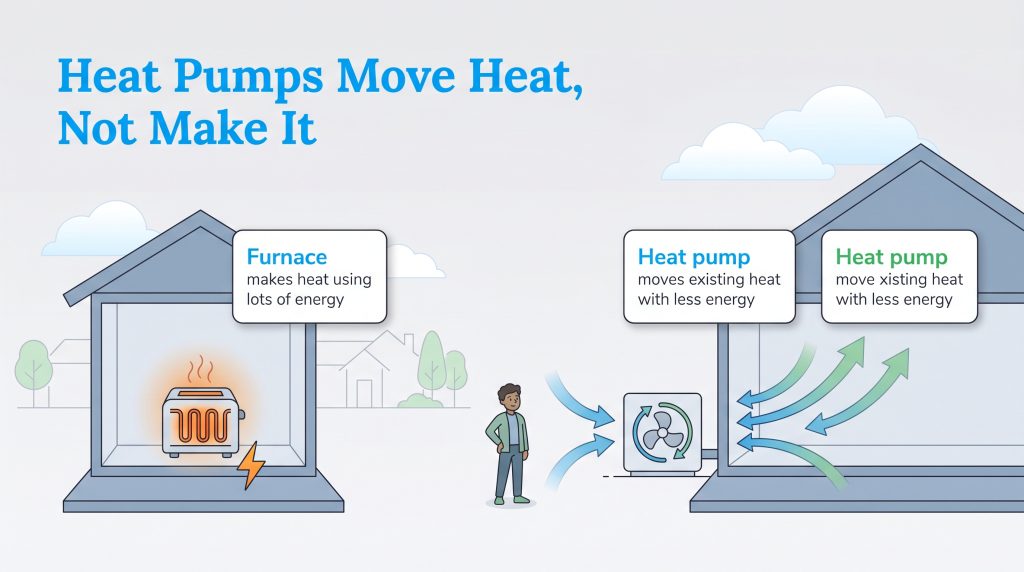
To understand the technology, you first need to look at how traditional systems differ from this environmentally mindful choice. A standard natural gas or electric furnace creates heat by burning fuel or running heavy electricity through hot coils. Think of a traditional furnace like a kitchen toaster — it uses massive amounts of raw energy to generate brand new warmth.
Instead of creating warmth, a heat pump simply transfers it. Because it is moving energy rather than manufacturing it, this process requires significantly less electricity. To put it simply, traditional furnaces burn fuel to create new heat, while a heat pump acts like a delivery truck transporting existing thermal energy from one place to another.
The Refrigerator Analogy
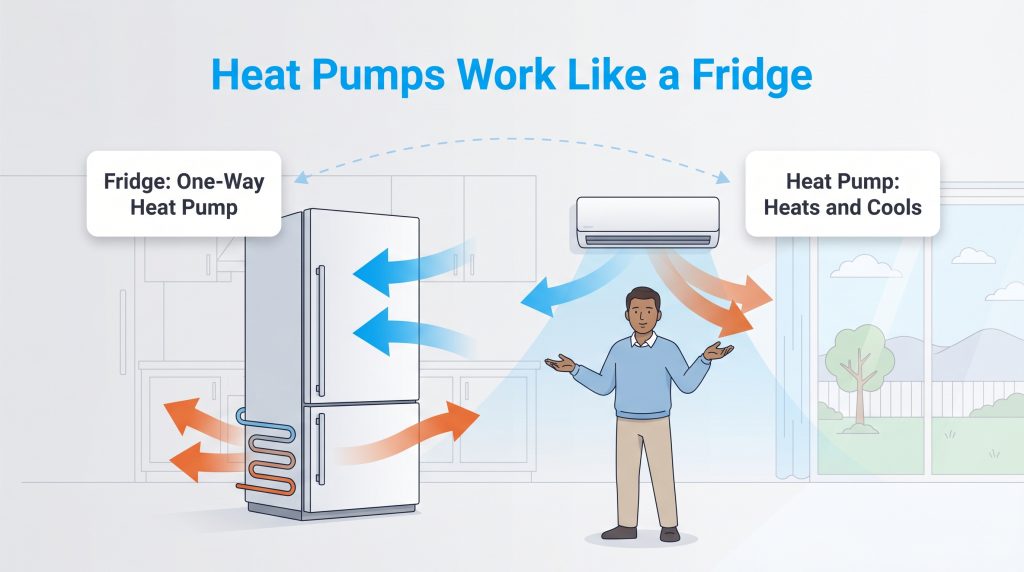
Believe it or not, you already have a similar device running in your kitchen right now. Your refrigerator is technically a one-way heat pump. It does not actually “make” cold air; instead, it pumps heat out of the insulated box and dumps it into your kitchen to keep your food cool. An electric heat pump operates on the exact same scientific principle, but with one major upgrade: it can run in both directions to cool your home in the summer and warm it in the winter.
The Core Components of a Heat Pump System
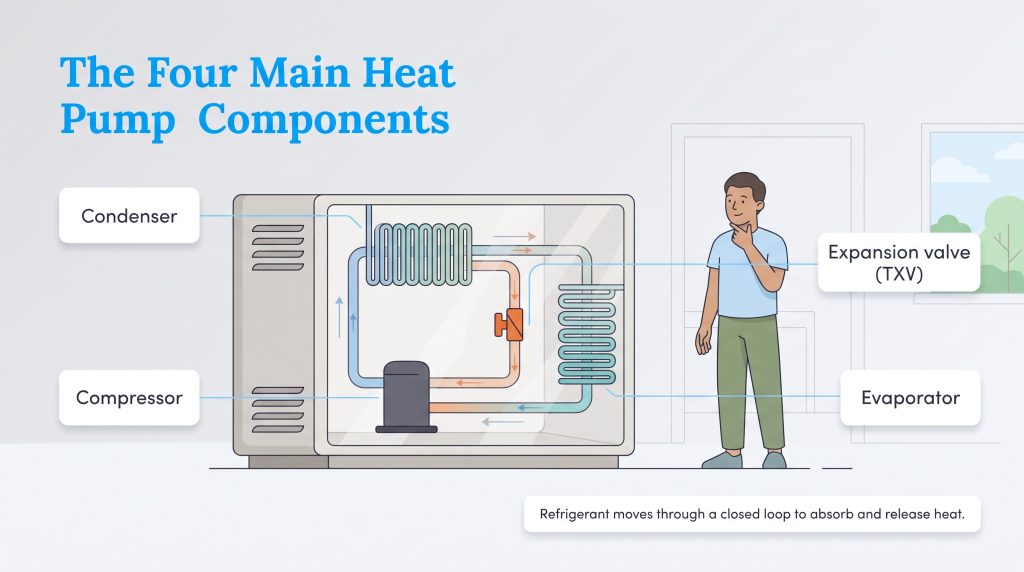
You do not need to be an HVAC technician to understand the hardware, but knowing the basic terminology helps immensely when you are comparing quotes or talking to a contractor. The entire architecture of the system relies on a continuous, closed-loop refrigeration cycle. As the chemical refrigerant travels through these parts, it continuously transitions between a liquid and a gas state, absorbing and releasing heat along the way.
- Compressor and condenser: The compressor is the beating heart of the system that heavily pressurizes the refrigerant to increase its temperature, while the condenser is the winding metal coil where the refrigerant successfully releases its stored heat into your home or yard.
- Evaporator coil: This is the critical component where the freezing cold refrigerant absorbs ambient thermal energy from the surrounding air.
- Expansion valve: After the refrigerant releases its heat, this specialized valve rapidly drops the pressure of the fluid, cooling it down significantly so it is ready to absorb heat once again.
- Reversing valve: This vital motorized switch physically changes the direction of the refrigerant flow, allowing the system to effortlessly flip back and forth between heating and cooling operations.
Step-By-Step: The Refrigeration Cycle Explained
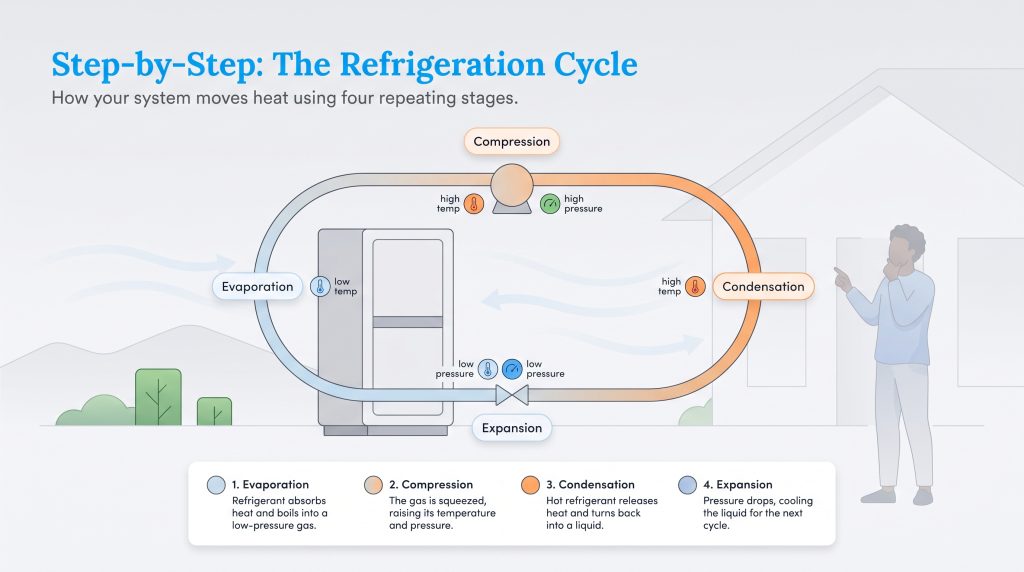
At the center of this technology is the refrigeration cycle, a continuous loop of physics that makes moving heat possible. By manipulating pressure and temperature, the system successfully extracts warmth from thin air. Here is exactly how the continuous process works in four essential stages:
- Evaporation: Absorb thermal energy from the ambient air as the freezing liquid refrigerant transforms into a low-pressure gas inside the evaporator coil.
- Compression: Squeeze the low-pressure gas inside the compressor to drastically increase its overall temperature and pressure, effectively preparing it for maximum heat transfer.
- Condensation: Release the stored warmth into your home (or outside, depending on the season) as the highly pressurized gas passes through the condenser and returns back to a liquid state.
- Expansion: Depressurize the cooled liquid by passing it through the expansion valve, returning the refrigerant to a freezing state so it can begin the cycle all over again.
How Heating Mode Works in Winter
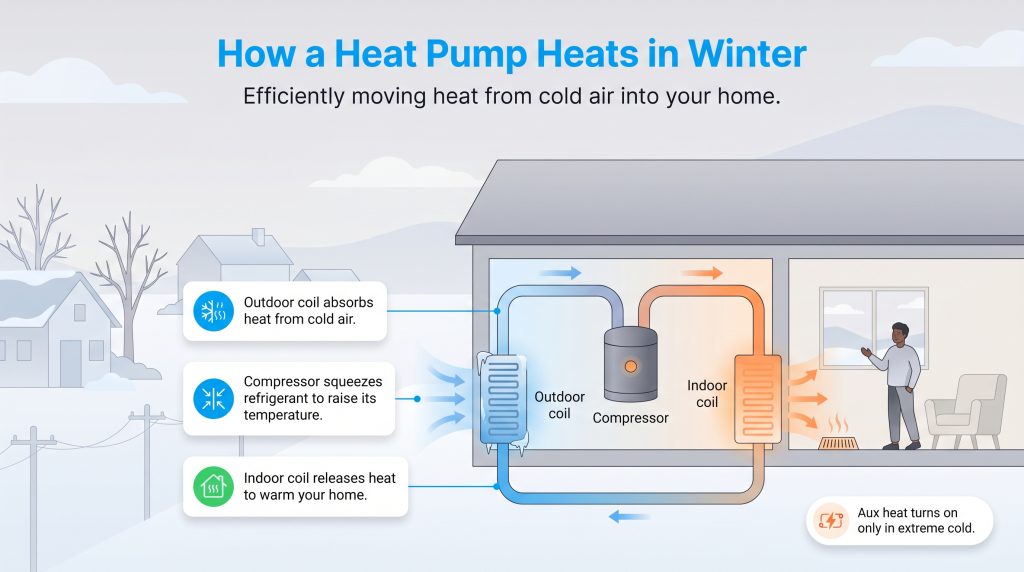
The most common question homeowners ask is how these systems operate when it is freezing outside. It feels completely counterintuitive, but it all comes down to basic physics. Even freezing cold air contains a surprising amount of thermal energy. In fact, absolute zero (the scientific point where there is zero heat energy) is -459.67°F. By circulating incredibly cold refrigerant through the outdoor evaporator coil, the system absorbs whatever ambient heat is floating in the winter breeze. The compressor then dramatically increases the refrigerant’s temperature before blowing that robust warmth directly into your living room.
How Cooling Mode Works in Summer
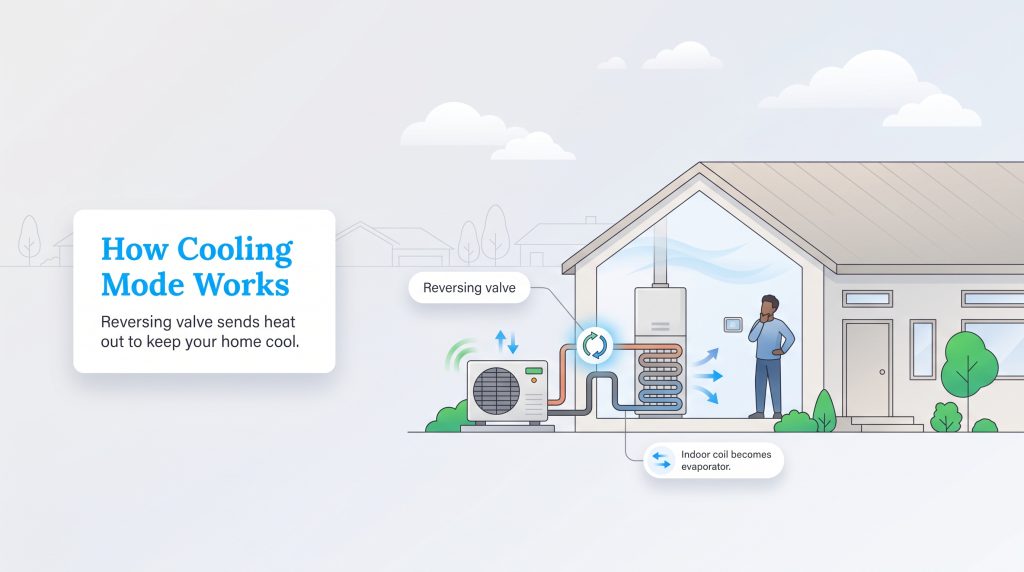
When comparing heating mode vs cooling mode, the system simply reverses its job when summer arrives. The magic behind this dual functionality is the reversing valve, which physically changes the directional flow of the refrigerant through your copper lines. When you switch your thermostat to cool, the reversing valve immediately engages, turning the indoor coil into an evaporator to pump the uncomfortable heat out of your house instead of into it. Leveraging this high-efficiency cooling is one excellent strategy if you want to learn how to save on your electric bill.
Types of Heat Pumps: Which Is Right for You?
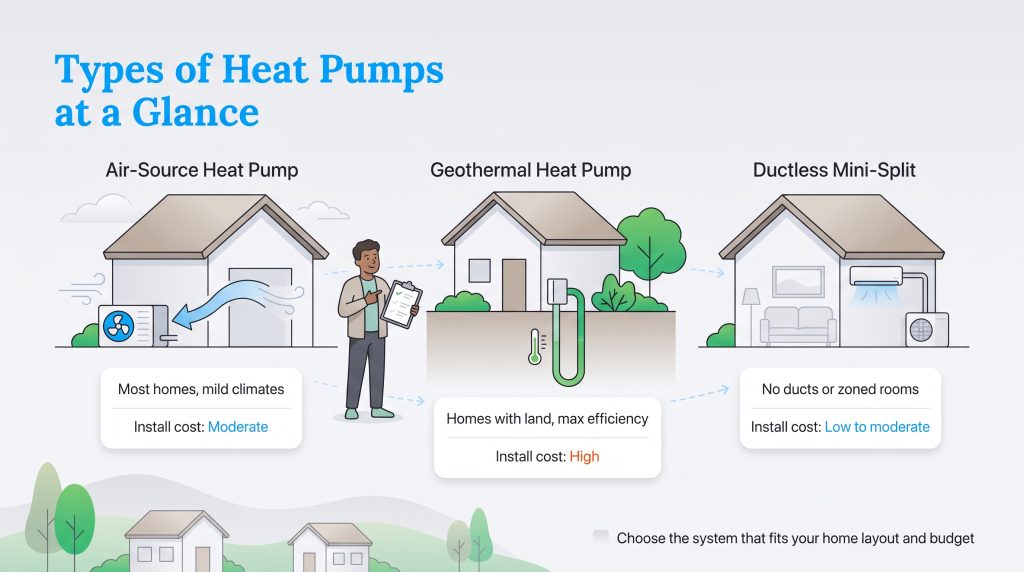
While the core science remains exactly the same, there are a few different ways to install this environmentally mindful choice in your home based on your specific layout and property. Each option offers unique benefits, ensuring that virtually any household can find a configuration that maximizes their energy savings.
| System Type | Best Use Case | Relative Installation Cost |
|---|---|---|
| Air-Source Heat Pump (ASHP) | Most residential homes in mild to moderate climates | Moderate |
| Geothermal Heat Pump (GHP) | Homes with ample land seeking maximum efficiency | High |
| Ductless Mini-Split Heat Pump | Older homes without ductwork or for specific room zoning | Low to Moderate |
Air-Source Heat Pumps
An air-source heat pump is the most common and cost-effective model available on the market today. As the name suggests, it exchanges heat directly with the outdoor air. Modern units are highly efficient, relatively fast to install, and incredibly popular for standard residential homes.
Ground-Source (Geothermal) Heat Pumps
A geothermal heat pump uses buried underground pipes to extract heat from the earth, which brilliantly maintains a steady 50-to-60-degree temperature year-round. While they are significantly more expensive to install initially, they offer unmatched efficiency regardless of how extreme the winter air gets.
Ducted Versus Ductless (Mini-Split) Systems
You will also need to choose how the conditioned air is delivered inside your living space. Ducted systems simply use your home’s existing ventilation network to push air into every room from a central air handler. Alternatively, a mini-split heat pump mounts individual blower units directly on your walls or ceilings. Ductless systems are incredibly efficient because they avoid duct leakage entirely, making them perfect for older homes or customized zoning.
Do Heat Pumps Work in Cold Climates?
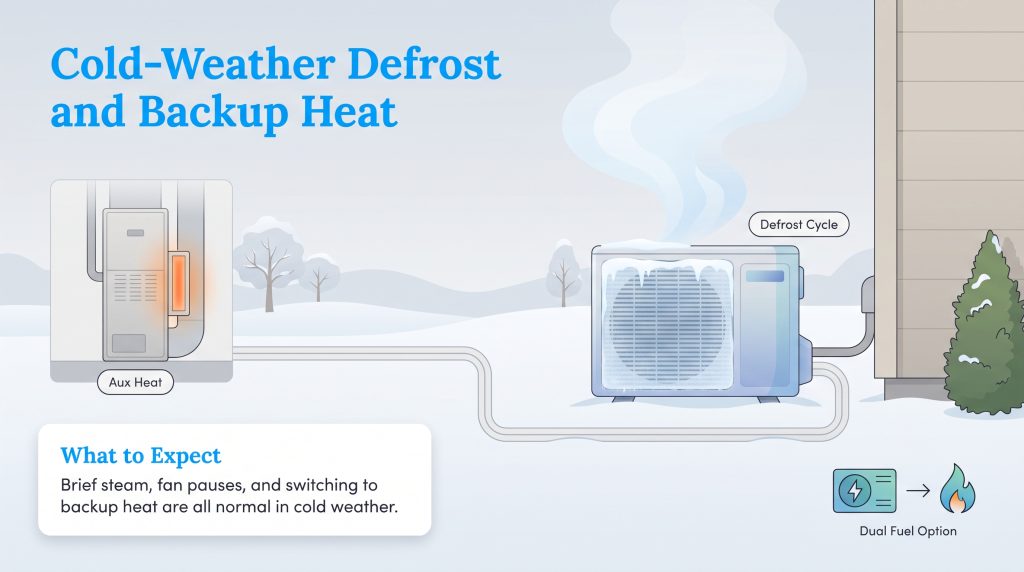
One of the most common consumer objections is the misconception that these systems cannot handle freezing rain and heavy snow. However, modern cold-climate heat pumps operate efficiently even in sub-zero temperatures. Today’s units feature advanced variable-speed compressors that can precisely adjust their operational capacity to pull adequate heat from frigid air.
When it is very cold and humid outside, moisture can freeze directly onto the outdoor coils. To fix this automatically, the system will temporarily reverse itself into cooling mode to melt the ice — a clever built-in process known as the defrost cycle.
During these brief defrost cycles, or when the outside temperatures take a sudden, massive dive, the system might need a little extra help warming your home. This is where backup heat strips come into play. These auxiliary electric resistance coils act like giant space heaters tucked inside your ductwork to keep you perfectly warm while the main outdoor unit catches up or clears away any accumulated frost.
Understanding Heat Pump Efficiency Ratings
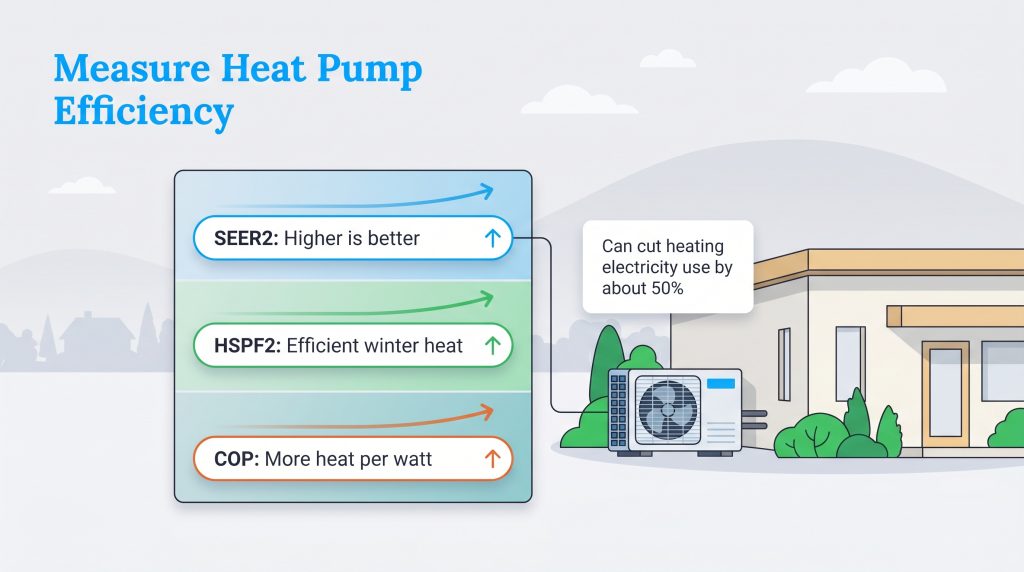
When shopping for a new system, you will quickly encounter metrics that measure how well the unit turns raw electricity into comfortable air, such as SEER2 for cooling efficiency and HSPF2 for winter heating performance. However, the most crucial metric for measuring true sustainability is the Coefficient of Performance (COP).
The COP is a raw, real-time measure of thermal efficiency. If an electric unit has a COP of 3, it outputs three times as much heat energy as the electrical energy it consumes to run the compressor.
Comparing Heating Systems: Heat Pumps Vs. Gas Furnaces
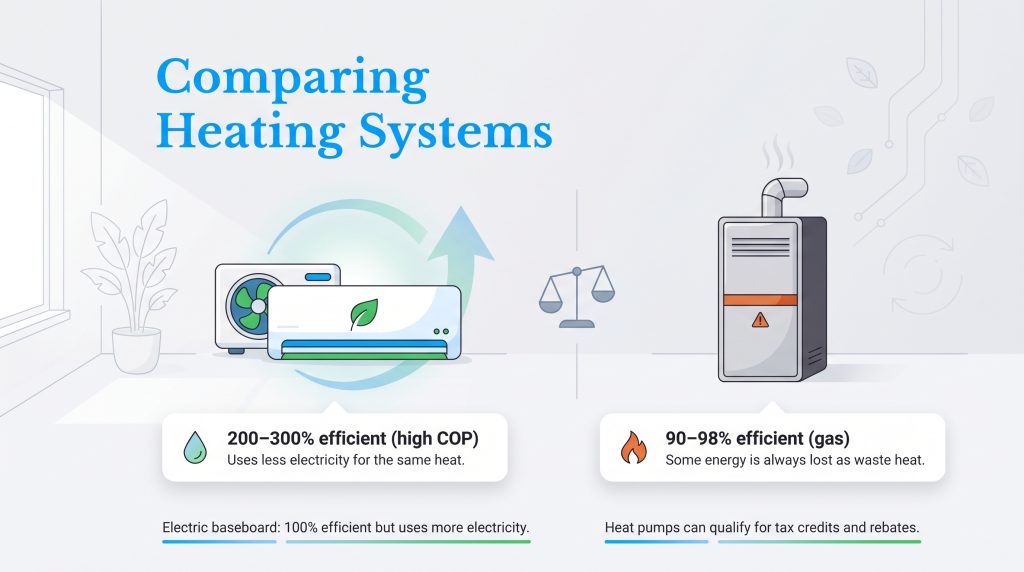
To understand exactly how this translates to savings in your home, consider how the energy efficiency of heat pumps compares directly to older, traditional heating technologies:
- Electric Heat Pumps: Thanks to a high COP, these systems easily reach 200% to 300% efficiency because they transfer existing heat rather than combusting raw fuel to create it.
- Traditional Gas Boilers and Furnaces: Even the absolute highest-efficiency gas combustion systems max out between 90% and 98% efficiency, meaning a portion of the energy you pay for is always lost as waste gas.
- Electric Baseboard Heaters: These resistance heaters operate at exactly 100% efficiency (a 1:1 ratio), meaning they consume up to three times as much raw electricity as a heat pump to produce the exact same amount of warmth in your living room.
Getting Ready for Your Heat Pump Installation
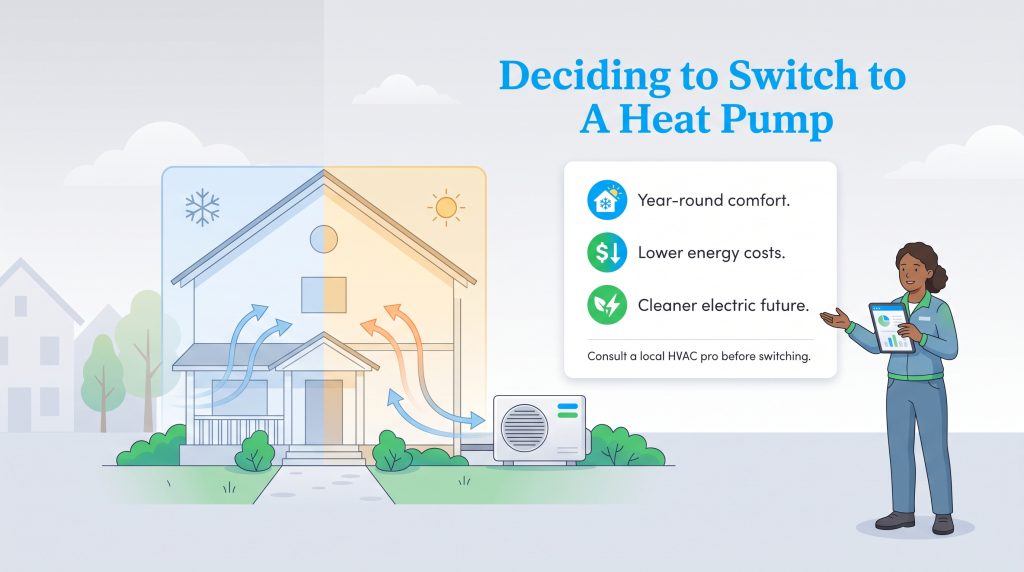
Electric heat pumps are a brilliant, versatile technology that leverages basic physics to provide year-round comfort in your residence. While the underlying science of manipulating refrigerants and heat transfer sounds highly complex, the end result for you is incredibly simple: one automated system that keeps you cozy in January and cool in July, typically for less money than traditional fossil-fuel systems.
As we transition toward a cleaner, greener energy grid, these energy-saving options are quickly becoming the gold standard for modern living. We highly recommend talking with a certified, local HVAC professional to evaluate your home’s unique climate, existing insulation, and ductwork setup. Taking the time to properly size and select the right unit will guarantee maximum comfort, safety, and efficiency for years to come.
Frequently Asked Questions About Electric Heat Pumps
Can a heat pump replace both my furnace and air conditioner?
Do heat pumps run all the time?
What is the difference between a heat pump and a ductless mini-split?
Do I need a backup furnace with a heat pump?
How long does a heat pump last?
Is a heat pump cheaper to run than gas?
Do electric heat pumps use a lot of electricity?
What is the difference between a heat pump and an air conditioner?
At what temperature does an air-source heat pump become inefficient?
About the Author

LaLeesha has a Masters degree in English and enjoys writing whenever she has the chance. She is passionate about gardening, reducing her carbon footprint, and protecting the environment. She also recently served as President of the Board for City Sprouts (a community garden).

Jared Evans is a licensed electrician and the owner of Full Circuit Electric in Omaha, Nebraska. As an expert reviewer for UtilitiesForMyHome.com, Jared uses his 10+ years of hands-on experience to ensure our electrical advice is safe, accurate, and easy to follow. Whether he's troubleshooting a complex wiring issue or sharing tips on green energy upgrades, Jared is dedicated to helping you power your home efficiently — and safely.