


Smart Upgrades to Lower Your Utility Bills and Maximize Your Tax Refunds This Year
Key Takeaways
- High-yield building envelope and HVAC upgrades can significantly reduce utility bills and increase your long-term property value.
- Federal tax credits (25C and 25D) offer substantial financial incentives for installing energy-efficient systems, solar panels, and battery storage.
- Starting with a professional home energy audit helps you pinpoint exactly where to prioritize your home improvement budget for maximum return on investment.
Rising utility costs are a reality for almost every homeowner, but living in a drafty, expensive home does not have to be your permanent situation. Thanks to expanded federal programs, the government has revamped the way you can claim money back for renovations, making 2026 an excellent time to tackle those long-awaited projects and transform your living space. We want to guide you through the best energy efficient home improvements that not only lower your monthly bills but also drastically increase your property value and qualify you for lucrative tax credits when you file next spring.
How the Energy Efficient Home Improvement Credit Works
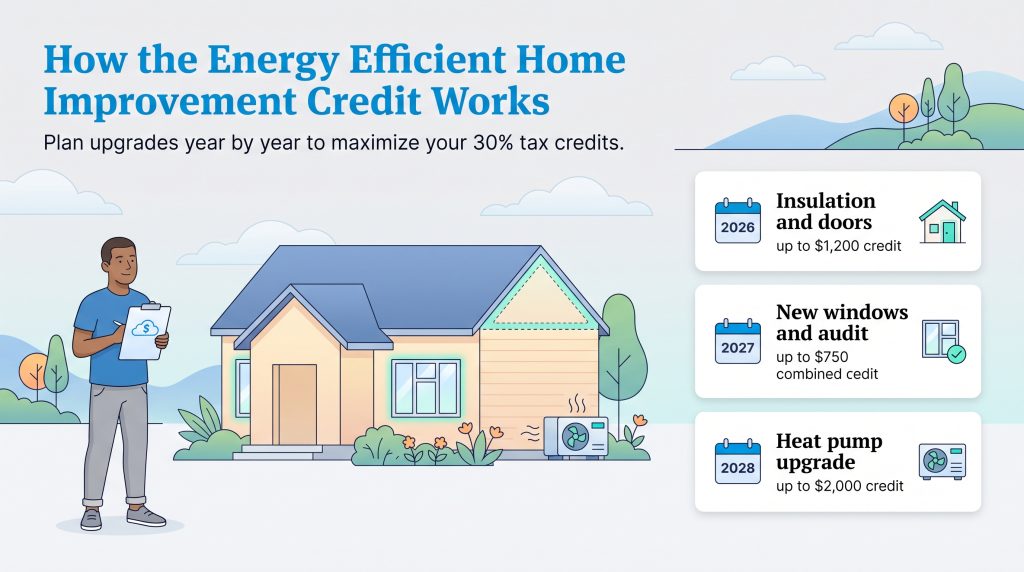
Before you rush to the hardware store or sign a contractor’s estimate, it helps to understand the financial incentives available to you. Under the recent inflation reduction act home upgrades, the federal government revamped the energy efficient home improvement credit (often called 25C). This incredible structural change allows you to claim 30% of the cost for qualified building upgrades and high-efficiency appliances.
Unlike previous versions of this credit that had a strict lifetime cap, the current 25C limits reset annually up to a maximum of $3,200 depending on the specific projects you choose. This means you can meticulously plan your renovations over several years to maximize your returns. You might update your insulation in 2026, tackle your exterior doors in 2027, and upgrade to a new heat pump water heater in 2028 — claiming a fresh tax credit each year. Here is a quick look at how the main categories of improvements and maximum tax limits compare:
| Project Category | Eligible Improvements | Annual Federal Credit Limits |
|---|---|---|
| Envelope Upgrades | Insulation, exterior doors, electrical panels | 30% of cost, up to $1,200 annually |
| High-Efficiency Systems | Electric air-source heat pumps, biomass stoves | 30% of cost, up to $2,000 annually |
| Energy-Efficient Windows | ENERGY STAR certified windows and skylights | 30% of cost, up to $600 annually |
| Home Energy Audits | Professional home inspection and thermal test | 30% of cost, up to $150 annually |
Keep in mind that these numbers reflect federal tax credits only. Local state programs and utility company rebates often stack directly on top of these federal incentives, substantially increasing your total financial savings and making these projects more accessible than ever before. When seeking tax deductible home improvements, remember that these are actually dollar-for-dollar tax credits, which provide a significantly larger financial return than standard deductions.
Start Here: Schedule a Home Energy Audit
If you are not sure where to start your renovation journey, scheduling a professional home energy audit is the most logical first step. A certified auditor will depressurize your house using a blower door test and utilize thermal imaging to identify exactly where you are losing energy. Knowing precisely where your home leaks prevents you from wasting money installing a massive new furnace in a house that loses all of its heat directly through the roof.
The average home energy audit cost varies based on your region and the total square footage of your property, typically ranging from $300 to $500. Fortunately, the federal tax code provides a specific 30% credit of up to $150 to help offset this initial inspection expense. Many local utility providers also offer free preliminary assessments or steep discounts to get you started on the right path.
Quick Wins: Low-Cost Energy Efficient Upgrades
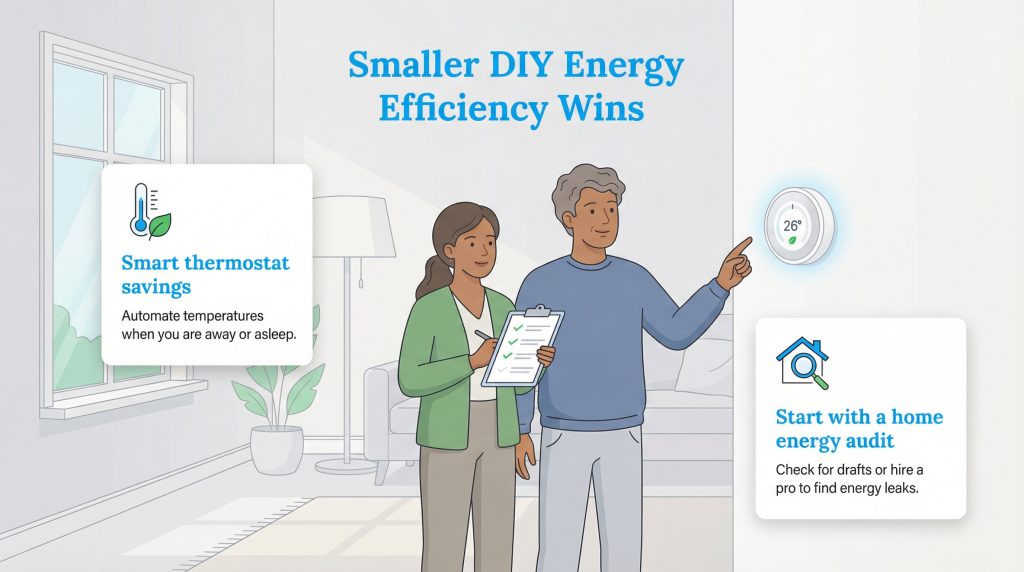
You do not need thousands of dollars to start reducing your monthly utility bills. Tackling a few low-cost, high-yield projects around the house provides immediate relief for your wallet while preparing your property for larger mechanical upgrades down the road. Focus on these quick wins to establish a solid foundation for home efficiency:
- Upgrade to LED Lighting: The cost-to-benefit ratio of replacing traditional incandescent bulbs is staggering. An older 60-watt incandescent bulb can be replaced with a 9-watt LED that produces the exact same amount of light while using up to 90% less energy and lasting 25 times longer. Swapping out just the most frequently used bulbs in your kitchen and living room offers an immediate reduction in your daily electrical load.
- Install Smart Thermostats: Upgrading your climate controls is one of the easiest ways to manage your energy usage automatically. The best smart thermostats for energy savings learn your family’s daily schedule and detect when you are out of the house, ensuring you never pay to heat or cool an empty living room.
- Eliminate Phantom Energy Loads: Many modern electronics continue to draw passive power even when turned off, accounting for up to 10% of your monthly electric bill. Installing smart power strips automatically cuts the electrical current to peripheral devices when your primary unit is powered down, saving you money without requiring you to manually unplug cords every day.
High-Impact Upgrades: Heat Pumps and HVAC
When it is time to replace your aging mechanical systems, an electric air-source heat pump is the absolute gold standard for modern, efficient climate control. Instead of generating heat by actively burning natural gas or oil, a heat pump utilizes advanced refrigerants to move existing heat from one place to another. During the winter, it extracts ambient heat from the outside air and pulls it indoors; during the summer, it reverses the process to act exactly like a traditional air conditioner.
Modern heat pumps boast an average lifespan of 15 years and can deliver staggering energy cost savings of up to 50% when replacing outdated fossil-fuel furnaces. To encourage these eco-conscious upgrades, the federal government offers a massive $2,000 annual tax credit limit for heat pumps and high-efficiency biomass stoves. Maximizing your heat pump installation savings by combining this federal credit with local utility rebates dramatically shortens your total payback period.
This advanced technology is not limited to just heating your home’s air. Upgrading to a heat pump water heater pulls ambient warmth from your garage or basement to heat the water inside the tank, slashing your daily water heating expenses by up to 60%. Because the $2,000 tax cap resets annually, you can strategically install a climate heat pump one year and the water heater the following year to claim maximum benefits for both.
Finally, do not overlook your kitchen and laundry room. Replacing core units that are over 10 years old with energy star certified appliances is a smart, environmentally mindful choice. Focus on heavy consumers like refrigerators and electric dryers, which can yield estimated annual savings of $100 to $300 while reducing your overall carbon footprint.
Weatherization: Insulation, Windows, and Doors
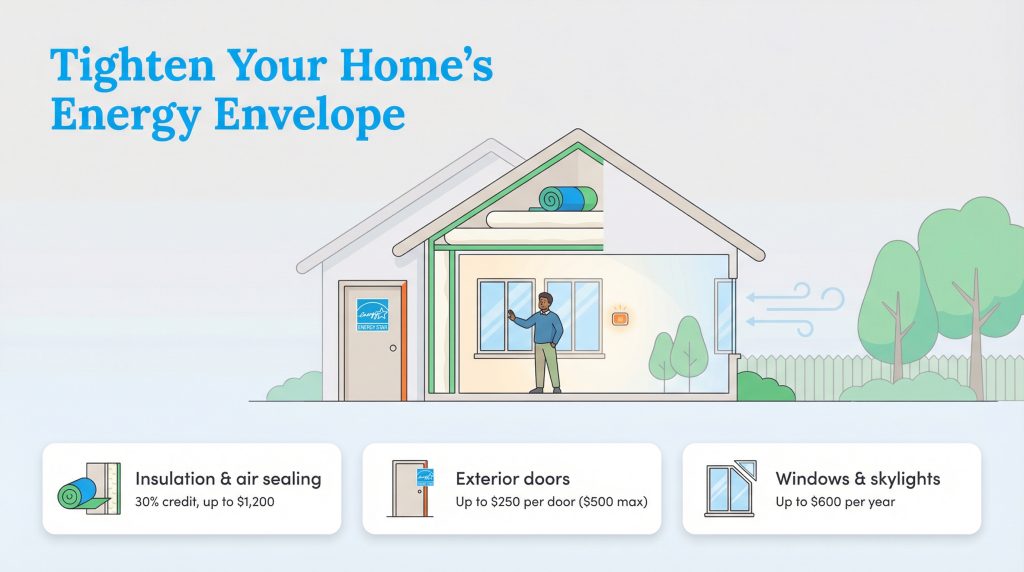
Before you invest heavily in a new HVAC system, you must seal the building envelope. Thick insulation and sealed gaps act as a thermal blanket, ensuring your expensive conditioned air stays inside. If you are wondering how to seal air leaks at home, start by inspecting your windows and doors on a windy day. Purchase high-quality silicone caulk for stationary gaps around window frames and flexible foam weatherstripping tape for moving sashes. These inexpensive projects are highly effective summer home weatherization tips that instantly improve the comfort of your living spaces and can save the average homeowner up to 10% on total heating and cooling bills.
Once the minor drafts are handled, evaluate your attic and wall insulation. Upgrading to higher R-value fiberglass batts or blown-in cellulose often yields a 100% to 117% ROI at resale. You can claim up to $1,200 annually under the 25C credit for bulk insulation materials that meet current International Energy Conservation Code (IECC) standards.
If you are still living with single-pane windows or a warped wooden front door, upgrading them drastically improves curb appeal and eliminates costly drafts. The energy efficient windows tax credit allows you to claim 30% of the cost, up to $600 per year, for products meeting the rigorous “ENERGY STAR Most Efficient” requirements. For exterior doors, the limit is $250 per door with a total maximum of $500 annually. For more comprehensive strategies on sealing your property against the elements, review our top tips to winterize your home and save energy.
Residential Clean Energy Credit: Solar and Geothermal
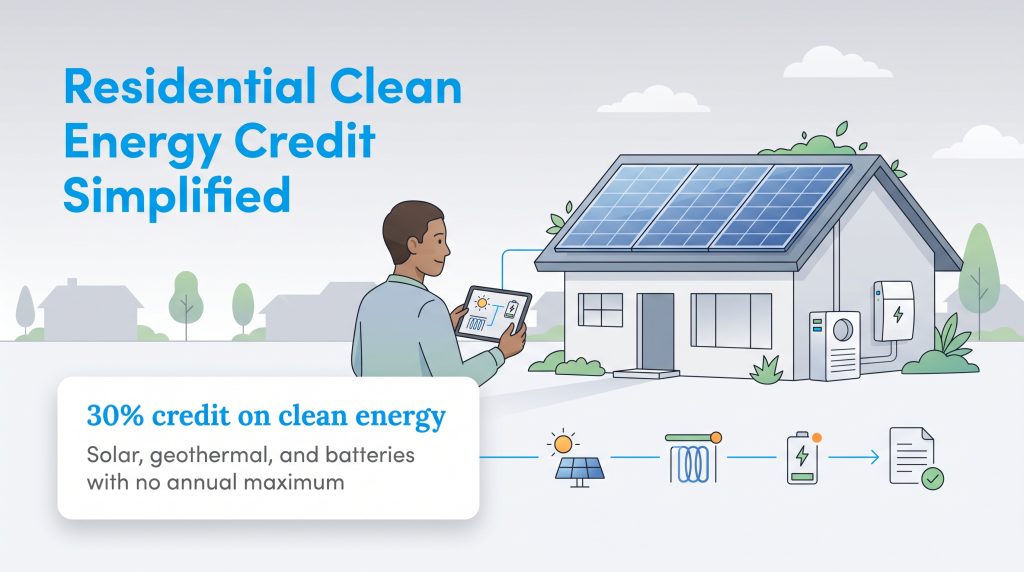
If you have optimized your home’s envelope and updated your mechanical systems, the ultimate leap toward efficiency is generating your own clean power. Investing in renewable energy protects you from volatile utility rate hikes and creates incredible long-term value for your property. A residential solar panel installation dramatically alters your relationship with the power grid by capturing sunlight and offsetting the electricity you would normally purchase from your local provider.
Major renewable installations fall under an entirely different tax program known as the residential clean energy credit (25D). Unlike the 25C program for standard home improvements, this credit covers major property additions like solar panels, wind energy systems, geothermal heat pumps, and battery storage technology (which federal guidelines require to have a capacity of at least 3 kilowatt-hours).
This 25D credit allows you to deduct 30% of your total installation costs — including labor, permits, and materials — straight from your federal tax liability with absolutely no annual maximum limit. If your 25D credit exceeds the amount of taxes you owe in a given year, you can even roll the remaining balance over to subsequent tax years, making a complete clean energy transition incredibly accessible for everyday households.
Preparing Your Home for a Greener Future
Upgrading a home requires capital, and not every family has thousands of dollars readily available for upfront renovation costs. Fortunately, the federal government offers several assistance programs designed specifically to help low-to-moderate-income households achieve energy independence without breaking the bank. The Weatherization Assistance Program (WAP) and the Low Income Home Energy Assistance Program (LIHEAP) provide specialized grants and free weatherization services to eligible families. Additionally, HUD Title I loans offer insured financing with competitive interest rates to fund efficiency renovations.
Between lower monthly bills, a more comfortable living environment, and substantial federal tax credits, 2026 is the perfect time to start making comprehensive changes. We recommend picking just one manageable project to start with this month — perhaps scheduling an energy audit or applying new weatherstripping — and seeing how much better your home feels. Beyond the immediate tax savings, these upgrades make your property tangibly more valuable and support sustainable living, paying off for both your wallet and the planet.
Frequently Asked Questions About Energy Efficient Upgrades
Are home improvements tax deductible?
Energy-efficient home improvements are not standard tax deductions; they provide tax credits. A deduction merely lowers your taxable income before taxes are calculated, while a tax credit reduces your actual tax bill dollar-for-dollar. This crucial distinction makes tax credits significantly more valuable for the average homeowner looking to recoup renovation costs.
What is the maximum energy efficient home improvement credit for 2026?
Under the 25C tax credit program for 2026, homeowners can claim up to $3,200 annually. This includes a maximum of $1,200 for building envelope upgrades (such as insulation, windows, and exterior doors) and a separate, higher limit of $2,000 for installing high-efficiency systems like electric air-source heat pumps or biomass stoves.
Do energy-efficient upgrades increase home value?
Yes, absolutely. Buyers increasingly seek out properties with low operational costs. Upgrades like ENERGY STAR certified windows, modern electric heat pumps, and active solar panel systems directly increase resale appeal, often allowing you to sell your home for a premium compared to drafty, outdated properties in your neighborhood.
What is the difference between a tax credit and a rebate?
A tax credit is applied when you file your annual federal taxes, reducing the total amount of income tax you owe to the IRS. A rebate is typically a direct partial refund or discount given by your local utility company, state agency, or hardware retailer at the time of purchase or shortly after you submit a proof-of-purchase receipt.
How much does a home energy audit cost?
The total cost of a comprehensive home energy audit varies widely by region and the total square footage of your home, but it typically ranges from $300 to $500. The $150 federal tax credit can help offset this initial cost, and many local utility providers also offer additional discounts or free preliminary assessments to get you started.
Do new homes qualify for the Energy Efficient Home Improvement Credit?
Generally, the 25C tax credit applies only to improvements made to existing homes that you currently use as your primary residence. It is not typically available for the initial construction phase of new builds. Always consult the latest IRS rules or a certified tax professional for specific advice regarding newly constructed properties.
Should I use my 25C credit for windows or a heat pump first?
This completely depends on the current state of your specific home. If your house feels incredibly drafty but your heating system is only a few years old, prioritize building envelope upgrades like windows and insulation first. If your furnace or AC is over 15 years old and visibly failing, it is much smarter to prioritize the heat pump to secure the larger $2,000 credit limit before the old unit breaks down in the middle of winter.
About the Author

LaLeesha has a Masters degree in English and enjoys writing whenever she has the chance. She is passionate about gardening, reducing her carbon footprint, and protecting the environment. She also recently served as President of the Board for City Sprouts (a community garden).

Jared Evans is a licensed electrician and the owner of Full Circuit Electric in Omaha, Nebraska. As an expert reviewer for UtilitiesForMyHome.com, Jared uses his 10+ years of hands-on experience to ensure our electrical advice is safe, accurate, and easy to follow. Whether he's troubleshooting a complex wiring issue or sharing tips on green energy upgrades, Jared is dedicated to helping you power your home efficiently — and safely.

David has been an integral part of some of the biggest utility sites on the internet, including InMyArea.com, HighSpeedInternet.com, BroadbandNow.com, and U.S. News. He brings over 15 years of experience writing about, compiling and analyzing utility data.