


Keep Your Home Comfortable And Efficient No Matter The Season

Key Takeaways
- Sealing drafts around doors and windows is the most cost-effective way to immediately lower your year-round heating and cooling bills.
- Starting with a home energy audit helps pinpoint exact energy leaks so you can prioritize high-impact insulation and HVAC upgrades.
- Taking advantage of energy efficiency rebates and federal tax credits can offset or completely cover the costs of major home improvements.
When extreme temperatures arrive, a properly weatherized home acts as a fortress against the elements, keeping your family comfortable while protecting your wallet. According to the Environmental Protection Agency, comprehensive Home Weatherization Tips — like air sealing drafts and performing energy efficient home improvements — can save homeowners an average of 15% on heating and cooling costs, putting hundreds of dollars back in your pocket each year. Learning how to weatherize a house for winter and summer boils down to a systematic approach of sealing your home’s envelope, reinforcing insulation, and optimizing your mechanical HVAC systems. Taking these proactive, energy-saving steps today will drastically reduce your utility bills and prevent expensive emergency repairs down the road.
Why Weatherize Your Home And The ROI Of Energy Efficiency
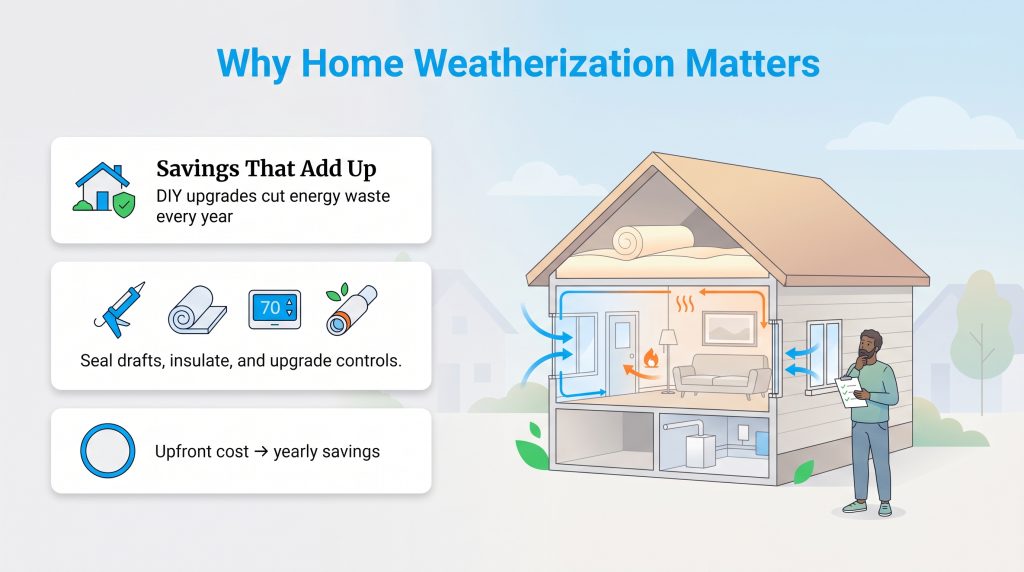
Weatherizing your house is more than just a weekend chore. It is a high-return investment that pays dividends year after year. Taking the time to execute a year-round weatherization strategy directly combats the drafts and heat transfer that force your HVAC system into overdrive. By addressing the structural vulnerabilities where conditioned air escapes and outside air intrudes, you are making an environmentally mindful choice that lowers your household carbon footprint while easing the strain on your budget.
Many homeowners assume that sealing up a house is too expensive or requires a general contractor. In reality, tackling a basic DIY weatherization checklist is highly affordable. Below is a breakdown of common weatherization tasks, what you can expect to spend upfront, and the anticipated annual savings you will enjoy.
| Weatherization Task | Estimated Upfront Cost | Average Annual Energy Savings |
|---|---|---|
| Sealing Drafts (Caulk & Weather Stripping) | $20 – $50 | 10% – 20% on heating and cooling bills |
| Upgrading Attic Insulation | $300 – $600 (DIY) | Up to 15% on overall energy costs |
| Installing a Smart Thermostat | $100 – $250 | 10% – 15% on HVAC usage |
| Insulating Pipes & Water Heater | $30 – $60 | 7% – 14% on water heating costs |
Start With A Home Energy Audit
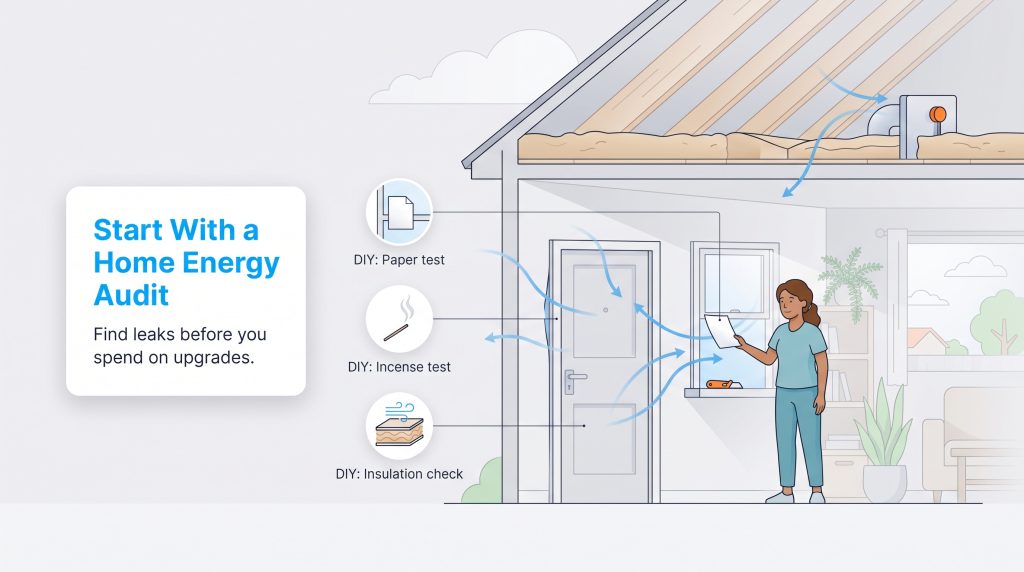
Before you rush to the hardware store, you need to understand exactly where your home is losing energy. A home energy audit is a comprehensive assessment of your property’s thermal performance, identifying the specific rooms and structural weaknesses driving up your utility bills. You generally have two paths to evaluate your home: performing a simple DIY test or hiring a certified professional.
You can identify the most severe leaks yourself using three easy steps:
- The Paper Test: Close an exterior door or window on a piece of paper. If you can pull the paper out easily without it tearing, the seal is too loose and requires new weather stripping.
- The Incense Test: On a cold, windy day, turn off your HVAC system and light an incense stick. Trace it carefully around your window frames, door hinges, and electrical outlets. If the smoke wavers or blows sideways, you have located a hidden draft.
- The Insulation Check: Safely peek into your attic. If your current fiberglass batts or blown-in cellulose are sitting below or exactly level with the floor joists, you absolutely need to add more insulation.
If your DIY tests reveal massive issues — or if you experience sudden, unexplained spikes in your electric bill — it is time to hire a pro. Professional auditors use blower doors and infrared cameras to pinpoint hidden structural leaks behind your drywall. While a professional audit requires an upfront fee, many state utility programs offer rebates to offset this cost.
Quick DIY Weatherization Tips For Immediate Savings
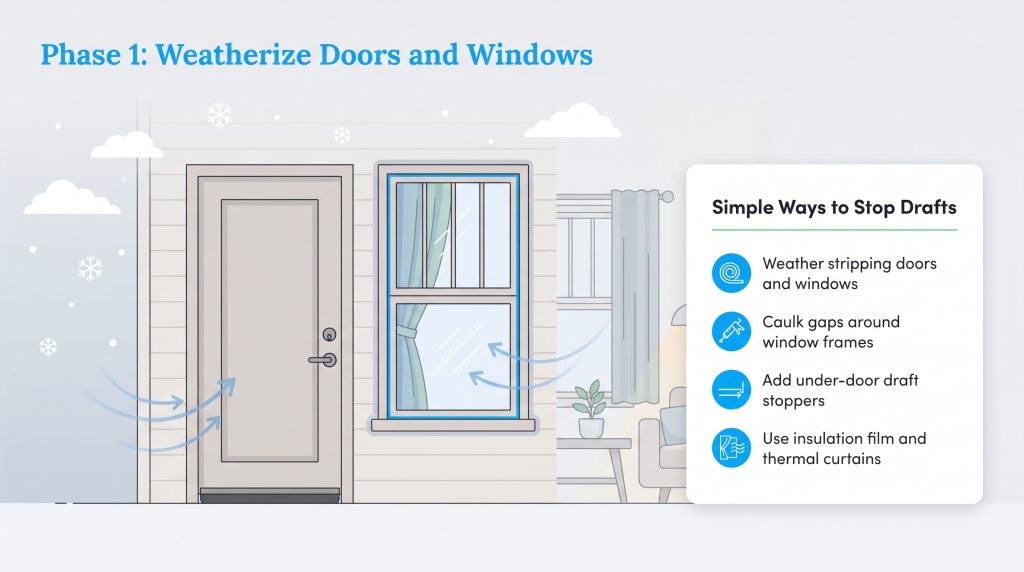
Stopping drafts around your home’s exterior doors and windows is the absolute foundation of our weatherization strategy. Because glass and door frames naturally expand and contract with seasonal temperature shifts, these entry points are notorious for leaking conditioned air. Securing your home’s envelope is an accessible DIY task that requires just a few basic materials.
Weather Stripping Doors And Windows
When weather stripping doors and windows, matching the specific profile to the job ensures a tight, long-lasting seal. We recommend using V-strip (also known as tension seal) for the sliding sides of double-hung windows, as it allows the window to glide open while blocking air. Use felt strips for low-traffic window sashes, and rely on durable foam tape for irregular gaps around exterior door frames. Always clean and dry the surface thoroughly before applying new weather stripping so the adhesive backing bonds securely.
For the gap at the bottom of your front and back doors, install heavy-duty door sweeps screwed directly into the bottom of the door. For interior doors leading to unheated spaces like a basement or an attached garage, simply slide a weighted fabric draft stopper along the floor.
Caulking Drafty Windows And Baseboards
While caulking handles the stationary frames, caulking drafty windows provides an air-tight solution. Use a high-quality silicone caulk to seal the exterior joints where the window frame meets your siding. Silicone remains flexible in freezing temperatures and creates a waterproof barrier. Apply a continuous bead around the perimeter, then smooth it out with a damp finger.
For interior gaps between window trim and drywall, or along drafty baseboards, use a latex acrylic caulk. Acrylic is easy to clean up with water and is completely paintable, allowing you to seamlessly blend the repair into your living space.
Compare Utility Providers for Your Home
Find which utilities service your address and connect your home to the best electricity, natural gas, water, internet, and trash companies in your area.
Installing Smart Thermostats
If your current HVAC system relies on an older manual thermostat, you are actively leaving money on the table. Upgrading to a Wi-Fi-enabled device guarantees effortless smart thermostat savings by learning your routine and optimizing run times. For maximum winter efficiency, set your thermostat to 68 degrees when you are awake, and program it to lower by 7 to 10 degrees while you sleep. During the summer, set the baseline to 78 degrees and allow the house to warm up slightly when you leave for work.
Our Top Five Smart Thermostats
- Best Overall: Ecobee Smart Thermostat Premium
- Best automation: Google Nest Learning Thermostat (4th gen)
- Best budget pick: Honeywell Home T9
- Best for DIY and renters: Sensi Touch 2
- Cheapest way to go Smart: Wyze Thermostat
See more about our picks for Best Smart Thermostats
High Impact Weatherization Upgrades And When To Hire A Pro
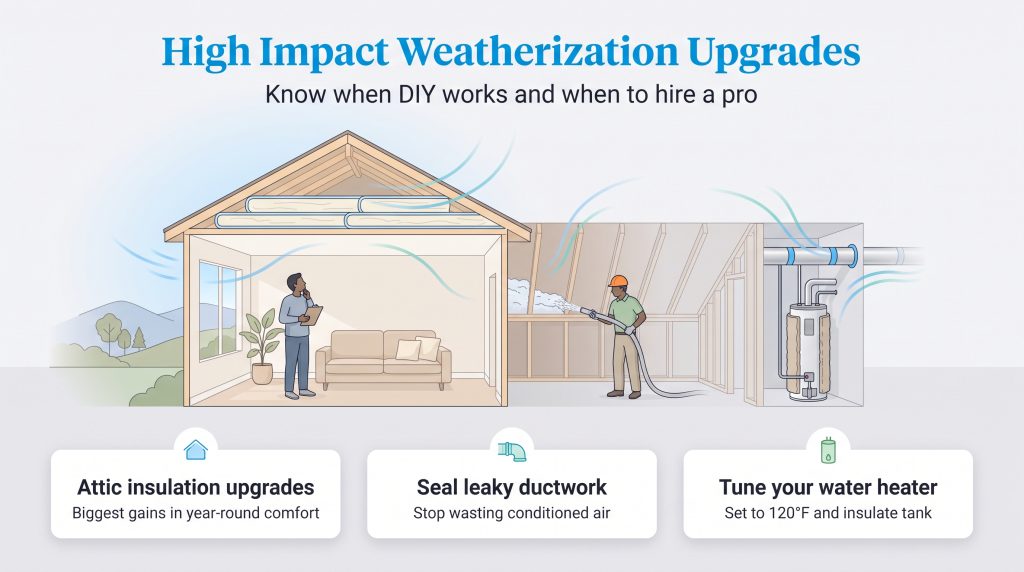
While quick DIY fixes improve daily comfort, addressing the core structural elements of your home delivers the most dramatic energy savings. Some projects involve venturing into tight, unconditioned spaces or handling complex mechanical systems. If you are not comfortable navigating these areas, hiring a professional contractor ensures the job gets done safely and up to code.
Attic Insulation Upgrades
Because heat naturally rises, a poorly insulated attic acts like a giant chimney in the winter and a stifling oven in the summer. Attic insulation upgrades are often the single most impactful project for long-term energy retention. Insulation relies on a metric called R-value, which measures how well a specific material resists conductive heat flow. Depending on your specific climate zone, the Department of Energy generally recommends an attic R-value between R-38 and R-60.
If your attic is unfinished and easy to navigate, topping up the insulation with un-faced fiberglass batts is a straightforward DIY task. Simply roll out the new batts perpendicular to the existing joists to cover any gaps, ensuring you wear gloves and a mask. However, if your attic requires complex blown-in cellulose or spray foam to reach tight eaves, bringing in an insulation contractor will guarantee a perfect thermal barrier.
Sealing HVAC Ductwork
Your furnace and air conditioner can run flawlessly, but if the ductwork carrying that conditioned air is full of holes, you are wasting money cooling your crawlspace. Up to 20% of the air moving through a typical duct system is lost due to leaks and poor connections. Inspect any exposed ducts in your basement or attic. If you find gaps, seal them using specialized mastic sealant or metal-backed foil tape — never use standard fabric duct tape, as it quickly degrades under temperature shifts. For ducts hidden behind drywall, a professional HVAC technician can use an aerosolized sealant to coat the interior of the entire system.
Protecting Plumbing And Water Heaters
Your water heater needs seasonal attention to operate efficiently year-round. Flush the tank annually to clear out sediment buildup that forces the burner to work harder. If your tank sits in an unconditioned basement or garage, wrap it in an insulated blanket to reduce standby heat loss. Focus on exposed plumbing lines in these cold zones as well. Insulate the pipes using inexpensive foam pipe sleeves to drastically reduce the chance of the water freezing solid during a cold snap.
Seasonal Adjustments For Winter And Summer Weatherization
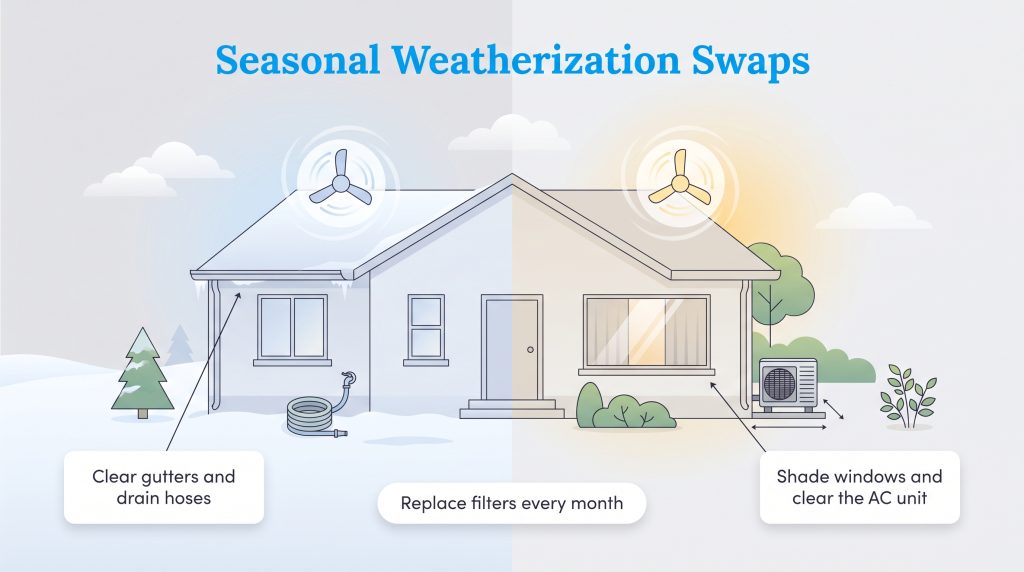
Weatherization is not a one-and-done project. Your home interacts with the environment differently depending on the season. While core tasks like air sealing and insulation benefit you 365 days a year, you must make specific seasonal adjustments to protect your property from localized weather extremes.
Winterizing Adjustments
- Clear Gutters to Prevent Ice Dams: Clogged gutters trap standing water that freezes into heavy ice dams, pushing moisture under your shingles. Clear autumn debris to ensure proper drainage.
- Drain Outdoor Hoses: Disconnect, drain, and store garden hoses. Shut off interior water valves leading to exterior spigots to prevent burst pipes.
- Reverse Ceiling Fans: Switch your ceiling fans to spin clockwise at a low speed. This updraft pushes warm air trapped near the ceiling back down into the room.
Summer Weatherization Adjustments
- Block Solar Heat Gain: Apply transparent insulation film to south-facing windows to reflect UV rays, or close heavy thermal curtains during peak daylight hours.
- Clear the AC Condenser: Trim bushes and remove leaves from around your outdoor central air conditioning unit. It needs at least 2 feet of clearance to exhaust heat efficiently.
- Optimize Airflow: Set ceiling fans to spin counterclockwise. The aggressive downdraft creates a wind-chill effect, allowing you to raise the thermostat without sacrificing comfort.
No matter the season, remember to replace your dirty HVAC filters monthly. A clogged filter restricts airflow, forcing the blower motor to work twice as hard to push air through your ducts.
How To Pay For Upgrades With Energy Efficiency Rebates
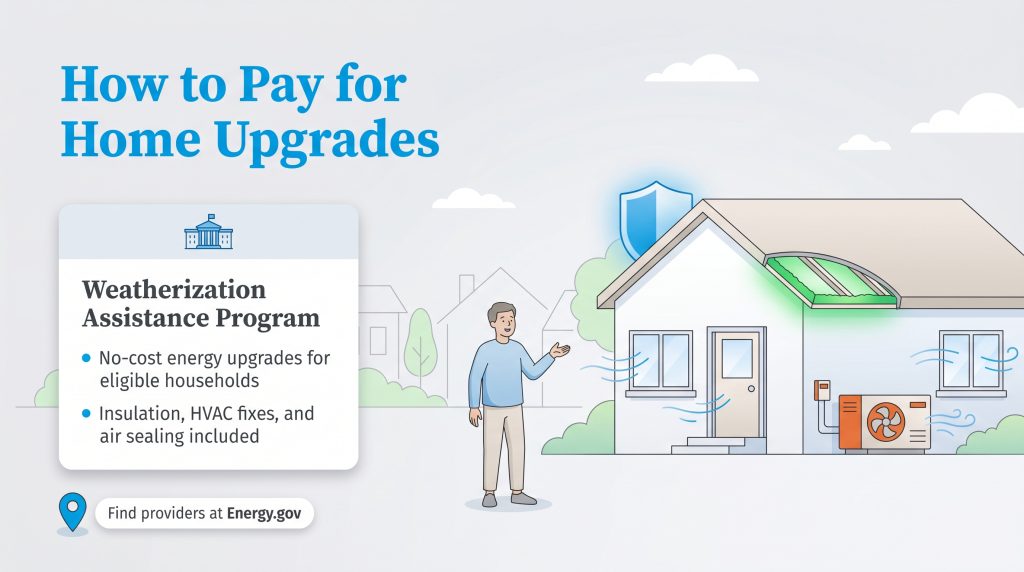
We know that completely sealing and insulating a home requires an upfront investment. Fortunately, energy efficiency rebates and federal tax credits make these upgrades far more accessible for the average homeowner.
If you are looking to tackle projects this year, the federal Inflation Reduction Act (IRA) offers substantial financial incentives. Through the Energy Efficient Home Improvement Credit (Section 25C), you can claim a tax credit covering up to 30% of the cost of qualifying weatherization projects — including insulation, exterior doors, and energy-efficient windows — up to a maximum of $1,200 per year.
Additionally, check with your local electricity or natural gas provider before purchasing any materials. Many local utility companies offer sizable instant rebates on smart thermostats, LED lighting, and professional HVAC tune-ups. You can easily search for active incentives in your zip code using the official ENERGY STAR Rebate Finder.
For eligible low-income households, the U.S. Department of Energy manages the Weatherization Assistance Program (WAP). This program provides free, comprehensive weatherization services. Instead of paying out of pocket, qualifying families receive professional energy upgrades — like duct sealing, attic insulation, and furnace repairs — at absolutely no cost. Priority is often given to the elderly, families with young children, and individuals with disabilities.
Securing Your Home’s Energy Future
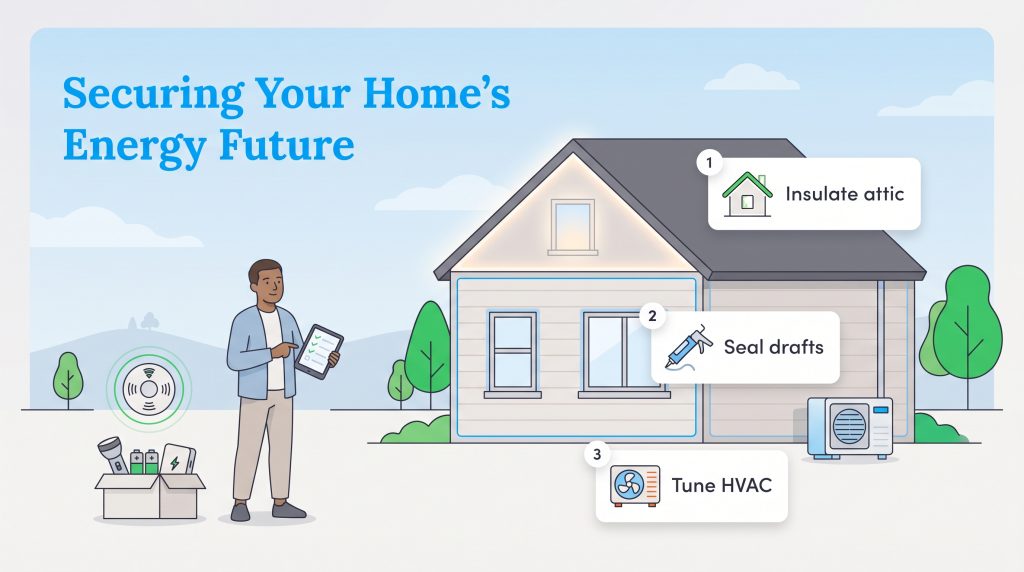
Weatherizing your house does not have to be a stressful or complicated process. By following this year-round home weatherization guide — focusing heavily on sealing the envelope, upgrading attic insulation, and optimizing your HVAC machinery — you take immediate control of your household energy consumption. The upfront effort and small material costs will pay dividends in every season, resulting in a more comfortable and drastically more efficient home.
As you secure your home against the elements, remember that extreme weather can also knock out local power grids. As part of a complete home safety plan, build an emergency kit containing flashlights, extra batteries, and a portable charger. Because a tightly sealed house traps indoor air, ensure you test your smoke alarms and install a reliable CO detector on every level of your home to protect against carbon monoxide buildup from gas appliances.
Frequently Asked Questions About Home Weatherization
How much does it cost to weatherize a house?
The cost to weatherize a house varies widely based on your approach. Basic DIY tasks, such as applying weather stripping and caulking windows, typically cost between $20 and $100 for materials. Mid-range projects like blowing new attic insulation or installing a smart thermostat range from $200 to $600. If you hire a professional contractor for a whole-home energy overhaul — including sealing ductwork and replacing exterior doors — the total cost can exceed $2,000, though federal tax credits and utility rebates can significantly lower your final out-of-pocket expense.
What is the difference between weatherization and winterization?
Winterization refers to specific, seasonal tasks designed exclusively to protect a home from freezing temperatures, such as draining outdoor sprinkler systems, covering pipes to prevent bursting, and installing storm windows. Weatherization is a broader, year-round strategy focused on improving the overall energy efficiency of the home’s building envelope. Proper weatherization upgrades, like adding attic insulation and sealing air leaks, benefit the homeowner in both the freezing winter and the blistering summer.
Does weather stripping really save money on heating and cooling?
Yes, applying weather stripping directly translates to noticeable financial savings. Small gaps around your front door or sliding windows might seem insignificant, but combined, they can equal the size of an open window, allowing massive amounts of conditioned air to escape. Sealing these leaks with inexpensive foam tape or V-strip tension seals reduces the strain on your HVAC system and can cut your overall heating and cooling bills by 10% to 20% annually.
Does the government offer free home weatherization assistance programs?
Yes, the Department of Energy runs the Weatherization Assistance Program (WAP), which provides free professional weatherization services to eligible low-income households. The program covers vital upgrades like sealing ductwork, adding insulation, and improving the heating systems found in single-family houses, multi-family complexes, and mobile homes.
What are the telltale signs that my home needs an energy audit?
You should strongly consider a home energy audit if you notice inconsistent temperatures between different rooms, constantly feel drafts near closed windows, or experience sudden, unexplained spikes in your utility bills. Additionally, the rapid formation of ice dams on your roof in the winter or excess humidity indoors during the summer are clear indicators that your home’s envelope is failing.
About the Author

LaLeesha has a Masters degree in English and enjoys writing whenever she has the chance. She is passionate about gardening, reducing her carbon footprint, and protecting the environment. She also recently served as President of the Board for City Sprouts (a community garden).

David has been an integral part of some of the biggest utility sites on the internet, including InMyArea.com, HighSpeedInternet.com, BroadbandNow.com, and U.S. News. He brings over 15 years of experience writing about, compiling and analyzing utility data.

Jared Evans is a licensed electrician and the owner of Full Circuit Electric in Omaha, Nebraska. As an expert reviewer for UtilitiesForMyHome.com, Jared uses his 10+ years of hands-on experience to ensure our electrical advice is safe, accurate, and easy to follow. Whether he's troubleshooting a complex wiring issue or sharing tips on green energy upgrades, Jared is dedicated to helping you power your home efficiently — and safely.