

Understanding The Dangers Of The Silent Killer And How Proper Utility Maintenance Protects Your Family
Key Takeaways
- Carbon monoxide (CO) is an odorless, colorless gas produced by the incomplete burning of fuels like natural gas, propane, and wood.
- Common household sources include gas furnaces, water heaters, stoves, and dryers, making regular utility maintenance essential for prevention.
- Installing carbon monoxide detectors on every level of your home and near sleeping areas is the single most effective way to prevent poisoning.
When establishing utilities in a new house, understanding what is carbon monoxide ranks among your most critical safety priorities as a homeowner. Often referred to as the “silent killer,” this invisible, toxic gas claims hundreds of lives annually because it entirely escapes human detection until physical illness strikes. By educating yourself on the most common household sources of carbon monoxide, prioritizing correct carbon monoxide detector placement, and learning to immediately recognize carbon monoxide poisoning symptoms, you can proactively defend your family against this threat. This comprehensive guide outlines expert-backed prevention strategies, safe parts per million (PPM) thresholds, and strict emergency protocols to ensure your indoor air quality remains secure year-round.
1. What Is Carbon Monoxide (CO)?
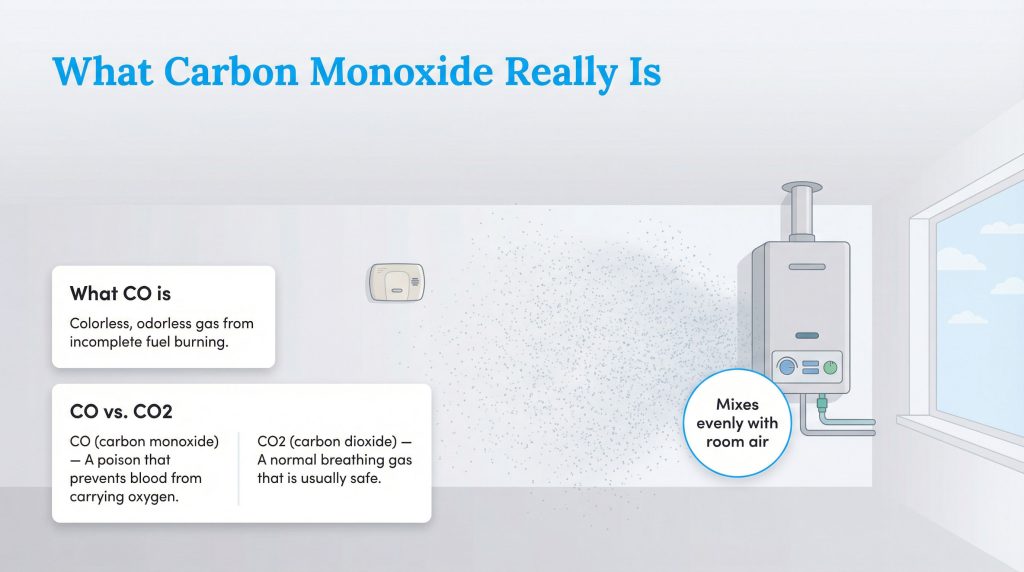
Carbon monoxide (CO) is a highly poisonous gas produced when fossil fuels fail to burn completely. If your household utilities do not receive enough ambient oxygen during operation, they stop producing harmless exhaust and begin emitting dangerous levels of this toxic byproduct instead. Because it lacks odor, color, or taste, this hazardous gas can rapidly build up indoors without triggering any of your natural human senses.
- Colorless: It is entirely invisible; you cannot see the gas accumulating in your living room or basement.
- Odorless: If you are wondering what does carbon monoxide smell like, the answer is nothing. It does not smell like smoke, rotten eggs, or raw natural gas.
- Tasteless: The fumes leave no distinct chemical or metallic taste in your mouth, even at extreme concentrations.
- Highly Toxic: When inhaled, the gas aggressively displaces vital oxygen in your bloodstream, leading to rapid cellular starvation.
- Combustion-Based: It is formed exclusively by the incomplete combustion of standard fuels like wood, oil, coal, charcoal, propane, and natural gas.
2. Common Sources Of Carbon Monoxide In The Home
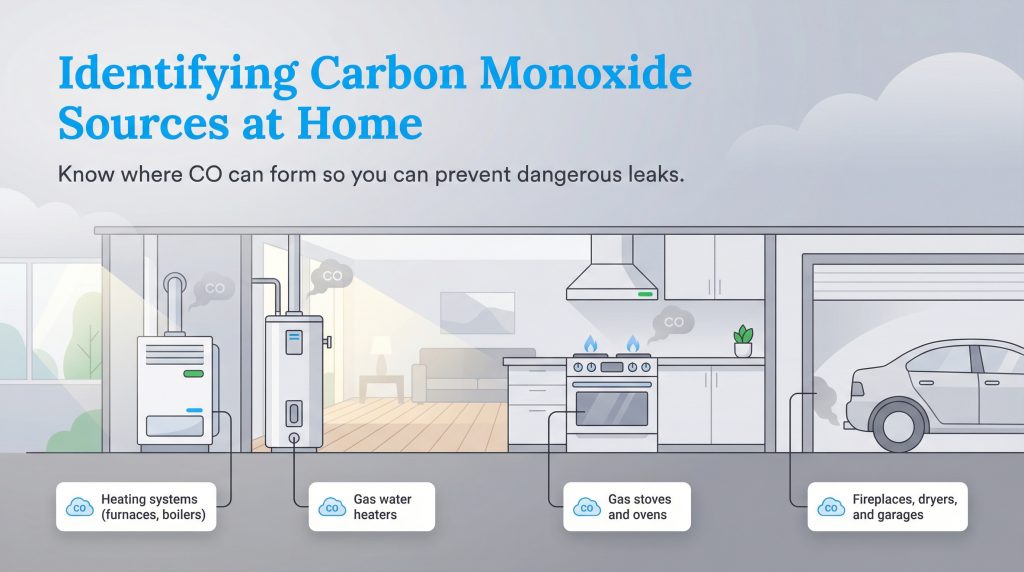
If your home relies on utilities that burn fuel to generate heat or power, you must carefully monitor them. Knowing what causes carbon monoxide in a house is your first line of defense against an unexpected leak. Electric appliances do not pose this threat, but any device consuming natural gas, oil, wood, or propane comes with an inherent risk if improperly maintained or operated.
- Portable Generators: The U.S. Consumer Product Safety Commission (CPSC) dictates strict safety rules for backup power. Generators must be operated strictly outdoors and placed at least 20 feet away from all open doors, windows, and structural vents. Never run a generator in a basement, inside an attached garage, or on an enclosed porch, as they produce catastrophic amounts of carbon monoxide in minutes.
- Gas Furnaces: Your central heating system becomes a major risk factor if the internal heat exchanger develops a hairline crack or if the main flue pipe disconnects. Scheduling annual professional checkups ensures your heating utilities safely direct exhaust outside.
- Attached Garages: Leaving a vehicle, motorcycle, lawnmower, or snowblower idling indoors allows heavy exhaust fumes to rapidly seep through adjoining drywall or open doors into your main living space. Always back vehicles entirely out of the garage before letting them warm up.
- Water Heaters: Blocked or improperly pitched vent pipes can cause dangerous exhaust to backdraft directly into your basement or utility closet rather than venting safely through the roof.
- Kitchen Appliances: Gas stoves and ovens release trace amounts of carbon monoxide during normal use. However, using your oven as a substitute to heat a cold room prevents proper ventilation and quickly leads to severe indoor poisoning.
3. Who Is At The Greatest Risk Of Carbon Monoxide Exposure?
While a massive leak is dangerous to any adult, governmental health organizations like the CDC and EPA warn that specific demographics are exceptionally vulnerable to this gas. For these populations, severe health effects take hold at much lower parts per million (PPM) thresholds, and irreversible bodily damage occurs significantly faster. Understanding these unique risks is vital if you live in a multi-generational household.
- Unborn Babies: Fetal hemoglobin naturally binds to carbon monoxide much more aggressively than adult hemoglobin. If a pregnant mother is exposed to a leak, the fetus absorbs the toxin at a dangerously accelerated rate, severely risking fetal oxygen deprivation.
- Infants and Young Children: Because children breathe at a faster biological rate than adults, they inhale and process toxic air much quicker in the same contaminated room, leading to faster symptom onset.
- The Elderly: Older adults often experience a natural decline in lung capacity and may have underlying health conditions, lowering their biological tolerance for poor indoor air quality.
- Individuals with Cardiovascular Disease or Anemia: People suffering from pre-existing heart disease, chronic respiratory issues, or anemia already have a reduced oxygen-carrying capacity in their blood. Even minor carbon monoxide exposure can quickly push their bodies into severe distress.
4. Carbon Monoxide Poisoning Symptoms
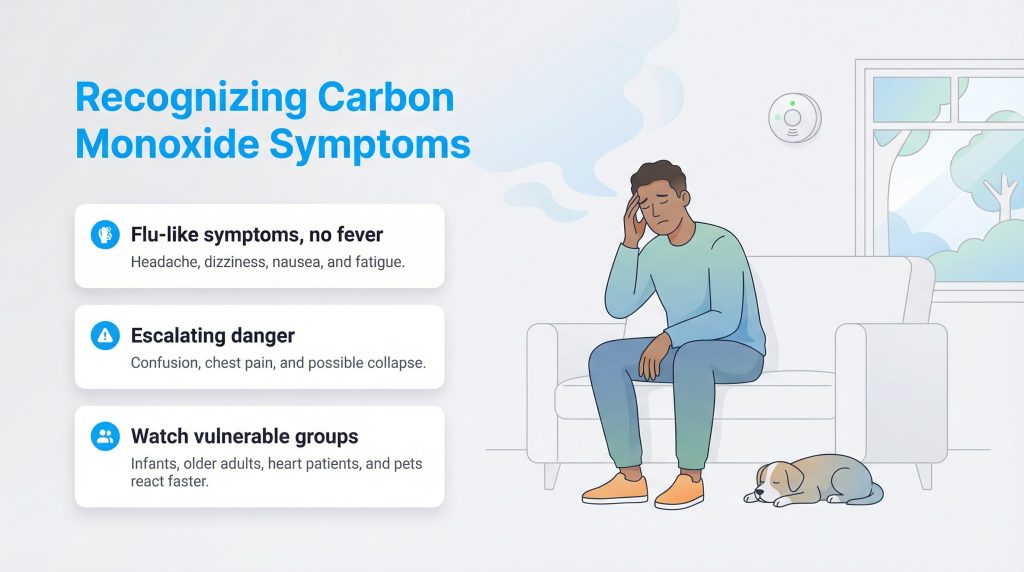
Because you cannot physically detect the gas floating in your home, your body’s adverse physical reaction might serve as your only early warning sign. Unfortunately, carbon monoxide poisoning symptoms heavily mimic common seasonal illnesses like the flu, making them incredibly difficult to diagnose at home. The single most crucial distinction to remember is that carbon monoxide exposure strictly occurs without a fever. If your entire family suddenly feels ill but no one has a high temperature, suspect an air quality emergency immediately.
Low-Level Exposure Symptoms
- A dull, tension-like headache that worsens over time
- Persistent dizziness and a sudden loss of balance
- Mild nausea or general stomach discomfort
- General fatigue, shortness of breath during normal activity, and sudden physical weakness
High-Level Exposure Symptoms
- Intense chest pain and a dangerously elevated heart rate
- Violent vomiting
- Extreme mental confusion, blurred vision, and a complete loss of muscular coordination
- Sudden loss of consciousness leading to permanent injury or death
5. The Science: What Does Carbon Monoxide Do To The Body?
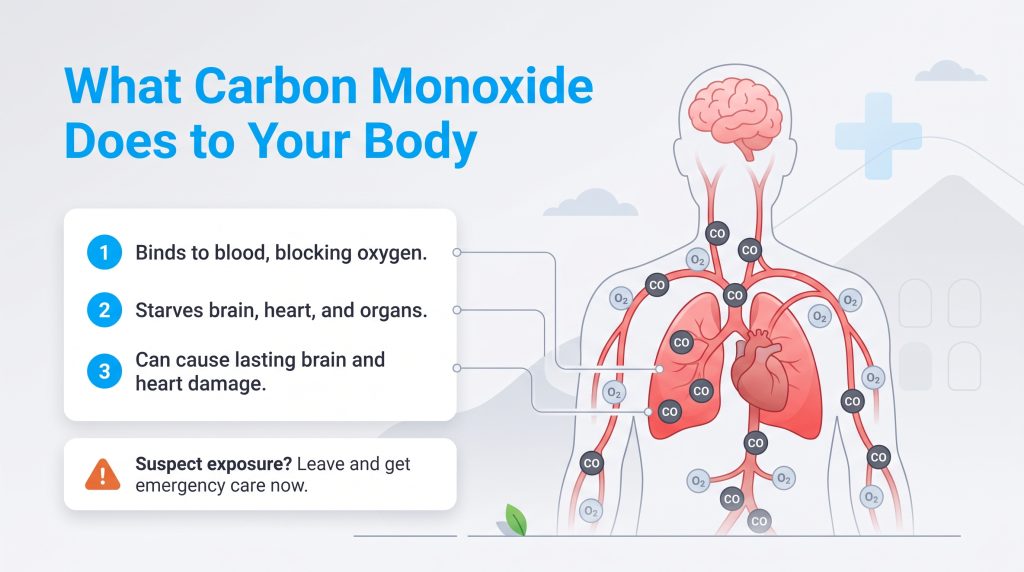
To fully respect the necessity of home maintenance, you must understand exactly how carbon monoxide attacks the human body. The fundamental reason this gas is so lethal is the stealthy, internal manner in which it systematically suffocates you on a cellular level.
When inhaled into your lungs, carbon monoxide rapidly binds to the hemoglobin in your red blood cells. In fact, it attaches to your blood cells over 200 times more aggressively than oxygen does. This toxic chemical reaction creates a dangerous compound called carboxyhemoglobin, effectively replacing the oxygen in your blood. As this compound circulates, it actively starves your brain, heart, and vital tissues of the oxygen they require to survive, causing rapid tissue and organ asphyxiation.
- According to the CDC, unintentional carbon monoxide poisoning results in more than 100,000 emergency department visits in the United States every year.
- The CDC also notes that this preventable household hazard causes over 14,000 hospitalizations and more than 400 fatalities annually.
- Authoritative health experts warn that survivors of severe poisoning often face long-term neurological damage, including memory loss, cognitive decline, and chronic cardiovascular issues.
6. Carbon Monoxide Vs. Carbon Dioxide: Understanding The Difference
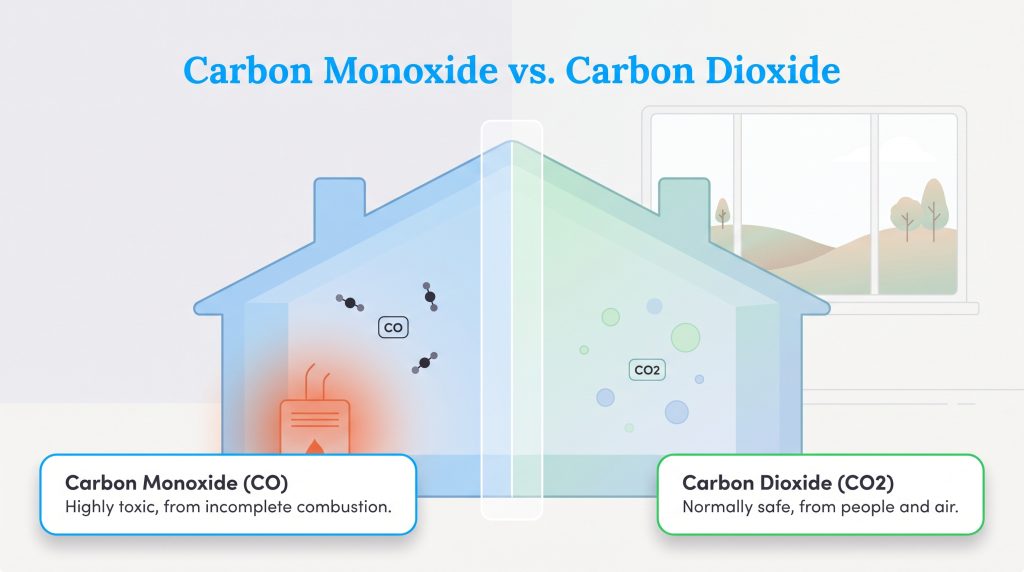
Many homeowners easily confuse carbon monoxide (CO) with carbon dioxide (CO2) due to their similar names, but misunderstanding them represents a significant home safety oversight. While they share chemical similarities, their impacts on human health and overall home safety are vastly different. Reviewing the difference between carbon monoxide vs carbon dioxide helps clarify exactly what hazard you are actively working to prevent in your home.
| Feature | Carbon Monoxide (CO) | Carbon Dioxide (CO2) | How to Prevent Build-Up |
|---|---|---|---|
| Source | Incomplete combustion of household fuels | Natural human respiration and environment | Ensure proper ventilation; switch to electric appliances |
| Odor/Color | Completely odorless and colorless | Odorless and colorless | Install specialized digital detectors (CO) and ensure proper fresh air intake (CO2) |
| Danger Level | Highly toxic; lethal at low indoor levels | Normally safe; dangerous only at extreme levels | Maintain HVAC systems annually; never run generators indoors |
| Effect on Body | Aggressively starves the blood of oxygen | Displaces ambient oxygen in a confined room | Evacuate immediately upon alarm detection |
7. How To Measure And Monitor Carbon Monoxide Levels (PPM)
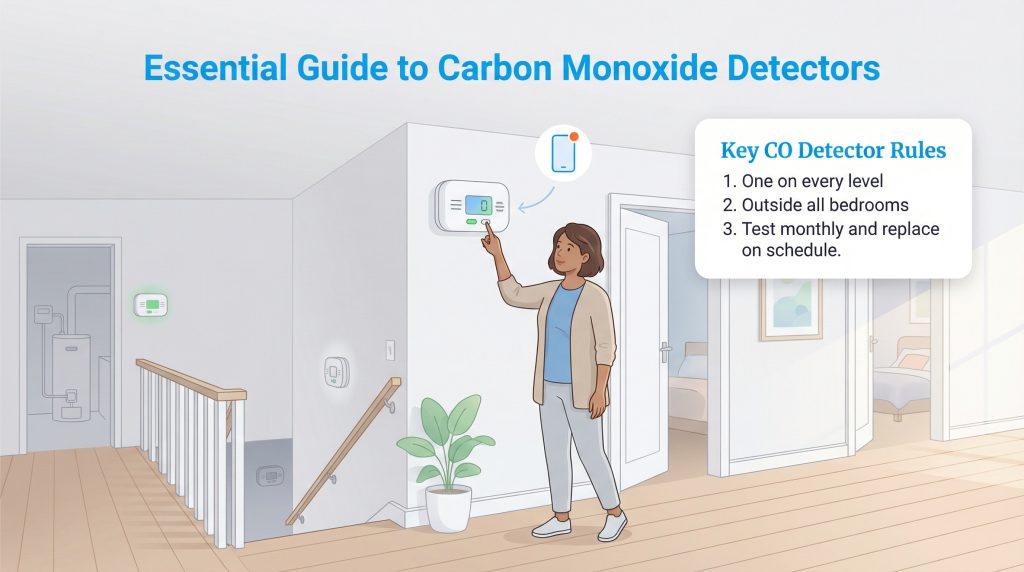
Because your own human senses are useless against this threat, specialized digital alarms serve as your absolute last line of defense. These devices measure indoor air contamination in Parts Per Million (PPM). Understanding a standard carbon monoxide levels chart is essential for gauging the severity of a home utility leak.
- 0 to 9 PPM: Normal, safe baseline for most residential homes.
- 10 to 35 PPM: Marginal levels. Prolonged exposure may begin to trigger mild symptoms in highly vulnerable populations, such as infants or the elderly.
- 36 to 99 PPM: Dangerous levels. Healthy adults will experience flu-like symptoms. Standard household alarms are designed to trigger once sustained levels hit 70 PPM.
- 100+ PPM: Lethal territory. Severe symptoms strike quickly, and extended exposure results in loss of consciousness or death within a few hours (or minutes at higher concentrations).
To accurately track these numbers, proper carbon monoxide detector placement remains strictly non-negotiable. If your devices sit in the wrong location, they will fail to register the rising PPM before the room becomes entirely lethal.
- Install on every level: Secure a detector on every single floor of your property, including finished basements and livable attics.
- Place immediately outside sleeping areas: Mount alarms in the hallway directly outside bedroom doors. The shrill siren must be loud enough to wake you from a deep sleep before the toxic gas incapacitates you.
- Follow the 15-foot rule: Keep units at least 15 feet away from fuel-burning appliances (like a gas stove or furnace). This prevents annoying false alarms triggered by the harmless burst of combustion when the utility first turns on.
- Respect the sensor lifespan: Detector sensors inevitably degrade over time. You must completely replace the entire device every seven to 10 years, depending on the manufacturer’s strict guidelines.
8. Emergency Protocol: What To Do If The Alarm Sounds
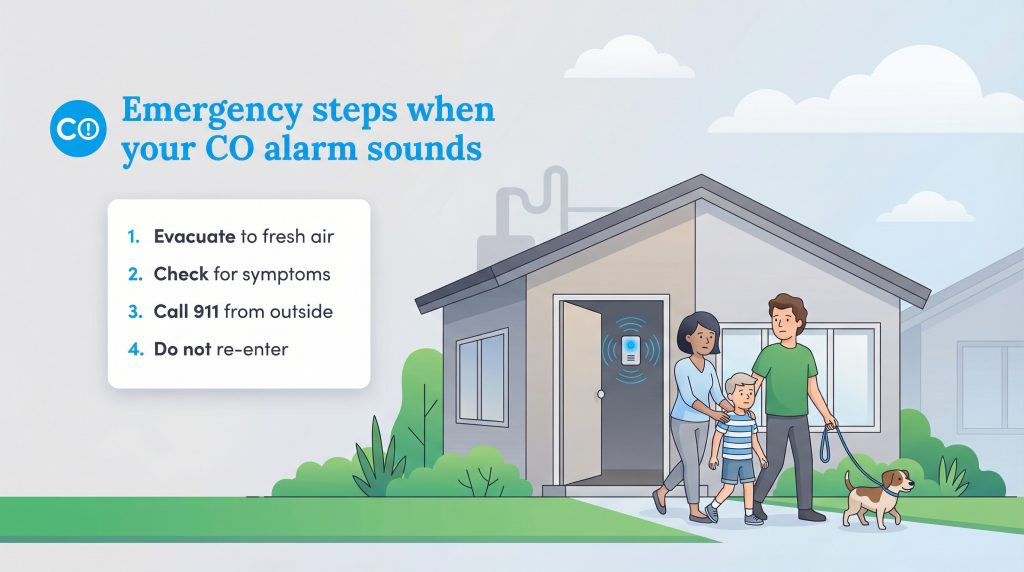
The sound of a home carbon monoxide alarm is intentionally loud, jarring, and terrifying. If your detector starts blaring with four continuous bursts followed by a pause, you are experiencing a life-threatening scenario. Knowing exactly how to respond can stop a minor utility leak from escalating into a fatal tragedy. Follow this strict emergency protocol without delay.
- Acknowledge the emergency: Treat four continuous beeps as a lethal, active threat. Never ignore the alarm, remove the batteries, or casually assume it is just a malfunctioning glitch.
- Evacuate immediately: Gather your family and pets, commanding everyone to leave the house immediately for fresh outdoor air. Do not waste precious seconds searching for the source of the leak, gathering belongings, or running around to open windows.
- Call 9-1-1 from outside: Once you are safely outdoors, dial 9-1-1 or your local fire department from a safe location, such as a neighbor’s driveway. Do not use your phone while lingering inside the contaminated house.
- Check for physical symptoms: Perform a rapid headcount outdoors and ask if anyone feels dizzy, nauseous, or severely fatigued. Inform emergency responders immediately if anyone exhibits signs of poisoning.
- Do not re-enter the property: Wait completely outside. Under no circumstances should you go back inside to retrieve a pet or grab a jacket until first responders explicitly declare the home safe using professional, calibrated air meters.
9. Preparing Your Home To Prevent Future Leaks
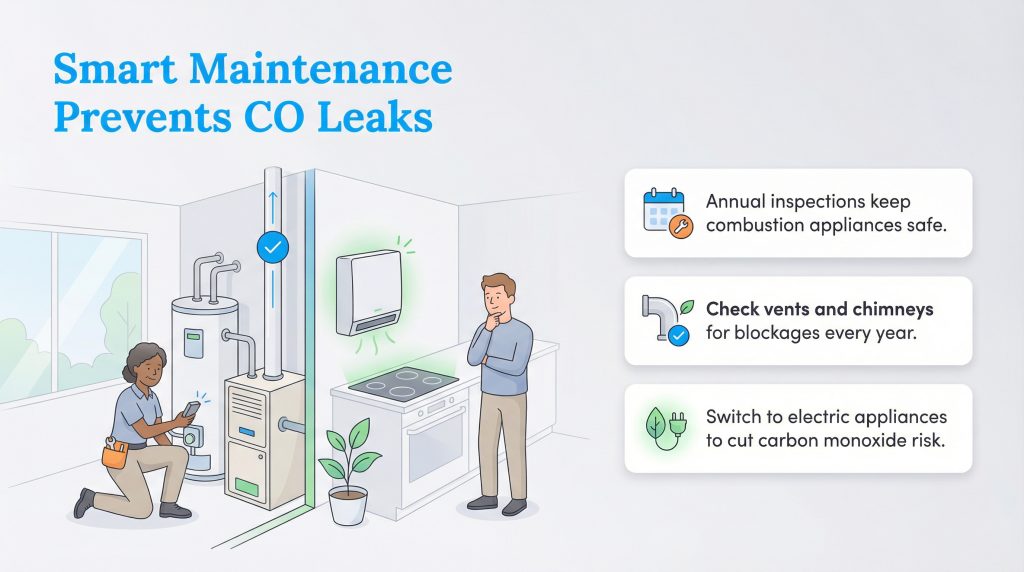
Instead of passively waiting for a dangerous indoor gas buildup, you can firmly take control of your indoor air quality with a proactive utility maintenance routine. Whether you are updating an older property or creating a comprehensive home safety plan for a brand-new move, follow these stringent directives to keep your household completely secure.
- Schedule annual HVAC inspections: Hire a certified, licensed technician every autumn to meticulously inspect your furnace, boiler, and gas water heater. They will check for cracked heat exchangers, test for proper combustion, and verify that venting systems are fully intact.
- Sweep chimneys and structural flues: Hire a professional chimney sweep annually to clear out bird nests, fallen leaves, and heavy soot buildup. A blocked chimney forces toxic exhaust to rapidly backdraft directly into your living room rather than safely exiting the roof.
- Upgrade to modern electric appliances: Consider permanently swapping out aging gas stoves and old gas furnaces for modern induction ranges and efficient electric heat pumps. Transitioning to electric models eliminates the hazardous combustion risk entirely. Upgrading also serves as an excellent way to update your space with energy-efficient home improvements and save on your electric bill over time.
10. Safeguarding Your Household Air Quality
By strictly adhering to this actionable maintenance checklist and embracing a sustainable living approach with non-combusting electric appliances, you dramatically reduce the daily risk of a toxic leak. Treating carbon monoxide as a serious, active threat rather than an afterthought ensures you are never caught off guard. Taking these decisive, simple steps today guarantees your home remains a safe, comfortable, and healthy haven for your family for years to come.
Frequently Asked Questions About Carbon Monoxide
What does carbon monoxide smell like?
Carbon monoxide is completely odorless and undetectable to human senses. It does not smell like rotten eggs, natural gas, fireplace smoke, or synthetic chemicals. Because you cannot smell, taste, or see this gas, you must rely exclusively on functioning digital detectors to alert you to a deadly leak inside your home.
Is carbon monoxide heavier than air?
No, carbon monoxide is not heavier than normal room air. It possesses roughly the exact same molecular weight as the ambient air circulating in your house. Therefore, the toxic gas mixes evenly and thoroughly throughout the room rather than sinking heavily to the floor or rising rapidly to the ceiling.
What causes carbon monoxide in a house?
The primary cause is the incomplete combustion of fossil fuels within a malfunctioning or improperly vented household appliance. Gas furnaces with cracked heat exchangers, blocked water heater flues, running generators positioned too close to the home, and vehicles left idling in attached garages are the most common ways this dangerous gas enters a living space.
What are safe levels of carbon monoxide?
The ideal, safest possible level of carbon monoxide in a home is strictly 0 parts per million (ppm). While the EPA notes that average levels in homes without gas stoves vary from 0.5 to 5 ppm, sustained levels climbing above 9 to 35 ppm can begin to cause health issues, especially for highly vulnerable individuals like infants or those with cardiovascular issues.
Can you treat carbon monoxide poisoning at home?
No, you cannot safely treat carbon monoxide poisoning at home. Breathing fresh air temporarily helps, but the toxic gas strongly binds to your blood and lingers in your system. Severe poisoning requires immediate, professional medical intervention, typically involving breathing pure oxygen through a mask or entering a pressurized hyperbaric oxygen chamber at a hospital to flush the toxin entirely from your body.
Will opening windows clear out a carbon monoxide leak?
Opening a window can temporarily dilute the gas in a specific room and provide a quick influx of fresh air, but it completely fails to fix the active source of the leak. It is absolutely not a permanent, safe, or acceptable solution. If your indoor alarm sounds, immediately evacuate the entire premises and call 9-1-1 rather than wasting time trying to open windows.
About the Author

Claudio is a sustainability-focused writer with a background in Anthropology and Psychology from NC State University. He has spent over 15 years working in writing, interpretation, and translation, driven by a deep interest in how human culture shapes the environment. Today, he shares his curiosity with readers by writing about sustainable living solutions and the connection between everyday choices and environmental impact.

David has been an integral part of some of the biggest utility sites on the internet, including InMyArea.com, HighSpeedInternet.com, BroadbandNow.com, and U.S. News. He brings over 15 years of experience writing about, compiling and analyzing utility data.