

Knowing Exactly How To React To A Rotten Egg Smell Can Protect Your Family And Your Neighborhood From A Dangerous Natural Gas Emergency
Key Takeaways
- Evacuate your home immediately without stopping to ventilate, though you can leave the door open if it does not delay your exit.
- Do not touch any light switches, electronics, or appliances, as a tiny electrical spark could ignite the natural gas.
- Call your local utility company or 911 from a safe distance outside to report the leak and get professional help.
A gas leak emergency protocol requires fast, decisive action to protect your home and your neighborhood. If you are wondering what should I do if I smell gas, your most critical response is to get outside instantly before trying to investigate the source.
Emergency Checklist: 4 Steps To Take Right Now
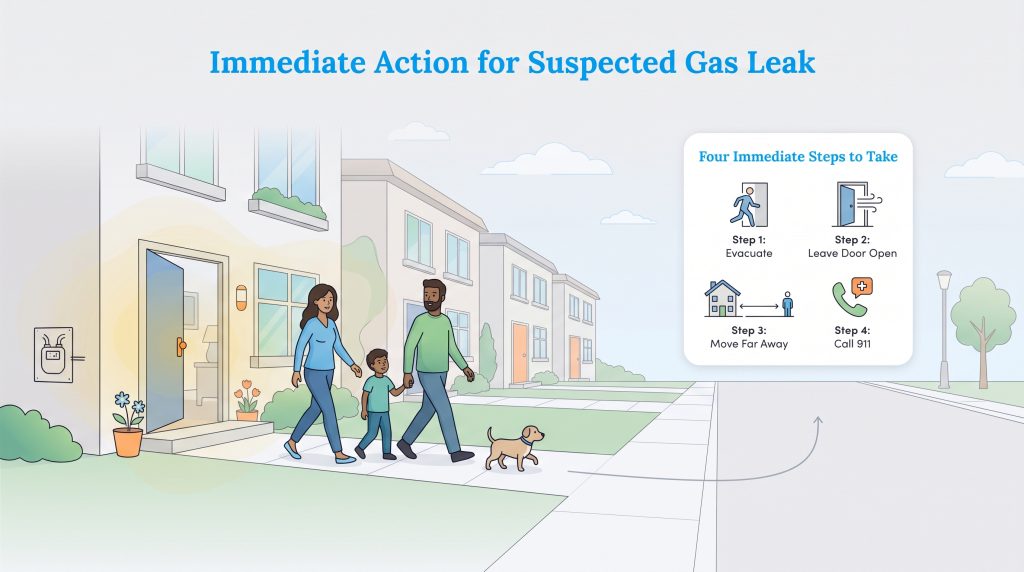
If you notice that distinct, foul odor, you need to act quickly. Follow this gas leak emergency protocol to ensure your household reaches safety without delay.
- Evacuate the building immediately, gathering your family and pets without stopping for personal items.
- Leave the doors open behind you only if it does not slow down your escape.
- Move to a safe distance far away from your property line, such as across the street.
- Call 911 and your utility provider only after you reach a secure outdoor location.
What Not To Do During A Gas Leak
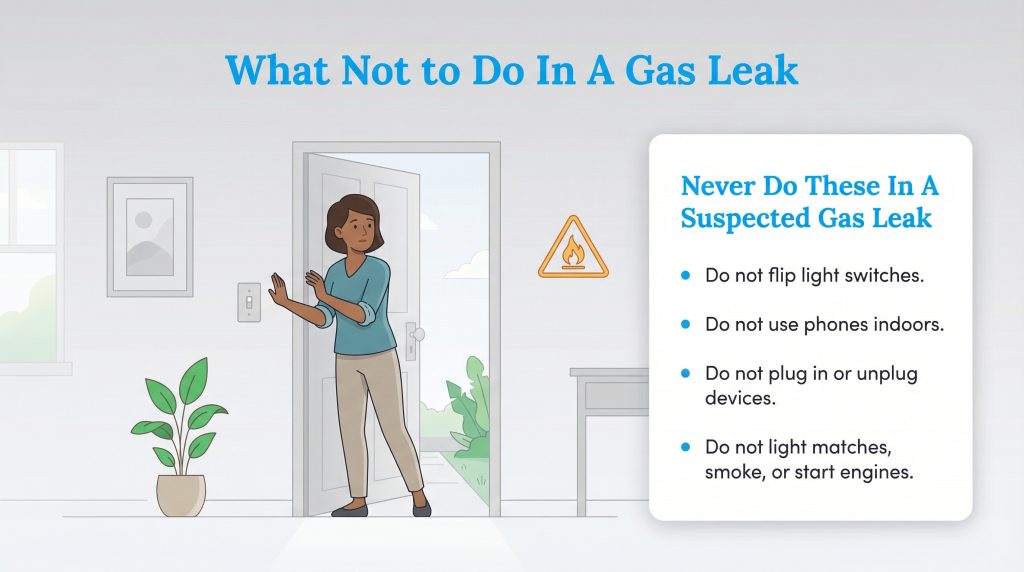
Natural gas is highly combustible, meaning a microscopic spark can ignite a room filled with fumes. Strictly avoid these everyday actions during an emergency to prevent triggering a disaster:
- Do not flip any light switches on or off.
- Do not use your cell phone or a landline inside the house.
- Do not unplug or plug in any electrical appliances.
- Do not strike a match, use a lighter, or smoke.
- Do not ring doorbells or use electronic garage door openers.
- Do not start your car if it is parked in an attached garage.
A standard light switch generates a microscopic electrical arc behind the wall plate every time you flip it. In a gas-filled room, that invisible static spark provides enough heat to cause an immediate explosion.
Who To Call For A Gas Leak
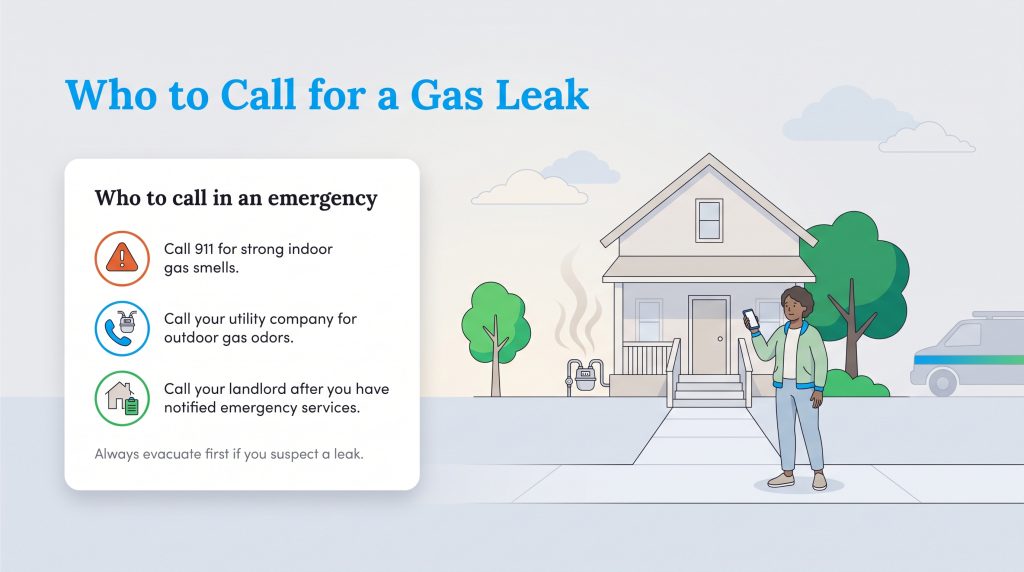
If you suspect a dangerous gas leak indoors or someone feels ill, evacuate immediately and call 911 from a safe distance.
The American Gas Association advises letting professionals handle the actual investigation. Use this reference table to determine exactly who to call for gas leak in house response teams based on your situation:
| Scenario | Who to Call | Priority Level |
|---|---|---|
| You smell gas strongly indoors. | 911 | Critical (Call immediately after evacuating) |
| You smell gas outdoors near the meter, or catch a faint exterior scent. | Local Utility Company | High (Call from a safe distance) |
| You live in an apartment and have evacuated safely. | Landlord / Property Manager | Secondary (Call only after notifying 911 or utility) |
Indoor Versus Outdoor Gas Smells
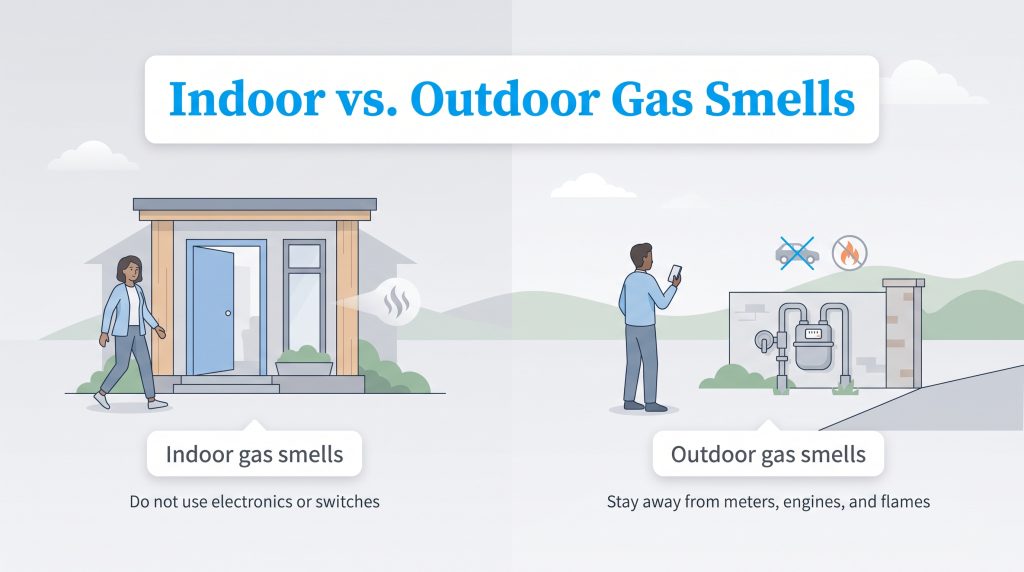
Whether you catch a faint smell of gas in house or you smell gas outside near meter, your location dictates your response. Let these two protocols guide you:
- Indoor Gas Smells: Evacuate the premises immediately without touching any electronics, and call emergency responders from across the street.
- Outdoor Gas Smells: Stay away from the meter, avoid creating open flames or starting engines, and call your utility provider from a safe distance.
How To Identify A Natural Gas Leak
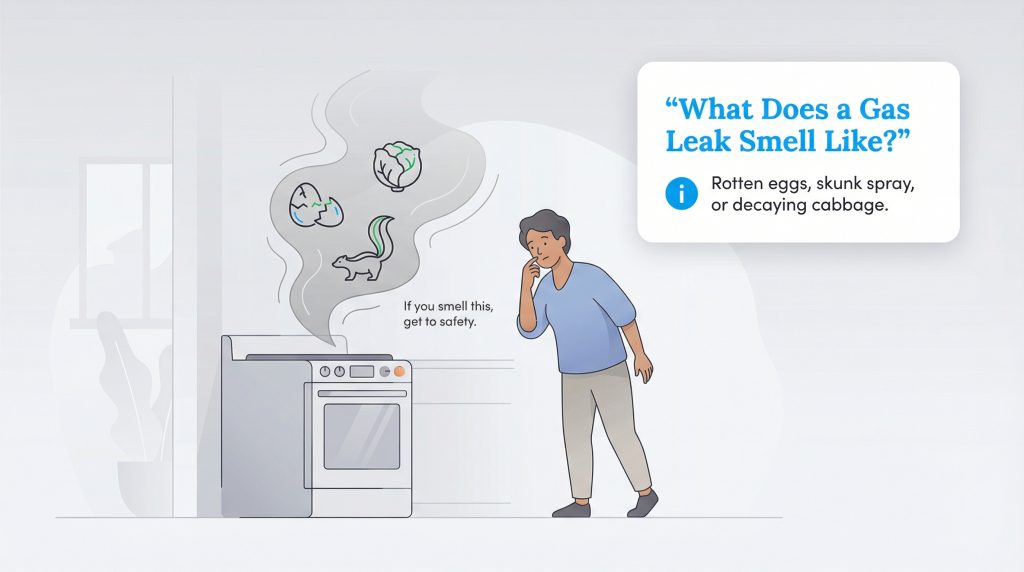
Natural gas is completely colorless and naturally odorless. To prevent a leak from going undetected, utility companies inject a harmless chemical compound called mercaptan into the supply line. If you suddenly notice a prominent rotten egg smell in house, you are smelling this crucial additive acting as a warning system.
However, it is entirely normal to experience a very brief, faint whiff of gas when you first turn the knob on your stovetop burner as the fuel ignites. You only need to evacuate if that smell lingers or appears while your appliances are completely turned off.
Sometimes, an appliance burning gas improperly produces deadly carbon monoxide rather than a raw fuel leak. For authoritative health context regarding exposure to combustion byproducts like carbon monoxide, the Centers for Disease Control and Prevention offers excellent resources. Here is how you can tell the difference between these two hazards:
| Feature | Natural Gas Leak | Carbon Monoxide (CO) |
|---|---|---|
| Smell | Strong rotten egg or skunk odor (mercaptan) | Completely odorless |
| Physical Symptoms | Dizziness, nausea, trouble breathing, lethargy | Headache, confusion, chest pain, vomiting |
| Detector Required | Specific natural gas or explosive gas alarm | Standard carbon monoxide detector |
Visual And Auditory Signs Of A Gas Leak
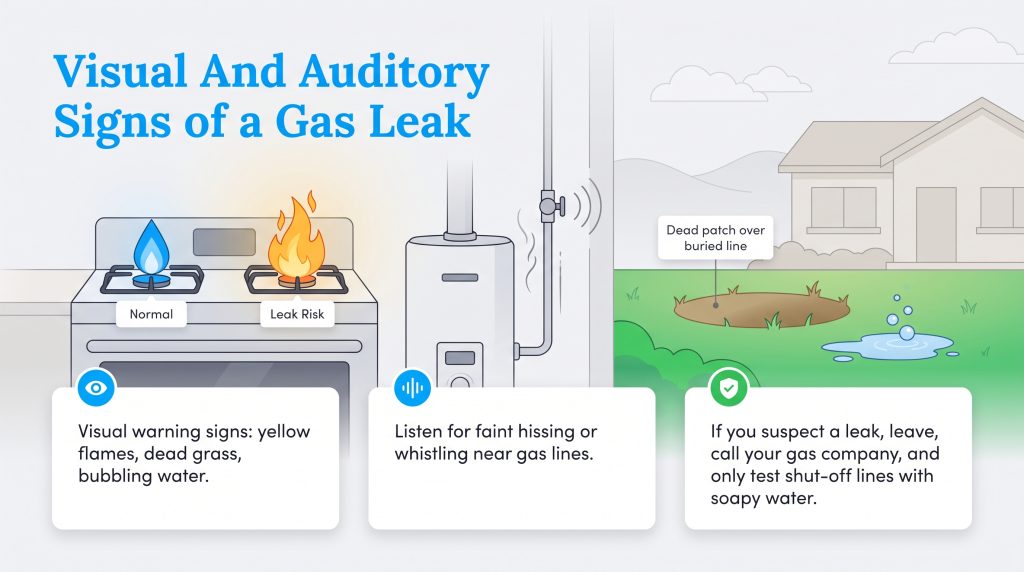
Not every leak is easily detectable by smell alone. Familiarize yourself with these gas leak symptoms and visual cues to recognize an emergency quickly without breathing in fumes.
| Category | Normal Condition | Dangerous Leak Indicator |
|---|---|---|
| Odor | A very faint gas smell near stove upon initial ignition | A continuous rotten egg or skunk smell in the air |
| Visual (Indoor) | Steady, crisp blue flames on your stovetop or furnace | Orange, yellow, or overly large, unstable appliance flames |
| Auditory | Normal operational hum of home appliances | Faint hissing or whistling noise near a gas line |
| Visual (Outdoor) | Healthy yard and green vegetation along the property | Patches of dead grass or bubbling standing water over a buried line |
| Physical Health | Feeling healthy, alert, and breathing comfortably | Sudden dizziness, fatigue, nausea, or lethargic pets |
How To Safely Shut Off Your Gas Meter
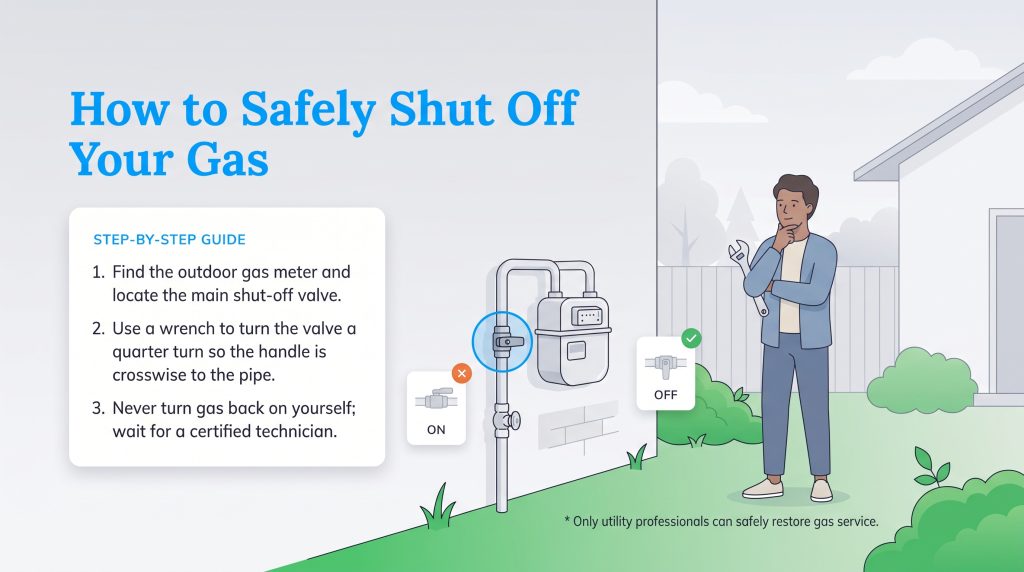
Warning: You should only perform this step if your gas meter is located safely outdoors and you can turn the valve without breathing in heavy fumes. If it is safe to do so, knowing how to shut off gas to house lines can stop the fuel flow before responders arrive.
- Locate your meter: Find your outdoor meter and the main shut-off valve on the pipe coming from the ground.
- Turn the valve: Use a 12-inch adjustable wrench to turn the valve a quarter turn so the rectangular tang rests perfectly perpendicular to the pipe.
- Step away: Never attempt to turn the gas back on yourself once the valve is closed.
Landlord Versus Homeowner Responsibilities
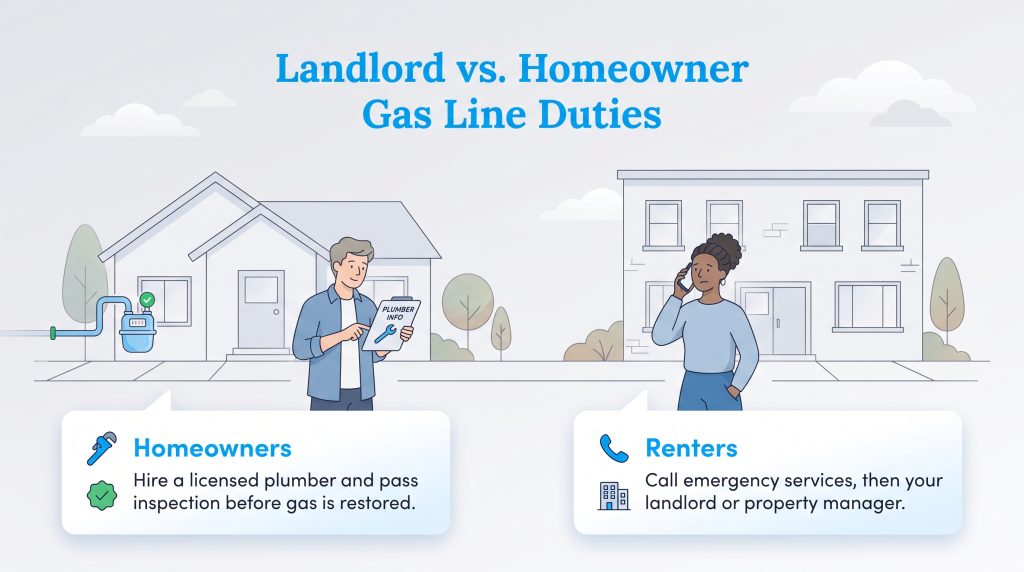
Homeowners: If you own your residence, you are legally responsible for the plumbing running from the utility meter into your home. You will need to hire a licensed, private plumber to repair the interior pipes and pass a local inspection before the utility company restores your service.
Renters: If you rent an apartment, the financial and logistical repair burden falls entirely on your property management team. Call emergency services to secure the scene, then immediately notify your landlord so they can dispatch a repair crew.
Preparing For Future Gas Emergencies
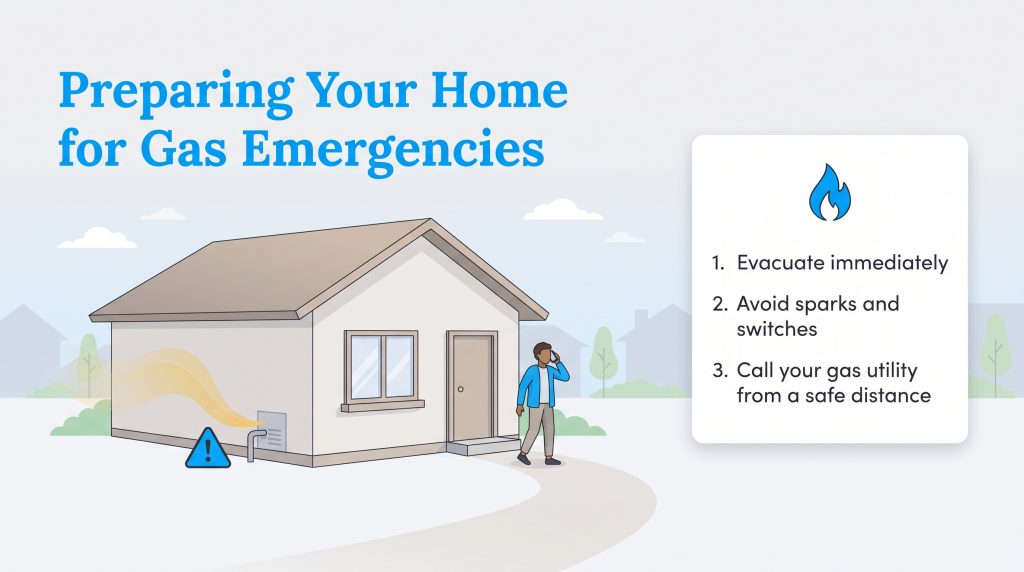
Dealing with unexpected utility failures can feel incredibly overwhelming, but thorough preparation makes all the difference. Remember that the pungent, rotten egg odor is an intentional safety feature designed to give you the critical minutes needed to escape.
By internalizing these safety protocols, you can transform a terrifying scenario into a manageable situation. Leaving immediately, avoiding electrical sparks, and calling the professionals ensures your property and neighborhood remain completely secure.
Frequently Asked Questions About Gas Leaks
What does a gas leak smell like?
Who do I call if I smell gas outside?
How do you find exactly where a gas leak is coming from?
Can a gas leak make you sick?
Is it safe to open windows if I smell gas?
What should I do if I smell a faint gas odor near my stove?
Can a carbon monoxide detector detect a natural gas leak?
About the Author

David has been an integral part of some of the biggest utility sites on the internet, including InMyArea.com, HighSpeedInternet.com, BroadbandNow.com, and U.S. News. He brings over 15 years of experience writing about, compiling and analyzing utility data.

LaLeesha has a Masters degree in English and enjoys writing whenever she has the chance. She is passionate about gardening, reducing her carbon footprint, and protecting the environment. She also recently served as President of the Board for City Sprouts (a community garden).