

Knowing The Early Signs Of A Gas Leak Can Protect Your Family And Home From Serious Danger, Empowering You To Take Swift, Life-Saving Action
Key Takeaways
- Trust your senses — a distinct rotten egg smell or hissing sound near appliances is a major red flag.
- Physical symptoms like sudden headaches, nausea, or dizziness in humans and pets require immediate evacuation.
- Never ignore a suspected leak; leave the area immediately without touching light switches or appliances before calling the authorities.
A natural gas leak presents a critical, immediate danger to your household, risking severe oxygen displacement and devastating explosions if ignited by a stray spark. If you smell rotten eggs, leave the house immediately. Recognizing gas leak symptoms early is your strongest defense against these sudden household hazards, and our comprehensive guide walks you through exactly what physical, environmental, and pet-related signs to look for so you can act decisively and safely.
Environmental Signs Of A Gas Leak In Your Home
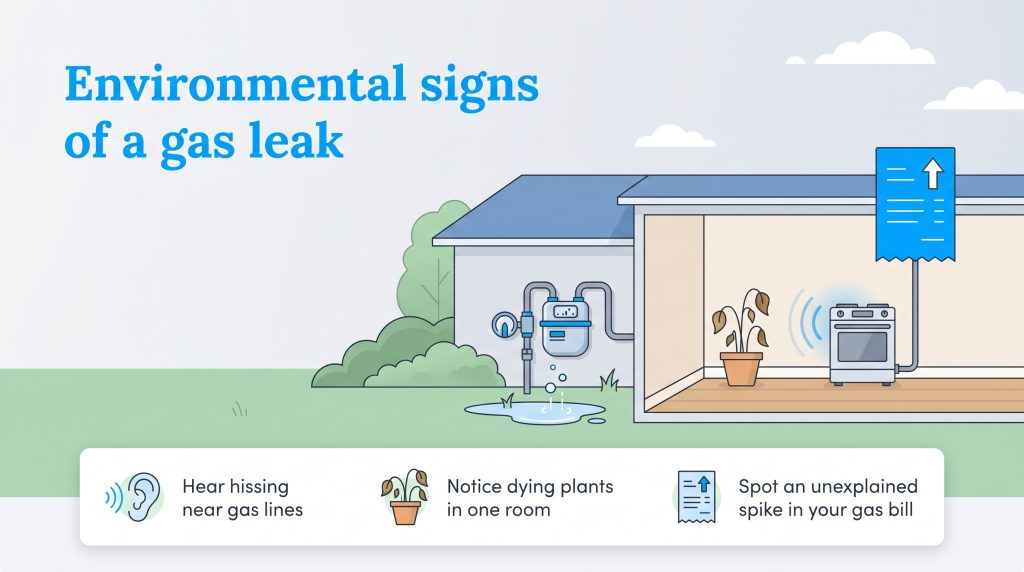
To spot a problem before it affects your health, pay close attention to your appliances, pipes, and any unusual spikes on your natural gas bill. Environmental indicators often appear long before you feel sick, making them crucial early warnings. Keep an eye out for these visual and auditory clues around your property:
- Smell: A distinct sulfur or rotten egg smell in house corridors, utility closets, or near supply lines.
- Sound: A sudden hissing, whistling, or roaring noise coming from your gas meter or indoor piping.
- Sight: Dying vegetation indoors or small, continuous bubbles appearing in puddles of standing water outside near the meter.
The “Rotten Egg” Smell (Mercaptan)
The usual warning sign is a strong sulfur-like odor resembling rotten eggs. Because the fuel naturally escapes detection, utility providers inject a harmless chemical compound called mercaptan into the supply lines. This essential additive gives the gas that unmistakable, heavy skunk scent, serving as a jarring warning system built directly into your infrastructure.
Hissing Or Whistling Sounds
If you hear a persistent hissing sound from gas line connections near a furnace, water heater, or stove, you likely have an active breach. Even if you don’t instantly smell mercaptan, high-pressure leaks create enough acoustic disturbance that you can hear them from across the room.
Dead Houseplants And Vegetation
Unexplained dead houseplants can point toward a slow indoor leak that is silently displacing oxygen in the immediate area. Outdoors, signs of an underground gas leak might look like an isolated patch of brown, dying grass directly above the buried utility line while the rest of your lawn remains green.
Bubbling In Standing Water
If you notice bubbles continuously rising in mud or standing water near your outdoor gas meter after a heavy rainstorm, it strongly indicates that underground piping is damaged and leaking fuel to the surface.
Physical Symptoms Of A Gas Leak In Humans
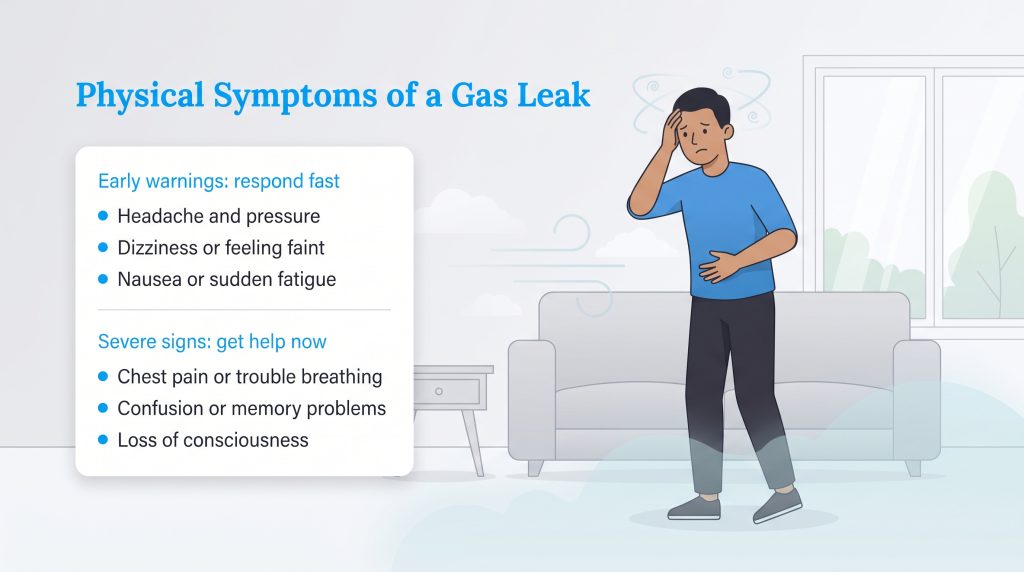
Experiencing a leak goes far beyond dealing with bad odors. As methane enters your living space, it aggressively displaces the available oxygen in the room. This reduction in breathable air triggers immediate physical symptoms of a gas leak as your body struggles to compensate for the sudden lack of oxygen.
While prolonged low-level exposure causes slow, chronic issues, sudden massive leaks provoke immediate distress. You must treat any physiological reactions with urgency to prevent natural gas poisoning signs from escalating into a life-threatening scenario.
Early Warning Signs (Headaches, Nausea, Dizziness)
When oxygen levels drop inside your home, your body signals distress very quickly. Before you investigate your natural gas service lines, evaluate yourself and your family members for these sudden onset issues:
- Severe, unexplained headaches or localized pressure in the temples
- Intense bouts of dizziness, sudden lightheadedness, or feeling faint
- Nausea, an upset stomach, or unexpected vomiting
- Uncharacteristic fatigue, physical weakness, or sudden drowsiness
Severe Natural Gas Poisoning Symptoms
If exposure continues, the displacement of oxygen reaches critical levels. Seek medical attention right away if you or your family members experience these severe signs:
- Sharp chest pains or noticeably irregular, shallow breathing
- Pale skin, sometimes accompanied by blistering in cases of direct contact with compressed gas
- Memory loss, severe confusion, or difficulty following simple instructions
- Complete loss of consciousness
Gas Leak Symptoms In Pets
Your animals will likely notice a problem before you do. Gas leak symptoms in pets often appear much sooner because dogs and cats possess higher respiratory rates and smaller lung capacities than humans. Since they spend their time closer to the ground, they inhale settling fumes or displaced air incredibly fast.
Keep a watchful eye on your furry and feathered friends for these alarming behavioral and physical changes:
- Rapid, uncharacteristic lethargy, extreme weakness, or an inability to stand
- A sudden refusal to eat their normal food or drink water
- Disorientation, stumbling, or seemingly confused behavior pacing the room
- Unexplained vomiting, excessive drooling, or breathing heavily through an open mouth
- Uncharacteristically red, watering, or glazed eyes
Natural Gas Leak Vs Carbon Monoxide: Key Differences
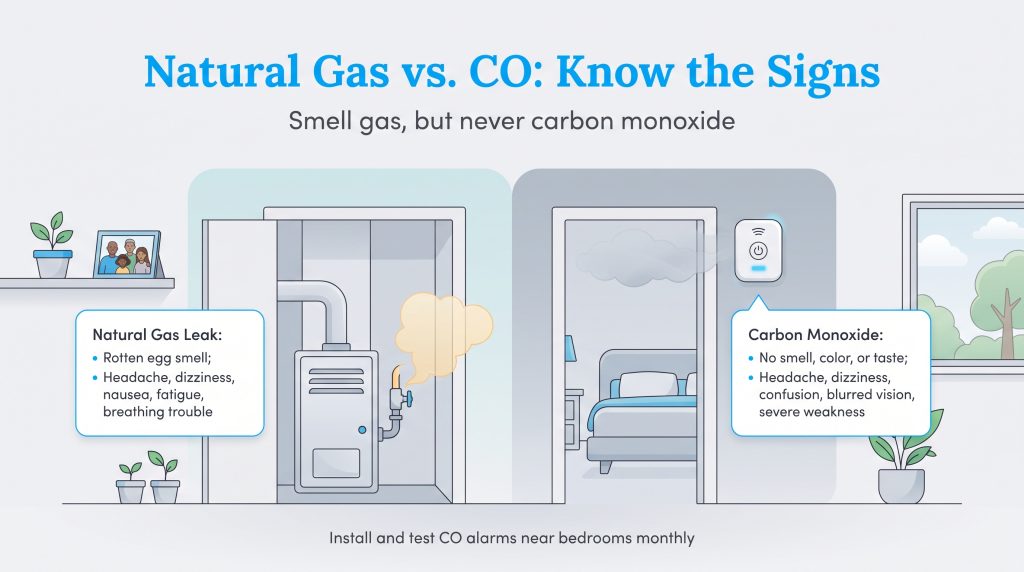
Natural gas and carbon monoxide can cause overlapping physical symptoms, including headaches, dizziness, nausea, and weakness. However, when comparing a carbon monoxide vs natural gas leak, the biggest differences lie in detection and origin.
For the most up-to-date carbon monoxide safety guidance from federal agencies, always follow proper carbon monoxide detector placement near sleeping areas and test your alarms monthly. To help you quickly distinguish between the two hazards, we broke down their key traits below.
| Characteristic | Natural Gas | Carbon Monoxide (CO) |
|---|---|---|
| Smell | Strong sulfur or “rotten egg” scent due to added mercaptan | Entirely odorless, colorless, and tasteless |
| Weight in Air | Lighter than air (methane rises toward the ceiling) | Roughly the same weight as air (mixes evenly throughout the room) |
| Detection Method | Smell, hissing sounds, and dedicated combustible gas detectors | Strictly requires working carbon monoxide alarms |
Emergency Protocol: What To Do If You Suspect A Gas Leak
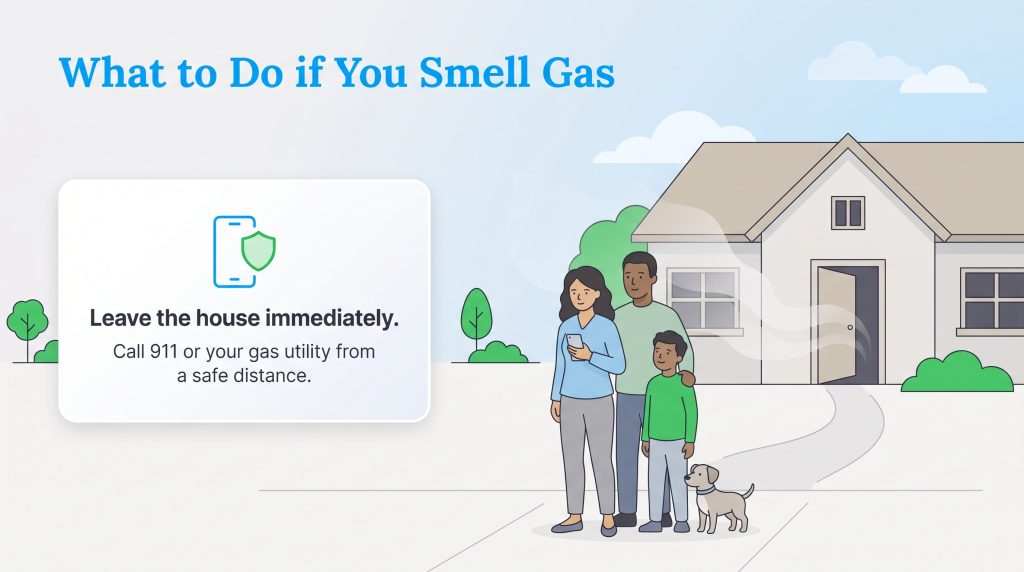
Knowing exactly what to do if you smell gas keeps a manageable emergency from escalating into a disaster. If you detect a strong odor, hear hissing, or feel sudden physical symptoms, follow these steps immediately:
- Evacuate the premises immediately: Gather all family members and indoor pets right away and head outside.
- Leave the door open: If it is safe and quick to do so on your way out, leave the front door wide open to help ventilate the trapped fumes.
- Move to a safe distance: Walk across the street or down the block, ensuring you are completely clear of the property boundary.
- Call for professional help: Once you are safely away from the home, dial 911 or your local utility provider’s emergency hotline, following industry gas leak safety guidance.
In the chaos of an emergency, your instincts might lead you to make dangerous mistakes. To prevent accidental ignition, here is exactly what you should avoid doing:
- Do not flip light switches on or off.
- Do not use your cell phone or a landline inside the house.
- Do not unplug or turn off any appliances.
- Do not light a match, use a lighter, or start a vehicle near the home.
- Do not try to locate the source of the leak or perform a soapy water test indoors.
Securing Your Home Against Gas Leaks
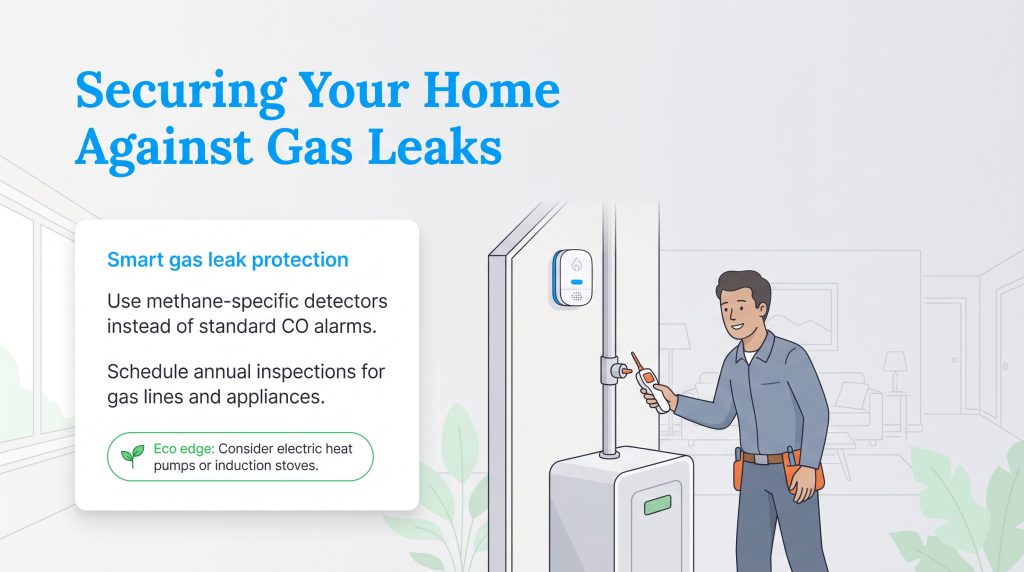
Taking a proactive approach to your home’s infrastructure is the smartest way to manage safety and avoid stressful emergencies. You can dramatically reduce your risk by investing in modern gas leak detection tools and sticking to a routine maintenance schedule.
To start, install smart home utility monitors and the best natural gas detectors specifically designed for methane. Look for units listed by recognized testing labs, such as UL or ETL, and follow the manufacturer’s placement instructions carefully, placing them higher up on walls since natural gas rises. Standard CO alarms do not detect natural gas, so you need a dedicated combustible gas monitor or a combination unit for full protection.
Furthermore, schedule annual HVAC and gas line inspections with a licensed professional. Have them thoroughly check your gas furnaces, water heaters, fireplaces, and dryers to ensure all valves and flexible connectors operate correctly and remain free of wear. Always keep your exterior vents and flues clear of debris to prevent dangerous exhaust backups.
For those wondering about the core fuel itself, federal energy data explains that it is a colorless, odorless hydrocarbon mixture used widely for heating and cooking. While it is highly efficient, its highly flammable nature means you must respect the infrastructure delivering it into your home.
Staying Prepared And Confident In Your Home Safety
A rapid, educated response serves as your greatest defense against escalating gas leak symptoms. By memorizing these distinct environmental clues, spotting physiological reactions in your family and pets early, and installing the right detectors, you empower yourself to act decisively under pressure. Save these emergency protocols, stay proactive about your annual appliance maintenance, and enjoy lasting peace of mind in your new home.
Frequently Asked Questions About Gas Leak Symptoms
These quick answers cover common gas leak safety questions homeowners and renters ask when something smells off. If you suspect an active leak, leave first and make calls only once you are safely outside.
Can a gas leak cause a fire or explosion?
Does a carbon monoxide detector detect natural gas leaks?
Can a small gas leak make you sick?
How long does it take to get natural gas poisoning?
Can I fix a small gas leak myself?
Who do I call if I suspect a gas leak in my neighborhood?
Will my utility company charge me for calling to report a leak?
About the Author

David has been an integral part of some of the biggest utility sites on the internet, including InMyArea.com, HighSpeedInternet.com, BroadbandNow.com, and U.S. News. He brings over 15 years of experience writing about, compiling and analyzing utility data.

LaLeesha has a Masters degree in English and enjoys writing whenever she has the chance. She is passionate about gardening, reducing her carbon footprint, and protecting the environment. She also recently served as President of the Board for City Sprouts (a community garden).