

Installing the right detector provides critical early warnings for leaks, keeping your home safe and efficient.
Key Takeaways
- Stationary monitors provide 24/7 protection for your living spaces, while portable “sniffers” act as diagnostic tools to help you pinpoint the exact source of a leak.
- Proper placement is absolutely critical because natural gas rises to the ceiling, whereas heavy propane sinks directly to the floor.
- Smart features and battery backups ensure your household remains protected and connected, even when you are away on vacation or experiencing a power outage.
You probably don’t think about your utility lines often, but a small plumbing failure can turn into a major safety hazard — and a massive waste of money — in just minutes. Being able to quickly recognize common gas leak symptoms is an essential part of responsible homeownership. While utility providers purposefully add a “rotten egg” smell (mercaptan) to help you catch issues early, relying on your nose alone isn’t foolproof, especially if the leak is small, occurs while you are sleeping, or stems from an HVAC unit in a basement you rarely visit. We evaluated the market’s top devices based on rigorous safety standards, verified performance data, and precise manufacturer specifications to ensure you secure top-tier home safety. Investing in a highly rated natural gas leak detector is a simple, proactive step that shields your family from explosive hazards and prevents raw methane, a potent greenhouse gas, from escaping into the environment. In this comprehensive guide, we break down the most reliable options available today, helping you choose everything from the best portable gas sniffer for DIY projects to a continuous smart wifi gas sensor for modern peace of mind.
Emergency Safety First: What To Do If You Smell Gas

A severe gas leak is a life-threatening emergency that requires immediate, decisive action. If you suspect an active leak, your absolute first priority is safely evacuating the premises. Do not hesitate, and do not attempt to find the source of the leak yourself.
- Evacuate immediately: Get all family members and pets out of the house and move a safe distance away from the property.
- Do not touch anything electrical: Never flip a light switch, unplug an appliance, use a garage door opener, or even use your cell phone while inside the house. The tiniest electrical arc can easily ignite built-up combustible gas.
- Leave the doors open: As you exit, leave the doors wide open behind you to help ventilate the trapped gas. Do not waste time opening windows.
- Call for help from outside: Once you are standing safely across the street or down the block, dial 911 or call your local utility provider’s emergency hotline immediately.
Top Picks At A Glance

Below are our top seven recommendations for 2026, carefully categorized with essential safety specifications to help you find the exact protection your home requires. We heavily prioritized mandatory UL 1484 compliance for all stationary units, ensuring these combustible gas alarms have passed rigorous third-party safety testing. Review the table below to quickly compare each option based on its ideal use case, power source, and targeted gas types.
| Category | Recommended Product | Best For | Price | Power Source | Gas Types Detected | UL 1484 Certified |
|---|---|---|---|---|---|---|
| Best Overall | Kidde Nighthawk (KN-COEG-3) | Whole-Home Protection | ~ $57.47 | Plug-in w/ 9V Backup | Natural Gas, Propane, CO | Yes |
| Best Smart Detector | Shelly Gas WiFi Sensor | Remote Mobile Alerts | ~ $69.99 | AC Plug-in | CNG (Methane) | Yes |
| Best Budget Monitor | First Alert Plug-In (GCO1CN) | Affordable 2-in-1 Safety | ~ $59.95 | AC Plug-in | Natural Gas, Propane, CO | Yes |
| Best for RVs | MTI Industries Safe-T-Alert 35 Series | Campers & Trailers | ~ $97.04 | 12V Hardwired | Propane, CO | Yes |
| Best Portable Sniffer (Pro) | Klein Tools ET120 | HVAC Pros & Deep Reaches | ~ $129.97 | AAA Batteries | Natural Gas, Propane, Butane | N/A (Portable Tool) |
| Best Portable Sniffer (Value) | TopTes PT520A | DIY Appliance Checks | ~$39.99 | AAA Batteries | Natural Gas, Propane, Butane, LPG | N/A (Portable Tool) |
| Best Battery-Operated | DeNova Detect Natural Gas Alarm | High-Wall Installations | ~ $96.95 | 10-Year Lithium | Natural Gas | Yes |
Detailed Reviews Of The Best Natural Gas Detectors
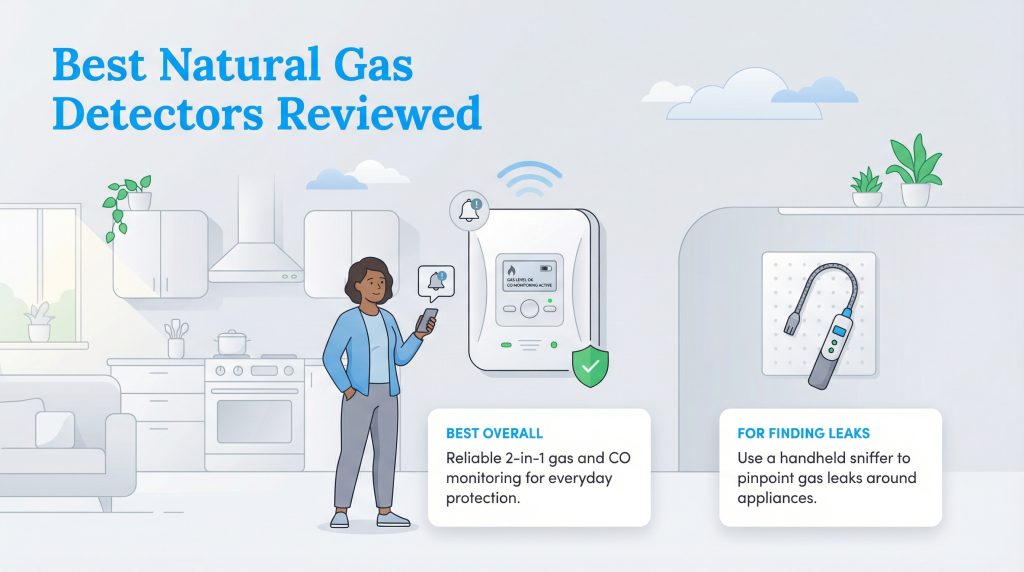
We selected these devices based on reliability, accurate sensor readings, and long-term ease of use for everyday homeowners. Whether you need a combo gas and CO detector for your main hallway or a handheld portable gas sniffer to check a recently installed water heater, these are the absolute best tools for the job.
1. Best Overall Kidde Nighthawk KN-COEG-3
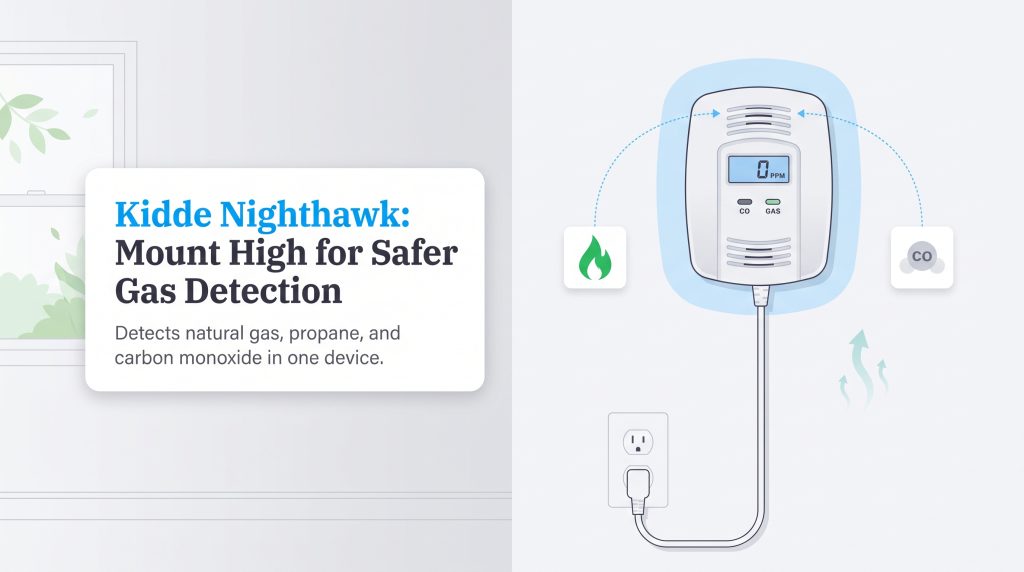
The Kidde Nighthawk consistently remains the gold standard for residential gas detection because it offers highly reliable 2-in-1 protection. It actively detects both explosive gases (methane and propane) and carbon monoxide. Its digital display is a standout feature, showing you real-time readings of CO levels in parts per million (PPM), while a distinct, blaring “GAS” alarm sounds if combustible agents are detected. We love that this unit includes a 6-foot extension cord, which allows you to plug it into a standard low outlet but physically mount the unit high on the wall — an absolute necessity for catching natural gas as it rises to the ceiling.
Price: ~ $57.47
Key Specs:
- Alarm Decibel Rating: 85dB
- Power Source: AC Plug-in with 9V Battery Backup
- Detection Range (LEL/PPM): 10% to 25% LEL for Gas / 50+ PPM for CO
Pros:
- Detects Natural Gas, Propane, and Carbon Monoxide in one device
- 9V battery backup keeps it fully operational during severe power outages
- Flexible mounting options via the included 6-foot extension cord
Cons:
- The physical design is slightly bulky compared to newer smart home devices
- Must be replaced every seven to 10 years when the internal sensors expire
2. Best Smart Detector Shelly Gas WiFi Sensor
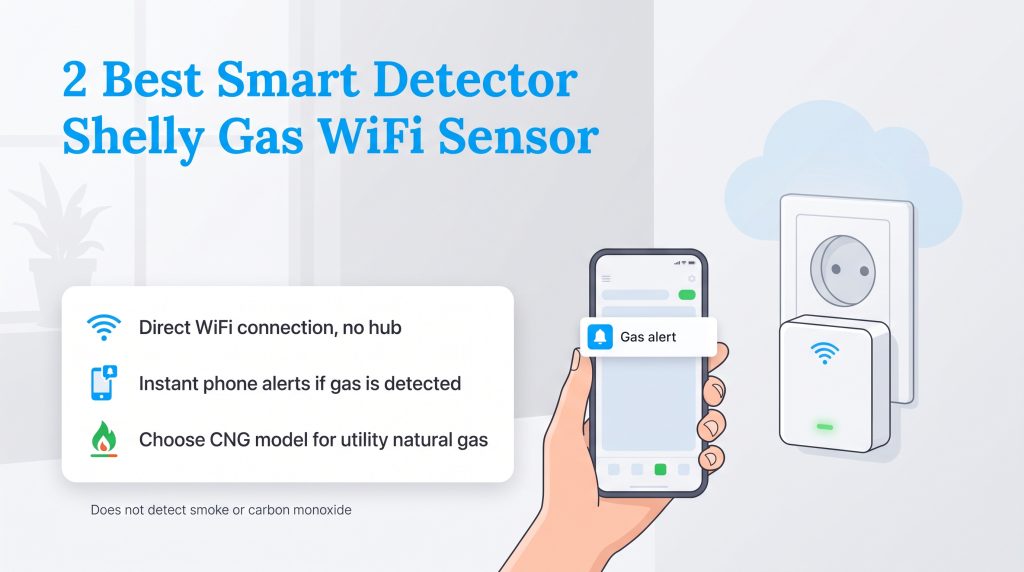
If you want the peace of mind that comes from receiving emergency alerts on your phone while you are at work or traveling, the Shelly Gas sensor is an incredible choice. Unlike many smart home gadgets that force you to buy a complicated separate hub, the Shelly connects directly to your existing home WiFi network. It acts as a compact, intelligent plug-in gas leak sensor that triggers a loud local siren while simultaneously sending push notifications to the Shelly Cloud app. Keep in mind that Shelly sells two distinct versions: one for CNG (Compressed Natural Gas) and one for LPG (Liquid Propane Gas). You must ensure you buy the “CNG” version if your home uses standard underground utility lines.
Price: ~ $69.99
Key Specs:
- Alarm Decibel Rating: 70dB+
- Power Source: AC Plug-in
- Detection Range (LEL/PPM): 10% to 25% LEL for Natural Gas
Pros:
- Connects directly to WiFi without requiring a third-party smart hub
- Mobile push notifications allow you to monitor your home remotely from anywhere
- Built with a flame-resistant shell that adds an extra layer of durability
Cons:
- Requires you to choose between the CNG or LPG model (it does not detect both)
- Relies entirely on AC power, meaning it loses WiFi capabilities if the power grid fails
3. Best Budget Monitor First Alert Plug-In GCO1CN
For homeowners who simply want an easy, “plug-and-play” solution without breaking the bank, the First Alert GCO1CN is a proven performer. Much like our top overall pick, it operates as a versatile combination alarm that hunts for explosive gases (methane and propane) right alongside carbon monoxide. It boasts a bright backlit digital display that makes it exceptionally easy to read numbers in a dark hallway or an unfinished basement. The unit plugs directly into any standard wall outlet, meaning you can have it up and running in seconds. Just be aware that this budget-friendly model lacks a battery backup in certain regional versions, so you are left blind during a total power outage.
Price: ~ $59.95
Key Specs:
- Alarm Decibel Rating: 85dB
- Power Source: AC Plug-in
- Detection Range (LEL/PPM): 10% to 25% LEL for Gas / 50+ PPM for CO
Pros:
- Highly affordable price point for a dual-threat combo device
- Incredibly simple, direct plug-in installation requires zero tools
- Large backlit display makes reading gas levels easy in low-light environments
Cons:
- No battery backup means it stops working if a storm knocks out your power
- Low outlet placement is better suited for heavy propane unless you use your own extension cord to mount it higher
4. Best For RVs MTI Industries Safe-T-Alert 35 Series
RVs, camper vans, and travel trailers have highly unique safety requirements because they heavily rely on propane for heating and cooking inside incredibly small, enclosed spaces. The MTI Industries Safe-T-Alert is the undisputed industry standard for recreational vehicles. It is specifically engineered to be hardwired directly into your RV’s 12-volt electrical system, ensuring the alarm remains active as long as your rig’s battery bank has juice. Because propane is a heavy, sinking gas, this RV propane gas alarm is designed to be flush-mounted near the floorboards, putting it in the exact right position to catch a leak before it accumulates inside your living space.
Price: ~ $61.13
Key Specs:
- Alarm Decibel Rating: 85dB
- Power Source: 12V DC Hardwired
- Detection Range (LEL/PPM): 10% to 25% LEL for Propane / 50+ PPM for CO
Pros:
- Engineered to handle the constant vibration and wild temperature swings of RV travel
- Hardwired 12V operation means you never have to remember to swap dead batteries
- Reliably detects both Propane and Carbon Monoxide in tight quarters
Cons:
- Installation requires cutting a physical hole in your cabinetry for proper flush mounting
- Not suitable for standard 120V household utility outlets
5. Best Portable Sniffer Pro Klein Tools ET120
Sometimes you already know there is a minor leak — perhaps you catch a faint whiff of sulfur when opening a utility closet — but you cannot track down the exact source. That is precisely where an active portable gas sniffer shines. The Klein Tools ET120 is a trusted favorite among HVAC professionals and dedicated DIYers. It features a rugged, 18-inch flexible gooseneck probe that allows you to easily snake the sensor behind stoves, underneath water heaters, and into cramped piping joints. The device utilizes an escalating audible ticking sound (much like a Geiger counter) alongside visual red LEDs to indicate the exact concentration of gas as you move closer to the faulty valve.
Price: ~ $129.97
Key Specs:
- Alarm Decibel Rating: 85dB Audible Ticking
- Power Source: 4x AAA Batteries
- Detection Range (LEL/PPM): 50 to 10,000 PPM
Pros:
- 18-inch gooseneck probe effortlessly reaches tight, hidden plumbing spots
- Rugged, drop-resistant build quality from a highly respected tool brand
- Adjustable sensitivity dial helps you pinpoint microscopic leaks without getting overwhelmed by background gas
Cons:
- This is a manual diagnostic tool, not a continuous 24/7 safety monitor
- Relies on standard AAA batteries rather than a modern rechargeable lithium pack
6. Best Portable Sniffer Value TopTes PT520A
When you need to hunt down the precise origin of a suspected leak around a newly installed kitchen range or outdoor grill, continuous wall-plug alarms cannot help you trace the line. You need a dedicated handheld sniffer equipped with an extended flexible probe that maneuvers around tight pipe joints. Following the retirement of our former budget pick, the TopTes PT520A has quickly taken the top spot as our recommended best value portable sniffer for the everyday homeowner.
The TopTes PT520A delivers an ideal combination of detection precision, extended physical reach, and highly affordable pricing. Powered by a responsive Gas Sensitive Semiconductor (GSS) sensor array, the PT520A identifies combustible gas concentrations as low as 50 parts per million (PPM) with an incredibly fast response time of just half a second.
Price: ~ $39.99
Key Specs:
- Alarm Decibel Rating: 75dB Audible Buzzer
- Power Source: 3x AAA Batteries
- Detection Range (LEL/PPM): 50 to 10,000 PPM
Pros:
- Generous 17-inch flexible gooseneck navigates around heavy appliances with ease
- Clear backlit LCD screen visually displays the rising gas concentration
- Three adjustable sensitivity levels (High, Medium, Low) let you narrow down the leak’s origin
- Includes a protective storage case and fresh batteries right out of the box
Cons:
- Requires a mandatory 30-second clean-air warm-up sequence every time you turn it on
- Battery compartment door frustratingly requires a small Phillips screwdriver to open
- The high-sensitivity mode can sometimes false-alarm on harmless household vapors like rubbing alcohol
7. Best Battery Operated DeNova Detect Natural Gas Alarm
For years, it was nearly impossible to find a reliable residential natural gas alarm that didn’t demand an empty wall outlet. That dramatically changed with the introduction of DeNova Detect. This sleek unit is one of the very first widely available residential natural gas alarms to be 100% battery-operated, boasting an incredible 10-year lithium battery life. This is an absolute game-changer for home installation because it allows you to mount the battery-operated gas detector exactly where it scientifically belongs — roughly six inches from the ceiling — without worrying about unsightly extension cords trailing down your wall. It also features spoken voice alerts that announce “Danger! Gas leak!”, which can be significantly less confusing than a generic siren when waking up a disoriented family member at two in the morning.
Price: ~ $98.95
Key Specs:
- Alarm Decibel Rating: 85dB with Spoken Voice Alerts
- Power Source: 10-Year Built-In Lithium Battery
- Detection Range (LEL/PPM): 10% LEL for Natural Gas
Pros:
- 100% wireless design with a sealed 10-year battery eliminates maintenance
- Can easily be installed high on the wall, making it ideal for detecting rising Natural Gas
- Loud voice alerts in both English and Spanish dramatically reduce panic
Cons:
- Demands a higher upfront cost than traditional plug-in models
- Detects Natural Gas only (it completely ignores Propane or CO hazards)
Portable Sniffers Vs Continuous Wall Monitors
It is incredibly important to understand the distinct difference between active diagnostic tools and passive safety devices to ensure your family remains fully protected. Continuous wall monitors (like the Kidde or DeNova models) are passive safety devices designed to sit quietly on your wall, actively sampling the air 24/7. These stationary alarms are an absolute requirement for living spaces because they act as your first line of defense, ready to blare a siren the moment a dangerous accumulation of gas occurs while you are sleeping or relaxing in another room.
On the other hand, portable sniffers (like the Klein Tools or TopTes models) are manual, active diagnostic tools. You do not leave them turned on indefinitely. Instead, you keep them in your toolbox and pull them out specifically when you need to inspect a new appliance connection, check a threaded pipe joint, or trace down a faint odor you noticed near the water heater. They are exceptionally sensitive to tiny, localized amounts of gas but will not protect your whole house from a sudden overnight leak.
Natural Gas Vs Propane Vs Carbon Monoxide
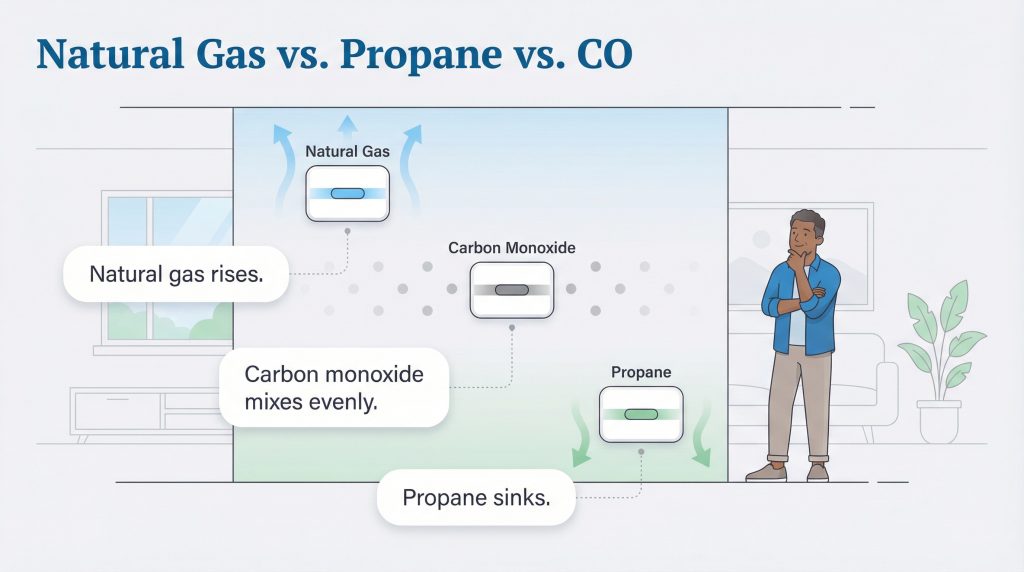
It is remarkably easy to confuse these different hazards, but buying the wrong detector can leave your home totally unprotected. Understanding the physical properties of these specific gases will help you choose the right device and install it correctly. Many homeowners mistakenly assume one simple device automatically covers everything, but most detectors either sense combustible gas or carbon monoxide. Only specific combo units successfully monitor both.
- Natural Gas (Methane): This is the primary fuel delivered directly via utility lines to most suburban and urban homes. It is lighter than air, meaning it quickly rises and accumulates near the ceiling. Because natural gas rises, you must install natural gas detectors high on the wall, roughly six to 12 inches down from the ceiling.
- Propane (LPG): This potent fuel is incredibly common in rural homes, RVs, and outdoor gas grills. It is heavier than air, meaning it rapidly sinks and pools along the floor when a leak occurs. Because propane sinks, you must install propane detectors low on the wall, typically six to 12 inches up from the floor.
- Carbon Monoxide (CO): A deadly, odorless byproduct created by burning fuel inefficiently (like gas, wood, or oil). It mixes with air roughly evenly. For dedicated CO protection, see our comprehensive list of the Best Carbon Monoxide Detectors.
How To Choose The Right Gas Detector
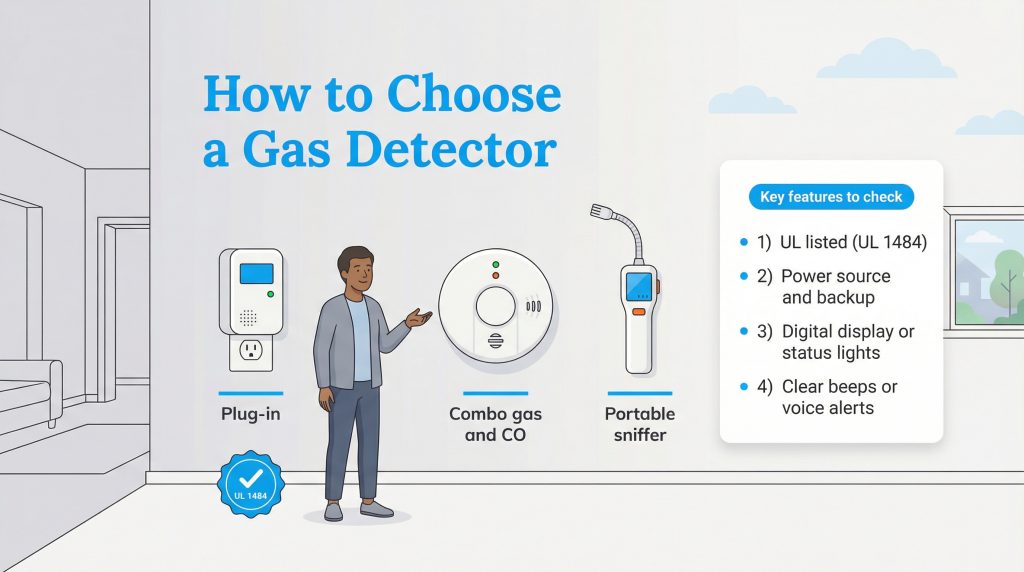
When shopping for the best natural gas detector, you need to look past flashy marketing and focus on key performance features to ensure you are getting a highly reliable device. Whether you want a simple lower explosive limit monitor or an advanced smart wifi gas sensor, understanding the technical jargon is critical for your family’s safety.
Understanding The Lower Explosive Limit
One of the most important technical concepts you will encounter is LEL, which stands for Lower Explosive Limit. The LEL represents the absolute lowest concentration of a specific gas in the air that can catch fire or explode if an ignition source (like a spark from a simple light switch) is introduced. If a gas concentration hits 100% LEL, it is fully explosive. Therefore, a trustworthy, UL-certified residential alarm must sense the gas and trigger its siren well before the environment becomes dangerous — typically alarming at 10% to 25% LEL. This early warning provides your family with the crucial minutes needed to evacuate safely.
- UL Listing: Ensure the device meets UL 1484 standards. This officially certifies it has passed strict, independent safety testing for residential combustible gas detectors.
- Power Source Resiliency: Plug-in models are incredibly easy to install but require a battery backup to function during severe storms or grid outages. Battery-only models (like DeNova) offer the ultimate placement flexibility without messy wires.
- Digital Display vs. Lights: A digital readout gives you precise, immediate information about the leak’s severity, whereas a simple green/red light only tells you a binary “safe” or “danger.”
- Voice Alerts: Some advanced models actually speak aloud (“Danger! Gas Leak Detected”), which is frequently much less confusing than a generic beep that might be mistaken for a dying smoke alarm.
Where To Install Your Gas Detectors
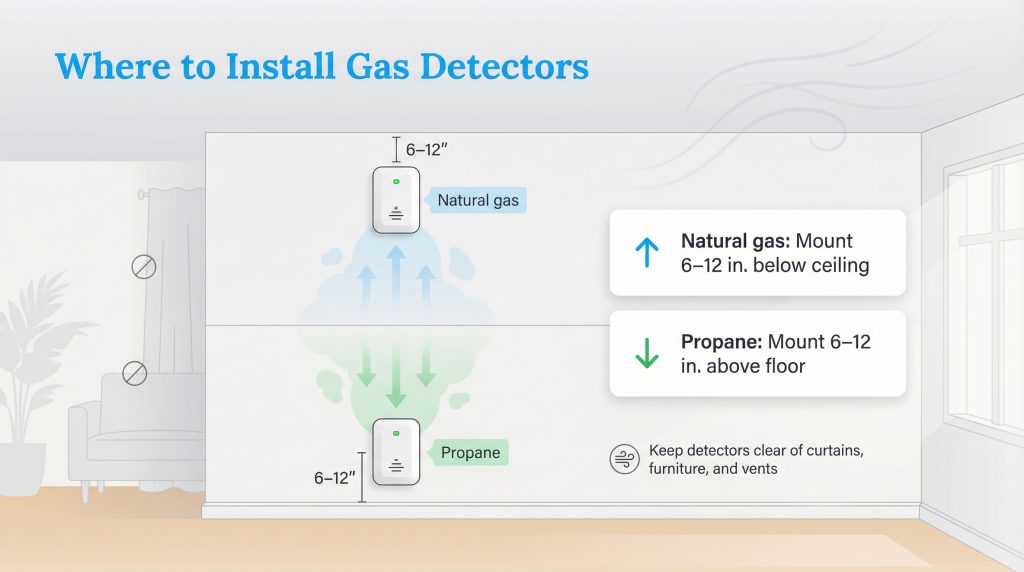
Even the most expensive, highly rated combo gas and CO detector will fail to protect you if it is installed in the wrong location. Proper placement ensures the internal sensor catches the gas exactly as it begins to accumulate, rather than waiting until the entire room is saturated.
- Do place detectors in rooms that actively house gas-burning appliances, such as your kitchen, utility room, or basement HVAC space.
- Do keep the sensor clear of obstacles so it has unobstructed access to the natural airflow of the room.
- Do plug in combo units using a secure extension cord if you need to elevate a natural gas monitor higher on the wall.
- Don’t place detectors behind heavy curtains, large furniture, or shoved deep into tight corners where airflow is entirely blocked.
- Don’t install units directly near open windows, aggressive ceiling fans, or HVAC intake vents that might aggressively blow escaping gas away from the sensor.
- Don’t install alarms in extremely humid areas, like directly above a boiling stove or inside a bathroom, which can cause false alarms.
If you are currently setting up utilities, start with our helpful guide on how to set up gas service in your new home to fully understand your incoming fuel lines. You can also review our detailed guide on how to read a gas meter to better monitor your overall household usage and detect potential hidden leaks through unusual consumption spikes.
Maintenance Testing And The Soapy Water Trick
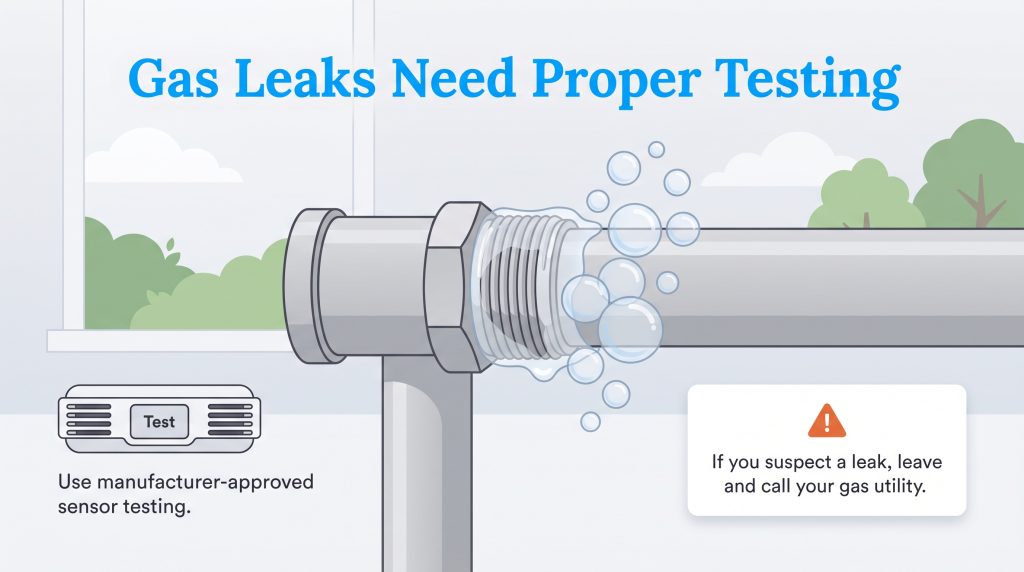
Pressing the “Test” button on the front of your device only confirms the siren and circuitry function properly; it does not physically verify the internal sensor’s ability to sniff out raw gas. To ensure true reliability, you should perform a manual gas test on your stationary detectors.
- Purchase a standard, adjustable butane pocket lighter.
- Hold the lighter approximately two inches away from the front sensor vents on the detector.
- Press and hold the lighter’s trigger to release unignited butane gas, making absolutely sure you do not strike a flame or spark.
- Wait for the alarm to sound, which typically takes 10 to 20 seconds of continuous butane exposure.
- Clear the air around the detector by vigorously fanning it with a magazine until the siren stops ringing.
If you suspect a physical leak near an appliance and don’t own a portable sniffer, HVAC professionals heavily rely on the age-old “soapy bubbles” method:
- Mix a few heavy squirts of liquid dish soap with water in a bowl or spray bottle.
- Generously apply this soapy mixture directly to the suspicious metal connections or threaded joints using a sponge.
- Watch closely. If the connection is actively leaking, the escaping gas pressure will immediately blow rapidly expanding visible bubbles in the soap, pinpointing the exact spot you need a licensed professional to repair.
Securing Your Home Against Leaks
Equipping your home with the right gas detection equipment is one of the smartest, most essential investments you can make for your family’s safety. For continuous, whole-home protection, we highly recommend the Kidde Nighthawk for its robust combo gas and CO detection capabilities and dependable battery backup. If you are a dedicated DIYer frequently installing appliances, keep the highly sensitive TopTes PT520A portable sniffer in your toolbox to ensure every fitting is airtight.
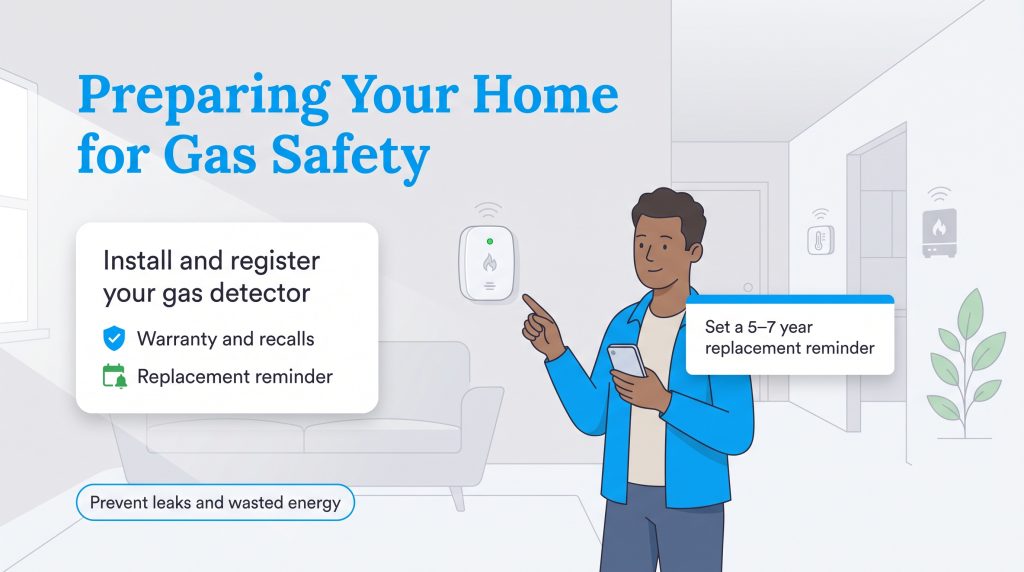
As soon as you purchase and install your new device, take five minutes to register it with the manufacturer. This simple step guarantees you receive critical firmware updates or recall notices. Furthermore, because the chemical sensors inside these detectors naturally degrade, you must set a digital calendar reminder right now for the five-to-10-year expiration date. Upgrading your alarms on schedule is a non-negotiable part of responsible homeownership. To keep your utility bills low while maintaining a secure household, explore our actionable tips on reducing your natural gas usage.
Frequently Asked Questions About Natural Gas Detectors
What is the difference between a natural gas leak detector and a carbon monoxide detector?
These devices sense entirely different, yet equally dangerous, hazards. A natural gas leak detector identifies raw, unburned combustible gases (like methane and propane) that can cause catastrophic explosions if ignited by a spark. Conversely, a carbon monoxide (CO) detector senses the odorless, toxic gas produced as a byproduct when appliances burn fuel inefficiently. You need reliable protection from both, which is why combo units are incredibly popular.
Do natural gas detectors also detect carbon monoxide?
Not always. While some advanced “combination” units (like the Kidde Nighthawk and First Alert models) detect both hazards, most standard natural gas alarms are engineered exclusively for combustible gases. You must carefully check the product specifications on the box to confirm it includes a dedicated CO sensor.
How do I know if my gas detector has expired?
Most gas detectors have a physical lifespan of five to 10 years before the internal chemical sensors lose their detection accuracy. You can find the exact expiration timeline by locating the manufacturing date stamped directly on the back of the device. Many modern detectors will also emit a unique “chirping” pattern (distinct from a standard low-battery beep) when they officially reach the end of their operational life.
At what LEL percentage will a natural gas alarm go off?
To keep your family safe, residential combustible gas alarms are highly calibrated to sound well before the environment actually becomes explosive. Most UL 1484-certified detectors will trigger their sirens when they detect a gas concentration between 10% and 25% of the Lower Explosive Limit (LEL), granting you plenty of time to escape.
What should I do if my gas detector alarm goes off?
Immediately evacuate everyone from the house into the fresh air. Do not touch any light switches, electrical appliances, garage door openers, or cell phones, as even a tiny microscopic spark could ignite the trapped gas. Once you are at a completely safe distance outside, call 911 and your utility provider to report the emergency. For more detailed procedures, refer to the safety guidelines for home fires.
Can I use a portable gas sniffer as a permanent monitor?
No, you should never use a portable tool as a permanent monitor. Portable sniffers are manual diagnostic tools designed specifically to help you find the source of a leak, like a loose pipe fitting behind a stove. They operate on standard disposable batteries and are not designed to monitor the air 24/7. You absolutely need a stationary plug-in, battery-operated, or hardwired alarm for continuous home protection.
Are plug-in gas detectors accurate?
Yes, plug-in gas detectors are highly accurate and effective for residential use, provided they hold a strict UL 1484 certification. However, installation height is the primary limiting factor. If you plug a detector directly into a low-to-the-ground outlet to monitor natural gas (which rises), it will not sound the alarm as quickly as a unit properly mounted near the ceiling. Using a model with an extension cord or a wireless battery unit is vastly superior for natural gas detection.
Do I need a natural gas detector if my appliances are brand new?
Yes. Even if your stove, furnace, or water heater is fresh out of the box, leaks often occur at the connection points, valves, or hidden supply lines rather than inside the appliance itself. Furthermore, new installations involve human error. Having a reliable gas detector acts as an essential fail-safe to protect your home against faulty plumbing joints or accidental bumps that loosen a vital connection over time.
What is the difference between mercaptan and methane?
Methane is the primary chemical component of natural gas; it is highly combustible, completely invisible, and naturally odorless. Mercaptan, on the other hand, is a harmless chemical odorant intentionally injected into the public gas supply by utility companies. Mercaptan produces that distinctive “rotten egg” or sulfur smell, serving as a noticeable warning sign that dangerous methane is escaping into your home.
How much does it cost to run a plug-in natural gas detector?
Running a standard plug-in natural gas detector uses an incredibly small amount of electricity, typically drawing only one to three watts of continuous power. Over the course of a full year, this energy-saving option will likely add less than $2 to your overall electric bill. It is one of the most cost-effective safety investments you can make for your household.
Will a standard smoke detector detect a natural gas leak?
No, a standard smoke detector will not alert you to a natural gas leak. Smoke detectors are designed specifically to sense airborne particulate matter created by an active fire. Combustible gases like methane and propane are completely invisible to these sensors. You must purchase a dedicated explosive gas detector to monitor for unignited fuel leaks in your home.
About the Author

LaLeesha has a Masters degree in English and enjoys writing whenever she has the chance. She is passionate about gardening, reducing her carbon footprint, and protecting the environment. She also recently served as President of the Board for City Sprouts (a community garden).

David has been an integral part of some of the biggest utility sites on the internet, including InMyArea.com, HighSpeedInternet.com, BroadbandNow.com, and U.S. News. He brings over 15 years of experience writing about, compiling and analyzing utility data.