

A good water leak alarm can catch small leaks early, reduce water waste, and help you avoid expensive repairs.
Key Takeaways
- Automatic shutoff systems offer the strongest protection because they can stop water at the main line when they detect unusual flow.
- Wi-Fi leak sensors without a hub are affordable, renter-friendly options for sinks, laundry rooms, basements, and water heaters.
- Some insurers may offer discounts for leak detection devices, but you’ll need to confirm eligibility with your provider before buying.
A small drip under your sink can turn into warped cabinets, mold concerns, or a surprise repair bill if it goes unnoticed. The best water leak alarms give you an early warning, whether you want a simple battery-powered sensor or a whole-home system that can shut off water automatically. Below, we’ll help you compare the main types, choose the right features, and place detectors where they’ll do the most good.
Best Water Leak Alarms at a Glance
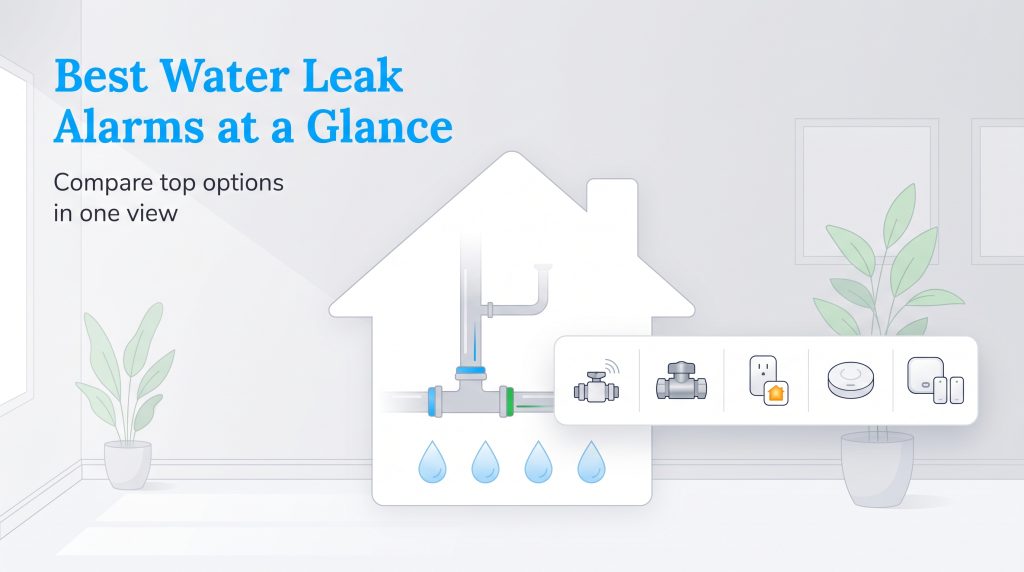
If you want to quickly narrow down your options, here is a snapshot of the top categories and recommended products to help you protect your home.
| Category | Average Price | Recommended Type or Product | Best For | Key Feature | Watch Out For |
|---|---|---|---|---|---|
| Best Whole-Home Shutoff | $559.00 | Flo by Moen Smart Water Monitor and Shutoff | Frequent travelers and homeowners | Automatic shutoff and daily health checks | Professional installation and subscription limits |
| Best Premium Shutoff | $466.28 | Phyn Plus | Larger homes and tech-focused users | Ultrasonic flow and pressure monitoring | Higher upfront cost |
| Best for Apple HomeKit | $199.90 | Eve Water Guard | Apple smart home users | Native HomeKit alerts and automation | Requires outlet power |
| Best Budget Alarm | $12.23 | Basic battery-powered leak alarm | Renters and under-sink use | Loud local siren | No remote alerts |
| Best for Basements | $64.99 | Yo-Link Long-range hub-based leak sensor | Sump pump areas and Wi-Fi dead zones | Better signal reliability | May require a hub |
Which Type of Water Leak Alarm Fits Your Home?
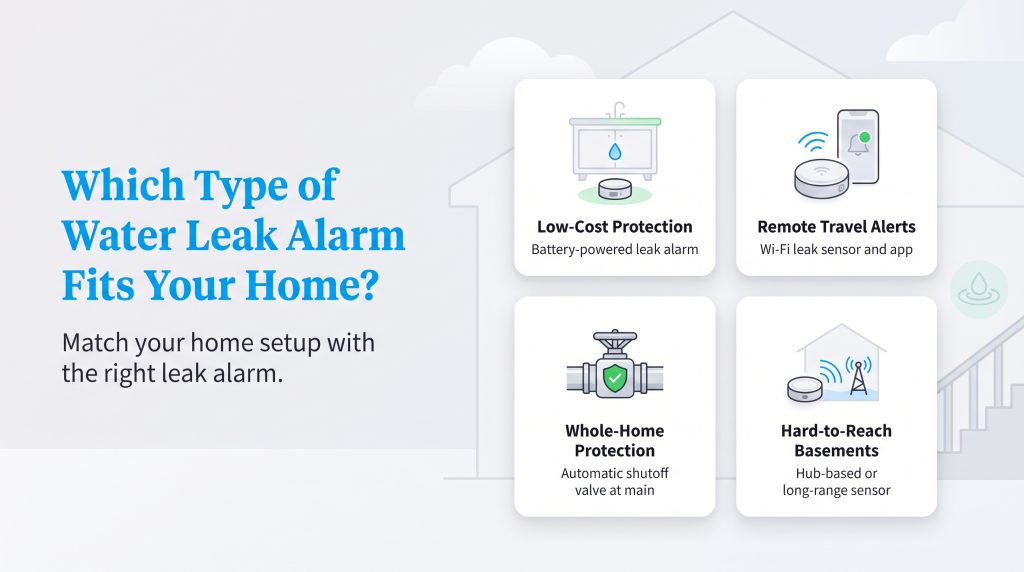
Different plumbing setups require different levels of monitoring. Here is a quick breakdown to match your living situation with the ideal device type.
| If You Need… | Choose This Type | Why It Works |
|---|---|---|
| Low-cost protection under a sink | Battery-powered alarm | Simple, loud, and renter-friendly |
| Remote alerts while traveling | Wi-Fi leak sensor | Sends app notifications directly to your phone |
| Whole-home flood prevention | Automatic shutoff valve | Stops water at the main line to prevent major damage |
| Basement protection with weak Wi-Fi | Hub-based or long-range sensor | Offers more reliable signal coverage than standard routers |
Why You Need to Invest in a Water Leak Detector
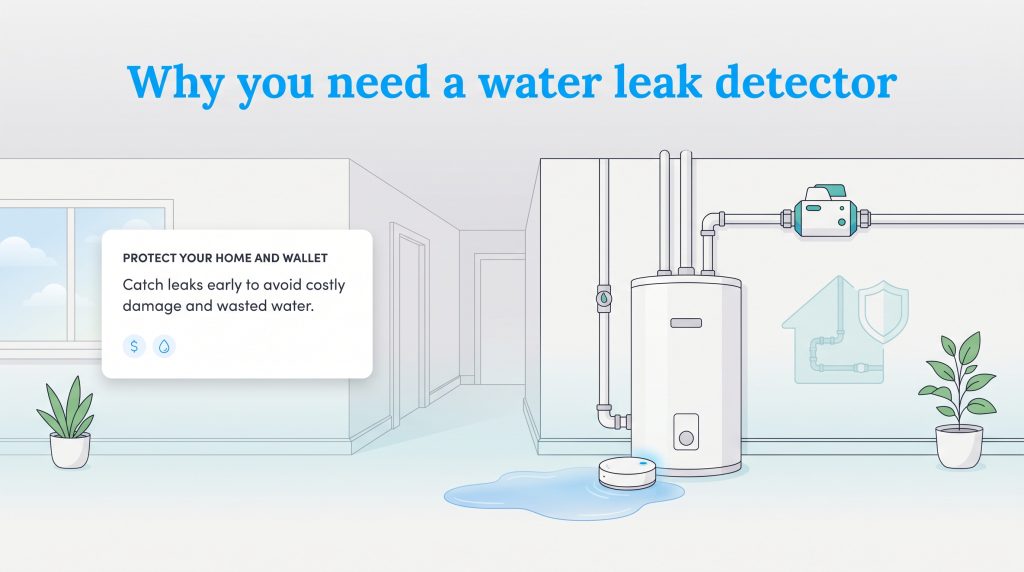
Water damage is one of the most common and expensive disasters a homeowner can face. According to the Insurance Information Institute, about one in 60 insured homes files a property damage claim related to freezing or water damage each year. Beyond the structural nightmares, a slow drip causes immense environmental strain. The Environmental Protection Agency notes that household leaks can waste nearly 1 trillion gallons of water annually nationwide.
Investing in the best water leak alarms provides an immediate alert before a minor puddle becomes a flooded living room. When shopping, you will encounter two main options. Standalone alarms are small sensors that sound a loud siren or ping your smartphone when they detect moisture. On the other hand, an automatic shut-off valve splices directly into your main plumbing line. If it senses unusual flow rates, it physically cuts off the water supply to mitigate a disaster. Even a basic $15 to $40 alarm can be worthwhile near a water heater, sump pump, washing machine, or under-sink supply line. Whole-home shutoff systems cost more, but they make the most sense if you travel often, own a second home, or have already dealt with water damage.
What Water Leak Protection Usually Costs
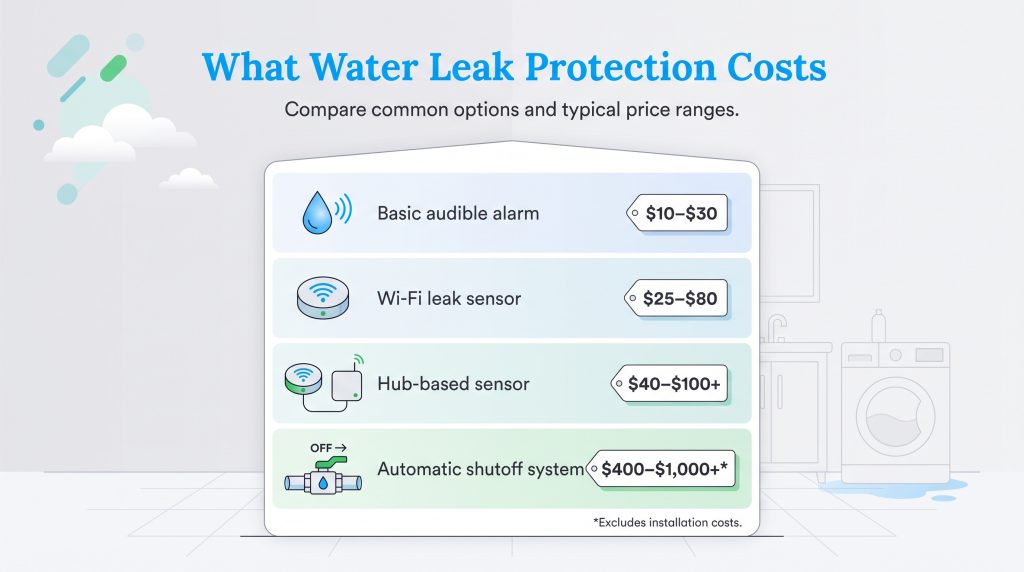
Protecting your home does not have to break the bank. Understanding standard pricing tiers can help you budget for the right level of security.
| Option | Typical Cost Range | Best For | Main Limitation |
|---|---|---|---|
| Basic audible alarm | $10–$30 | Renters and small risk areas | No phone alerts |
| Wi-Fi leak sensor | $25–$80 | Remote alerts under sinks or near appliances | Needs reliable Wi-Fi |
| Hub-based sensor | $40–$100+ | Smart-home users and larger homes | May require a hub |
| Automatic shutoff system | $400–$1,000+ before installation | Whole-home protection | Higher upfront cost and installation requirements |
How to Ask About an Insurance Discount for a Water Leak Detector
Many property owners wonder if buying these devices will lower their monthly premiums. While sustainable living and home security upgrades often lead to savings, you need to verify the details directly with your agent.
- Call your insurer before buying: Make sure you know what types of devices qualify for savings.
- Clarify the requirements: Ask whether they require an automatic shutoff valve, professional installation, or a monitored system.
- Keep your documentation: Ask whether a receipt, plumber invoice, or app-based confirmation is needed to prove installation.
- Check the timing: Confirm whether the discount applies at your policy renewal date or goes into effect immediately.
- Weigh the upfront costs: Do not buy an expensive device solely for the discount unless you know the terms and potential payback period.
How to Compare Smart Water Leak Detectors
The right detector depends on where you’ll place it, how often you’re home, and whether you want alerts only or automatic shutoff. Before buying, compare these features so you don’t end up with a sensor that’s too quiet, too dependent on weak Wi-Fi, or missing the smart-home support you expected.
- Sensor Type: Decide whether you need a floor puck, rope sensor, probe sensor, or inline water monitor.
- Alert Type: Look at how the device notifies you, whether through audible-only alarms, app notifications, text messages, or smart speaker alerts.
- Connectivity: We looked at how well the device integrates with Apple HomeKit, Amazon Alexa, Google Home, Matter, or IFTTT. Ensure it connects via Wi-Fi, Z-Wave, Zigbee, LoRa, or Bluetooth.
- Power Source and Battery Life: No one wants to change batteries every month. We prioritized devices boasting multi-year lifespans, rechargeable options, or reliable battery backups.
- Value and Ease of Installation: Weigh the upfront price against the complexity of setup to decide if you prefer DIY placement or a plumber-installed inline shutoff.
Best Smart Water Leak Detector With Shut Off Valve: Flo by Moen vs. Phyn Plus
An automatic shutoff valve offers the strongest protection for many homes, especially if you travel often or have had water damage before. These systems actively monitor your daily usage and automatically halt the flow if they detect a massive rupture or a persistent micro-leak.
The current market leaders are Flo by Moen and the Phyn Plus. Most homeowners should plan on professional installation because these devices connect to the main water line, but they offer incredible peace of mind when managing your home’s water supply. When comparing Flo by Moen vs. Phyn Plus, you will find a few distinct differences in how they operate. Phyn Plus uses ultrasonic sensing and pressure analysis to monitor flow patterns, while Flo by Moen uses an inline flow meter and automatic shutoff valve.
| Feature | Flo by Moen | Phyn Plus |
|---|---|---|
| Mechanism | Inline flow meter and automatic shutoff valve | Ultrasonic sensing and pressure analysis |
| Pros | Daily health checks, highly accurate at catching micro-leaks | No moving parts to wear out, excellent mobile app interface |
| Cons | Requires a subscription for detailed historical data | Higher upfront device cost compared to competitors |
Best Water Leak Detector for Basements
Choosing a reliable water leak detector for basement environments comes with a unique set of challenges. Older homes often feature thick concrete walls and vast underground footprints that easily block standard Wi-Fi signals. If your router struggles to reach the lower levels, a traditional smart sensor might drop offline and fail to alert you during an emergency.
Devices that use long-range radio technologies, such as LoRa, may perform better than standard Wi-Fi sensors in basements or detached areas, depending on the home’s layout and hub placement. Also, ultra-loud, non-Wi-Fi standalone alarms are fantastic, budget-friendly options that simply rely on a piercing siren to grab your attention from upstairs.
To maximize your defense, follow these steps for optimal sensor placement:
- Place a primary sensor directly next to the sump pump pit to catch potential overflows during heavy rainstorms.
- Slide a detector near the base of your water heater, as older tanks are notorious for slow leaks that eventually burst. Put the sensor near the drain pan or the side where plumbing connections enter.
- Position additional units under egress basement windows or directly beneath exposed overhead plumbing joints. Ensure sensors are on the lowest point of the floor, not on top of a mat or shelf.
Best Under Sink Water Leak Alarm Without a Hub
You don’t need to buy into a massive, expensive smart ecosystem to protect your kitchen or bathrooms. A Wi-Fi water leak sensor without a hub operates independently by connecting directly to your home router. This makes it an incredibly affordable and accessible choice for renters, budget-conscious DIYers, or anyone moving into a new home.
An under-sink water leak alarm gives you a quick heads-up before a small drip damages the cabinet floor. These compact devices tuck neatly behind trash cans and cleaning supplies, quietly monitoring the plumbing connections above. They’re simple to install — just pop in the batteries, sync them to the companion app, and slide the device onto the cabinet floor. Just be aware that some sensors can be bulky, so make sure they fit below supply lines, drain connections, dishwasher lines, and garbage disposal plumbing.
Where to Place Water Leak Alarms First
Targeting high-risk areas ensures you get the most out of your leak detectors. Consider placing alarms in these crucial locations throughout your home.
- Under kitchen sinks
- Under bathroom vanities
- Near water heaters
- Beside washing machines
- Near sump pumps
- Behind toilets
- Under dishwashers, if accessible
- Near refrigerator ice maker lines
- In basement low points
- Near HVAC condensate lines
How to Detect Water Leaks in Walls
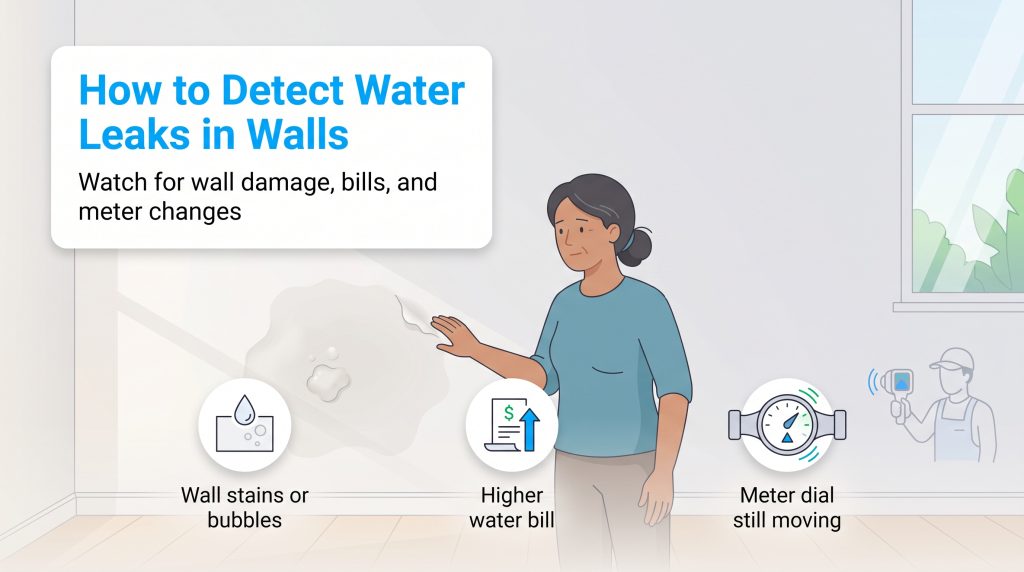
Even the most advanced sensors cannot catch everything immediately. Learning how to detect water leaks in walls is a crucial skill because moisture can fester out of sight for weeks. It’s stressful to suspect a hidden plumbing issue, but staying calm and observant remains your best strategy.
Start by paying close attention to your monthly utility bills. A sudden, unexplained spike in your water usage is often the first red flag. Next, inspect your drywall for physical symptoms. Discolored spots, bubbling or peeling paint, and a musty, damp odor are all telltale signs that moisture is trapped behind the barrier.
If you spot these clues, avoid the temptation to tear open the wall yourself. Turn off all faucets, appliances, irrigation, and water-using fixtures, then check your water meter. If the leak indicator or dial continues moving, water is still flowing somewhere on your side of the meter. If you’re unsure how to interpret the meter, call your water utility or a licensed plumber who can use specialized thermal imaging cameras to pinpoint the exact location without causing unnecessary destruction to your home.
Stopping Leaks to Protect Your Home and Wallet
Upgrading your property with modern leak detection technology is a minimal upfront expense that pays massive dividends. Water leak alarms can’t prevent every plumbing problem, but they can give you a crucial early warning when minutes matter. Start with the riskiest spots in your home, such as the water heater, sump pump, washing machine, and under-sink cabinets. If you travel often or want the strongest protection, consider a whole-home shutoff system that can stop water automatically.
Frequently Asked Questions About Water Leak Alarms
Water leak alarms are simple devices, but the details matter. These answers can help you choose, place, and maintain the right detector for your home.
Do smart water detectors really work?
What is the best water leak detector for Apple HomeKit?
How long do the batteries last in a water leak sensor?
Will a water leak alarm stop a flood?
Can renters install water leak detectors?
Are water leak detectors worth it for renters?
Can a water leak detector lower my insurance bill?
About the Author

LaLeesha has a Masters degree in English and enjoys writing whenever she has the chance. She is passionate about gardening, reducing her carbon footprint, and protecting the environment. She also recently served as President of the Board for City Sprouts (a community garden).

David has been an integral part of some of the biggest utility sites on the internet, including InMyArea.com, HighSpeedInternet.com, BroadbandNow.com, and U.S. News. He brings over 15 years of experience writing about, compiling and analyzing utility data.