

Spotting the most common household water leaks early can save you money and protect your home from severe water damage.
Key Takeaways
- Check your water meter before and after a two-hour period of zero water use to accurately determine if you have a hidden leak.
- Fixing a continuously running toilet or a dripping faucet is often a simple DIY project that can lower your monthly water bill.
- Investing in water leak detection tools can alert you to unseen pipe issues before they cause costly structural damage behind your walls.
Opening the mail to find an unexpectedly steep utility bill can quickly ruin a perfectly good afternoon. When your monthly usage inexplicably doubles, finding the root cause doesn’t have to be a stressful ordeal. The most common household water leaks usually hide in plain sight or announce themselves through minor household annoyances we often ignore. We always recommend performing a basic sweep of your home’s plumbing fixtures before calling a licensed plumber. Tracking down the culprit yourself empowers you to protect both your monthly household budget and our shared natural resources.
How to Check for Water Leaks With a Meter
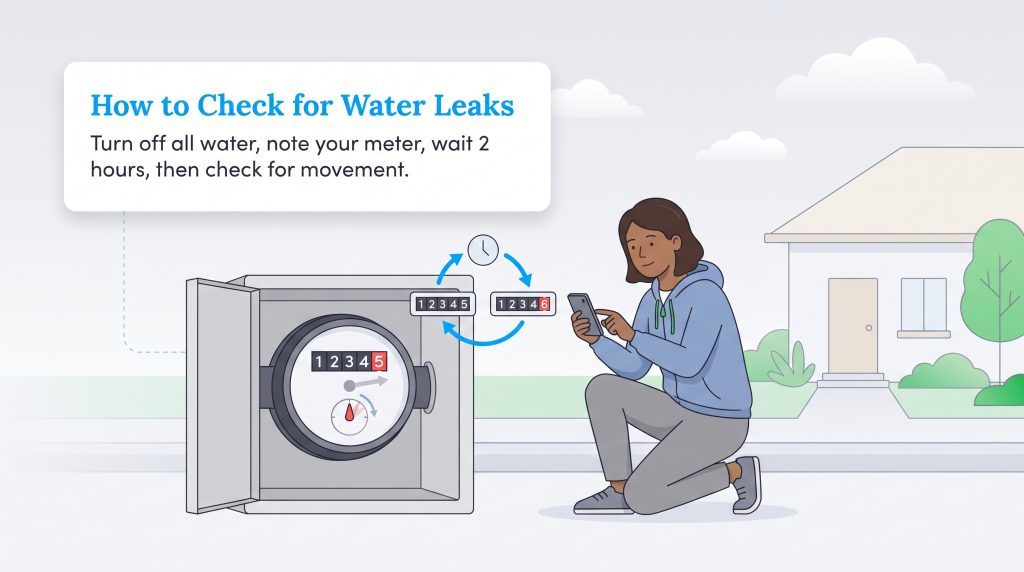
Learning how to check for water leaks with your meter is the fundamental first step in diagnosing any suspicious utility spike. Rather than tearing apart your bathrooms looking for a drip, your home’s water meter can give you a strong first clue about whether water is moving somewhere it shouldn’t. We suggest trying this test on a quiet weekend morning when nobody needs to use the showers or appliances.
- Shut off all faucets, showers, and water-consuming appliances inside and outside your home.
- Locate your water meter, which is usually housed in a concrete box near the street or attached to the exterior of your house.
- Write down the current number on the dial, or take a quick picture with your phone.
- Wait exactly two hours without using any water on the property.
- Check the dial again. If the numbers have increased, you have a leak somewhere in your system.
Once you confirm water is escaping, you should systematically move through the usual suspects to find out exactly where the breach is happening. Consider checking these common areas first: toilets, faucets, under-sink cabinets, your water heater base, washing machine hoses, dishwasher lines, and sprinkler zones.
🚩 Heads Up: Know where your main water shutoff valve is before you need it. In many homes, it’s located in the basement, garage, crawl space, utility closet, or near the water heater.
Quick Diagnostic Guide for Household Leaks
Use this reference table to quickly identify and troubleshoot potential leaks around your property.
| Leak Type | Common Signs | Quick Check | DIY or Pro? |
|---|---|---|---|
| Running toilet | Rippling bowl water, refill sounds | Food coloring test | Usually DIY |
| Dripping faucet | Constant drip, mineral buildup | Watch/listen for drips | Usually DIY |
| Behind-wall leak | Musty smell, bubbling paint | Meter test + wall inspection | Usually pro |
| Water heater leak | Rust, puddling near tank | Inspect base and valves | Often pro |
| Under-sink leak | Damp cabinet, swollen wood | Dry cabinet, check again later | Often DIY |
| Appliance leak | Water near washer, dishwasher, fridge | Inspect hoses and seals | Depends |
| Irrigation leak | Mushy lawn, broken sprinkler head | Run zones manually | DIY or pro |
How to Estimate the Cost of a Leak
To estimate the cost of a leak, multiply wasted gallons by your combined water and sewer rate. Many utilities bill in 1,000-gallon or 100-cubic-foot increments, so check your bill for the exact rate. If your utility charges water and sewer fees per 1,000 gallons, divide the wasted gallons by 1,000, then multiply by your combined rate. For example, a leak wasting 3,000 gallons in a month would equal three billing units.
1. The Silent Running Toilet
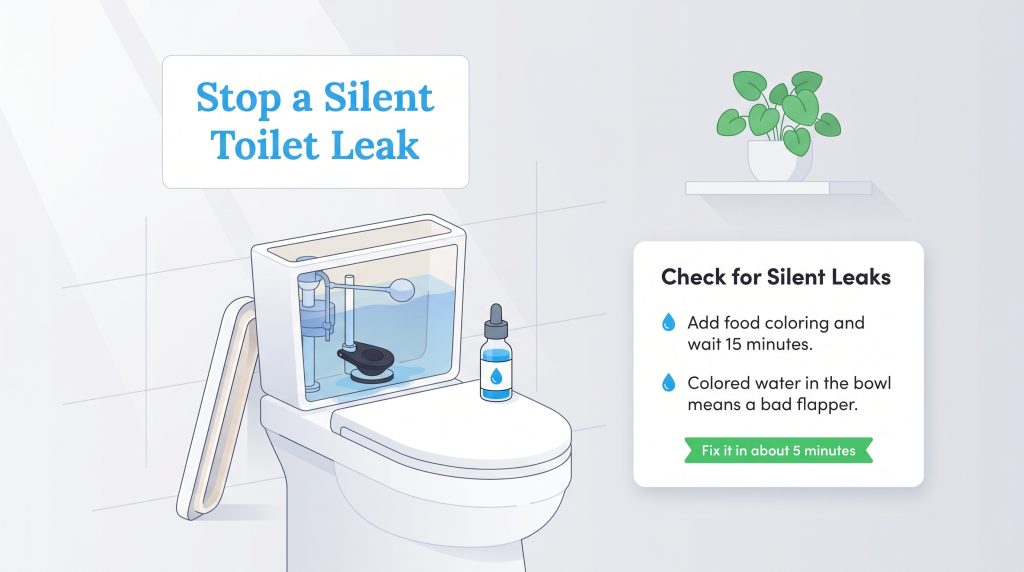
Toilets are notorious for quietly wasting massive amounts of water day and night. According to verified EPA WaterSense statistics, a continuously running toilet can waste up to 200 gallons of water every single day. The usual cause is simply a warped or degraded rubber flapper at the bottom of the tank, which is an incredibly cheap and straightforward component to replace yourself.
To test if your flapper is failing, you can perform a quick DIY food coloring test. Take off the toilet tank lid, drop a few drops of blue or red food coloring into the water, and wait about 15 minutes without flushing. If you see that dyed water seeping into the toilet bowl, you have a confirmed flapper leak. Swapping out the old flapper takes about five minutes and requires no special plumbing tools.
2. Dripping Faucets and Worn Fixtures
A single faucet dripping at a rate of one drop per second might not seem urgent, but the resulting dripping faucet water waste can easily exceed 3,000 gallons over the course of a year. That constant drip is usually caused by degraded rubber washers or worn-out O-rings inside the handle assembly. As we use our sinks daily, the friction eventually wears down these small components until they can no longer hold back the water pressure.
Fixing a drip usually involves turning off the supply valve beneath the sink, unscrewing the handle, and replacing the degraded washer with a fresh one from your local hardware store. Not only does this quick maintenance eliminate the irritating sound of dripping water, but it also lowers the unnecessary strain placed on local water treatment facilities. Similarly, swapping out old fixtures for WaterSense-labeled showerheads or toilets is an environmentally mindful choice that saves water without compromising performance.
💸 Money-Saver: Upgrading your sinks with an environmentally mindful choice like an EPA WaterSense-certified aerator can effectively reduce water flow without sacrificing your daily water pressure.
3. Hidden Water Leaks Behind Walls
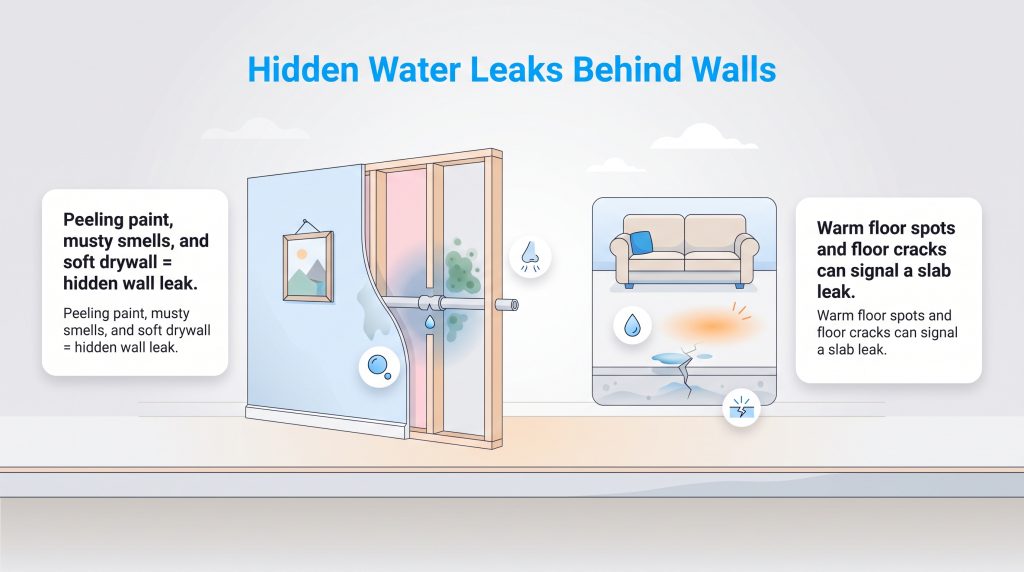
While a dripping sink is obvious, hidden water leaks are harder to catch and often more expensive to repair. When a pipe pinhole or loose joint occurs out of sight, moisture slowly accumulates in the dark cavities of your framing. If left unchecked, this dampness can encourage mold growth and damage drywall, insulation, and framing.
Since you cannot easily inspect the plumbing inside your walls, you have to rely on secondary clues. You should immediately investigate further if you notice any of the primary signs of a water leak behind a wall.
- Unexplained peeling or bubbling paint on walls or ceilings
- Persistent musty or earthy smells that never seem to dissipate
- Warped, soft, or permanently discolored patches of drywall
- A sudden, localized drop in your home’s overall water pressure
Slab Leak Symptoms to Watch For
While wall leaks are destructive, leaks occurring beneath your foundation — known as slab leaks — are equally problematic. These require a licensed plumber to diagnose and fix. Watch for these potential signs:
- Unexplained warm spots on the floor
- Damp flooring or a persistent mildew smell
- The sound of running water when all fixtures are turned off
- Sudden cracks in your flooring or foundation
- An unexpected and sudden loss of water pressure
4. Water Heater Leaks
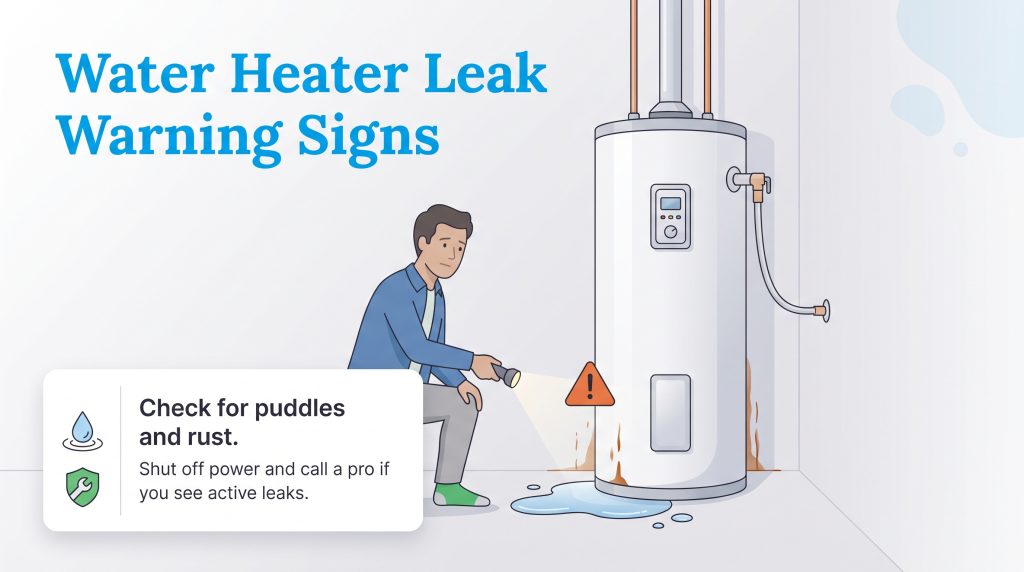
Your water heater operates under constant thermal expansion and contraction, which naturally weakens its internal seals and external valves over the years. Common failure points include a loose drain valve at the base, a failing temperature and pressure relief valve (T&P valve) near the top, or a fully corroded internal storage tank. Whether your home runs on an electric unit or a natural gas model, a compromised tank can quickly escalate from a small puddle to a flooded utility closet.
If you suspect your water heater is compromised, inspect the base and the attached supply lines with a flashlight. Puddling water or severe rust spots are clear indicators that the system requires maintenance or total replacement.
🚩 Heads Up: If you see active leaking near electrical components, shut off power at the breaker if it’s safe to do so and call a professional. If you smell gas, leave the area immediately and contact your gas utility or emergency services.
5. Under-the-Sink Pipe Leaks
We all have a habit of stuffing far too many cleaning supplies, sponges, and trash bags into the cabinets under our kitchen and bathroom sinks. Constantly rummaging through those cramped spaces frequently bumps the curved P-trap pipes or the braided supply lines, slowly loosening the threaded connections over time. We recommend pulling everything out of your cabinets twice a year to tighten up the slip nuts and check the baseboard for any signs of water damage or mold growth.
6. Washing Machine and Appliance Leaks
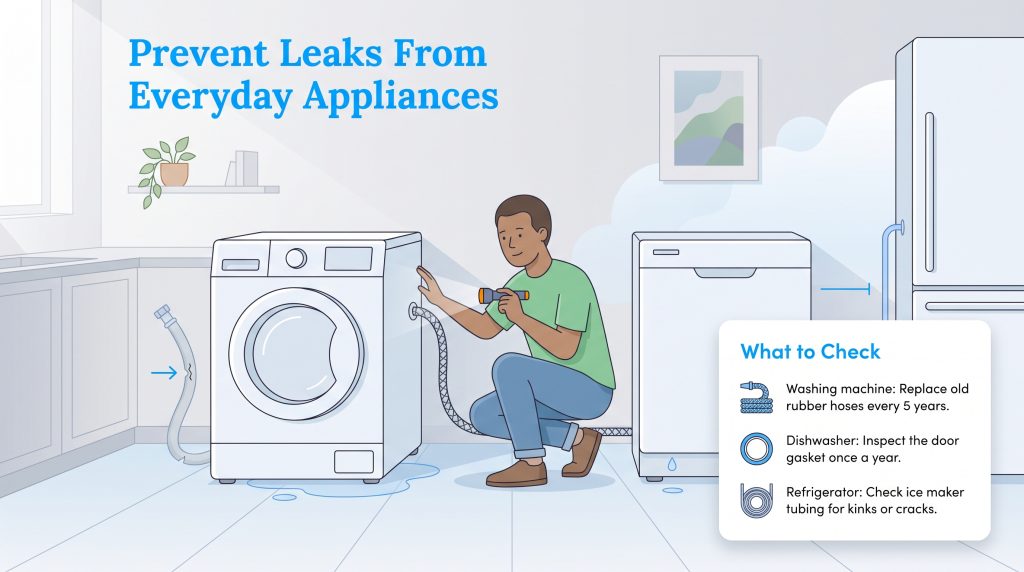
Household appliances that draw water automatically are frequent culprits for intermittent leaks that only occur during active wash cycles. Washing machine supply hoses endure intense water pressure surges, and older rubber hoses are prone to bulging and eventually bursting. Similarly, dishwasher door seals degrade from exposure to hot water and harsh detergents, while refrigerator ice maker supply lines frequently crack if they get pinched against the wall.
Routinely inspecting the connection points behind your appliances can save you from coming home to a ruined kitchen floor. If you determine an appliance is severely leaking from internal mechanics, you will need to weigh the cost of a repair against investing in a new, eco-conscious model like an ENERGY STAR-certified appliance.
| Appliance | Common Leak Source | Inspection or Replacement Guidance |
|---|---|---|
| Washing Machine | Rubber supply hoses, drain pump | Replace rubber hoses every 5 years (upgrade to braided steel) |
| Dishwasher | Door gasket, water inlet valve | Inspect seals annually; machines vary by use and maintenance |
| Refrigerator | Ice maker plastic tubing, defrost drain | Check lines yearly; replace tubing if brittle or pinched |
7. Outdoor Irrigation System Leaks
When utility bills spike during the summer months, homeowners often tear apart their indoor plumbing while completely forgetting to check the backyard. Outdoor irrigation systems face harsh weather conditions, freezing temperatures, and physical damage from lawnmowers. A single cracked underground PVC line or a snapped sprinkler head can spew hundreds of gallons of water directly into the soil without you ever noticing a puddle on the surface.
To audit your outdoor setup, manually run through each sprinkler zone for five minutes while walking the yard. Look for heads that fail to pop up, geysers of water shooting straight into the air, or unusually mushy spots in the turf. If you need help understanding seasonal outdoor usage rates in your area, reviewing your municipal water utility setup information can help you optimize your watering schedule.
Upgrading to Smart Water Leak Detection Tools
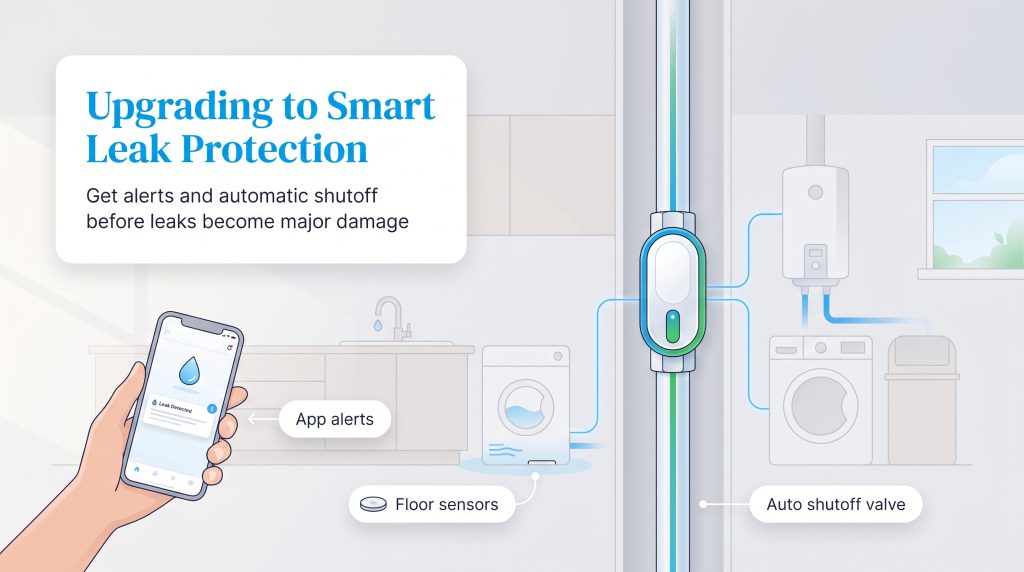
Modern smart home technology offers an excellent safety net for homeowners who want to proactively stop water damage in its tracks. Installing water leak detection tools around your most vulnerable appliances and plumbing fixtures is one of the smartest upgrades you can make.
When choosing a detection system, consider your risk level and budget. Basic moisture sensors are affordable alarms that sit on the floor and sound off when wet, but they require you to be home to hear them. Smart leak sensors connect to your Wi-Fi and send app alerts directly to your smartphone, making them ideal for monitoring hidden spots while you are at work.
For maximum protection, you can invest in a whole-home smart water valve or a flow-monitoring system. These advanced systems splice directly into your main water line to monitor flow rates 24/7. If the system detects an anomalous, continuous flow of water — like a burst pipe while you are on vacation — it will automatically shut off the water supply to the entire house, preventing severe flooding.
💡 Pro Tip: Check with your homeowners insurance provider, as some insurers offer discounts or incentives if you install whole-home smart leak detectors.
When to Fix a Leak Yourself and When to Call a Pro
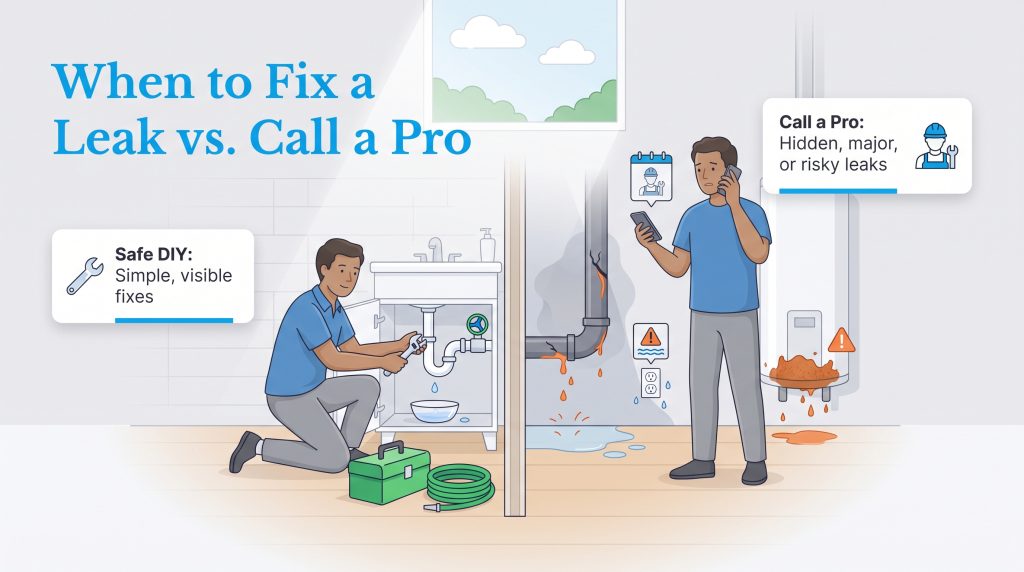
Knowing your limits when it comes to household plumbing can save you from accidentally making a small problem much worse. While basic maintenance is safe for most homeowners, certain jobs carry higher risks of property damage or personal injury.
- DIY-friendly projects: Replacing toilet flappers, changing out faucet washers, upgrading showerheads, tightening loose under-sink slip nuts, and replacing visible appliance hoses.
- Call a licensed plumber: Suspected slab leaks, behind-the-wall pipe issues, corroded water heater tanks, water pooling near electrical components, sewage backups, major pressure loss, or any leak you cannot easily isolate and access.
Take Action to Stop Water Waste Today
Taking an hour on a Saturday afternoon to methodically hunt down household leaks is a high-value investment in your property and the environment. By swapping out a degraded toilet flapper or tightening a loose under-sink connection, you immediately lower your monthly utility costs and prevent minor drips from evolving into major repair costs. Staying proactive ensures your home runs efficiently, saving both your hard-earned money and our vital community water supplies.
Frequently Asked Questions About Common Water Leaks
Below are quick answers to common questions about finding leaks, lowering your water bill, and deciding when to call a plumber.
What is the most common cause of a high water bill?
Can a hidden water leak cause structural damage?
How much water does a dripping faucet actually waste?
Should I fix a plumbing leak myself or hire a professional?
Are smart water leak detectors worth the investment?
About the Author

LaLeesha has a Masters degree in English and enjoys writing whenever she has the chance. She is passionate about gardening, reducing her carbon footprint, and protecting the environment. She also recently served as President of the Board for City Sprouts (a community garden).

David has been an integral part of some of the biggest utility sites on the internet, including InMyArea.com, HighSpeedInternet.com, BroadbandNow.com, and U.S. News. He brings over 15 years of experience writing about, compiling and analyzing utility data.