

Find the Perfect Alarm to Keep Your Household Safe From Invisible Threats With Our Top-Rated Choices for Homeowners and Renters
Key Takeaways
- Electrochemical sensors provide the most accurate detection and are the widely recommended choice for modern home safety.
- Interconnected devices offer superior protection by triggering all alarms in the house when one detects danger.
- Proper placement is just as critical as the device itself, with experts recommending detectors on every level of your home.
Carbon monoxide (CO) is notoriously dubbed the “silent killer” because it is completely colorless, odorless, and tasteless, making it impossible for the human senses to detect. As a natural byproduct of combustion, any residence equipped with gas appliances, an attached garage, or a traditional fireplace faces the constant risk of toxic build-up. Bottom Line: Installing a reliable carbon monoxide detector is the absolute best way to actively monitor this invisible threat, alert your family to danger, and prevent a life-threatening emergency. If you are setting up services for a new place, adding one of these devices to your moving utilities checklist is crucial. We overhauled our comprehensive buying guide to bring you the best carbon monoxide detectors of 2026, helping you effortlessly compare top-rated smart, plug-in, and 10-year battery alarms to keep your family safe and secure.
Quick Comparison: Top Carbon Monoxide Detectors

If you are in a rush and need a dependable safety solution immediately, consult our quick-reference table below. We categorized the top five performers of the year to help you quickly find the exact monitoring system that fits your lifestyle, budget, and housing setup. There is no one-size-fits-all solution when it comes to residential safety, so we designed this breakdown to highlight the absolute best models for specific, everyday households.
| Product Name | Best For | Power Source | Smart App Integration | Price Range |
|---|---|---|---|---|
| Kidde Nighthawk (KN-COPP-3) | Overall Reliability | Plug-In (Battery Backup) | No | ~$42.84 |
| First Alert SC5 | Smart Home Connectivity | Hardwired / Battery | Yes | ~$128.44 |
| First Alert CO615 | Renters & Apartments | Plug-In (Battery Backup) | No | ~$72.78 |
| First Alert BRK SC9120B | Consolidated Protection | Hardwired (Battery Backup) | No | ~$39.03 |
| First Alert CO710 | Eco-Conscious Homes | 10-Year Sealed Battery | No | ~$44.00 |
How We Evaluated the Best CO Detectors

With countless options flooding hardware store shelves and online marketplaces, distinguishing a reliable, life-saving device from a cheap knockoff is a major priority. To build this comprehensive list, we evaluated market-leading brands and heavily scrutinized their underlying technology. While we do not conduct isolated laboratory testing, our recommendations are meticulously synthesized from manufacturer specifications, verified safety agency guidelines, and strict consumer protection criteria.
First and foremost, we immediately disqualified any device lacking UL Certification (meeting Underwriters Laboratories safety standards). We prioritized electrochemical sensor carbon monoxide detectors above all other types because they offer the most rapid, precise response time to varying parts per million (PPM) thresholds. We also looked closely at decibel ratings, ensuring each selected alarm features a horn loud enough—typically 85 decibels or higher—to easily cut through walls and wake sleeping household members during a midnight emergency.
Finally, we evaluated the overall user experience and long-term value. We looked for devices that cater to all skill levels, prioritizing straightforward installation processes whether it is a hardwired harness or a simple plug-in mount. Furthermore, we factored in smart home compatibility for remote monitoring and championed environmental impact by highlighting eco-friendly models with 10-year sealed lithium batteries that significantly reduce annual e-waste.
Top Picks for Carbon Monoxide Detectors
Securing your household means choosing the right tool for your specific environment. From intelligent mobile integrations to travel-ready portability, here is our breakdown of the absolute best carbon monoxide alarm for home and travel applications this year.
1. Best Overall Kidde Nighthawk KN-COPP-3
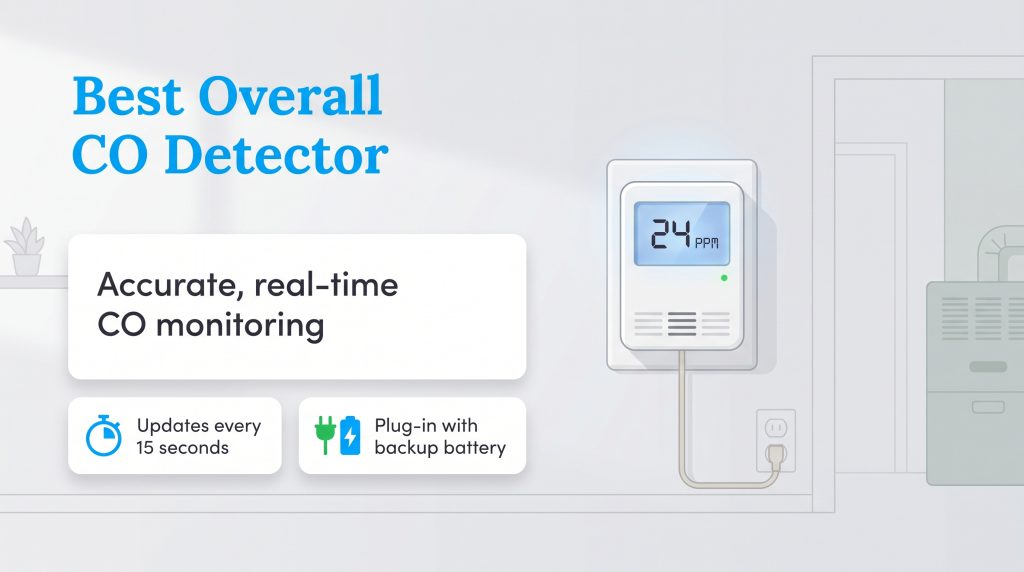
For the vast majority of households, the best choice is a standalone unit that perfectly balances pinpoint accuracy, affordability, and plug-and-play ease of use. The Kidde Nighthawk (KN-COPP-3) remains a widely trusted, top-tier model that sets a high standard for modern residential safety. It relies on a hyper-sensitive electrochemical sensor that continuously monitors your ambient air, catching dangerous fluctuations well before they reach life-threatening thresholds.
The standout feature is its bright, easy-to-read digital display. This screen provides a real-time readout of current carbon monoxide parts per million (PPM). While older, standard alarms only sound an ear-piercing siren when levels become critically dangerous, the Nighthawk allows you to see if low levels are present. This could be the early warning sign you need to indicate a developing issue with a furnace or water heater before it becomes a full-blown emergency.
- Best For: Most standard households wanting reliable, real-time readouts without a complex setup.
- Power Source: Plug-in with 9V battery backup.
- Pros: Peak level memory records the highest CO spikes during your absence; continuous digital display updates every 15 seconds; features a 6-foot extension cord for versatile mounting.
- Cons: The bulky design dominates the wall outlet and can block secondary adapters; lacks Wi-Fi connectivity or smart app integration.
2. Best Smart Integration First Alert SC5
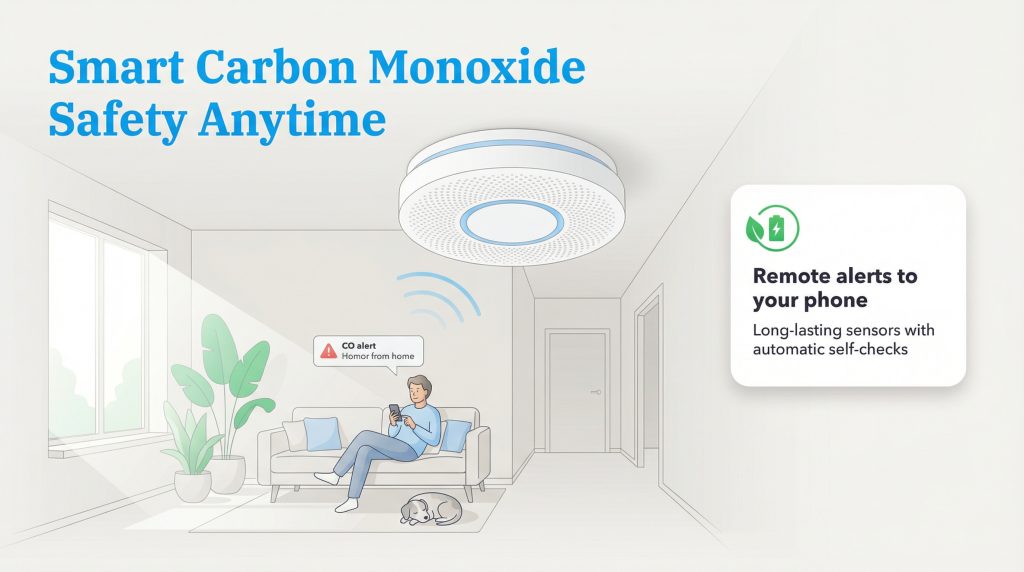
For modern homeowners who demand total connectivity, the First Alert SC5 is the undisputed champion of the best smart carbon monoxide detector category. Engineered as the official successor to the legendary Google Nest Protect, it utilizes the exact same mounting bracket, meaning absolutely zero patching or drilling if you are upgrading from an older, expired Nest unit.
Beyond the frictionless installation, the SC5 operates as a highly sophisticated dual-threat monitor. It connects securely to your Wi-Fi network, sending instant push notifications directly to your smartphone if danger is detected while you are at work or on vacation. Furthermore, instead of just blaring a generic siren, the device provides a calming voice alert that pinpoints the exact location of the threat (e.g., “Warning! Carbon Monoxide detected in the utility room!”).
- Best For: Tech-savvy homeowners wanting remote smartphone monitoring and seamless smart ecosystem integration.
- Power Source: Available in Hardwired (with backup) or Pure Battery configurations.
- Pros: Advanced push notifications sent directly to your phone; delivers localized, spoken voice alerts; integrates beautifully with Google Home.
- Cons: Significantly more expensive than standard non-smart detectors; currently optimized heavily for Google, lacking native integration with Apple HomeKit.
3. Best Plug-In Model First Alert CO615
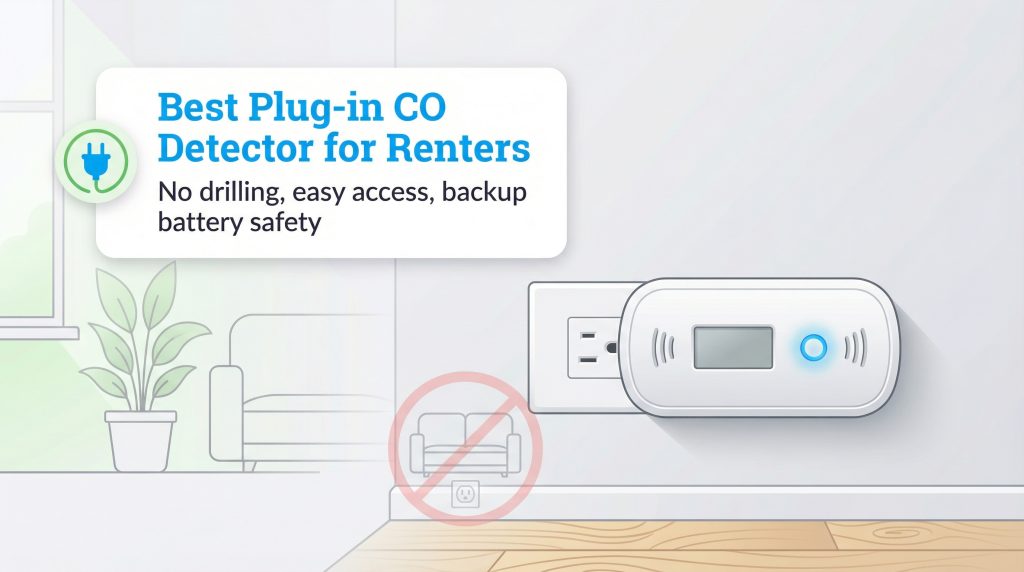
Renters and apartment dwellers need sturdy safety solutions that do not require drilling holes in the drywall, messing with the electrical panel, or risking a security deposit. A plug-in carbon monoxide detector, such as the First Alert CO615, is the ideal tool for the job. You simply unbox the device, plug it directly into any standard wall outlet, and it begins actively monitoring your environment instantly.
Because severe storms frequently cause power outages — which is the exact time people might dangerously run portable generators or charcoal grills indoors — the CO615 features a robust battery backup system. This ensures the monitor stays fiercely active even when your neighborhood loses electricity entirely. It also sports a backlit digital display, allowing you to quickly verify that your air is safe with just a passing glance.
- Best For: Renters and apartment dwellers needing a damage-free, instant installation.
- Power Source: Plug-in with battery backup (2 AA included).
- Pros: Zero permanent installation required; features a bright backlit digital display; includes a line-cord option for flexible tabletop placement.
- Cons: The large footprint will likely block the secondary socket on standard two-plug wall outlets.
4. Best Smoke and CO Combo First Alert BRK SC9120B
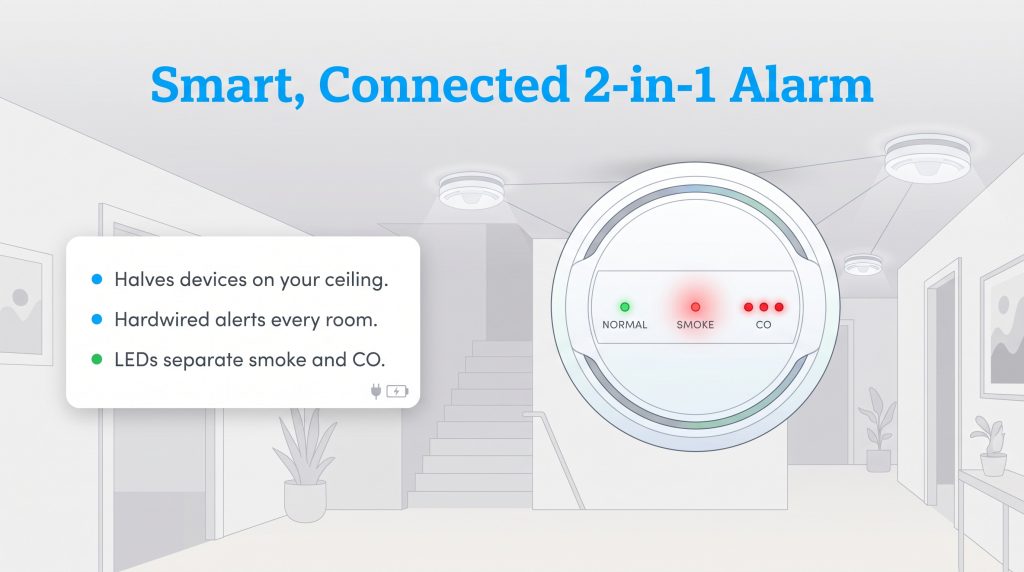
If you hate a cluttered ceiling and want to strategically consolidate your household gadgets, a 2-in-1 device is incredibly efficient. We heavily recommend the First Alert BRK SC9120B for anyone looking to simplify their home maintenance. This smoke and carbon monoxide detector combo handles both critical threats in a single compact footprint, utilizing trusted ionization technology for smoke detection alongside an advanced electrochemical sensor for CO monitoring.
Because it connects directly into your home’s 120V electrical system, it possesses the distinct advantage of communicating instantly with other compatible BRK units in your home. If one device detects danger in the basement, every linked alarm throughout the house sounds off simultaneously. It features independent indicator lights — green for normal operation, red for a smoke alarm, and a distinct red flashing pattern for carbon monoxide — so you immediately know exactly which emergency you are dealing with.
- Best For: Homeowners looking to minimize ceiling clutter and consolidate their safety devices into one interconnected unit.
- Power Source: 120V Hardwired with 9V battery backup.
- Pros: Halves the number of units you need to maintain; intelligent interconnectivity triggers a whole-home alert system; clear LED indicators distinguish between smoke and gas.
- Cons: Requires a connection to your home’s electrical wiring; if one internal sensor fails after a few years, you must replace the entire unit.
5. Best Eco-Friendly 10-Year Battery First Alert CO710
If you are passionate about minimizing your household’s environmental footprint while maximizing everyday convenience, the First Alert CO710 is a brilliant, environmentally mindful choice. The biggest drawback of traditional battery-operated alarms is the sheer volume of alkaline batteries you inevitably discard over the years. This 10-year battery carbon monoxide detector eliminates that wasteful cycle entirely by integrating a sealed lithium-ion battery designed to last the entire lifespan of the device.
Beyond its eco-friendly power source, this sleek detector features a modern, unobtrusive design that can be easily mounted on a wall or placed flat on a tabletop. It comes equipped with an easy-to-read, backlit digital display that conveniently highlights ambient room temperature alongside current carbon monoxide levels. Because it never requires a battery swap, you can simply activate it upon purchase and enjoy uninterrupted peace of mind for a full decade.
- Best For: Eco-conscious consumers who want long-lasting, zero-maintenance safety.
- Power Source: 10-year sealed lithium-ion battery.
- Pros: Completely eliminates the frustrating need for annual battery replacements; features a stylish freestanding design; provides a clear digital temperature and CO readout.
- Cons: Once the sealed internal battery dies after ten years, the entire unit must be permanently discarded.
6. Best for Travel and RVs Kidde KN-COPP-B-LPM
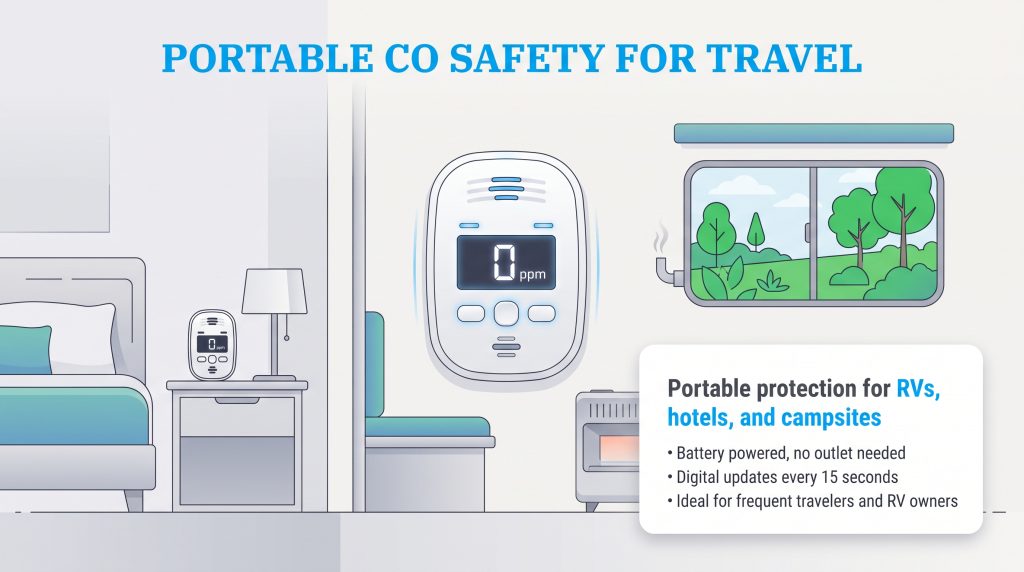
Carbon monoxide does not safely stay behind when you hit the open road. Hotels, Airbnb rentals, and recreational vehicles (RVs) pose highly unique air quality risks. In an RV, you sleep mere feet away from internal combustion engines, propane heaters, and powerful onboard generators. The Kidde KN-COPP-B-LPM is widely regarded as the best carbon monoxide detector for travel because it operates entirely on three AA batteries, granting you complete flexibility to place it on a hotel nightstand or mount it securely to the wall of your camper.
This compact unit features a prominent digital display that boldly updates every 15 seconds. This frequent refreshing is crucial in a small, enclosed space where a sudden draft of exhaust fumes can alter air quality rapidly. By keeping this lightweight, freestanding device packed securely in your travel bag, you ensure that you are never relying on a stranger’s potentially expired safety equipment.
- Best For: Frequent travelers, RV owners, and campers needing reliable, portable protection.
- Power Source: Battery-operated (3 AA included).
- Pros: Ultimate portability completely independent of wall outlets; screen refreshes every 15 seconds; peak level memory securely logs concerning spikes while you are out exploring.
- Cons: You must diligently pack spare batteries on extended road trips to maintain continuous safety.
7. Best Budget Option First Alert CO400
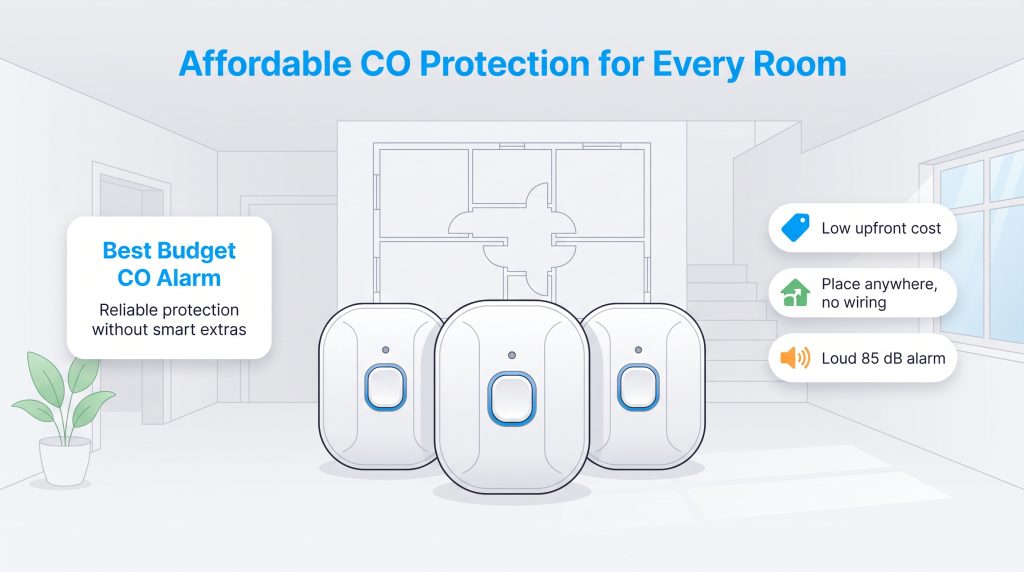
Protecting your home from the silent killer shouldn’t require unexpectedly draining your bank account. If you need reliable protection on a tight budget — or if you are outfitting a large house and need to purchase multiple detectors to cover every single floor and bedroom — the First Alert CO400 is an outstanding, highly cost-effective choice. It expertly strips away the premium smart features and digital screens to deliver pure, uninterrupted functionality.
Despite its exceptionally low price point, the CO400 refuses to compromise on actual safety. It utilizes the exact same advanced electrochemical sensing technology found in First Alert’s significantly more expensive models. It runs entirely on two AA batteries, meaning you can place it effortlessly anywhere in your home, completely independent of wall outlets or existing electrical wiring.
- Best For: Budget-conscious households needing to purchase multiple units for whole-home compliance.
- Power Source: Battery-operated (2 AA included).
- Pros: Highly affordable upfront cost; freestanding flexibility requires absolutely zero installation; features a powerful 85-decibel horn that cuts through closed doors easily.
- Cons: Provides no visual digital readout of ambient gas levels; strictly requires annual battery maintenance.
Key Features to Look for in a CO Alarm
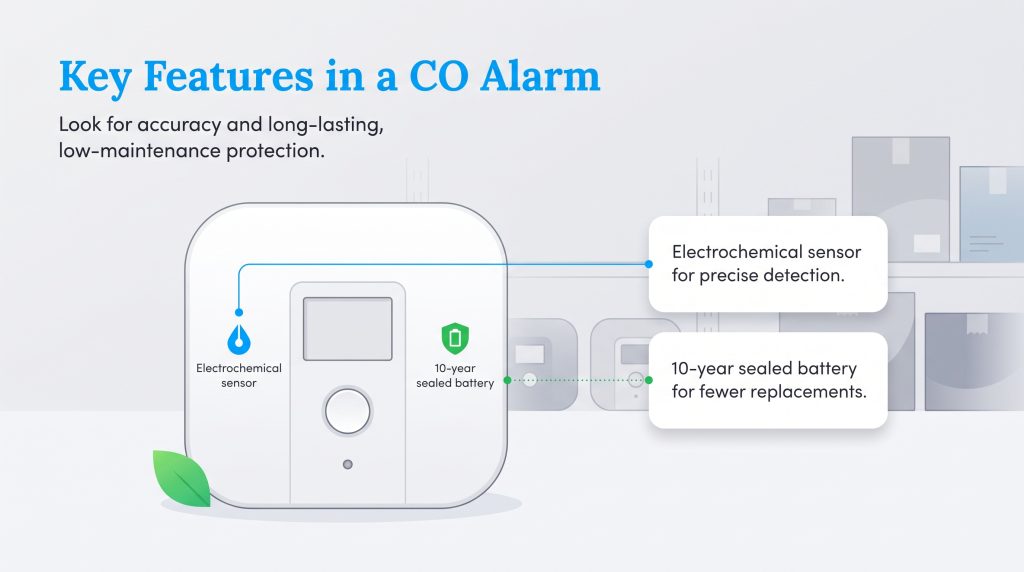
When you are staring down a massive wall of similar-looking plastic boxes at the hardware store, the decision can feel incredibly overwhelming. Focusing on a few critical features helps you efficiently narrow down the exact tool you need to protect your unique environment. Understanding the technical terminology printed on the side of the box is the best way to guarantee you are purchasing truly reliable protection.
Digital Displays and Advanced Alert Types
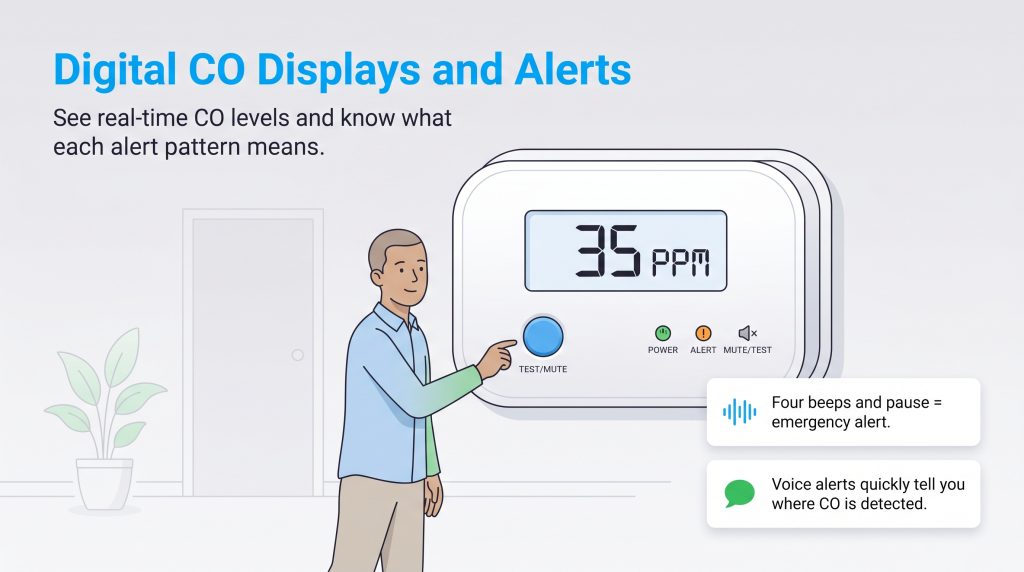
Advanced alert systems and clear screens fundamentally change how you respond to potential threats. Instead of relying solely on an ear-piercing siren, modern units provide nuanced warnings that help you identify the exact source of a problem. Always look for these core capabilities when choosing a new unit for your household.
- Electrochemical Sensor: This is the modern industry standard for precision home safety. It utilizes a reliable chemical reaction to quickly spot varying parts per million (PPM) of CO gas, actively alerting you far faster than outdated sensor types.
- Digital Display: A carbon monoxide detector with digital display provides a real-time numerical readout of your air quality. This enables you to catch a subtle gas leak from a malfunctioning water heater long before the concentration escalates into a full-blown emergency.
- Peak Level Memory: This vital feature continuously records the highest concentration of carbon monoxide detected since the device was last reset. It acts as an incredible diagnostic tool for uncovering mysterious gas spikes that occur while you are asleep or away at work.
Interconnectivity and Smart Network Features
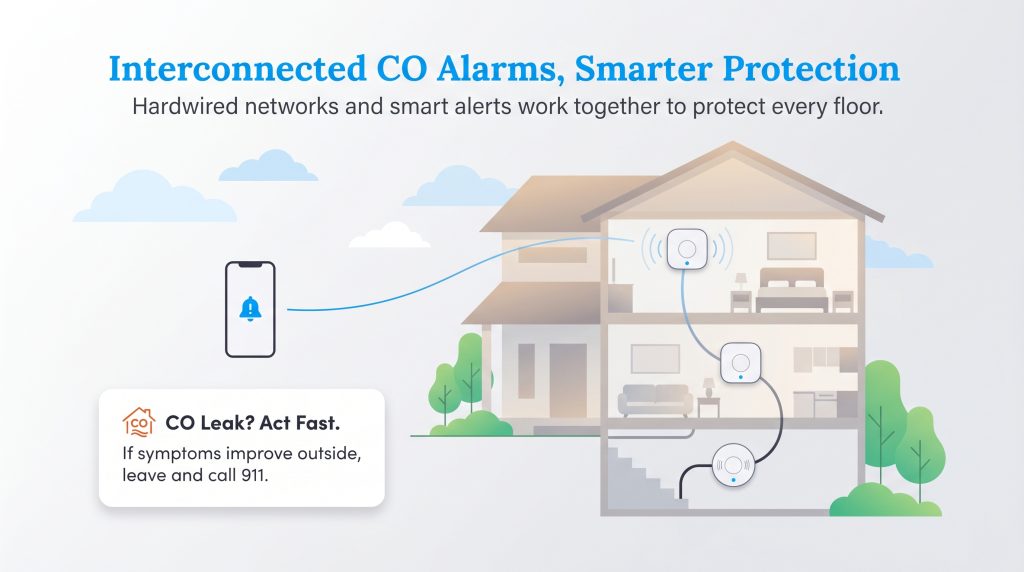
Additionally, you must evaluate the scale of your property. If you live in a large, multi-story home, utilizing interconnected carbon monoxide detectors is practically mandatory. When these devices are properly interlinked, an alert triggered in a remote basement will cause the alarm in your master bedroom to sound off immediately. Modern smart features push this a step further by bridging the gap between your physical house and your smartphone, sending instant push notifications to your device no matter where you are in the world.
Where to Place Carbon Monoxide Detectors in Your Home
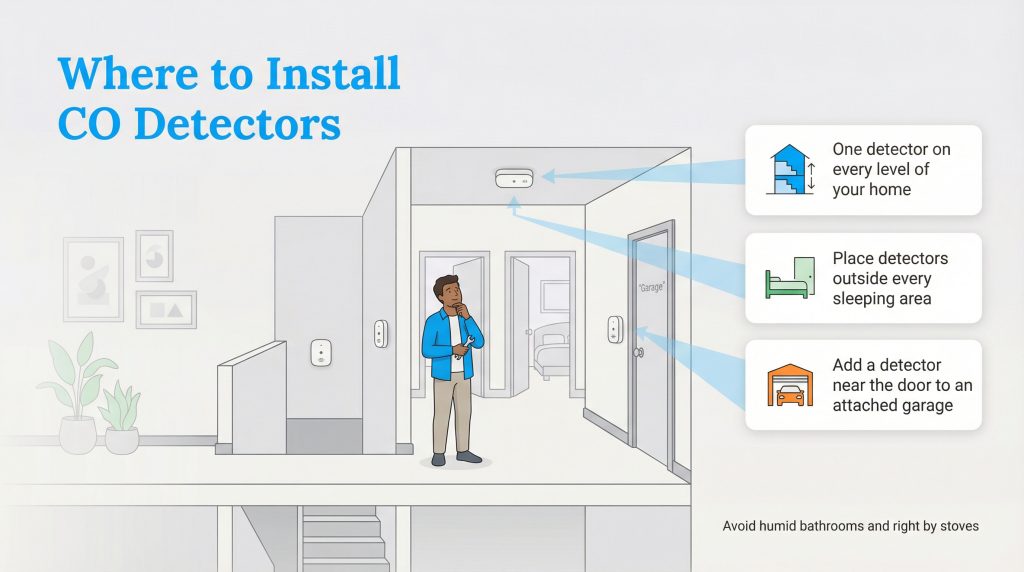
Buying the most expensive carbon monoxide detector on the market is practically useless if you blindly bury it in a drawer or mount it in a dead-air space. Proper carbon monoxide detector placement is absolutely critical for rapid, life-saving detection. Adhere firmly to these exact locational rules to ensure comprehensive coverage and significantly reduce annoying false alarms throughout your home.
- Cover Every Level: You must install at least one functioning detector on every single level of your house, including fully finished attics and livable basements.
- Prioritize Sleeping Areas: Mount units safely in the hallway immediately outside of every separate bedroom. If the alarm sounds at 3:00 a.m., the horn must be loud enough to securely wake you from a deep sleep.
- Maintain Appliance Distance: Install detectors at least 15 feet away from all fuel-burning appliances, such as gas stoves, furnaces, and traditional fireplaces. Placing them too close triggers frustrating false alarms from brief, completely harmless bursts of gas during standard ignition.
- Consider Height Flexibility: Because CO mixes evenly with standard room air — unlike smoke, which rapidly rises — your actual mounting height is quite flexible. You can confidently place them high on a wall, down low in a standard baseboard outlet, or right at eye level on a bookshelf.
- Watch Attached Garages: If your home features an attached garage, ensure a detector is placed inside the main house within 10 feet of the connecting interior door. This easily catches highly dangerous vehicle exhaust fumes attempting to bleed into your living space.
Securing Your Home Against the Silent Killer
Investing in a high-quality carbon monoxide detector is arguably one of the smallest financial investments you can make for a truly massive return on your personal safety. Whether you opt for a high-tech smart device that texts your smartphone during an emergency, or you rely heavily on a simple, budget-friendly plug-in unit for a rented apartment, the most important outcome is that you have an active, tested unit monitoring your air right now. By thoughtfully choosing long-lasting, eco-conscious models and maintaining them properly — lightly vacuuming the external vents once a year to clear away dust — you are building a household that is vastly safer and more resilient against the unexpected.
Frequently Asked Questions About Carbon Monoxide Detectors
Where is the best place to plug in a carbon monoxide detector?
The best place to plug in a carbon monoxide detector is an open, heavily unobstructed wall outlet located in a central hallway outside of your bedrooms. Never plug the device into an outlet hidden directly behind heavy curtains, large sofas, or bulky dressers, as restricting the natural airflow will severely delay the sensor’s ability to detect dangerous gas levels.
Should carbon monoxide detectors be placed high or low on the wall?
Because carbon monoxide is roughly the exact same weight as normal ambient air, it mixes evenly throughout the room rather than rapidly rising to the ceiling like standard smoke. This means you can confidently place your detector high on a wall, down low in a standard baseboard outlet, or right at eye level, depending on what is most convenient for your specific household layout.
How often do you need to replace a carbon monoxide detector?
Most high-quality carbon monoxide detectors are explicitly built to last between 7 and 10 years, heavily depending on the manufacturer. After this period, the internal electrochemical sensors begin to break down and may completely fail to alert you to danger. Always check the expiration or manufacture date stamped clearly on the back of the unit and replace the entire device once that date passes.
Do I need a carbon monoxide detector if my home is all electric?
If your home relies entirely on electric appliances and does not feature an attached garage or a wood-burning fireplace, your direct risk of carbon monoxide poisoning is exceptionally low. However, you should still consider installing at least one robust detector if you ever plan to use a portable gas generator outdoors during power outages, or if you live in a townhome where a neighbor’s dangerous gas fumes could potentially seep through the shared walls.
What is the difference between a smoke alarm and a carbon monoxide detector?
Smoke alarms actively use optical or ionization sensors to “see” physical smoke particles produced by a growing fire. Carbon monoxide detectors rely strictly on electrochemical sensors to detect invisible, highly odorless CO gas. Because they detect completely different threats, you must have both types of alarms (or a verified 2-in-1 combo unit) properly installed in your home to be fully protected from disaster.
Can I just use one CO detector for my whole house?
No, relying solely on a single detector is incredibly risky, especially for large multi-story homes. Safety experts and the Consumer Product Safety Commission (CPSC) strongly recommend installing at least one detector on every single floor. A lone detector mounted on the second floor will likely not alert you in time if a severe gas leak rapidly begins in the basement furnace.
Do carbon monoxide detectors detect natural gas leaks?
No, standard carbon monoxide detectors do not detect raw natural gas (methane) leaks or raw propane leaks. Carbon monoxide is a hazardous byproduct created only when fuel is burned incorrectly. If you want to strictly monitor for a raw natural gas leak from a stovetop or pipeline, you must purchase one of the best natural gas detectors on the market. Additionally, knowing exactly what to do if you smell gas is an essential companion skill for complete home safety.
What should I do if the alarm goes off?
If your carbon monoxide alarm loudly sounds, do not attempt to frantically locate the source of the leak or open windows to investigate the issue. Immediately evacuate everyone, including your pets, outside to fresh air. Once you are safely outdoors, dial 911 or call your local emergency services directly. You should never re-enter the residence under any circumstances until professional first responders have officially declared it safe.
About the Author

LaLeesha has a Masters degree in English and enjoys writing whenever she has the chance. She is passionate about gardening, reducing her carbon footprint, and protecting the environment. She also recently served as President of the Board for City Sprouts (a community garden).

David has been an integral part of some of the biggest utility sites on the internet, including InMyArea.com, HighSpeedInternet.com, BroadbandNow.com, and U.S. News. He brings over 15 years of experience writing about, compiling and analyzing utility data.