

Understanding How Extreme Cold Disrupts the Energy Grid and Affects Your Monthly Costs
Key Takeaways
- Natural gas freeze offs occur at the production wellhead, typically hundreds of miles away from the plumbing or pipes inside your home.
- Water vapor turns to ice inside extraction equipment during extreme cold snaps, blocking the flow of fuel and causing severe supply shortages.
- Reduced supply directly drives up consumer prices and can force power plants offline, leading to potential blackouts and winter utility bill spikes.
When severe winter weather rolls in, you might hear the news blaming power outages and soaring heating costs on a natural gas freeze off. If you are a homeowner relying on gas to keep your family warm, that phrase alone is enough to send a chill down your spine. But before you start worrying about the pipes inside your walls freezing solid, it helps to understand what this term actually means and how it affects your household. Rather than your home’s indoor pipes freezing, this massive drop in production is an industrial supply-chain failure that severely impacts the entire energy grid, directly contributing to the winter utility bill spikes you face during extreme cold snaps.
What Is a Natural Gas Freeze Off?
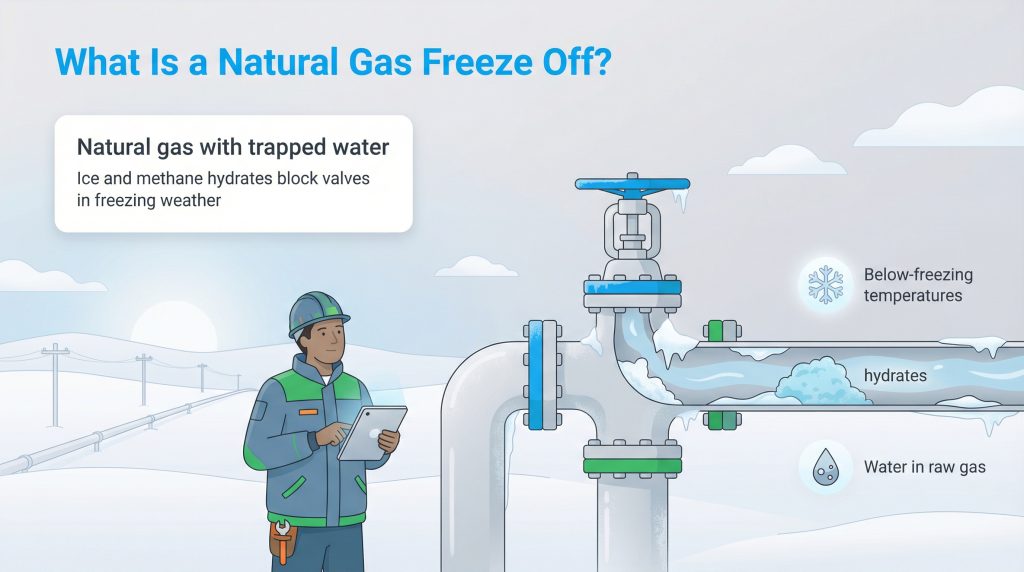
A natural gas freeze off is an industrial supply-chain disruption that occurs when freezing temperatures cause water vapor and liquid impurities inside production wellheads to turn to solid ice, stopping the flow of raw fuel at the source. When asking exactly what this event entails, it is crucial to separate what happens at the massive industrial production level from what happens in your own residential backyard.
These disruptions primarily occur upstream at industrial extraction sites. When raw fuel is pulled from the earth, it is considered a raw wet gas stream, meaning it contains heavy amounts of moisture. Downstream at the residential level, the story is entirely different. By the time natural gas travels through the utility lines to your neighborhood, it has been stripped of its moisture and processed into consumer-grade “dry gas.” Because the water has been completely removed, the gas itself flowing into your home will not freeze.
At What Temperature Does Natural Gas Freeze?
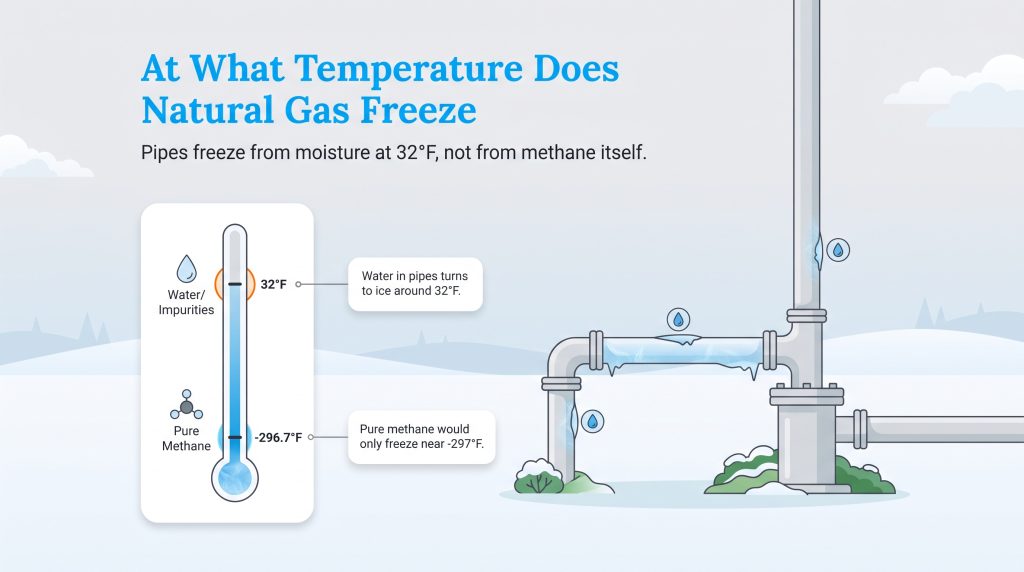
You might be wondering, at what temperature does natural gas freeze on its own? The short answer is no, not in any weather condition you will experience on Earth. Pure methane, which is the primary component of natural gas, has an incredibly low freezing point of -296.7°F. When industry experts talk about a natural gas wellhead freeze-off, they are not talking about the fuel itself turning into a solid block.
| Freezing Points of Gas Stream Components | Temperature |
|---|---|
| Pure Methane (Dry Gas) | -296.7°F |
| Water Vapor (Moisture) | 32.0°F |
| Liquid Hydrocarbons (Impurities) | Varies (Typically near 32°F) |
Instead, they are referring to the freezing point of the impurities mixed in with the raw fuel. The moisture inside the extraction pipes freezes right around 32°F, forming slushy, ice-like crystals. According to the U.S. Energy Information Administration (EIA), extreme cold snaps lead to significant natural gas production declines, as the ice completely restricts the flow of fuel.
The Mechanics of a Wellhead Freeze Off
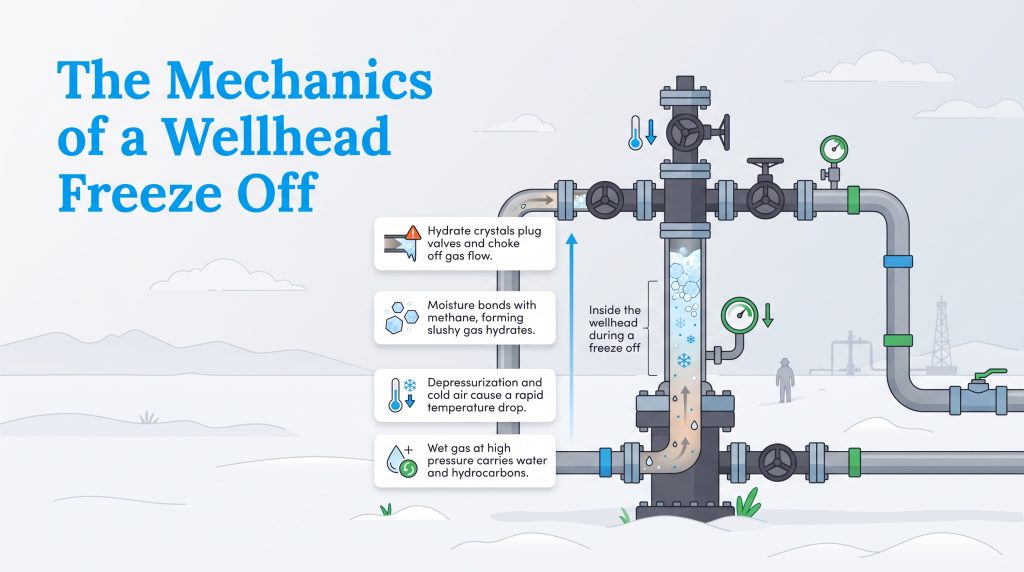
When extracting fuel from the ground, operators deal with a raw wet gas stream that contains significant amounts of moisture. Understanding exactly how wellheads freeze requires looking at the natural physical reactions that happen under extreme pressure. Here is the step-by-step process of natural gas hydrate formation during a winter blast:
- Extraction of wet gas: Raw natural gas is pulled from the earth at high temperatures, carrying large amounts of water vapor and liquid hydrocarbons alongside the methane.
- Rapid temperature drop: As the gas travels up the wellbore and hits the surface equipment, depressurization combined with freezing ambient temperatures causes a rapid cooling effect inside the pipes.
- Hydrate formation: The sudden chill causes the moisture to bind with methane molecules, creating slushy, ice-like crystals known as hydrates.
- Flow restriction: These solid ice plugs quickly build up inside the wellhead valves and transmission pipelines, completely choking off the flow of fuel and causing severe natural gas supply disruptions.
The Ripple Effect: Supply Disruptions and Price Spikes
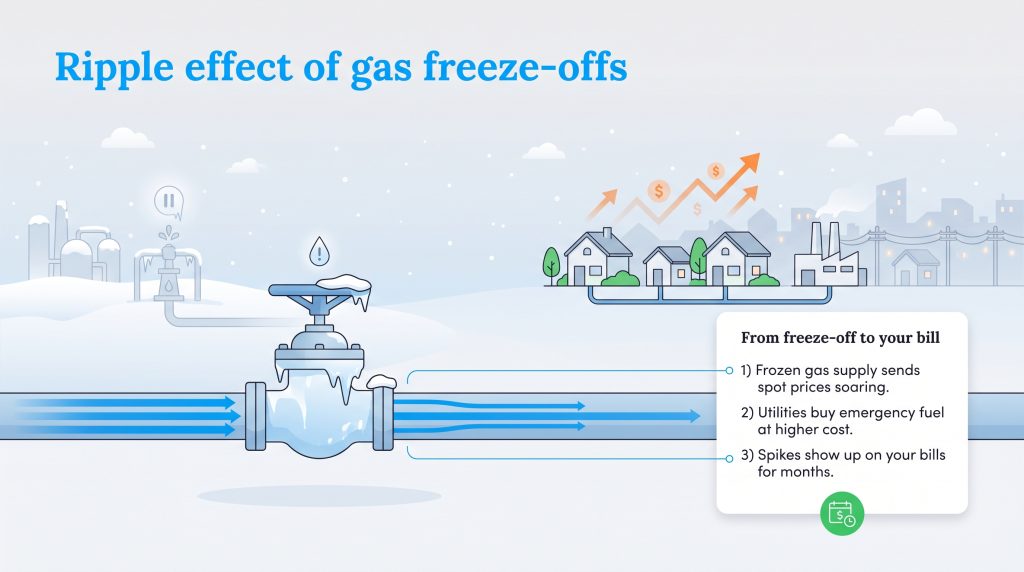
When a natural gas wellhead freeze-off restricts the overall fuel supply, the basic laws of macroeconomics take over. During extreme winter storms, the supply and demand curve shifts violently. As production volume plummets due to frozen extraction points, millions of consumers simultaneously turn up their thermostats to combat the freezing temperatures. This skyrocketing demand rapidly drains the limited gas left in the utility grid.
To keep your furnace running safely, local utility companies are forced to purchase emergency replacement fuel on the spot market, where wholesale prices can jump exponentially in just a few hours. These massive natural gas price spikes are eventually passed down to consumers, leading to painfully high winter storm heating bills. Because many electric power plants rely directly on natural gas to generate electricity, these sudden supply shortages can also force power plants offline, leading to potential blackouts. To learn more about how different fuel sources interact with the grid, you can read our guide on energy grid basics.
💸 Money-Saver: The lag effect of a freeze-off is real. You might not see the price hike on your bill immediately. Utilities often smooth out these astronomical costs over several billing cycles, meaning you could pay a little extra for months after the storm has passed to cover the spike.
How the Energy Industry Winterizes Equipment
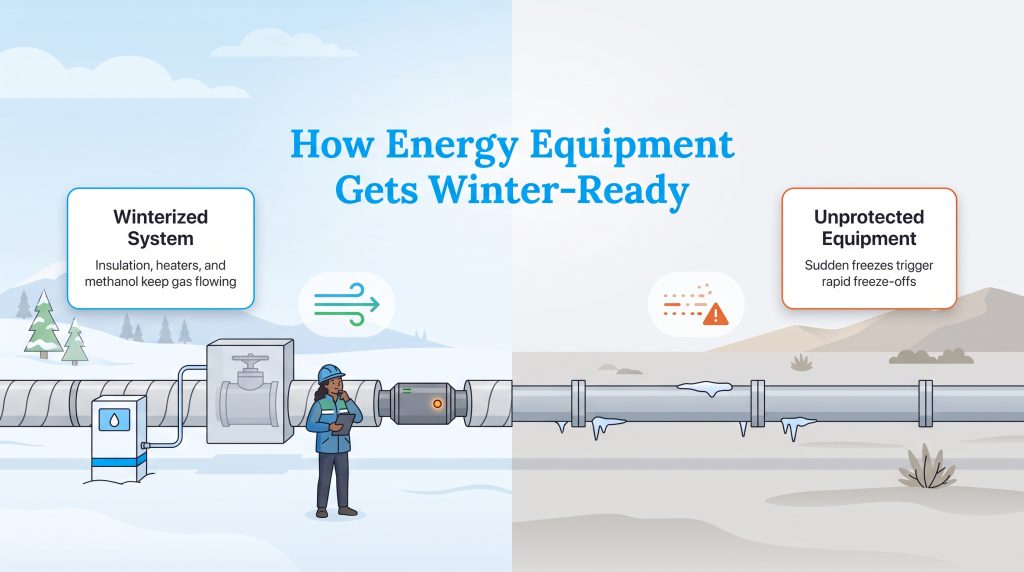
To prevent these massive disruptions and ensure winter energy grid reliability, operators must aggressively winterize natural gas equipment. In colder, northern climates, producers proactively use continuous methanol injection to lower the freezing point of the water vapor inside the extraction pipes. They also install heavy pipe insulation, thermal enclosures, and specialized inline heaters to maintain a steady flow of fuel even in sub-zero weather.
However, in historically warmer climates like the Texas Permian Basin, these expensive safeguards are often skipped to reduce daily operational costs. When sudden arctic blasts hit these unprepared southern regions, the resulting freeze-offs in Texas shut down extraction almost instantly. This lack of weatherization is a primary reason why sudden freezes in warmer states disproportionately destabilize the entire national energy grid.
Signs Your Home Gas Equipment Is Frozen
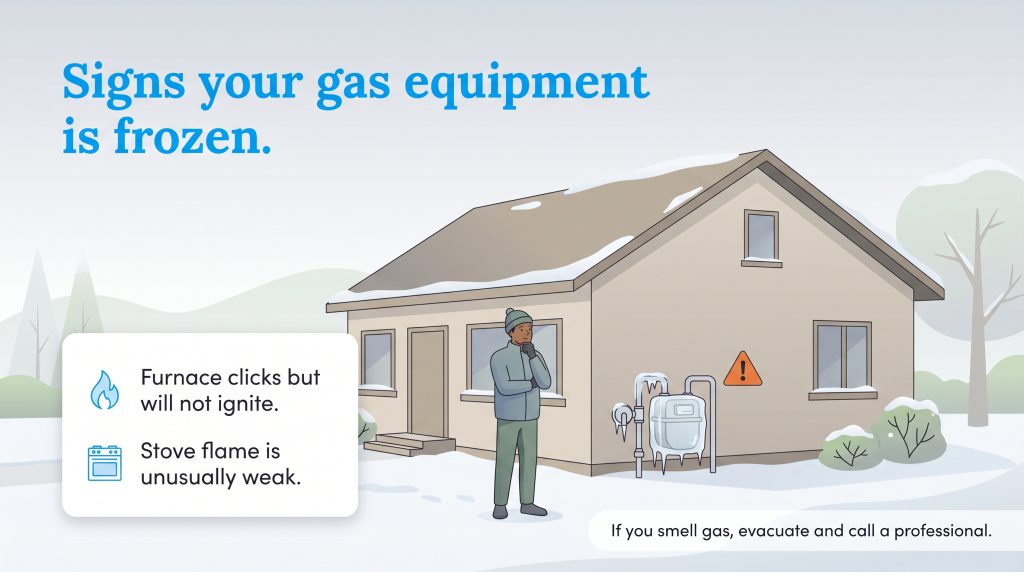
While the refined dry gas running through your home’s indoor pipes will not freeze, your outdoor equipment remains vulnerable to harsh winter storms. Severe weather can cause external condensation to build up and turn to solid ice, leading to a natural gas regulator freezing up outside your home. The American Gas Association (AGA) provides extensive resources showing that the underground delivery system is designed to safely withstand winter conditions, but surface equipment still needs your attention.
If you suspect you have a natural gas meter frozen in ice, you might notice your furnace clicking but failing to ignite, or your kitchen stovetop exhibiting a weak flame. If you experience these symptoms or smell gas, evacuate your household safely and call a professional immediately. Never attempt to thaw the regulator yourself.
Actionable Steps to Prevent Home Gas Shortages
When grid failures happen, you must know how to protect your property and save on your gas bill. If an industrial freeze-off causes local supply shortages or rolling blackouts, take these three specific steps immediately to maintain your home’s thermal envelope:
- Lower your thermostat dramatically: Drop your indoor temperature setting to 60°F or lower if supply shortages are announced. This conserves the remaining fuel in the utility grid and reduces the massive strain on local infrastructure.
- Reinforce weatherstripping: Apply inexpensive foam weatherstripping and draft blockers around doors and windows to trap your home’s existing indoor heat. Draft-proofing is the most effective way to stay warm if your furnace loses gas pressure.
- Prepare backup electric heating sources: Ensure you have an electric space heater ready, plugged directly into a wall outlet rather than a power strip. Never use outdoor propane heaters, camp stoves, or your kitchen oven to heat your living room, as these present severe carbon monoxide risks.
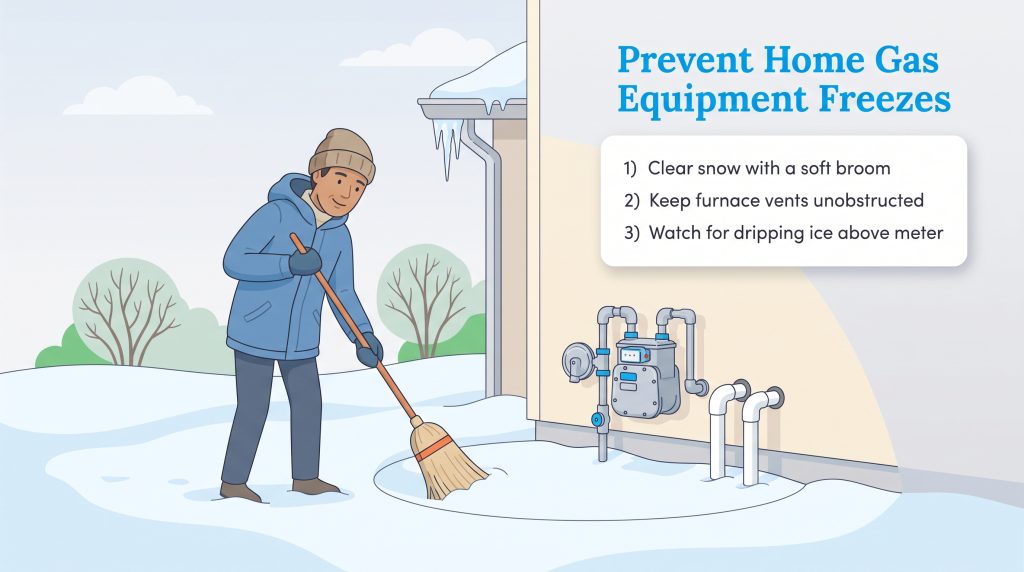
To safely maintain your outdoor equipment, carefully brush the snow off your outdoor gas meter and its regulator vents with a soft broom after a heavy blizzard. Never kick the meter, use a snowblower near it, or pour hot water over the dials, as extreme temperature changes can fracture the metal pipes and trigger a catastrophic gas leak.
🌱 Eco Edge: Worried about gas volatility and unexpected price spikes? Consider upgrading your home with a smart thermostat or switching to an electric heat pump. Heat pumps are an incredible energy-saving option that can drastically cut your reliance on natural gas and lower your carbon footprint. According to the Department of Energy, heat pumps offer an energy-efficient alternative that transfers heat instead of generating it.
Weatherizing to Reduce Grid Strain
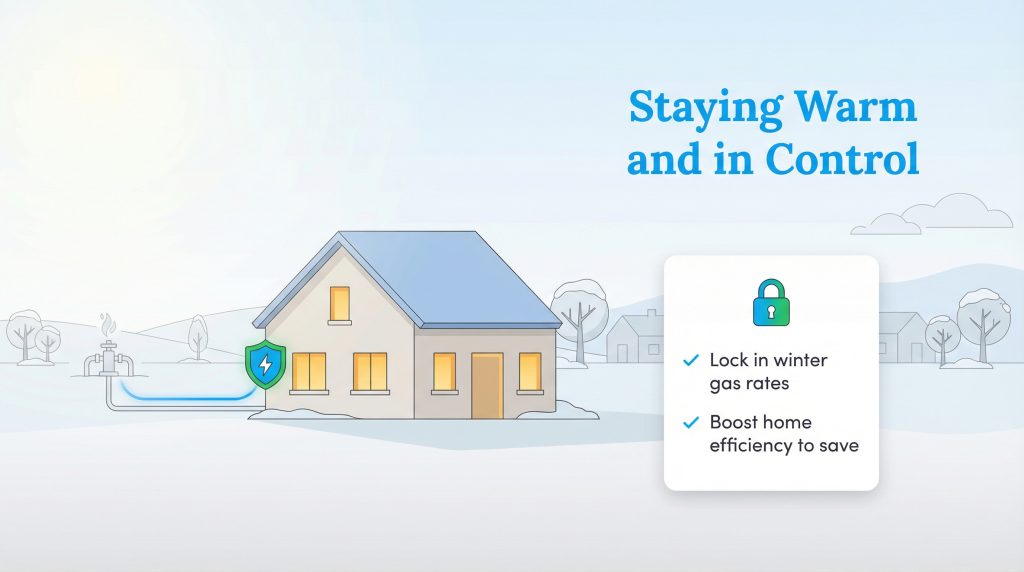
By understanding the difference between an industrial supply shortage and a frozen outdoor meter, you empower yourself to make smarter energy choices. A natural gas freeze off may start at a distant production well, but the financial impacts and utility bill spikes eventually land right on your doorstep.
Taking the time to weatherize your property not only protects your wallet from volatile rate surges but also lessens the massive strain on the broader energy grid. Simple steps like sealing your home’s thermal envelope and insulating exposed utility pipes can dramatically increase your household’s resilience when temperatures plummet.
Staying Warm and Protected During Winter Storms
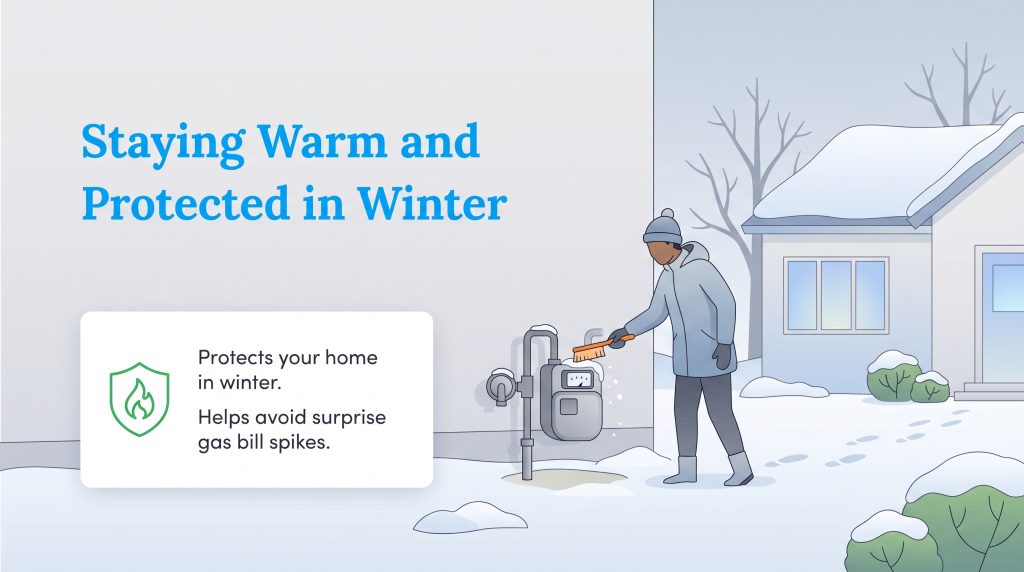
Severe winter weather is unavoidable, but being caught off guard doesn’t have to be. Knowing how to maintain your equipment and handle a supply shortage gives you total confidence when the next polar vortex hits your region.
For more comprehensive tips on reducing your daily energy consumption and protecting your property, check out our guide to natural gas in your home and understanding your natural gas bill. These resources will help you navigate volatile winter rates and keep your family comfortable all season long.
Frequently Asked Questions About Natural Gas Freeze Offs
What is a natural gas freeze off?
At what temperature does natural gas freeze?
Will the natural gas line to my house freeze?
How long does a natural gas freeze off last?
Do natural gas freeze offs affect electricity grids?
How do I safely unfreeze my natural gas meter?
Why is my gas furnace blowing cold air during a freeze?
About the Author

Claudio is a sustainability-focused writer with a background in Anthropology and Psychology from NC State University. He has spent over 15 years working in writing, interpretation, and translation, driven by a deep interest in how human culture shapes the environment. Today, he shares his curiosity with readers by writing about sustainable living solutions and the connection between everyday choices and environmental impact.

David has been an integral part of some of the biggest utility sites on the internet, including InMyArea.com, HighSpeedInternet.com, BroadbandNow.com, and U.S. News. He brings over 15 years of experience writing about, compiling and analyzing utility data.