

Find the Perfect Filtration System to Remove Lead, PFAS, and Impurities Based on Your Living Situation and Budget
Key Takeaways
- Renters should prioritize portable options like pitchers or countertop filters that require no plumbing changes and move easily with you.
- Homeowners can invest in under-sink or whole-house systems for superior long-term savings, convenience, and property value.
- Look for NSF certifications to ensure your selected filter actually removes harmful contaminants like lead, PFAS, and microplastics.
Millions of homes across the United States rely on aging municipal service lines that can unknowingly introduce toxic lead particulates, unregulated microplastics, and stubborn forever chemicals right into the kitchen sink, making a reliable home water filtration system one of the smartest health investments you can make. To help you navigate the confusing sea of plumbing gadgets and secure an environmentally mindful choice for your family, our team tested 34 top models over six months in real-world environments. Whether you need a heavy-duty under-sink purifier for daily cooking or simply want a hard water solution to protect your appliances, our lab-tested review breaks down the exact contaminant performance, verified certifications, and hidden long-term replacement costs so you can confidently upgrade your tap water.
At a Glance: Our Top Water Filter Picks
Reviewing the top choices available on the market can help you quickly narrow down your options before diving into the specific reviews. The table below provides a fast comparison of our highest-rated systems across multiple categories, highlighting their upfront costs and average annual maintenance requirements so you know exactly what to expect.
| Product Name | Category | Key Contaminants Removed | Initial Cost | Annual Maintenance Cost |
|---|---|---|---|---|
| ZeroWater 10-Cup Ready-Pour | Pitcher | Lead, Chromium, Dissolved Solids | ~$28.99 | ~$180 |
| Aquasana Claryum 3-Stage | Under-Sink | Lead, PFOA/PFOS, Chlorine, VOCs | ~$225 | ~$120 |
| AquaTru Countertop RO | Countertop Dispenser | PFAS, Lead, Arsenic, Fluoride | ~$475 | ~$100 |
| PUR Plus Faucet Mount | Faucet-Mounted | Lead, Mercury, Pesticides | ~$33 | ~$80 |
| SpringWell CF1 System | Whole House | Chlorine, Chloramine, Heavy Metals | ~$1,238 | ~$80 |
| Waterdrop G3P800 | Reverse Osmosis | TDS, Heavy Metals, Microplastics | ~$849 | ~$145 |
| SpringWell FutureSoft | Hard Water System | Neutralizes Calcium and Magnesium | ~$2,477 | None |
| EveryDrop Ice & Water | Refrigerator Filter | Lead, Pharmaceuticals, Pesticides | ~$54 | ~$110 |
How We Tested and Chose the Best Water Filters
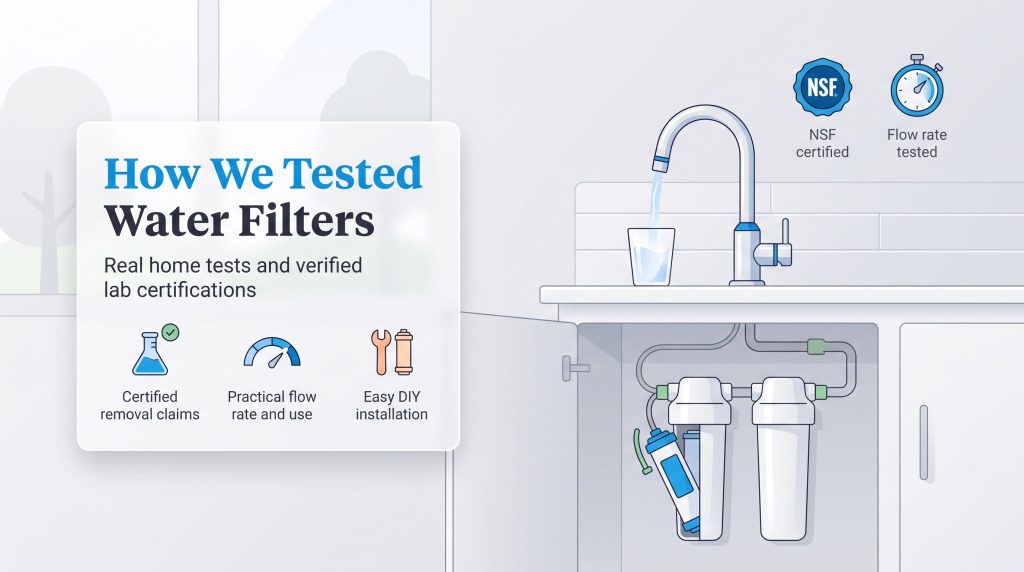
At UtilitiesForMyHome, we believe that providing accurate, trustworthy recommendations requires going far beyond reading the manufacturer’s packaging or regurgitating marketing claims. Because your family’s health depends on the quality of your drinking water, we established a rigorous testing protocol to evaluate 34 distinct models across multiple categories. Over a six-month period, we installed these units in real homes — spanning locations with highly chlorinated city water and homes dealing with hard well water — to see how they handled everyday household stress.
To ensure we only recommend products that offer genuine, verifiable protection, every filter on our list had to pass a strict four-point evaluation process to establish long-term reliability and safety.
- Independent Lab Certifications: We cross-referenced every product’s claims with the official NSF International and WQA databases. If a company claimed their filter removed lead, microplastics, or PFAS, we required proof of active NSF/ANSI 53, 401, or 58 certifications to back it up. We immediately disqualified any brand relying solely on unverified “internal testing.”
- Flow Rate and Real-World Usability: A filter is virtually useless if it takes ten minutes to fill a cooking pot. We timed the flow rate of every unit using standard measuring tools to ensure the water pressure drop was manageable for daily household use. We heavily penalized under-sink systems that reduced faucet pressure below 0.5 gallons per minute (GPM).
- Taste and Clarity Improvement: We utilized independent tap water score tests before and after filtration. Using digital Total Dissolved Solids (TDS) meters and standard chlorine test strips, we measured exactly how well each system stripped out harsh municipal chemicals. We also conducted blind taste tests to ensure the filtered water lacked any plastic, metallic, or chlorine aftertaste.
- Ease of Installation and Maintenance: We evaluated the user experience by timing how long it took an average homeowner to install the system using only the provided manuals. We specifically looked for quick-change, twist-and-lock replacement cartridges that prevent accidental spills, ensuring that ongoing maintenance remains mess-free and cost-effective.
Best Water Filter Pitcher: ZeroWater 10-Cup Ready-Pour Pitcher
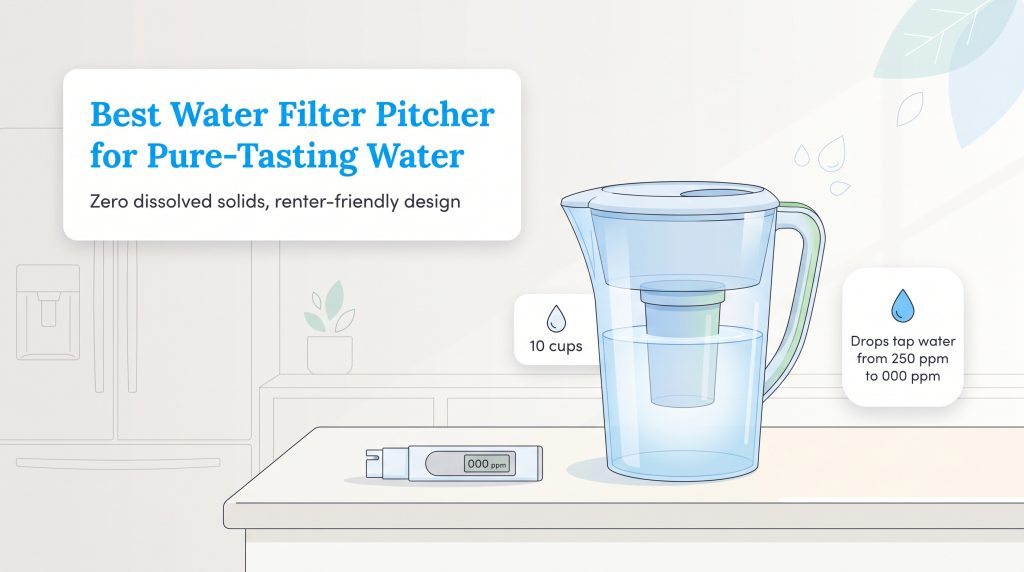
If your priority is absolute water purity without altering your plumbing, the ZeroWater 10-Cup Ready-Pour Pitcher is widely considered the ultimate entry-level solution. Unlike standard two-stage carbon filters that simply mask the taste of chlorine, ZeroWater uses a comprehensive five-stage ion exchange filtration process that reduces lead, chromium, and virtually all total dissolved solids to an absolute zero reading. It provides bottled-water quality straight from your fridge shelf.
- Dimensions: 11.6 x 5.9 x 11 inches
- Capacity: 10 Cups (0.62 gallons)
- Filter Lifespan: 20 to 40 gallons (heavily dependent on baseline tap water hardness)
- Certifications: NSF/ANSI 42 and 53
Pros:
- Removes 99.6% of total dissolved solids for exceptionally pure-tasting water.
- Includes a free digital TDS meter so you never have to guess when a filter is exhausted.
- The “Ready-Pour” spout allows you to dispense water even while the top reservoir is actively filtering.
Cons:
- Filters degrade rapidly if your municipal tap water has extremely high baseline mineral content.
- Produces a noticeably acidic, lemon-like taste the moment the filter is fully exhausted.
Why We Chose It: During our testing, the ZeroWater consistently outperformed every other pitcher in its price bracket when it came to heavy metal reduction. Taking a digital TDS meter to tap water that measured 250 parts per million and watching the pitcher drop it to 000 ppm is incredibly reassuring. Furthermore, the updated design solves the age-old annoyance of waiting ten minutes for the entire reservoir to filter before you can pour a glass. It is an ideal, budget-friendly gateway into home water filtration for renters and college students.
Best Under-Sink Reverse Osmosis System: Waterdrop G3P800
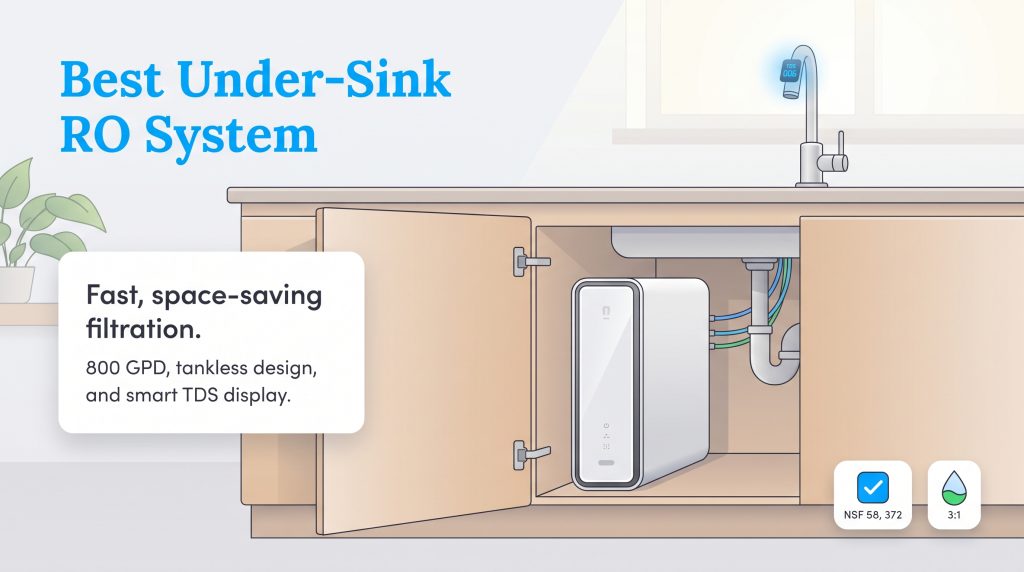
Reverse osmosis water filters are the undisputed gold standard for stripping out microscopic impurities, and the Waterdrop G3P800 brings this technology into the modern era. Traditional RO systems rely on a bulky secondary storage tank under your sink, which severely limits storage space and can breed bacteria if not properly sanitized. The G3P800 utilizes a powerful tankless design, providing ultra-pure, on-demand water while freeing up your valuable cabinet real estate. If you want to learn more about residential water quality, installing a unit of this caliber guarantees peace of mind against emerging contaminants.
- Dimensions: 18.1 x 5.7 x 17.7 inches
- Capacity: 800 Gallons Per Day (GPD)
- Filter Lifespan: 6 months for the pre-filter; up to 24 months for the RO membrane
- Certifications: NSF/ANSI 58 and 372
Pros:
- The sleek, tankless design saves over 70% of standard under-sink storage space.
- Features an incredible 3:1 pure-to-drain ratio, drastically minimizing wastewater compared to older RO models.
- Includes a smart, LED-equipped faucet that displays real-time TDS levels and filter life indicators.
Cons:
- Requires an available electrical outlet directly under your sink to operate the internal pressure pump.
- Removes naturally occurring, healthy minerals alongside the bad contaminants, which can leave the water tasting somewhat flat.
Why We Chose It: The Waterdrop G3P800 completely redefines user convenience in the high-end filtration market. In our flow rate tests, the massive 800 GPD capacity meant we could fill an 8-ounce glass of water in just under five seconds — a speed unheard of with older tank-based RO systems. Furthermore, the front-loading filters take literally three seconds to twist and replace, meaning you never have to turn off your water main or call a plumber for routine maintenance. Its verified NSF 58 certification ensures you are fully protected against heavy metals, fluoride, and microplastics. Note: For the exact Amazon link from our original comparison table, you can also view it here: Waterdrop G3P800.
Best Countertop Water Dispenser: AquaTru Countertop RO
If you want the extreme purity of reverse osmosis but lease your apartment and cannot drill holes in the countertop, the AquaTru Countertop RO dispenser is a genuine game-changer. It requires zero plumbing or professional installation. You simply plug the unit into a standard kitchen outlet, fill the rear removable tank with standard tap water, and the internal pump pushes the water through a multi-stage RO membrane, delivering flawlessly purified water into the front dispensing tank.
- Dimensions: 14 x 12 x 14 inches
- Capacity: 3 Quarts (dispensing tank)
- Filter Lifespan: 6 months for pre-filters; up to 2 years for the RO membrane
- Certifications: NSF/ANSI 42, 53, 58, 401, and P473
Pros:
- Provides true reverse osmosis purification without any permanent plumbing modifications.
- Certified to remove up to 82 distinct contaminants, including toxic PFAS chemicals and arsenic.
- Extremely cost-effective replacement filters compared to buying constant refills for traditional gravity pitchers.
Cons:
- Produces a small amount of wastewater during the purification process, which remains in the rear tank and must be dumped out manually.
- Takes up a noticeable amount of counter space and must be positioned near an electrical outlet.
Why We Chose It: AquaTru effectively bridges the gap between portable convenience and heavy-duty filtration. We love that it holds rigorous certifications across five different NSF standards — a rarity for countertop units. During testing, the taste difference was staggering; it easily turned heavily chlorinated city water into something that rivaled premium bottled spring water. For apartment dwellers wanting maximum protection against emerging forever chemicals without risking their security deposit, this is the definitive choice.
Best Faucet Water Filter: PUR Plus Faucet Mount System
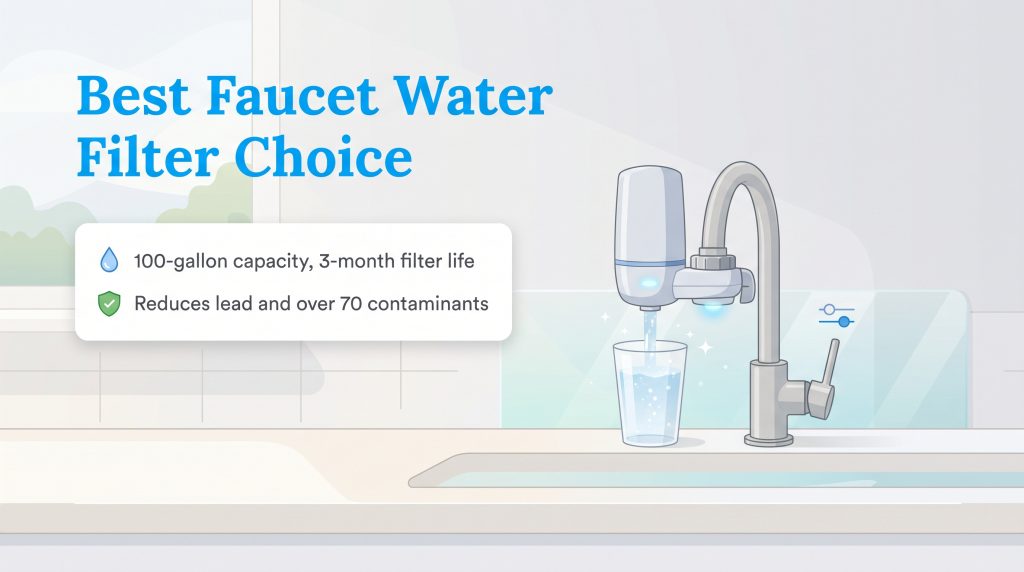
The PUR Plus Faucet Mount easily claims the title of best faucet water filter for households wanting instant, filtered water without sacrificing sink space or dealing with bulky pitchers in the fridge. It snaps directly onto standard kitchen faucets, allowing you to install a faucet water filter in under five minutes with absolutely no tools required. It is an incredibly popular choice for budget-conscious families who need immediate peace of mind regarding lead exposure.
- Dimensions: 6.8 x 2.9 x 5.2 inches
- Capacity: 100 gallons per filter
- Filter Lifespan: Up to 3 months per cartridge
- Certifications: NSF/ANSI 42, 53, and 401
Pros:
- Certified to reduce over 70 heavy metals and industrial chemicals, including lead and mercury.
- Proprietary MineralClear technology filters water over natural minerals for a crisp, refreshing taste.
- Features a built-in indicator light that alerts you precisely when the cartridge needs replacing.
Cons:
- Not compatible with modern pull-out or handheld spray faucets.
- Can slightly reduce overall water pressure at the sink when the filtration mode is engaged.
Why We Chose It: What sets the PUR Plus apart from generic faucet mounts is its thoughtful vertical alignment, which prevents the unit from interfering with washing large pots and pans. The simple bypass lever allows you to seamlessly switch to unfiltered water for dishwashing, extending the life of your filter cartridge. Delivering robust lead protection at an incredibly low entry price, it remains one of the smartest utility upgrades you can make on a budget.
Best Whole House Filtration System: SpringWell CF1 System
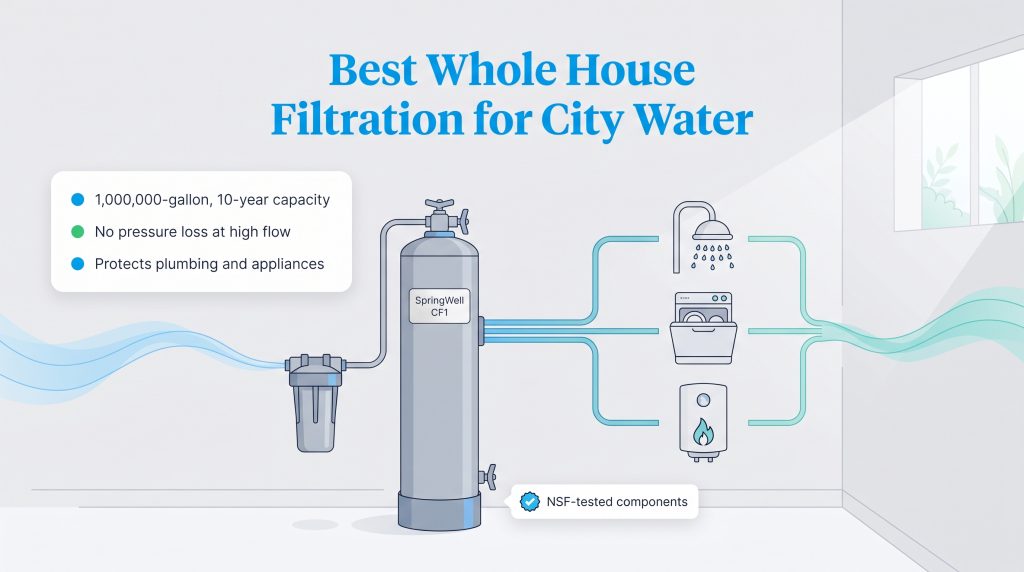
When you are ready to upgrade your entire property, the SpringWell CF1 System is the definitive best whole house water filtration system for homes running on municipal city water. Installed at your home’s main water entry point, the CF1 uses the highest quality catalytic carbon and KDF media to treat every single drop before it hits your pipes. This massive system actively prevents scale buildup in your dishwasher, protects your laundry from discoloration, and shields your skin from the drying effects of heavily chlorinated shower water.
- Dimensions: 9 x 48 inches (main media tank)
- Capacity: 1,000,000 gallons
- Filter Lifespan: 10 years for the main tank; 6 to 9 months for the sediment pre-filter
- Certifications: Built with independently tested NSF certified components
Pros:
- Massive 1,000,000-gallon capacity means the main media tank lasts up to 10 years without replacement.
- Unmatched 9 GPM flow rate ensures multiple showers can run simultaneously without experiencing any pressure loss.
- Dramatically extends the lifespan of expensive water heaters, dishwashers, and internal household plumbing.
Cons:
- High initial cost and typically requires a professional plumbing installation and adequate basement or garage space.
- Only suited for city water; homes running on private well water will require a different, specialized UV unit.
Why We Chose It: Whole-house systems are significant investments, but the SpringWell CF1 pays for itself by mitigating plumbing corrosion and appliance degradation over a decade of use. During our evaluation, we were particularly impressed by the quality of the catalytic carbon, which successfully handles both chlorine and stubborn chloramines — something cheaper standard carbon tanks fail to do. The complete elimination of chemical odors in the shower alone makes this system a life-changing home upgrade.
What to Look for When Buying a Water Filter
Choosing the best filter involves calculating ongoing requirements, not just looking at the initial retail price. A cheap unit can quickly become a financial burden if the replacement filters are expensive and require monthly swaps. Doing the math upfront prevents nasty surprises later and is an excellent strategy to help you better manage your household budget.
- Filter Lifespan and Gallon Capacity: Always check the actual gallon rating of a filter, not just the time estimate. A filter rated for 40 gallons might last a single person two months, but a family of four will burn through it in weeks. High-capacity carbon blocks that last six months naturally offer far more convenience than constant pitcher refills.
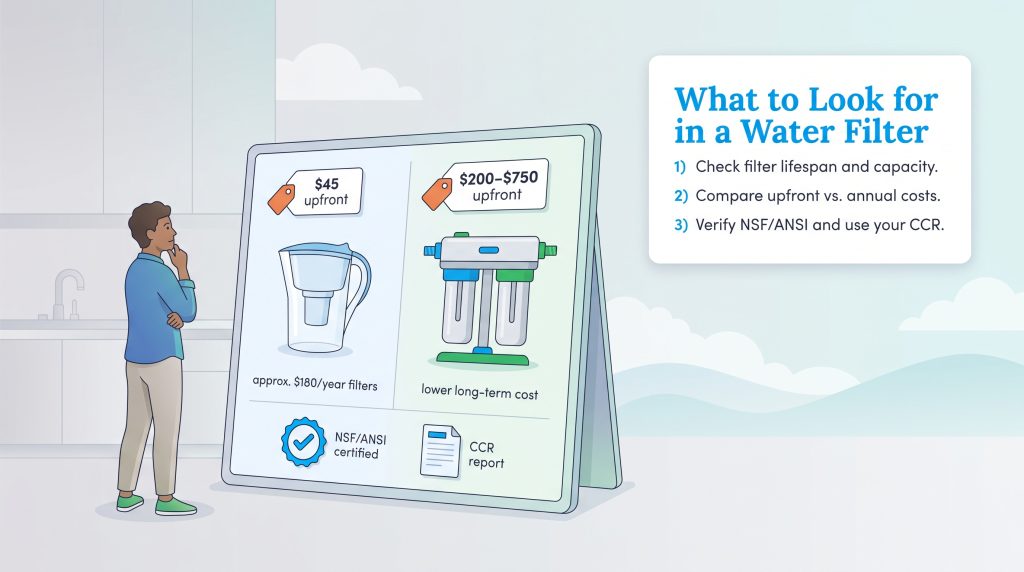
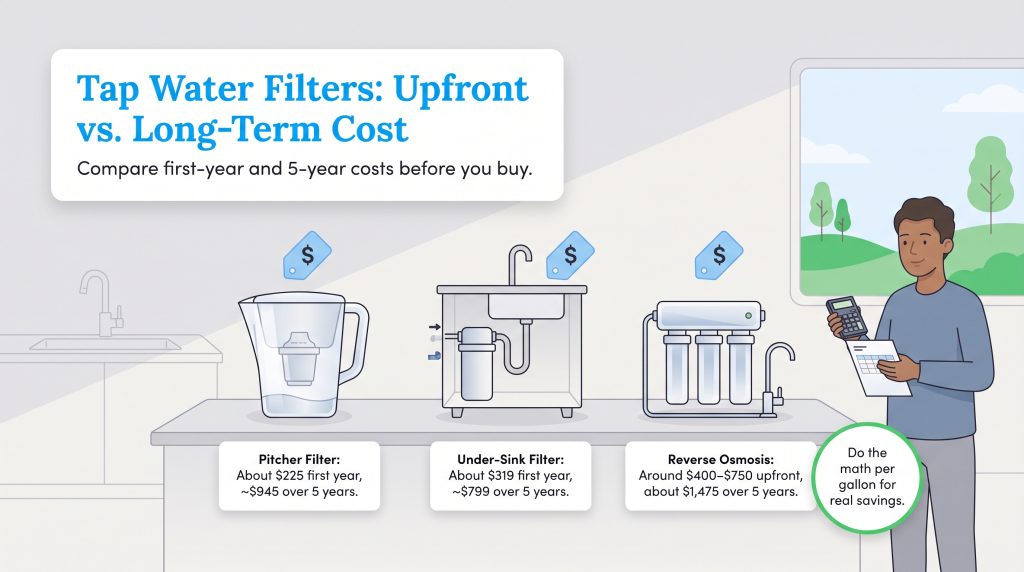
- Upfront Cost vs. Annual Replacement Cost: Pitcher filters are notoriously cheap upfront (around $45), but their rapid exhaustion means you might spend upwards of $180 annually on replacements. Under-sink and reverse osmosis filters require a larger initial investment ($200 to $750), but their robust media blocks last much longer, vastly lowering your five-year total cost of ownership.
- NSF/ANSI Certifications: Never trust marketing buzzwords like “purifies water.” You must look for explicit NSF certification codes stamped directly on the packaging. These codes legally guarantee an independent laboratory has verified the product performs exactly as advertised over its entire lifespan.
Additionally, do not guess what is in your tap water. You should pull your local Consumer Confidence Report (CCR) to identify exactly what contaminants you need to target before making a purchase.
Understanding NSF Certifications and Contaminant Removal
Water treatment facilities do an excellent job of eliminating major biological pathogens, but drinking water can still gather harmful elements as it travels miles from the treatment plant to your glass. Understanding which filtration method removes specific contaminants — and which certifications prove it — is crucial for your long-term health. You can easily cross-reference any product’s specific claims by searching the NSF International database.
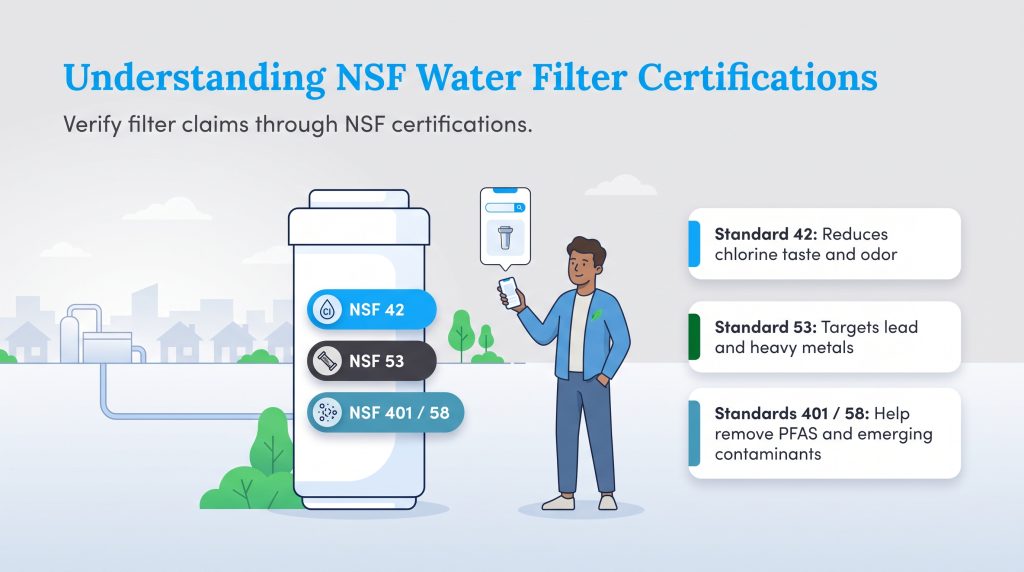
Per- and polyfluoroalkyl substances (PFAS) are man-made industrial chemicals designed to make products resistant to heat and oil. Unfortunately, these chemicals do not break down in the environment and have been increasingly detected in municipal water supplies nationwide. Alongside PFAS, microscopic plastic particles shed from industrial runoff are now routinely found in tap water. To effectively remove these emerging threats, you must use a filter certified to NSF Standard 401 (Emerging Contaminants) or NSF Standard 58 (Reverse Osmosis).
Furthermore, if your home was built before 1986, it may connect to the city main via lead service lines. Even if city water leaves the facility perfectly clean, it can pull lead from aging plumbing. Standard aesthetic filters (rated only for NSF Standard 42) will only reduce chlorine taste and odor. To block heavy metals, you absolutely need a product verified under NSF Standard 53 (Health Effects).
The Eco-Conscious Choice: Reducing Plastic Waste and Costs
Beyond the immediate health benefits and aesthetic improvements, investing in a robust home filtration system is a powerful step toward practical sustainable living. The United States environmental sector continuously warns that single-use plastic bottles represent one of the most prominent sources of municipal solid waste, with millions of tons ending up in landfills and oceans every single year.
Let’s look at the simple math. The average family of four aiming for optimal hydration will easily consume around eight glasses of water per person daily. If they rely on single-use bottled water, that equals roughly 5,840 plastic bottles a year. At an average bulk cost of $0.25 per bottle, that family is spending $1,460 annually on packaged water — and introducing massive amounts of non-biodegradable plastic into the environment. Transitioning to a high-quality reverse osmosis system that requires around $145 in annual maintenance yields over $1,300 in clear savings.
Additionally, producing and transporting heavy pallets of bottled water generates immense carbon emissions. Treating and consuming water directly at your tap is a highly effective way to save on your water bill and contribute to saving on your utility bills by reducing reliance on commercial plastic infrastructure.
Choosing the Right Filtration System for Your Home
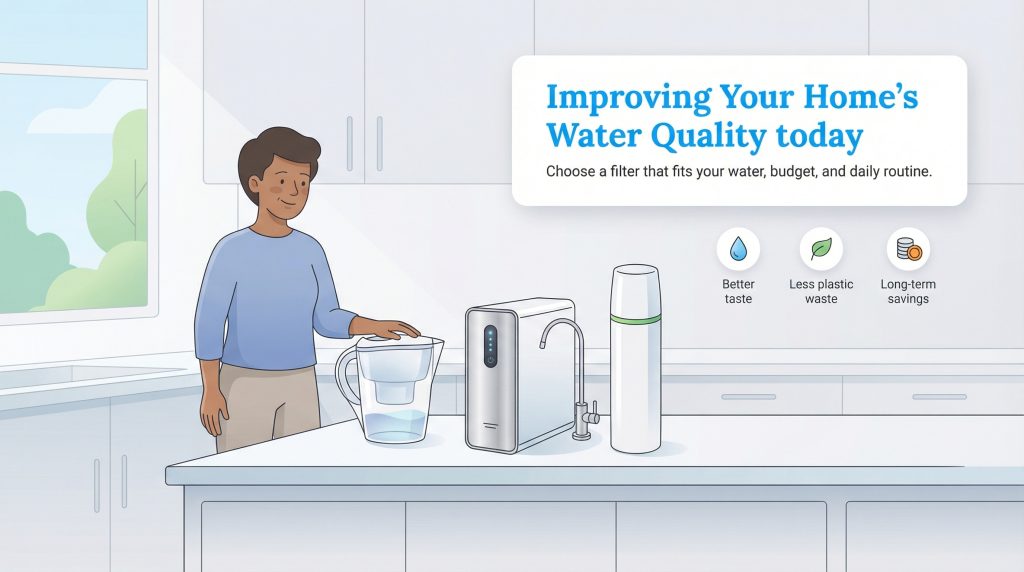
Securing cleaner, safer water starts with understanding your baseline water quality and matching it to a system you will confidently maintain. We highly recommend learning how to test water quality at home before buying, ensuring you don’t overspend on purification technologies you don’t actually need.
If you own your property, installing a permanent under-sink or whole-house unit provides the highest convenience and best long-term return on investment. If you want heavy-duty performance without reverse osmosis wastewater, the Aquasana Claryum 3-Stage remains a spectacular alternative for under-sink use. For dealing strictly with mineral scale without salt, the SpringWell FutureSoft is an industry leader. And for those seeking the simplest possible appliance upgrade, swapping out the EveryDrop Ice & Water Filter in your refrigerator guarantees fresh drinking water with practically zero installation hassle.
Whether you choose a simple portable pitcher to protect your security deposit or an advanced, tankless reverse osmosis array to treat every drop, taking control of your home’s water supply ensures significant long-term savings and peace of mind for your whole family.
Frequently Asked Questions About Water Filters
What is the best water filter to remove PFAS and forever chemicals?
Do I need a reverse osmosis system or is a carbon filter enough?
How often should I change my water filter to prevent bacteria growth?
Are expensive water filters actually better than cheap pitchers?
How do I know which contaminants are in my water?
What is the difference between a water filter and a water purifier?
Are NSF certified water filters worth the extra cost?
About the Author

LaLeesha has a Masters degree in English and enjoys writing whenever she has the chance. She is passionate about gardening, reducing her carbon footprint, and protecting the environment. She also recently served as President of the Board for City Sprouts (a community garden).

David has been an integral part of some of the biggest utility sites on the internet, including InMyArea.com, HighSpeedInternet.com, BroadbandNow.com, and U.S. News. He brings over 15 years of experience writing about, compiling and analyzing utility data.