

Understanding the Risks of PFAS Contamination and the Practical Steps You Can Take to Protect Your Home’s Drinking Water
Key Takeaways
- PFAS are persistent man-made chemicals found in many water supplies that can accumulate in the body over time.
- Not all water filters remove these chemicals, so choosing the right certification (like NSF/ANSI 53) is critical for safety.
- You can check your local water quality report to see if PFAS have been detected in your municipal supply before investing in filtration.
Recent headlines about forever chemicals in tap water have understandably caused alarm for homeowners trying to ensure their families stay healthy, but addressing PFAs in water doesn’t have to be an overwhelming ordeal. Contamination from these stubborn, long-lasting compounds is a widespread issue that currently affects massive municipal utility systems and rural private wells alike across the United States. However, you are far from powerless when it comes to securing your home’s infrastructure and eliminating these contaminants with the right hardware. At UtilitiesForMyHome, we want to help you cut through the confusing scientific jargon, understand exactly how these chemicals enter your supply, and take decisive action. In this comprehensive guide, we cover the latest EPA regulations setting strict new limits, practical step-by-step instructions for how to accurately test your local supply, and the most reliable filtration systems certified to protect your household without unnecessarily stretching your budget.
What Are PFAS (Forever Chemicals) and How Do They Enter the Water Supply?
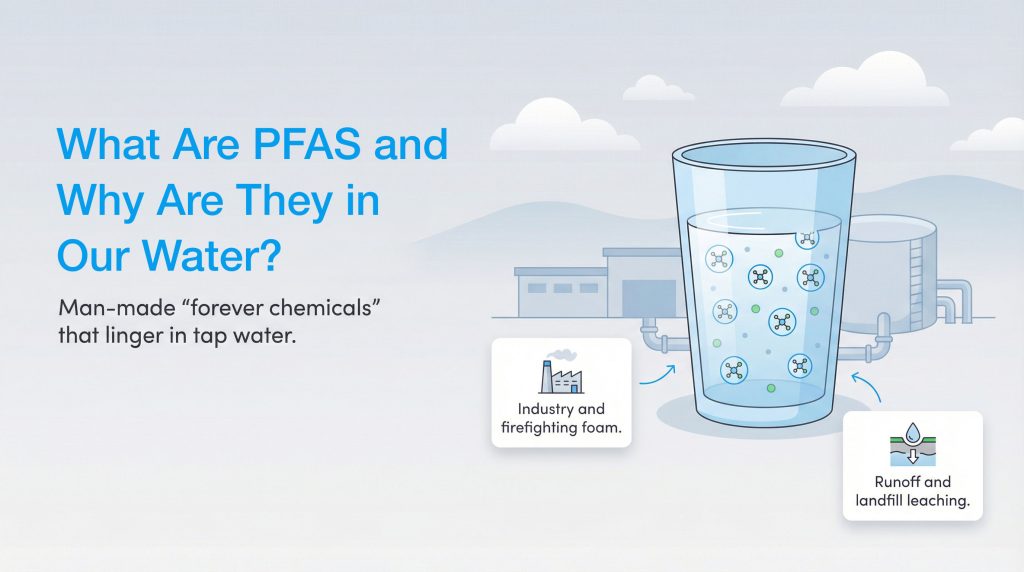
PFAS (per- and polyfluoroalkyl substances) are man-made compounds utilized in industrial and consumer products since the 1940s. Because their strong carbon-fluorine bonds prevent natural degradation, they are widely known as “forever chemicals.” PFOA and PFOS are the most notorious variants, frequently entering our water supplies through three primary avenues:
- Aqueous film-forming foam (AFFF): Specialized, highly effective firefighting foams used extensively at military bases, commercial airports, and local fire training facilities. Over decades of routine use and emergency response exercises, these chemical-dense foams quickly seep into the surrounding soil, eventually infiltrating deep groundwater aquifers that feed local utility plants.
- Industrial runoff and discharge: Massive manufacturing factories producing water-resistant outdoor clothing, stain-resistant carpeting, and specialized grease-proof food packaging produce significant liquid waste. When this chemical runoff is improperly managed or historically dumped into nearby rivers and streams, it creates a direct contamination pipeline into public drinking water sources downstream.
- Household consumer products: Everyday items like discarded non-stick cookware, fast-food wrappers, and certain waterproof cosmetics slowly break down in local municipal landfills. Over several decades, the toxic runoff from these aging landfills leaches into the local water table, turning localized trash disposal into a widespread environmental hazard.
Known Health Risks of PFOA and PFOS Exposure
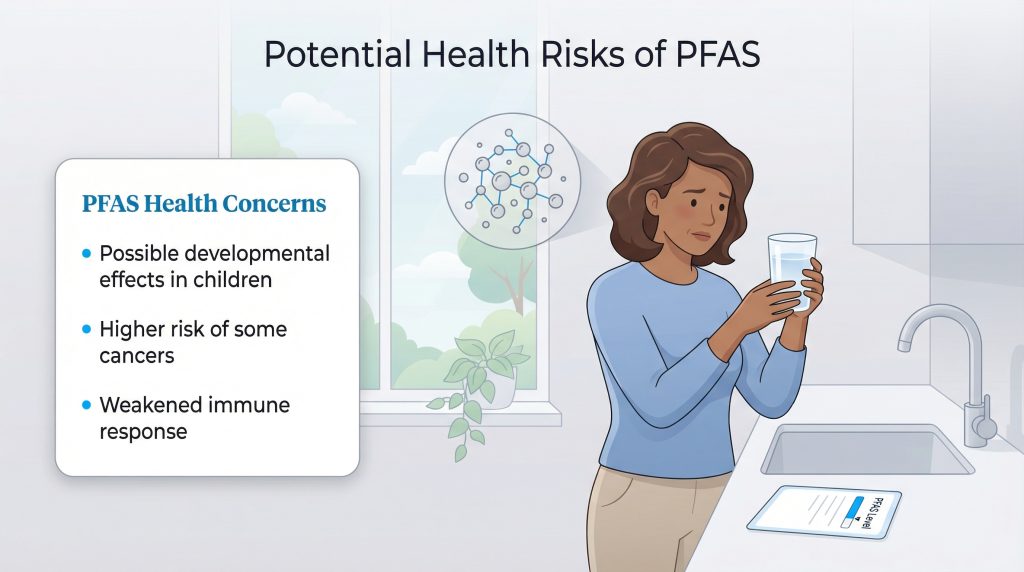
The potential PFOA and PFOS health effects remain a critical focus for major environmental organizations and medical agencies. Because these specific compounds bioaccumulate — meaning they continuously build up in your body’s tissues over long periods — routinely drinking tap water with even microscopic amounts of contamination can eventually lead to highly elevated, dangerous levels in your bloodstream. Your body lacks the natural biological mechanisms required to break down that intense carbon-fluorine bond, meaning the chemicals you ingest today could remain in your system for years.
According to the Centers for Disease Control and Prevention (CDC) and the Agency for Toxic Substances and Disease Registry (ATSDR), prolonged exposure to forever chemicals is directly linked to several serious adverse medical outcomes. Because these potential health impacts trigger at surprisingly low concentrations, current peer-reviewed medical studies suggest clear, objective links to various complications.
| Short-Term Risks | Long-Term Risks |
|---|---|
| Immune system suppression and altered response | Developmental risks for growing infants and toddlers |
| Decreased antibody response to routine preventative vaccines | Specific cancers (elevated risk of prostate, kidney, and testicular cancers) |
| Elevated blood pressure and pre-eclampsia during pregnancy | Chronic thyroid disease and cardiovascular issues |
| Temporary, abnormal spikes in cholesterol levels | Disruption of natural hormone production cycles and potential obesity |
It is vital to rely strictly on verified, scientific data when assessing your household’s personal risk rather than alarmist internet rumors. For the most detailed, objective, and up-to-date information regarding these medical impacts, you can directly review the EPA’s official page on Our Current Understanding of the Human Health and Environmental Risks of PFAS or the ATSDR’s comprehensive health effects overview.
National Contamination: Where Are PFAS Most Commonly Found?
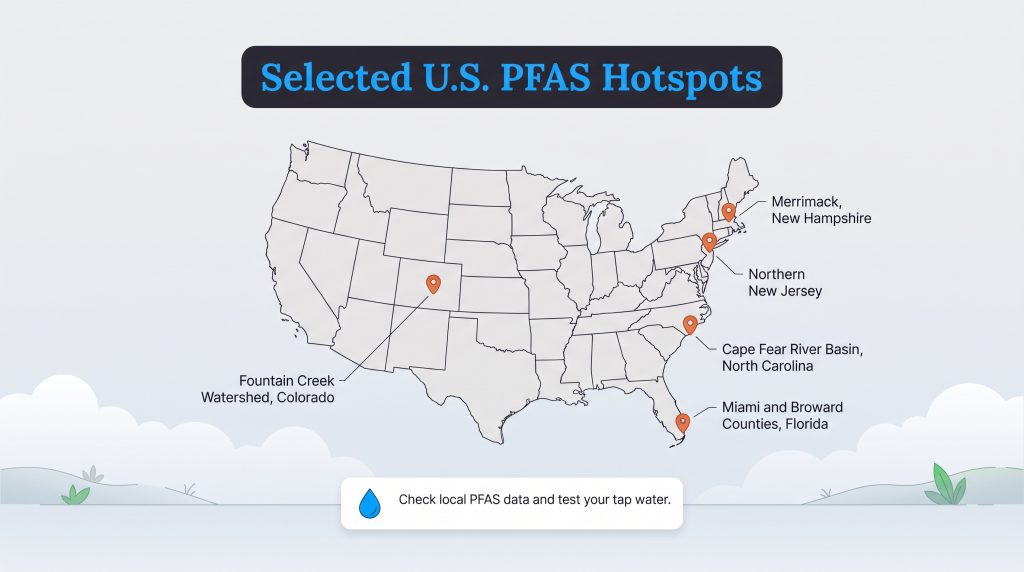
While forever chemicals have unfortunately infiltrated public utilities across all 50 states, certain regions face a significantly higher burden due to their proximity to specific industries. Understanding where these hotspots are located can help you better assess your localized risk and decide how urgently you need to implement a home filtration strategy. Your geographic proximity to high-risk zones drastically increases your chances of exposure. Facilities like military bases and commercial airports have routinely used aqueous film-forming foam for emergency response training, which inevitably leaches into the local water table.
Recent environmental studies and municipal testing data have highlighted several major regions struggling with severe contamination. If you live in or near any of the following top five U.S. regions, you should be particularly vigilant about reviewing a PFAS contamination map and testing your tap water:
- The Cape Fear River Basin, North Carolina: This area has experienced decades of heavy industrial discharge, making it one of the most widely documented regions for high concentrations of GenX chemicals and other PFAS variations flowing directly into municipal intakes.
- Miami and Broward Counties, Florida: High levels of urbanization combined with the extensive use of firefighting foams at regional airports and military bases have pushed these coastal counties to the top of the contamination list.
- Merrimack, New Hampshire: Driven by airborne and groundwater emissions from local manufacturing plants, this region has severely impacted both municipal supplies and thousands of rural private wells.
- Fountain Creek Watershed, Colorado: The historical use of AFFF at nearby military installations has led to widespread, persistent groundwater contamination affecting surrounding communities for decades.
- Northern New Jersey: As a dense, historically industrial corridor, numerous public water systems in this area consistently detect elevated levels of PFOA and PFOS due to legacy manufacturing runoff.
Current EPA Regulations and Drinking Water Limits
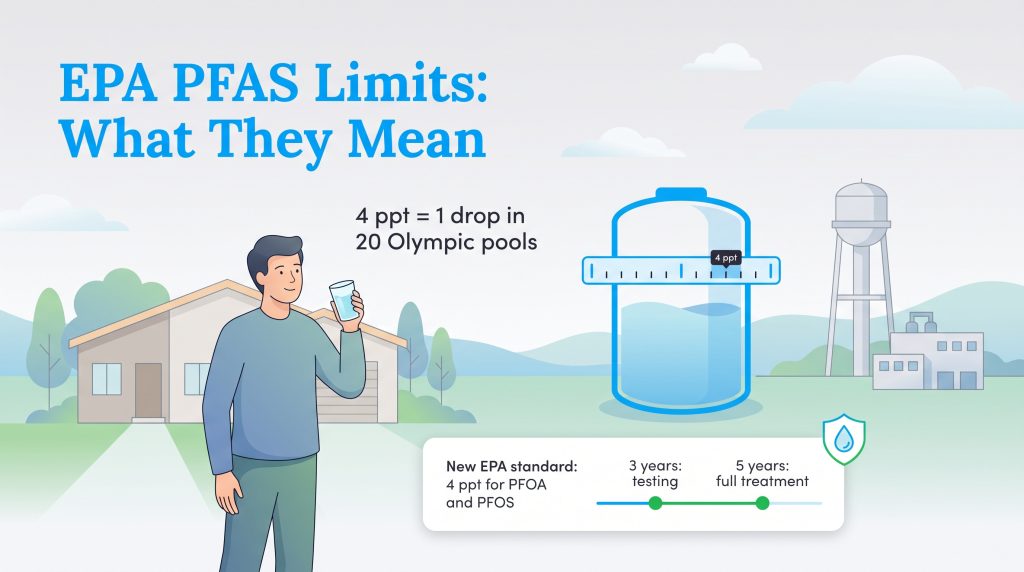
In a historic move to better protect public health, the federal government recently established the first-ever national, legally enforceable drinking water standards specifically targeting forever chemicals. Understanding these new EPA PFAS drinking water limits is absolutely essential for homeowners who want to know exactly what their local city utility is legally required to test for and actively treat.
In April 2024, the EPA finalized strict National Primary Drinking Water Regulations, establishing Maximum Contaminant Levels (MCLs) of just 4.0 parts per trillion (ppt) for both PFOA and PFOS. To help visualize this exceptionally tiny measurement, 4.0 parts per trillion is roughly equivalent to a single drop of water diluted across 20 Olympic-sized swimming pools. The new limits also strictly restrict several other specific chemicals within the family — including PFHxS, PFNA, and HFPO-DA — utilizing a comprehensive Hazard Index formula to drastically reduce overall public exposure across the country.
Public municipal water utilities are now legally obligated to upgrade their testing procedures and filtration infrastructure to meet these new federal standards. However, managing this transition is a massive logistical undertaking. Utilities have a designated multi-year grace period to fully comply. They must complete their initial monitoring and public reporting by 2027. Following that, they must purchase, install, and activate the massive commercial filtration systems required to scrub these contaminants from millions of gallons of water daily, reaching full enforceable compliance by 2029 (though recent regulatory proposals may offer some specific systems an extension up to 2031).
This long compliance timeline practically means many municipal tap water supplies will continue to contain trace amounts of these dangerous chemicals until local treatment facilities finish their massive, expensive overhauls. Homeowners who want immediate protection should not wait for municipal compliance. By taking independent action now, you can confidently bridge this gap and guarantee your family’s safety today.
How to Accurately Test Your Home’s Water for PFAS
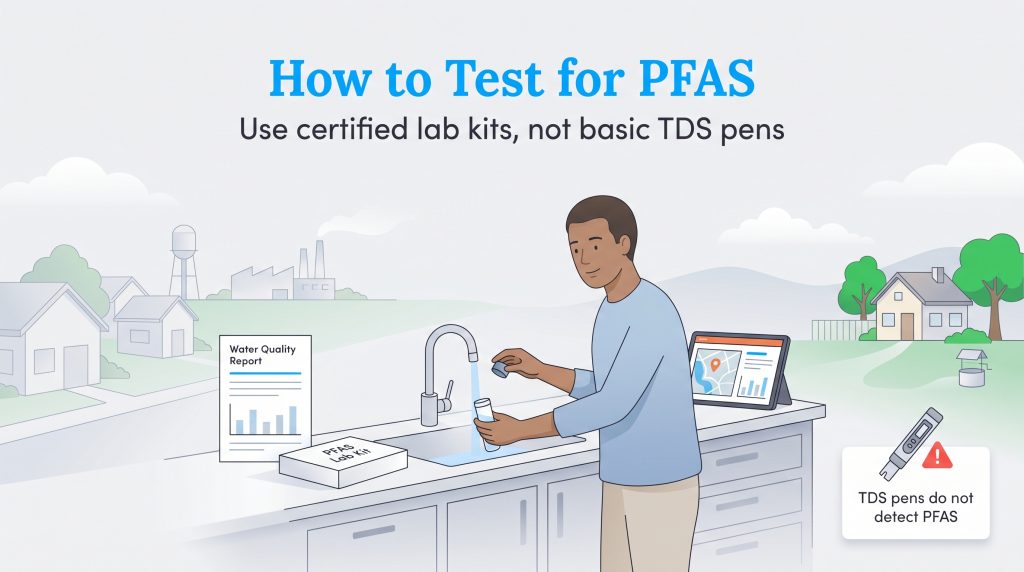
Before you spend money on an expensive whole-home water filtration system, you should logically confirm if your specific home’s supply is actually affected by these chemicals. Contamination levels vary widely depending on your region, your local geology, and your proximity to industrial manufacturing sites or military bases. Thankfully, learning how to test water quality at home for forever chemicals is easier and more accessible than ever before.
Municipal Tap Water vs. Private Well Water Testing
The diagnostic approach you take heavily depends on where your home officially sources its water. Municipal users can often rely on aggregated public data, while rural well owners must take matters into their own hands to identify PFAS in well water, as private wells completely lack strict federal oversight. Here is a practical guide detailing how to test water for PFAS flowing from your tap:
- Review your municipal data online: If you rely on public city water, your easiest first step is to read your local utility’s annual Consumer Confidence Report (CCR). You can easily request this document from your water provider’s website. Alternatively, you can utilize the Environmental Working Group (EWG) Tap Water Database by typing in your home zip code for a quick, comprehensive overview of historical violations.
- Avoid cheap DIY test strips: Standard hardware store test strips or basic color-changing kits are completely ineffective for this level of complex chemical analysis. You need advanced laboratory equipment to accurately detect parts per trillion.
- Order a state-certified mail-in kit: If you rely on a private well — or if you simply want to verify your municipal tap water independently — you will need an accredited mail-in testing kit. Ensure the independent laboratory you select is specifically EPA-certified for a PFAS water testing kit analysis, as standard bacterial well tests do not naturally look for forever chemicals.
- Collect your sample carefully: Follow the kit’s exact instructions to draw water directly from your kitchen tap into the provided sterile vials. Avoid touching the inside of the cap or the rim of the vial to prevent accidental cross-contamination from everyday household products or natural skin oils.
- Mail it back to the lab: Ship the sealed vials back to the accredited facility using the provided return packaging. Within a few weeks, you will receive a detailed digital breakdown highlighting any detected chemical contaminants in your home’s supply, allowing you to make an informed filtration choice.
The Best NSF-Certified Water Filters for PFAS Removal
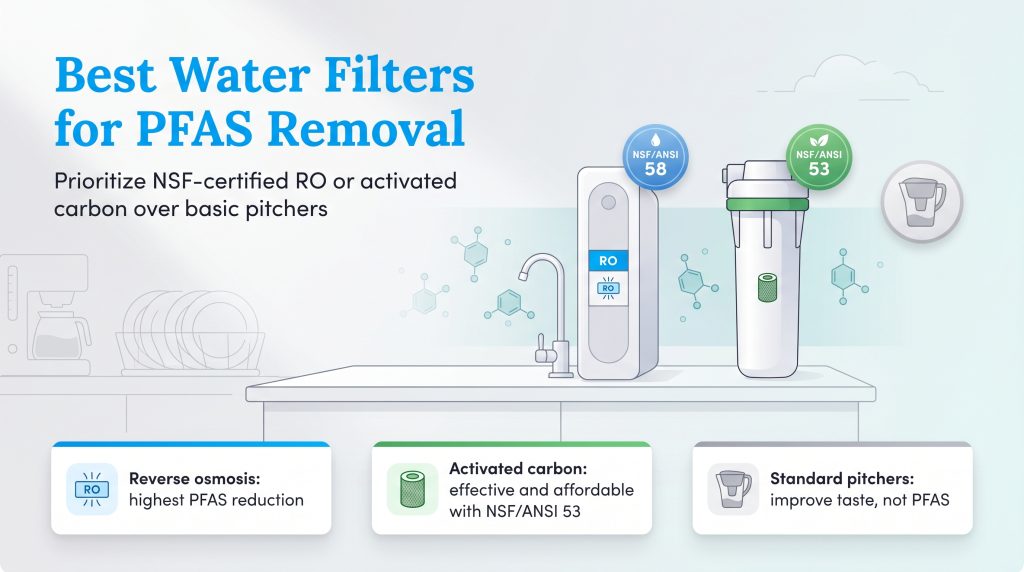
If testing confirms the unfortunate presence of forever chemicals in your home, your next logical step is securing reliable filtration. However, not every product sitting on the hardware store shelf is up to the heavy-duty task. To find the best water filters for true PFAS removal, you must actively verify third-party certifications to guarantee the system actually extracts these stubborn contaminants, rather than just improving basic taste and odor.
When shopping, explicitly look for PFAS water filters certified to NSF/ANSI Standard 53 or 58 for chemical reduction. Basic, inexpensive gravity pitchers will not protect you. Below is a direct comparison of the most accessible and effective filtration methods designed for residential homes to help you make an informed decision.
| Filtration Type | Upfront Cost | Maintenance Frequency | PFAS Removal Efficacy | NSF Certification |
|---|---|---|---|---|
| Reverse Osmosis (RO) | High ($200–$500+) | Annual filter changes; replace semipermeable membrane every 2-3 years | Excellent | NSF/ANSI 58 |
| Activated Carbon Filter | Medium ($50–$150) | Frequent cartridge replacements (every 3-6 months) | Very Good | NSF/ANSI 53 |
| Whole-Home Ion Exchange | High ($1,000+) | Regular salt refills; professional servicing | Good | Specialty Resin |
| Standard Pitcher | Low ($20–$40) | Monthly filter replacements | Poor / None | None |
Reverse Osmosis (RO) Systems
Reverse osmosis is widely considered the absolute gold standard for residential water purification. These robust under-sink systems forcefully push your tap water through an ultra-fine, semipermeable membrane that successfully blocks microscopic molecules, making reverse osmosis PFAS removal highly effective. Because the membrane pores are small enough to filter out contaminants down to the ionic level, an NSF/ANSI 58 certified RO unit offers unmatched peace of mind for severely contaminated municipal or well water supplies. Leading verifiable brands like APEC Water Systems and Aquasana offer excellent under-sink RO models that seamlessly integrate into your kitchen plumbing. While they carry a higher upfront cost and require minimal plumbing knowledge to install, they are the most dependable defense for your primary drinking tap.
Activated Carbon Filters
Activated carbon purifies water by attracting and physically trapping chemical contaminants within the dense, highly porous surface of a solid carbon block through a process known as adsorption. The science of how carbon water filters work serves as the primary technology inside high-end refrigerator filters, advanced pitcher models, and specialized point-of-use under-sink units. High-quality options from verifiable brands like Clearly Filtered and Waterdrop utilize highly compressed carbon blocks to ensure adequate contact time for trapping forever chemicals. While an activated carbon system is incredibly effective and more affordable upfront than reverse osmosis, its reliability depends entirely on you changing the filters on a strict schedule. Furthermore, you must verify the NSF/ANSI 53 certification for PFOA and PFOS reduction right on the product’s packaging to ensure it isn’t just a standard chlorine filter.
Whole-Home Ion Exchange Systems
Understanding how ion exchange water systems work is helpful here; the technology is typically utilized in whole-home water softening systems to remove hard minerals, but specialized commercial anion resins can also be explicitly engineered to target forever chemicals. These highly advanced systems swap harmless chloride ions for the negatively charged PFAS molecules as the water passes through a large, centralized resin bed in your garage or basement. While ion exchange is highly effective for treating water at every single tap in the house — ensuring your bathroom sinks and showers are protected — these whole-home solutions require a significant upfront investment, professional plumbing installation, and meticulous maintenance to ensure the specialized resin does not become oversaturated over time.
For more foundational information on managing your home’s infrastructure, including how to transfer water service to a new address, explore our water utility hub.
Is Bottled Water a Safe Alternative to Tap Water?
When faced with an alarming local water report, many families instinctively switch to buying flats of bottled water. However, relying on commercial plastic bottles is not the foolproof solution most consumers assume it is. It is absolutely crucial to understand that not all bottled water is PFAS-free. In fact, numerous independent laboratory tests have consistently found trace amounts of forever chemicals lingering in popular bottled brands, alongside thousands of microscopic plastic particles.
To make an informed purchase, you need to clearly understand the fundamental difference between natural spring water and purified reverse osmosis bottled water. Spring water is sourced directly from natural underground aquifers. While marketers make it sound pristine, if that specific underground aquifer happens to be situated near a contaminated industrial site or military base, the spring water will be naturally laced with PFAS before it ever reaches the bottling facility. Because spring water companies want to preserve natural minerals for taste, they often use basic filtration methods that cannot capture molecular-level forever chemicals. Conversely, purified reverse osmosis bottled water undergoes an aggressive, multi-stage filtration process that forcefully removes almost all microscopic impurities, including dangerous chemical compounds. This makes purified water a much safer bet for completely avoiding contamination.
If you need an immediate, clean alternative while waiting to install a home filtration system, always read the fine print on the label. Specific brands like Aquafina, Dasani, and Essentia explicitly utilize robust reverse osmosis filtration processes in their manufacturing facilities, giving you verified peace of mind when seeking a clean, temporary hydration solution.
Managing Everyday Exposure: Cooking, Bathing, and Baby Formula
When you discover contamination in your tap, it is entirely natural to start worrying about every single way you use water in your home. Many homeowners frantically wonder if they are unknowingly exposing themselves when taking a hot shower or washing dishes. According to current environmental health guidelines, forever chemicals do not easily absorb through the human skin barrier. Bathing, showering, and doing laundry with unfiltered municipal water are generally considered safe activities that do not significantly contribute to your internal exposure.
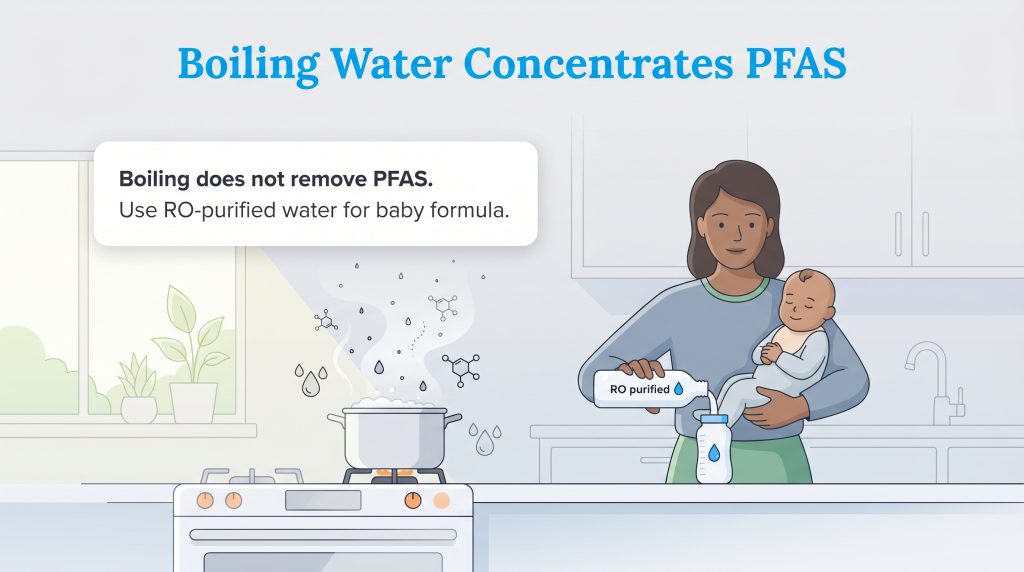
However, cooking presents a very different challenge entirely. You might assume that applying high heat automatically purifies the liquid, but does boiling water remove PFAS? The answer is a definitive no. Boiling water does not remove these synthetic compounds; instead, boiling water concentrates PFAS as the clean steam evaporates. Because these synthetic compounds possess incredibly strong carbon bonds specifically engineered to resist intense heat, boiling a pot of tap water for pasta or coffee actually increases the overall concentration of these dangerous chemicals. As the clean water evaporates into steam, the resilient forever chemicals are left behind in a much denser ratio.
This hazardous concentration effect makes unfiltered tap water especially dangerous when preparing meals for infants. Because infants consume a high volume of liquids relative to their extremely small body weight, using contaminated water to mix powdered formula dramatically spikes their exposure risk.
Action Plan for a PFAS-Free Home
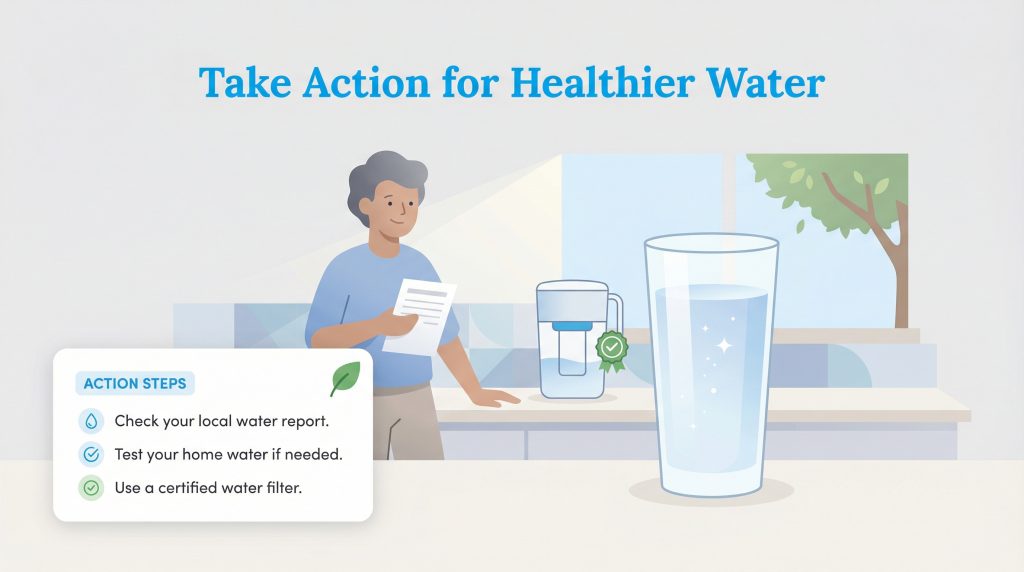
While uncovering the widespread presence of these complex chemicals is undoubtedly unsettling, you now possess the actionable knowledge required to manage the situation effectively and protect your family’s long-term health. You absolutely do not have to wait for your local municipal treatment plant to catch up with the latest federal regulations to enjoy clean drinking water. Securing a healthier, PFAS-free home comes down to the following strict three-step recap:
- Check your local water quality report: Pull your municipal utility’s annual Consumer Confidence Report today or search the EWG Tap Water Database to understand your baseline regional risk.
- Test your specific home supply: Order an EPA-certified mail-in lab test, especially if you source your water from a private well, to pinpoint your exact contaminant levels.
- Install an NSF-certified filter: Purchase and install a point-of-use reverse osmosis system (NSF/ANSI 58) or an advanced activated carbon block unit (NSF/ANSI 53) for your primary kitchen tap.
Taking Control of Your Home’s Water Quality
Navigating the complexities of forever chemicals can feel like an uphill battle, especially as regulatory agencies and municipal utilities work through years of vital infrastructure upgrades. However, by understanding the direct sources of these contaminants and the science behind effective filtration, you are taking a massive leap toward securing a safer, healthier household. Implementing a certified reverse osmosis system or an advanced carbon block filter doesn’t just improve the taste of your water — it provides profound, lasting peace of mind. By proactively testing your supply and investing in verified technology today, you are actively protecting your family from the invisible risks of modern industrial runoff and fostering a far more environmentally mindful living space.
Frequently Asked Questions About PFAS in Water
What is the best water filter for PFAS?
The most effective option for residential households is an under-sink reverse osmosis system officially certified to NSF/ANSI Standard 58. By pushing water through a semipermeable membrane, these systems catch contaminants at the molecular level. If you prefer a simpler, more affordable setup that does not require major plumbing work, a dense activated carbon block filter certified to NSF/ANSI Standard 53 is also a highly reliable choice for removing these chemicals.
Does a standard Brita pitcher filter out PFAS?
No, standard Brita pitchers and similar basic gravity filters are not effective for this level of heavy-duty purification. They typically use loose granular activated carbon designed simply to remove chlorine and improve basic taste. To successfully capture forever chemicals, you need a highly dense carbon block filter or a reverse osmosis membrane that is explicitly certified to NSF/ANSI Standard 53 or 58.
How much does a certified PFAS home water test cost?
The cost of a certified PFAS home water test can vary significantly depending on the depth of the laboratory analysis. Basic mail-in screening kits from accredited labs typically start around $79 to $115, which provides a reliable overview of the most common compounds. For a highly comprehensive, full-spectrum laboratory panel that tests for dozens of specific chemical variants, you can expect to pay anywhere from $250 to $400.
Do refrigerator water filters remove forever chemicals?
Most standard refrigerator filters only remove chlorine, bad tastes, and organic odors because they lack the necessary density to trap smaller molecules. However, premium carbon block refrigerator filters can remove forever chemicals if they carry an official NSF/ANSI 53 certification for PFOA and PFOS reduction. Always check the packaging to confirm this specific rating before purchasing a replacement.
Can I remove PFAS by boiling my water?
No, boiling water does not remove these man-made chemicals. Because their strong carbon bonds easily resist high heat, boiling tap water causes the clean water to evaporate as steam. This process leaves you with a much higher, more dangerous concentration of hazardous chemicals lingering in the remaining liquid, making it especially unsafe for cooking.
Are PFAS absorbed through the skin when showering or bathing?
Thankfully, environmental health guidelines indicate that these man-made chemicals do not easily absorb through the human skin barrier. The molecular size of forever chemicals makes it incredibly difficult for them to penetrate your pores effectively. Showering, bathing, and washing your hands with unfiltered municipal tap water are generally considered safe activities that will not significantly contribute to your overall internal exposure.
What is the difference between PFOA, PFOS, and PFAS?
PFAS is a broad umbrella term used to describe thousands of synthetic forever chemicals created over the last several decades. PFOA and PFOS are just two specific, widely studied chemicals within that much larger family. The EPA heavily regulates both PFOA and PFOS due to their extreme environmental persistence and well-documented, severe health risks.
How do I know if my water filter is NSF certified for PFAS removal?
You can verify the certification by checking the physical product packaging or the manufacturer’s official specifications online. Look specifically for NSF/ANSI Standard 53 for carbon filters or NSF/ANSI Standard 58 for reverse osmosis systems. The packaging must explicitly state that the product is certified for PFOA and PFOS reduction, as an NSF logo alone does not guarantee chemical removal.
About the Author

David has been an integral part of some of the biggest utility sites on the internet, including InMyArea.com, HighSpeedInternet.com, BroadbandNow.com, and U.S. News. He brings over 15 years of experience writing about, compiling and analyzing utility data.

LaLeesha has a Masters degree in English and enjoys writing whenever she has the chance. She is passionate about gardening, reducing her carbon footprint, and protecting the environment. She also recently served as President of the Board for City Sprouts (a community garden).