

Identifying Pollutants Is The First Step Toward Ensuring Safer, Cleaner Hydration For Your Entire Household
Key Takeaways
- Check your Consumer Confidence Report before spending money to identify known local municipal contaminants for free.
- Choose the right testing method by comparing the convenience of DIY test strips against the accuracy and depth of professional lab analysis.
- Understand your results and costs to make informed, eco-conscious decisions about home filtration systems or necessary plumbing repairs.
According to the Environmental Protection Agency (EPA), millions of homes across the United States are still connected to legacy lead service lines, and countless more are exposed to invisible “forever chemicals” like PFAS without ever realizing it. Knowing exactly how to test your water for pollutants is the most critical step in safeguarding your family’s health and establishing a safer, eco-conscious home environment. While your municipality might treat the bulk supply to meet federal minimums, physical testing inside your home is the only definitive way to know if your household water is truly safe to drink. In this comprehensive guide, we will walk you through reading your local municipal data, spotting early warning signs, choosing between DIY water testing kits and EPA-certified lab panels, and implementing the right water filtration systems to protect your entire household.
1. Review Your Local Consumer Confidence Report (CCR)
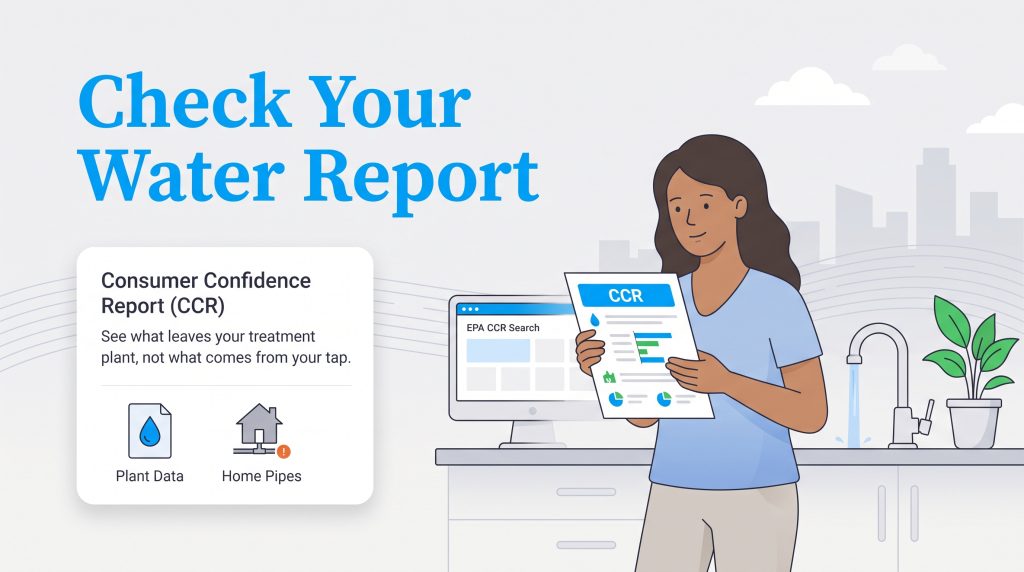
Before making any purchases or sending off samples, checking your local consumer confidence report (CCR) is the best free starting point for understanding your area’s water quality. If you pay a municipal water utility bill, your local provider is federally mandated by the Safe Drinking Water Act to publish and distribute an annual Consumer Confidence Report (CCR) by July 1 of each year. This detailed document acts as a comprehensive report card for your public water system.
To track down your specific CCR, simply visit your local water utility’s website or use the EPA’s online CCR search tool. This report details exactly where your water is sourced from — be it a local river, reservoir, or underground aquifer — and lists any regulated contaminants detected during the utility’s routine testing process over the previous calendar year. Reviewing this document establishes a fantastic baseline for understanding regional issues like extreme hard water scaling, agricultural runoff spikes, or high municipal chlorine use.
However, you have to understand exactly what this municipal report excludes. A CCR reflects the water quality as it leaves the central treatment plant or as it passes through specific regional monitoring stations. It absolutely does not account for localized contamination occurring on your own property, such as lead leaching directly from your private household pipes. For independent, localized analysis that highlights contaminants passing federal minimums but failing stricter environmental health guidelines, we also recommend checking the EWG Tap Water Database online.
2. Identify Signs Of Contaminated Tap Water
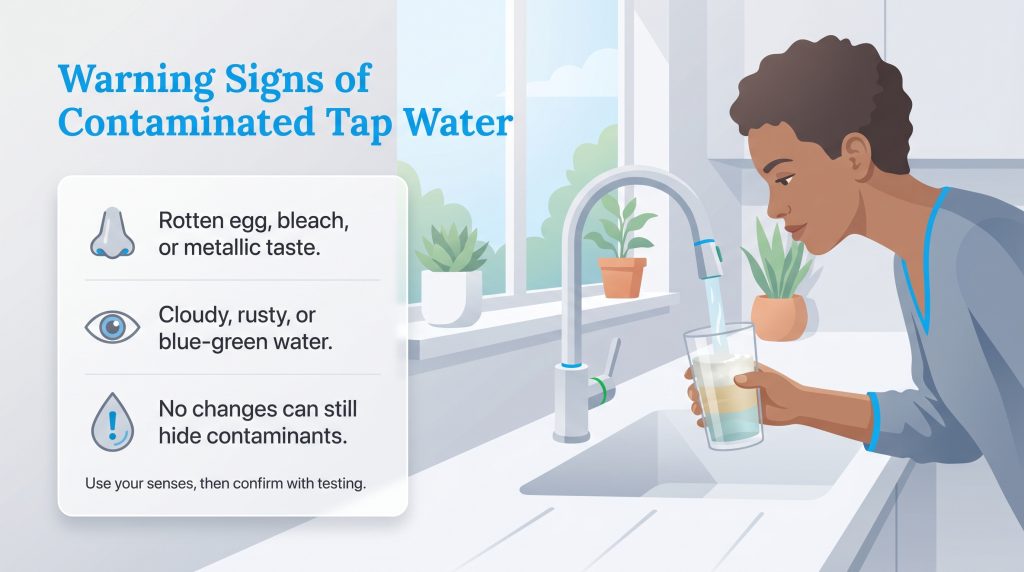
While municipal treatment plants constantly monitor the bulk supply at the source, their tests cannot account for what happens as water travels through miles of aging underground infrastructure to reach your faucet. Paying close attention to the physical signs of contaminated tap water can help you narrow down which diagnostic tests you actually need to run. You should always use your own senses as an immediate, preliminary screening tool before opening your wallet.
Sensory Signs
- Sulfur odor: Rotten egg smells usually point to hydrogen sulfide gas or sulfur bacteria.
- Chemical smell: Strong bleach scents signal excess chlorine or chloramines from treatment facilities.
- Metallic taste: Suggests dissolved iron, zinc, or dangerous lead pipe corrosion.
Physical Signs
- Cloudy appearance: Signifies trapped air, high sediment levels, or extreme mineral hardness.
- Red or brown stains: Often caused by high iron content or rusting galvanized pipes.
- Blue or green stains: Points to aggressive copper pipe corrosion from low pH levels.
If you live in an older home, identifying sensory clues is only part of the battle. Learning how to check tap water for lead is critical regardless of whether your water tastes or smells normal, as lead pipes and lead-based solder were standard building materials prior to strict federal bans enacted decades ago.
3. Who Needs To Test Their Water Most Urgently?
Not everyone faces the same level of risk when turning on the tap. Depending on your home’s location, its age, and the people living under your roof, testing your water might be an immediate necessity rather than a casual weekend project. If any of the following specific scenarios apply to you, verifying your water quality should become a top household priority.
- Living in a home built before 1986: Prior to the 1986 amendments to the Safe Drinking Water Act, the use of lead pipes, solder, and plumbing fixtures was completely legal and widespread. If your home predates this ban, there is a significant risk that aging plumbing components are actively leaching toxic lead into your daily drinking supply.
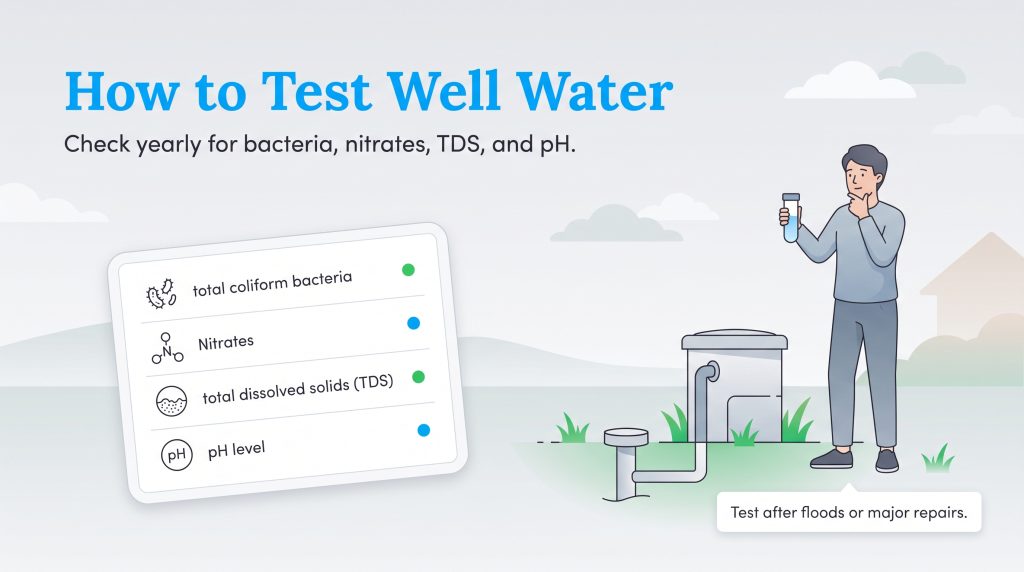
- Relying on a private well near agricultural runoff: Private wells are not protected by municipal treatment systems. If your property is situated near commercial farms, livestock facilities, or heavy agricultural zones, your groundwater aquifer is highly vulnerable to nitrate runoff from fertilizers and dangerous coliform bacteria from animal waste.
- Expecting a baby or having infants in the home: Infants and young children have rapidly developing nervous and immune systems, making them incredibly susceptible to the effects of waterborne pollutants. Contaminants that might only mildly affect an adult — such as trace heavy metals or nitrates — can severely disrupt a baby’s cognitive development or cause serious health complications, particularly when tap water is used to mix infant formula.
Taking proactive steps to test your water if you fall into one of these high-risk categories provides essential peace of mind. Catching a problem early empowers you to implement protective filtration systems before long-term exposure occurs.
4. Choose The Right Water Testing Method
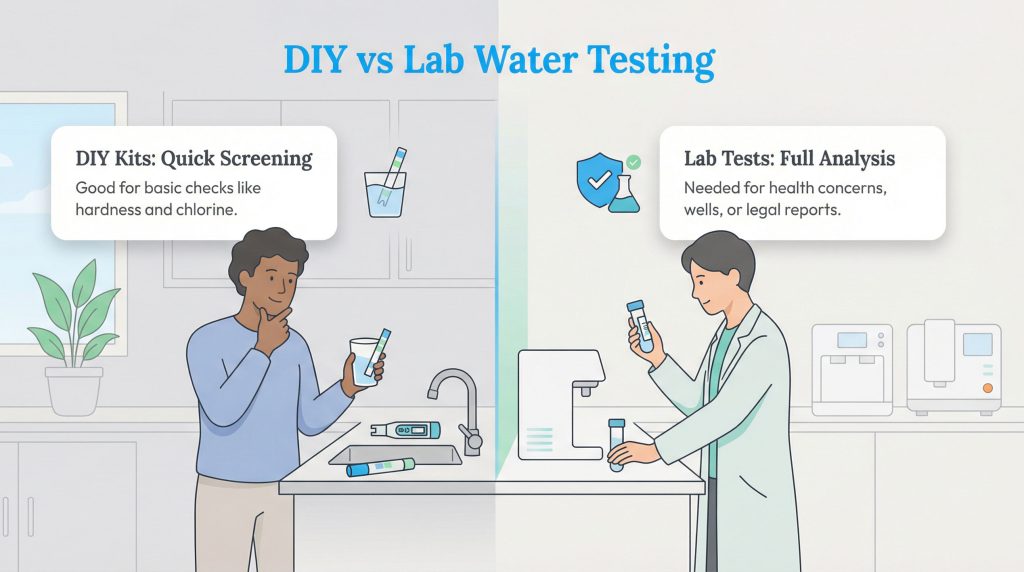
Once you recognize a potential issue, review your local CCR, or determine you fall into a high-risk demographic, you have to decide how to proceed with physical testing. The available testing methods vary dramatically in their scope, reliability, and price point. Think of basic DIY water testing kits as rapid screening tools for simple chemistry, whereas a professional mail-in lab acts as a definitive diagnostic test for serious, invisible toxic threats. Review the comparison matrix below to select the right approach for your household.
| Testing Method | Cost | Accuracy | Turnaround Time | Best For |
|---|---|---|---|---|
| DIY Test Strips | $10 – $30 | Low to Moderate | Minutes | Hardness, pH, and residual chlorine |
| Mail-In Certified Lab Kits | $150 – $300+ | High | 1 – 2 Weeks | Heavy metals, PFAS, VOCs, and bacteria |
| Local County Health Departments | Free – $50 | High | Days to 1 Week | Well water bacteria, nitrates, and safety compliance |
DIY Water Testing Kits
The most accessible solutions on the market rely on chemically treated test strips. You simply dip the paper into a fresh sample of your tap water and match the resulting color change to a provided chart. These strips are highly affordable and give instant feedback on aesthetic issues, making them perfect for verifying hard water scaling, testing pH levels, or checking for high municipal chlorine content.
You can also utilize a digital Total Dissolved Solids (TDS) meter alongside your strips. A TDS meter measures the electrical conductivity of your water to calculate the sheer volume of dissolved inorganic salts and organic matter present. However, standard 9-in-1 or 12-in-1 DIY water testing kits and basic TDS meters have severe limitations: they cannot accurately detect specific toxic pollutants at the microscopic parts-per-billion level. They will certainly tell you that something is dissolved in the water, but they are practically useless for confirming the presence of complex heavy metals or PFAS.
Mail-In Certified Water Testing Labs
When you are dealing with genuine health concerns, at-home color-changing strips are entirely insufficient. To guarantee the safety of your drinking supply — especially if you are expecting a baby, notice sudden well water changes, or live in an area with a history of industrial runoff — you must partner with a certified water testing lab.
These professional facilities utilize advanced mass spectrometry and rigorous scientific controls to detect trace toxins down to the smallest parts-per-billion levels. Today, modern mail-in services like SimpleLab Tap Score have emerged as the industry standard. They offer prepaid shipping boxes and provide consumers with highly detailed, unbiased laboratory health reports that rival municipal testing. You can also verify local accredited facilities in your area by searching the EPA’s Certified Lab List, ensuring your final results carry true scientific weight.
5. Step-By-Step: How To Use A DIY Water Test Strip
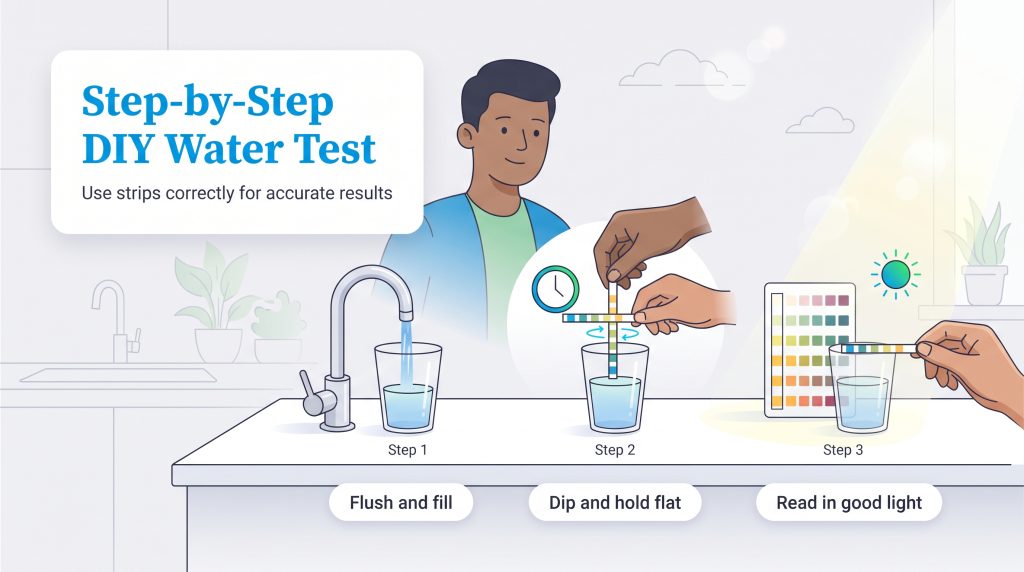
If you opt to start your evaluation with a fast, affordable home kit, executing the test correctly is vital. Because the chemical reagent pads on the strip are highly sensitive, poor handling can easily lead to false readings or bleeding colors. Follow these steps to ensure you get the most accurate aesthetic reading possible from your DIY water testing kits.
- Gather a fresh sample in a clean glass. Let your cold water tap run for about two to three minutes to flush out any water resting directly in the faucet. Fill a freshly washed and thoroughly rinsed glass with the cold water.
- Dip the strip for the manufacturer’s specified time. Carefully remove a single strip from the packaging without touching the colored chemical pads. Submerge the strip completely into the water for the exact time noted on the instructions — this is usually between two to five seconds.
- Hold the strip horizontally to prevent chemical color bleeding. Once you pull the strip out of the glass, do not shake off the excess water. Hold the strip perfectly horizontal. If you hold it vertically, the chemicals from the top pads will drip down into the lower pads, permanently ruining your results.
- Match it against the provided color chart in a well-lit room. Wait the recommended development time (usually 30 to 60 seconds) and immediately compare the strip to the color guide provided on the bottle. Do this in a room with bright, natural lighting, as dim yellow light bulbs can make subtle shade differences impossible to accurately decipher.
6. Test For Specific High-Risk Pollutants
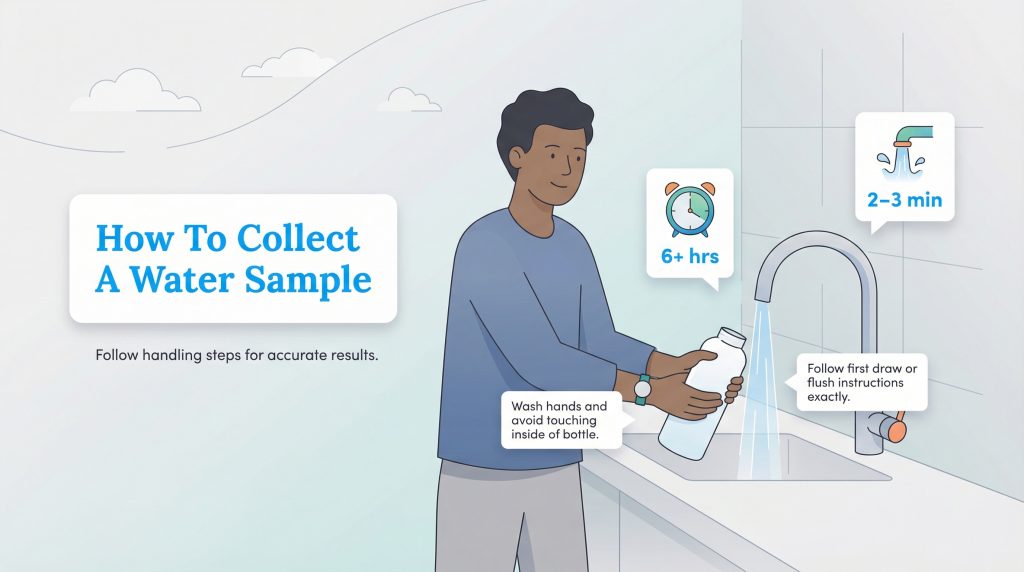
Different contaminants require entirely different collection protocols to ensure scientific accuracy. If you mishandle the testing vial, you risk contaminating the sample and generating expensive false positives. Understanding the specific threats you are looking for will dictate exactly how you fill your sample bottles. Below is a quick-reference guide to the most common household water threats, followed by detailed collection instructions.
| Pollutant | Source | Sensory Clues | Required Test Type |
|---|---|---|---|
| Lead | Aging pipes, outdated solder | Metallic taste, or none | Mail-in lab (first draw) |
| PFAS | Industrial runoff, household goods | None | Certified water testing lab |
| Coliform Bacteria | Soil, agricultural runoff, well breach | Digestive issues, sulfur smell | Bacteria culture test |
| Hard Minerals | Natural bedrock, groundwater | Cloudy water, scale buildup | DIY test strips or TDS meter |
Test Tap Water For Lead
Testing tap water for lead is essential if you live in a historically older neighborhood or your home was built prior to 1986. Lead rarely comes from the municipal treatment plant; it typically leaches directly from your own plumbing network or the utility service line buried leading up to your property. To test tap water for lead accurately, you must follow the exact EPA protocol for a “first draw” sample.
You must let the water sit undisturbed in your home’s pipes for at least six to eight hours before collecting a sample. Most homeowners perform this test first thing in the morning before anyone uses a toilet or runs a sink. Capture the very first drops that exit the tap to ensure you measure the highest possible concentration of metals that leached overnight. Always draw from the cold water tap, as hot water is corrosive and actively pulls more lead out of the plumbing, heavily skewing your baseline results.
Test For PFAS (Forever Chemicals) In Water
Per- and polyfluoroalkyl substances (PFAS) are incredibly resilient man-made industrial chemicals that do not easily break down in the environment. Thanks to extremely strong carbon-fluorine bonds, these forever chemicals accumulate in the human body over time, leading to severe health risks. Standard DIY kits absolutely cannot detect PFAS.
If you want to know if forever chemicals are in your drinking supply, you must mandate the use of specialized mail-in kits from an EPA-certified facility. Because PFAS are present in thousands of everyday consumer items like waterproof clothing, non-stick cookware, and fast-food packaging, collecting a clean sample is incredibly tedious. You must wash your hands thoroughly with basic, unscented soap and carefully avoid touching the inside of the testing vial cap to prevent accidental cross-contamination from your own skin.
Well Water Testing For Bacteria
If you rely on a private well, you are essentially acting as your own municipal utility manager. Coliform bacteria naturally occur in the environment, but their presence in your well indicates a clear pathway for highly dangerous pathogens like E. coli to enter your private supply. When collecting a sample for bacterial culture testing, your approach is the exact opposite of a lead test.
First, you must unscrew and remove the small aerator from the tip of your faucet. The tiny mesh screen inside traps household debris and frequently grows localized bacteria that falsely represents the overall health of your deep well aquifer. Once removed, wash your hands and run the cold water for at least two to three minutes to completely flush the local pipes. Fill the sterilized vial provided by your local health department or lab, seal it immediately, and keep it cool until it reaches the testing facility to ensure the bacterial culture remains viable for analysis.
7. Interpret Lab Results Against EPA Drinking Water Standards
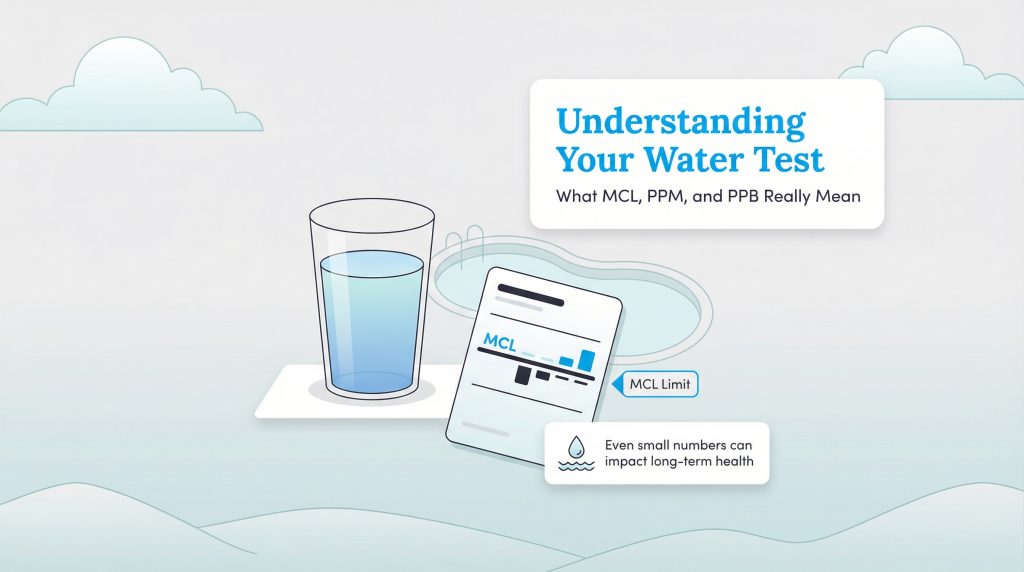
Receiving a multi-page professional lab report can feel incredibly overwhelming, especially when faced with rows of scientific acronyms and complex chemical names. The single most important figure to identify on your sheet is the Maximum Contaminant Level (MCL). This vital number represents the absolute highest, legally enforceable limit of a specific pollutant that the EPA permits in public drinking water systems. These limits collectively form the official EPA drinking water standards designed to balance health risks with municipal treatment costs.
If your test results show a chemical concentration sitting above the MCL, your water is deemed unsafe for long-term consumption and requires immediate filtration. You will typically see your results broken down into two primary measurements on the lab report:
- PPM (Parts Per Million): This is equivalent to one milligram per liter. To visualize this scale, imagine a single drop of liquid food coloring diluted into a standard 50-gallon residential bathtub.
- PPB (Parts Per Billion): This is equivalent to one microgram per liter. To picture this microscopic scale, imagine one single drop of liquid diluted across an entire massive Olympic-sized swimming pool.
Even at these microscopically tiny levels, certain toxic chemicals remain incredibly harmful over a lifetime of constant exposure. For instance, the EPA’s action level for lead is set at 15 parts per billion, though most public health experts and pediatricians advocate for a target level of absolute zero, as no amount of lead is safe for human consumption. To better interpret what your specific lab numbers actually mean for your family’s daily health, we highly recommend reviewing the CDC’s Drinking Water page.
8. Select The Proper Home Water Filtration Systems
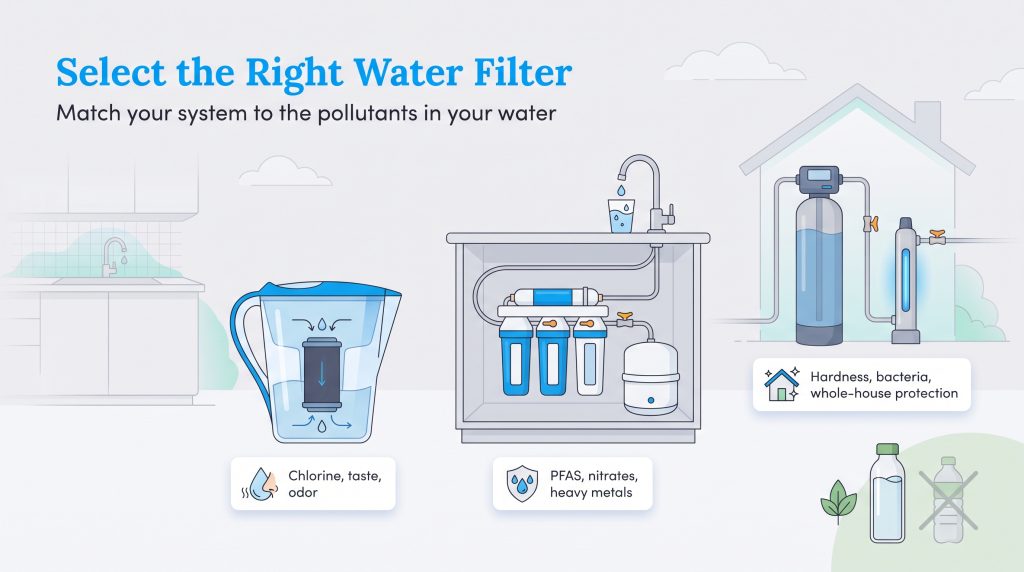
If your results confirm the presence of pollutants, do not panic. The true purpose of testing is to empower you to choose the correct, targeted home water filtration systems rather than relying on wasteful single-use plastic water bottles for everyday hydration. You must match the specific filtration technology to the exact pollutants flagged on your lab report to ensure long-term, reliable safety.
If your report highlights dangerous levels of PFAS forever chemicals, high agricultural nitrates, or heavy metals like lead, you will need to invest in a robust under-sink filtration system utilizing Reverse Osmosis (RO) technology. Standard carbon filters simply cannot strip these heavy toxins, whereas an RO semi-permeable membrane acts as an absolute physical barrier. Conversely, if your primary issue involves high municipal chlorine, VOCs, or strange tastes and odors, a simple pitcher filter utilizing a solid activated carbon block is a highly effective and affordable choice.
For broader structural household issues like extreme mineral hardness, installing a whole-home water softener prevents calcium scale buildup from prematurely destroying your expensive water heaters and dishwashers. Additionally, for private well owners battling ongoing biological contamination, installing specialized whole-home UV purifiers is the most reliable way to neutralize coliform and harmful pathogens as the water enters the house.
Learn more about sizing and choosing the best targeted setups for your household on our dedicated Water Filtration Systems page.
9. Finalizing Your Household Water Safety Strategy
Ultimately, analyzing your tap water is a relatively minor upfront investment that yields incredible peace of mind for years to come. Whether you start by evaluating your municipal Consumer Confidence Report, perform a quick baseline test with affordable DIY strips, or move forward with shipping a complex PFAS panel to an accredited lab like SimpleLab Tap Score, removing the guesswork is vital to protecting your health. By identifying exactly what flows through your plumbing and taking targeted action, you ensure that your home remains a safe, sustainable sanctuary for every single person living under your roof.
Frequently Asked Questions About Testing Water Quality
Can the EPA test my drinking water for free?
Do home water test strips actually work?
How do I test for PFAS in my drinking water?
What is the most accurate at-home water test?
How do I test well water for bacteria?
What is the difference between total dissolved solids and actual pollutants?
Do total dissolved solids (TDS) meters detect pollutants like lead?
Are free local water tests as accurate as paid certified labs?
How often should I test my well water?
Do I need to test my water if it looks and tastes completely clear?
Will a standard refrigerator water filter remove all pollutants?
About the Author

David has been an integral part of some of the biggest utility sites on the internet, including InMyArea.com, HighSpeedInternet.com, BroadbandNow.com, and U.S. News. He brings over 15 years of experience writing about, compiling and analyzing utility data.

LaLeesha has a Masters degree in English and enjoys writing whenever she has the chance. She is passionate about gardening, reducing her carbon footprint, and protecting the environment. She also recently served as President of the Board for City Sprouts (a community garden).