

Accurate Testing Is the Only Way to Ensure Your Family’s Drinking Water Is Free From Harmful Coliform and E. Coli Bacteria
Key Takeaways
- Contaminated water usually looks, smells, and tastes normal, making regular testing essential for homeowners with private wells.
- DIY test kits offer quick results for basic screening, while professional lab testing provides EPA-certified accuracy for health concerns.
- Immediate action is required if your water tests positive for bacteria, ranging from shock chlorination to installing UV disinfection systems.
There is nothing quite as unsettling as the thought of invisible contaminants lurking in the glass of water you just poured for your family. While public utilities are strictly monitored to minimize tap water bacteria, nearly 43 million Americans rely on private wells that are entirely their own responsibility to maintain, making these households uniquely vulnerable to undetected pathogens. If you want to know how to test your water for bacteria, you are taking a vital step in proactive home maintenance. In this step-by-step guide, we will cover exactly when you should check your water supply, the different types of harmful organisms to look out for, and how to accurately collect samples using convenient at-home kits or professional laboratories.
Signs of Bacteria in Drinking Water
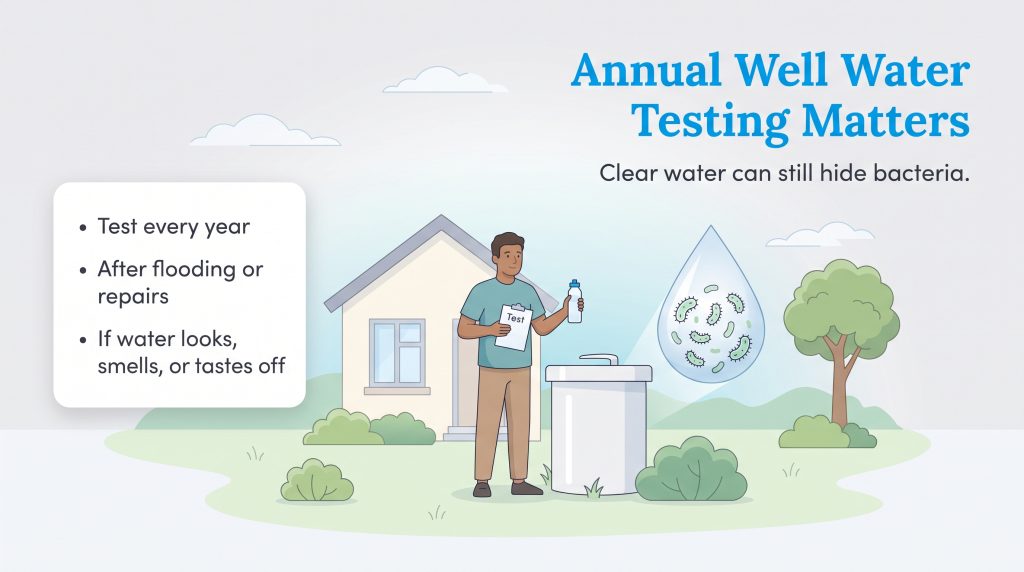
Bacteria are masters of disguise, frequently leaving no trace in the taste, smell, or appearance of your tap water. Because relying solely on your senses is a flawed strategy, establishing a consistent testing schedule is a crucial part of responsible homeownership — much like tracking your daily usage to save on your water bill. However, when contamination levels spike, your water may begin to exhibit noticeable warning signs. If you are experiencing any of these common signs of bacteria in drinking water, you must evaluate your supply immediately:
- Unexplained gastrointestinal illness: If family members, pets, or frequent house guests suffer from recurring stomach cramps, nausea, or diarrhea, your home’s tap water is the first suspect you should rule out.
- Changes in taste or odor: The sudden appearance of a harsh sulfur-like smell (often described as rotten eggs) or a distinct metallic taste strongly suggests that the physical environment inside your well has shifted.
- Visual cloudiness or sediment: If your water suddenly looks murky, discolored, or contains floating particles, surface contaminants have likely breached your plumbing system.
Types of Bacteria Found in Water Supplies
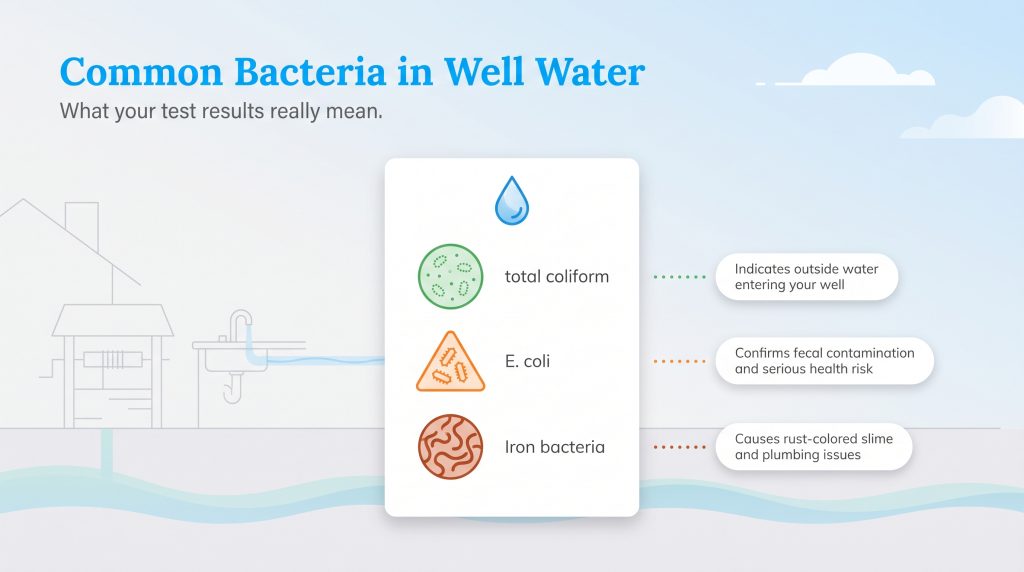
When analyzing your water quality, you will encounter scientific terminology that determines exactly how you handle a positive test result. A standard coliform bacteria water test usually provides a simple presence or absence reading to let you know if microscopic organisms have breached your plumbing. Here are the specific categories of bacteria that laboratories and home kits look for:
Total Coliforms
Total coliforms are a broad family of organisms that exist naturally in soil, surface water, and plant life. They act as a reliable environmental indicator rather than an immediate poison. While total coliforms are usually harmless on their own, their presence proves that outside surface water is finding a way into your well system, meaning more dangerous pathogens could easily follow.
Fecal Coliform and E. Coli
Escherichia coli (E. coli) is a highly dangerous subgroup of coliform found exclusively in the feces of warm-blooded animals. If an e coli water test returns a positive result, it confirms direct fecal contamination and creates a severe human health hazard that requires an immediate response.
At-Home Water Bacteria Test Kits vs. EPA-Certified Labs
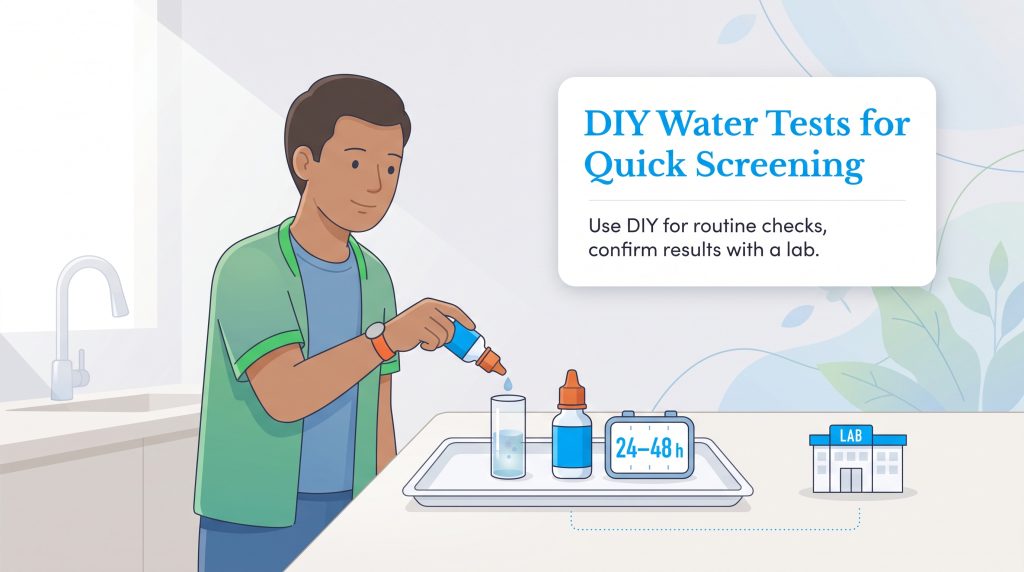
When deciding how to check your water quality, you generally choose between a rapid at-home water bacteria test kit and a comprehensive analysis from an EPA certified water testing lab. Both testing methods serve a vital purpose in home maintenance, but they are designed for very different scenarios.
A DIY home bacteria test kit is your most accessible first line of defense for routine annual checks. These kits provide a quick indicator designed to alert you to a potential problem, usually through a simple color-changing liquid or test strip. Conversely, submitting a sample to a professional laboratory delivers the precise, legally recognized data required to treat complex contamination. You should always opt for an official lab panel if your initial DIY screen returns a positive result, if your family is actively experiencing illness, or if you need official documentation to close a real estate transaction.
| Testing Method | Cost | Turnaround Time | Accuracy Level | Best Use Case |
|---|---|---|---|---|
| DIY Water Test Kit | $15 — $30 | 24 to 48 hours | Moderate (Simple Pass/Fail) | Routine annual screening |
| EPA-Certified Laboratory | $30 — $100+ | 2 Days to 2 Weeks | High (Precise Bacterial Counts) | Official transactions and health scares |
Step-by-Step: How to Test Your Water for Bacteria at Home
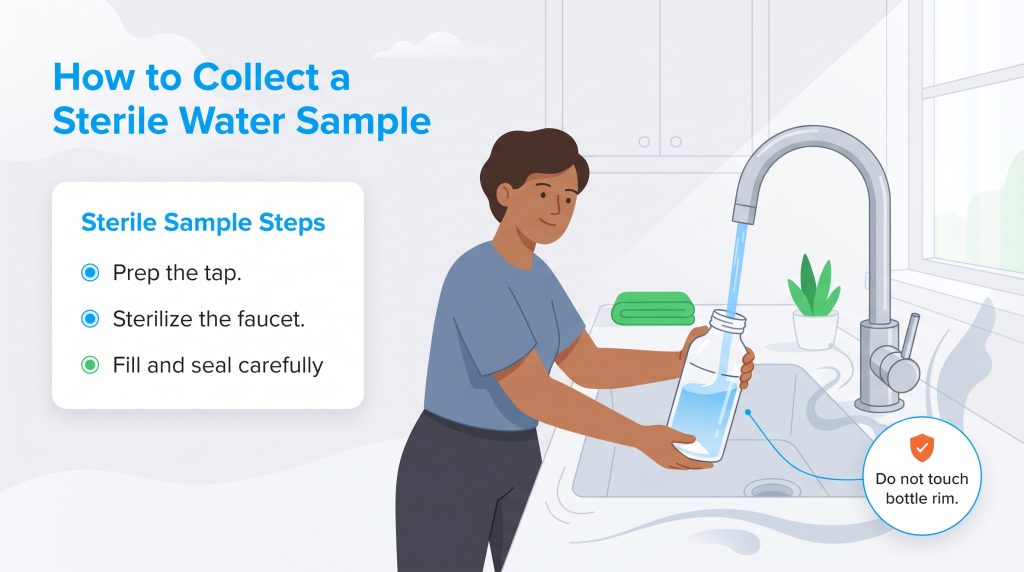
Using an at-home water bacteria test kit is an easy way to establish basic peace of mind. However, water testing supplies are incredibly sensitive. A single stray fingerprint on the rim of the bottle or a cough across the room can introduce outside germs, ruining the sample and triggering an expensive false positive. To guarantee your results reflect your actual groundwater rather than everyday germs on your hands, you must meticulously follow these steps:
- Prep and sterilize the faucet: Select a standard indoor cold-water faucet (avoid swivel faucets, leaky taps, or outdoor hoses). Carefully unscrew and remove the metal aerator screen from the tip of the faucet, as bacteria routinely collect and grow on these mesh filters. Clean the exposed rim thoroughly using a diluted bleach solution or rubbing alcohol.
- Flush the line: Turn on the cold water and let it run continuously for two to five minutes. Do not use the hot water line. This extended flushing clears out stagnant water sitting in your indoor pipes so you can draw a fresh sample directly from the underground well.
- Fill the vial carefully: Wash your hands thoroughly with soap. Open the sterile container, ensuring your fingers never touch the inner rim of the bottle or the inside of the cap. Reduce the water flow to a gentle, pencil-thin stream to prevent splashing. Fill the bottle exactly to the indicated fill line without overflowing.
- Incubate and read the results: Seal the vial tightly and incubate it at room temperature, out of direct sunlight, for 24 to 48 hours as directed by the manufacturer. If the liquid changes color (for example, from purple to yellow), microorganisms are actively multiplying, indicating a positive result.
Step-by-Step: Sending a Sample to an EPA-Certified Water Testing Lab
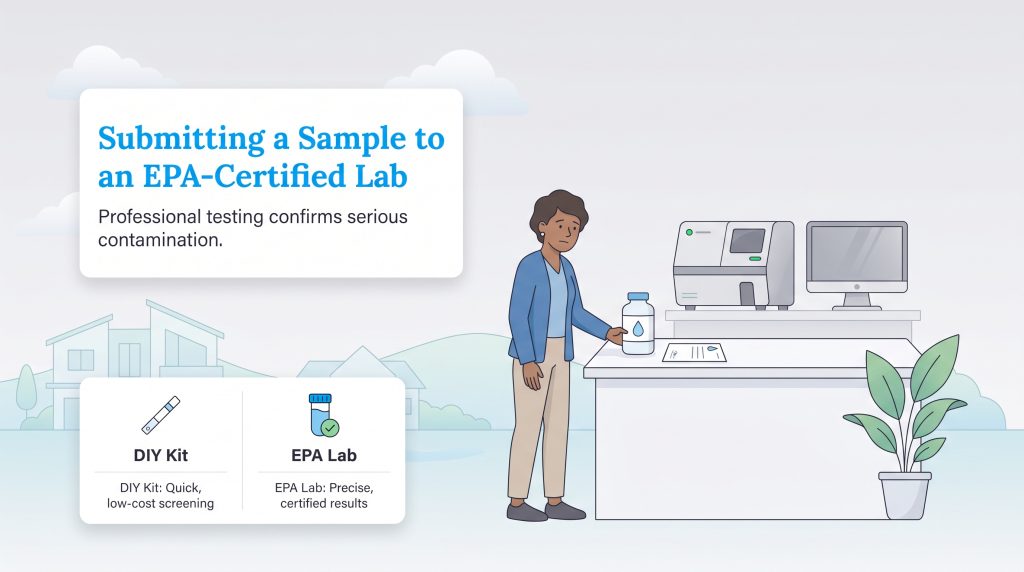
For definitive answers and exact bacterial counts, you must send your sample to an EPA certified water testing lab. Professional panels utilize highly sensitive equipment to give you precise data, identifying the exact severity of the contamination so you can confidently select the correct long-term filtration hardware.
- Source a certified laboratory: Start by contacting your local health department, which frequently provides sterile collection bottles and subsidized lab services. Alternatively, search the EPA’s official website for a directory of certified drinking water laboratories in your specific state.
- Obtain official sterile sample bottles: Pick up the proper collection vials directly from the lab or health department. You will likely notice a small amount of white powder inside the vial — do not rinse this out, as it is a required chemical preservative.
- Collect the sample properly: Follow the exact same faucet sterilization and flushing procedures outlined for home kits. Remove the aerator, sanitize the tap, flush the cold water line for several minutes, and fill the bottle without letting anything touch the inside of the cap or rim.
- Transport the sample immediately: Seal the bottle tightly and place it in a cooler on ice. Most professional labs require you to deliver the chilled sample within 24 hours of collection to ensure the bacteria do not die off or multiply artificially before analysis. If you are shipping the sample, ensure you use overnight delivery and include ice packs according to the laboratory’s specific packing instructions.
Well Water Testing for Bacteria: How Often to Test Well Water
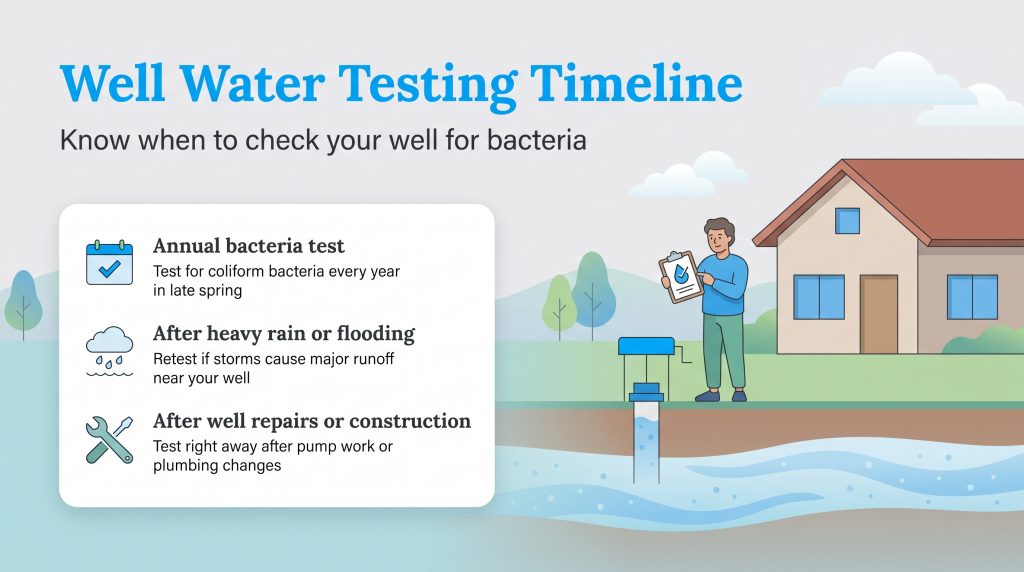
If you rely on a municipal city supply, your water is heavily regulated by the government. However, private well owners are not protected by the safe drinking water act, meaning you are entirely responsible for your own water safety. Understanding how often to test well water is critical for protecting your household.
The Centers for Disease Control and Prevention (CDC) recommends checking your well annually for coliform bacteria, ideally in the late spring when surface runoff is highest. Beyond your baseline annual check, well water testing for bacteria is mandatory immediately following any of these specific scenarios:
- Heavy rainfall or flooding: Intense storms can cause surface water to seep into your well cap or casing, dragging bacteria from nearby agricultural runoff or animal waste along with it.
- Well repairs or construction: Whenever you open your home’s pipes, replace a well pump, or conduct construction near your wellhead, you risk introducing outside contaminants into a closed system.
What to Do If Your Water Tests Positive for Bacteria
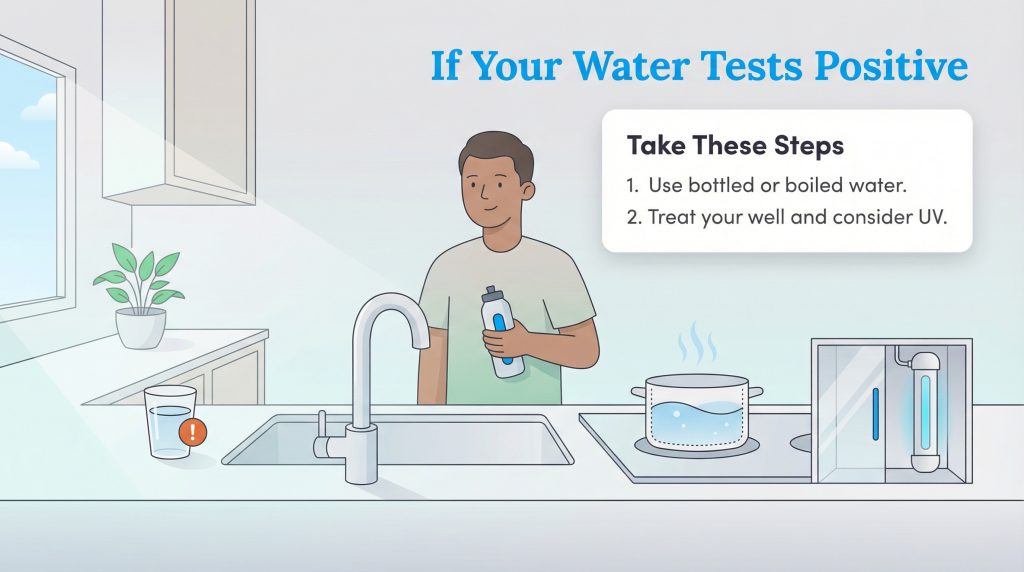
Receiving a positive test result can be deeply alarming, but it is a highly solvable home maintenance issue. Your immediate priority is preventing illness, which means taking decisive safety precautions before attempting to fix the well.
First, immediately switch your household to bottled water for all drinking, cooking, food preparation, and teeth brushing. If bottled water is unavailable, you must bring your tap water to a rolling boil for at least one full minute to kill active pathogens before ingestion.
Once you secure safe drinking water for the short term, you must aggressively address the source of the contamination. The standard first-line treatment for a compromised well is executing a shock chlorination flush. This DIY-friendly mitigation process involves circulating a highly concentrated bleach solution down into the well casing and throughout your home’s entire plumbing network to obliterate the bacterial bloom. Following the shock chlorination treatment, you must thoroughly flush the system and re-test the water after a few days to verify the bacteria are permanently gone.
If shock chlorination does not permanently resolve the issue, or if your well is frequently compromised by seasonal surface runoff, you need to upgrade your plumbing infrastructure. Installing a point-of-entry home water filtration system equipped with an ultraviolet (UV) purifier is widely considered the gold standard for long-term residential protection.
Next Steps for Securing Your Water Supply
Ensuring your home enjoys a continuous flow of clean, potable water is an ongoing commitment rather than a one-and-done chore. Groundwater quality shifts constantly with the changing seasons, the gradual aging of your well casing, and heavy weather events in your local environment.
By establishing a strict annual maintenance calendar, you take decisive control of your family’s health and property value. We highly recommend setting a recurring yearly calendar reminder on your smartphone to perform an at-home water bacteria test kit screening every spring. Keeping all past lab reports logged securely in a physical home maintenance binder allows you to quickly spot shifting trends in your water quality, ensuring you remain completely proactive and confident in the safety of your tap water.
Frequently Asked Questions About Testing Your Water for Bacteria
How do you check for tap water bacteria?
You can check for tap water bacteria by using an at-home water bacteria test kit for a rapid preliminary screen, or by collecting a sterile sample and mailing it to an EPA-certified water testing lab for an official, highly accurate analysis.
What is the most accurate at-home water bacteria test kit?
While many DIY kits provide reliable pass or fail results for coliforms, no at-home water bacteria test kit is as accurate as a professional laboratory analysis. For the most dependable home screening, choose comprehensive test kits that specifically identify both total coliforms and E. coli, and ensure you follow the sterile collection instructions perfectly.
How often should I test my well water for bacteria?
You should test your private well water for coliform bacteria at least once a year, ideally in the late spring. You also need to conduct immediate testing following major storm flooding, significant plumbing repairs, or if you notice distinct water contamination symptoms like changes in the taste, odor, or color of your tap water.
Does boiling water kill coliform bacteria and E. coli?
Yes, bringing your water to a rolling boil for at least one full minute is highly effective at killing coliform bacteria, E. coli, and other harmful pathogens. This is a critical emergency step to take immediately if your water tests positive for contamination.
How much does an EPA-certified water bacteria test cost?
Submitting a sample to an EPA certified water testing lab typically costs between $30 and $100 for a dedicated bacteria panel. If you require a broader analysis that also checks for heavy metals—such as when you need to test your water for lead—the price will increase significantly.
Can standard water filters remove bacteria from drinking water?
No, standard pitcher filters and basic refrigerator carbon filters are not designed to remove bacteria from drinking water. They only improve taste and reduce basic chemical impurities like chlorine. To effectively neutralize microorganisms, you must use a dedicated ultraviolet (UV) purification system, a reverse osmosis setup, or shock chlorination.
What is the difference between coliform and E. coli?
Total coliform bacteria belong to a large family of mostly harmless organisms found naturally in soil and plant matter; their presence acts as an environmental indicator that surface water is breaching your well. E. coli is a dangerous subgroup found in the digestive tracts of warm-blooded animals, meaning its presence confirms hazardous fecal contamination in your drinking water.
Can I test my city water for bacteria?
Yes, you can test municipal city water, though finding bacteria is incredibly rare due to aggressive chemical treatments and continuous daily monitoring by public facilities. You generally only need to test a city supply if a main line breaks in your neighborhood or an official “boil water advisory” is publicly issued.
About the Author

LaLeesha has a Masters degree in English and enjoys writing whenever she has the chance. She is passionate about gardening, reducing her carbon footprint, and protecting the environment. She also recently served as President of the Board for City Sprouts (a community garden).

David has been an integral part of some of the biggest utility sites on the internet, including InMyArea.com, HighSpeedInternet.com, BroadbandNow.com, and U.S. News. He brings over 15 years of experience writing about, compiling and analyzing utility data.