

Understanding The Chemistry Behind Softer, Cleaner Water For Your Home
Key Takeaways
- Protect your plumbing and appliances by understanding how ion exchange replaces damaging minerals with harmless sodium or potassium ions.
- Master the mechanics of resin beads and how they act like magnets to trap scale-causing contaminants.
- Keep your system efficient with our simple guide to regeneration cycles and maintenance schedules.
Dealing with crusty white scale on your faucets, faded laundry, and perpetually dry skin can be incredibly frustrating. These are classic signs of hard water, and the permanent solution lies in understanding exactly how ion exchange water systems work. While the terminology might sound like a daunting chemistry experiment best left to professionals, the water softening process is remarkably straightforward and safe. By actively treating the water right where it enters your home, this reliable technology improves your daily water quality, protects your expensive water-using appliances, and ultimately saves you significant money on energy bills and plumbing repairs.
What Is Ion Exchange?
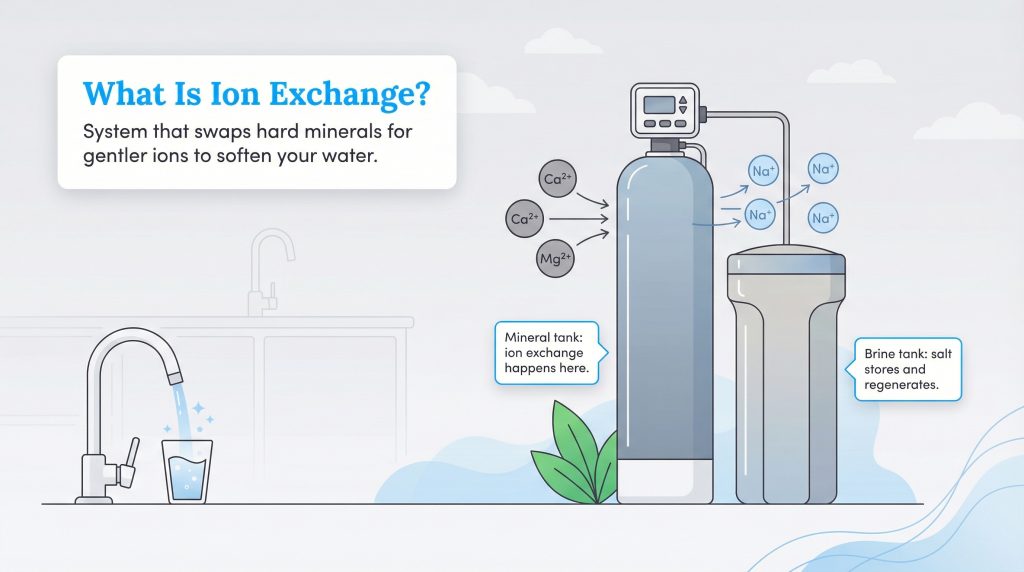
An ion exchange water system is a highly specialized, whole-house treatment setup designed to actively trade unwanted, damaging minerals in your water supply for harmless ones. In simple terms, an “ion” is an atom or molecule that carries a positive or negative electrical charge. This specific charge allows the system to act like a powerful magnet.
Unlike basic mechanical filters that try to block physical debris using a mesh screen or pleated paper, this process operates entirely on a molecular level. It relies on a chemical swap to strip impurities — primarily calcium and magnesium — from your water supply before it ever reaches your faucets, safely trading them for sodium or potassium.
The Core Components Of An Ion Exchange System
To fully grasp how this transformative process functions, it helps to understand the physical hardware. Most residential setups look like two distinct tanks sitting side-by-side in a garage or utility closet. Working together, these components create a self-sustaining loop that continuously provides your home with high-quality, soft water.
The Mineral Tank And Resin Beads
The mineral tank is the primary, tall vertical cylinder where the actual water softening and chemical exchange occurs. Inside, thousands of tiny, highly porous plastic spheres known as ion exchange resin wait for incoming water. These specialized beads act as an electrical sponge, increasing the surface area needed to trap scale-causing minerals.
The Brine Tank
Sitting next to the mineral tank, the brine tank is typically a shorter bin that stores a high-concentration salt or potassium solution. Its essential function is to provide the liquid required to routinely clean and recharge the resin beads during the regeneration cycle. If this tank runs empty, your system loses the ability to soften your water.
The Control Valve
Mounted directly on top of the mineral tank, the control valve acts as the digital brain of your water softener. It continuously meters your household water usage and automatically triggers the system’s vital cleaning cycle. This smart component ensures you always have continuous soft water while actively minimizing wasted salt and wastewater.
Step-By-Step The Water Softening Process
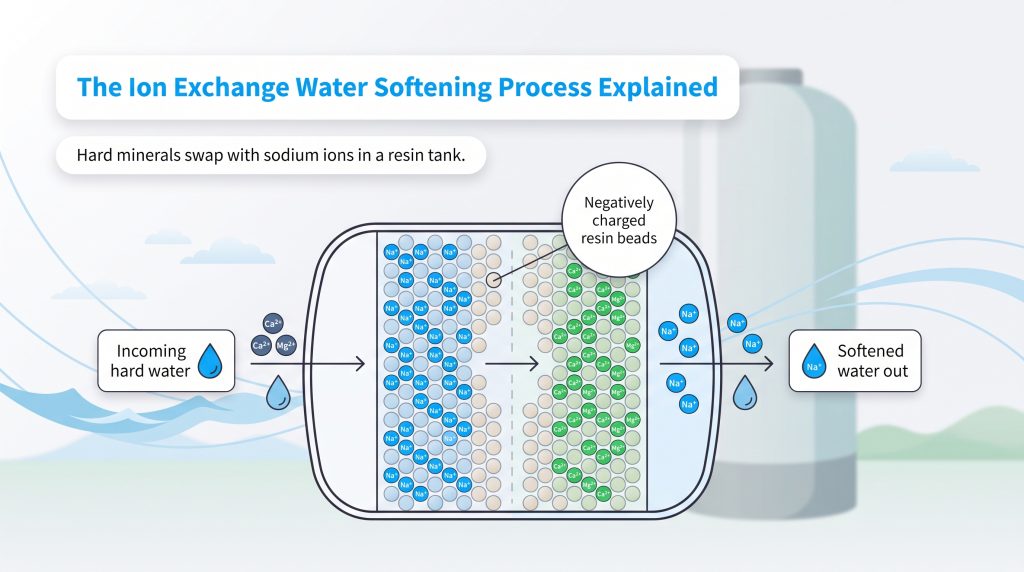
The secret behind this highly efficient treatment process involves the physical structure and electrical pull of the resin bed. To grasp the mechanics of how these systems remove calcium and magnesium, you need to understand how these elements interact sequentially inside the mineral tank:
- The Electrical Baseline: The resin beads are manufactured to carry a permanent negative electrical charge. Because opposites attract in chemistry, these negatively charged beads securely grip positively charged sodium ions before the softening process even begins.
- The Chemical Swap: When hard water flows into the tank, it introduces calcium and magnesium. These specific hard minerals carry a very strong +2 electrical charge, making them much stronger magnets than the single-charge sodium ions resting on the beads.
- The Clean Output: As the incoming hard water washes over the resin bed, the beads instantly grab the hard minerals, forcing a molecular trade. The scale-causing minerals remain securely trapped inside the tank, while harmless, soft water exits the system and flows smoothly to your faucets.
Cation Vs Anion Exchange: What’s The Difference?
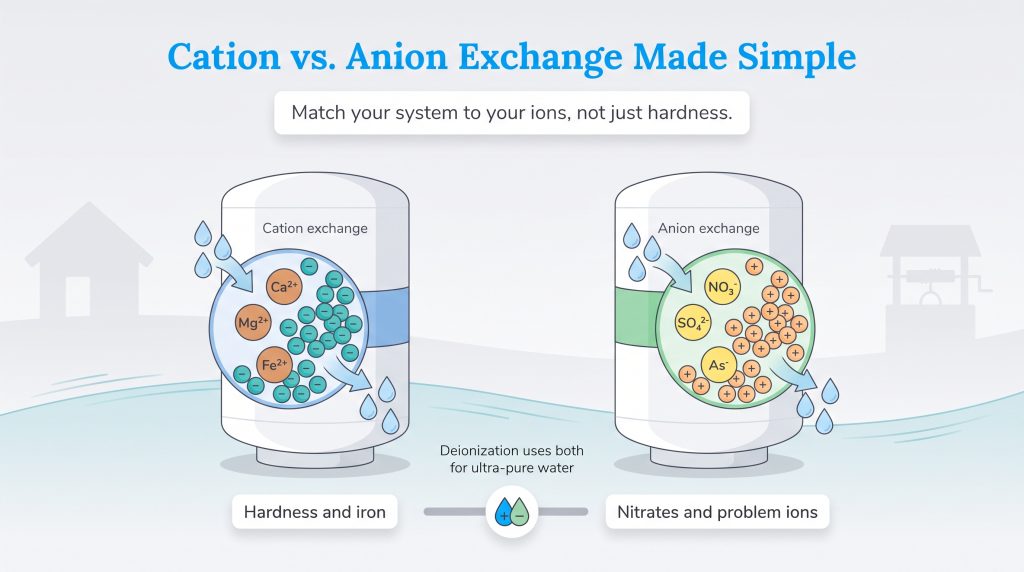
While basic water softening is the most common residential application, the exact type of system you need depends entirely on your unique water chemistry. Understanding the difference between cation exchange and anion exchange reveals distinct mechanisms tailored for entirely different contaminants.
| Resin Type | Electrical Charge | Target Contaminants | Common Use Case |
|---|---|---|---|
| Cation Exchange | Negatively Charged | Positively charged ions (Calcium, Magnesium, Iron) | Residential water softening and iron reduction. |
| Anion Exchange | Positively Charged | Negatively charged ions (Nitrates, Sulfates, Arsenic) | Targeted well water treatment and removing nitrates. |
Cation exchange uses negatively charged resin beads to attract positively charged contaminants, making it the universally accepted method for treating hard water and eliminating heavy metals like iron. On the flip side, anion exchange relies on positively charged resin to pull negatively charged impurities out of your water supply. This method is primarily chosen to tackle specific environmental hazards often found in well water. When highly specialized systems combine both methods, the process is known as deionization, which strips away virtually all ionizable particles to create ultra-pure water.
The Regeneration Cycle Explained
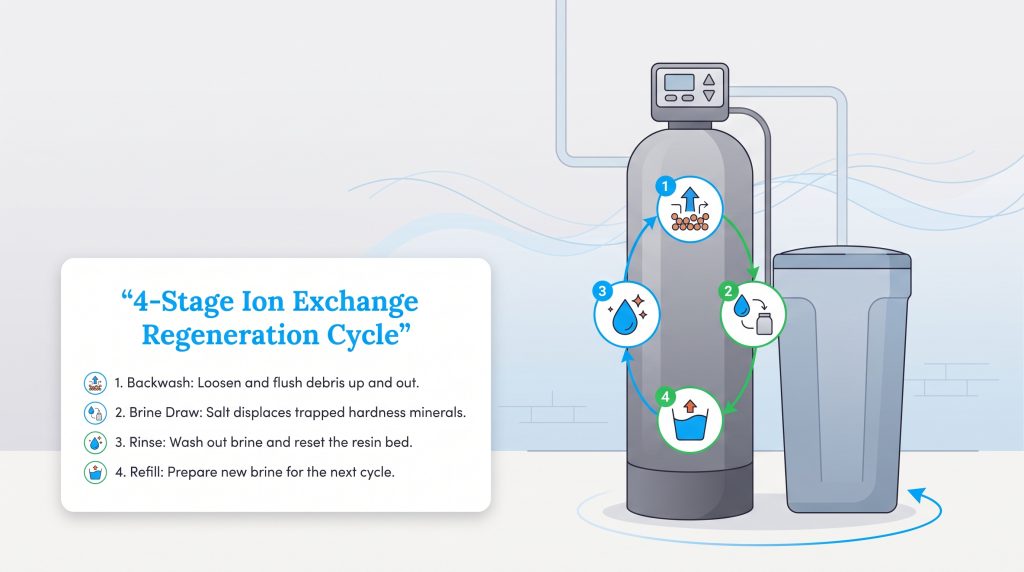
Eventually, the resin bed inside your mineral tank becomes completely saturated with hard minerals and can no longer capture new ones. To resolve this, the system’s control valve triggers the regeneration cycle. This fully automated cleaning sequence uses the strong salt solution stored in your brine tank to forcibly wash the resin bed and restore its negative charge.
To ensure this cycle always executes correctly, you must proactively manage your salt levels. Check your brine tank monthly and add fresh salt whenever the pellets drop below the halfway mark or the liquid water level is visible above the salt line. During the cycle itself, your system progresses through four essential phases:
- Backwash: The system forces the flow of water backward up through the mineral tank to actively expand the resin bed. This aggressive upward flush acts as a physical cleaning, washing accumulated dirt, sediment, and heavy iron particles directly down your utility drain.
- Brine Draw: The unit pulls the concentrated, salty brine solution slowly from the adjacent tank into the main mineral tank. As this dense, sodium-rich liquid cascades over the resin beads, the massive influx of salt molecules displaces the stubborn calcium and magnesium, forcing them to let go.
- Rinse: Fresh water flushes downward through the tank to rinse away the leftover brine and newly detached hardness minerals. This dual-speed rinse ensures no salty taste enters your home’s water supply and settles the resin back into a tightly packed formation for daily service.
- Refill: A meticulously measured amount of fresh, softened water is sent back into the brine tank. This essential final step pre-dissolves a new batch of salt pellets over several hours, guaranteeing the system is fully prepared with fresh brine for the next regeneration.
Ion Exchange Vs Reverse Osmosis
When homeowners begin researching water treatment, they often find themselves comparing reverse osmosis vs ion exchange. The truth is, these technologies serve entirely different purposes and are rarely considered direct competitors. Ion exchange is designed strictly for whole-house utility and softening. It operates exactly where the municipal water main enters your home, acting as a reliable shield that targets scale-causing hardness to protect your plumbing infrastructure.
Conversely, reverse osmosis (RO) is a robust point-of-use purification method that physically filters out a much broader spectrum of contaminants. By forcing tap water through an ultra-dense membrane, RO systems strip out dangerous heavy metals, toxic forever chemicals (PFAS), chlorine, and bacteria, leaving you with bottled-quality drinking water right at your kitchen sink. For the ultimate home setup, they work brilliantly together. Your softener defends your home’s pipes and delicate RO membrane from hard scale, while the under-sink RO system polishes that softened water for flawless drinking.
Choosing The Right Ion Exchange System For Your Home
Transitioning to a home setup requires a bit of upfront planning, an honest assessment of your plumbing infrastructure, and a clear understanding of the long-term benefits. By correctly sizing your equipment and committing to routine maintenance, you can maximize your investment while keeping your home highly efficient.
System Sizing And Water Hardness
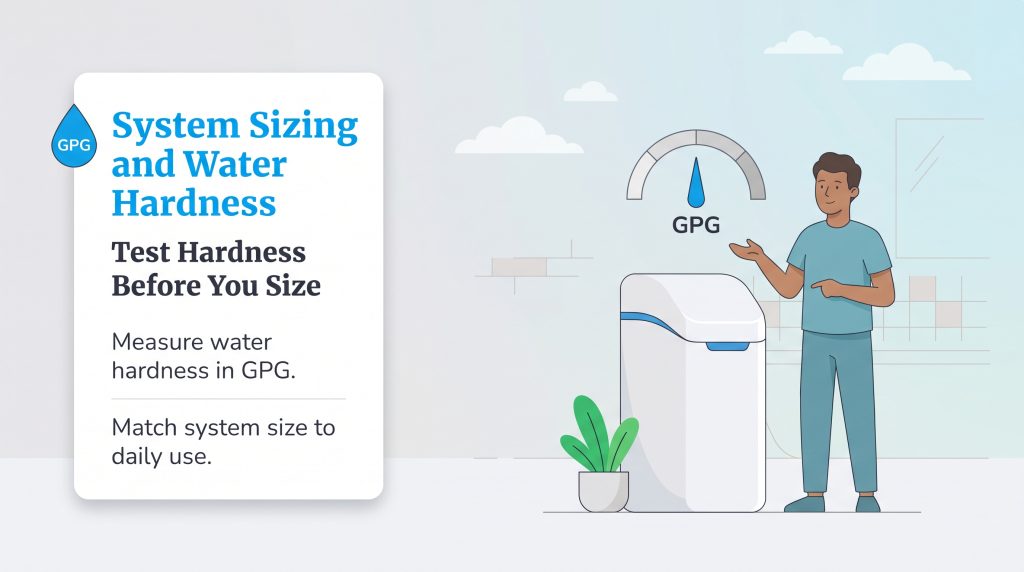
Before purchasing any equipment, you must accurately determine your home’s exact hardness level to avoid underperforming or wildly oversized machinery. In North America, water hardness is universally measured in Grains Per Gallon (GPG). To put that into perspective, one single grain of hardness equals exactly 17.1 milligrams of calcium or magnesium dissolved in one liter of water. Pinpointing your precise GPG is a non-negotiable first step because it dictates the total grain capacity of the equipment you need to buy to keep up with your household’s daily demand.
Maintenance Requirements
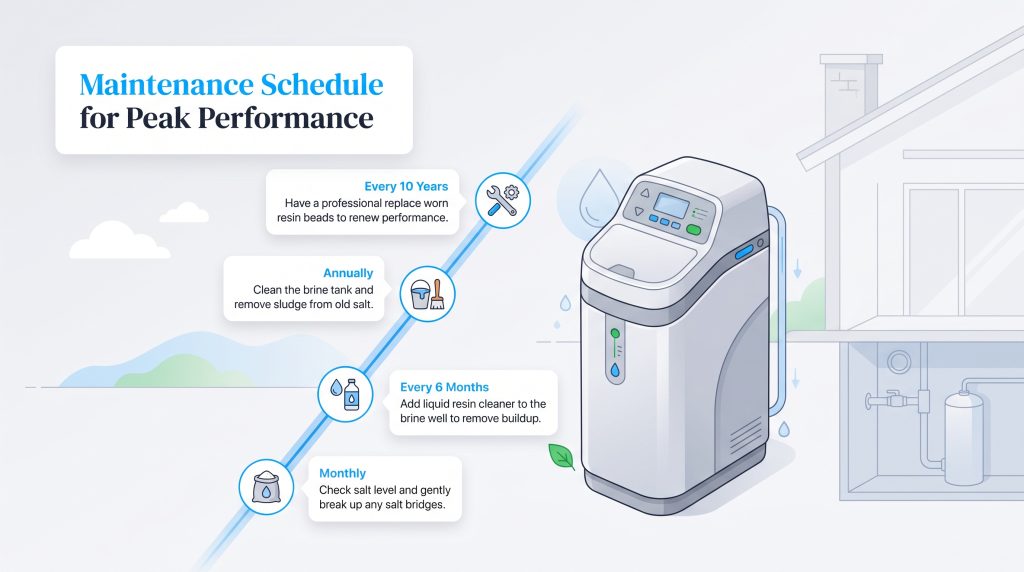
Even the most advanced models on the market are not entirely “set it and forget it” appliances. To keep your unit running smoothly and protect your investment, you need a proactive approach. Committing to routine maintenance prevents sudden breakdowns and ensures efficient salt usage.
- Monthly: Check your salt levels and use a broom handle to gently poke the salt, breaking up any hard “salt bridges” that form over the water line.
- Every 6 Months: Pour a specialized liquid resin cleaner down the brine well tube to strip away stubborn buildup and restore the beads’ magnetic pull.
- Annually: Clean the brine tank by scooping out accumulated sludge from evaporated salt bags and washing the interior with a mild soap solution.
- Every 10 Years: Have a professional vacuum out the old, physically degraded resin beads and pour in a fresh batch to completely revitalize your aging system.
Eco-Conscious Benefits And Environmental Impact
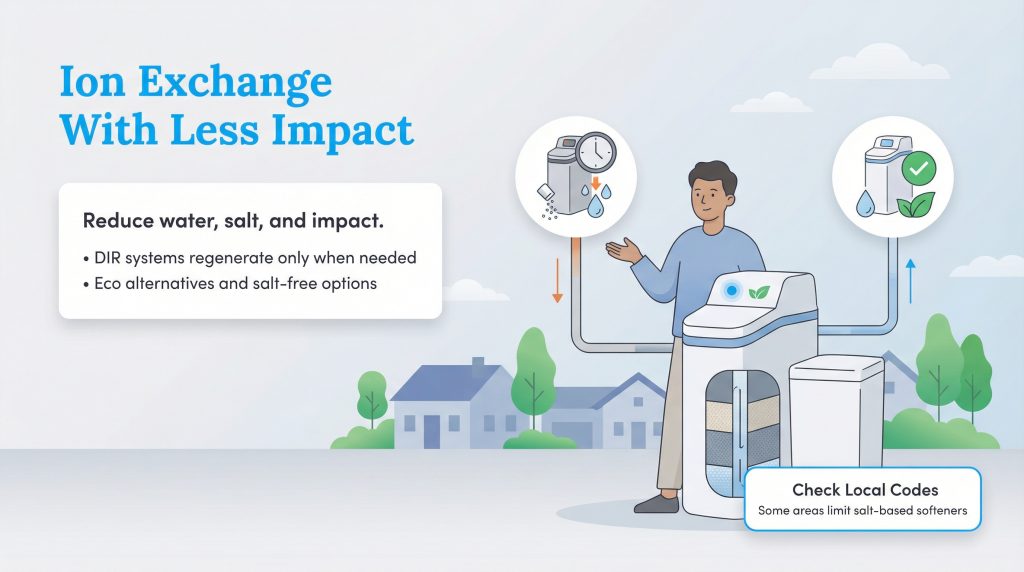
Upgrading to a modern, energy-saving option provides fantastic perks for both your wallet and the environment. By embracing an environmentally mindful choice, you gain several tangible benefits that make your home significantly more sustainable:
- Extended appliance lifespan: Soft water stops thick scale buildup from ruining the internal mechanics of your dishwasher and washing machine.
- Lower energy bills: Clean, scale-free water heater elements do not have to work nearly as hard, drastically reducing the electricity or natural gas needed to warm your water.
- Reduced chemical cleaner usage: Soft water lathers effortlessly, meaning you can cut back significantly on harsh environmental pollutants like strong detergents and chemical descalers.
To proactively curb unnecessary water waste, nearly all modern units employ Demand-Initiated Regeneration (DIR) technology. Instead of blindly flushing the system on a fixed timer, DIR units use a digital meter to track your exact water usage gallon by gallon. The computer calculates your remaining capacity and regenerates only when absolutely necessary, cutting your yearly salt purchases and wastewater production by up to half.
Weighing The Benefits And Trade-Offs
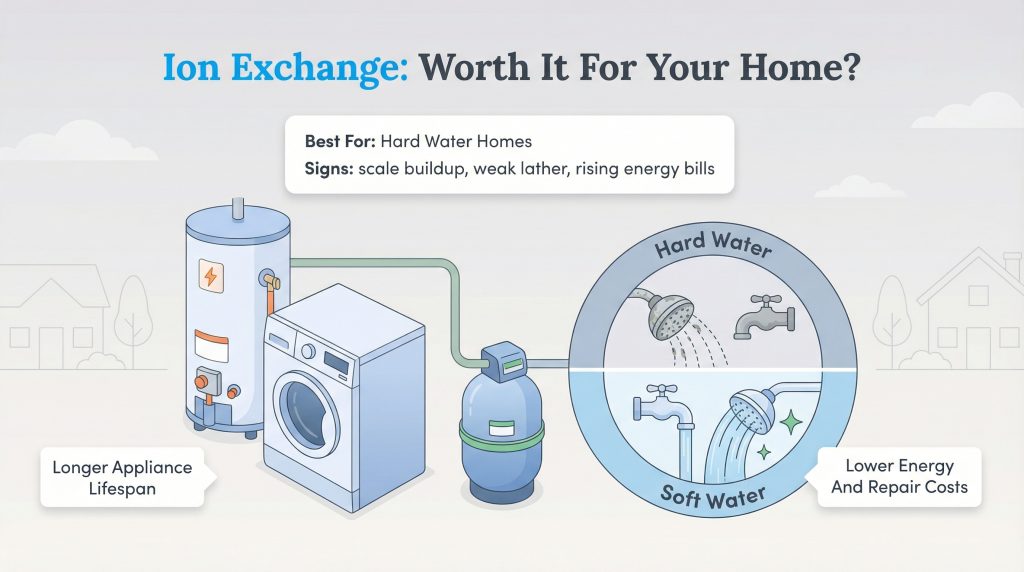
Successfully transitioning to a home setup requires a bit of upfront financial planning, but if your water hardness tests above 7 GPG, the installation quickly pays for itself. Hard water scale creates a thick, rocky insulating barrier on internal plumbing elements, forcing appliances to burn significantly more utility power. By committing to this technology, you proactively defend your most expensive household assets against premature failure, trading a bit of physical space and monthly salt purchases for long-term peace of mind.
Preparing Your Plumbing For An Installation
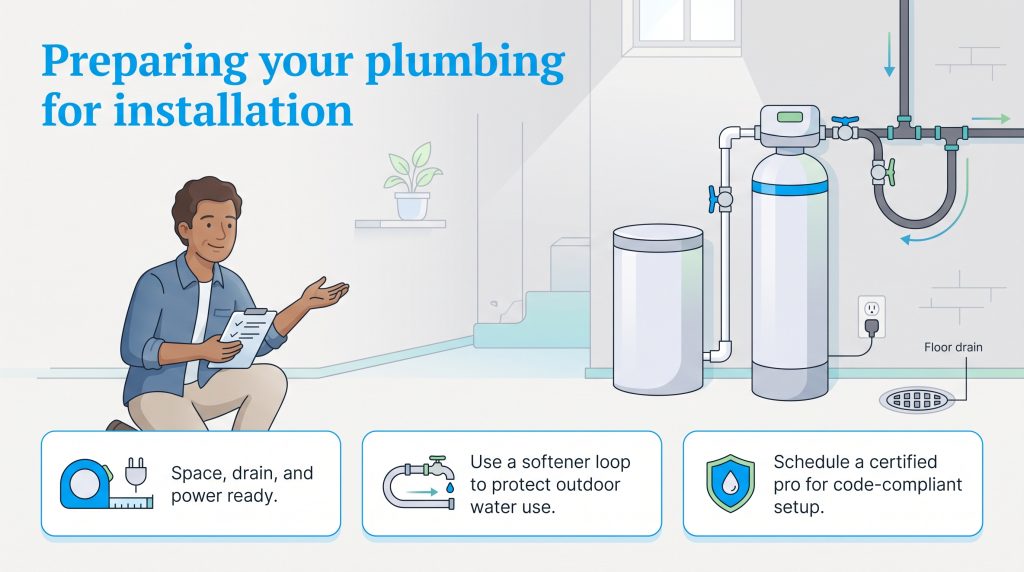
To properly prepare your home for a new system, take immediate action to evaluate your available space. Check your utility room, basement, or garage to ensure you have enough square footage for a two-tank setup, access to a dedicated utility floor drain, and proximity to a standard 110-volt electrical outlet to power the control head. Next, inspect your current plumbing configuration to determine if your builder proactively installed a dedicated “softener loop” to smartly isolate the treated water from your outdoor hose bibs — you definitely do not want to waste money softening the water you use on your lawn. Finally, contact a certified water specialist to audit your exact household pressure levels and coordinate a professional installation that complies with all local plumbing codes.
You can discover more proven ways to protect your essential plumbing infrastructure in our broader guide to residential water services, or learn exactly how major efficiency upgrades reduce costs in our comprehensive guide on how to save on your water bill.
Learn more about home water filtration systems to ensure you select the perfect technology for your family’s unique needs.
Investing In Long-Term Water Quality
Taking control of your home’s water quality is one of the most impactful decisions you can make for both your daily comfort and your overall utility budget. By understanding exactly how these ion exchange systems identify, capture, and flush away damaging minerals, you empower yourself to maintain a highly efficient, scale-free home. With proper system sizing, a bit of routine maintenance, and the right salt stocked in your brine tank, your investment will reliably protect your plumbing and appliances for decades to come.
Frequently Asked Questions About Ion Exchange Systems
Do ion exchange water systems make drinking water salty?
No, a properly functioning system does not make your drinking water taste salty. While the process does substitute hard minerals with sodium ions, the amount added is quite low. For moderately hard water, it adds approximately 8 milligrams per liter of sodium, which is entirely negligible for most people unless you are on a strictly supervised low-sodium medical diet.
How often do I need to add salt to my ion exchange system?
You should physically inspect your brine tank once a month. As a general rule, you will need to add a bag of salt every six to eight weeks, depending on your household’s daily water usage and your baseline water hardness. Always ensure the salt remains at least halfway full and sits comfortably above the liquid water line.
Can ion exchange filters remove chlorine and heavy metals?
Standard residential cation systems can effectively capture specific positively charged heavy metals like iron and barium that often accompany hard well water. However, they are fundamentally incapable of removing uncharged chemicals, municipal chlorine, or complex hazards like PFAS. You will need supplemental activated carbon filtration or a reverse osmosis setup to tackle those specific modern contaminants.
Does ion exchange make water safe to drink?
While ion exchange works wonderfully to soften water by actively trading hard minerals for sodium, it is not a purification method designed to make microbiologically unsafe water safe to drink. If your water supply is contaminated with harmful bacteria, viruses, or hazardous industrial chemicals, you will need a dedicated filtration setup, such as reverse osmosis or UV purification, to ensure your drinking water is completely safe for consumption.
How much does an ion exchange water system cost?
The total cost can vary widely depending on the grain capacity required, the specific brand, and local labor rates. Generally, homeowners can expect to pay anywhere from $800 to $2,500 for a standard residential system, including professional installation. High-end smart systems that integrate with home Wi-Fi networks or feature dual-tank designs for uninterrupted soft water can push the price point closer to $3,500.
How long does an ion exchange water softener resin lifespan last?
High-quality cross-linked resin beads generally last between 10 to 15 years under normal residential conditions before needing replacement. However, heavy concentrations of chlorine or chloramine in municipal city water can prematurely oxidize and break down the porous beads, reducing their efficiency and overall operational lifespan significantly.
What is the difference between water demineralization vs deionization?
Demineralization is a broad umbrella term for removing common mineral salts from water, which technically includes standard household cation exchange softening. Deionization is a far more extreme, rigorous purification process that uses a precise combination of both cation and anion resins to strip away virtually all ionizable particles, yielding the ultra-high-purity water strictly required for medical laboratories and sensitive manufacturing.
About the Author

LaLeesha has a Masters degree in English and enjoys writing whenever she has the chance. She is passionate about gardening, reducing her carbon footprint, and protecting the environment. She also recently served as President of the Board for City Sprouts (a community garden).

David has been an integral part of some of the biggest utility sites on the internet, including InMyArea.com, HighSpeedInternet.com, BroadbandNow.com, and U.S. News. He brings over 15 years of experience writing about, compiling and analyzing utility data.