

Identifying Hard Water Early Can Save Your Appliances from Mineral Damage and Keep Your Daily Water Usage Highly Efficient
Key Takeaways
- Look for crusty white buildup on plumbing fixtures and spotty residue on clean dishes to spot the problem early.
- Perform a simple DIY soap test at home using an empty bottle and liquid soap to quickly gauge your water hardness.
- Review the grains per gallon scale to understand your water’s exact mineral content before investing in eco-conscious softening systems.
Moving into a new place and setting up utilities after a move is stressful enough without the sudden discovery of dry skin and persistently cloudy dishes. If you suspect your home’s tap might be the culprit behind these daily frustrations, you are certainly not alone. Learning how to know if you have hard water is the first vital step toward reclaiming your plumbing system and improving your daily routine. This guide will walk you through the eight most common signs of hard water in your home, provide simple DIY testing methods you can perform today, and explain the science behind the hardness scale so you can confidently choose the best eco-conscious treatment for your household.
What Exactly Is Hard Water?
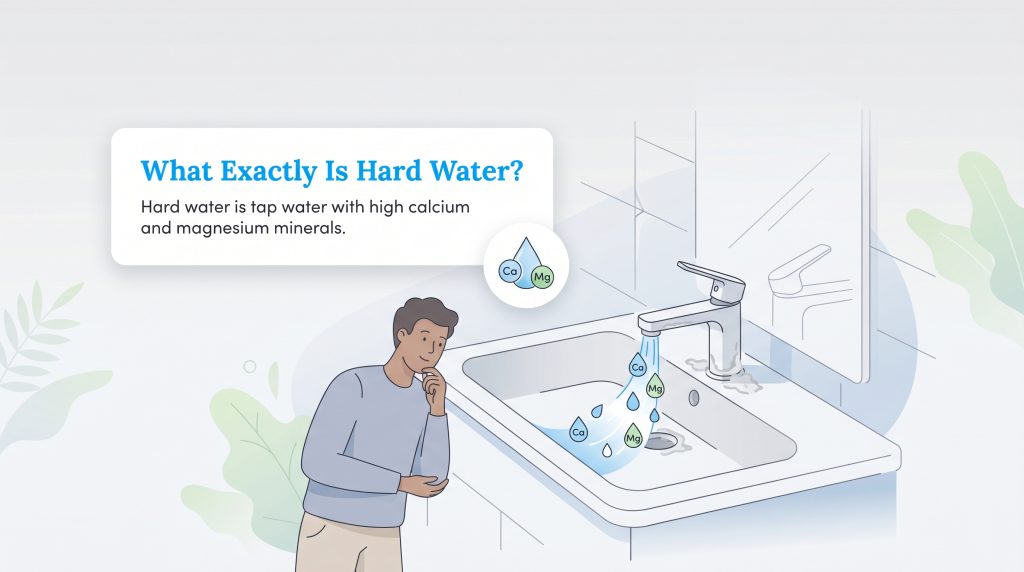
Figuring out how to know if you have hard water simply comes down to understanding the exact mineral concentration flowing through your pipes. When you ask what hard water is and what it looks like, you are essentially looking for the physical, crusty residue left behind by those two primary earth minerals.
While you might feel singled out by these frustrating sink deposits, hard water is common across much of the United States, especially in areas where groundwater passes through limestone or other mineral-rich rock. Managing this heavy calcium and magnesium presence is a completely normal part of homeownership.
8 Common Signs of Hard Water in Your Home
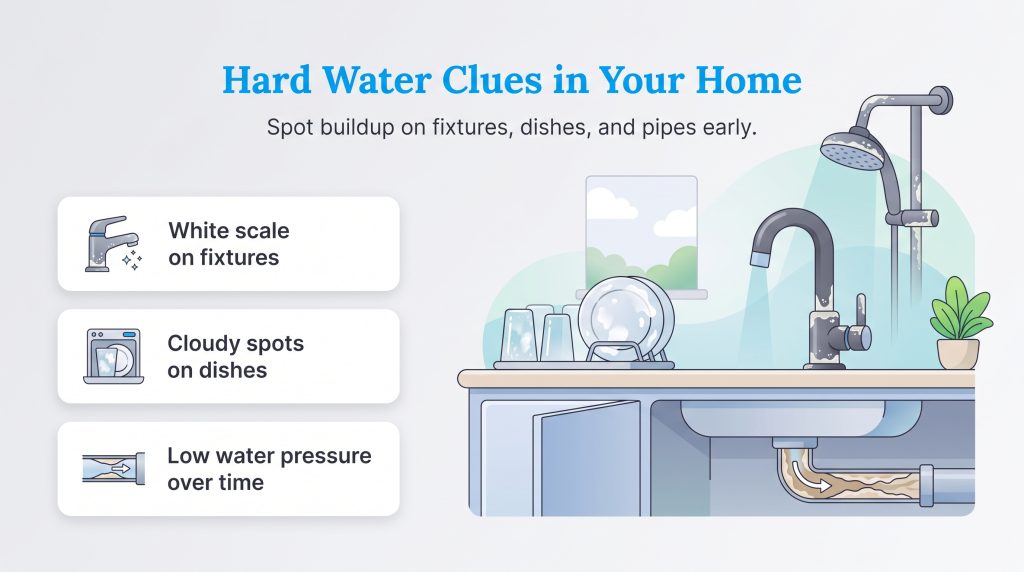
Before you pull out testing kits, your house usually offers a few subtle and not-so-subtle clues. These everyday symptoms act as a direct response to high mineral concentrations reacting with your cleaning products, skin, and plumbing surfaces. Recognizing these signs of hard water in your home early helps prevent long-term damage to your infrastructure.
1. White, Chalky Limescale Buildup on Faucets
White, chalky limescale buildup: If you constantly battle a stubborn, crusty residue around your bathroom fixtures, you are witnessing the most glaring visual evidence of a hard water problem. When calcium-heavy water evaporates, it leaves behind limescale buildup on faucets that can easily clog tiny showerhead nozzles and permanently damage expensive metal finishes over time.
2. Cloudy, Spotty Dishes After Washing
Cloudy, spotty dishes: You load your dishwasher hoping for sparkling glasses, only to find them covered in a cloudy, milky film once the drying cycle finishes. Hard water minerals prevent detergent from dissolving entirely, allowing sticky soap residue and calcium deposits to bake directly onto your glassware.
3. Dry, Itchy Skin and Dull Hair
Dry skin and dull hair: Stepping out of the shower should leave you feeling refreshed, not as though your skin just shrank a size. Hard water symptoms on skin and hair happen because calcium and magnesium react negatively with your body wash, leaving behind an invisible, soapy film. This lingering mineral buildup blocks moisture from penetrating hair follicles and strips natural oils from your skin, leading to chronic dryness.
4. Soap That Won’t Lather Properly
Soap that refuses to lather: When you wash your hands, you might notice your favorite soap creates a weak, milky sludge instead of a rich, bubbly foam. Heavy earth minerals actively fight against the foaming agents in liquid and bar soaps, drastically reducing their overall cleaning power and forcing you to use more product just to feel clean.
5. Stiff, Faded, or Scratchy Laundry
Stiff, faded laundry: The same chemical reaction plagues your washing machine. Leftover mineral residue weaves itself deep into clothing fibers during the rinse cycle, causing fabrics to feel scratchy against your skin. This constant abrasion causes your favorite clothes to wear out prematurely and lose their vibrant colors faster than normal.
6. Soap Scum on Shower Doors and Tubs
Persistent soap scum: Instead of washing cleanly down the drain, body soap combined with hard water forms a thick, sticky curd. This resulting soap scum clings stubbornly to glass shower doors, tile grout, and porcelain tubs, requiring intense weekly scrubbing and harsh chemical cleaners to properly remove.
7. Frequent Appliance Breakdowns (Water Heaters and Dishwashers)
Frequent appliance breakdowns: Hard water plumbing damage extends far beyond your sink. Mineral scale forces internal heating elements inside water heaters and dishwashers to work much harder to achieve their set temperatures. This constant, heavy strain leads to premature mechanical failures and frequent, costly repairs.
8. Low Water Pressure From Clogged Pipes
Low water pressure: Over years of constant, daily use, thick layers of calcium scale build up inside your home’s hidden plumbing network. This accumulation effectively narrows the internal channel for water to flow, resulting in noticeably low water pressure at your taps and showerheads that no amount of fixture cleaning will fix.
How to Test for Hard Water at Home
While physical clues offer a strong hint, you need solid confirmation before researching expensive treatment options. Learning how to test water quality at home doesn’t require waiting weeks for expensive lab results. You can easily perform a DIY water hardness test right at your kitchen sink to quickly gauge your situation.
The DIY Soap and Bottle Test
The soap and bottle test for hard water is the fastest way to check your supply using everyday household items. Here is exactly how to do it:
- Fill a clear plastic bottle about one-third full with cold tap water.
- Add a few drops of pure liquid soap, such as a liquid Castile soap (avoid using standard dish detergents, as they are specially formulated to cut through grease regardless of the mineral content).
- Cap the bottle tightly and shake vigorously for several seconds.
- Set the bottle down and closely observe the suds and the water clarity.
If the water turns cloudy and milky with barely any bubbles at the top, you are likely looking at a high mineral concentration. Conversely, if the water remains mostly clear beneath a thick, lasting layer of fluffy suds, your water is on the softer side.
Using Hard Water Test Strips
If you want a more precise DIY water hardness test without the steep expense of a certified lab, pick up a basic testing kit from your local hardware store. These kits contain specially treated paper strips that change color when exposed to calcium and magnesium. You simply dip the strip into a fresh glass of tap water, wait a few seconds, and match the resulting color against the provided grains per gallon hard water chart to get an accurate reading.
Requesting a Local Water Quality Report
If you’re on municipal water, your utility publishes an annual Consumer Confidence Report listing water quality details for your area. You can easily find information about your local supply by visiting the Environmental Protection Agency’s Consumer Confidence Report portal. While this won’t reflect the exact piping conditions inside your specific house, it provides an excellent baseline for average neighborhood hardness.
Understanding the Water Hardness Scale (GPG)
When reviewing professional lab results, DIY test strips, or local municipal reports, you will see your mineral concentration presented in either grains per gallon (GPG) or milligrams per liter (mg/L). We recommend referencing a standard grains per gallon hard water chart to understand exactly what these scientific measurements mean for your household plumbing. One grain per gallon equals about 17.1 milligrams per liter, so understanding the conversion makes comparing data much simpler.
Here is how the standard water hardness scale breaks down based on those measurements:
| Hardness Level | Grains Per Gallon (GPG) | Milligrams Per Liter (mg/L) |
|---|---|---|
| Soft | 0-3 GPG | 0-51 mg/L |
| Moderately Hard | 4-7 GPG | 52-120 mg/L |
| Hard | 8-10 GPG | 121-171 mg/L |
| Very Hard | 11+ GPG | 172+ mg/L |
The Hidden Costs of Hard Water on Appliances
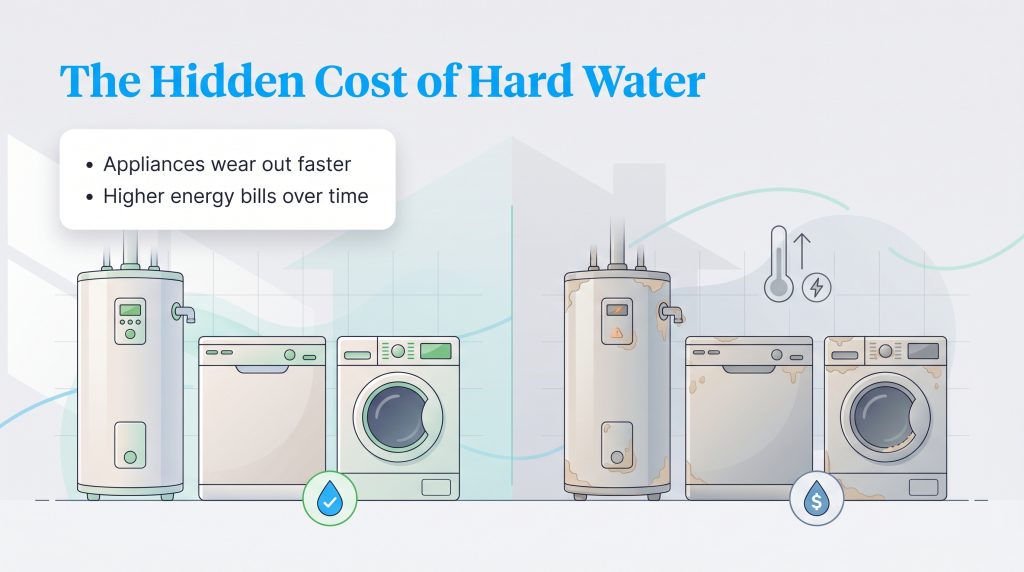
Once you confirm your home’s mineral levels, you must decide how to tackle the problem. The hidden costs of ignoring hard water are steep. The U.S. Department of Energy recommends maintaining water heating systems because thick sediment buildup forces devices to work significantly harder, severely reducing their energy efficiency.
Hard Water vs Soft Water: Which Is Better?
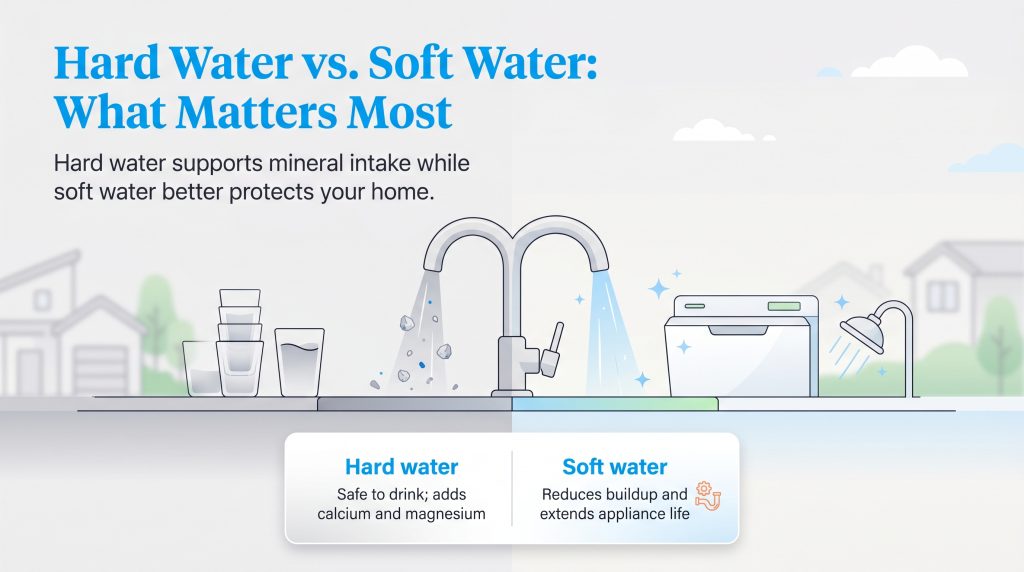
When exploring hard water vs soft water signs, remember that while hard water is perfectly safe to drink and provides essential dietary calcium, soft water is far superior for protecting your expensive plumbing infrastructure and appliances. So, how do you permanently fix this issue? The most effective solution is a traditional ion-exchange water softener. These systems work by pulling hard water into a resin tank filled with negatively charged beads. The positively charged calcium and magnesium ions stick to the beads, effectively stripping them from your water supply. The system then periodically flushes these trapped minerals away using a salt-brine solution.
Eco-Conscious Ways to Fix Hard Water in a House
Effectively transferring water service to a new address and setting up your home’s water service requires addressing these mineral issues before they become deeply ingrained. Exploring these sustainable living options allows you to protect your home’s plumbing while keeping a close eye on your environmental footprint. We highly recommend purchasing a basic DIY test strip kit online or consulting a local water treatment specialist today to get a definitive reading on your household’s unique water profile.
| Solution | Best For | What It Does | Watch Out For |
|---|---|---|---|
| DIY test strips | Quick confirmation | Estimates hardness level | Less precise than lab testing |
| Municipal water report | City water users | Shows local water quality data | May not list hardness clearly |
| Lab test | Private well owners or serious concerns | Provides detailed results | Costs more and takes longer |
| Salt-based softener | Whole-home softening | Removes calcium and magnesium | Uses salt and regeneration water |
| Salt-free conditioner | Scale control | Helps reduce scale formation | Does not technically soften water |
| Reverse osmosis | Drinking water at one tap | Reduces many dissolved substances | Not practical for whole-home softening |
Protecting Your Home’s Plumbing for the Long Haul
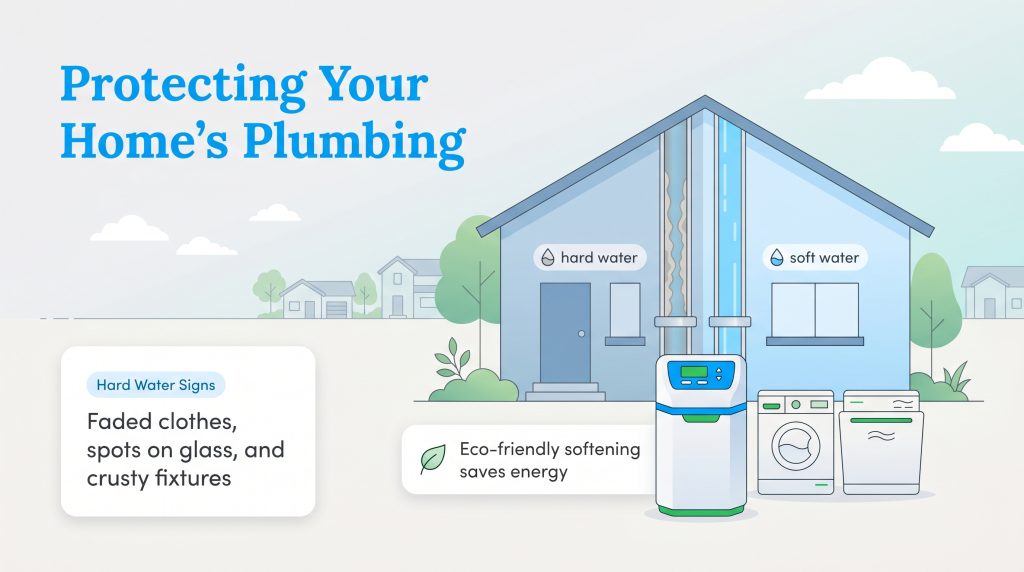
Figuring out the exact mineral content of your tap is the first crucial step toward maintaining a healthy, efficient household. By spotting the physical signs early and testing your levels, you position yourself to make smart, proactive decisions about water treatment. Embracing modern, eco-conscious softening solutions drastically reduces the risk of expensive appliance repairs, slashes unnecessary energy waste, and keeps your plumbing fixtures running flawlessly for years to come.
Frequently Asked Questions About Hard Water
These quick answers cover the most common hard water concerns we hear from homeowners, renters, and recent movers. Use them to decide whether you need a simple test, a maintenance step, or a more permanent treatment system.
Is hard water safe to drink?
Can hard water cause hair loss?
How do you fix hard water without a water softener?
Will a water filter remove hard water minerals?
How much does it cost to test my home’s water?
Does boiling water soften it?
About the Author

LaLeesha has a Masters degree in English and enjoys writing whenever she has the chance. She is passionate about gardening, reducing her carbon footprint, and protecting the environment. She also recently served as President of the Board for City Sprouts (a community garden).

David has been an integral part of some of the biggest utility sites on the internet, including InMyArea.com, HighSpeedInternet.com, BroadbandNow.com, and U.S. News. He brings over 15 years of experience writing about, compiling and analyzing utility data.