UtilitiesforMyHome.com is supported by commissions from some of the providers we list on our site.

Setting Up Utilities for a New Home: A Complete Timeline

By
Updated May 20th, 2026

Planning Your Utility Setup in Advance Ensures a Smooth, Stress-Free Move While Giving You the Chance to Choose Greener Energy Options

Key Takeaways

  • Start the process three to four weeks before moving to guarantee your electricity, water, and internet are running on day one.
  • Researching eco-friendly utility providers and green energy plans can significantly lower your home’s carbon footprint.
  • Keep a detailed list of your account numbers and provider contacts to easily manage transfers or new setups without day-of surprises.

Moving into a new place brings a rush of excitement, but nothing dampens that thrill faster than arriving to find the lights won’t turn on and the water isn’t running. Setting up utilities for a new home doesn’t have to be a stressful scramble of last-minute phone calls and confusing account transfers. By following a structured timeline, you can seamlessly transition your essential services, avoid unnecessary activation fees, and even upgrade to more energy-efficient, eco-conscious plans. Whether you are navigating a deregulated energy market for the first time or simply trying to move your existing Wi-Fi router to a new address, this guide will walk you through exactly when and how to get your move-in utilities fully connected.

When to Set Up Utilities for a New Home

Timeline showing three stages for setting up new home utilities: 3-4 weeks out, 2 weeks out, and move-in day.
Plan your utility setup in phases starting three to four weeks before moving to ensure a smooth transition.

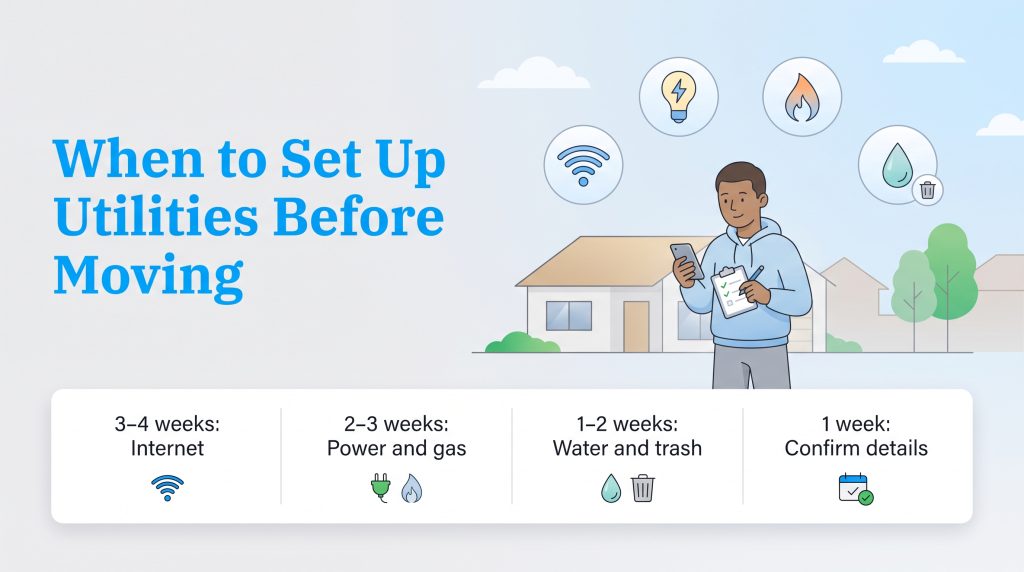
Knowing exactly when to set up utilities for a new home eliminates a massive chunk of moving anxiety. Treating this task as a structured, multi-week process instead of a last-minute chore guarantees you won’t be left in the dark on your first night. We recommend breaking the process down into manageable phases to give yourself plenty of time to review local options, gather necessary documents, and align activation dates with your actual moving schedule. You do not need to legally own the house yet to schedule future utility activation dates. As long as you have a confirmed closing date or a signed lease, you can—and should—get on your provider’s calendar well in advance.

Quick Utility Setup Timeline

Keeping a strict timeline prevents the headache of overlapping bills and ensures you have a functioning home the moment you walk through the door. Use this straightforward breakdown to govern your transition.

TimeframeAction to TakeServices to Address
Four weeks outResearch local providers and compare energy plans.Electricity, natural gas, internet
Two weeks outCall providers to schedule activation and stop service at your old home.Water, sewer, trash, electricity
One week outConfirm appointment windows and check for any required deposits.Internet installation, tech visits
Move-in dayTest all connections, locate shut-off valves, and record starting meter readings.All household services

Three to Four Weeks Out: Assess and Compare

This early phase is all about research and preparation. Start by identifying the local utility providers servicing your new neighborhood. While some municipal services like water and trash are fixed, you might have the freedom to choose your internet provider or natural gas supplier. Getting a head start allows you to thoroughly compare energy rates and evaluate the terms of various service contracts without feeling rushed. If you are relocating to a specific area, checking local city resources, like our guide to Houston utilities, can help you quickly pinpoint the exact companies you need to contact.

Information You Will Need Before Calling Providers

Having your personal details ready before you pick up the phone streamlines the utility account setup process and minimizes friction. Utility companies will typically require a few key pieces of information to verify your identity and confirm your right to establish service at the new property. Gather the following details to ensure a quick registration:

  • Your full new service address, including any apartment, unit numbers, or gate codes for technicians.
  • The exact move-in date and your desired start date for services.
  • A government-issued ID, such as a driver’s license or passport.
  • Your Social Security Number or ITIN, if the provider requires a credit check to waive security deposits.
  • Contact information for your landlord or property manager if you are renting.
  • Your prior address and existing account numbers if you are requesting a service transfer.
  • Your preferred payment method or banking information for setting up autopay.
  • Proof of closing and the property deed, which are often mandatory requirements for municipal water setups to prove you are the new legal owner.

Two Weeks Out: Schedule Activation and Transfers

Once you know who will supply your home, it is time to make the phone calls or fill out the online forms to establish service. We advise handling this at least 14 days prior to your move. Many local utility offices process requests manually, and securing an appointment for a physical technician visit—especially for internet installation or gas line inspections—can take weeks during busy summer moving seasons. Getting on the calendar early ensures your address is locked in the system.

Move-In Day: Test Connections and Read Meters

Your arrival day requires a bit of physical inspection to ensure everything transferred smoothly. Locate the main breaker box to confirm the power is live, and test a few light switches in different rooms. Check the water valves under your sinks and test the faucets for proper pressure. Finally, locate your electric and water meters and snap a quick photo of the initial readings with your smartphone. Having a visual record of where your usage began ensures you are accurately billed for your first month and won’t end up paying for the previous occupant’s lingering energy use.

What Utilities Do You Actually Need to Set Up?

If you are upgrading from an apartment to a single-family house, or stepping into homeownership for the first time, you might be surprised by the sheer number of services required to keep a modern household running. However, not every home utilizes every type of utility. Before making a dozen phone calls, you need to assess your specific property’s infrastructure. If you are a renter, checking a renters utility setup guide and carefully reviewing your lease agreement should be your first steps; landlords frequently cover water, sewer, and trash collection, leaving you responsible only for electricity and internet.

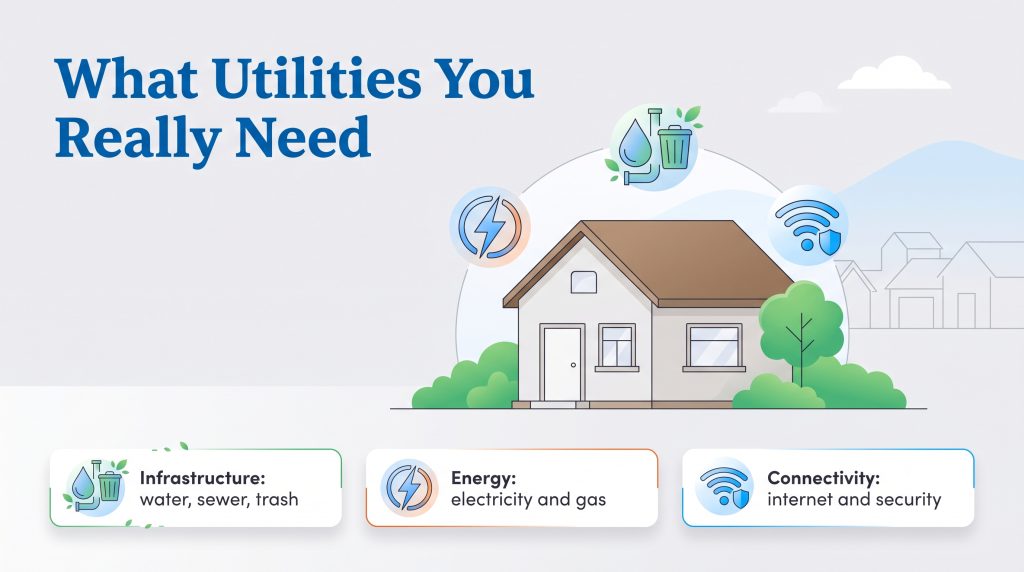
For most new homeowners, establishing services generally falls into three main categories:

  • Essential Infrastructure: Electricity is non-negotiable for powering your lights, appliances, and HVAC system. Water and sewer services are equally vital and are almost always handled directly by your local city or county municipality. Trash and recycling collection may be bundled with your municipal water bill, or you may need to hire a private waste management company depending on your neighborhood’s regulations.
  • Heating Fuels: Depending on the climate and the age of your new home, your heating system might rely on a secondary fuel source. Natural gas is the most common, powering furnaces, water heaters, and gas ranges. In older Northeastern homes, you might need to establish an account with a local heating oil delivery service. In rural areas without municipal gas lines, setting up a propane delivery schedule is a standard requirement.
  • Connectivity and Security: Internet service has evolved from a luxury to a household essential, powering everything from your home office to your smart thermostat. You will also want to consider activating any existing home security systems, smart doorbell cameras, or traditional cable and satellite television services.

How to Transfer Utilities to a New House

Illustration of a person with a checklist between two houses, representing transferring home utilities.
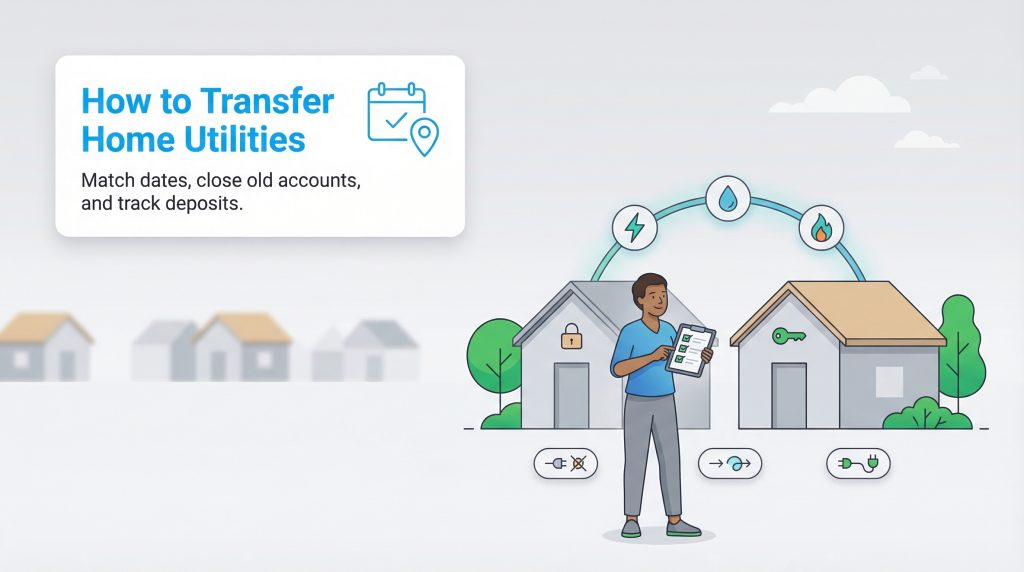
The key steps to transferring home utilities are to match service dates, close old accounts, and track security deposits.

Understanding how to transfer utilities to a new house mostly depends on whether you are moving within the same service territory. If your current provider operates at your new address, you can simply request a transfer of service. This process links your existing account history to the new property, often bypassing the need for an additional credit check or activation fee. You just need to provide your new address and the specific dates for stopping and starting the services.

If you are moving out of state or to an area handled by a different municipality, you will need to completely cancel utilities after moving and start fresh with a new company. When you start/stop service, always ask for a final meter reading and provide a forwarding address so your final prorated invoice reaches you. Keep track of any security deposits you paid when you first opened your account, as those should be refunded or applied to your final bill once the service is closed. Planning a complex relocation can feel overwhelming, but utilizing resources from our moving hub can keep your transfer organized and efficient.

Check if your current internet or energy provider offers a “transfer of service” loyalty discount or fee waiver. Some companies may waive or credit fees if you ask, especially for internet or competitive energy suppliers who want to keep your business.

Managing Overlapping Service Dates

One of the most frequent mistakes movers make is shutting off the utilities at their old residence on the exact day they move out, while simultaneously activating the new home on the day they move in. This lack of a buffer creates an incredibly stressful environment if timelines shift. Moving trucks get delayed, closings get pushed back by a few hours, and cleaning tasks often take longer than expected.

To eliminate this stress, always plan for a brief period of overlapping service. We highly recommend leaving the utilities active at your old address for a full 48 hours post-move. This grace period guarantees you will have running water and electricity to complete a deep clean, run the vacuum one last time, and conduct a final walkthrough with your landlord or real estate agent. Conversely, you should schedule the utility activation for your new home for the day prior to your closing or lease start date. Having the power and HVAC system running before you arrive means you can immediately start unpacking in a comfortable, climate-controlled environment, and any final home inspections can proceed without a hitch.

Setting Up Electricity and Gas for the First Time

Illustration of a man with a tablet comparing utility distributors versus energy suppliers.
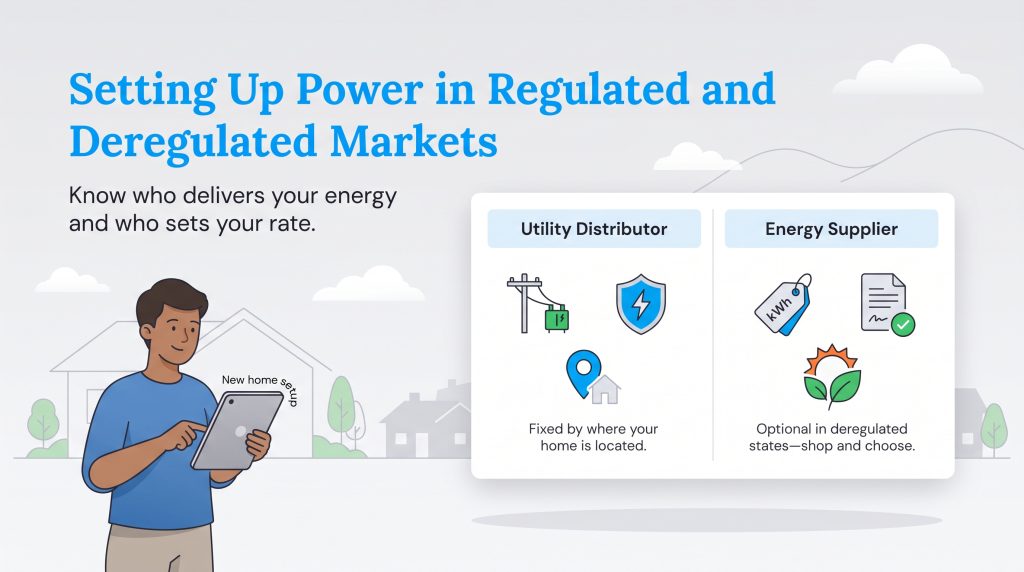
When setting up electricity, it’s crucial to understand the difference between your utility distributor, who manages infrastructure, and your energy supplier, who sells you the power.

If you are a first-time renter or a new homeowner transitioning from a property where utilities were included, setting up your energy profile for the first time might seem slightly complex. The most critical concept to understand is the difference between your utility distributor and your energy supplier. Your distributor is the company that owns the physical infrastructure, the poles, wires, and transformers outside your home. They handle outages and maintain the grid. Your supplier, on the other hand, is the company that actually buys and sells the energy you consume. If your bill lists a utility and a separate supplier, or if your state has an official comparison website, you are likely in a choice market.

Before establishing your accounts, you must physically verify what type of fuel your new home actually requires. To figure out if your home relies on natural gas, take a walk through the property. Look for physical gas valves positioned directly behind the stove or near the laundry hookups. Examine the water heater and furnace—if they feature prominent metal exhaust flues venting to the outside, they likely rely on gas combustion. If you are moving to a more rural property, step out into the yard to see if there is a large, cylindrical propane tank installed on the premises. Knowing exactly what powers your major appliances ensures you only set up the accounts you genuinely need.

In many regions, the distributor and supplier are the exact same entity. However, if you live in a state with a deregulated energy market, you have the power to shop around and choose your own supplier for both electricity and natural gas. This competitive system allows you to select plans based on pricing structures, contract lengths, or the source of the generation. Navigating a deregulated market requires a bit of comparison shopping to lock in the most favorable rate for your household budget. For instance, if you live in a deregulated state like Pennsylvania, you can shop for suppliers on PA Power Switch to find the best rates and contract terms that fit your needs.

Navigating New Construction Utility Setups
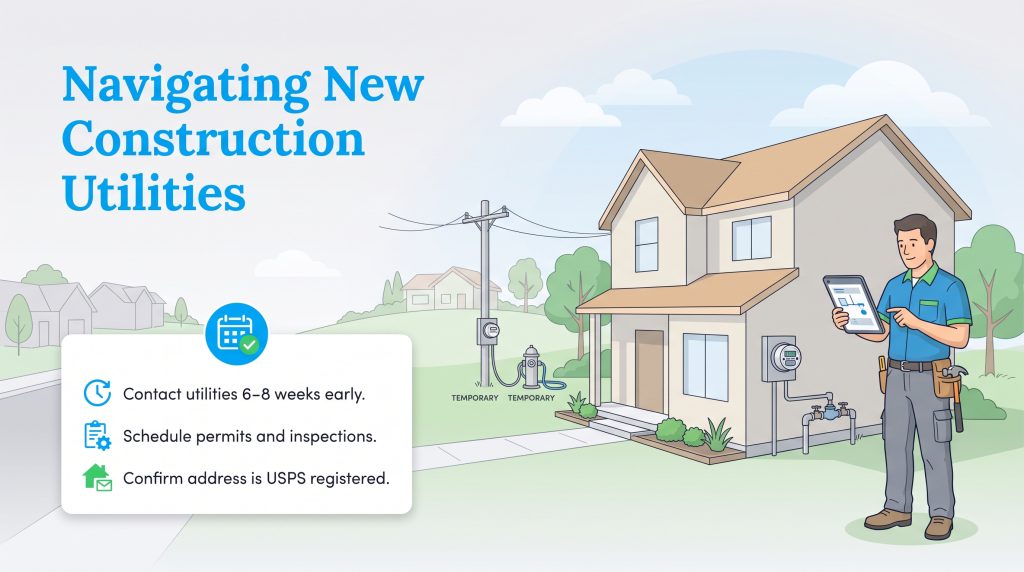
Moving into a brand-new build introduces an entirely different set of logistical challenges. Unlike an existing home where you simply transfer an account name, new construction often requires the initial installation of physical meters and connection to the municipal grid. During the building phase, contractors typically rely on temporary power poles and construction water lines. Transitioning from these temporary setups to your permanent, residential utility meters is a process you must coordinate proactively.

To avoid moving into a beautiful new house that lacks running water or power, you need to initiate this manual meter installation process heavily in advance. We highly recommend contacting your local county offices and utility providers six to eight weeks before your targeted move-in date. Setting up new infrastructure frequently involves pulling specific local permits, scheduling physical site inspections to ensure the wiring meets code, and dispatching specialized technicians to install the hardware. In some cases, such as connecting to a municipal sewer system or running new fiber-optic internet cables, providers may even need to dig trenches or navigate utility easements on your property. Coordinating this well ahead of your closing date protects you against frustrating bureaucratic delays.

If your new construction home is located in a freshly developed subdivision, double-check that the United States Postal Service has officially registered your street address. Utility providers often cannot generate a new account in their software system until the address populates in the official national database.

Choosing Eco-Friendly Utility Providers

A couple reviews a checklist and a comparison chart for eco-friendly utility plans, including wind and solar options.
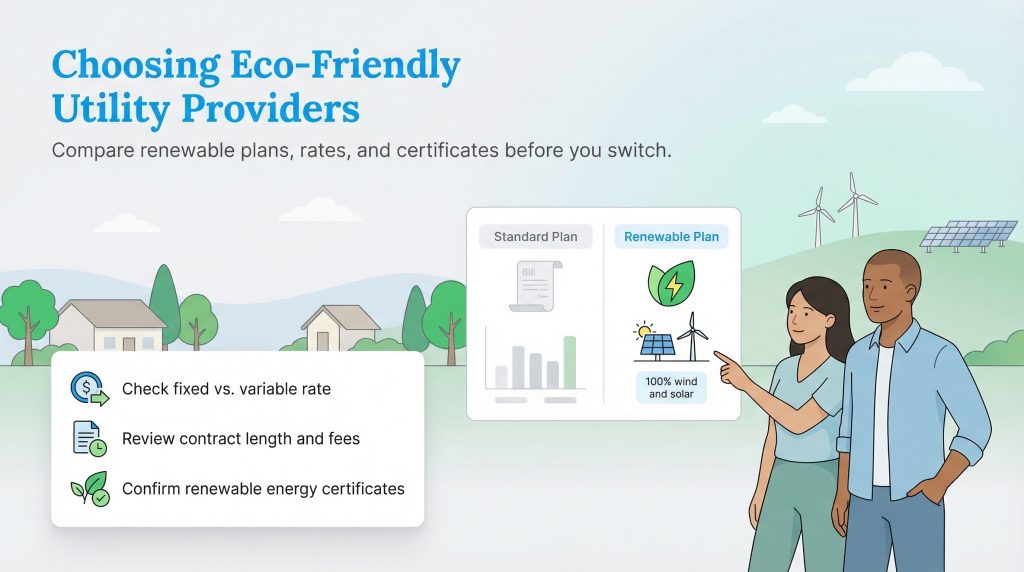
When switching to an eco-friendly utility provider, compare renewable plans, rates, contract terms, and energy certificates.

Moving presents a perfect opportunity to rethink how your household consumes resources. Researching eco-friendly utility providers allows you to actively support renewable infrastructure while potentially lowering your long-term energy costs. When browsing available plans, look beyond generic “green” marketing and seek out concrete sustainability commitments. Many modern suppliers offer plans sourced from 100% wind or solar energy. Before signing up, always verify whether the plan is a fixed or variable rate, check the contract length, and review any early termination fees to protect your budget. Additionally, look for a renewable energy certificate disclosure to confirm exactly where the clean energy is coming from.

If your local market doesn’t offer direct renewable supply plans, you still have highly impactful alternatives. Consider exploring local community solar options, which allow you to subscribe to a shared solar farm in your region. You receive credits on your standard electric bill for the power your share generates, supporting localized clean energy without needing to alter your roof. Opting for these environmentally mindful choices transforms a routine utility setup into a meaningful step toward sustainable living.

Eco Edge: When comparing electricity suppliers, look for plans certified by the EPA Green Power Partnership. This designation can indicate the provider supports renewable generation (often through renewable energy certificates), which is one practical way to easily reduce your footprint without installing roof panels.

Essential Utility Setup Checklist for a New Home

A man points to a clipboard checklist titled "Essential Utility Setup Checklist" for a new home.
Reviewing the four main categories of essential utilities guarantees your new home will be fully functional on day one.

Keeping track of multiple companies, account numbers, and activation dates can quickly overwhelm even the most organized mover. Using a comprehensive moving utilities checklist ensures you won’t accidentally skip a critical service. Review the following essential utilities to secure your home’s comfort and functionality.

  • Electricity and Natural Gas: These dictate your home’s heating, cooling, and cooking capabilities. Contact your provider at least two weeks out to confirm grid connections and lock in your supply rate. You can also read our guide on how to save on your electric bill to start off with efficient habits. Don’t forget to check the HVAC air filters upon move-in, as clogged filters drastically increase your initial energy draw.
  • Water and Sewer: Since water services are inherently tied to your local municipality, you will generally contact your city or county billing department. Review our water utilities guide to understand local usage rates and billing cycles. Be prepared to email them a copy of your lease or closing disclosure to prove residency.
  • Trash and Recycling: Some municipalities bundle waste management with the water bill, while others require you to hire a private collection service. Always clarify your specific neighborhood’s collection days, bulk pickup schedules, and municipal recycling rules when you call. This is especially vital during a move, as you will likely have a massive influx of cardboard boxes.
  • Internet and Smart Home Tech: Establish your connection early so you can seamlessly transition your digital life. Setting up your Wi-Fi right away ensures internet-dependent devices like smart thermostats, security cameras, and energy monitors can be configured immediately upon move-in. You will also need active power to test and reset all hardwired smoke and carbon monoxide detectors.

Preparing for Move-In Day

An illustration showing a person with a tablet confirming utility setup for a new home with moving boxes.
Confirming your utilities are set up before moving in ensures a smooth and worry-free transition into your new home.

The moment you unlock the front door to your new house, your very first task should be an immediate utility audit. Before carrying in a single heavy box, conduct a rapid walkthrough to ensure every service you scheduled is actually active and functioning safely. Begin by locating the main electrical panel to confirm none of the breakers tripped during the transition. Next, identify the main water shut-off valve—usually located near the street, in the basement, or along the perimeter foundation—so you know exactly how to halt the water supply in the event of an unexpected plumbing emergency. Flush all the toilets and run both the hot and cold taps to verify proper water pressure and verify that your hot water heater is actively working. Finally, walk the exterior of the property to locate your physical electric, gas, and water meters. Use your smartphone to take clear, time-stamped photos of the numerical readouts. Logging this starting data completely protects you from paying for energy or water usage accumulated by the previous residents or the construction crew, securing total peace of mind for your first billing cycle.

Frequently Asked Questions About Setting Up Utilities for a New Home

Reviewing common concerns can help clarify the final details of your move and prepare you for a seamless transition.

What is the average cost to set up utilities in a new house?

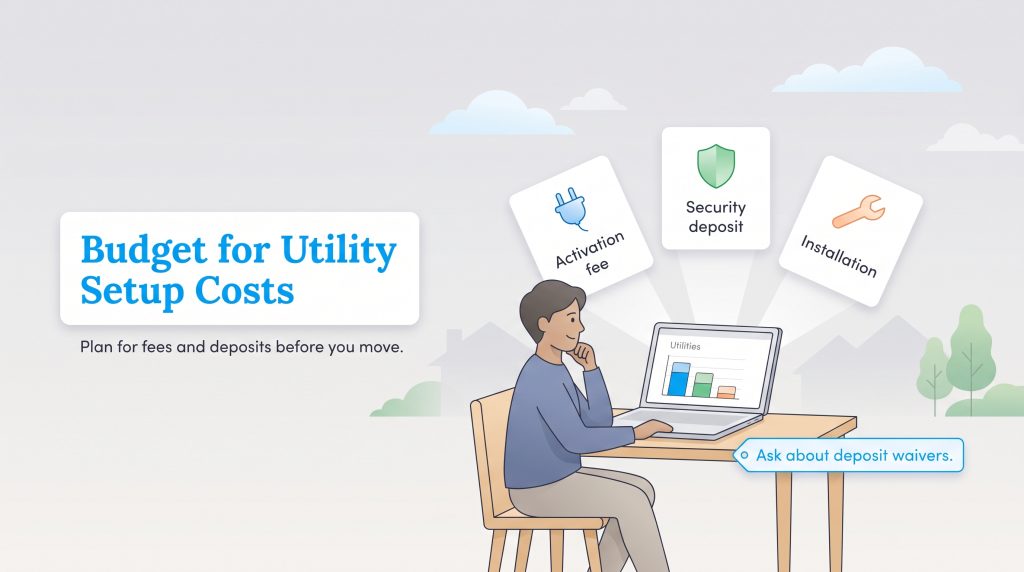
The base cost to set up utilities in a new house often involves an activation fee, which usually ranges from $0 to $50, depending on the specific utility and your location. Providers might also require a security deposit based on your credit history or lack of previous service. We recommend calling your provider to ask for a full move-in quote and inquiring whether any activation fees can be waived. Deposits are usually refundable, but the timing varies by provider, so always ask when and how your deposit will be returned.

Who do I need to call to set up utilities?

Water, sewer, and trash services are usually managed by your municipal government, so you will need to call your local city or county utility office. Conversely, electric, natural gas, and internet services are generally handled by private companies that you must contact directly via their customer service phone numbers or online enrollment portals.

How long does it take to connect utilities?

If the physical infrastructure and meters are already intact, activation can happen as soon as the same day or within a couple of business days in some areas. If the property requires manual activation, new hardware installations, or physical gas line inspections, technicians generally require a week or more of advance notice.

Can I transfer my current internet service to a new address?

You can usually transfer your internet service if your current provider actively services your new zip code and neighborhood. The success of the transfer also depends on whether the new home possesses the correct wiring infrastructure, such as direct fiber lines versus traditional coaxial cable. If the infrastructure differs, a technician may need to visit the property to upgrade the lines.

How do I know if my new home requires natural gas?

You can check for natural gas requirements by looking for physical gas valves positioned directly behind the stove or near the laundry hookups. Additionally, reviewing the home inspection report or examining the water heater and furnace will clearly indicate if those appliances rely on gas combustion through the presence of external exhaust flues.

Can I set up utilities before closing on a house?

Yes, you can and should set up utilities before your official closing date. Most providers allow you to schedule a future activation date weeks in advance. Setting the start date for the day before or the actual day of closing ensures you will have immediate power and water for final walkthroughs, deep cleaning, and unloading the moving truck.

What happens if the previous tenant did not cancel utilities?

If the previous resident forgot to cancel their service, you might run into a brief delay when trying to establish your own account. You will need to contact the utility provider and submit proof of your new occupancy, such as a signed lease or final closing documents. Providing this legal paperwork overrides the old account and transfers the billing responsibility directly to you.

What should I do if the previous owner completely disconnected the power?

If the previous owner ordered a hard disconnect rather than a simple transfer of service, the utility company likely deactivated the physical meter. In this scenario, you must call your local electricity distributor to request a full reconnection. This process often takes longer than a standard account transfer and may require a small reconnection fee, so you should initiate this request immediately upon signing your housing contract.

Do I need to put the utilities in both my and my spouse’s name?

You are generally only required to place a utility account under one primary account holder’s name. That primary individual assumes full legal responsibility for the billing and account history. However, adding your spouse or roommate as an authorized user is highly recommended. This allows both parties to call customer service, report outages, or make changes to the energy plan without the primary account holder needing to be present.

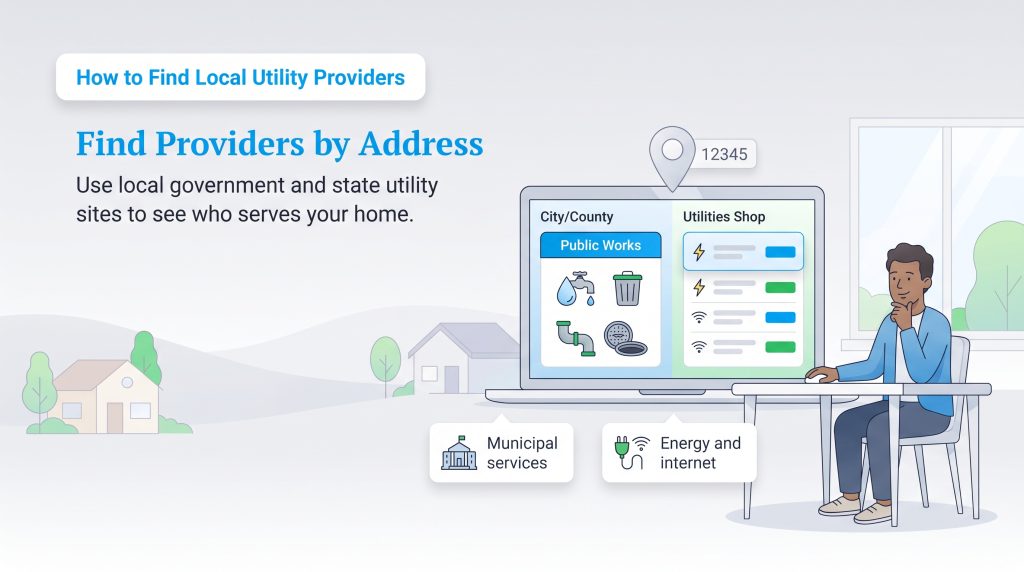
How do I find out who my local utility providers are?

The simplest way to identify your local providers is to ask the previous homeowner, your landlord, or your real estate agent. If that isn’t an option, visiting your city or county’s official government website usually provides a clear directory of municipal water and trash services. For electricity and gas, entering your new zip code into your state’s public utility commission website will reveal exactly which distributors own the infrastructure in your specific neighborhood.

About the Author

David Cosseboom Author Image

David has been an integral part of some of the biggest utility sites on the internet, including InMyArea.com, HighSpeedInternet.com, BroadbandNow.com, and U.S. News. He brings over 15 years of experience writing about, compiling and analyzing utility data.