

Don’t Let “Zombie Bills” Haunt Your Bank Account: Learn Exactly When and How to Disconnect or Transfer Your Essential Services
Key Takeaways
- Give yourself a buffer by contacting utility providers at least two weeks before your move-out date to schedule service stops.
- Take a timestamped photo of your meters on your final day to prove usage and dispute any incorrect billing after you leave.
- Return all leased equipment, such as cable boxes or modems, immediately to avoid expensive replacement fees on your final bill.
Leaving your essential services active after handing over the keys is a fast track to draining your bank account with surprise charges and zombie bills. To protect your finances and stop paying for energy you do not use, you must proactively cancel utilities after moving. Whether you carefully plotted your relocation months ahead of time or suddenly unpacked your first box and realized you forgot to notify your power provider, this comprehensive guide walks you through exactly what you need to know. We will help you navigate the entire process — from executing strategic shut-offs to securing accurate final statements — ensuring you never get stuck footing the bill for the next occupant’s high heating costs.
Why Timing Matters: The Ideal Utility Cancellation Timeline
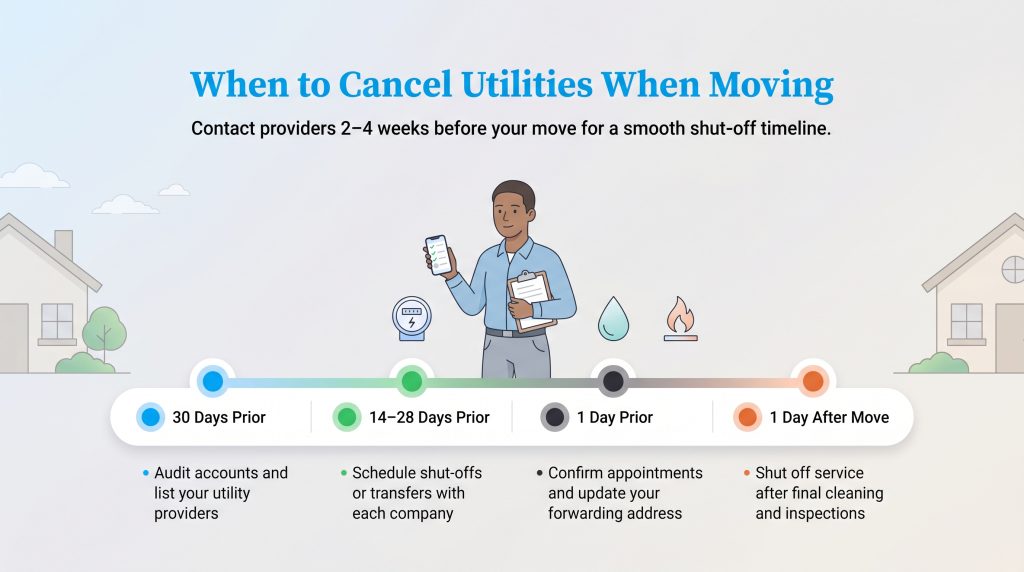
Timing is everything when coordinating a major move, and waiting until the last minute practically guarantees you will encounter billing headaches. If you are wondering when to cancel utilities when moving, we recommend adhering to a strict utility cancellation timeline to establish a solid buffer. This advance notice ensures a stress-free transition, giving municipal districts and private energy companies plenty of time to process your requests and dispatch necessary technicians. If you are juggling multiple tasks, checking our moving hub keeps you organized with other essential to-do items during this busy window. Follow this chronological timeline for a seamless disconnect:
- 2 to 4 weeks before your move: Audit your accounts, compile a comprehensive provider list, and call to schedule your shut-offs or transfers. Confirm whether any early termination fees apply to your current contracts.
- 1 week before your move: Verify your upcoming appointments. Update your forwarding address on all accounts to ensure you receive your closing statements. Organize all leased equipment for an easy return.
- Moving day: Take a timestamped photo of all final meter readings as you walk out the door. Pack up and return any leased cable boxes, wireless routers, or security hardware.
- 1 day after moving day: Keep essential utilities on for this final 24 hours to accommodate walkthroughs and deep cleanings. Allow the scheduled shut-offs to execute naturally once the home is empty.
How to Cancel Utilities When Moving (Step-by-Step)
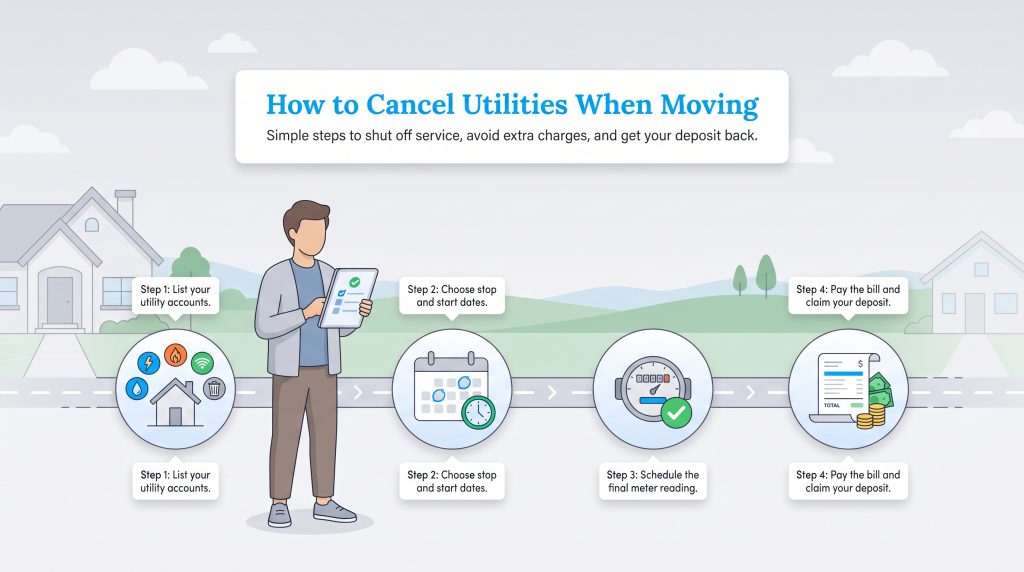
Figuring out exactly how to cancel utilities when moving does not have to be an overwhelming chore. By breaking the process down into a few manageable steps, you can confidently clear your name from the property’s billing cycle.
Step 1: Inventory Your Current Services
To successfully cancel your accounts, you must first know exactly who supplies your home. Walk through your property and compile a list of all your active services, including electricity, natural gas, water, internet, and trash collection. Tracking down your account numbers, customer service phone numbers, and online login credentials early prevents last-minute scrambling.
Step 2: Determine Stop/Start Dates for Utilities
Setting the correct stop/start dates utilities require is crucial to avoid overlapping charges or working in the dark. Schedule your disconnection for exactly one day after your move-out date. For your new residence, arrange for the essential services to activate at least one day before you officially arrive. Remember that your contractual obligations differ wildly depending on if you rent or own. Home sellers must leave utilities active through the closing date for final inspections, while renters should shut them down immediately after the lease ends.
Step 3: Schedule a Final Meter Reading
You must actively schedule a final meter reading to guarantee accurate billing on your last statement. Whether you call the provider or submit an online request, this step formally closes your usage liability and prevents you from paying for the next tenant’s consumption. Do not rely on estimates — insist on an exact reading based on your final day of occupancy.
Step 4: Pay Balances and Collect Your Utility Deposit Refund
To prevent nasty debt collection issues, explicitly provide a forwarding address to the billing department for your final statement. When the final bill arrives, pay it immediately. The standard timeframe for receiving your utility deposit refund is usually 30 to 60 days. If you leave a closing balance unpaid, the provider will automatically drain your deposit to cover the difference. If they do not have your forwarding address, your deposit eventually turns into unclaimed property.
Transfer Utilities When Moving vs. Canceling Completely
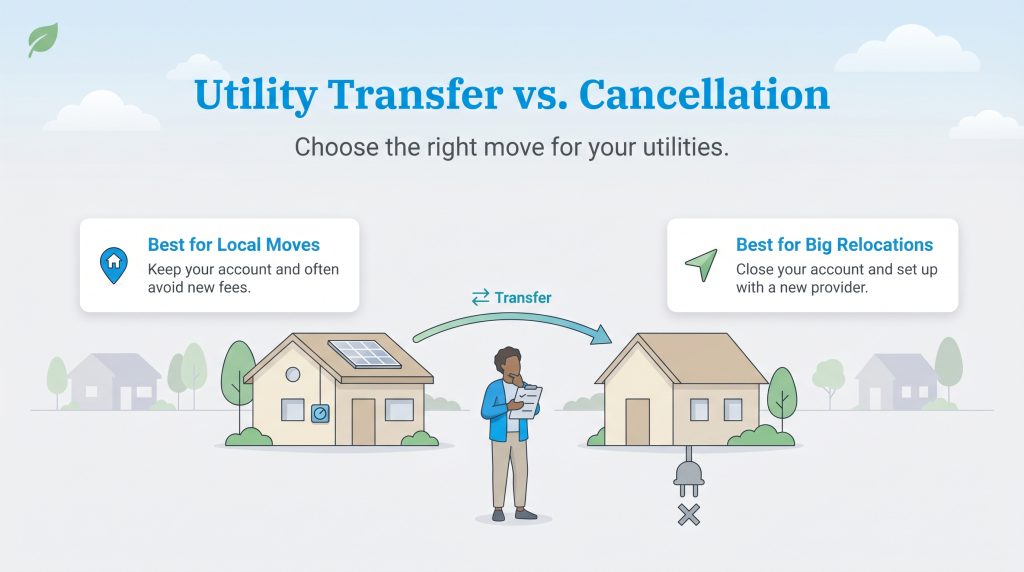
Depending on where you are relocating, you must decide whether a simple address transfer or a full cancellation makes the most sense. If you decide to transfer your service locally, the process is streamlined. However, if you move out of state or to a deregulated energy market, you will need to start fresh with a new provider, such as checking available plans in Texas.
- When to Transfer Utilities When Moving (Local Moves):
- Pros: A transfer keeps your account history intact, often avoids a secondary credit check, and frequently waives new connection fees.
- Cons: Sticking with the same provider prevents you from shopping around for better promotional rates.
- Timeline: Initiate the request at least two weeks before moving day.
- When to Cancel Completely (Long-Distance Moves):
- Pros: A fresh cancellation gives you a clean slate, lets you shop for highly competitive rates, and presents a great opportunity to explore solar or green energy options for your new home.
- Cons: Requires setting up new security deposits and potentially paying activation fees.
- Timeline: Contact all providers two to four weeks in advance.
How to Handle Specific Utility Types
Not all essential services are handled the same way. Knowing the distinct procedural differences between your providers helps you effectively manage your disconnect and reconnect dates without frustrating delays.
Electricity and Natural Gas
Most modern electric meters (especially if you plan to compare electric providers for a new plan) are read and disconnected remotely, meaning you rarely need to wait for a technician to shut off your power. Natural gas, however, requires an entirely different approach. Strict safety regulations dictate that an in-person technician must visit your property to physically cap the line and lock the gas meter. Because this requires an on-site visit, you must schedule your natural gas shut-off much earlier than your electricity.
Water, Sewer, and Trash
Municipal services operate at a notoriously slower pace than private energy companies. You typically need to call your local city or municipality directly to close out your water and sewer accounts, and an in-person technician may be dispatched to secure the main water valve. Additionally, cancel your private trash collection and recycling bin service immediately to avoid charges for the upcoming quarter, and arrange for the empty bins to be picked up from the curb before you drive away.
Internet, Cable, and Security Systems
While digital services like the internet utilize quick remote shutoffs, the physical hardware demands serious attention. You must strictly obtain and securely keep return shipping receipts with tracking numbers when dropping off leased modems, cable boxes, or home security cameras. If you abandon the hardware or lose the receipt, you will likely face massive replacement fees right as you try to set up home internet service at your new residence.
What to Do If You Forgot to Cancel (Emergency Steps)
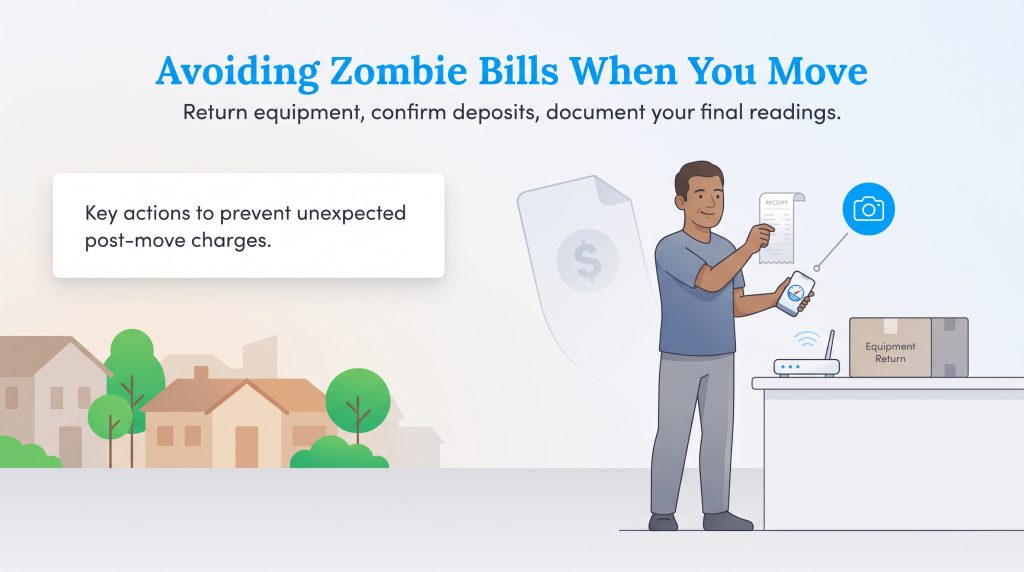
If you handed over the keys and suddenly realized you never called the power company, do not panic — but do act quickly. You remain legally liable for all energy usage at the property until you officially notify the provider. Take these rapid-fire steps to mitigate the damage:
- Call immediately: Get a customer service representative on the phone right now to halt the service and stop further daily charges.
- Request a final reading: Confirm the exact shut-off date and demand a final reading based on that day’s usage to freeze the billing cycle.
- Check for a revert clause: Ask your property manager if a landlord utility revert agreement kicked in when your lease expired. If an agreement exists, the billing automatically shifted back to the owner, letting you completely off the hook for the extra days.
Preparing for a Seamless Transition
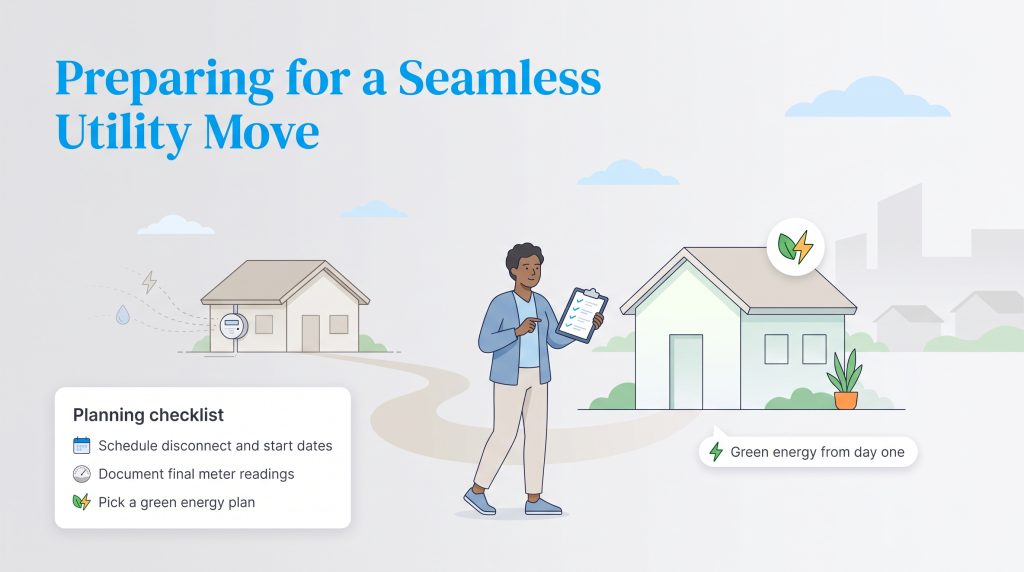
Moving represents an exciting fresh start, and you certainly do not want old financial baggage following you to your new doorstep. By taking the time to properly schedule your service disconnects, aggressively documenting your final meter readings, and tracking your moving checklist utilities requirements, you can close this chapter cleanly. A few minutes of organized planning today prevents hours of frustrating phone calls and stressful billing disputes tomorrow, leaving you entirely free to focus on settling comfortably into your new home.
Frequently Asked Questions About Canceling Utilities After Moving
When should I cancel utilities when moving?
Do I need to schedule a final meter reading before moving?
How long does it take to transfer utilities to a new address?
Can I cancel utilities online?
| Online Cancellation Usually Allowed | Phone Call Usually Required |
|---|---|
| Major electricity providers | Municipal water districts |
| Natural gas companies | Local sewage departments |
| National internet service providers | Regional trash collection services |
How do I return my internet equipment when moving?
How do I get my utility security deposit back after moving?
Do utility companies charge a cancellation fee?
About the Author

Claudio is a sustainability-focused writer with a background in Anthropology and Psychology from NC State University. He has spent over 15 years working in writing, interpretation, and translation, driven by a deep interest in how human culture shapes the environment. Today, he shares his curiosity with readers by writing about sustainable living solutions and the connection between everyday choices and environmental impact.

David has been an integral part of some of the biggest utility sites on the internet, including InMyArea.com, HighSpeedInternet.com, BroadbandNow.com, and U.S. News. He brings over 15 years of experience writing about, compiling and analyzing utility data.