
Planning ahead ensures your lights and internet are ready the moment you walk through the door of your new home.
Key Takeaways
- Start the utility transfer process at least three weeks before your move to avoid service lapses or rush fees.
- Create a master list of all current accounts including electricity, gas, water, internet, and waste management services.
- Ask specifically about “overlapping” service dates to ensure you have power at both locations on moving day.
Figuring out how to transfer utilities when moving shouldn’t be a chaotic chore that keeps you up at night. This step-by-step guide walks you through exactly when to call your providers, who to contact, and how to entirely avoid frustrating service gaps. By following our concrete timeline and actionable advice, you can confidently navigate the utility transfer process and ensure your lights, water, and internet are fully functional the minute you walk through the door of your new home.
1. Create A Master Utility Checklist
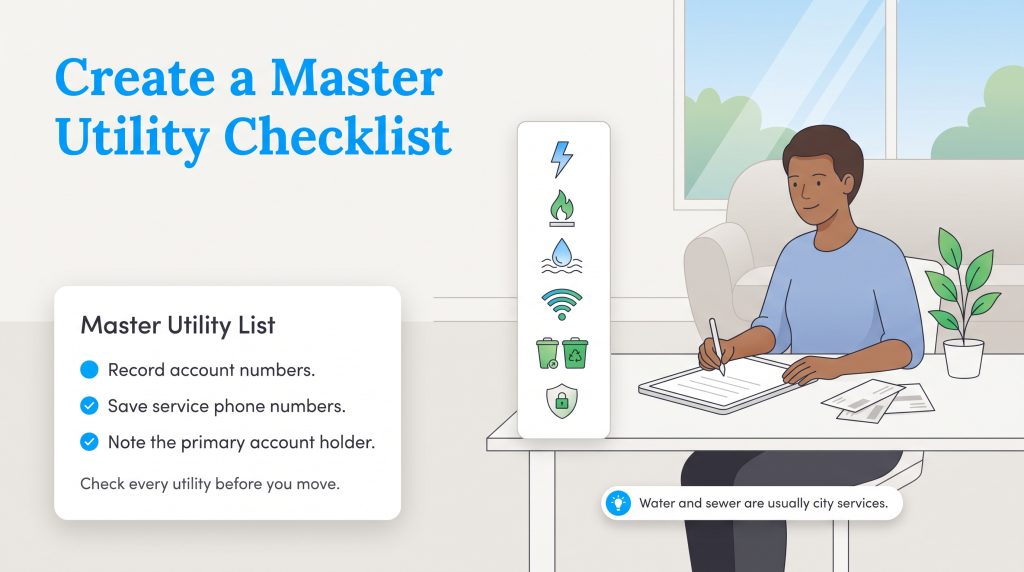
Before you dive into calling moving utility companies, you need a highly accurate moving utilities checklist of what you currently use. It is remarkably easy to remember the massive bills like electricity and internet, but smaller municipal services routinely slip through the cracks until the absolute last minute. Take a moment to build a master inventory of your current accounts. Instruct yourself to record your current account numbers, the corresponding customer service phone numbers, and the name of the primary account holder right next to each entry.
Use this comprehensive breakdown to track your transition:
- Electricity: Priority number one for lighting, major appliances, and climate control.
- Natural Gas: Essential for heating, stovetop cooking, and hot water in many residential properties.
- Water and Sewer: Often bundled together, but sometimes billed separately by your specific municipality.
- Internet, Cable, and Phone: These services require the most lead time for on-site installation. Always check ahead of time since fiber optic speeds can vary wildly from neighborhood to neighborhood.
- Waste and Recycling: Check your current bill to see if this is handled by the city or a private disposal contractor.
- Security Systems: Track whether you need to physically move proprietary equipment or officially cancel active monitoring services.
2. Research New Utility Providers And Green Options
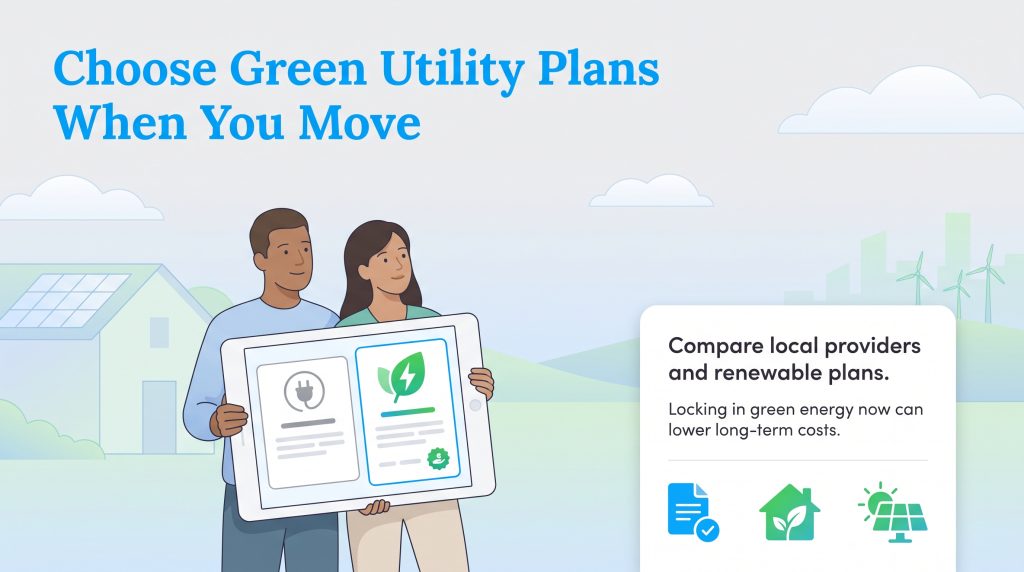
Depending on where you are relocating, you might encounter a difference between transferring your existing service and starting totally fresh with new utility providers. Understanding how your new local market operates dictates your next steps. In regulated energy markets, a single monopoly provider supplies electricity and gas to your area, meaning your choices are straightforward. However, if you are moving to a deregulated market, you have the incredible power to choose a retail energy provider that fits your budget and lifestyle.
A major relocation serves as the perfect opportunity to reset your energy habits. During your research phase, purposefully seek out green energy plans. Many modern utility providers offer plans sourced entirely from 100% wind or solar energy. You can also contact local companies to see if they offer free home energy audits for new residents, helping you identify drafty windows or inefficient HVAC units the moment you move in.
You can easily verify these environmentally mindful choices and learn more about how purchasing green power allows you to support renewable energy generation without changing your daily routine. If you are highly interested in generating your own sustainable power at the new property, explore dedicated solar energy options.
3. Schedule The Transfer Timeline And Overlaps

Knowing exactly when to cancel utilities when moving is the absolute secret to avoiding expensive expedited connection fees. If you wait until moving week to manage these accounts, appointment slots for technicians will likely be booked out for days. Use this structured timeline to proactively schedule your utility transfer process.
| Timeline Phase | Action Required |
|---|---|
| 3-4 Weeks Out | Audit your current accounts, research green energy options, and gather your account numbers and new address details. |
| 2 Weeks Out | Call providers to book exact disconnection and connection dates. Secure technician appointments for complex internet or natural gas setups. |
| Moving Day | Capture final meter readings, return old leased equipment, and verify essential systems are fully operational. |
When you call to schedule these dates, explicitly command your providers to overlap utility services by 24 to 48 hours. The single biggest mistake movers make is instructing their providers to stop and start services on the exact same day.
4. Settle Balances And Return Old Equipment
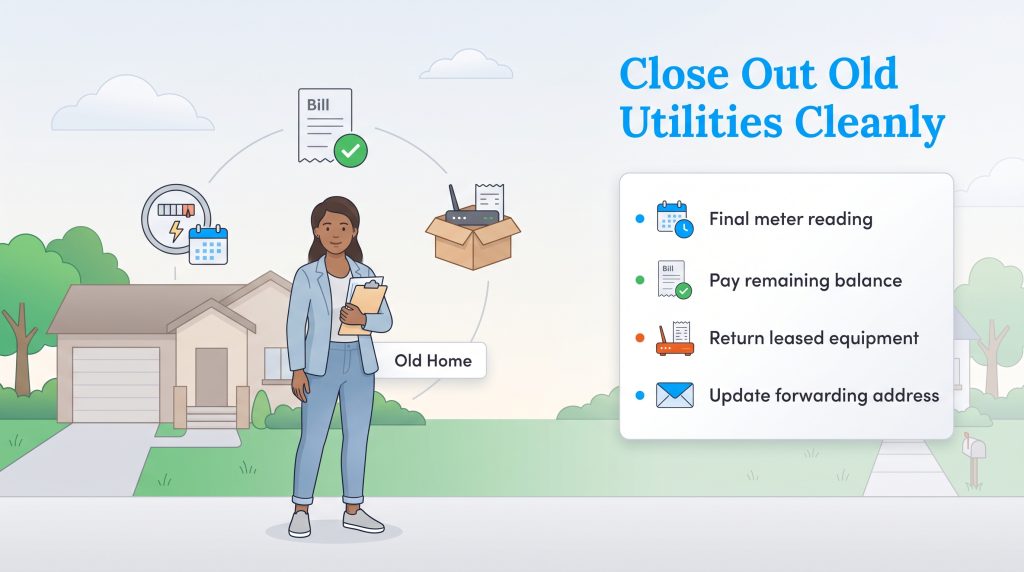
Managing your final administrative tasks correctly prevents nasty financial surprises months down the road. If you need to cancel utilities when moving rather than transferring them, securing loose ends is paramount. Follow these direct actions to close out your old home flawlessly:
- Request a final meter reading: Demand a final meter reading on your scheduled disconnection day. If they cannot send a technician, simply take a clear, date-stamped photo of the physical meter yourself to prove exactly how much energy you consumed.
- Pay off outstanding balances: Unpaid bills routinely block account transfers. You generally cannot migrate an account if you owe money, so settle any past-due amounts immediately.
- Return leased equipment: Gather all company-owned hardware, like internet routers and cable boxes, before the moving truck arrives. Physically hand-deliver these items to a local provider storefront and get a printed return receipt to avoid unreturned equipment fees.
- Update your forwarding address: Forwarding your mail guarantees that your final utility bills and any potential deposit refund checks from the old house successfully reach your new mailbox.
Once your accounts are settled and transferred securely, you can start looking for ways to lower your monthly expenses in your new space. Read our expert guide to understanding utility bills to start this chapter on a highly budget-friendly note.
5. Verify HOA And Landlord Utility Agreements
Before you begin aggressively dialing providers to set up utilities in a new home, you must verify exactly which services you are actually responsible for. This is a critical, yet frequently overlooked, step for renters and those purchasing property within a managed community.
Take the time to thoroughly review your new lease agreement or Homeowners Association (HOA) bylaws. In many condo complexes and rental properties, municipal services like water, sewage, and exterior trash collection are automatically covered by your monthly property management dues. Attempting to open duplicate accounts for these services will only result in confusing administrative delays and potential setup fees.
If you are renting, your landlord should provide a definitive list of the specific utilities you need to activate in your name. Keep this documentation handy as a reference point when building your master checklist, ensuring you only pay for the services you directly control.
6. Preparing For A Seamless Move-In Day
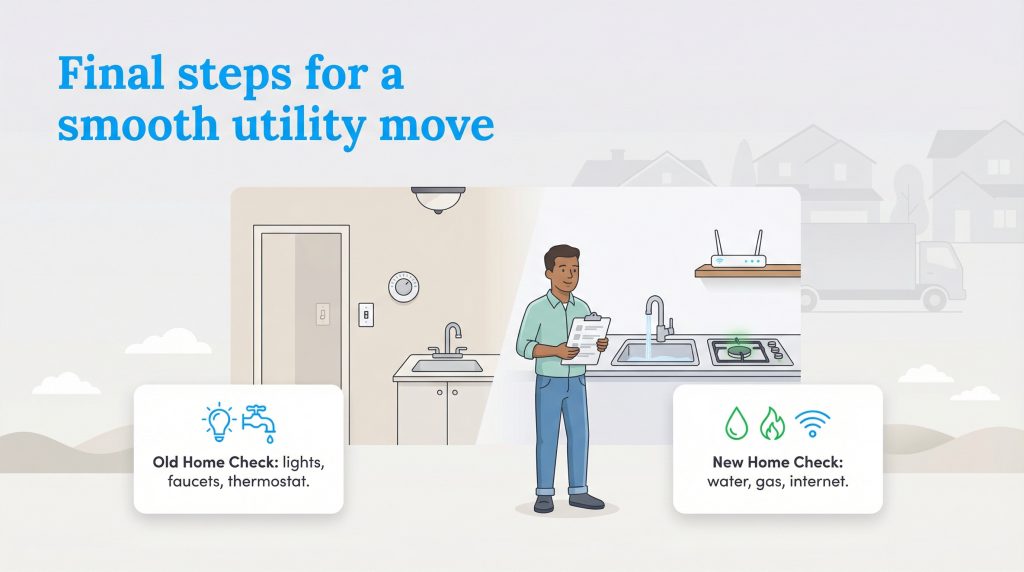
By proactively planning to transfer utilities to a new house weeks ahead of time, you entirely bypass the headache of last-minute surprises. As moving day approaches, stay incredibly organized. Instruct yourself to print your utility confirmation emails and keep them securely in a physical moving binder, so you have account numbers and technician appointment times readily available even if your phone battery dies.
Once you finally step through the front door of your new residence, take a brief moment to verify that all of your essential services are active. Command yourself to test all light switches, turn on sinks to check hot water faucets, and test your internet connections within the first hour of arriving at the property. Coordinating your service transfers might initially feel like a heavy burden, but leaning on this standardized system completely eliminates the typical stress of relocation. For more expert tips on organizing your transition, check out our comprehensive moving resources.
Frequently Asked Questions About Transferring Utilities
When should I transfer utilities before moving?
Do I have to pay a deposit to set up utilities in a new home?
How long does it take to transfer internet when moving?
How do I set up utilities for the first time?
Can I transfer utilities if I am moving to a different state?
What happens if I forget to cancel my utilities?
How is transferring utilities different for renters vs. homeowners?
About the Author

LaLeesha has a Masters degree in English and enjoys writing whenever she has the chance. She is passionate about gardening, reducing her carbon footprint, and protecting the environment. She also recently served as President of the Board for City Sprouts (a community garden).