

Make Your Move Smoother by Knowing When to Transfer Existing Services and When to Start Fresh with New Providers
Key Takeaways
- Know the difference early: Transferring service is usually possible for local relocations, while setting up new utilities is mandatory for long-distance moves or switching providers in deregulated markets.
- Timing prevents blackouts: Schedule your disconnects and connects at least two weeks in advance to avoid hidden moving costs and ensure you have continuous power and water on move-in day.
- Go green when you move: A new address is the absolute perfect opportunity to switch to eco-conscious providers or renewable energy plans if you live in an energy-choice state.
Transferring vs. setting up new utilities is one of the most critical decisions you will make during a relocation, dictating whether you walk into a fully functional home or spend your first night fumbling in the dark. While moving involves an endless stream of logistical headaches, understanding the exact procedural differences between shifting an active account and establishing a brand-new connection is the ultimate secret to avoiding unexpected blackouts. By mastering this essential moving utilities checklist, you can prevent expensive administrative delays, bypass costly surprise charges, and guarantee you have lights, water, and climate control the exact moment you walk through the front door.
What Is the Difference Between Transferring and Setting Up New Utilities?
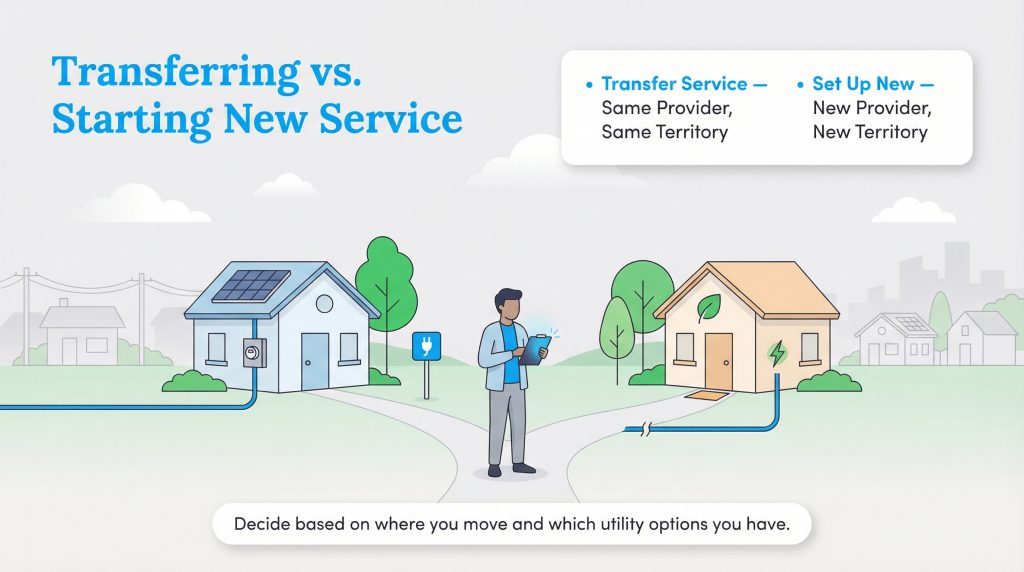
Knowing whether you can simply transfer an account or if you must cancel and restart service depends entirely on your move distance and which providers legally serve your new neighborhood. Before you pick up the phone to arrange your services, you need to verify if keeping your current utility company is even an option. Trying to transfer an account into a territory your provider does not cover results in immediate cancellation and frustrating move-in delays.
Understanding the fundamental difference saves you valuable time and protects your credit score from unnecessary hard inquiries. Transferring an account preserves your positive payment history and preferred billing cycles, while starting fresh means undergoing new customer evaluations. We built a simple comparison table to help you understand exactly what to expect from both scenarios.
| Feature | Transferring Utilities | Setting Up New Utilities |
|---|---|---|
| Provider Status | Keeping the exact same provider | Switching to a brand-new provider |
| Move Distance | Local move within the same service territory | Out-of-state move or new service area |
| Credit Check | Usually not required to transfer service | Standard requirement for new accounts |
| Security Deposit | Avoided by transferring positive payment history | Often required (can range from $100 to $300) |
| Setup Complexity | Simple address update and schedule switch | Full application, ID verification, and potential technician visit |
When to Transfer Your Existing Utilities
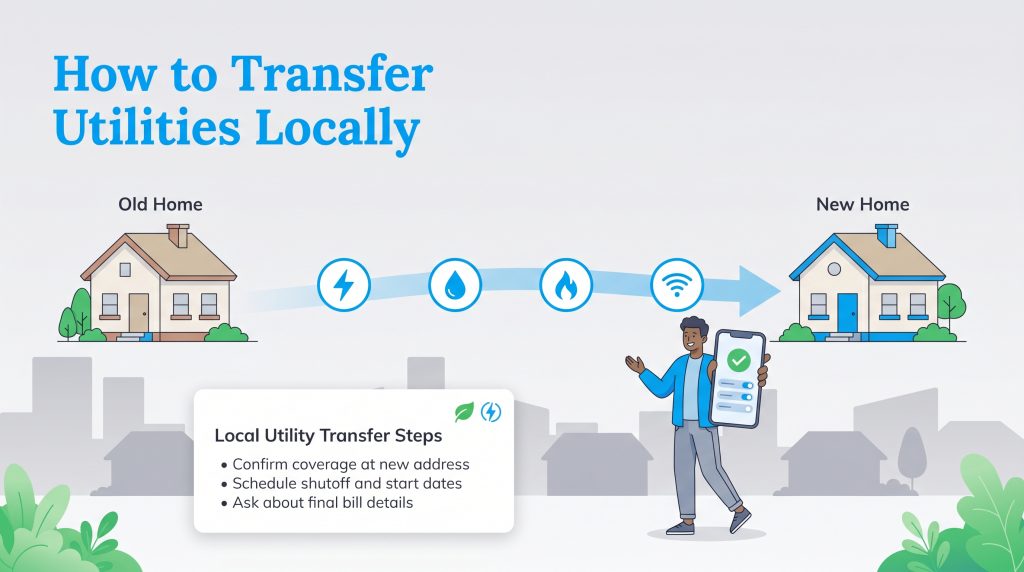
Transferring is undoubtedly the path of least resistance, allowing you to bypass soft credit checks and skip entirely new digital portal setups. However, keeping your exact same provider is only legally and physically possible under a few specific scenarios. Here is the exact step-by-step process for how to transfer utilities when moving locally without missing a beat:
- Local municipal moves: If you are moving within the exact same city limits, your local municipal water, sewer, and trash services can easily transition. Cross a county or city line, and you will need a brand-new setup.
- Shared service territories: You can quickly transfer private telecommunications or regulated electricity monopolies if your new home falls perfectly within their existing regional coverage map.
- Deregulated market carryovers: In energy-choice states, you can transfer your retail energy provider seamlessly to a new address, provided your current long-term contract allows it.
🌱 Eco Edge: Even if you are simply transferring your current service locally, ask your provider if they have recently introduced any green energy programs. Moving is the perfect catalyst to upgrade to a 100% wind or solar energy-saving option without changing companies.
When to Start Fresh with New Utility Providers
When you cross state lines, move to an entirely new region, or sign your very first lease, transferring is no longer an option on the table. Setting up utilities for the first time requires passing identity verification and undergoing a standard soft credit check. However, treating this fresh start as an opportunity allows you to fully optimize your monthly household spending.
In a deregulated energy market setup, you are not stuck with a single monopoly option. You can actively shop around for electricity or natural gas providers that offer superior per-kilowatt-hour rates, free nights and weekends, or competitive renewable energy incentives. If you are moving into a rental, always check your lease agreement before opening unnecessary accounts, as landlords frequently bundle municipal water and trash pickup directly into the rent payment.
Finally, always confirm the specific internet coverage map for your new neighborhood to avoid being stuck with slow, outdated connections when you previously paid for high-speed fiber.
Learn more about Setting Up Utilities for a New Home
The Hidden Costs: Utility Transfer Fee vs Connection Fee
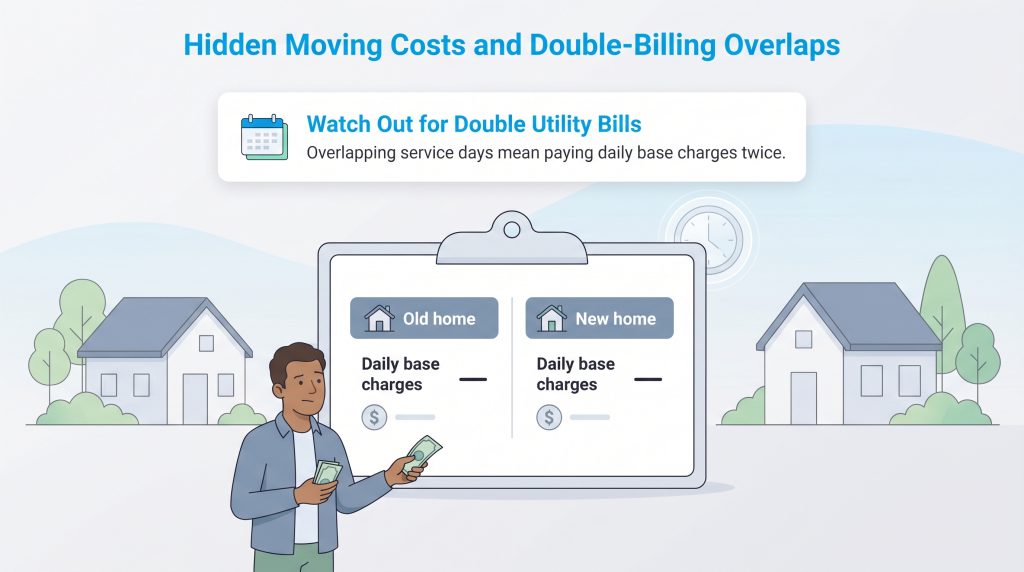
Relocating is already an expensive endeavor, but failing to navigate your service connections properly can quickly drain your budget. Hidden moving costs frequently take the form of unexpected administrative penalties. Understanding the difference between a utility transfer fee vs connection fee ensures you are completely prepared for your first transition month bills.
| Fee Type | Average Cost | Description |
|---|---|---|
| Utility Transfer Fee | $20 to $50 | A minor administrative charge to digitally shift an existing active account to a new local address. |
| New Connection Fee | $30 to $100 | A non-refundable activation fee covering the physical or digital labor required to turn on a brand-new meter. |
| Security Deposit | $100 to $300 | A refundable upfront charge required for new accounts without an established payment history. |
Beyond standard activation fees, you must also meticulously plan for double-billing. When you overlap utilities when moving, you keep services active at your old home for cleaning while simultaneously powering up your new residence. Because utility bills contain non-negotiable fixed daily base charges, having two active meters means you are paying those non-usage fees twice. You must explicitly budget an extra $20 to $50 for this transition month to comfortably absorb these simultaneous active accounts without derailing your moving finances.
Step-by-Step Timeline for Managing Moving Utilities
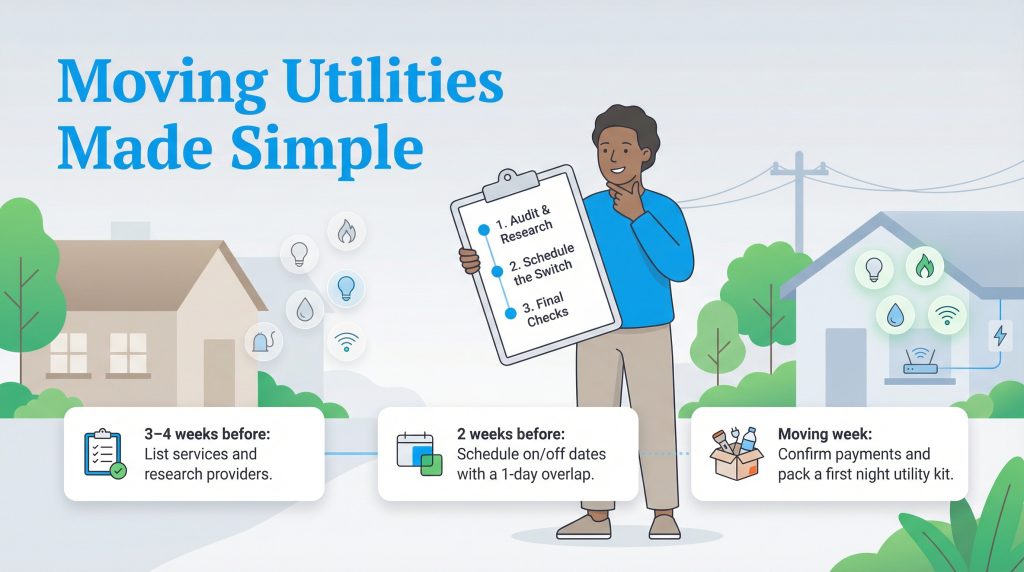
Waiting until the last minute to tackle your utility setups guarantees highly uncomfortable blackout periods and rushed administrative fees. Follow this chronological new home utility checklist to ensure your household infrastructure activates perfectly on schedule.
- 3 Weeks Out: Audit your current active services, including power, water, trash, and Internet service. This is the exact window for transferring internet to a new house. Call your provider immediately to verify their physical network extends to your new address, as telecommunications technicians book up incredibly fast during peak seasons.
- 2 Weeks Out: Contact your chosen providers to officially book your shut-off and turn-on dates. During this step, ask your current provider to email you a formal Letter of Credit.
Managing Security Deposits and Letters of Credit
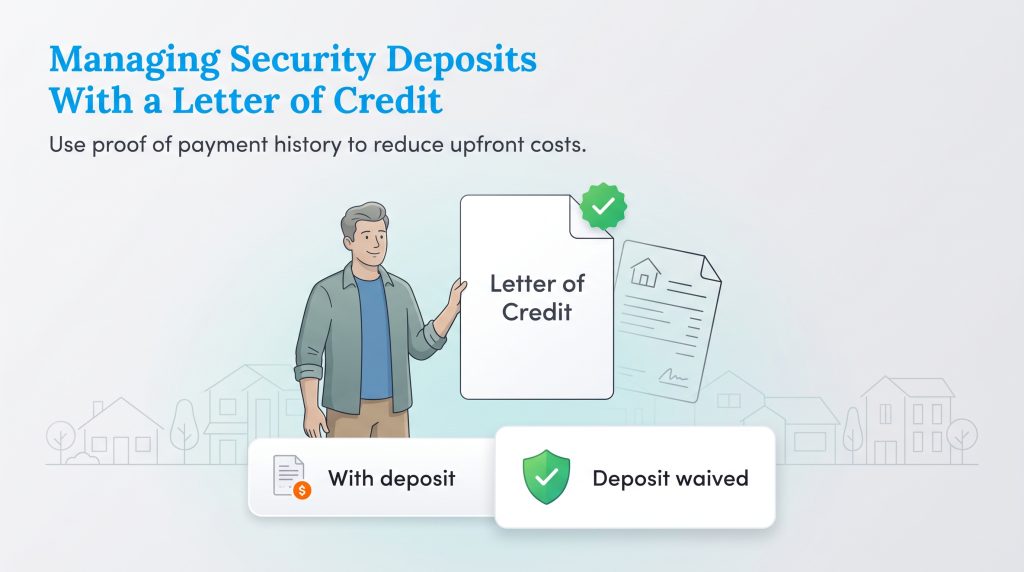
When opening a brand-new account, regional providers will routinely require an upfront security deposit based on a standard soft credit check. However, presenting a formal Letter of Credit from your previous provider definitively proves your positive, on-time payment history and often completely waives this hefty administrative requirement.
Pro Tips for Overlapping Utility Service Dates
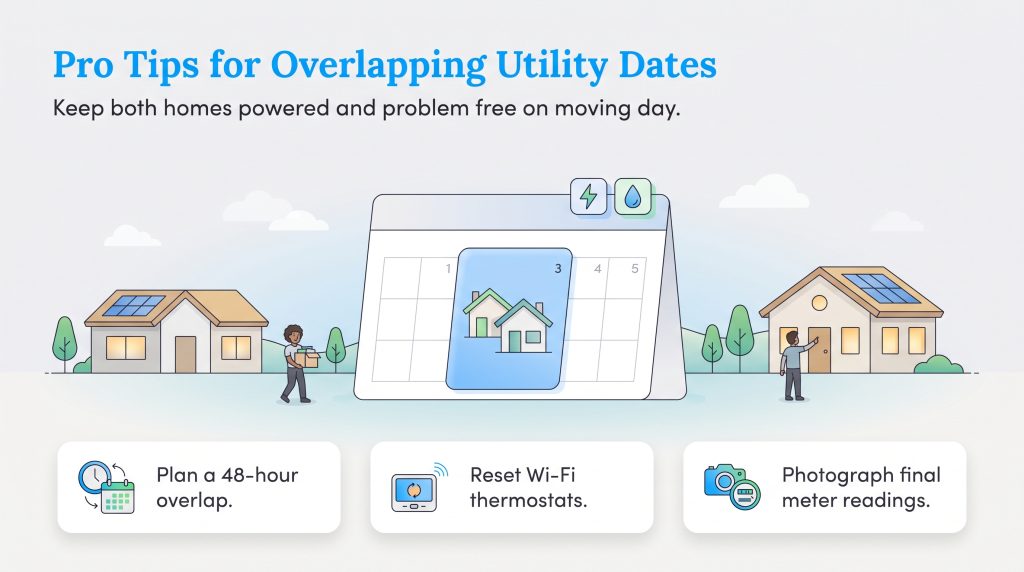
Overlapping your dates ensures you have bright power and reliable running water at both properties during the most chaotic transition days. Before handing over the keys to your old house, remember to reset any Wi-Fi thermostats to their factory settings so the next occupants can connect without issues. Finally, when you officially cancel your utility services, capture a time-stamped photo of the final meter reading at the old residence and the initial reading at your new home to completely prevent any costly billing disputes.
How to Make Eco-Conscious Utility Choices During a Move
A fresh address presents the perfect catalyst to minimize your daily carbon footprint. When switching utility providers when moving, actively search for robust renewable energy programs. Many providers in deregulated energy markets offer 100% wind or solar energy-saving options that cost roughly the same as traditional fossil fuel rates. During your new account setup phase, immediately opt into paperless billing to eliminate unnecessary paper waste and secure immediate digital autopay discounts.
💸 Money-Saver: Utilizing smart home technology is one of the easiest ways to trim your monthly spending. For more ways to reduce everyday expenses, read our detailed guide on how to save on your electric bill in a new residence.
Troubleshooting Common Utility Transfer Issues
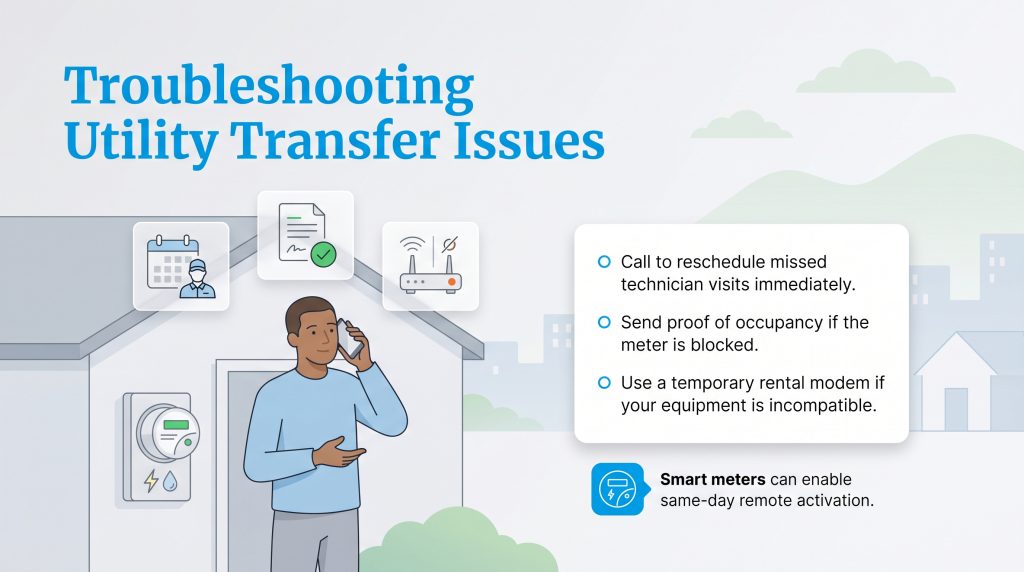
Once your first statements arrive, carefully audit your utility bills to ensure your environmentally mindful choice rates were accurately applied. If your eco-friendly programs or initial transfers fail to process properly, you must troubleshoot the administrative issue immediately. Call your provider’s retention department to formally escalate missed technician appointments, or manually email proof of your new lease if a previous tenant accidentally left a block on the home’s smart meter.
Preparing Your Essential Services for Move-In Day
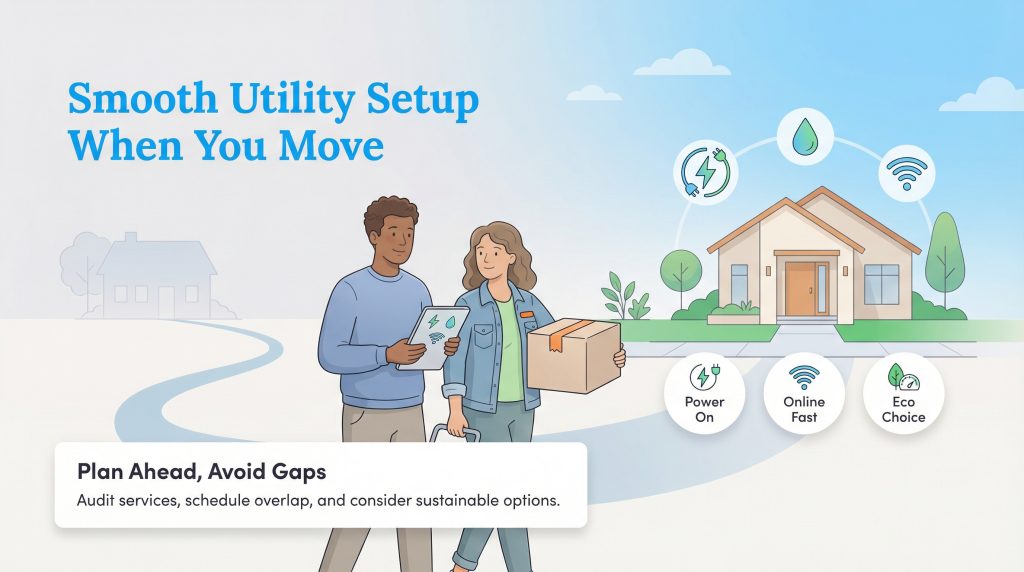
Successfully transferring or setting up your new utilities allows you to completely bypass logistical stress and focus on the exciting process of settling into your fresh space. By strategically budgeting for overlap fees, following a precise timeline, and embracing eco-conscious energy choices, you completely eliminate the miserable risk of move-in day blackouts.
Take absolute control of your home’s infrastructure right from the start. For more highly effective tips on keeping your new residence efficient and affordable from day one, check out the Department of Energy’s comprehensive Energy Saver guide. With rigorous planning and the right checklist firmly in hand, you will confidently have the lights shining brightly and the high-speed internet running flawlessly the exact moment you step through your new front door.
Frequently Asked Questions About Transferring vs Setting Up New Utilities
How long does it take to transfer utilities to a new address?
Do I have to pay a deposit when setting up utilities for the first time?
How do I avoid paying for overlap utilities when moving?
How early should I schedule utilities for a new house?
Does it cost money to transfer utilities?
Can I transfer my internet to a new address?
About the Author

LaLeesha has a Masters degree in English and enjoys writing whenever she has the chance. She is passionate about gardening, reducing her carbon footprint, and protecting the environment. She also recently served as President of the Board for City Sprouts (a community garden).

David has been an integral part of some of the biggest utility sites on the internet, including InMyArea.com, HighSpeedInternet.com, BroadbandNow.com, and U.S. News. He brings over 15 years of experience writing about, compiling and analyzing utility data.