

Knowing your legal protections helps you restore essential services quickly and safely if a landlord suddenly cuts your power or water.
Key Takeaways
- Your landlord cannot legally shut off your utilities as a way to force you out of your rental property without going through the proper eviction process.
- Documenting the exact time and date of the disconnection is an essential first step for building a case and communicating with local authorities.
- Smart thermostats and utility apps can provide timestamped data to help prove exactly when your essential home services were interrupted.
No, a landlord generally cannot shut off your utilities to force you out or collect unpaid rent. Losing power, water, heat, or gas without warning can make your home feel unsafe fast. Understanding your tenant rights utility shut off protections is one of the fastest ways to safeguard your household and legally force the restoration of your services. This guide explains what to document, who to contact, and how to differentiate between an illegal landlord lockout and a standard disconnection so you can resolve the situation safely.
Is It Legal for a Landlord to Shut Off Your Utilities?
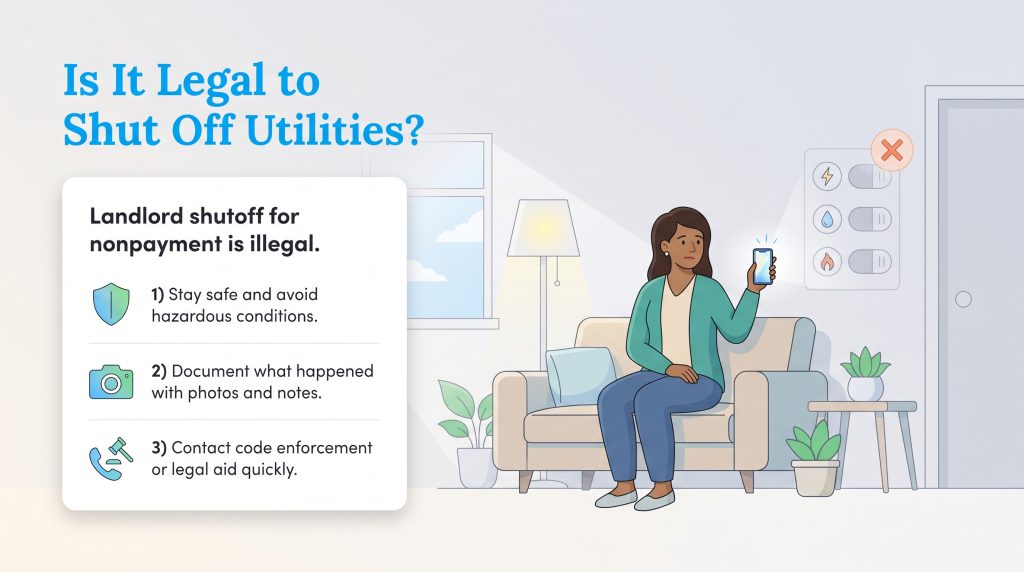
In short, it is overwhelmingly illegal for a property owner to intentionally disconnect your essential services. “Self-help evictions” are illegal in all 50 states. This means a utility shut off for nonpayment of rent by a landlord is strictly prohibited. If you fall behind on your monthly payments or violate a lease term, landlords must still follow the formal, court-ordered eviction process to remove you from the property.
There are very few specific situations where a temporary shutoff is permissible. If there is a genuine emergency — such as an active electrical fire, a severe gas leak, or a burst pipe — your landlord or the utility provider can sever the connection to keep everyone safe. Planned maintenance or bona fide construction also permits temporary shutoffs, though landlords are strictly required to provide proper notice for utility shut off rental property actions.
Understanding Constructive Eviction and Utility Retaliation
When a landlord purposely makes a rental unit completely unlivable to force you to move, the law often views this as a constructive eviction. Rather than handing you a formal legal notice, they create conditions so unbearable — like removing your heat in winter or shutting off your running water — that you feel you have no choice but to pack up and leave.
In these cases, an illegal eviction utility shut off crosses the line into severe tenant abuse. Because the property owner is essentially forcing you out without a court order, you have grounds to sue for damages. However, always speak with local legal aid before moving out and claiming constructive eviction utilities, because abandoning the unit can significantly alter your legal remedies.
Property owners often use disconnections as a weapon. Common examples of landlord utility retaliation include:
- Cutting the main breaker box after you request necessary health and safety repairs.
- Turning off the water valve because you filed a complaint with local code enforcement.
- Disabling your primary heating system to punish you for forming a tenant union.
- Refusing to pay the master-metered gas bill to force all tenants out of a building.
Landlord Nonpayment vs. Utility Company Shut-Offs
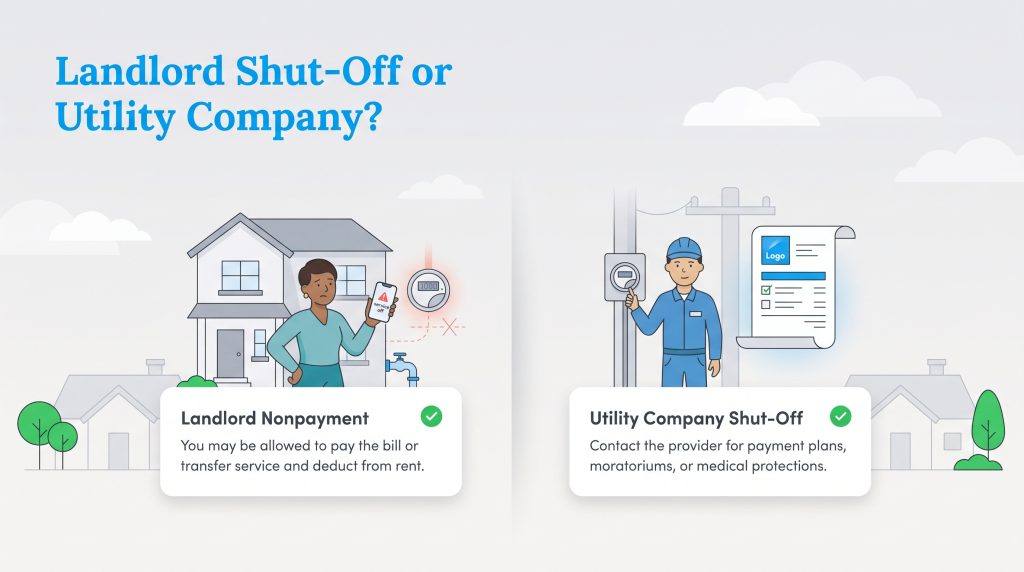
It is critical to distinguish between a malicious property owner and a standard utility company disconnection. Knowing the difference dictates your immediate response.
If your utilities are bundled into your rent or master-metered, your landlord is legally responsible for paying the bill. Your tenant rights when landlord doesn’t pay utilities usually allow you to step in, open a new account in your own name, or pay the outstanding balance and deduct it from your next rent check to avoid losing your power or water.
Utility company shut-offs, conversely, happen when the account holder fails to pay the provider directly. Fortunately, regulated utility providers must follow strict state guidelines before cutting service. Many states offer protections for vulnerable consumers, such as winter moratoriums that prevent heat disconnections during freezing months or medical exemptions if someone in your home relies on life-saving equipment. You can often negotiate payment plans directly with utility providers to prevent an emergency utility shut off tenant rights crisis.
| Scenario | Reason for Disconnection | Tenant’s Legal Remedy |
|---|---|---|
| Landlord Retaliation (Illegal) | Landlord intentionally cuts service to force you out. | Call code enforcement, file for an emergency court injunction, and sue for damages. |
| Landlord Nonpayment | Landlord fails to pay the master-metered utility bill. | Transfer the account to your name or pay the utility directly and deduct it from rent (if local law permits). |
| Utility Company Shut-Off | Tenant fails to pay the utility provider directly. | Contact the provider to negotiate a payment plan or request a medical exemption. |
Immediate Action Plan: What to Do If Your Utilities Are Disconnected
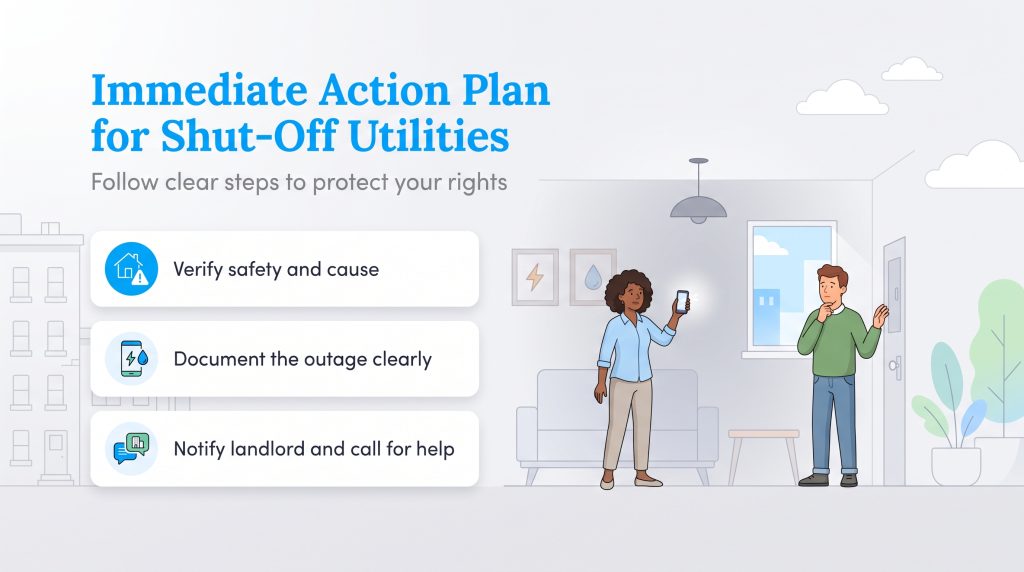
When the lights unexpectedly go out or the faucets run dry, panic is a natural reaction, but you have legal options to fight back. Knowing exactly what to do when you face a “landlord turned off electricity what can i do” scenario helps you regain control. Follow this clear, chronological action plan to prioritize your safety and document the incident.
1. Verify the Cause and Prioritize Safety
Before you confront your property manager, ensure your household is physically safe. Walk outside to check whether the outage is building-wide or if it is just your unit. Do not tamper with utility meters, electrical panels, or shared building equipment. If you smell gas, leave immediately and call 911. If you are dealing with a no water in apartment tenant rights issue, secure bottled water for essential hygiene while you investigate.
2. Document the Outage
Courts and utility commissions rely heavily on factual evidence. Record the current state of your electric services and plumbing. Modernizing your home with smart technology can also provide a helpful security measure against predatory landlord behavior. Smart thermostats, utility apps, and router logs can easily capture the exact minute the connection failed.
3. Send a Formal Written Notice to the Landlord
Notify your landlord by sending a text message or email demanding immediate restoration of your utilities. Keep the tone professional, but make it clear that you consider the shutoff an illegal action. Never rely solely on verbal conversations. Save all responses or take screenshots of ignored messages to prove they are aware of the issue.
4. Contact the Utility Provider and Local Authorities
Call your local provider for setting up water service, gas, or electricity directly. Explain the situation and ask what options are available under local rules. If the landlord refuses to restore service, contact your local code enforcement office or the city health department. These municipal agencies treat essential service interruptions as severe health hazards and can dispatch an inspector to issue a citation.
5. Consult a Tenant Rights Attorney
If the outage persists, you need legal backing. Reach out to local legal aid or a tenant lawyer to discuss emergency court relief. An emergency injunction can legally compel your landlord to restore the utilities while a broader legal case is decided.
State-Specific Protections and Notice Requirements
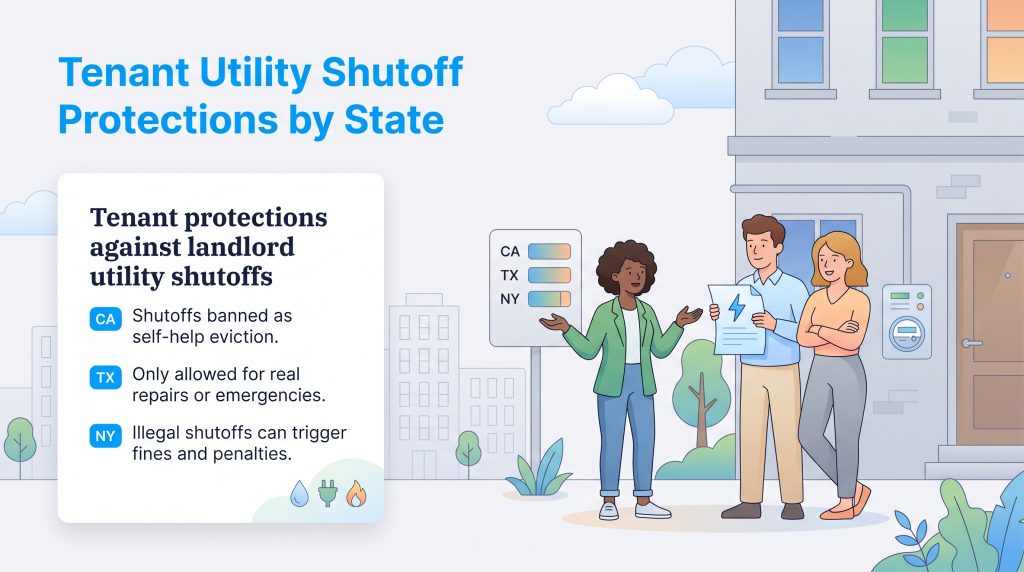
Tenant utility shut off laws vary drastically by state, local housing codes, and public utility regulations. What constitutes proper notice for utility shut off rental property activities in one state might be completely illegal in another. Below is a quick breakdown highlighting how a few major states handle these illegal shutoffs and the steep penalties landlords face for breaking the rules.
| State | Are Shutoffs Legal During Eviction? | Potential Landlord Penalties | Where to Check |
|---|---|---|---|
| California | No | Up to $100 per day the utility is off, plus actual damages and attorney fees. | California Civil Code § 789.3 |
| Texas | No (except for bona fide repairs or emergencies) | One month’s rent plus $1,000, actual damages, and court costs. | Texas Property Code § 92.008 |
| New York | No | Fines and civil penalties that can range from $1,000 to $10,000 per violation, plus potential misdemeanor charges. | Real Property Actions and Proceedings Law § 768 |
| Washington | No | Actual damages plus a penalty of up to $100 per day of lack of service, and attorney fees. | RCW 59.18.300 |
| Ohio | No | Actual damages and attorney fees, with the right to obtain a court order to restore service. | ORC 5321.15 |
Suing for Damages: How to Enforce Your Tenant Rights
If your landlord flagrantly violates the law by freezing you out or cutting your water, you can often take them to civil or small claims court. The goal of suing for damages is not only to compensate you for the hardship but also to punish the landlord for illegal behavior.
Depending on your state, courts may award actual damages for out-of-pocket expenses, statutory damages for each day the utility was intentionally off, and attorneys’ fees. Make sure you organize your timestamped photos, written correspondence, and any citations from the health department to present a rock-solid case. Always find local legal aid organizations to help you file the correct emergency petitions and navigate the courtroom process efficiently.
Sustainable Habits to Keep Utility Bills Manageable
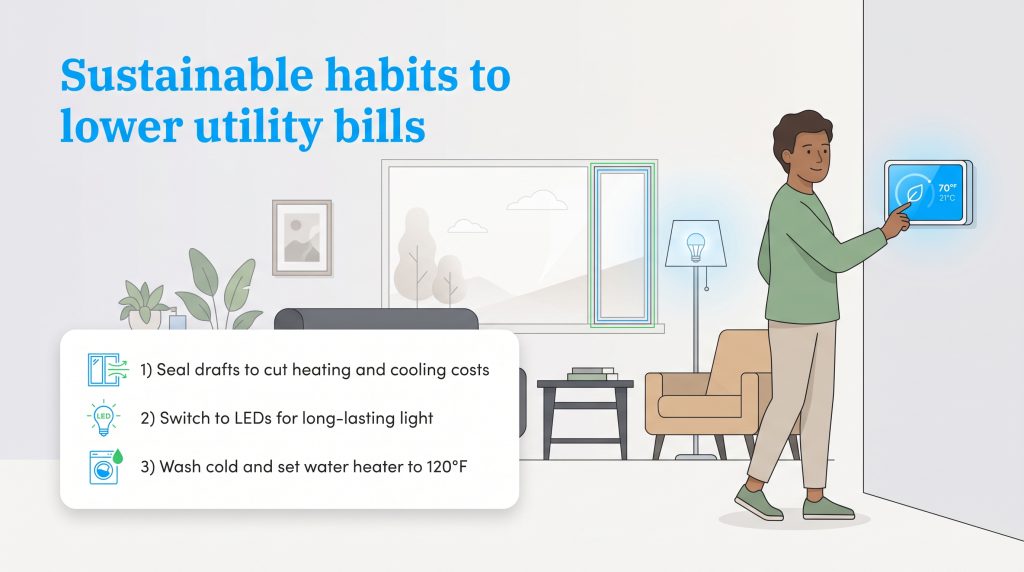
While protecting yourself from an illegal landlord shut-off is paramount, it is equally important to manage your utility usage to prevent standard nonpayment disconnections. Adopting a few low-cost, high-impact sustainable habits helps lower your monthly burden and keeps your accounts in good standing.
Start by sealing drafts around your windows and doors to reduce the strain on your heating and cooling systems. Swap out incandescent bulbs for LED alternatives, which use a fraction of the electricity and last significantly longer. Finally, try washing your laundry in cold water and adjusting your water heater temperature down to 120 degrees Fahrenheit. These environmentally mindful choices not only reduce your carbon footprint but also create immediate savings on your monthly statements.
Securing Your Essential Services Moving Forward
Losing your essential services at the hands of a hostile landlord is a deeply jarring experience, but you have fundamental rights designed to keep your household safe, warm, and illuminated. By documenting the incident, reaching out to the proper authorities, and understanding your local protections, you can effectively advocate for yourself and hold predatory property owners accountable.
If the relationship with your property manager remains toxic, start planning your exit strategy. When you eventually transition to a safer, more reliable living situation, consider consulting a renters utility setup guide to ensure you can set up utility accounts directly in your name or clearly review how master-metered utilities are billed before signing the lease. Whether you are arranging your natural gas connection or looking for ways to save on your electric bill, maintaining direct control over your energy providers is a smart, sustainable way to protect your peace of mind moving forward.
Frequently Asked Questions About Tenant Rights During Utility Shutoffs
Utility shutoff rules vary by location, but these answers cover the most common questions tenants have when essential services are interrupted. For decisions involving rent, court filings, or lease termination, check your local law or speak with legal aid first.
Can a landlord legally cut off a tenant’s utilities if they do not pay their rent?
What are my tenant rights when the landlord doesn’t pay the utilities?
Can I withhold rent if my landlord shuts off my water or electricity?
How much can I sue my landlord for an illegal utility shut-off?
How do I report a landlord for shutting off utilities?
What is considered a constructive eviction utility shutoff?
Can a utility company shut off service if the landlord hasn’t paid?
What are my tenant rights if I have no water?
How quickly must a landlord restore utilities after an illegal shutoff?
Can my landlord shut off utilities for repairs?
Should I call the police if my landlord shuts off my utilities?
Can my landlord charge me extra fees to reconnect utilities?
About the Author

LaLeesha has a Masters degree in English and enjoys writing whenever she has the chance. She is passionate about gardening, reducing her carbon footprint, and protecting the environment. She also recently served as President of the Board for City Sprouts (a community garden).

David has been an integral part of some of the biggest utility sites on the internet, including InMyArea.com, HighSpeedInternet.com, BroadbandNow.com, and U.S. News. He brings over 15 years of experience writing about, compiling and analyzing utility data.