

Setting up your utilities in Michigan is easy when you gather your documents early and understand the state’s energy choice programs.
Key Takeaways
- Prepare your lease or deed and a valid ID before calling any Michigan utility providers to speed up your transfer or new service requests.
- Michigan residents can choose their natural gas supplier and potentially their electric provider, opening the door for eco-conscious alternative plans.
- Many Michigan households should budget several hundred dollars per month for core utilities, especially during winter heating season.
Moving to Michigan comes with enough logistics already, so utility setup shouldn’t be the part that slows you down. Because Michigan operates under a semi-regulated energy market, figuring out who provides your gas and how to set up your electricity can initially feel a bit confusing. Whether you are buying a home in Grand Rapids or renting an apartment in downtown Detroit, navigating the transition doesn’t have to be a stressful chore. By utilizing our comprehensive moving to Michigan utilities guide, exploring environmentally mindful choices, and following a clear timeline, you can easily conquer this administrative task, lower your monthly bills, and settle into your new space with confidence.
A Step-by-Step Michigan Utility Setup Checklist
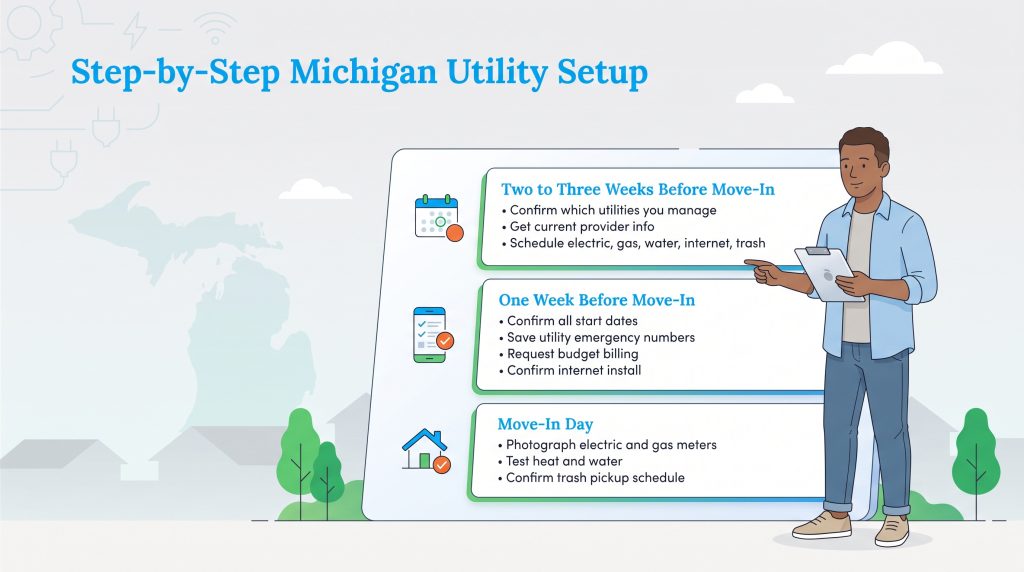
Knocking out your utility transfers early prevents unnecessary stress on moving day. Use this comprehensive moving to Michigan checklist to ensure your lights, heat, and internet are fully functional the moment you walk through your new front door.
- 30 Days Before Move-In: Initiate your service transfer as early as possible. Major providers actively encourage this timeline, and securing a Consumers Energy start service request specifically recommends a 30-day notice to ensure an on-time connection during busy seasons.
- Two to Three Weeks Before Move-In: Confirm which utilities you are strictly responsible for setting up. Ask your landlord or the previous homeowner for a list of their current providers, and officially schedule your electric, gas, water, internet, and trash service activations.
- One Week Before Move-In: Verify all service start dates with your providers via email or phone. Save the 24-hour emergency outage numbers for your local electric and gas utilities in your phone contacts, request budget billing if it is available, and confirm your internet installation appointment window.
- Move-In Day: Take clear, timestamped photos of your electric and gas meters to guarantee accurate initial billing. Test your home’s heat, air conditioning, and water fixtures immediately, and confirm your new neighborhood’s trash and recycling pickup schedule.
Quick Links: Start, Stop, or Transfer Major Michigan Utilities
Hunting down the correct web page to initiate your service can eat up valuable packing time. To streamline your move, we compiled the direct service portals and official customer service phone numbers for the state’s most prominent utility companies. Use these links to quickly schedule a DTE Energy move service request, activate a Consumers Energy account, or connect with your regional cooperative.
| Utility Provider | Customer Service Number | Direct Service Portal |
|---|---|---|
| DTE Energy | 800-477-4747 | Start, Stop, or Move Service |
| Consumers Energy | 800-477-5050 | Start, Stop, or Transfer Service |
| Michigan Gas Utilities (MGU) | 800-401-6402 | Start, Stop, or Move |
| Great Lakes Energy (Co-op) | 888-485-2537 | New Service Request |
📌 Quick Fact: When utilizing these portals to start service, you will generally need your exact new service address, your desired start date, and your preferred payment method ready to complete the online form.
Navigating Utility Responsibilities: Renters vs. Homeowners
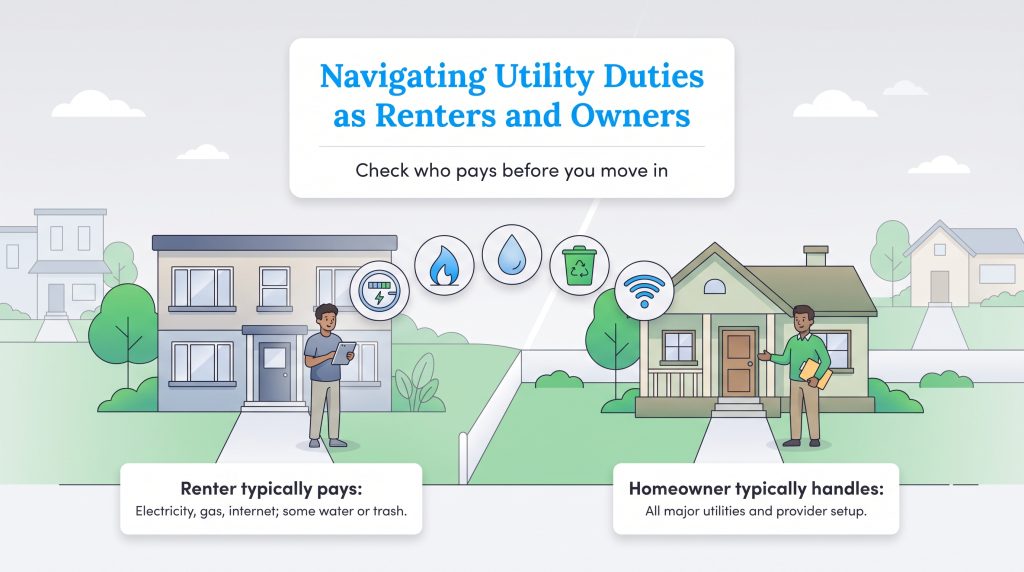
Your specific setup steps depend entirely on whether you are renting an apartment or buying a property. Review your lease or closing documents well in advance to verify exactly which services fall under your name and which ones are handled by a third party.
| Utility Task | Renter Responsibility | Homeowner Responsibility |
|---|---|---|
| Electricity | Usually the tenant’s responsibility | Homeowner’s responsibility |
| Natural Gas | Often the tenant’s responsibility | Homeowner’s responsibility |
| Water and Sewer | May be included in rent | Usually set up with the local municipality |
| Trash and Recycling | Often included in rent or city services | May require municipal or private setup |
| Internet | Tenant chooses the provider | Homeowner chooses the provider |
If you are exploring off-campus housing in prominent college towns like Ann Arbor or East Lansing, you might encounter “all-bills-paid” apartments. In these rental agreements, the landlord covers the cost of electricity, gas, water, and trash, folding it directly into your flat monthly rent fee. While this offers incredible convenience and predictable budgeting, you should carefully read your lease for any “excessive use” clauses, which allow landlords to charge you extra if your energy usage spikes unusually high during the winter months. For most standard rentals, understanding your lease is one of the most critical utility tips for renters in Michigan.
Gathering Your Information and Handling Deposits
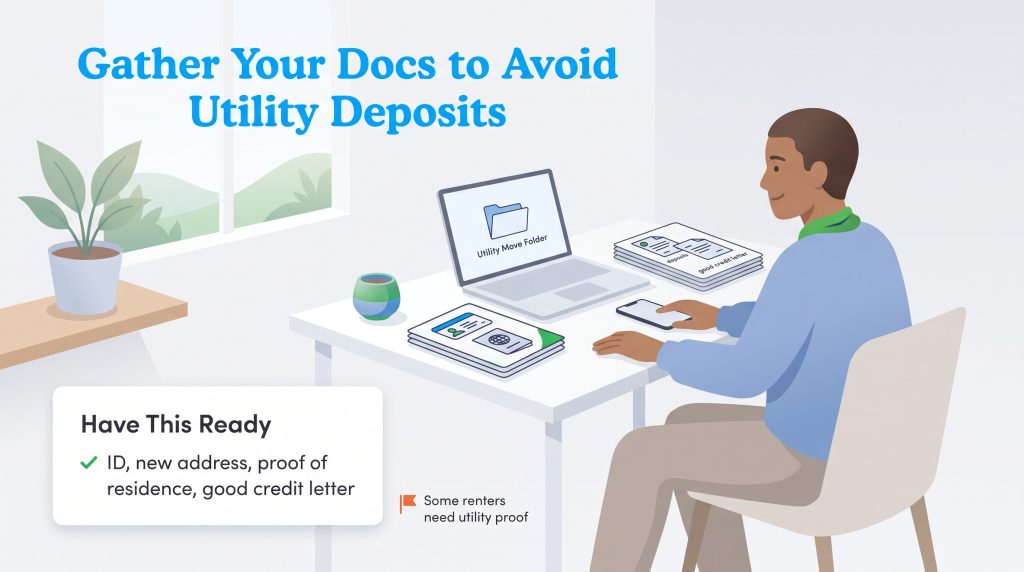
If you are transferring utilities before a Michigan move, a little upfront organization goes a long way. Utility providers commonly verify your identity before opening a new account to comply with federal identity-theft protections and internal credit policies. This essential extra step prevents fraudulent accounts and ensures you are only billed for the energy your household actually consumes.
Under the Fair and Accurate Credit Transactions Act (FACTA), utility companies must employ robust identity verification methods, but they cannot legally force you to provide a Social Security Number (SSN) to start service. If you prefer to keep your SSN private, you can legally request alternative identification methods. Have the following primary documents prepared in a dedicated physical or digital folder before calling a representative:
- A valid government-issued ID (such as a state driver’s license or U.S. passport)
- An alternative secondary ID if you decline to provide an SSN (birth certificate, W-2 form, or a state identification card)
- Your complete new service address, double-checking any specific apartment, lot, or unit numbers
- Proof of residence, such as your freshly signed lease agreement or official mortgage closing documents
When you initiate your service request, many utility providers will conduct a soft credit check. If you lack an established credit history or have previous late payment records, the company may demand an upfront security deposit. Fortunately, most Michigan utilities will gladly waive this deposit requirement if you provide a “Letter of Good Credit” from your previous utility provider. We highly recommend calling your current electric or gas company to request this official payment history document several weeks before you move; securing this waiver can easily save you a few hundred dollars in upfront moving costs.
🚩 Heads Up: If you are renting, review your lease agreement carefully. Many Michigan landlords require tangible proof of utility transfer — such as an account confirmation email — before they will legally hand over the keys to your new apartment.
Understanding Michigan Utility Companies and Energy Choice
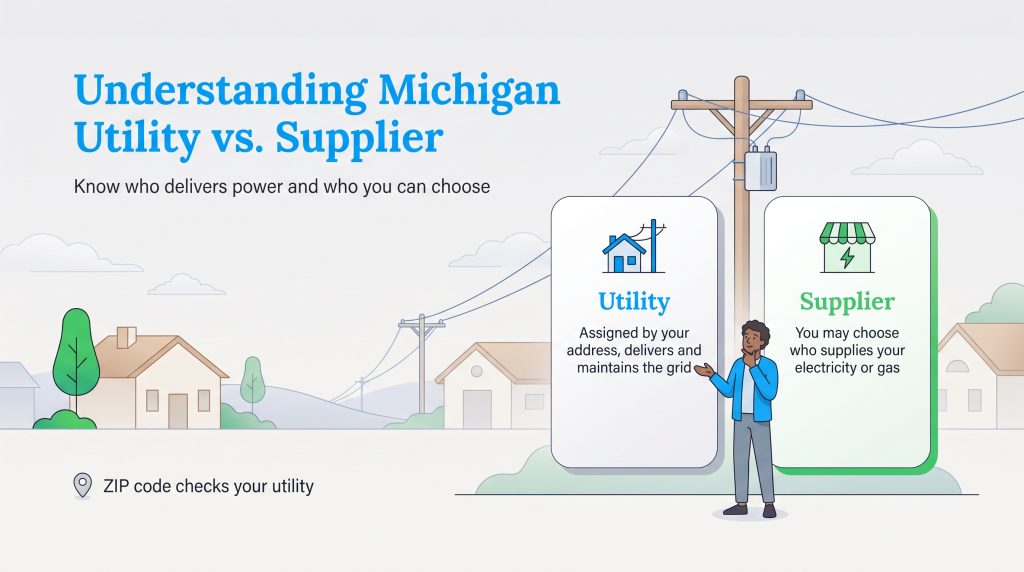
Setting up electricity in Michigan is vastly easier once you understand the distinct difference between your local utility and your energy supplier. Major utility companies — such as DTE Energy and Consumers Energy — own and strictly maintain the physical infrastructure. They manage the towering poles, the high-voltage wires, and the neighborhood transformers that deliver power directly to your meter. However, the state offers an initiative called Electric Choice, which allows a limited portion of residents to purchase their actual electricity supply from alternative retail suppliers. If you want to dive deeper into how residential power grids function, learning the fundamentals about your electric utility setup can make evaluating these retail options much simpler.
While Michigan residents have broad freedom to choose a natural gas supplier, alternative electric supplier choices are much more restricted. Your primary delivery utility is permanently assigned based on your geographic service address. This core utility provider remains solely responsible for delivering the energy, maintaining the lines, and fixing outages during major storms, and you cannot change who that is. Your supplier, on the other hand, is the company that actually generates or buys the raw electricity on the open wholesale market. While Electric Choice gives consumers the freedom to shop for better rates or green energy plans, state law controversially caps participation at just 10% of a utility’s total retail sales. This means you might find yourself placed on a lengthy waiting list if the participation cap in your specific region has already been reached.
| Service Type | Common Michigan Providers | Notes |
|---|---|---|
| Electric | DTE Energy, Consumers Energy, Indiana Michigan Power, Upper Peninsula Power Company, municipal utilities, electric co-ops | Your provider is based on your service address. |
| Natural Gas | DTE Gas, Consumers Energy, SEMCO Energy Gas Company, Michigan Gas Utilities | Some customers may be eligible for Gas Choice. |
| Water and Sewer | City, township, or municipal water department | Typically not open to retail choice. |
| Internet | Xfinity, AT&T, Spectrum, Frontier, T-Mobile Home Internet, local fiber or satellite providers | Availability varies heavily by ZIP code. |
Who Provides My Gas and Electric in Michigan?
Because the Michigan utility companies list is split strictly by geography, checking your exact ZIP code on the Michigan Public Service Commission (MPSC) website is the fastest way to pinpoint your designated electric infrastructure provider. If you are moving to a rural community, you will likely fall into a Michigan electric cooperative service area. Cooperatives like Great Lakes Energy or Cherryland Electric Cooperative are non-profit, member-owned entities that provide highly reliable power to regions outside the reach of massive investor-owned utilities like DTE.
Similar to the electric grid, natural gas delivery is managed by regional monopolies such as DTE Gas, Consumers Energy, or Michigan Gas Utilities. When you ask who provides your gas in Michigan, the delivery answer depends entirely on your address, but you are absolutely not locked into their supply pricing. Under the Michigan gas choice program, residential consumers can actively shop around for alternative gas suppliers. These independent suppliers frequently offer specialized rate structures, such as fixed-rate contracts that protect you from winter price spikes, or carbon-offset programs that support environmental sustainability. You can safely compare licensed and participating natural gas suppliers by visiting the official MPSC Gas Choice portal, which helps you thoroughly vet authorized companies before signing any binding agreements.
Average Cost of Utilities in Michigan
When calculating the average utility cost in Michigan, you must heavily factor in the state’s distinct seasons. Many Michigan households should budget several hundred dollars per month for core utilities, knowing that actual costs will fluctuate drastically between July and January. Intense winter months bring heavy lake-effect snow and freezing temperatures across the state, causing natural gas, propane, or electric heating bills to spike significantly between November and March. Setting aside extra funds during the mild summer and fall months can help you comfortably offset these anticipated winter heating costs.
To help you prepare your initial household budget, we broke down rough planning estimates for a standard two- to three-person home. Keep in mind that these averages shift based on your home’s square footage, the quality of your attic insulation, your chosen thermostat settings, and the energy efficiency of your major appliances.
| Utility Service | Estimated Monthly Cost (Mild Months) | Estimated Monthly Cost (Winter Spikes) |
|---|---|---|
| Electricity | $110 to $130 | $130 to $180+ (if using electric heat) |
| Natural Gas | $30 to $50 | $120 to $200+ |
| Water and Sewer | $60 to $80 | $60 to $80 |
| Internet | $60 to $80 | $60 to $80 |
| Trash and Recycling | $20 to $30 | $20 to $30 |
You do not have to accept high bills as a permanent reality. Taking proactive steps during your first few weeks in your new home can drastically reduce your long-term consumption. Consider implementing these immediate energy-saving tips to lower your monthly overhead:
- Install a Programmable Thermostat: Smart thermostats learn your family’s schedule and can automatically drop the temperature by a few degrees while you sleep or work, saving up to 10% on heating and cooling costs annually.
- Upgrade to LED Lighting: Swap out any outdated incandescent bulbs left behind by the previous owners. LEDs use up to 90% less energy and last substantially longer.
- Seal Drafty Windows: Michigan winters are notoriously windy. Applying inexpensive weatherstripping or caulking around older window frames prevents your expensive heated air from escaping outside.
💸 Money-Saver: You can balance out expensive winter heating spikes by asking your Michigan utility company if they offer a “budget billing” plan, which evens out your historical usage payments into a predictable flat rate over 12 months.
Setting Up Water, Sewer, and Trash Services
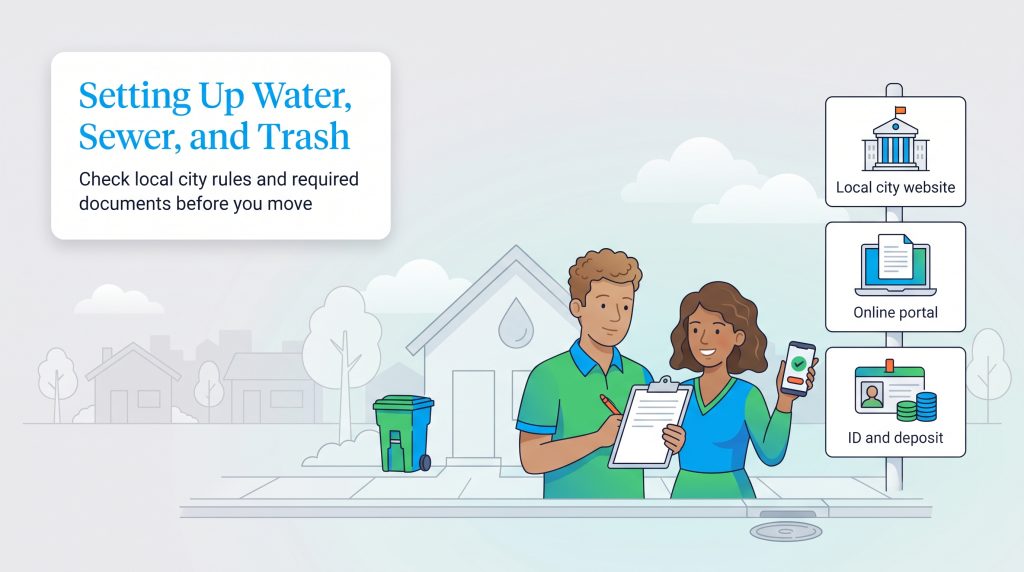
Unlike electricity and natural gas, Michigan water and sewer utilities operate strictly at the local municipal level. You won’t find a statewide choice program or competitive supplier market here. Instead, you need to check your specific city or township’s official government website to establish your essential plumbing and waste services. Depending on where you live, you will need to navigate specific city requirements, which we outline below.
If you are a renter, your water and weekly trash collection might already be rolled into your monthly rent payment, but you should always confirm this detail directly with your landlord before assuming it is handled. Homeowners, on the other hand, must prioritize establishing these municipal services immediately upon closing the sale. If you need more general guidance on dealing with municipal water departments, check out our comprehensive guide on navigating water service setup for a smooth move-in day.
City-Specific Water Setup: Detroit, Grand Rapids, and Ann Arbor
Initiating a Detroit water department new service request is notoriously strict and requires precise documentation. To establish an account with the Detroit Water and Sewerage Department (DWSD), residential customers are required to pay a mandatory $150 deposit. You must also provide a government-issued ID, your Social Security Number (or passport), and your official lease or property deed. Importantly, DWSD often requires new account holders to visit a local customer care center in person to verify these documents, so plan this trip well ahead of your moving day.
Residents moving to Grand Rapids will find a much more streamlined process by visiting the city’s dedicated Water System online portal, where you can submit a service transfer request completely digitally. Similarly, if you are settling in Ann Arbor, you can conveniently initiate or transfer your municipal water and sewer services via the City of Ann Arbor’s official government website without needing an in-person appointment.
Choosing Internet Service Before Move-In
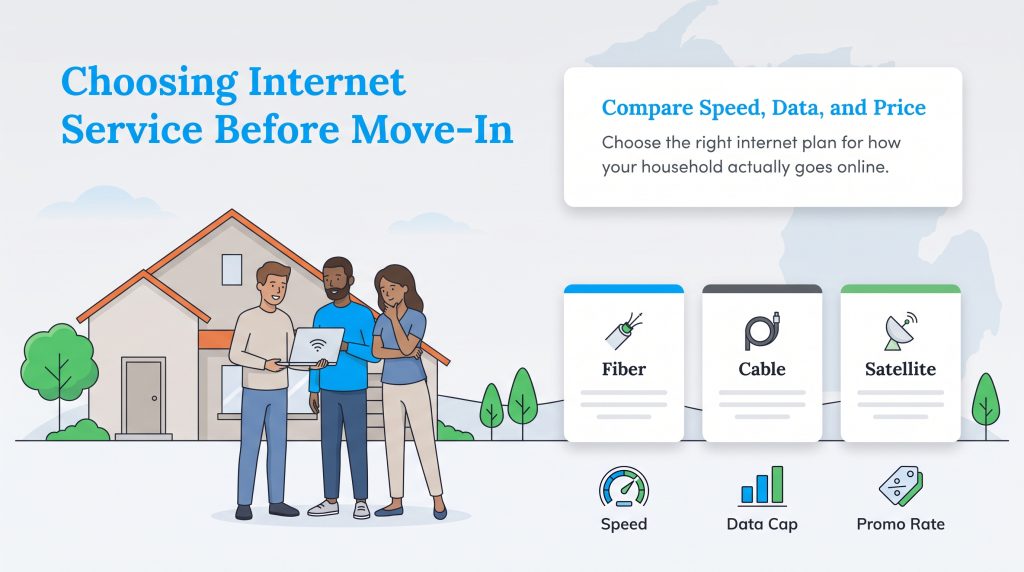
Setting up internet in Michigan is entirely distinct from your core utilities because the telecommunications market is fully deregulated. This open market structure gives you a wealth of competitive choices depending on where you ultimately settle. Urban and suburban centers like Grand Rapids, Lansing, and Detroit boast lightning-fast fiber-optic networks and robust cable providers. Conversely, rural communities in the Upper Peninsula or northern lower peninsula might rely on advanced satellite connections, localized broadband providers, or emerging 5G home internet solutions.
You should meticulously compare download speeds, monthly data caps, and first-year promotional rates across multiple internet service providers before committing to a multi-year contract. Think critically about your family’s daily online habits. If multiple people in your household plan to stream 4K video, engage in competitive online gaming, or work remotely simultaneously, you will definitely need a higher bandwidth tier to prevent frustrating buffering. For deeper advice on picking a connection that perfectly matches your digital lifestyle, explore our resources on choosing home internet service for your new residence.
Finding Green Energy Options in Michigan
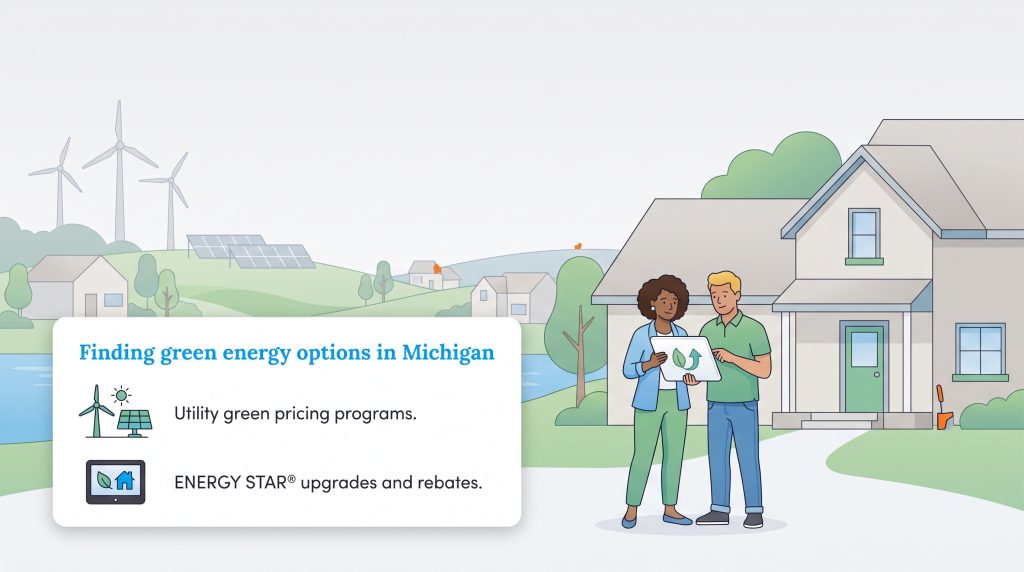
Supporting clean, renewable energy generation is highly accessible in the Great Lakes State, making it simple to find an environmentally mindful choice for your new home. Even if your participation in the Electric Choice market is restricted due to the statutory cap, you can still easily opt into voluntary green pricing programs offered by the default delivery providers. Major utilities actively encourage this transition. For example, DTE’s MIGreenPower program allows residential customers to attribute up to 100% of their electricity use to local wind and solar projects, promoting an excellent energy-saving option without the steep upfront cost of rooftop solar panel installation.
Making an eco-conscious alternative choice goes far beyond how your electricity is generated; it also heavily involves how you consume it inside your home. Upgrading older, inefficient units to modern ENERGY STAR certified appliances can frequently earn you lucrative state and federal rebates while instantly lowering your overall carbon footprint. Prioritizing household sustainability reduces the seasonal strain on the regional electric grid and keeps your hard-earned money securely in your wallet over the entire lifespan of your property.
🌱 Eco Edge: If community solar or utility renewable subscriptions are available in your neighborhood, they may let you support clean energy without the hassle of installing panels. Review the contract terms carefully, because monthly bill credits and long-term savings vary widely by program.
Preparing for Your Michigan Move
Relocating involves managing plenty of moving parts, but successfully handling the steps to transfer utilities to a new owner in Michigan sets the absolute foundation for a comfortable new chapter. While dealing with administrative phone calls and hunting down municipal web pages requires a bit of upfront effort, mapping out your strategy guarantees a warmer, brighter arrival. Making environmentally mindful choices and optimizing your setup now will pave the way for years of affordable living in the Great Lakes State. For actionable next steps on trimming down your monthly expenses, discover how to save on your electric bill and start building smarter habits from day one.
Frequently Asked Questions About Moving to Michigan Utilities
These quick answers cover common Michigan utility setup questions, especially for renters, rural households, and anyone comparing supplier options. Use them to double-check the details before you schedule service or sign a supplier contract.
How do I find out if Consumers Energy or DTE provides service at my address?
Do I need my Social Security number to set up utilities in Michigan?
What is the Michigan Gas Choice program?
How do I know how to set up utilities in Michigan if I live in a rural area?
Additionally, properties located far outside city limits frequently rely on private well water and septic systems, replacing the need for municipal water and sewer setup. If your new home uses a well or propane tank, ensure you schedule an inspection or a fuel delivery right away.
What are my tenant utility rights in Michigan?
If you feel your landlord is violating these standards, you have legal avenues for recourse. You can review authoritative legal context and file complaints by reading the Michigan Public Service Commission consumer protections page.
How early should I schedule my utility transfer before moving?
Booking early is especially helpful during the busy summer moving season, when appointment slots can fill quickly. Giving companies ample lead time ensures you won’t spend your first weekend unpacking boxes in the dark.
Can I switch my natural gas supplier later if I find a better rate?
We advise you to always read the fine print of your current contract before making a switch. Many suppliers include early termination fees, which can quickly erase any potential savings you might gain from changing companies mid-contract.
About the Author

LaLeesha has a Masters degree in English and enjoys writing whenever she has the chance. She is passionate about gardening, reducing her carbon footprint, and protecting the environment. She also recently served as President of the Board for City Sprouts (a community garden).

David has been an integral part of some of the biggest utility sites on the internet, including InMyArea.com, HighSpeedInternet.com, BroadbandNow.com, and U.S. News. He brings over 15 years of experience writing about, compiling and analyzing utility data.