
Regulators Approve Rate Hike Adding $2.87 to Average Monthly Residential Bills
Key Takeaways
- Typical residential heating bills will climb by 3.34%, or $2.87 per month, starting with billing cycles in mid-September 2026.
- Regulators approved $74.52 million in net new revenue — down more than 54% from the utility’s original request — to fund pipeline replacement and leak-detection upgrades.
- Income-eligible households gain added relief through an expanded monthly assistance credit raised to $58, up from $40.
If you heat your home with natural gas from DTE Energy, you will notice a slight bump in your monthly energy statements starting this autumn. The Michigan Public Service Commission finalized its decision in Case No. U-21973, approving a $74.52 million net revenue increase for DTE Gas Company to modernize underground pipeline infrastructure and replace aging delivery mains. While DTE originally sought a much larger $162.7 million net adjustment, state regulators trimmed more than half of that request to balance infrastructure safety against household affordability. Because the approved change raises base distribution charges rather than seasonal wholesale fuel costs, this price adjustment will remain embedded in your utility bills all year round.
How the Rate Decision Impacts Your Monthly Statement
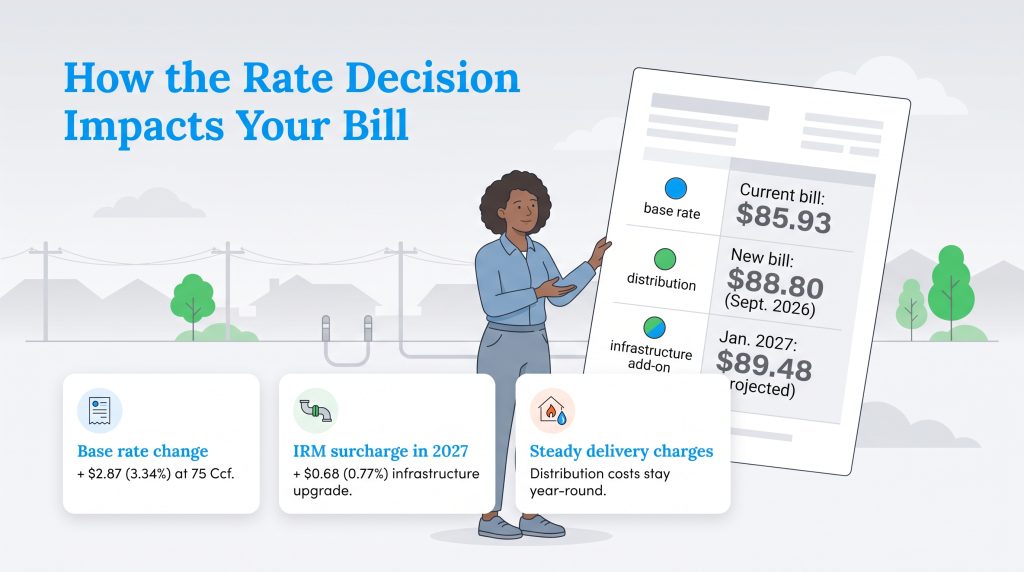
State utility regulators reviewed DTE Energy’s infrastructure plans and authorized a revised tariff structure designed to support ongoing safety mandates while curbing excess corporate spending. The approved order sets a 50-50 debt-to-equity capital structure with an authorized return on equity of 9.8%, scaled back from the utility’s proposed 10.25%.
For typical residential households consuming an average baseline of 75 hundred cubic feet (Ccf) of natural gas per month, the base rate increase adds $2.87 to your monthly invoice, representing a 3.34% bump. An additional monthly surcharge of 68 cents (or 0.77%) under the state-approved Infrastructure Recovery Mechanism (IRM) will take effect on Jan. 1, 2027. Full details of the decision and authorized accounting revisions are available in the Michigan Public Service Commission Rate Order
.
| Billing Component | Previous Baseline (75 Ccf) | Revised Rate (Sept. 2026) | Projected Jan. 2027 Adjustment |
| Typical Monthly Bill | $85.93 | $88.80 | $89.48 |
| Net Dollar Change | — | +$2.87 | +$0.68 |
| Percentage Increase | — | +3.34% | +0.77% |
| Primary Cost Driver | Standard Base Operations | Distribution & Pipeline Modernization | Infrastructure Recovery Mechanism |
Why Base Rate Increases Differ From Gas Cost Recoveries
Your monthly gas bill separates costs into two major categories: distribution delivery rates and commodity supply costs. Commodity charges fluctuate based on wholesale market supply and demand, changing periodically under the Gas Cost Recovery (GCR) mechanism without utility markup.
In contrast, base distribution rates recover the fixed physical cost of owning, operating, and inspecting thousands of miles of subterranean mains and residential service lines. Because this approved hike alters that base delivery structure, the higher expense will not drop off when spring arrives; it applies steadily across baseline water heating and cooking loads during summer, as well as peak furnace consumption in freezing winter temperatures.
Disallowed Expenses and Infrastructure Scrutiny
State regulators scrutinized DTE’s long-term capital plans before granting rate relief, disallowing several proposed capital expenditures that lacked sufficient proof of ratepayer benefit. Specifically, the commission denied $284.1 million in proposed spending to replace the aging Taggart Compressor Station, noting that DTE failed to demonstrate comprehensive cost-benefit modeling or explore lower-cost alternatives.
Regulators also deducted $17.9 million in vehicle fleet expenses after discovering that DTE retired fleet trucks earlier than historical averages without proving economic necessity. The commission ordered DTE to conduct a formal vehicle idling study to identify operational fuel savings and mandated an independent investigation into customer shutoff disparities by Dec. 30, 2026.
Michigan Counties and Communities Affected by the Hike
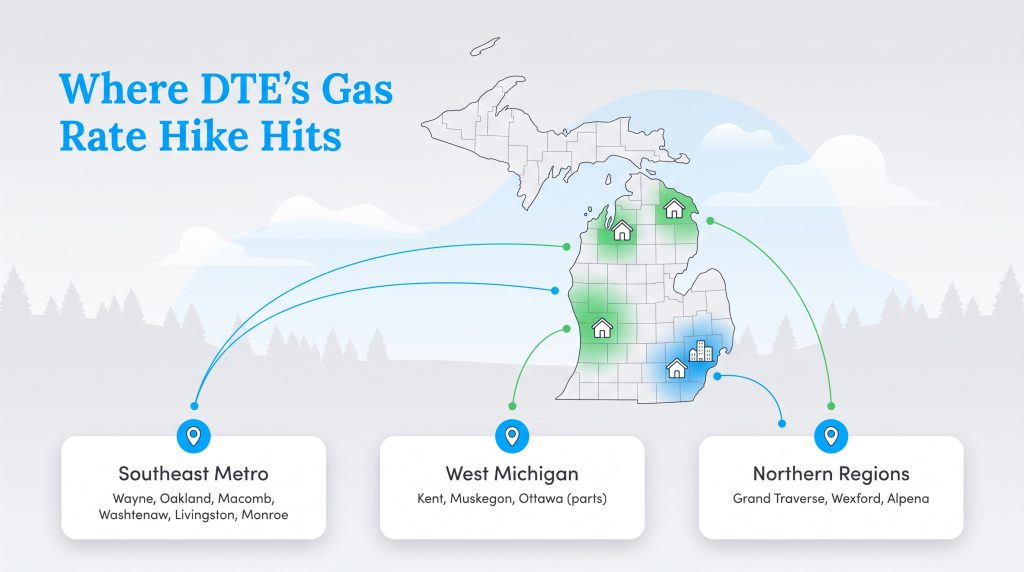
DTE Gas Company distributes natural gas to approximately 1.3 million residential, commercial, and industrial accounts across more than 500 municipalities throughout Michigan. The approved tariff adjustment applies uniformly across DTE Gas Company’s regulated service territory, meaning every household receiving natural gas delivery from the utility will see the new rates.
Southeast Michigan Metro Corridor
The largest concentration of impacted households resides in southeastern Michigan, where DTE serves dense suburban and urban communities. This footprint includes Wayne County (including Detroit, Dearborn, Livonia, and Westland), Oakland County (Troy, Southfield, and Pontiac), and Macomb County (Warren and Sterling Heights). Customers in Washtenaw County (Ann Arbor), Livingston County (Howell and Brighton), and Monroe County are likewise subject to the updated distribution charges.
West and Northern Michigan Districts
Beyond Greater Detroit, DTE Gas provides delivery service to major regional pockets in western and northern Michigan. Key service territories include parts of Kent County (including Grand Rapids), Muskegon County, and sections of Ottawa County. The utility’s service boundaries also reach central and northern communities, extending into Grand Traverse County (Traverse City), Wexford County (Cadillac), and Alpena County.
Energy-Saving Steps and Ratepayer Assistance Options
While delivery rates are fixed by regulatory orders, you still have direct control over the overall volume of natural gas your home burns each month. Taking simple steps to boost home thermal efficiency can easily offset the $2.87 monthly increase before cold weather sets in.
- Lower thermostat setpoints: Turning your thermostat back seven to 10 degrees for eight hours a day while sleeping or away can trim annual heating bills by up to 10%.
- Seal air leaks around windows and doors: Installing inexpensive silicone weatherstripping and door sweeps prevents conditioned air from escaping, easing the workload on your furnace.
- Service your heating equipment: Replacing clogged furnace air filters monthly maintains optimal airflow, reducing gas burn and system wear.
- Choose an eco-conscious alternative: Upgrading to a certified high-efficiency gas furnace or hybrid heat pump significantly cuts overall thermal demand.
Comparing Gas Supplier Options
Michigan operates a deregulated retail gas market through the state’s customer choice initiative. You can review alternative retail gas suppliers and compare pricing terms on the official MPSC Natural Gas Customer Choice Platform.
Switching to an alternative supplier lets you lock in a fixed commodity supply price, which can protect your household against unexpected winter price spikes. Remember that choosing an alternative supplier only replaces the commodity supply portion of your bill; DTE will still deliver the fuel and bill the standard regulated distribution charges.
Expanded Utility Assistance and Relief Programs
If your household budget is stretched thin, several financial assistance programs can help you manage utility payments:
- DTE Low-Income Assistance Credit (RIA/LIA): As part of this rate order, the MPSC increased the monthly credit for income-eligible customers from $40 to $58, covering roughly 70% of an average monthly gas bill.
- Low-Income Home Energy Assistance Program (LIHEAP): Federal funding distributed through state community agencies provides direct grants to prevent service disconnections during peak winter weather.
- Michigan Energy Assistance Program (MEAP): State-administered funding pairs immediate bill payment assistance with long-term energy self-sufficiency plans.
- DTE Budget Billing: Spreading seasonal heating peaks evenly across 12 consistent monthly installments prevents budget shocks during freezing winter months.
Practical Strategies to Protect Your Household Budget
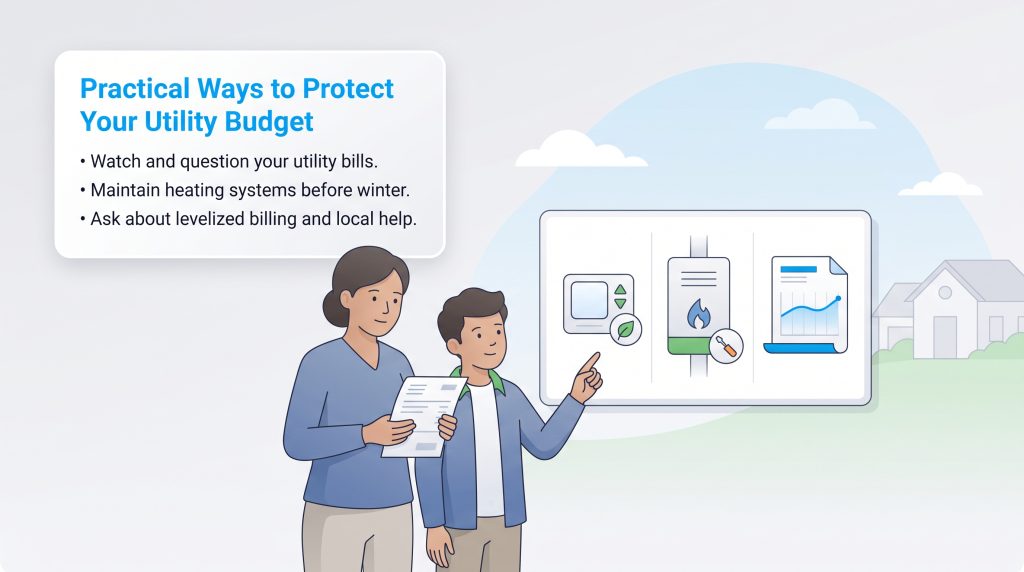
Managing recurring utility rate increases requires a balanced mix of vigilant billing oversight, routine heating maintenance, and community assistance where needed. Taking time now to winterize drafty doorways, schedule a furnace tune-up, and enroll in levelized billing ensures that rising infrastructure fees do not disrupt your monthly finances. We will continue monitoring MPSC dockets to keep you informed of upcoming utility rate filings across Michigan.
Frequently Asked Questions About DTE Energy Gas Rates
When do the new DTE natural gas rates take effect?
How much will the average residential heating bill increase?
Can I avoid this rate increase by switching to an alternative gas supplier?
What relief options and assistance programs are available if I cannot afford my bill?
About the Author

Claudio is a sustainability-focused writer with a background in Anthropology and Psychology from NC State University. He has spent over 15 years working in writing, interpretation, and translation, driven by a deep interest in how human culture shapes the environment. Today, he shares his curiosity with readers by writing about sustainable living solutions and the connection between everyday choices and environmental impact.