

Transferring Your Essential Services to California Is Manageable When You Plan Ahead and Explore the State’s Eco-Friendly Energy Options
Key Takeaways
- Start the utility setup process three to four weeks before your move to ensure your electricity, water, and internet are fully functional on day one.
- Compare local Community Choice Aggregation (CCA) programs to potentially power your new home with a cleaner energy mix and reduce your household carbon footprint.
- Request a letter of good payment history from your previous utility provider to proactively reduce or entirely waive hefty out-of-state deposit fees.
When you are moving to California setting up utilities properly is an essential step to ensure your new house is fully functional from day one. You must initiate your utility transfers three to four weeks before your exact move-in date to secure technician appointments and finalize account verifications. The Golden State features a unique energy grid filled with localized regional monopolies and municipal water districts that operate on strict timelines. By following a strategic checklist, you can proactively waive expensive out-of-state deposits, effortlessly manage your local connections, and master setting up utilities for a new home before the moving truck ever arrives.
The 3-Week California Utility Setup Timeline
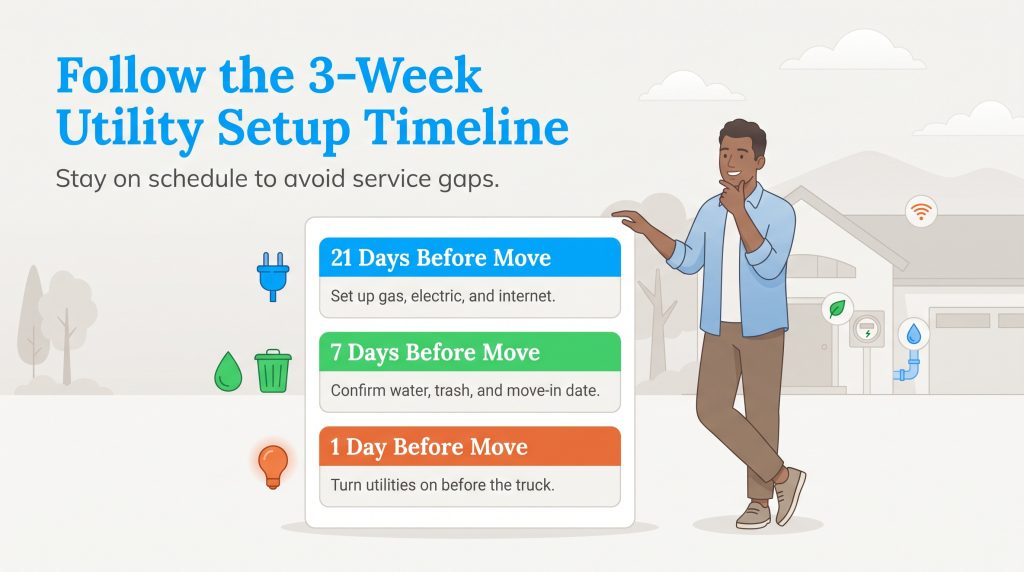
A prescriptive California utility setup timeline is the greatest tool you have for avoiding frustrating service gaps. Keeping a cross-country move organized requires knowing exactly when to submit specific requests to local municipal providers. Adhere to this simple chronological checklist to ensure a stress-free transition into your new residence.
21 Days Out Schedule Gas Electricity and Internet
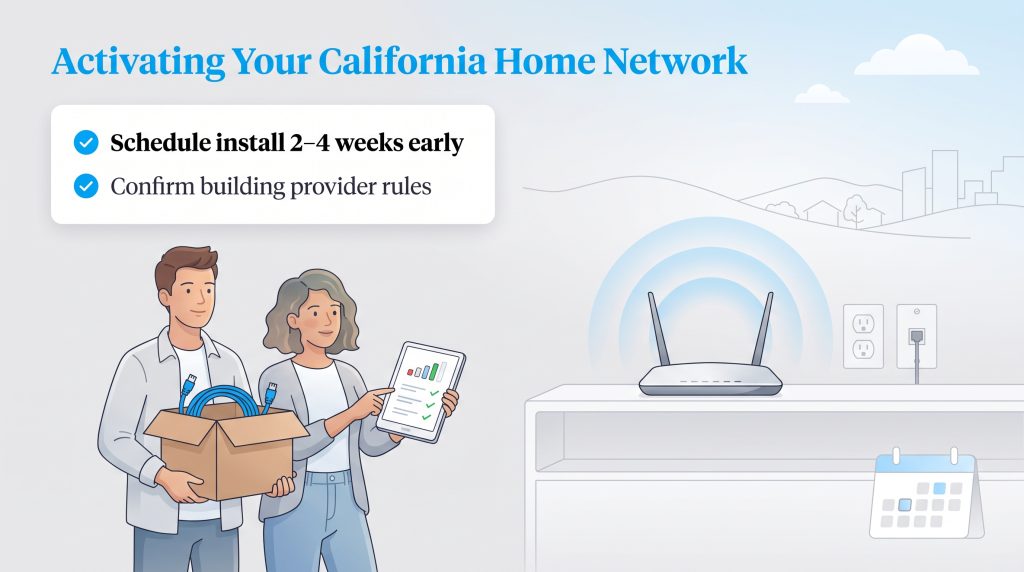
Three weeks before moving, you need to identify your regional monopolies for gas and electricity. Create your online accounts and submit your new service requests immediately. Since electricity rates in California are typically higher than the national average, this is the perfect time to compare electricity basics before you move. Additionally, you must mandate booking your internet installation at the 21-day mark. High-speed fiber technicians often have incredibly limited availability in major urban areas, and securing an early appointment guarantees you will not be left offline during your first week.
7 Days Out Confirm Water and Trash Services
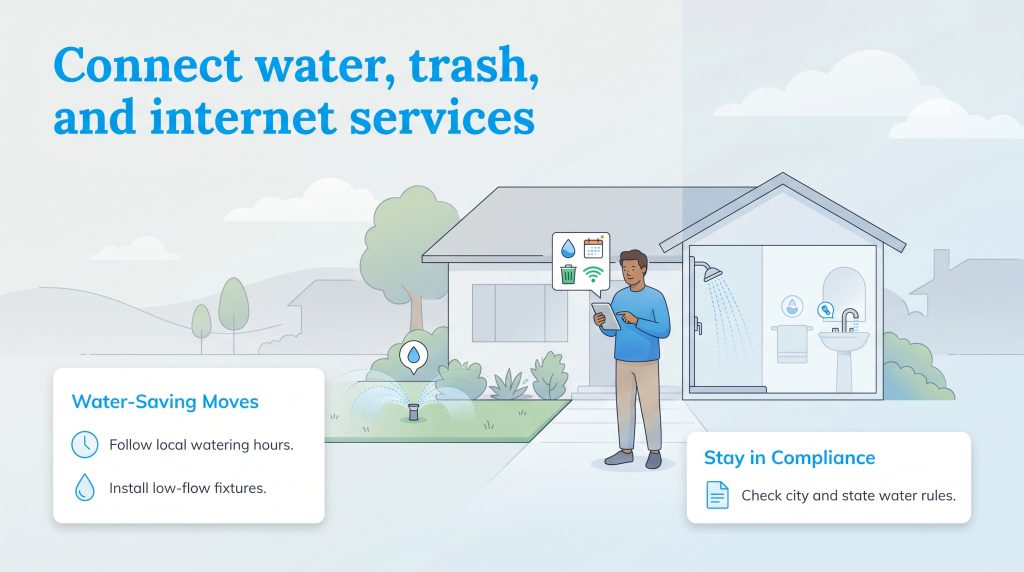
Unlike the large investor-owned utilities that manage the statewide power grid, your California water and trash setup operates strictly on local city timelines. One week before you arrive, you must contact your specific city’s water and sanitation department directly. Verify that your localized municipal accounts are fully active, and review your neighborhood’s designated trash collection days. Confirming these details early ensures your essential sanitation services are running smoothly when you are throwing away endless moving boxes.
1 Day Out The Moving Day Overlap
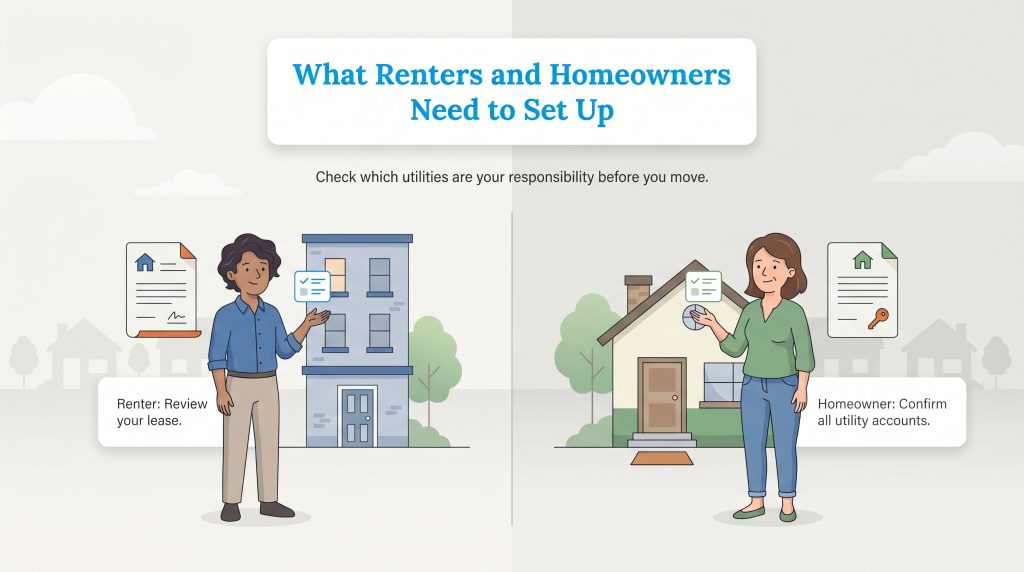
When scheduling your exact activation dates, always instruct the provider to establish a one-day service overlap. Your requested utility start date should be set for the day before you officially move in. This crucial buffer window ensures your electricity and water are fully active before you arrive, allowing you to easily turn on the lights, verify your smart meter is communicating, and check the plumbing the moment you unlock the front door. If you are renting an apartment, coordinate this overlap closely with your property manager so you do not experience unexpected service gaps.
Identifying Your Regional California Utility Providers
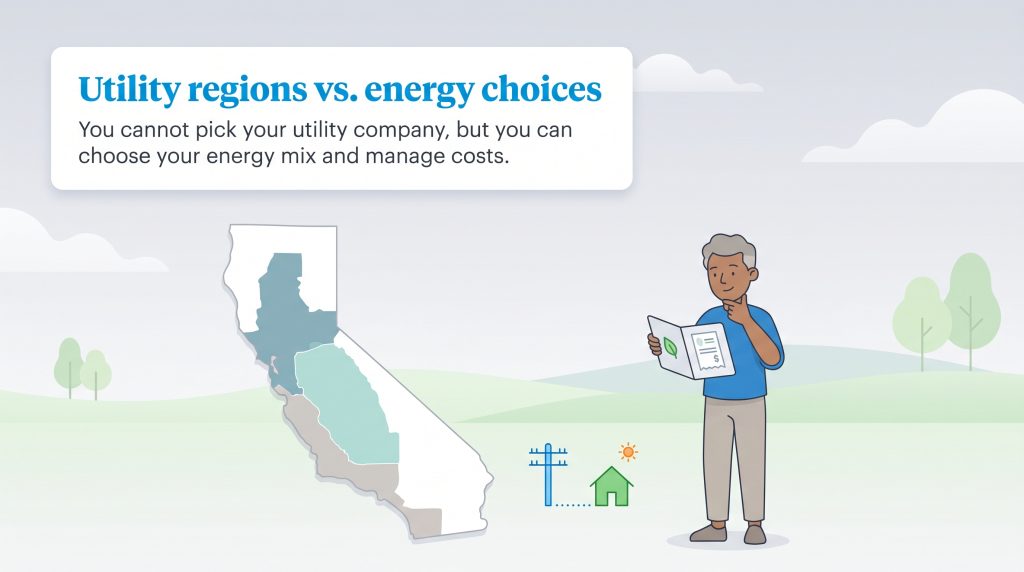
Unlike deregulated markets where residents can shop around for the lowest electric rate, California relies heavily on regional monopolies. Pinning down your exact providers is entirely dictated by your physical address. To ensure a seamless connection, you must correctly identify which companies service your specific geographic territory.
Northern and Central California Providers
If you are moving to the San Francisco Bay Area, the northern coast, or the surrounding valleys, you will likely need to navigate the PG&E start service page to set up your account. Pacific Gas and Electric (PG&E) manages both electricity and natural gas connections for the vast majority of Northern California. Additionally, water services in the East Bay are handled by specific municipal entities like the East Bay Municipal Utility District (EBMUD). Central California residents relocating to the capital city enjoy service from the Sacramento Municipal Utility District (SMUD), a community-owned provider that frequently offers lower baseline energy rates.
Southern California Providers
Southern California residents typically split their utility services across multiple specialized companies. If you are settling into Los Angeles, you will likely request a LADWP start service connection to manage both your water and power. Residents in Orange County or the Inland Empire generally need a Southern California Edison setup for electricity, while relying on SoCalGas to fuel their water heaters and stoves. Furthermore, the greater San Diego region consolidates most energy needs through San Diego Gas & Electric (SDG&E).
| California Region | Primary Electric & Gas Monopoly |
|---|---|
| Northern California (Bay Area, Coast) | Pacific Gas and Electric (PG&E) |
| Central California (Sacramento, Central Valley) | SMUD (Electric) / PG&E (Gas) |
| Southern California (Los Angeles, Orange County) | Southern California Edison (Electric) / SoCalGas (Gas) |
| Southern California (San Diego) | San Diego Gas & Electric (SDG&E) |
What to Know About Solar Homes and Net Metering
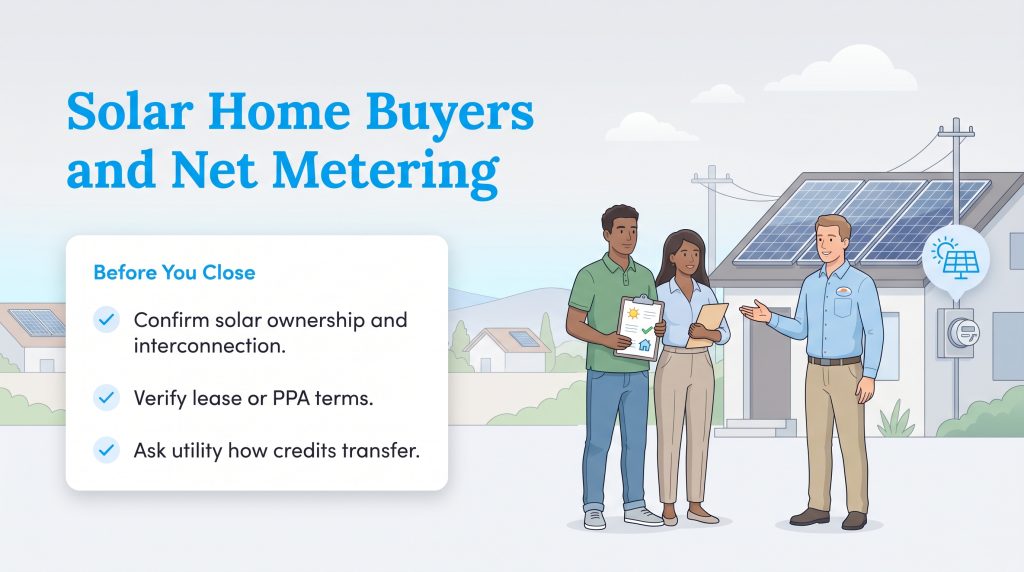
Always confirm your exact service providers by checking your physical street address. ZIP codes in California frequently overlap municipal lines, meaning two houses in the same ZIP code could be serviced by entirely different companies. If your new property features rooftop solar, contact the utility company immediately to transfer interconnection agreements and billing credits, which is a vital step in managing your home solar energy system.
How to Waive Out-of-State Utility Deposits
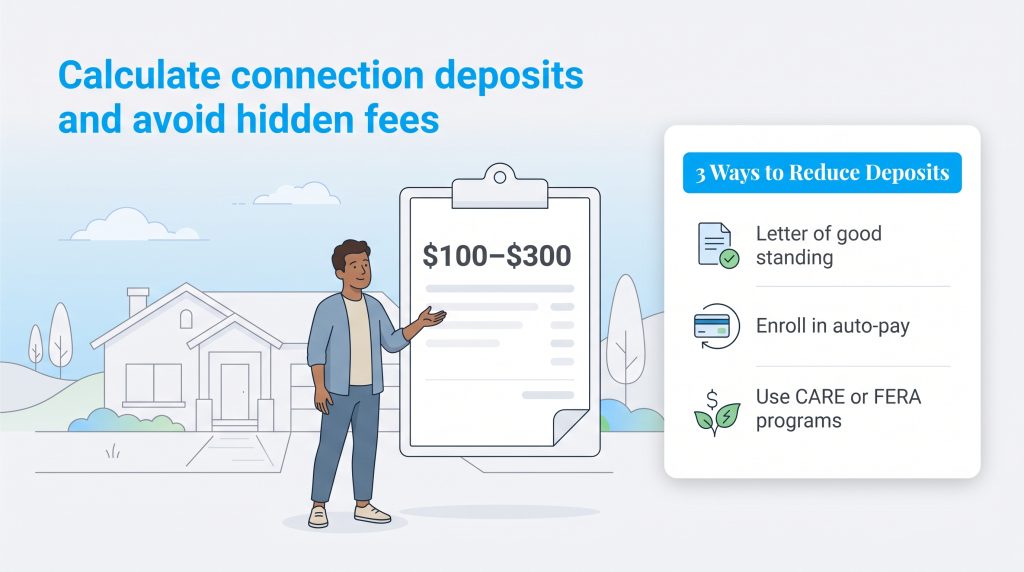
Navigating start-up costs is a major hurdle for many out-of-state movers. One of the most common hidden moving costs is dealing with standard utility connection deposits. Because localized utility companies cannot access your regional payment history from another state, they often classify new arrivals as “credit-limited” customers. Depending on your home’s square footage and seasonal energy demands, these deposits frequently range from $100 to $300 per service.
Fortunately, you can strategically bypass these upfront fees mandated by the California Public Utilities Commission (CPUC). Follow these simple steps to waive your utility deposit in California:
- Contact Your Previous Provider: Call your current out-of-state utility company before you close your account.
- Request Documentation: Ask customer service to generate a formal “letter of good payment history” or a “letter of credit.” This document proves you have made consistent, on-time payments for at least the past 12 months.
- Submit to Your California Utility: Email or fax this letter to your new California energy provider during the application process.
- Confirm the Waiver: Verify with a representative that the documentation has been accepted and the standard security deposit is fully removed from your opening statement.
Enrolling in Auto-Pay is another proven strategy to lower initial costs. Some municipal water districts and internet providers will automatically waive initial installation or security fees if you agree to link your checking account and enroll in paperless billing on day one. If you meet specific state income thresholds, you can also explore the CARE (California Alternate Rates for Energy) or FERA (Family Electric Rate Assistance) assistance programs, which can lower your monthly energy costs by up to 30% and frequently help waive new-service deposits entirely.
Going Green Exploring Community Choice Aggregation CCA
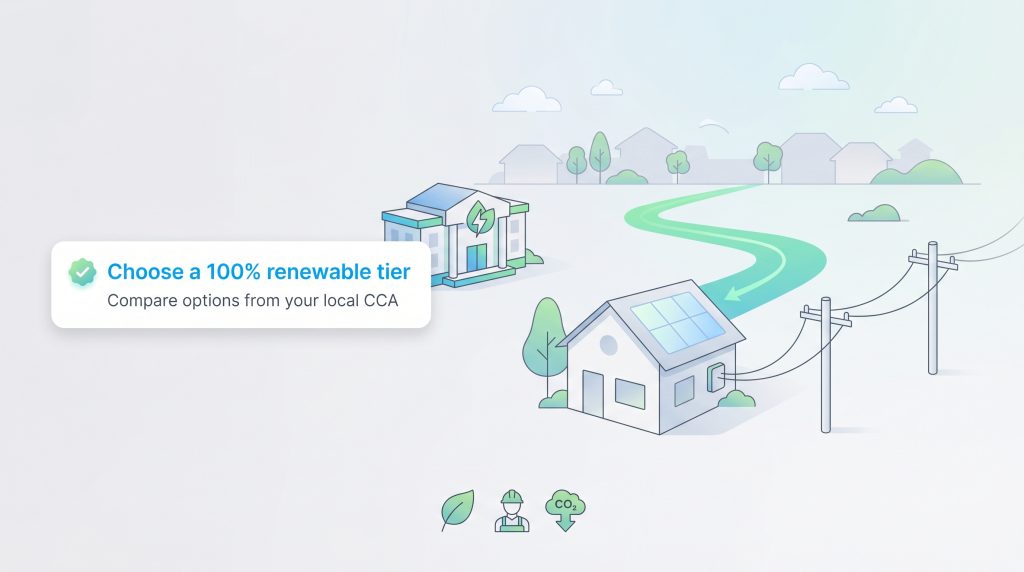
Beyond modern smart meters and basic account setups, new residents must familiarize themselves with California’s robust green energy landscape. One of the greatest benefits of relocating to the West Coast is gaining access to Community Choice Aggregation (CCA) programs. A CCA is a local, not-for-profit governmental program that buys and builds electricity generation on behalf of residents, businesses, and municipal facilities.
While your traditional utility company still maintains the physical power lines, responds to outages, and sends your monthly bill, the actual energy flowing through those lines is procured by your local CCA. This setup empowers communities to choose cleaner, more sustainable energy options. You can easily reduce your household carbon footprint by following a few simple steps. First, visit the California Public Utilities Commission (CPUC) CCA information page to research your designated agency and enter your new address. Next, review their generation options, which often include a 100% renewable energy tier sourced from wind and solar power. Finally, actively opt into this premium eco-conscious tier to guarantee your home is powered by a cleaner energy mix.
Implementing these environmentally mindful choices is just as important as updating your physical fixtures inside the home. Taking a few moments to review the statewide water conservation portal can save you from receiving an unexpected fine from your city. Reusing resources and upgrading to low-flow showerheads represents one of the smartest ways to reduce your household water usage while fully embracing a sustainable California lifestyle.
Set Up Outage Alerts Before Wildfire Season
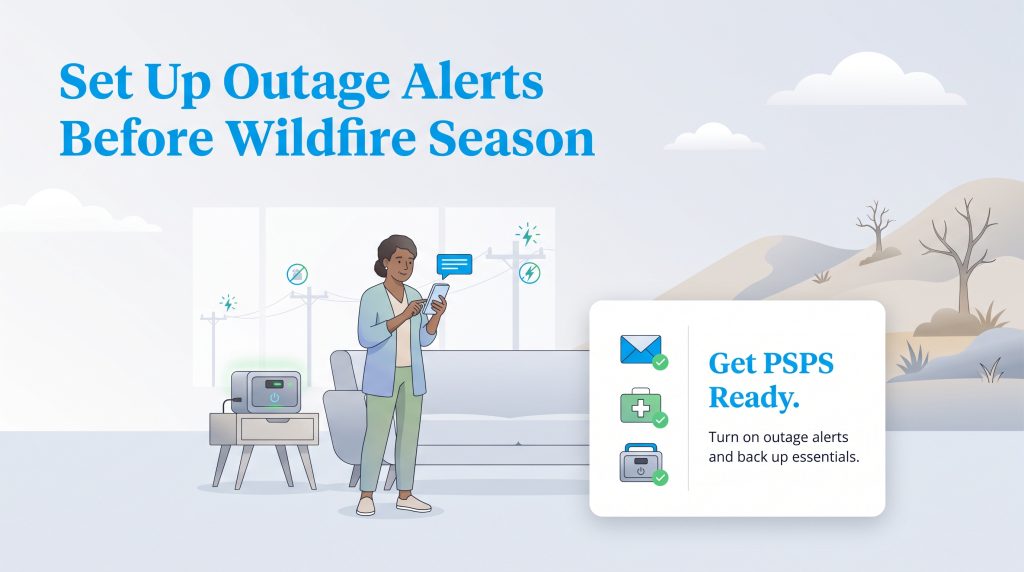
Additionally, a critical step when registering your essential services is preparing for regional Public Safety Power Shutoffs (PSPS). These controlled outages occur during periods of high wildfire risk to prevent power lines from sparking dry vegetation. As soon as your primary utility account is active, verify that your email address is up to date so you can receive crucial shutoff notifications from your CCA or primary provider.
Powering Your California Transition
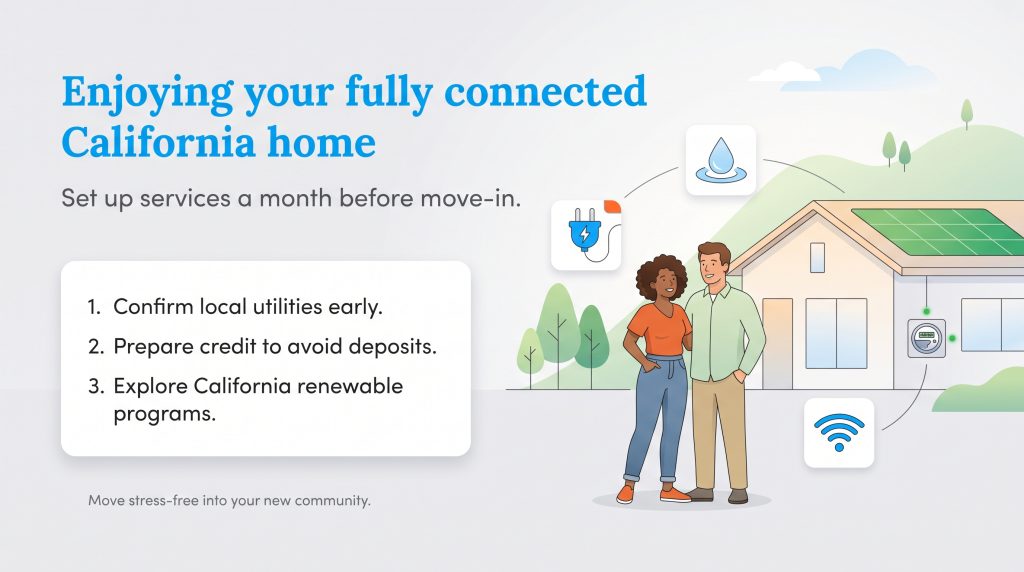
Transitioning your daily life to the West Coast inherently involves navigating multiple regional service providers, but securing your start dates a full month in advance removes all the friction from the process. By adhering to a strict three-week timeline, identifying your designated local monopolies, and proactively gathering your credit documentation, you ensure a perfectly orchestrated move. Do not let hidden deposits or easily avoidable service gaps disrupt your excitement about relocating.
Taking the time to arrange your internet installations in advance is the foundation for successfully setting up your home network without frustrating delays. Finalize those activation dates early, explore your local CCA options to reduce your carbon footprint, and focus entirely on settling in.
Once your essential services are seamlessly transferred, you can spend less time worrying about administrative tasks and more time enjoying your beautiful, fully connected new California community. Whether you are renting a small apartment in Los Angeles or purchasing a large family home in the Bay Area, being prepared is the key to unlocking a stress-free transition.
Frequently Asked Questions About Setting Up Utilities in California
How early should I set up utilities before moving to California?
How much are utility deposits when moving to California?
What is the difference between PG&E, SCE, and SDG&E?
Can I choose my electricity provider in California?
What documents do I need to open a utility account in California?
How do I find out who provides electricity to my new address?
Who provides water and trash service in California?
About the Author

LaLeesha has a Masters degree in English and enjoys writing whenever she has the chance. She is passionate about gardening, reducing her carbon footprint, and protecting the environment. She also recently served as President of the Board for City Sprouts (a community garden).

David has been an integral part of some of the biggest utility sites on the internet, including InMyArea.com, HighSpeedInternet.com, BroadbandNow.com, and U.S. News. He brings over 15 years of experience writing about, compiling and analyzing utility data.