
Major California natural gas utilities are raising core procurement rates, but you can protect your budget with smart energy choices and consumer choices.
Key Takeaways
- Major utilities like PG&E, SoCalGas, and SDG&E are raising their core procurement rates this summer, which directly increases the cost of the natural gas commodity you consume.
- The average household will see a monthly bill increase of approximately $1.00 to $4.00, depending on where you live and how much fuel you use.
- You can take control of your bills by switching to a third-party supplier through California’s Core Transport Agent program or by qualifying for state assistance discounts.
If you are a California resident, you probably dread opening your utility bills, and a new round of natural gas rate hikes is about to make that experience a bit tougher on your wallet. Major utilities across the state — including Pacific Gas and Electric Company (PG&E), Southern California Gas Company (SoCalGas), and San Diego Gas & Electric (SDG&E) — have updated their monthly core procurement charges, driving up the cost of the raw commodity we all use to heat our water and cook our food. Here at Utilities For My Home, we want to make sure you have the exact facts, so we have broken down why these rates are shifting, how they impact your household budget, and the best steps you can take to lower your energy expenses.
Why California Natural Gas Rates Are Rising
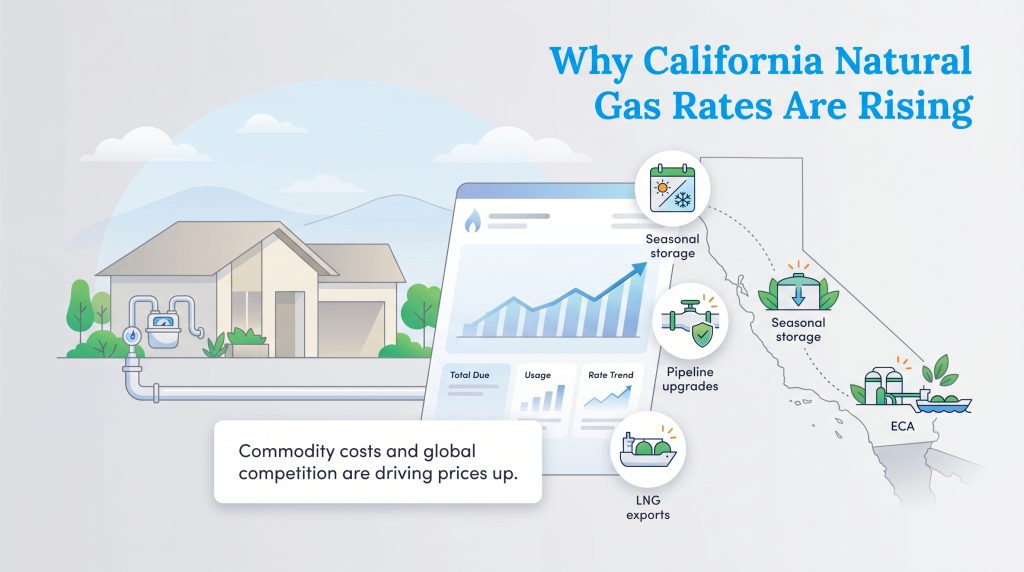
Natural gas prices do not just change on a whim; instead, they are driven by a complex mix of global energy markets and local infrastructure maintenance costs. When you see a change on your monthly statement, it is usually because the cost to buy the physical gas commodity has fluctuated.
Seasonal Shifts and Summer Storage
As we transition into the warmer summer months, natural gas providers must secure and inject fuel into massive underground storage reservoirs to prepare for the upcoming winter. This seasonal demand push, combined with steady industrial needs, typically causes commodity prices to rise during the late spring and early summer.
Decarbonization and Legacy Pipeline Upgrades
California is leading the nation in adopting eco-conscious alternatives to fossil fuels, but this transition comes with a unique financial challenge. As more homeowners choose to install energy-saving options like electric heat pumps, the overall number of natural gas customers shrinks. However, the cost to inspect, maintain, and harden the state’s thousands of miles of physical pipeline remains exactly the same. Consequently, utilities must recover these safety costs from a smaller group of customers, driving up delivery fees.
The Costa Azul LNG Pull
A new player on the West Coast is also tightening our regional fuel supply. Sempra’s massive Energía Costa Azul liquefied natural gas export facility in Baja California began operations on June 4, 2026. This terminal is designed to export US natural gas to Asian markets, pulling West Texas Permian Basin gas away from Southern California and introducing tighter supply competition. According to the U.S. Energy Information Administration, local storage surpluses have historically kept West Coast spot prices low, but this new global export pull is already reshaping regional pricing dynamics.
Comparing the New Rates Across California Utilities
To help you understand how your specific service provider is billing you, we have compiled the latest core procurement rates from the state’s three largest investor-owned utilities. These charges reflect the raw cost of the gas itself, which utilities are legally required to pass along to you without any added profit or markup.
| Utility Provider | Previous Rate (per therm) | New Rate (per therm) | Net Increase (%) |
| PG&E | $0.27496 | $0.37749 | 37.3% |
| SoCalGas | $0.15938 | $0.26766 | 67.9% |
| SDG&E | $0.21111 | $0.26781 | 26.9% |
How These Changes Impact Your Monthly Utility Bill
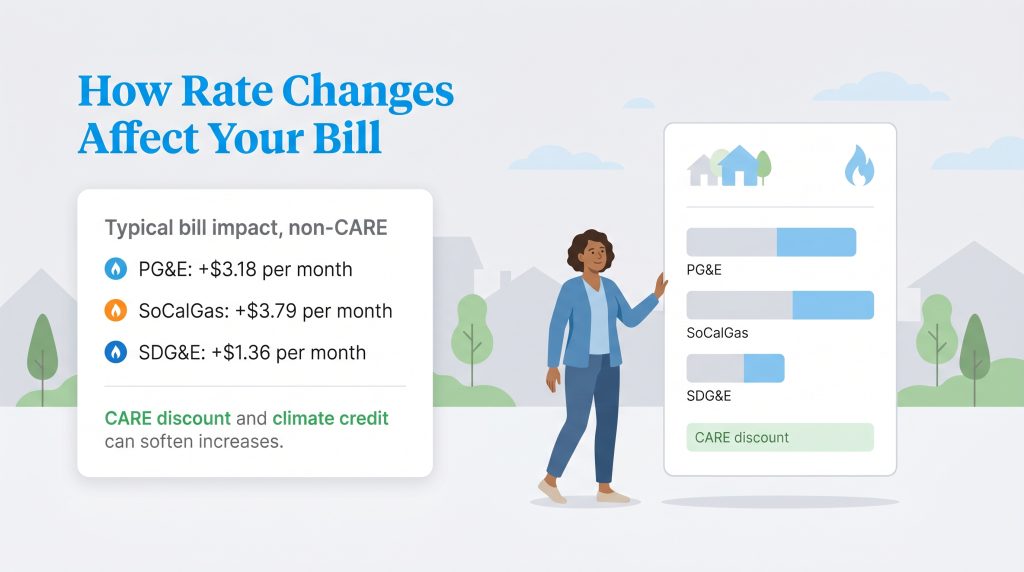
Reading about decimal points and therms can feel incredibly abstract, so we want to show you exactly how these numbers translate to a real-world household budget. Your final monthly bill depends on your baseline geographic territory, the weather in your area, and whether you qualify for income-based discounts.
Comparing Typical Household Bill Impacts
- PG&E (Non-CARE): A typical household uses an average of 31 therms per month. Under the previous rate, the commodity portion of your bill was $8.52. With the new rate, that portion rises to $11.70 — an increase of $3.18.
- SoCalGas (Non-CARE): A standard household uses roughly 35 therms per month. Your commodity charge will rise from $5.58 to $9.37, adding $3.79 to your monthly statement.
- SDG&E (Non-CARE): With an average monthly usage of 24 therms, your commodity charge will go from $5.07 to $6.43, bringing a modest monthly increase of $1.36.
Understanding the CARE Discount
If your household meets the state’s income guidelines, you can enroll in the California Alternate Rates for Energy (CARE) program. This state-mandated initiative provides a 20% discount on both your natural gas transportation and procurement charges. For example, a CARE customer under PG&E using 26 therms will see their procurement portion rise from $5.72 to $7.85, which is a mild $2.13 increase.
The Cushioning Power of the California Climate Credit
You do not have to absorb these price hikes all on your own, thanks to the state’s carbon reduction efforts. Residential gas accounts received a one-time credit on their April bills to help offset energy expenses, funded by California’s cap-and-trade program. For PG&E customers, this credit is $46.26, while SoCalGas customers receive $36.06, Southwest Gas customers receive $45.57, and SDG&E customers receive $32.58. To find more details about this program, you can check out the official CPUC Climate Credit Portal.
Major California Cities and Regions Impacted
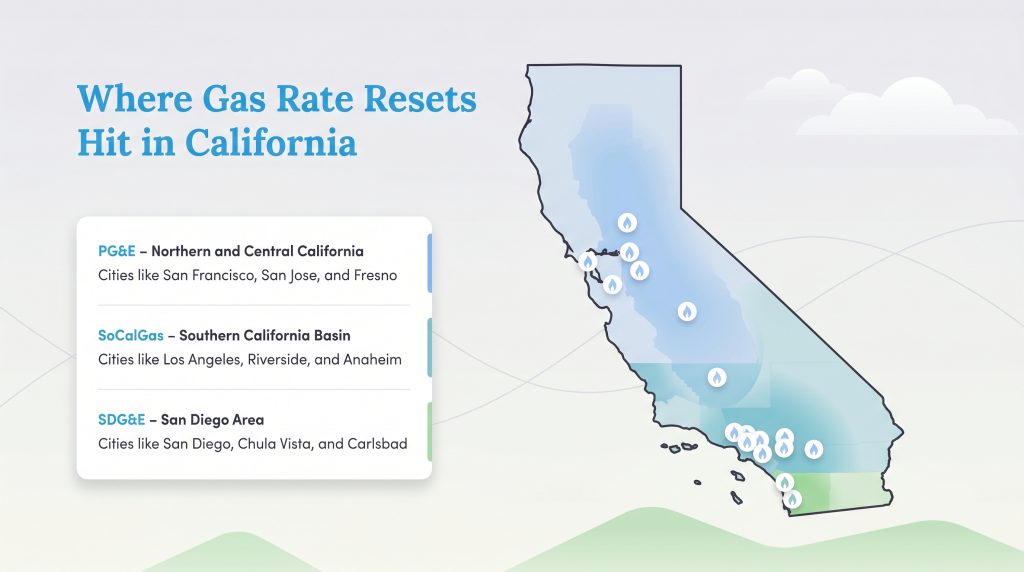
These utility territories cover vast stretches of the Golden State, meaning that millions of people are feeling the effects of these rate resets. Depending on your local climate, your actual consumption can vary significantly.
PG&E Service Territory
Serving Northern and Central California across a massive 70,000-square-mile territory, PG&E delivers gas to major urban hubs. Residents in San Francisco, San Jose, Oakland, Sacramento, Fresno, and Bakersfield are all subject to the new $0.37749 procurement rate.
SoCalGas Service Territory
As the nation’s largest natural gas distribution utility, SoCalGas serves the Southern California basin and coastal communities. Major cities in this footprint include Los Angeles, Riverside, San Bernardino, and Anaheim.
SDG&E Service Territory
Tucked into the southwestern corner of the state, SDG&E provides gas to San Diego County and southern Orange County. Impacted communities include San Diego, Chula Vista, and Oceanside.
Steps You Can Take to Lower Your Gas Expenses
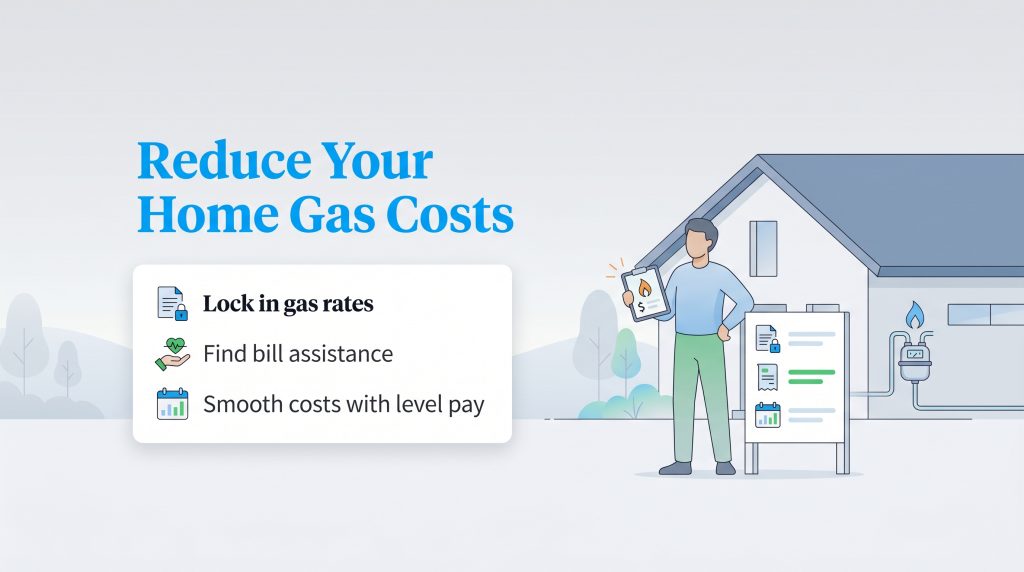
You are never completely powerless when it comes to managing your home’s energy costs, and we are here to help you navigate your options. From exploring alternative energy suppliers to applying for state assistance, you have several routes to find budget relief.
Locking in Rates With Core Transport Agents
Since 1991, California has permitted residents to buy their physical natural gas from independent third-party suppliers called Core Transport Agents (CTAs), rather than their local utility. If you choose this option, your local utility still safely delivers the gas through its pipelines, but you pay the CTA for the fuel itself. Many CTAs offer fixed-rate contracts, allowing you to lock in a set price per therm for 12 to 36 months. This provides incredible budget predictability, though you risk paying more if wholesale prices fall during your contract. To learn more, read the comprehensive CPUC Consumer Guide to compare your choices.
Applying for Assistance and Weatherization Programs
If you are struggling to keep up with your billing statements, there are several federal and state-sponsored programs designed to assist you:
- LIHEAP Direct Bill Payments: The Low Income Home Energy Assistance Program (LIHEAP) offers up to $1,500 in one-time financial support to help you balance your bills or avoid a service disconnection during a crisis.
- LIHEAP Weatherization: This program provides eligible households with free home weatherization services. Professionally installed upgrades — like attic insulation, hot water heater blankets, and weather-stripping — can drastically lower your monthly consumption.
- Level Pay Plans: Most major utilities offer a budget-balancing option that averages your annual energy costs into 12 equal monthly payments, smoothing out expensive winter heating spikes.
How to Protect Your Home and Your Budget Moving Forward
Taking control of your utility bills does not require making sacrifices; instead, it is about making smart, environmentally mindful choices that align with your family’s budget. Shifting to an energy-saving option like an ENERGY STAR certified appliance or installing simple insulation can dramatically reduce your home’s monthly consumption. As California continues to transition toward clean energy, staying informed and exploring retail gas choice programs will help you save time, money, and energy. We are always here to help you make the best decisions for your new home, ensuring you can enjoy a comfortable living space without overpaying for your utilities.
Frequently Asked Questions About California Natural Gas Rates
What is the difference between natural gas procurement and transportation charges?
Can I choose my natural gas provider in California?
What should I do if my natural gas bill spikes unexpectedly?
About the Author

Claudio is a sustainability-focused writer with a background in Anthropology and Psychology from NC State University. He has spent over 15 years working in writing, interpretation, and translation, driven by a deep interest in how human culture shapes the environment. Today, he shares his curiosity with readers by writing about sustainable living solutions and the connection between everyday choices and environmental impact.