
Understanding the latest utility rate hikes can help you take control of your home energy budget with smart, eco-conscious decisions.
Key Takeaways
- Volumetric delivery rates are increasing by over 20% for major California utility providers, including SDG&E, SoCalGas, and PG&E.
- These pricing adjustments only impact the delivery of natural gas to your home, meaning you can still save money by exploring energy-saving appliances and efficiency upgrades.
- You can actively manage your rising utility expenses by switching to a third-party supplier or enrolling in state-sponsored financial assistance programs like CARE.
If you have recently moved into a new California home or are simply reviewing your monthly expenses, you might have noticed a sudden jump in your natural gas bill. We understand how frustrating it is to watch your utility costs climb when your household habits have not changed. Major state utility providers — including San Diego Gas & Electric (SDG&E), Southern California Gas Company (SoCalGas), and Pacific Gas and Electric Company (PG&E) — have rolled out significant rate increases under the authorization of the California Public Utilities Commission (CPUC). Our goal at UtilitiesForMyHome.com is to help you navigate these shifting tariffs with ease, providing clear, actionable, and environmentally mindful steps to protect both your wallet and our planet.
The Numbers Behind the New California Gas Rates
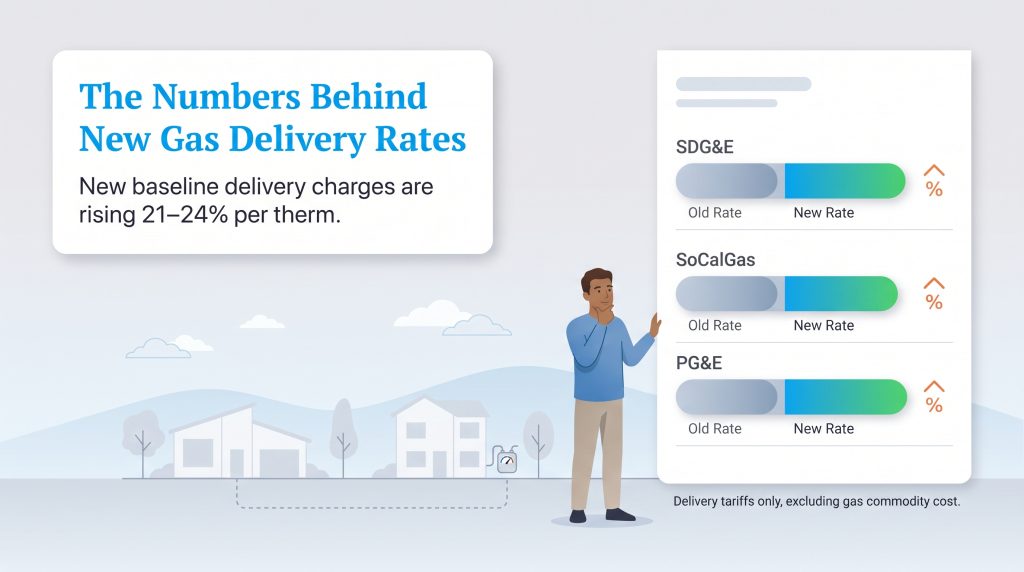
California utility rates are among the highest in the country, and the latest volumetric delivery tariff increases are pushing those bills even higher. These baseline changes exclude the fluctuating monthly cost of the actual gas commodity, meaning they represent the core operational charges of bringing energy to your home.
We can break down these structural changes in delivery rates per therm below:
| Utility | Old Rate | New Rate | Percent Increase |
| SDG&E | $0.26781 | $0.32485 | 21.3% |
| SoCalGas | $0.26766 | $0.32467 | 21.3% |
| PG&E | $0.37749 | $0.46974 | 24.4% |
Why Are California Natural Gas Rates Changing?
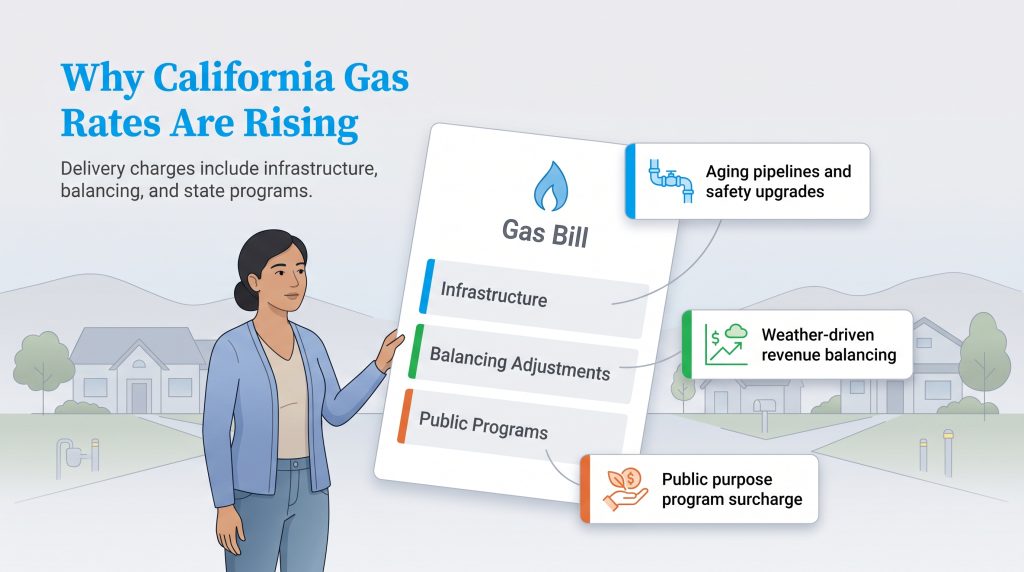
It is natural to wonder why these delivery prices are moving upward so sharply. The shifts are approved through multi-year General Rate Cases overseen by the California Public Utilities Commission to cover several massive infrastructure changes.
Modernizing Aging Gas Infrastructure
A massive portion of your bill goes directly toward updating and maintaining physical pipelines. Safety mandates require utilities to test for leaks, repair older distribution networks, and deploy advanced methane detection systems.
State Programs and Balances
Under state laws, utilities also use these delivery fees to reconcile balancing accounts. If weather is milder than normal or if people use less gas, the utility’s revenues drop below what was authorized. To make up the difference, the remaining costs are amortized back into customer rates through annual gas true-up filings.
The Hidden Cost of Public Purpose Program Surcharges
On top of delivery rates, your bill includes a state-mandated fee called the Public Purpose Program (PPP) surcharge, which is set by the state and updated by the California Department of Tax and Fee Administration. This fee funds low-income assistance, public interest research, and conservation efforts.
How These Rate Changes Impact Your Monthly Bill
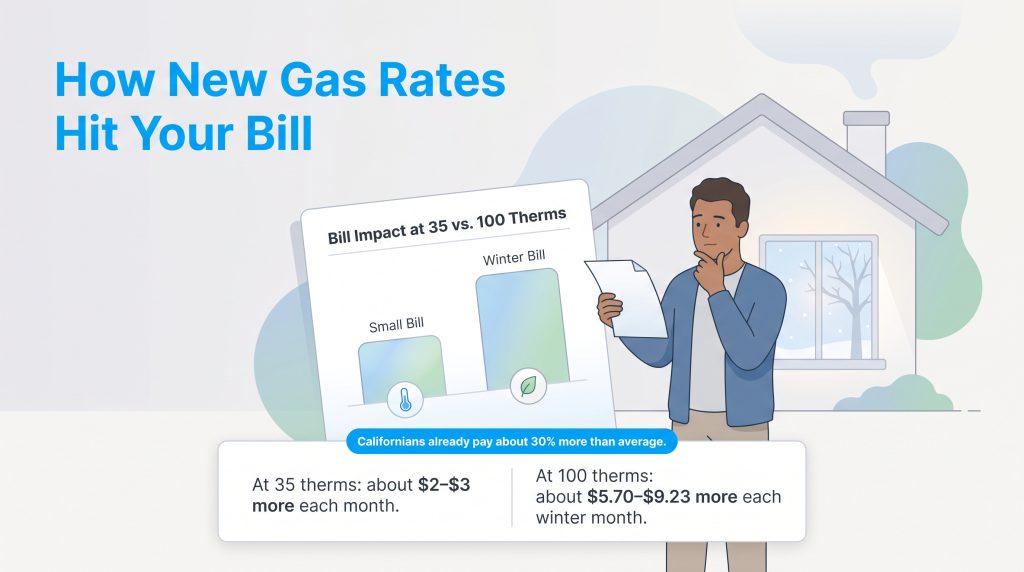
To understand the direct impact on your wallet, we have to look at how a standard home gas bill is actually calculated. Your total bill is a combination of a fixed monthly charge, the cost of the gas itself, the delivery rate, and the public purpose surcharge.
If you consume a modest 35 therms a month, the updated delivery rates will increase your monthly bill by around $2 to $3. However, during cold winter months, heating needs can easily push your household use to 100 therms or more. For high-use winter bills, this delivery rate hike alone adds roughly $5.70 to your monthly SDG&E or SoCalGas statement, and a noticeable $9.23 to your PG&E statement. When combined with the fact that Californians already pay about 30% more for natural gas than the national average, these changes make household budgeting even tougher.
Which Major Cities and Regions Are Impacted?
These rate updates affect millions of households and properties throughout the state. Because California’s utilities cover vast geographic territories, the specific hikes you experience depend directly on where your home is located.
PG&E Territory
PG&E serves Northern and Central California, spanning major metropolitan hubs. If you are moving to San Jose, San Francisco, Oakland, Sacramento, Fresno, or Bakersfield, you will see PG&E’s updated delivery rates on your bill.
SoCalGas Territory
Covering a massive stretch of Southern California, SoCalGas represents the nation’s largest natural gas distribution utility. This rate shift directly impacts residents in Los Angeles, Glendale, Pasadena, Riverside, San Bernardino, Anaheim, and Irvine.
SDG&E Territory
SDG&E provides natural gas service to San Diego County and southern Orange County. If your new home is in San Diego, Chula Vista, or Carlsbad, these updated baseline delivery tariffs apply to you.
Actionable Steps You Can Take to Manage Changing Rates
Even though you cannot change the regulated delivery fees your utility charges, you are not entirely powerless. There are several clear and accessible paths to take control of your energy bills while keeping your carbon footprint small.
Explore Independent Energy Suppliers
Under California’s Gas Choice program, you have the option to buy your gas supply from an independent supplier known as a Core Transport Agent (CTA). These third-party providers often allow you to lock in fixed-rate contracts to secure budget predictability. This can protect you from unpredictable wholesale market spikes, even though you will still pay the utility’s regulated delivery and surcharge fees to transport the gas to your home.
Enroll in Utility Discount Programs
If your household meets specific income guidelines, you may qualify for the California Alternate Rates for Energy (CARE) program, which provides a minimum 20% discount on both natural gas and electric bills. You can review the updated CARE and non-CARE surcharge rate schedules through the CDTFA Special Taxes Division to see the exact lower rates you might qualify to pay.
Adopt Smart, Energy-Saving Habits
The absolute best way to lower your bill is to reduce the amount of gas your home consumes. Simple adjustments like washing clothes in cold water, lowering your water heater’s temperature to 120 degrees, and sealing drafty windows make a massive difference.
Transition to an Environmentally Mindful Alternative
Over the long term, making an environmentally mindful choice like replacing gas appliances with electric alternatives is a highly effective energy-saving option. Installing an ENERGY STAR certified electric heat pump or switching to an induction stove can drastically reduce your household’s reliance on fossil fuels. As California works toward its climate goals, transitioning to these electric solutions will shield your home from future gas rate increases entirely.
Empowering Your Move with Smart Energy Choices
Managing your utility bills during a move can feel overwhelming, but staying informed is the first step toward smart home management. As California transitions toward cleaner energy networks, gas rates are likely to face ongoing upward pressure due to infrastructure maintenance. By taking proactive measures today — whether that means weatherizing your home, checking out alternative suppliers, or opting for energy-efficient appliances — you can easily protect your wallet. We are here to support you at every stage of your home setup, helping you build a lifestyle that is both sustainable and highly affordable.
Frequently Asked Questions About California Gas Rates
Can I switch natural gas providers in California to get a lower rate?
What is the Public Purpose Program surcharge on my gas bill?
How can I lower my gas bill without switching providers?
About the Author

Claudio is a sustainability-focused writer with a background in Anthropology and Psychology from NC State University. He has spent over 15 years working in writing, interpretation, and translation, driven by a deep interest in how human culture shapes the environment. Today, he shares his curiosity with readers by writing about sustainable living solutions and the connection between everyday choices and environmental impact.