
Learn everything you need to know to set up utilities, compare pricing plans, and decode your energy costs in San Diego County.
Key Takeaways
- Start SDG&E service one to two weeks before move-in to avoid delays or interruptions.
- Maximize your savings on Time-of-Use rates by shifting energy-heavy tasks to Super Off-Peak hours.
- Explore income-qualified assistance like the CARE and FERA programs for substantial monthly bill discounts.
Moving to a new home comes with a million moving parts, and trying to decipher how to keep the lights on shouldn’t be the hardest one. If you recently unpacked your boxes in Southern California, we want to help you confidently navigate your new energy landscape. This comprehensive guide walks you through exactly how to set up your account, choose the smartest rate plan for your lifestyle, and make sense of the local market so you can easily evaluate San Diego electricity providers without the typical confusion. Because San Diego Gas & Electric (SDG&E) handles electricity and natural gas, while water, sewer, trash, and internet are typically managed by separate local providers, getting a clear picture of your total utility setup is the best way to start your new residency on the right foot.
Understanding SDG&E Coverage and Service Area
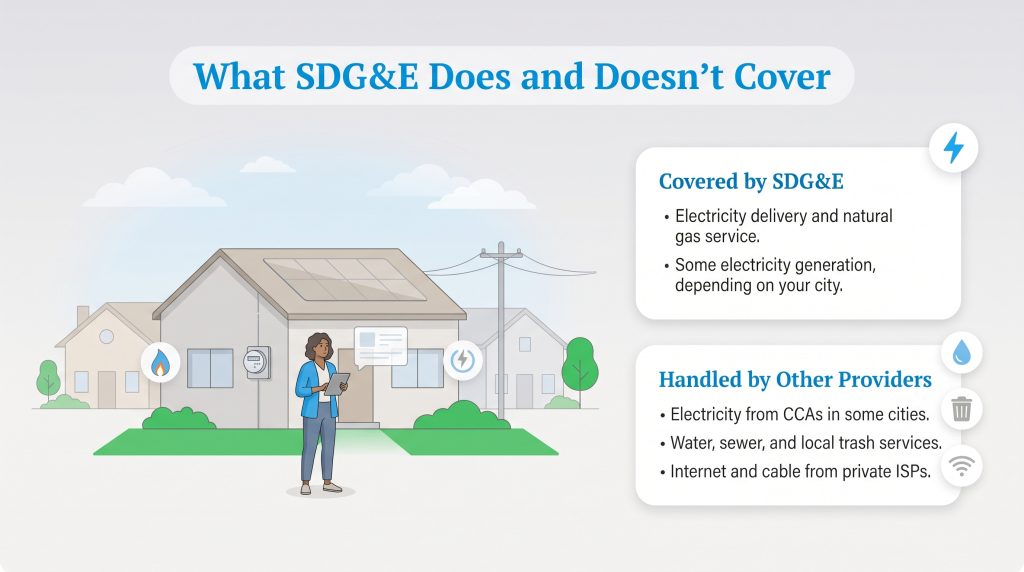
When moving to a new area, it is easy to assume one company handles all your basic needs, but Southern California utilizes a highly decentralized approach. SDG&E operates as a regulated public utility, delivering electricity and natural gas throughout a massive 4,100-square-mile territory. Their infrastructure powers millions of homes, acting as the backbone for both San Diego County and parts of southern Orange County.
SDG&E Service Area and Coverage Map
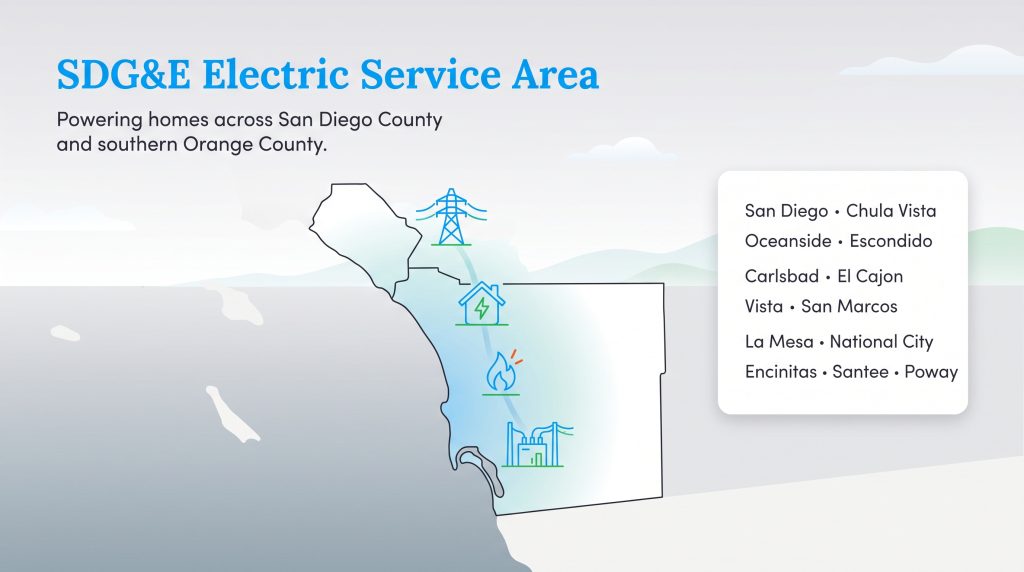
Whether you are renting an apartment downtown or buying a house in the suburbs, knowing exactly who covers your address saves you time and prevents billing surprises. SDG&E provides continuous electric and gas service to a wide demographic, including the following major cities:
Preparing to Start SDG&E Service
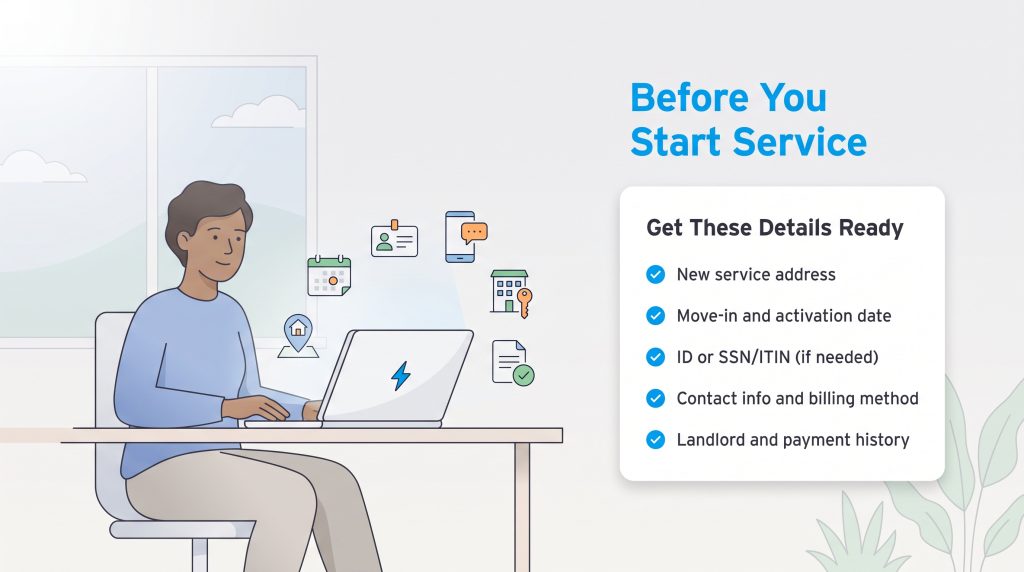
Preparation makes the transfer process completely seamless. Before you sit down to initiate your SDG&E account, gather your essential details — like your exact service address, preferred activation date, and government-issued ID — so you aren’t scrambling for information at the last minute. The utility makes the process relatively straightforward through their online portal, but they may review your credit or payment history when you open an account. If your credit history is limited, you might need to pay a security deposit, though this is frequently waived if you provide a letter of credit from a previous utility.
How to Start SDG&E Service
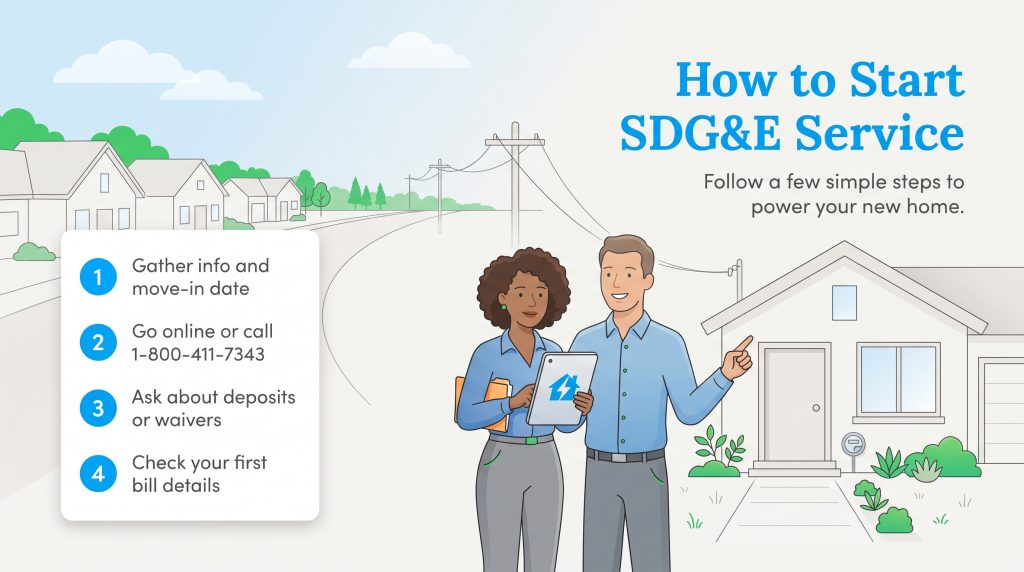
We recommend getting your start service request finalized at least one to two weeks before move-in day to ensure you aren’t unpacking boxes in the dark. For fast reference, use our contact guide below to quickly reach the right department.
| SDG&E Quick Contacts | Details & Links |
|---|---|
| Customer Service Phone | 1-800-411-7343 (Available Mon–Fri, 7 a.m. to 8 p.m.) |
| Emergency & Gas Leaks | 1-800-411-7343 (24/7) or Call 911 |
| Start, Stop, or Transfer Service | SDG&E Online Portal |
| Mobile App Download | Search “SDG&E” on the Apple App Store or Google Play Store |
SDG&E Electricity and Gas Plans
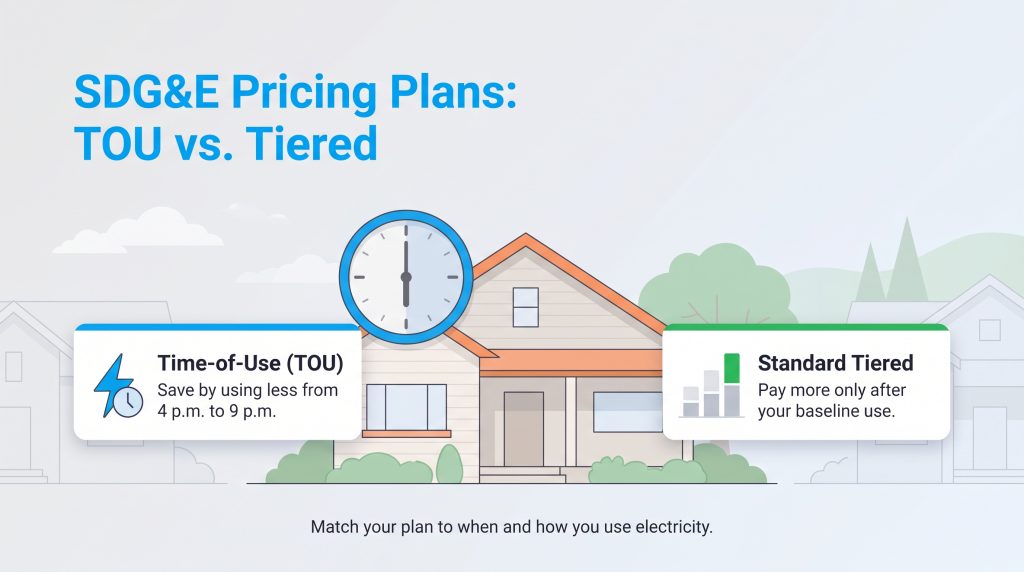
Selecting the right rate structure plays a massive role in your monthly budget. San Diego features some of the highest electricity rates in the nation, meaning the transition to Time-of-Use (TOU) plans requires you to think critically about exactly when you consume energy. Under a TOU pricing model, when you use energy matters just as much as how much you use.
SDG&E’s standard time of use rates (like TOU-DR1) penalize heavy consumption during peak demand hours, which run from 4 p.m. to 9 p.m. every day. To dramatically lower your monthly bills, you must actively shift your usage to “Super Off-Peak” pricing windows. These ultra-cheap periods typically occur on weekdays from 10 a.m. to 2 p.m., and every day from midnight to 6 a.m. We strongly recommend running your dishwasher, doing laundry, and charging electric vehicles exclusively during these Super Off-Peak hours.
If your schedule makes it completely impossible to avoid using power during peak evening hours, a standard tiered plan might be a safer bet. These legacy plans charge a flat rate based on your total monthly consumption rather than the time of day, granting you a baseline allowance of cheaper electricity before the price spikes.
| Household Situation | Rate Plan to Compare First | Why It May Help |
|---|---|---|
| You’re rarely home from 4 p.m. to 9 p.m. | TOU plans (like TOU-DR1 or TOU-DR2) | You can easily avoid peak pricing hours. |
| You work from home and use power all day | Compare TOU and standard plans | You can take advantage of 10 a.m. to 2 p.m. Super Off-Peak weekday rates. |
| You charge an EV overnight | EV-specific or TOU plan options | Midnight to 6 a.m. charging is highly cost-effective. |
| You can’t shift evening usage | Standard or alternate TOU plans | Predictable evening use drives up standard TOU costs quickly. |
Ways to Save With Discounts Rebates and the CARE Program
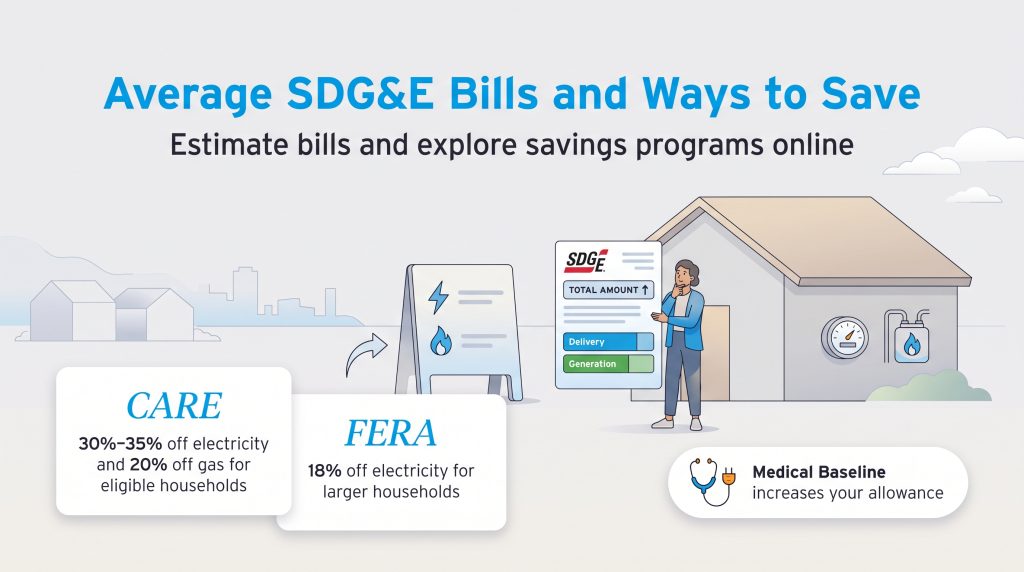
Because California’s energy costs frequently strain household budgets, you should never leave potential savings on the table. Several state-mandated low-income assistance programs exist to relieve the financial burden for eligible households based on gross annual income and family size.
The California Alternate Rates for Energy (CARE) program provides a massive 30% to 35% discount on your electricity bill and a 20% discount on natural gas. If your income slightly exceeds CARE requirements, the Family Electric Rate Assistance (FERA) program provides an 18% discount on electricity for households of three or more people. You can apply for these state-sponsored discount programs easily online. Additionally, if someone in your household requires life-support equipment or has a qualifying medical condition, applying for the Medical Baseline Allowance grants you an extra daily energy allotment at the absolute lowest rate.
Beyond income-qualified programs, all residents can take advantage of SDG&E rebates. The utility consistently offers substantial cash rebates (often $50 to $75) for purchasing qualifying smart thermostats, and they provide free in-home appliance safety checks to ensure your gas furnace and water heater operate efficiently.
Managing Your Account With the SDG&E Mobile App
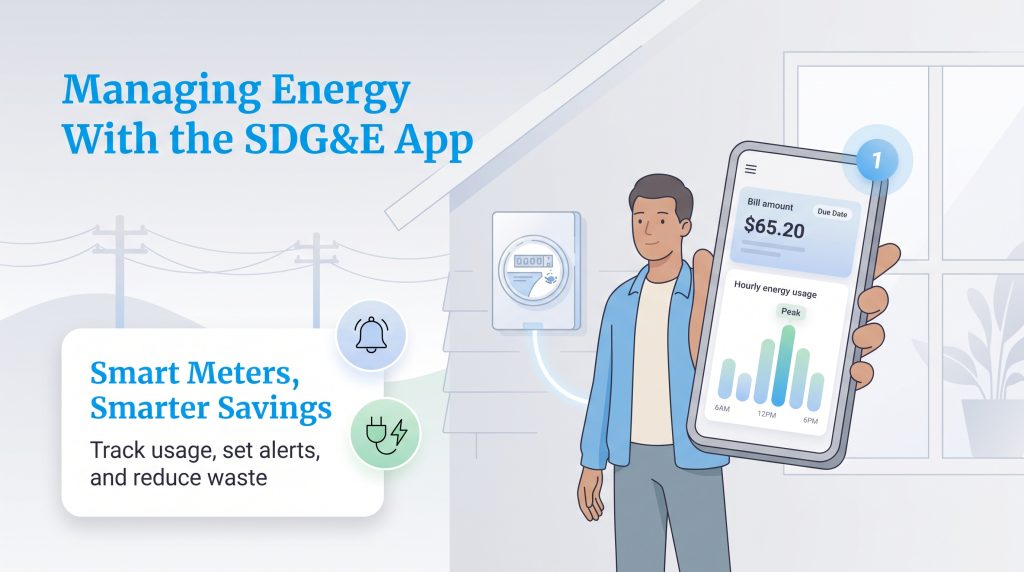
Modernizing how you interact with your utility company removes a lot of the traditional friction. The SDG&E mobile app acts as a powerful command center right in your pocket. Because SDG&E utilizes advanced smart meters, you can view your hourly energy usage directly in the app. When paired with smart home energy devices, this granular data empowers you to identify phantom power drains, set custom budget alerts, and optimize your home’s overall efficiency before your bill arrives.
Navigating San Diego Community Power Versus SDG&E
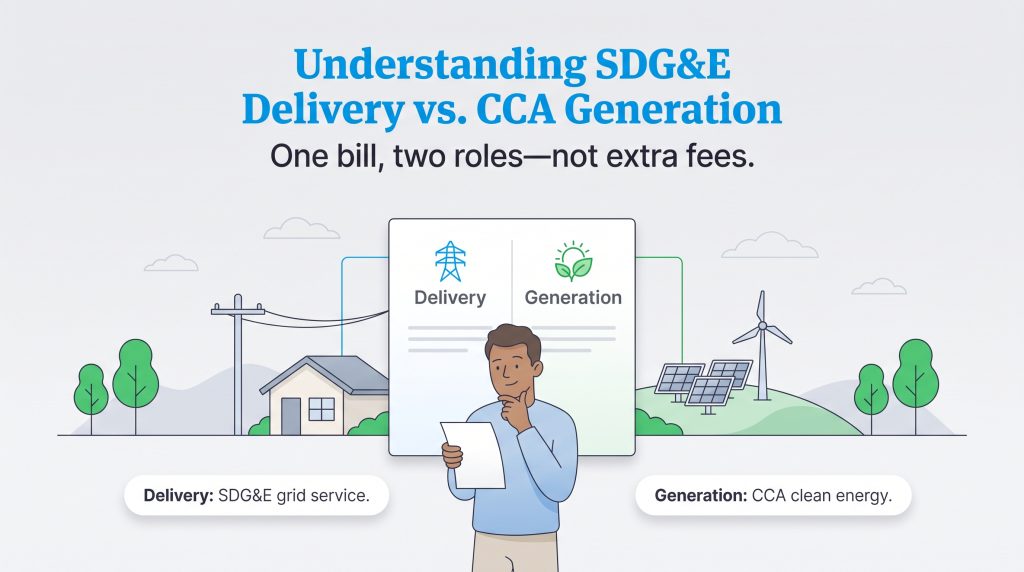
Once your first statement arrives, you might notice charges broken down into two distinct categories: delivery and generation. SDG&E maintains the physical infrastructure — the poles and wires — meaning they will always charge you for electricity delivery. However, thanks to Community Choice Aggregation (CCA), you likely have a different provider handling your electricity generation.
Agencies like San Diego Community Power (SDCP) now purchase renewable energy on behalf of residents in participating cities. These are not extra, hidden fees stacked on top of your bill; CCA generation charges completely replace the generation charges SDG&E would have normally billed you. You are automatically enrolled in SDCP if your city participates, but you always retain the right to opt out and return to SDG&E’s standard bundled service.
| Comparison Feature | SDG&E (Bundled Service) | San Diego Community Power (CCA) |
|---|---|---|
| Base Generation Rates | Standard utility pricing | Designed to be competitive or slightly lower than standard rates |
| Renewable Energy Mix | State minimums (historically around 31%) | 50% renewable (PowerOn) or 100% renewable (Power100) options |
| Delivery & Billing | Handled by SDG&E | Handled by SDG&E on a single consolidated bill |
Solar Energy and SDG&E NEM Updates
With utility rates climbing steadily, many San Diego residents look to residential solar setups to take control of their energy costs. However, California’s shift to the NEM 3.0 net billing structure fundamentally altered the financial math for new solar adopters. Under older net metering policies, SDG&E credited solar owners at near retail rates for excess energy sent back to the grid. Today, under NEM 3.0, those export rates have plummeted by roughly 75%.
Because the grid no longer pays a premium for midday solar generation, adding battery storage is rapidly becoming the standard for new SDG&E solar customers. A battery allows you to capture all that abundant daytime sunshine and store it for use during the expensive 4 p.m. to 9 p.m. peak TOU window. By self-consuming your solar power rather than exporting it for pennies, you successfully offset SDG&E’s most punishing rates.
How to Report and Check SDG&E Outages
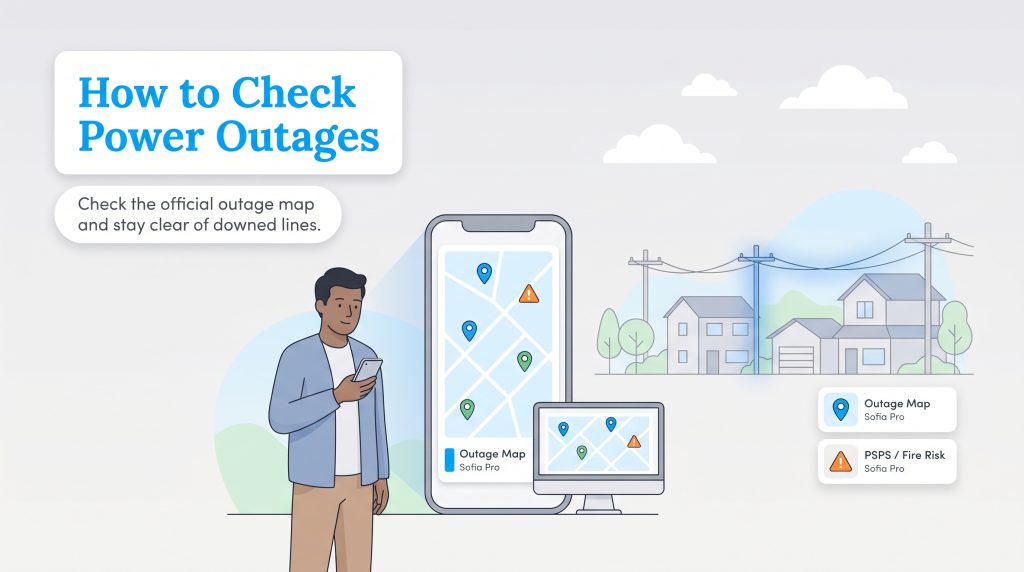
Power interruptions happen, but knowing exactly how to respond minimizes the frustration and keeps your household safe. Whether caused by winter storms or proactive Public Safety Power Shutoffs (PSPS) during high wildfire risk days, getting accurate restoration estimates is crucial.
To safely report and monitor a power outage, follow these simple steps:
- Open the SDG&E mobile app or visit their official online outage map via your cellular connection.
- Search your specific address to verify if the utility already knows about the blackout in your neighborhood.
- If your area shows no active outages, report it directly through the app portal.
- If you spot a downed power line, hear electrical arcing, or smell natural gas, evacuate the immediate area. Call 911 first, and then contact the SDG&E emergency line immediately at 1-800-411-7343.
SDG&E Customer Reviews and BBB Sentiment
When analyzing public sentiment across the Better Business Bureau (BBB) and local community forums like Reddit, clear themes emerge regarding the SDG&E customer experience. While residents generally praise the utility for maintaining a reliable grid with fast outage restoration times, billing frustrations remain a massive sticking point.
Many customer complaints stem from the shock of high summer bills and confusion surrounding automatic enrollment into Time-of-Use plans. Users frequently feel “stuck” on pricing structures that don’t match their work-from-home schedules. To combat this, we highly advise utilizing the “Green Button” data analyzer available in your online account. This tool allows you to safely download your raw, standardized hourly energy usage data. By plugging this exact data into online comparison tools, you can objectively verify if SDG&E’s “recommended” rate plan actually stands as the cheapest option for your distinct household rhythm.
Making the Most of Your SDG&E Service
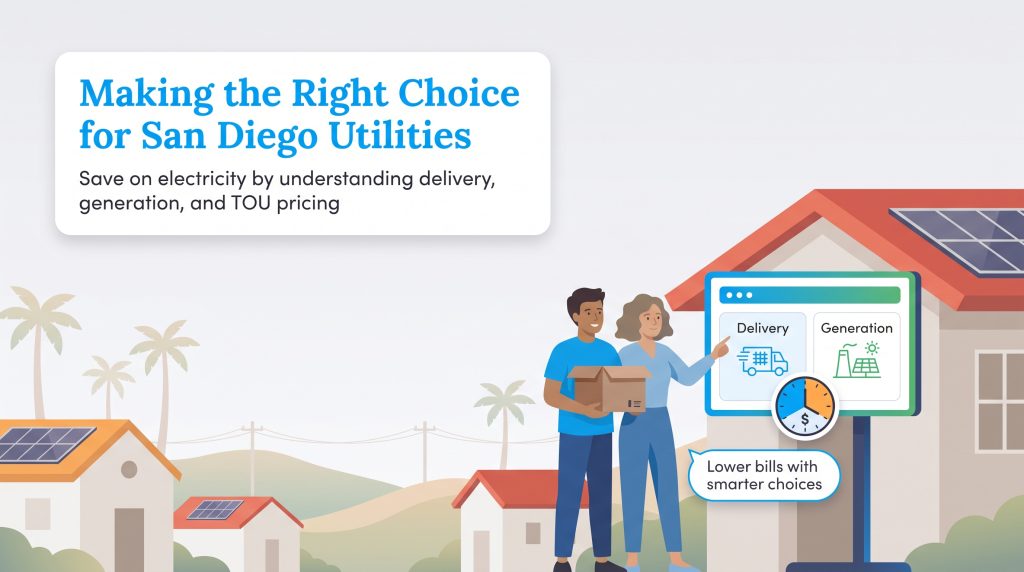
Setting up utilities and unpacking boxes can certainly feel overwhelming during a major transition. However, grasping the intricacies of peak pricing and recognizing the eco-conscious alternatives available to you puts you firmly in control of your monthly costs. To ensure a smooth transition into your new home, take these immediate actions once your account goes live:
- Download the Mobile App: Set up custom usage alerts to prevent billing surprises at the end of the month.
- Evaluate Your TOU Plan: Review your first month of usage data and verify if shifting your habits to Super Off-Peak hours makes financial sense, or if a standard tiered plan works better.
- Apply for Assistance: If you think you might meet the income guidelines, apply for the CARE or FERA program immediately to lock in substantial multi-year discounts.
Frequently Asked Questions About SDG&E
How long does it take for SDG&E to turn on power?
What are SDG&E super off-peak hours?
Can I opt out of San Diego Community Power and stay with SDG&E?
How do I qualify for the SDG&E CARE program?
Why is my SDG&E bill so high?
Does SDG&E offer net metering for solar panels?
About the Author

David has been an integral part of some of the biggest utility sites on the internet, including InMyArea.com, HighSpeedInternet.com, BroadbandNow.com, and U.S. News. He brings over 15 years of experience writing about, compiling and analyzing utility data.