

Identifying and treating hard water in your home can save you money, protect your plumbing, and improve your daily comfort.
Key Takeaways
- Hard water is categorized by high levels of calcium and magnesium, which can leave residue on your skin, hair, and household appliances.
- Untreated hard water can cause scale buildup in pipes and appliances over time, which may reduce efficiency and increase maintenance needs.
- Eco-friendly water softener alternatives exist, allowing you to treat mineral buildup without relying on traditional, high-maintenance salt systems.
Hard water is household tap water that contains elevated concentrations of dissolved minerals, primarily calcium and magnesium. While completely natural, this dense mineral makeup is responsible for the stubborn limescale buildup on your showerheads, the irritating dry skin you feel after bathing, and the cloudy residue clinging to your freshly washed glassware. Trying to clean your home with mineral-heavy water often feels like an uphill battle because it prevents soap from lathering properly. Fortunately, diagnosing the problem is simple once you know what to look for. This guide will walk you through the most common signs of hard water, how to accurately test your home’s water hardness scale, and the most effective water softening solutions available to protect your plumbing and improve your daily comfort.
What Makes Water Hard?
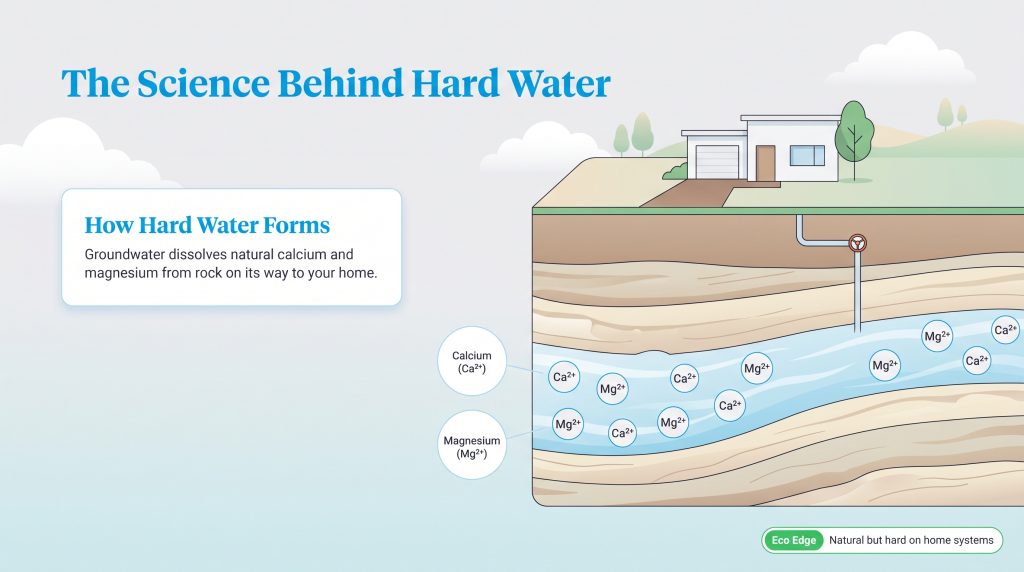
Water hardness is a completely natural phenomenon that begins long before the water reaches your faucet. It occurs when groundwater percolates through underground deposits of limestone, chalk, or gypsum before making its way into your municipal supply or private well. As the water travels through the earth, it acts as a universal solvent, absorbing heavy concentrations of calcium and magnesium and carrying those minerals straight into your home’s plumbing system.
While municipal treatment plants do an excellent job of filtering out harmful bacteria and chemical contaminants, they don’t remove natural dissolved minerals. For a deeper dive into regional mineral concentrations, you can check groundwater hardness data to see how local geography plays a role. Hard water is exceptionally common across the United States, especially in regions with limestone-rich groundwater, meaning both private well users and city-water customers frequently encounter it.
Common Signs of Hard Water in Your Home
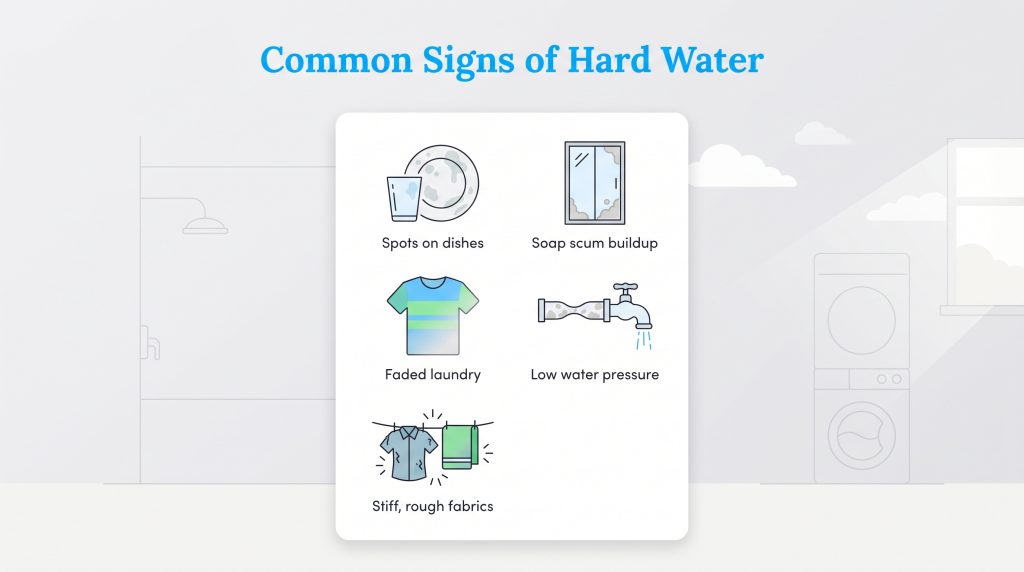
Diagnosing mineral buildup starts with paying close attention to your daily environment. The signs of hard water typically manifest through visible damage around the house and physical symptoms you feel during your hygiene routine. If you suspect your utility lines are carrying heavy minerals, keep an eye out for these top five repeating offenders:
- Spots on dishes: Freshly washed glasses and silverware emerge from the dishwasher with stubborn water spots and a cloudy, milky film that is frustratingly hard to buff out.
- Soap scum on shower doors: A resilient, sticky layer of soap scum constantly hugs the edges of your bathtub, bathroom sinks, and glass shower doors, requiring frequent scrubbing.
- Faded laundry: Clothes washed in mineral-heavy water quickly lose their vibrancy. Bright colors look noticeably dingy, dull, or faded after just a few wash cycles.
- Low water pressure: Hard mineral deposits slowly calcify inside your pipes and faucet aerators over time. This narrows the pipes, restricting overall flow and reducing your home’s water pressure.
- Stiff fabrics: Towels, linens, and clothing frequently feel scratchy, stiff, and uncomfortable against your skin because the mineral residue gets permanently trapped inside the fabric fibers.
Key Differences Between Hard Water and Soft Water
When comparing hard water vs soft water, the defining factor is the mineral density. The interactions these different water types have with your daily cleaning agents dictate how your home functions, how much cleaning product you need to buy, and how comfortable you feel. Here is a direct breakdown highlighting the exact differences between the two:
| Feature | Hard Water | Soft Water |
|---|---|---|
| Mineral Content | High concentrations of dissolved calcium and magnesium | Very low mineral density, primarily containing sodium ions |
| Feel on Skin | Leaves a sticky or “squeaky” residue, frequently causing dryness | Feels smooth, silky, and rinses completely clean from the body |
| Soap Lathering Efficiency | Prevents suds from forming, creating an insoluble soap scum | Allows soap to lather richly with minimal effort and product |
| Pipe Scaling | Causes heavy, chalky limescale buildup over time | Leaves no scale, protecting your plumbing infrastructure |
| Taste Profile | Distinct metallic or chalky flavor | Neutral or slightly salty taste |
How Hard Water Affects Your Health and Body
Many homeowners worry about the health implications of mineral-heavy tap water. Fortunately, drinking hard water is completely safe. The natural calcium and magnesium present can even contribute to your recommended daily dietary needs without posing any internal health risks. You don’t need to panic if your tap water tests high for natural mineral hardness.
However, the external effects of hard water on hair and skin are a different story. The heavy minerals react poorly with body washes and shampoos, creating an invisible film that clings to your body rather than washing away down the drain. This lingering residue can easily clog pores and strip away your body’s natural oils. If you or your family members have sensitive skin, bathing in hard water can significantly exacerbate dry skin, itching, or pre-existing conditions like eczema. Similarly, the mineral coating can weigh down your hair follicles, leaving your hair feeling heavy, brittle, and difficult to manage.
The True Cost of Hard Water on Appliances and Plumbing
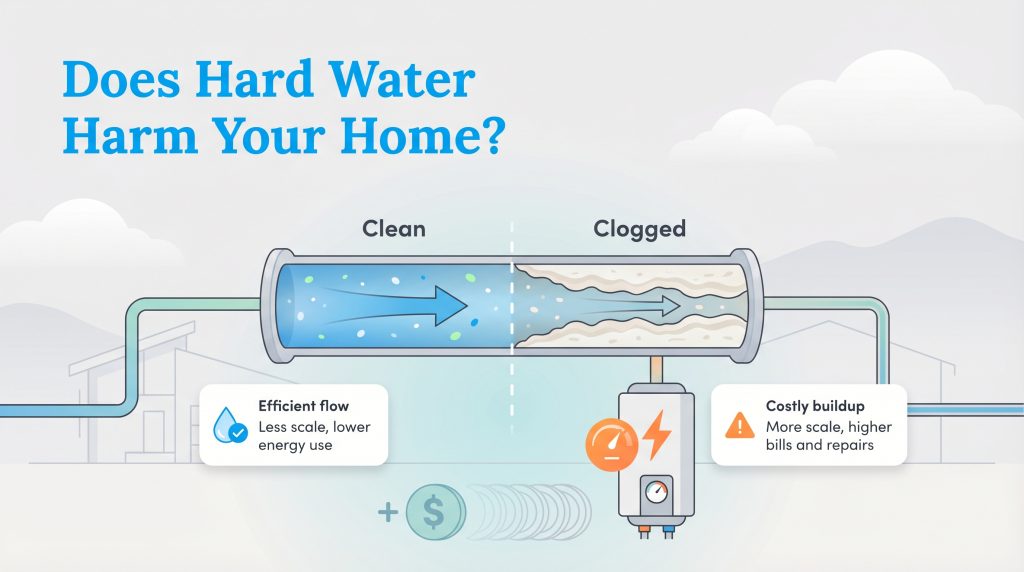
Think of your home’s plumbing like the arteries in a human body. As mineral-heavy water flows through your home, it leaves behind microscopic rock deposits that eventually harden into limescale. This chalky crust narrows the inside of your pipes, restricting water flow and forcing your appliances to work much harder to push liquid through the system. According to the Department of Energy, maintaining your appliances and keeping them free of scale can significantly improve energy efficiency, which is a key part of learning how to save on your electric bill. If left untreated, hard water can severely impact the following household systems:
- Water heaters: Scale buildup inevitably settles at the bottom of the water heater tank. This forces the heating element to work much harder to warm the water through the thick layer of rock, which spikes your energy consumption.
- Dishwashers: Mineral deposits aggressively clog the spray arms and internal heating elements, leading to poor cleaning performance, extra water usage, and frequent breakdowns.
- Washing machines: Limescale quickly accumulates in the pump mechanisms and internal hoses, causing premature wear and tear on the motor.
- Showerheads: Calcium crust blocks the tiny rubber nozzles on your showerheads, creating wild, uneven spray patterns and drastically reducing your daily water flow.
How to Test Your Home’s Water Hardness
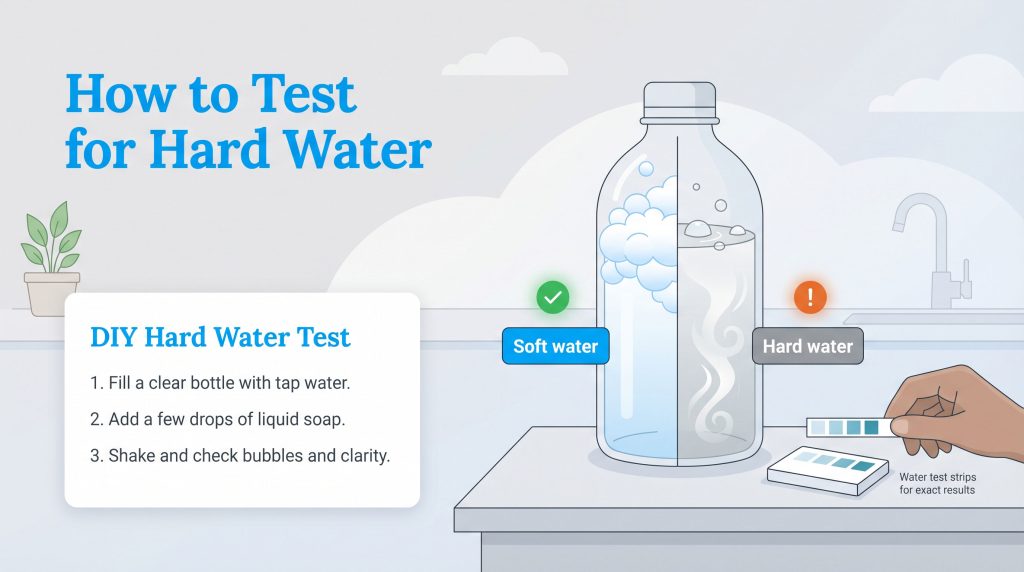
You don’t need to hire a costly professional or hold a chemistry degree to get a clear understanding of your home’s water quality. Learning how to test for hard water is highly accessible and gives you the exact data you need to choose the right treatment solution. Here is a simple step-by-step guide to evaluating your water supply:
- The DIY Soap and Water Bottle Test: Grab a clear, empty water bottle, fill it a third of the way with cold tap water, and squeeze in a few drops of pure liquid soap (avoid using synthetic detergents). Cap the bottle and shake it vigorously for several seconds. If the water creates a thick, fluffy lather of bubbles and remains clear beneath them, your water is likely soft. If it yields barely any bubbles and the water turns a murky, milky white, the heavy minerals are actively interfering with the soap.
- At-Home Test Strips: For a more precise measurement, purchase affordable water testing strips online or at a local hardware store. Simply dip the strip into a glass of fresh tap water, wait a few seconds, and match the resulting color against the provided chart. You will read the results in grains per gallon (gpg) or parts per million (ppm).
- Send a Sample to a Certified Lab: If you want exact, highly accurate numbers to guide an expensive home-improvement decision, you have two reliable options. You can submit a water sample to a certified independent laboratory for comprehensive testing, or you can review your municipal water utility’s annual consumer confidence report.
The Official Water Hardness Scale
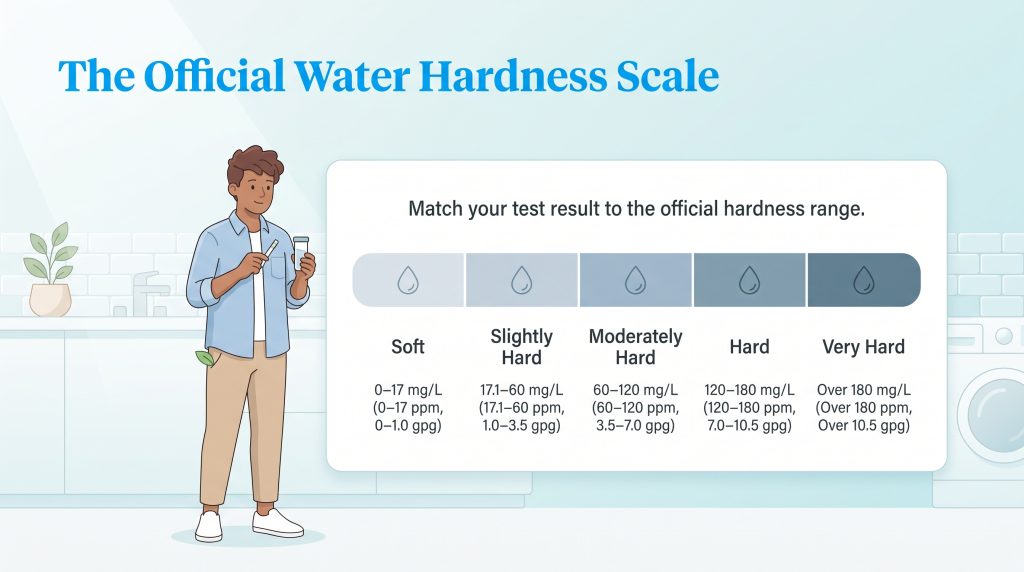
Understanding exactly what your test results mean requires looking at the official water hardness scale. Water quality experts measure mineral density using milligrams per liter (mg/L), parts per million (ppm), and grains per gallon (gpg). Identifying where your home’s water supply falls on this scale provides a factual baseline for treatment.
| Classification | Milligrams Per Liter (mg/L) | Parts Per Million (ppm) | Grains Per Gallon (gpg) |
|---|---|---|---|
| Soft | 0 – 17.0 | 0 – 17.0 | 0 – 1.0 |
| Slightly Hard | 17.1 – 60 | 17.1 – 60 | 1.0 – 3.5 |
| Moderately Hard | 60 – 120 | 60 – 120 | 3.5 – 7.0 |
| Hard | 120 – 180 | 120 – 180 | 7.0 – 10.5 |
| Very Hard | Over 180 | Over 180 | Over 10.5 |
Effective Solutions to Treat Hard Water
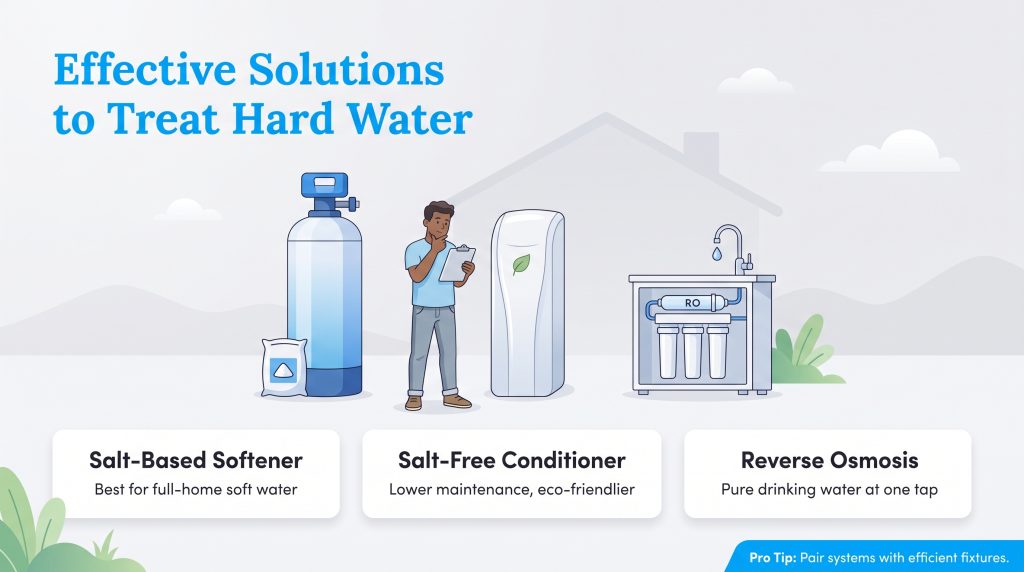
Fortunately, you have several reliable water softening solutions at your disposal. Finding the right fix depends heavily on your budget, household size, and your personal commitment to sustainable living. Here are the most effective methods to treat your water supply and remove heavy mineral buildup:
Salt-Based Water Softeners
Traditional salt-based ion exchange softeners are the industry standard for entirely removing calcium and magnesium from your water supply. They swap hard mineral ions with sodium ions, delivering genuinely soft water throughout the entire house.
- Pros: Completely eliminates future scale buildup, produces rich soap lather, solves laundry fading issues, and extends the lifespan of your plumbing and water heater.
- Cons: Requires ongoing purchases of heavy salt bags, wastes gallons of water during its regeneration cycles, and releases sodium back into local municipal waterways.
Salt-Free Conditioners
Also known as Template Assisted Crystallization (TAC) systems, these eco-conscious units don’t actually remove the hard minerals. Instead, they crystallize the calcium and magnesium so they remain suspended in the water rather than sticking to your pipes and forming scale.
- Pros: Incredibly low maintenance, highly eco-friendly, wastes zero water, and requires no heavy bags of salt or electricity to run.
- Cons: Does not actually soften the water, meaning you might still experience slightly less soap lather and some minor water spots compared to a traditional salt-based system.
Reverse Osmosis Systems
If a whole-house system is out of your budget or you are renting your home, an under-sink reverse osmosis (RO) system can drastically improve your kitchen’s drinking water quality. These point-of-use filters force water through a specialized semi-permeable membrane to trap heavy minerals and contaminants.
- Pros: Highly affordable, easy to install without hiring a plumber, and provides exceptionally pure, great-tasting drinking water.
- Cons: Only treats water at a single fixture, leaving the rest of your home’s plumbing and appliances entirely unprotected from ongoing scale buildup.
Choosing Your Water Treatment Strategy
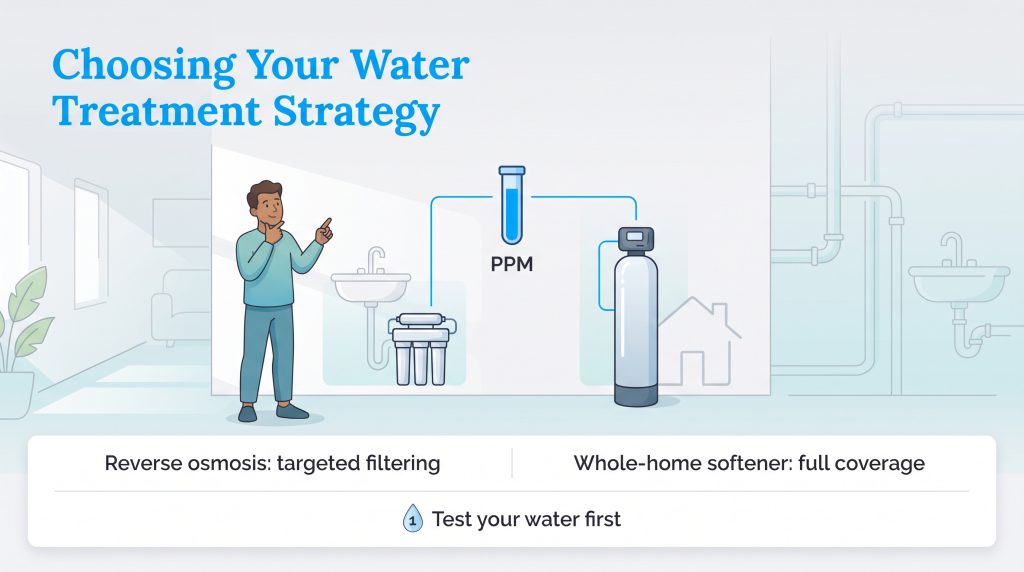
Diagnosing your water quality and implementing an environmentally mindful treatment strategy is one of the smartest investments you can make for your property. By neutralizing abrasive minerals, you actively protect the longevity of your home’s hidden infrastructure and consistently lower your monthly utility bills. Transitioning away from harsh, scale-heavy water means you can finally enjoy longer-lasting appliances, softer laundry, and plumbing that flows freely without expensive bottlenecks. We recommend testing your water first to identify your exact parts per million (ppm), evaluating the severity of your household symptoms, and then deciding whether a targeted reverse osmosis filter or a comprehensive whole-home softener makes the most sense for your family.
Frequently Asked Questions About Hard Water
Is hard water bad for you to drink?
No, drinking hard water is completely safe for your health and is not bad for you. In fact, the natural calcium and magnesium present can actually contribute to your recommended daily dietary needs. However, the heavy mineral concentration often gives the water a metallic or chalky taste that some people prefer to filter out.
Can hard water cause hair loss?
Hard water does not directly cause permanent male or female pattern hair loss, but it can lead to temporary hair thinning and breakage. The high levels of calcium and magnesium create a stubborn film that clings to your scalp, clogging pores and leaving your hair feeling brittle, dull, and highly prone to snapping off at the root.
Does boiling hard water make it soft?
Boiling can remove “temporary hardness” caused by dissolved calcium bicarbonate, leaving a chalky scale at the bottom of your pot. However, it will not remove “permanent hardness” caused by calcium and magnesium sulfates. For most modern households, boiling is not a practical or comprehensive solution for softening daily usage water.
Will a standard water pitcher filter remove hard water minerals?
Standard carbon pitchers, like a Brita, are designed to filter out chlorine and improve taste, but they do not remove heavy minerals. To effectively target and eliminate calcium and magnesium buildup, you need a dedicated water softening solution or a salt-free conditioning system.
How quickly does hard water damage pipes?
The rate of damage heavily depends on your specific grains per gallon (gpg) level. However, even with moderately hard water, minor scale buildup can begin restricting pipe flow and reducing appliance efficiency within just a few years.
What is the most eco-friendly way to remove hard water stains?
You can skip harsh chemical cleaners by mixing equal parts white vinegar and distilled water in a spray bottle. The natural acidity of the vinegar safely dissolves calcium buildup on your faucets, shower doors, and glassware without introducing toxic fumes into your home.
Can hard water increase my utility bills?
Yes. Scale buildup forces your water heater and other appliances to work harder to function properly. By treating hard water, you can help these systems run more efficiently, which can ultimately help lower your electric or natural gas costs over time.
About the Author

LaLeesha has a Masters degree in English and enjoys writing whenever she has the chance. She is passionate about gardening, reducing her carbon footprint, and protecting the environment. She also recently served as President of the Board for City Sprouts (a community garden).

David has been an integral part of some of the biggest utility sites on the internet, including InMyArea.com, HighSpeedInternet.com, BroadbandNow.com, and U.S. News. He brings over 15 years of experience writing about, compiling and analyzing utility data.