

Upgrade Your Kitchen Tap For Cleaner, Better-Tasting Water Without Needing A Toolbox Or Professional Help
Key Takeaways
- Most faucet filters install in under five minutes using only your hands.
- Check your faucet style first, as pull-down sprayers are generally not compatible with standard water filters.
- If the unit leaks after installation, tightening the adapter or adding a rubber washer usually fixes the issue instantly.
Plumbing projects often feel intimidating, but learning how to install a faucet water filter is a refreshing exception that takes under five minutes and requires zero specialized tools. Whether you are a renter seeking better tap water or a new homeowner cutting down on plastic waste, this tool-free water filter installation upgrade is surprisingly simple. Regardless of whether you purchased a Brita, PUR, or another major brand, our step-by-step guide walks you through the exact process to get fresh, purified water flowing right from your kitchen sink today.
Tools And Materials Required
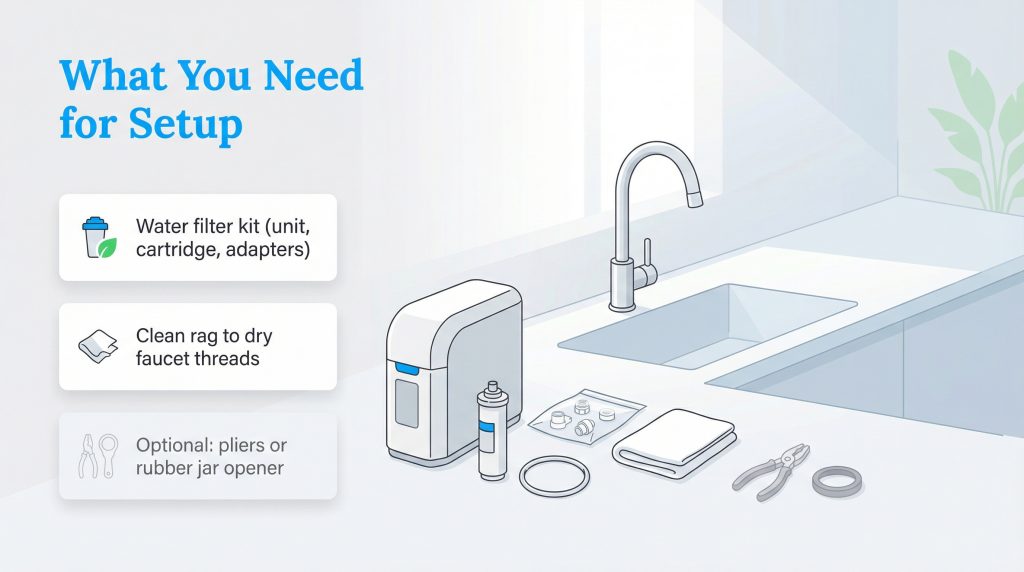
When preparing for this quick kitchen upgrade, you might be wondering if you need to raid your toolbox. The excellent news is that this is a zero-tools project for the vast majority of sinks. To capture a seamless installation experience, gather the following essentials before starting:
- Towel: Use this clean rag to completely dry the wet faucet threads so you can maintain a firm grip, and to protect your hardware finish.
- Pliers or Wrench (optional): You only need these if your old aerator is stuck tight due to hard water scale and refuses to twist off by hand.
- Plumber’s Tape (Teflon tape): This inexpensive white tape is highly recommended for establishing a watertight seal between the adapter and the faucet base.
- The replacement filter unit: Your primary housing unit and the fresh carbon block.
- Included adapter assortment: Multiple plastic or metal rings provided by the manufacturer to fit various sink types.
1. Verify Faucet Compatibility
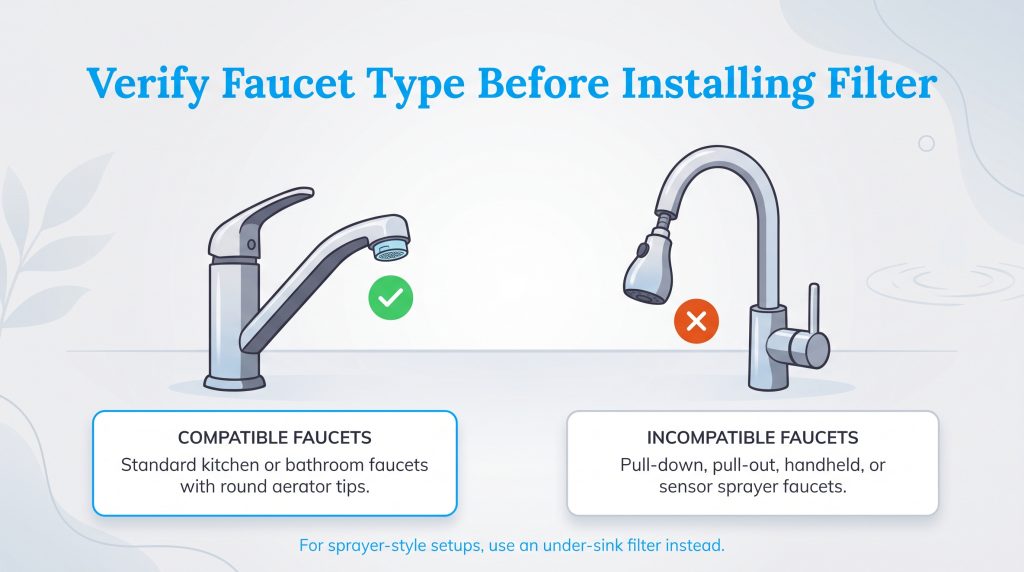
Before opening the packaging, you must confirm that your current sink hardware can physically support the new device. Standard filtration units are explicitly designed to attach directly to the tip of a traditional aerator on a fixed spout. If your kitchen features a standard fixed spout with a removable mesh aerator at the tip, you are entirely ready to proceed. However, modern kitchens frequently incorporate complex hardware that lacks the necessary attachment points. Review the table below to identify compatible faucets before beginning your project to prevent unnecessary frustration.
| Compatible Faucets | Incompatible Faucets |
|---|---|
| Standard Kitchen Faucets | Pull-down or Pull-out Faucets |
| Standard Bathroom Faucets | Handheld Faucets or Sprayers |
| Basic Round Aerator Tips | Touchless or Sensor Faucets |
2. Remove The Existing Faucet Aerator
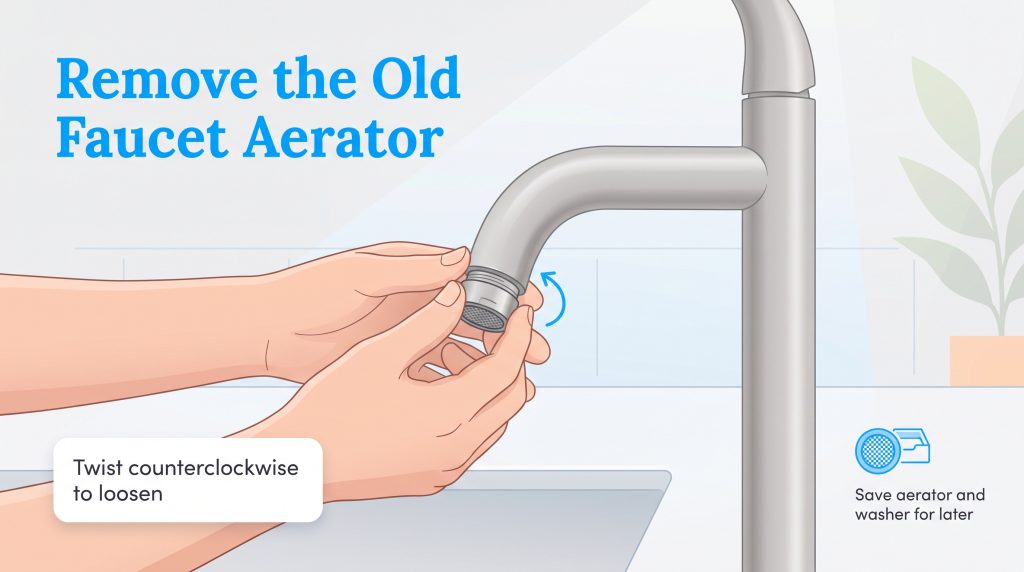
Your first mechanical action is figuring out how to remove aerator for water filter placement. The aerator is the small, circular mesh tip located at the very end of the spout that mixes air into the water stream to prevent aggressive splashing. Inspect the tip closely, and you will see a distinct seam where it screws directly into the main faucet neck.
Grip the aerator firmly with your dry fingers and twist counterclockwise. If you are looking from the bottom up, remember the classic rule: “lefty-loosey.” Once you successfully unscrew it, place the old aerator and its rubber washer in a safe drawer. You will definitely need to reinstall it if you ever move out or decide to remove the filtration unit in the future.
3. Determine Internal Vs External Faucet Threads
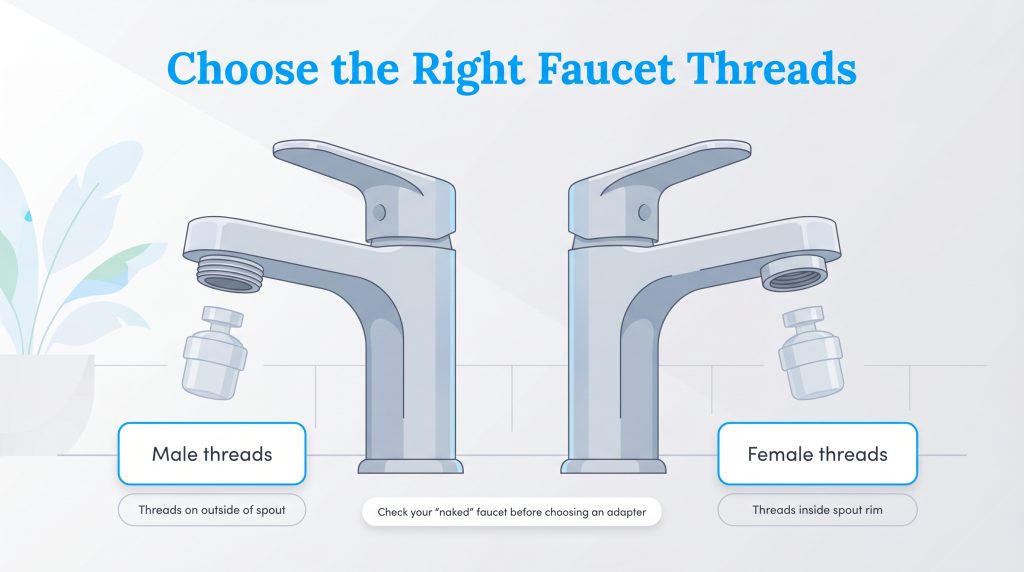
Selecting the right attachment relies entirely on understanding your specific hardware. Examine your naked faucet spout to determine your thread orientation before digging through your parts bag. External threads sit exposed on the outside of the faucet spout, much like a traditional screw. In contrast, internal threads are completely smooth on the outside, with the threading grooves hidden inside the rim cavity.
Choosing the correct internal vs external thread faucet adapter is the most critical step to prevent leaking. If your faucet has external threads, you will typically use the thin rubber washer provided in your kit to seal the connection. For internal threads, you generally need the thicker rubber washer to bridge the deeper gap inside the cavity.
4. Select And Attach The Correct Adapter
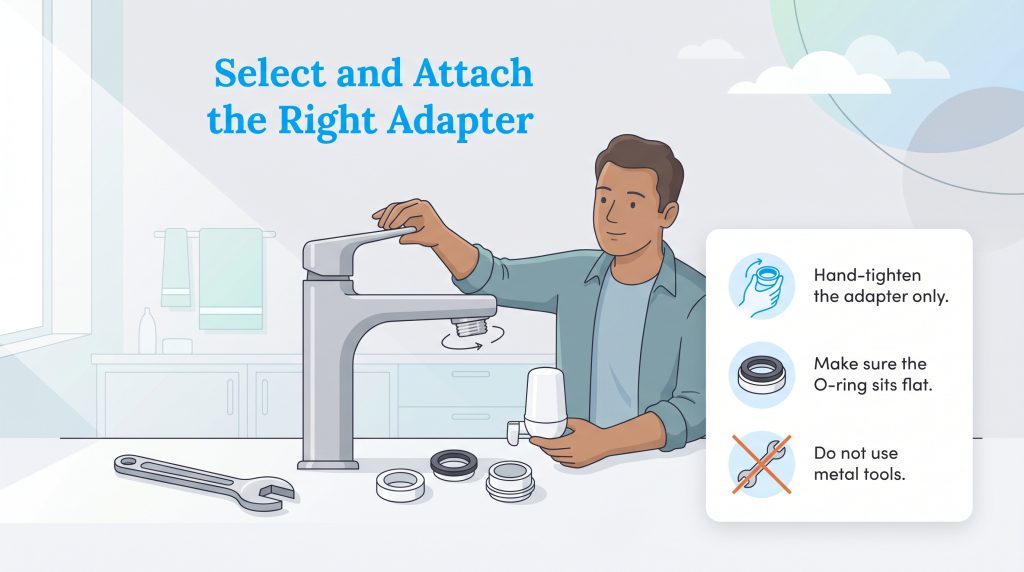
With your thread type identified, sort through your faucet water filter adapter types. Test the provided adapters gently by hand. Choose the adapter that threads perfectly without forcing it, ensuring your selected thick or thin rubber O-ring washer is seated flat inside the top of the adapter. Twist the adapter clockwise by hand until it is flush with the faucet. Never use metal wrenches to tighten these pieces, as excessive pressure will almost certainly crack the delicate plastic components.
5. Mount The Filter Base To The Faucet
Once your adapter is fully secure, figuring out how to attach a water filter to a sink faucet takes just seconds. Take the primary base and align it carefully beneath the freshly installed adapter. Depending on your brand, you will either use a push-to-click mechanism or a twisting threaded collar to lock the unit securely into place.
Push the device straight up onto the adapter threads and listen closely for a distinct click, or twist the textured locking collar counterclockwise until it feels snug against the sink. Make sure the unit sits perfectly level — an uneven base will heavily compromise your water flow and potentially damage the internal cartridge chamber.
6. Insert The Filter Cartridge And Flush The System
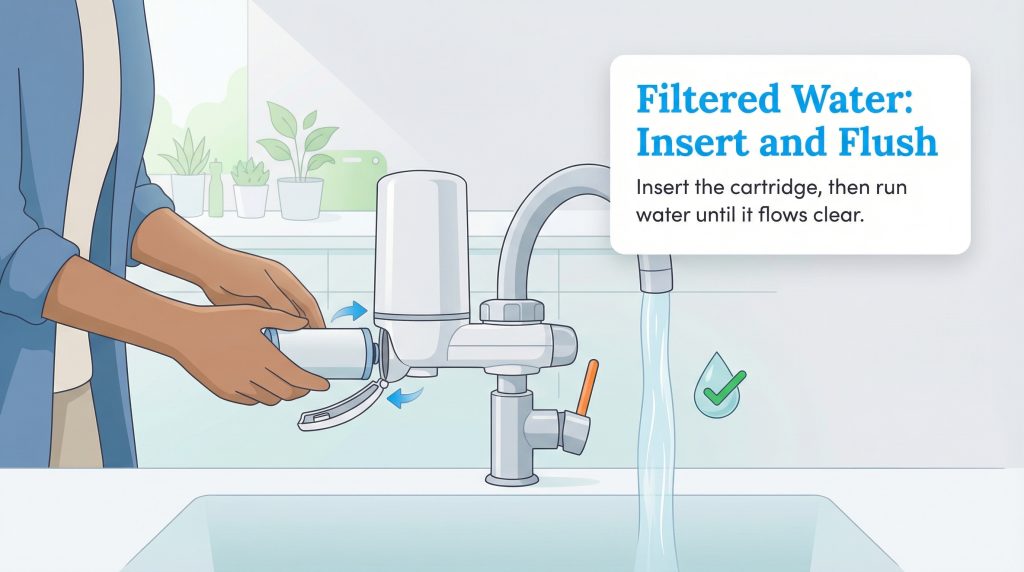
With the housing securely suspended from your spout, inserting the best faucet water filter replacement cartridge is your final mechanical step. Pop open the top lid or unthread the side cap of your main filter housing. Remove the cartridge from its sealed plastic wrapper and slide it downward into the empty chamber.
Match up the directional arrows printed on the label with the corresponding notches inside the plastic cavity. Press it down firmly until it seats completely, then snap the lid shut to lock it into position. Finally, you must conduct a safety flush. Turn the diverter valve switch on the side of the housing to the “filtered” position and turn on your cold water tap. Let the cold water run uninterrupted for exactly five minutes to clear out any harmless carbon dust.
It is crucial to remember that running hot water will severely damage the internal filter medium. Never run anything but cold water through the active filtration setting. If you are still evaluating options for pure drinking water throughout your entire property, explore our reviews of the best water filters.
Troubleshooting Common Installation Leaks
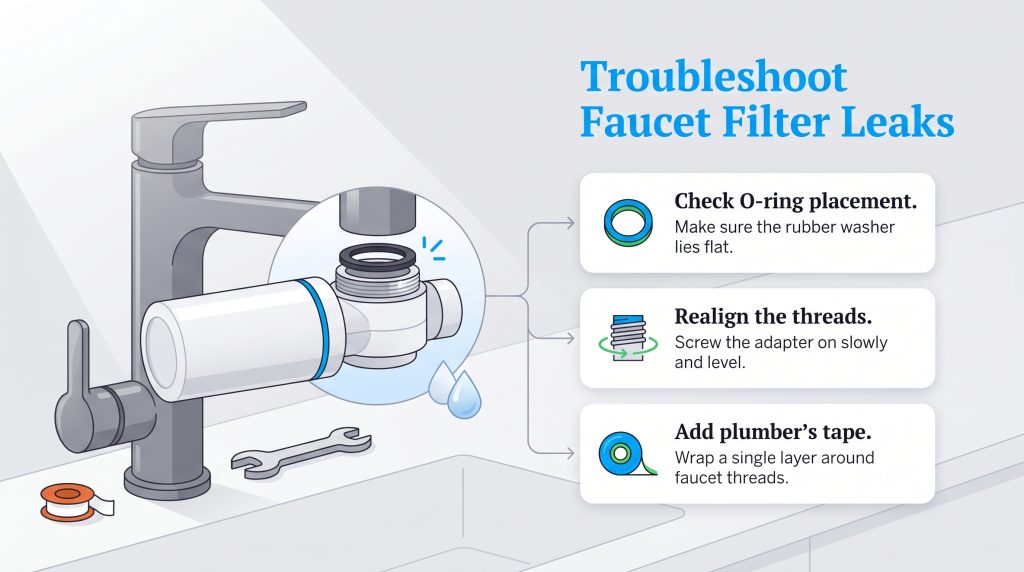
Dealing with a faucet water filter leaking after installation is frustrating, but resolving the drip usually requires only minor adjustments. If water sprays aggressively when you turn on the tap, run through this quick troubleshooting checklist targeting the three most common leak points:
- Base of the faucet: If leaking from the very top connection to the sink spout, remove the unit and apply two layers of plumber’s tape to the bare faucet threads before reattaching.
- Collar of the filter: If leaking from the plastic collar, remove the unit and ensure your thick or thin rubber O-ring is seated perfectly flat against the internal base.
- Spout: If water drips constantly from the filter spout when turned off, the internal cartridge is likely misaligned; simply pop it out and press it firmly back into place until it clicks.
Brita Vs PUR Brand-Specific Installation Tips
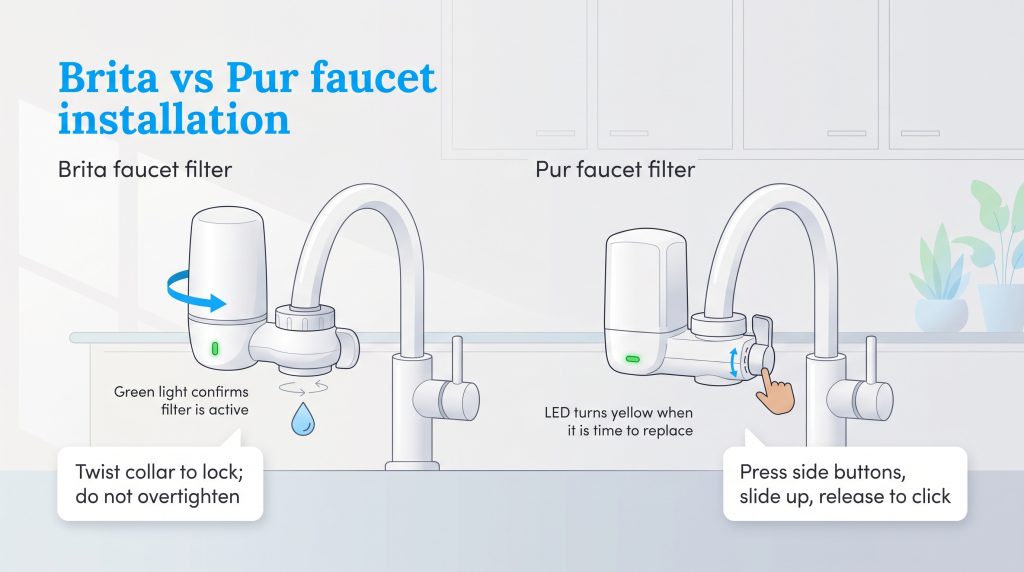
While the basic plumbing principles remain identical across the market, different manufacturers utilize proprietary attachment styles. Understanding these unique mechanisms ensures your new device tracks water usage accurately and securely locks into place.
A standard Brita faucet filter setup requires a threaded collar-twist mechanism. After pressing the base onto the adapter, you must physically twist the outer collar to lock the unit in place. Be careful not to overtighten this collar, as the plastic threading can warp under extreme pressure. Once locked, running the water on the filtered setting automatically triggers the internal electronic indicator screen, flashing a green light to confirm the battery is active.
Mastering a PUR water filter installation involves a distinct side-button clicking mechanism. Instead of twisting a collar, you simply press the two side release buttons on the housing simultaneously, slide the unit up onto the adapter, and release the buttons until you hear a sharp, audible click. The PUR system also utilizes an advanced LED filter life indicator that flashes green with every use, automatically shifting to yellow when it is time to order a replacement block.
Maximizing Your Filter’s Lifespan
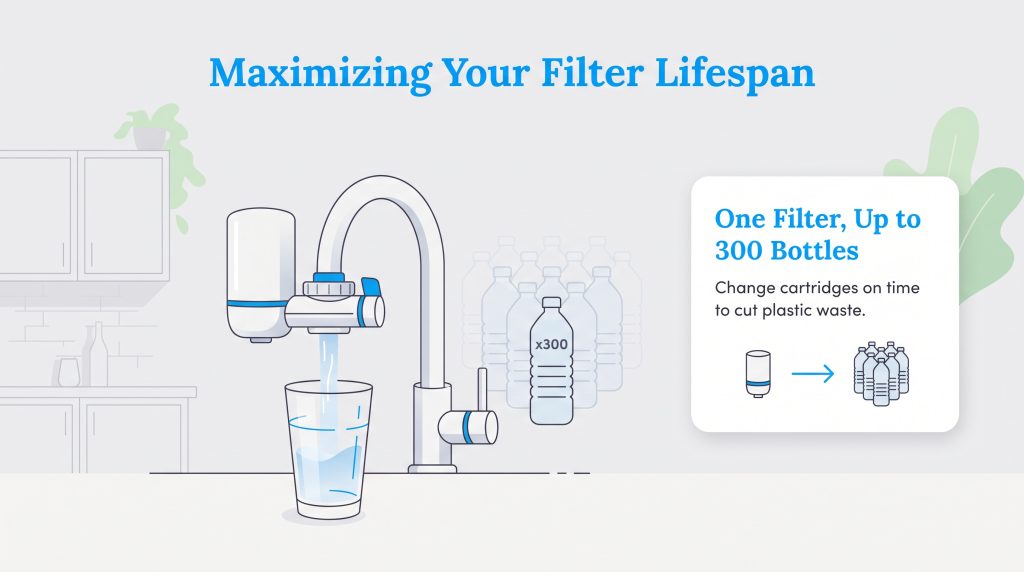
Attaching a filtration unit to your kitchen sink is one of the easiest ways to make your household significantly more sustainable. By cleaning your municipal tap water right at home, you drastically reduce your family’s reliance on single-use plastic bottles. Knowing how often to change faucet water filter cartridges is key to maximizing these benefits; astonishingly, one standard filter cartridge can comfortably replace up to 300 standard 16.9-ounce water bottles before expiring.
Start Enjoying Fresh Filtered Water Today
This environmentally mindful choice saves you considerable money at the grocery store while simultaneously keeping a massive volume of plastic out of local landfills and vulnerable oceans. According to the EPA, plastics are a rapidly growing segment of municipal solid waste, and reducing usage at the source is the most powerful action consumers can take. You now have immediate access to cleaner, crisp-tasting hydration without the daily hassle of filling bulky pitchers. Just remember to establish a consistent replacement schedule — generally every two to three months — so your family can enjoy purified tap water all year long.
Frequently Asked Questions About Faucet Water Filters
Do faucet water filters fit all faucets?
Why is my faucet water filter leaking after installation?
Can I use hot water with my newly installed faucet filter?
How often do I need to change the faucet water filter cartridge?
Do I need a plumber to install a water filter on my sink?
Why is black water coming out of my newly installed faucet filter?
Why is my water flow so slow after installation?
Do faucet filters remove all contaminants?
About the Author

David has been an integral part of some of the biggest utility sites on the internet, including InMyArea.com, HighSpeedInternet.com, BroadbandNow.com, and U.S. News. He brings over 15 years of experience writing about, compiling and analyzing utility data.

Claudio is a sustainability-focused writer with a background in Anthropology and Psychology from NC State University. He has spent over 15 years working in writing, interpretation, and translation, driven by a deep interest in how human culture shapes the environment. Today, he shares his curiosity with readers by writing about sustainable living solutions and the connection between everyday choices and environmental impact.