
Save Money and Reduce Plastic Waste With This Simple DIY Project for Homeowners and Renters
Key Takeaways
- Identify your cold water line under the sink before starting to ensure you attach the adapter to the correct pipe.
- Choose a method that fits your home by deciding between drilling a new hole for a faucet or utilizing an existing soap dispenser opening.
- Flush the system for several minutes after installation to remove loose carbon particles and ensure the water is clear and safe to drink.
Installing an under sink water filter is a highly rewarding, eco-conscious home upgrade that saves you money and significantly reduces household plastic waste. Rather than relying on expensive bottled water, tackling this DIY under sink water filter project allows you to access crisp, purified water directly from your kitchen tap in just an afternoon. This step-by-step under sink water filter installation guide walks you through the entire process, covering essential plumbing best practices, the specific tools needed for water filter installation, and clever renter-friendly hacks so you can complete the job with confidence.
Types of Under Sink Water Filters: Carbon Block Versus Reverse Osmosis
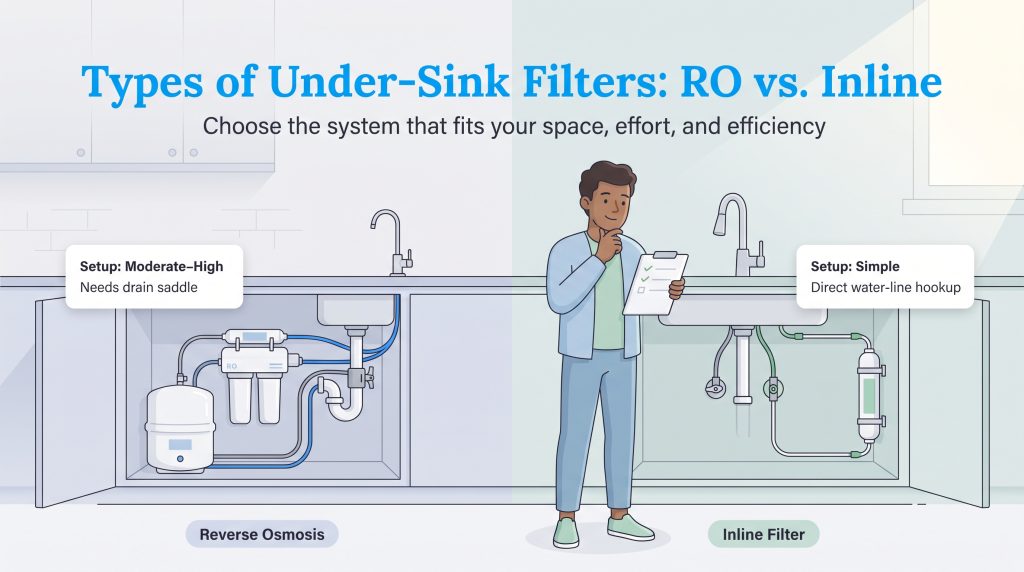
Before you dive into the physical plumbing work, it is important to understand the specific type of system you are working with. The complexity of your DIY project will vary heavily depending on whether you are tackling a reverse osmosis system setup or a simpler inline configuration. Both provide excellent water purification, but they interact with your plumbing and available cabinet space in completely different ways.
An under sink carbon block filter connects directly to your existing plumbing, filtering the water instantly as it passes through densely packed carbon media. These are highly efficient, generate zero wastewater, and require minimal room. Conversely, reverse osmosis (RO) systems offer the highest level of contaminant removal by forcing water through a delicate semi-permeable membrane. This is often considered the best under sink water filter for well water because it removes stubborn heavy metals and dissolved solids. However, an RO setup requires extra installation steps — specifically, installing a drain saddle on your sink’s PVC drain pipe to handle wastewater and accommodating a bulky pressurized water storage tank.
| Feature | Reverse Osmosis (RO) System | Carbon Block Inline System |
|---|---|---|
| Installation Complexity | Moderate to High (requires installing a drain saddle) | Low (simple direct connection to cold water line) |
| Space Requirement | Large (requires extra cabinet space for a pressurized storage tank) | Minimal (mounts easily to cabinet wall) |
| Filtration Capabilities | Removes heavy metals and dissolved solids (best for well water) | Removes chlorine, bad tastes, and odors (best for tap water) |
| Wastewater Generation | Yes (typically 3 to 4 gallons per 1 gallon purified) | No (100% of water is filtered and dispensed) |
Essential Tools and Materials Checklist
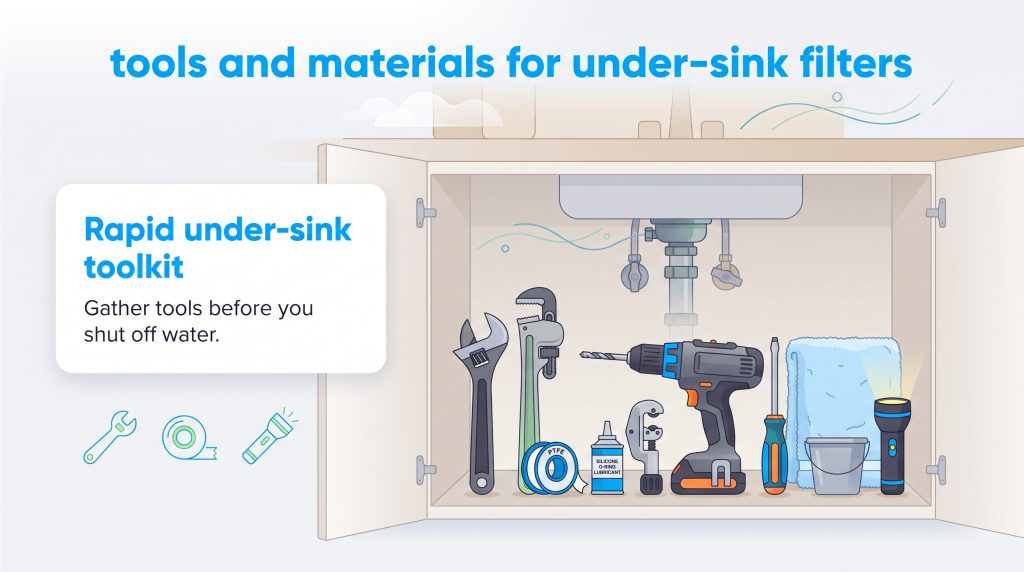
Even if you purchase a comprehensive, all-in-one kit, you will need a few standard household tools to secure the plumbing properly and prevent long-term leaks. Gathering the tools needed for water filter installation beforehand ensures you will not have to stop halfway through the process with your main water supply shut off. Below is the essential checklist you need to complete the job safely and efficiently:
- Adjustable wrench: Essential for loosening and tightening compression nuts safely without stripping the metal.
- Plumber’s Teflon tape (PTFE tape): Crucial for wrapping threaded metal connections to stop slow dripping leaks.
- Drill and specific drill bits: Required only if you plan to drill a hole for a dedicated water filter faucet (typically 1/2-inch to 1 3/8-inch sizes).
- Utility knife or dedicated tube cutters: Ensures perfectly square cuts on the plastic tubing to prevent push-fit fitting blowouts.
- Screwdrivers: Needed for securing the mounting brackets firmly to the wooden cabinet wall.
- Towels and a catch bucket: Catches residual water pressure when disconnecting the old pipes.
- Flashlight: Provides essential visibility under the dark, crowded sink basin.
1. Inspect Pipes and Clear the Cabinet
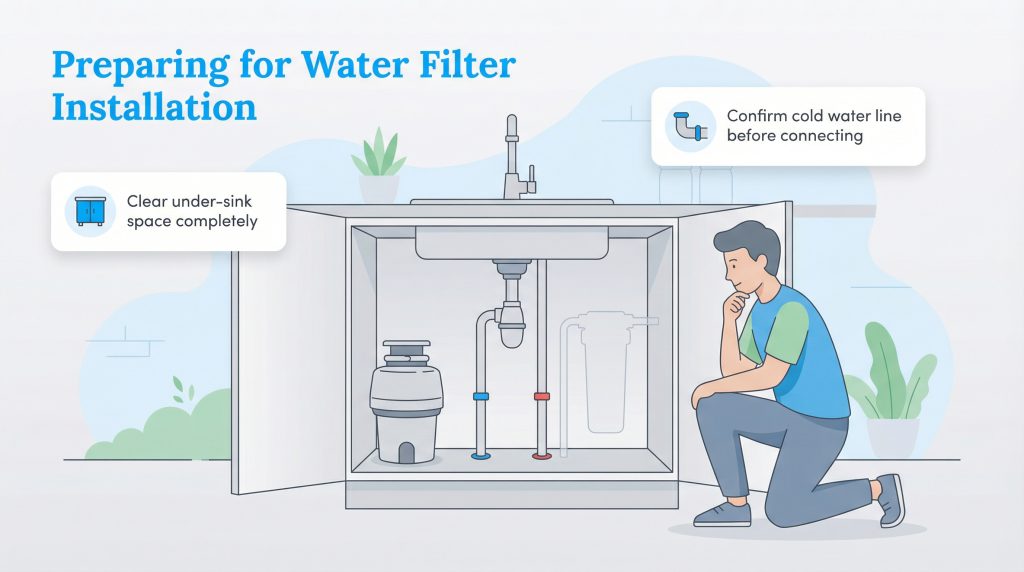
A successful installation begins with adequate mechanical preparation. Before gathering your tools, completely clear out the area under your sink to ensure you have ample room to maneuver. Use your flashlight to verify there are no active leaks, structural pipe rot, or exposed GFCI electrical outlets near your plumbing fixtures. Addressing these hazards first is non-negotiable for your safety during any home water filtration project.
Next, carefully identify your cold water supply line. In most standard plumbing setups, the cold water line is located on the right side. Verify this by turning on the hot water at the sink and carefully feeling the pipes; the pipe that remains cool is your target. Once identified, locate the oval-shaped cold water shut-off valve.
2. Shut Off the Cold Water Line and Relieve Pressure
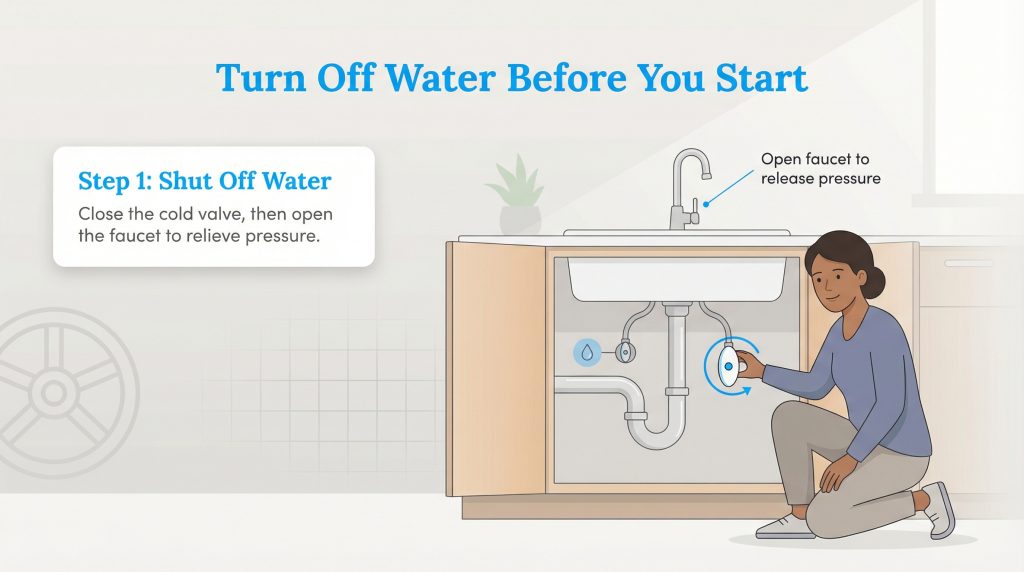
Turn the cold water shut-off valve clockwise (to the right) until it stops turning. Never force a stuck valve, as breaking the stem will cause an immediate flood.
Once the valve is tightly closed, turn on your kitchen’s cold water faucet to relieve any lingering pressure in the line. Leave the faucet open to prevent trapped water from spraying out at you when you unscrew the connections.
3. Disconnect the Cold Water Line and Install the T-Adapter
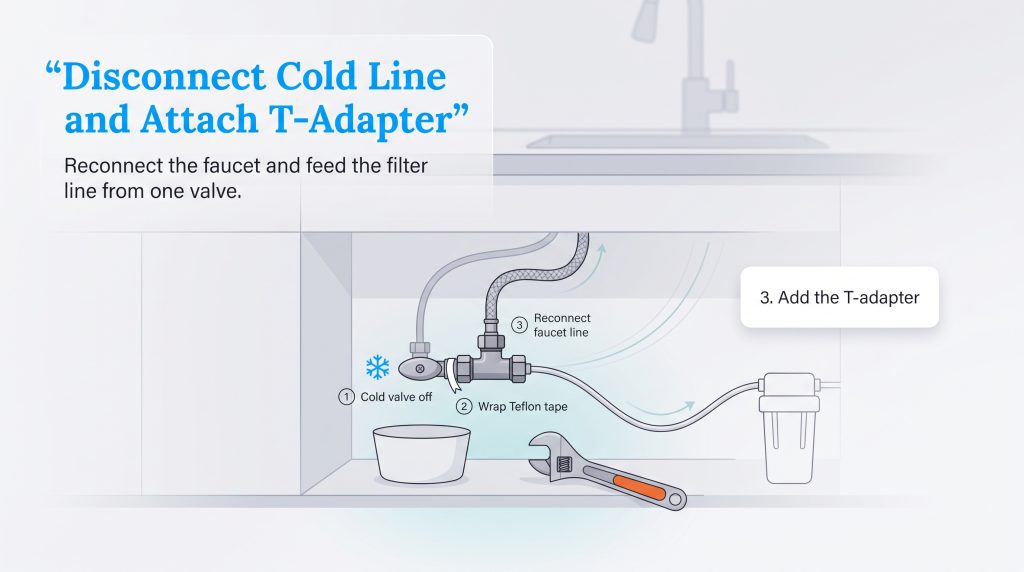
With the water safely shut off, you can now connect the water filter to the cold water line. Your kit includes a T-adapter (sometimes called a feed water valve), which acts as a detour for your plumbing. It directs the main flow back up to your regular kitchen faucet while diverting a dedicated stream to your new filtration system.
Place your catch bucket directly under the shut-off valve. Use your adjustable wrench to carefully disconnect the existing riser tube (the braided metal hose going up to your main kitchen faucet) from the wall valve. Wrap all male threaded metal connections with plumber’s Teflon tape to prevent slow drips, applying three tight wraps in a clockwise direction. Thread the T-adapter onto the shut-off valve by hand to avoid cross-threading, then tighten it snugly with your wrench. Finally, reconnect the kitchen faucet’s riser tube to the top male threads of the newly installed T-adapter.
4. Install the Dedicated Filter Faucet
If your system requires a secondary dispenser, tackling the water filter dedicated faucet installation early in the process ensures you do not drop heavy tools on your new filter housing later. If you have a standard stainless steel sink, you can safely drill a new hole for the faucet using a high-quality metal drill bit. If you are working with thick granite or quartz countertops, always use a diamond-tipped hole saw. Apply a small pool of water around the drill site to keep the bit cool, drill slowly with steady downward pressure, and wipe up shavings immediately.
For a renter-friendly, no-drill hack, check if your sink has a built-in soap dispenser or side sprayer you rarely use. Unscrew the soap bottle from underneath, loosen the mounting nut, and pull the dispenser out entirely from the top. You now have a perfectly sized hole for your new faucet without risking expensive countertop damage. Once the new faucet is inserted, use a basin wrench to tighten the faucet nut securely from underneath the sink.
5. Mount the Filter Housing Unit
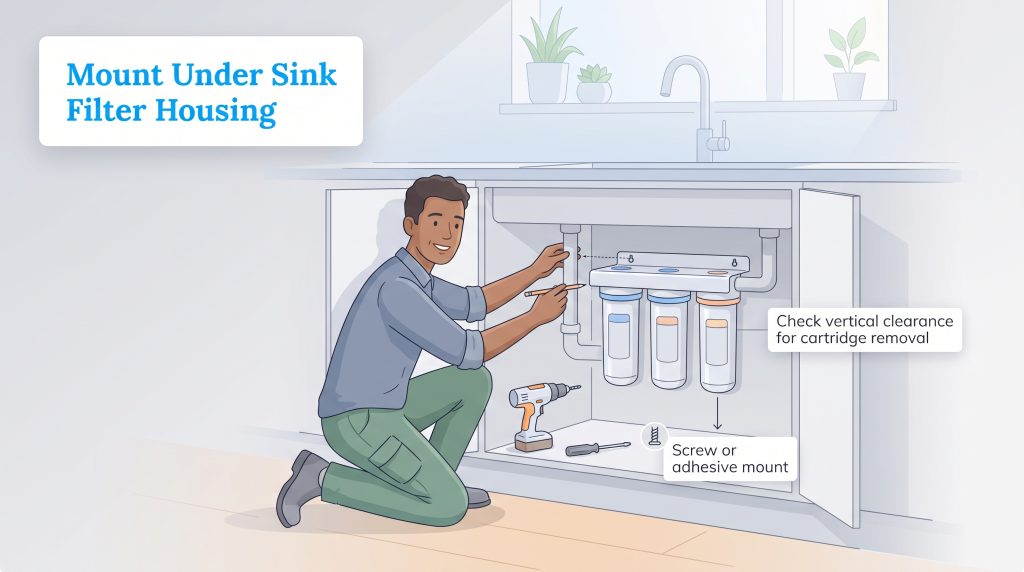
Where you place the main housing unit depends heavily on your cabinet layout and the flexibility of your plastic tubing. Hold the filter manifold securely against the cabinet wall and verify there is enough vertical clearance directly below it. You must leave room to pull the filter cartridges straight down during future replacements. If you mount the system too low, the cartridges will hit the cabinet floor before they fully unscrew.
Once you visually confirm the clearance, mark the screw holes with a pencil. Drill small pilot holes to prevent the cabinet wood from splitting, and secure the mounting bracket using your screwdrivers. If you are renting an apartment and want to avoid drilling into the cabinetry altogether, use heavy-duty, double-sided adhesive strips, or simply allow a flat-based system to stand freely on the cabinet floor.
6. Connect the Water Lines and Fittings
Most modern systems utilize push-fit plumbing fittings, which make routing the water lines incredibly user-friendly. However, they require precise execution to avoid sudden blowouts. Take your plastic tubing and push it firmly into the open port on the T-adapter. You will feel it slide in, hit an internal O-ring, and properly seat into place. Give the tube a gentle tug backward to ensure the internal collet teeth have locked onto it securely.
Route the tubing from the adapter to the filter input, and from the filter output up to your new faucet. When routing the lines, always leave a gentle, sweeping curve in the plastic tubing. Tubing that is stretched too tight places severe lateral stress on the push-to-connect fittings, which distorts the O-ring and causes slow leaks over time.
7. Flush the System and Inspect for Leaks
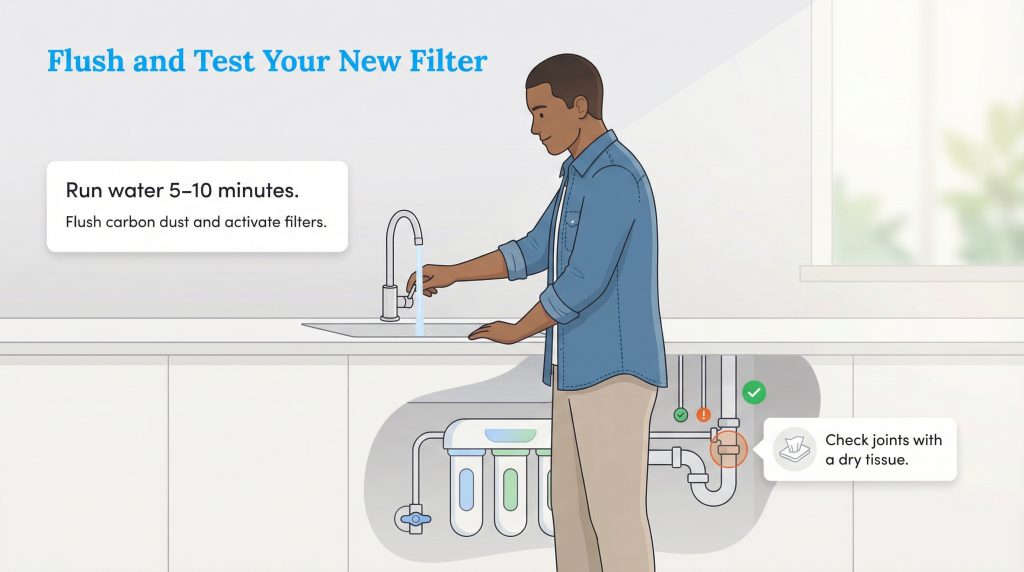
Before adding water, apply a very light layer of silicone-based lubricant around the seals of your NSF certified water filter cartridges. Twist the filter cartridges firmly into the housing manifold, ensuring they align perfectly with the directional flow arrows. Now, turn your cold water supply valve counterclockwise slowly to restore the flow and gradually pressurize the system.
Open your new filter faucet. The carbon block filters inside the unit contain loose carbon fines left over from manufacturing, meaning the water will likely look gray, cloudy, or sputtering at first. Let the water run continuously for at least 10 to 15 minutes to fully flush out this harmless dust. While the water runs, wipe a dry tissue or paper towel around every single connection point. The dry tissue will instantly reveal microscopic moisture, ensuring your installation is entirely watertight.
Troubleshooting Common Installation Leaks
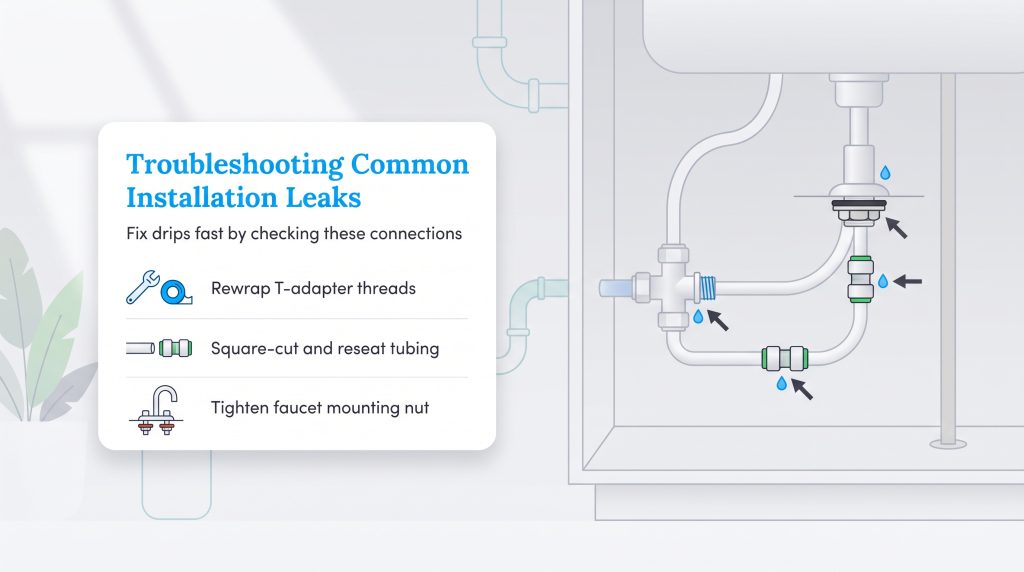
Even with careful preparation, discovering your under sink water filter leaking once the system is fully pressurized is a common scenario for many DIYers. Rather than panicking or uninstalling the entire unit, you can usually isolate and fix the problem in minutes. Use this troubleshooting matrix to identify and commandingly resolve the three most common mid-installation leak points:
- Threaded Connections (T-adapter feed valve): If water is dripping steadily from the metal threads, the connection is either loose or lacks sufficient sealing tape. Fix: Turn off the water supply and open the faucet to depressurize. Unscrew the adapter entirely, apply three fresh layers of plumber’s Teflon tape clockwise, and retighten snugly with an adjustable wrench.
- Push-Fit Tubing Joints: If water is weeping out from around the plastic collets, the tubing was likely cut at an angle or not pushed in deeply enough to pass the internal O-ring. Fix: Turn off the water. Remove the tube by pressing inward on the collet ring while simultaneously pulling the tube out. Recut the tip perfectly square, then firmly push it back in until you feel it click into place.
- Faucet Base: If water is pooling at the base of the new drinking tap directly above the sink, the under-sink mounting hardware is not fully compressing the seal. Fix: Use a basin wrench to tighten the under-sink mounting nut. Ensure the rubber gasket is positioned correctly between the metal faucet base and the countertop surface.
Preparing for Long-Term Water Quality
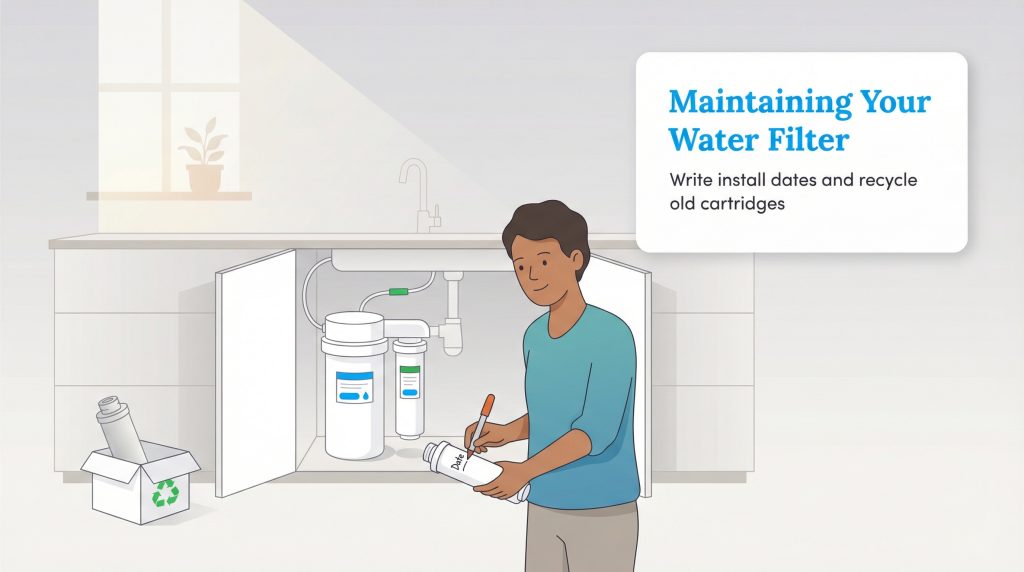
Proper long-term maintenance is required to keep your water tasting fresh, maintain optimal flow rates, and prevent bacterial growth. Most under sink cartridges are rated to last anywhere from six months to a year, depending heavily on your household’s daily water usage and local municipal sediment levels. A highly effective habit is to use a permanent marker to write the exact date of installation directly on the front of the cartridge. This provides a clear visual reminder every single time you open your cabinet doors.
Knowing how to change under sink water filter cartridge safely is just as important as the initial setup. Before swapping out old filters, you must always shut off the cold water supply valve and open your filter faucet to fully depressurize the system. Failing to depressurize the lines makes the filter housings nearly impossible to twist off and can result in a messy burst of trapped water.
By learning how to tackle this plumbing upgrade, you have taken a significant step toward a healthier home and a much healthier planet. You are saving money that would have otherwise been spent on expensive bottled water while preventing countless single-use plastics from entering the global waste stream. Enjoy your eco-conscious choice, fill up a reusable bottle, and feel confident tackling your next household upgrade.
Frequently Asked Questions About Under Sink Water Filter Installation
What is the easiest DIY under sink water filter installation method?
The easiest method is an inline water filter setup. Because it connects directly to your existing cold water hose under the sink, it filters all cold water flowing through your primary kitchen faucet. This completely eliminates the need to drill a new hole in your countertop or sacrifice your soap dispenser for a secondary, dedicated drinking tap.
How do you reduce water pressure for filter systems to prevent leaks?
Most under sink water filtration systems operate safely between 40 and 80 PSI. If your home’s water pressure exceeds 80 PSI, the constant stress can blow out push-fit connections or crack plastic housings. To reduce water pressure for filter systems, install a screw-on pressure-limiting valve (PLV) directly onto the cold water line before the T-adapter. This regulates the incoming flow to a safe, steady PSI.
How tight should I make the T-adapter feed valve?
You should thread the adapter by hand until it is secure, then use a wrench to tighten it one additional quarter or half turn. Do not overtighten it. Applying excessive force with a wrench can crack the brass fittings, strip the delicate threads, or crush the internal rubber washers, all of which will guarantee an immediate leak.
What should I do if my cold water shutoff valve is corroded and won’t turn?
If your shutoff valve is heavily corroded, gritty, or seized, never use extreme force or a wrench to force it open or closed. Forcing a stuck valve can easily snap the internal stem, resulting in an immediate, high-pressure leak that could flood your kitchen. Instead, shut off the main water supply to your entire house. From there, you can replace the under-sink valve yourself or call a licensed plumber to install a new, modern quarter-turn valve before proceeding.
Does my under sink water filter need to be NSF certified?
While it is not a legal requirement for residential use, purchasing an NSF certified water filter is highly recommended. The National Sanitation Foundation rigorously tests water treatment systems to ensure they actually remove the specific contaminants the manufacturer claims to eliminate. Certification guarantees the materials used are safe for drinking water and will not leach harmful chemicals into your supply.
Can I install an under sink filter if I rent my home?
Yes, you absolutely can. Look for renter-friendly kits that utilize an existing soap dispenser hole for the faucet so you don’t have to drill into the countertop. Alternatively, choose inline filters that connect directly to your existing cold water line. Always keep the original plumbing parts in a safe place so you can restore the sink to its original state when you move out.
How often should I change the filter cartridges?
Most manufacturers recommend changing the filter cartridges every six to 12 months. However, this depends heavily on your local water quality and how much water your household uses. If you notice a drop in water pressure or a change in taste, it is likely time for a replacement sooner than the recommended interval. For more details on water quality standards, you can visit the EPA’s Ground Water and Drinking Water page.
Do I need a plumber to install an under sink water filter?
In most cases, no. Installing a standard inline or carbon block under sink water filter is a straightforward DIY project that requires only basic hand tools. However, if your home’s plumbing is severely corroded, you are dealing with complex well water systems, or you are uncomfortable drilling a hole in a granite countertop for a dedicated faucet, hiring a licensed plumber is a smart investment to prevent costly damage.
How long does it take to install a reverse osmosis system?
For a beginner DIYer, a complete reverse osmosis system setup typically takes between two and four hours. This timeline includes clearing the cabinet space, setting up the dedicated faucet, mounting the multi-stage filter manifold, installing the drain saddle for wastewater, and allowing the storage tank to fill and flush properly. A simpler inline carbon filter can usually be installed in under an hour.
Can I connect an under sink water filter directly to my existing kitchen faucet?
Yes, you can connect specific types of inline water filters directly to your existing kitchen faucet. These systems attach to your main cold water line and filter all the cold water you use for washing dishes and drinking. However, reverse osmosis systems cannot be connected to your main faucet; they require a dedicated dispenser because of the slow filtration rate and the presence of a pressurized storage tank.
About the Author

LaLeesha has a Masters degree in English and enjoys writing whenever she has the chance. She is passionate about gardening, reducing her carbon footprint, and protecting the environment. She also recently served as President of the Board for City Sprouts (a community garden).