

Knowing exactly what to keep out of your compost pile helps you avoid bad smells, pests, and harmful pathogens while creating rich soil for your garden.
Key Takeaways
- Never compost meat, dairy, or fats, as they attract pests and introduce harmful bacteria to your yard.
- Keep carnivorous pet waste out of your bin to avoid spreading dangerous parasites into your garden soil.
- Balance your greens and browns to quickly fix a smelly or sluggish compost pile.
Starting a compost bin at your new home is a fantastic, eco-conscious choice that turns daily kitchen scraps into nutrient-rich soil, though it can initially feel a little intimidating. If you toss the wrong ingredients into the mix, you might accidentally transform a fun backyard project into a messy, pest-heavy problem. Learning exactly what not to put in compost takes the guesswork out of the process, ensuring your pile breaks down efficiently and safely. We want to help you confidently build a thriving, odor-free compost system that nourishes your garden without drawing uninvited neighborhood wildlife.
Quick List: 12 Things Not to Put in Compost
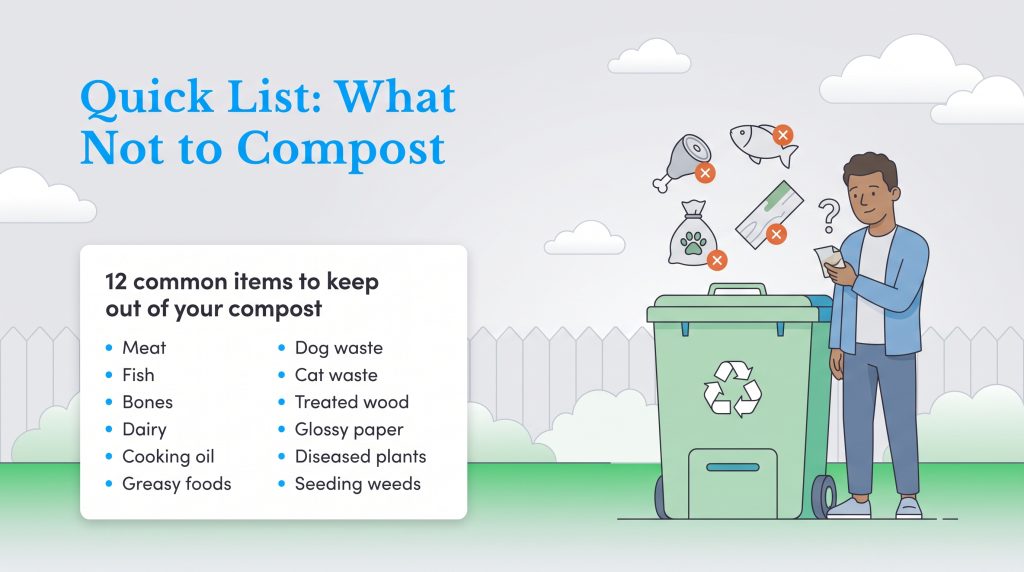
If you are holding a questionable item and wondering where it goes, use this quick reference guide to decide whether it belongs in your backyard bin.
| Item | Why to Avoid It | Better Option |
|---|---|---|
| Meat | Attracts pests and may harbor pathogens | Trash or municipal compost if accepted |
| Fish | Strong odors and pest risk | Trash or municipal compost if accepted |
| Bones | Break down slowly and attract animals | Trash |
| Dairy | Smells bad and attracts pests | Trash |
| Cooking oil | Blocks oxygen flow | Trash or reuse/dispose properly |
| Greasy foods | Slow decomposition and attract pests | Trash |
| Dog waste | May contain pathogens and parasites | Trash |
| Cat waste | May contain parasites such as Toxoplasma gondii | Trash |
| Treated or painted wood | May contain chemicals unsafe for soil | Trash or local disposal option |
| Glossy/coated paper | May include plastic coatings or chemical finishes | Recycle if accepted |
| Diseased plants | May spread disease back into the garden | Trash or municipal yard waste if accepted |
| Weeds that have gone to seed | May survive and spread | Trash or hot compost only |
Understanding Home vs. Industrial Composting
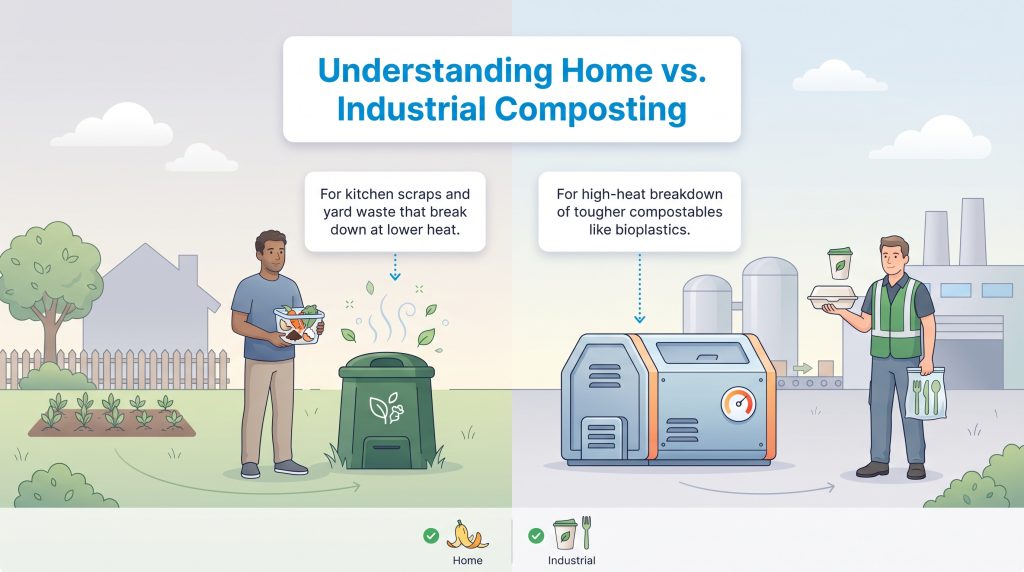
Many beginners assume that if a product is labeled organic or biodegradable, it automatically belongs in their backyard bin. However, municipal and industrial composting facilities operate at significantly higher temperatures than a standard home setup, allowing them to rapidly break down stubborn materials that your backyard pile simply cannot handle. Treating your backyard setup like a commercial facility is one of the most common home composting mistakes, often leading to foul odors and stalled decomposition. For instance, items like compostable cups, PLA bioplastic utensils, and compostable trash bags usually require a municipal or commercial composting facility and should not go in backyard compost unless the package clearly states it is suitable for home composting. If your city offers curbside food-scrap pickup, check the local rules. Some municipal programs accept meat, bones, dairy, and certified compostable bags because they use controlled, high-heat systems, whereas backyard bins usually do not reach those same conditions.
📌 Quick Fact: Items explicitly labeled “commercially compostable,” such as plant-based bioplastics or eco-friendly takeout containers, usually won’t break down in a home bin and will just sit in your soil for years.
Why These Items Don’t Belong in Backyard Compost
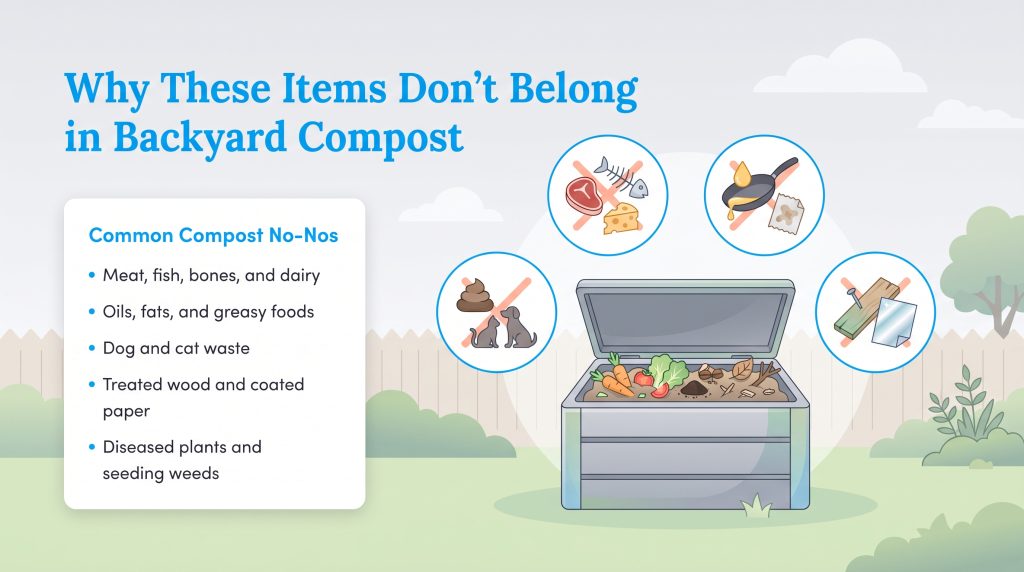
Avoiding specific items isn’t just an arbitrary rule — it all comes down to basic chemistry, biology, and keeping your yard resistant to pests. When you know exactly which materials disrupt the delicate ecosystem of your pile, you can easily maintain a healthy decomposition rate. The biggest troublemakers usually fall into a few predictable categories.
Meat, Fish, Bones, and Dairy
If you find yourself wondering, “can you compost meat?” the short answer is no. Animal products like leftover steak, fish bones, cheese rinds, and spoiled milk will quickly putrefy rather than safely decompose in a backyard environment. The rotting smell is a dinner bell for neighborhood pests like rats, raccoons, and stray cats, making these animal byproducts top the list of things you should never compost. Instead, throw these items in the trash, or check whether your city accepts them in municipal food scrap collection. For more detailed guidance on home composting basics, you can check the EPA’s official recommendations to keep your pile safe and productive.
Oils, Fats, and Greasy Foods
Pouring leftover cooking oil or tossing grease-soaked paper towels into your bin creates a suffocating barrier inside the pile. Fats and oils coat the other organic materials, entirely cutting off the vital oxygen supply that beneficial microbes need to break down your scraps. Without that oxygen flow, the entire composting process slows down and shifts into an anaerobic state, which generates unpleasant odors. Instead of composting, let cooking oil cool, seal it in a container, and trash it, or check for local cooking oil recycling programs.
Dog and Cat Waste
When deciding what to do with backyard messes, many homeowners ask, “can dog poop be composted?” Rabbit, guinea pig, horse, cow, and chicken manure can often be composted with care, though manure should be fully decomposed before use around edible plants. Dog and cat waste should stay out of backyard compost because it may contain pathogens and parasites that home piles may not reliably destroy. In fact, cat feces can contain Toxoplasma gondii, a parasite the CDC identifies as a cause of toxoplasmosis. Because contaminated soil can pose a risk, keep cat waste out of compost used in food gardens.
Treated Wood and Coated Paper
While plain wood chips and shredded newspapers are excellent sources of carbon, chemically altered versions spell disaster for your soil. Pressure-treated lumber, painted wood scraps, metallic wrapping paper, and plastic-coated glossy paper may contain preservatives, coatings, inks, or finishes you don’t want breaking down into garden soil. If you add these to your bin, those toxic compounds will slowly leach into the compost, ultimately ruining the soil and making it unsafe for any future vegetable gardens. For treated wood, follow local hazardous waste or construction debris rules, and recycle clean glossy paper if your municipality accepts it.
Diseased Plants and Weeds
Throwing yard waste into your bin makes sense until you accidentally include tomato plants suffering from blight or aggressive weeds that have already gone to seed. Because backyard compost bins rarely reach the high temperatures required to kill off robust pathogens or resilient weed seeds, these threats simply hibernate in the pile. The moment you spread that finished compost around your yard, you will unknowingly spread the disease and invasive weeds right back into your garden beds. Bag and trash these problematic plants, or use municipal green waste collection if accepted.
Tricky Compost Items That Need Extra Care
Some everyday kitchen scraps occupy a confusing gray area for beginners, leading to easily avoidable headaches. While technically organic, these tricky items require a bit of extra caution before you toss them into your bin.
- Bread and baked goods: Small amounts of stale bread can be composted if buried deep in an active pile, but it’s usually better to avoid bread in backyard bins because it attracts rodents and can encourage odors.
- Citrus peels and onions: Adding a few orange peels or onion skins is fine, but dumping large quantities increases the acidity of your pile. Too much acid throws off the pH balance and can kill the helpful worms breaking down your organic matter.
- Tea bags: While loose-leaf tea is fantastic for compost, many commercial tea bags contain hidden synthetic plastics in their sealing mesh. Unless the box specifically states the bags are plastic-free, tear them open, compost the wet leaves, and trash the bag entirely.
- Fruit stickers: Those tiny PLU tags on apples, bananas, and avocados are made of plastic and represent one of the most common contaminants found in finished home compost. Always peel them off before tossing your fruit scraps!
What Goes in a Compost Bin Instead
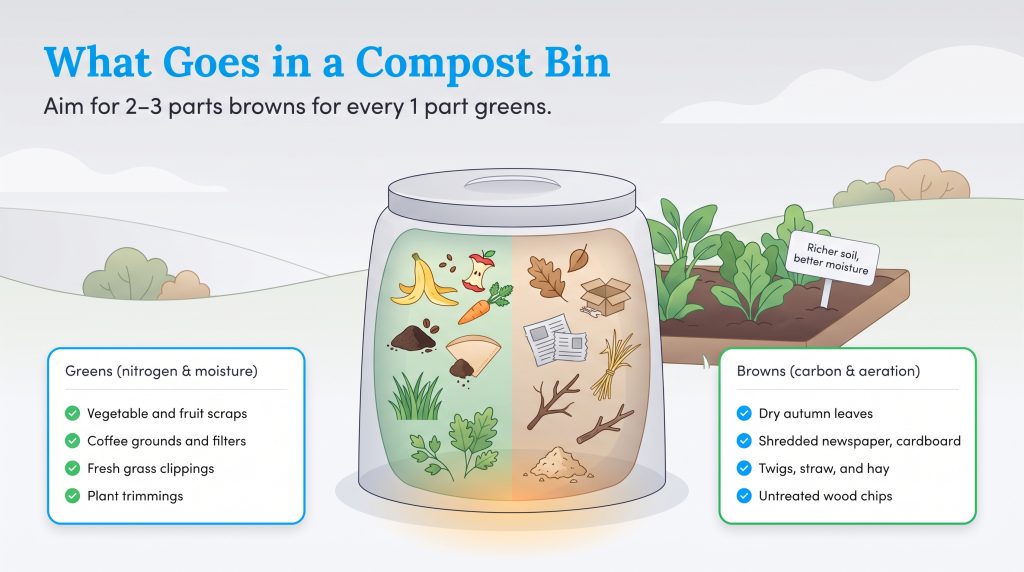
Now that we have covered the troublemakers, let’s pivot to the positive side of what goes in a compost bin. The secret to a fast-acting, nutrient-dense pile is balancing the “Greens” (nitrogen-rich materials that provide moisture) with the “Browns” (carbon-rich materials that provide structure and aeration). A healthy ratio is typically two to three parts browns for every one part greens. Once your compostable materials list breaks down into rich, dark soil, you can mix it into your flower beds to significantly improve the dirt’s texture. Adding this finished compost is an excellent way of retaining soil moisture, which helps you rely less on your sprinklers and effortlessly supports your efforts to conserve water at home.
| Greens (Nitrogen & Moisture) | Browns (Carbon & Aeration) |
|---|---|
| Vegetable and fruit scraps | Dry autumn leaves |
| Coffee grounds and paper filters | Shredded newspaper and cardboard |
| Fresh grass clippings | Twigs, straw, and hay |
| Plant trimmings (disease-free) | Untreated sawdust and wood chips |
How to Fix Common Home Composting Mistakes
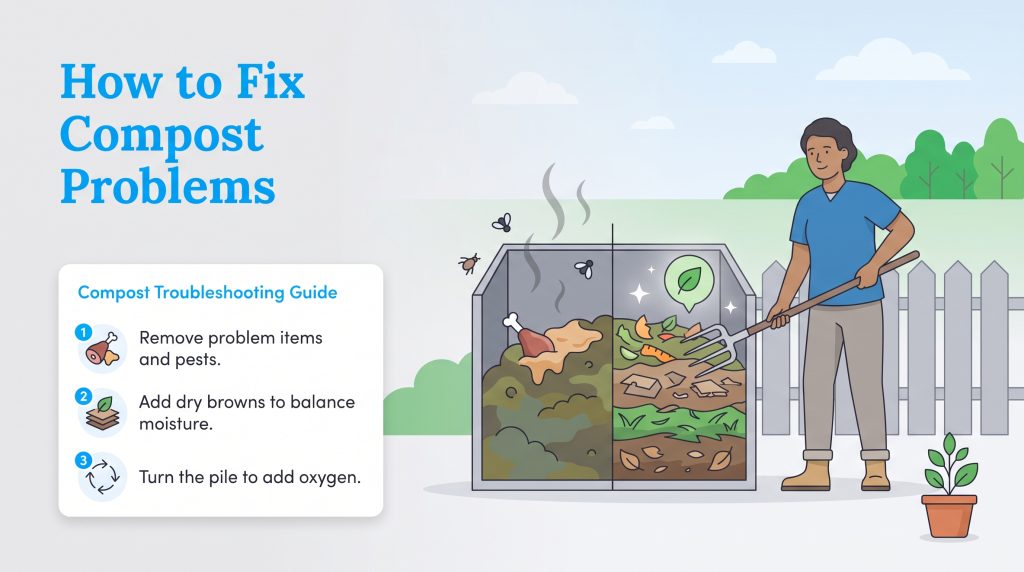
Even the most careful gardeners occasionally toss something they shouldn’t into the mix, but thankfully, a struggling pile is rarely a lost cause. Whether you are dealing with a foul odor or a pile that just won’t break down, troubleshooting these home composting mistakes is a straightforward process. A sunny spot can help a pile warm up in cooler weather, but moisture and airflow matter more. If the pile dries out, add water until it feels like a wrung-out sponge.
Compost Troubleshooting Guide
| Problem | Likely Cause | Quick Fix |
|---|---|---|
| Rotten smell | Meat, dairy, or fats added | Remove item, add dry browns, and mix thoroughly |
| Ammonia smell | Too much nitrogen (greens) | Add carbon-rich browns like dry leaves or cardboard |
| Pile is too dry | Lack of moisture | Add water or moisture-rich green scraps |
| Pile is not breaking down | Lack of oxygen or nitrogen | Turn the pile and add more greens if needed |
| Flies or pests nearby | Food scraps exposed on top | Bury new scraps deeply into the center of the pile |
If you realize you accidentally added meat, grease, or an abundance of oil, follow these practical steps to rescue your pile:
- Remove the item if possible: Put on a pair of garden gloves and carefully extract the offending piece of meat or large chunk of dairy before it completely rots.
- Add a thick layer of dry brown material: Dump in a generous amount of shredded cardboard, dry leaves, or sawdust to absorb excess oils and stifle any emerging odors.
- Turn the pile to increase oxygen: Use a pitchfork to thoroughly mix the contents and restore airflow, which breaks up dense, oily mats and reintroduces the oxygen your beneficial microbes need to survive.
- Monitor for pests: Keep a close eye on the bin over the next few days to ensure the smell hasn’t attracted raccoons or rodents. If wild animals arrive, secure the lid with a bungee cord and bury any new food scraps much deeper.
Build a Cleaner, Healthier Compost Habit
Keeping the wrong items out of your backyard bin ensures you cultivate a healthy, odor-free, and nutrient-dense soil amendment for your property. When you pay close attention to your greens and browns while blocking meats, oils, and toxic chemicals, nature does the heavy lifting for you. Making environmentally mindful choices in your backyard sets a strong foundation for home waste reduction and composting basics, ultimately turning everyday waste into a thriving garden ecosystem. Start with fruit and vegetable scraps, coffee grounds, dry leaves, and shredded cardboard. Once you’ve got that balance down, composting becomes one of the easiest sustainable habits to maintain at home.
Frequently Asked Questions About What Not to Put in Compost
Can You Compost Meat?
Can Dog Poop Be Composted?
Can You Compost Bread?
Are Paper Plates and Napkins Safe to Compost?
What Happens if I Accidentally Put Oil in My Compost Bin?
How Do I Get Rid of a Bad Smell in My Compost?
About the Author

LaLeesha has a Masters degree in English and enjoys writing whenever she has the chance. She is passionate about gardening, reducing her carbon footprint, and protecting the environment. She also recently served as President of the Board for City Sprouts (a community garden).

David has been an integral part of some of the biggest utility sites on the internet, including InMyArea.com, HighSpeedInternet.com, BroadbandNow.com, and U.S. News. He brings over 15 years of experience writing about, compiling and analyzing utility data.