

Managing Your Compost Pile’s Moisture and Green-to-Brown Ratio During the Hot Summer Months Prevents Odors, Deters Pests, and Speeds Up the Decomposition Process
Key Takeaways
- Balance your greens and browns to maintain the perfect decomposition ratio and control summer odors.
- Add moisture regularly using collected rainwater or graywater to keep the pile active during dry spells without inflating your water bill.
- Turn your compost pile every three to five days to ensure proper aeration and regulate extremely high temperatures.
Implementing effective summer compost bin maintenance ensures your outdoor setup doesn’t turn into a sweaty, smelly nightmare during the hottest months of the year. When temperatures soar, an unbalanced pile can rapidly dry out into a dusty heap or transform into a slimy, pest-infested mess. We know how frustrating it is to deal with foul odors and swarms of fruit flies when you are simply trying to embrace organic waste recycling at home. Fortunately, maintaining an efficient, odor-free bin all season long doesn’t require a degree in soil science. By making a few strategic, step-by-step adjustments to your watering, shading, and layering routines, you can accelerate the breakdown of food scraps, reduce your carbon footprint to prevent harmful methane emissions, and create free nutrient-dense soil amendments for your autumn garden.
The Basics of the Hot Composting Process
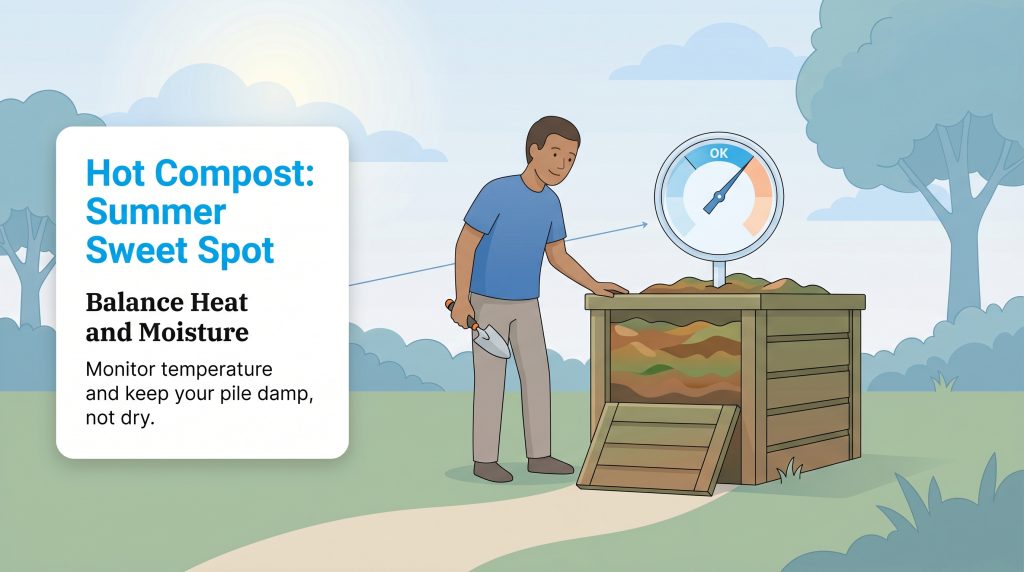
The hot composting process, scientifically known as thermophilic decomposition, relies on naturally high internal temperatures to rapidly break down organic matter. When the ambient summer weather heats up, the intense warmth drastically accelerates microbial activity inside your bin. These microorganisms consume yard waste and food scraps much faster than they do during the chilly spring or fall months. However, mastering composting in hot weather requires a delicate balancing act to keep those microbes happy and productive.
While those hungry microbes thrive in the warmth, the intense afternoon sun can rapidly evaporate essential moisture, which halts the decomposition process entirely. For successful hot composting, your pile’s internal temperature should sit right around 130 to 160 degrees Fahrenheit. If it climbs significantly above that mark, microbial activity rapidly declines. Monitoring your pile’s internal environment guarantees those microbes stay highly productive without burning out. If you are just starting your sustainability journey, mastering these composting tips for beginners ensures your organic matter breaks down efficiently.
📌 Quick Fact: A well-managed hot compost pile can help reduce some weed seeds and plant pathogens, but only if the material reaches high temperatures consistently and gets turned so outer material reaches the hot center.
Top Summer Composting Tips for Bins and Piles
Before diving into the chemical balance of your compost, setting up your physical environment correctly makes daily maintenance much easier. Use these core summer composting tips to troubleshoot extreme heat and set your bin up for long-term success:
- Place your compost bin in full or partial shade: Direct sunlight can literally bake your compost, instantly halting the aerobic decomposition process. You must locate your outdoor pile under a tree canopy or shaded awning to protect it from the intense midday heat.
- Freeze your food scraps before adding them to the outdoor bin: Place wet, nitrogen-rich food scraps — like fruit peels, vegetable ends, and coffee grounds — in a sealed, freezer-safe container. This completely eliminates indoor odors, slows down premature rotting, and stops fruit flies from breeding on your kitchen counters.
- Use a breathable canvas cover: If your yard lacks natural shade, drape a cover over open bins to block the UV rays while still allowing essential airflow.
Balancing Greens and Browns in Summer
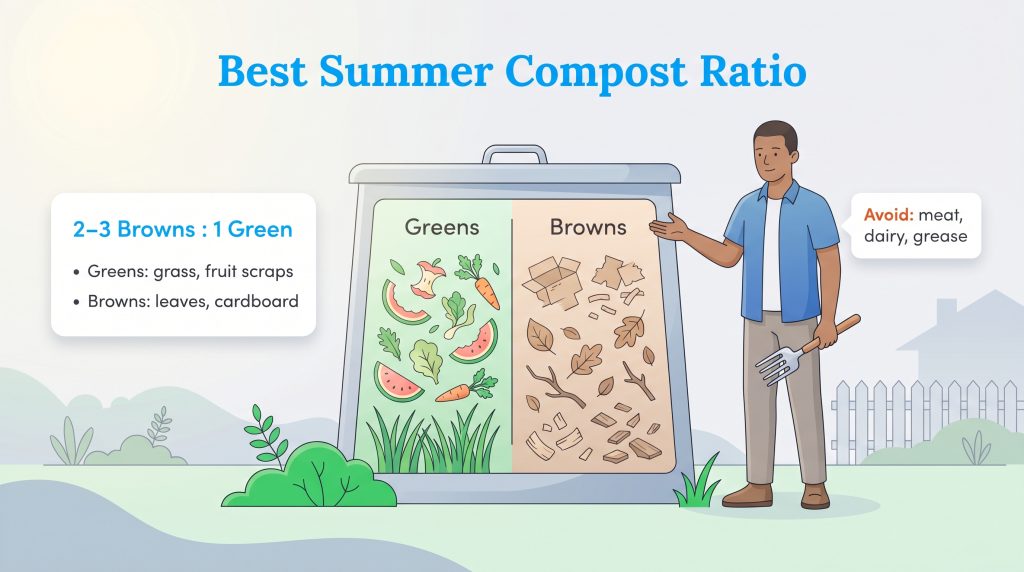
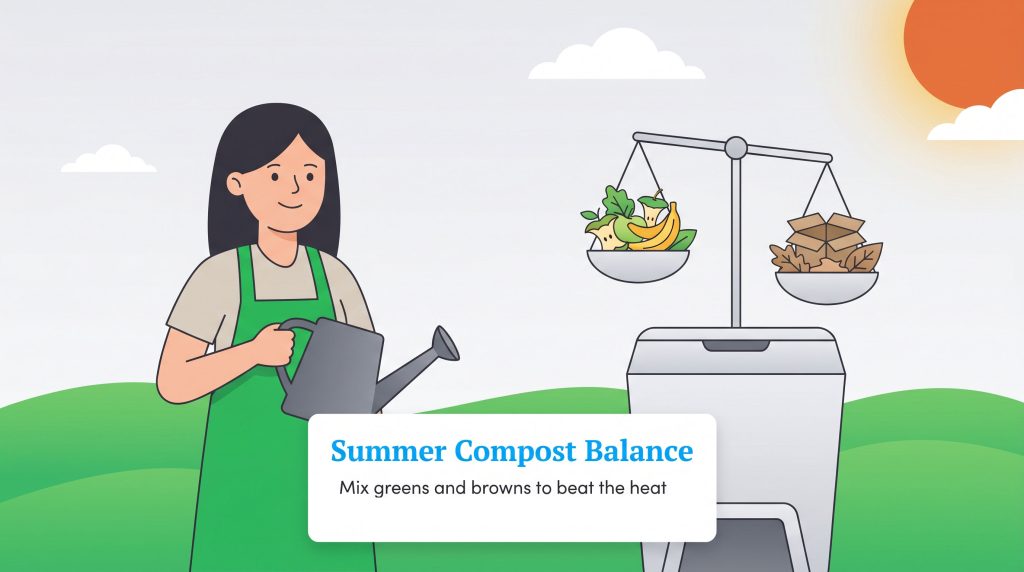
The sweltering heat of July and August demands strict adherence to your carbon-to-nitrogen ratio. When you throw in too many watery fruit scraps without balancing them properly, you will quickly end up with a rotting, slimy pile. To balance greens and browns effectively during the summer, you must command your pile’s chemistry. We strongly command readers to maintain a strict 1:3 ratio of greens (nitrogen) to browns (carbon).
Carbon-rich browns effectively absorb the excess moisture from rotting summer fruits. Stockpile dry materials indoors or in a dry shed so you always have them on hand when you add wet kitchen waste. Checking out Penn State Extension’s home composting guide on balancing greens and browns offers excellent guidance for making seasonal adjustments.
| Greens (Nitrogen-Rich) | Browns (Carbon-Rich) |
|---|---|
| Watermelon rinds and fruit scraps | Shredded cardboard |
| Grass clippings | Dry leaves |
| Coffee grounds | Twigs and small branches |
| Fresh garden trimmings | Paper towel tubes |
| Tea bags without plastic | Untreated sawdust |
| Spent flowers | Straw or crushed eggshell cartons |
Choosing the Right Compost Container
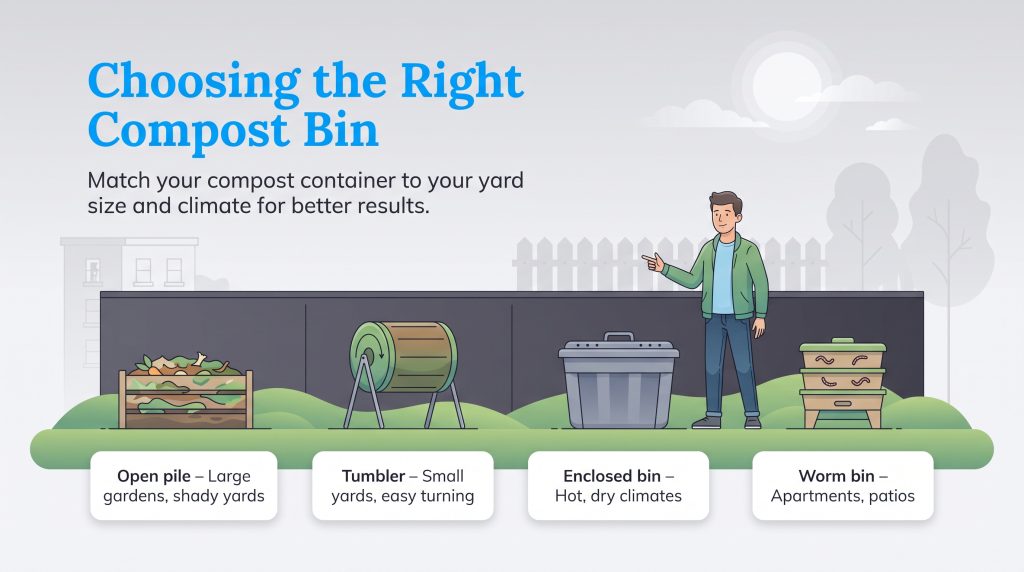
If you are settling into a new home and implementing zero waste moving tips, matching your container to your specific yard size and climate helps maintain this vital carbon ratio. For example, an enclosed plastic bin works wonderfully in hot, dry climates by locking in humidity and preventing your hard-earned browns from blowing away in summer storms.
| Compost Setup | Best For |
|---|---|
| Open pile | Large gardens and shaded suburban yards with plenty of space |
| Tumbler | Keeping pests out and turning compost easily in small yards |
| Enclosed plastic bin | Hot, dry climates where moisture retention is critical |
| Worm bin | Apartments or shaded patios requiring a low-odor solution |
| Countertop electric recycler | Indoor use to reduce food volume before adding it to an outdoor bin |
Pest and Odor Control Mitigation
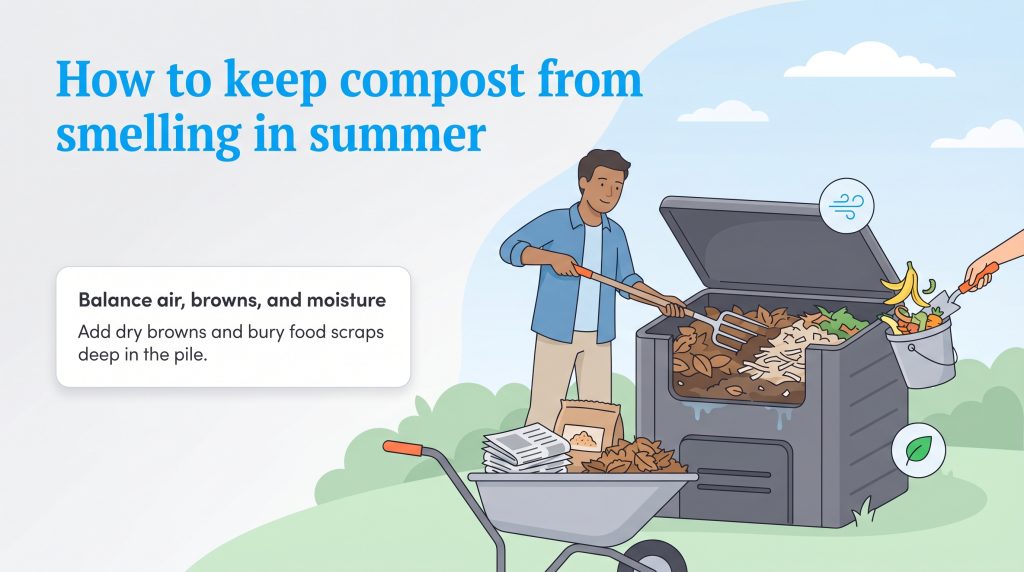
Managing compost smells in summer usually comes down to correcting excessive moisture and a lack of oxygen. When a pile goes anaerobic, it releases hydrogen sulfide, which creates that distinct rotten egg odor. To fix smelly compost naturally, avoid relying on chemical sprays. Instead, add a thick layer of dry brown materials like shredded newspaper to absorb the excess liquid. You can also sprinkle coffee grounds over the top layer of the pile to naturally deodorize the bin and neutralize foul smells.
🌱 Eco Edge: A small amount of coffee grounds or citrus peels is fine in most compost piles, but the real odor fix is dry browns and airflow. If your bin smells sour or rotten, mix in shredded cardboard, dry leaves, or untreated sawdust.
Preventing Maggots and Fruit Flies
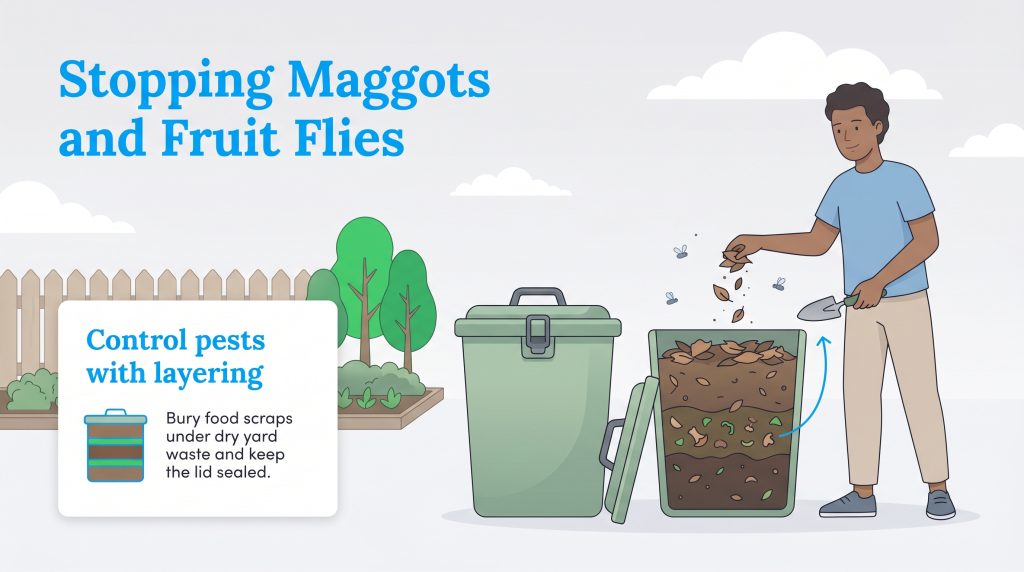
If you find maggots in your bin during a heatwave, high temperatures and exposed food scraps are the likely culprits. To learn how to prevent fruit flies in compost effectively, you must limit access to fresh organic matter. Follow this strict pest prevention checklist to keep your summer bin clean:
- Bury all fresh food scraps under a thick layer of browns: Following EPA guidelines, you must always bury your kitchen scraps beneath a solid layer of yard trimmings or dry soil rather than leaving them exposed on the surface.
- Use tight-fitting, lockable lids on all compost bins: Mandating a secure lid keeps adult flies, rodents, and neighborhood scavengers completely out of the pile.
- Clean your collection bins frequently: Scrub out your indoor containers with a mild mix of warm water and white vinegar every couple of weeks to remove residual sludge and deter pests from gathering near the rim.
🚩 Heads Up: Freezing food scraps slows odors and can help reduce fruit fly activity before scraps reach your outdoor bin. It is especially helpful if you only empty your kitchen container once or twice a week.
Managing Moisture and Aeration
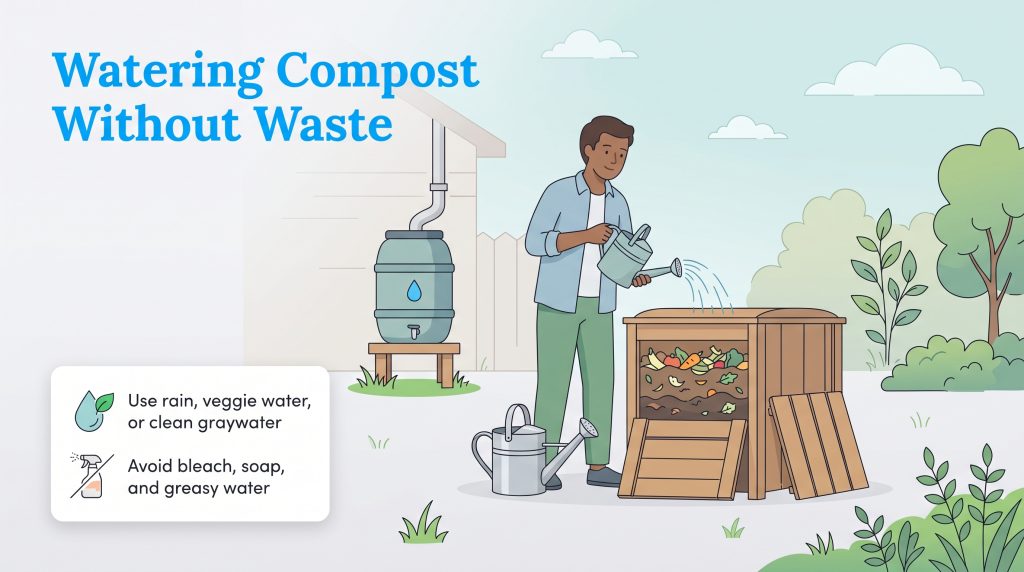
Rapid evaporation is a massive challenge during a heatwave. Knowing exactly how to keep compost moist ensures your beneficial microbes do not die off in the scorching sun. Checking your compost moisture levels should be a mandatory part of your weekly routine. Rather than relying on your hose, harvest precipitation with a rain barrel or use clean graywater. If you want to dive deeper into home water conservation, exploring summer rain barrel tips offers practical advice for lowering your monthly utility usage.
💸 Money-Saver: Harvesting precipitation with a rain barrel provides a completely free water source for your garden and compost, significantly reducing your reliance on expensive municipal water.
To accurately gauge your pile’s hydration, use this simple three-step process:
- Dig into the center: Pull a handful of material from the deepest, most active part of your bin.
- Perform the “wrung-out sponge” test: Squeeze the material tightly in your fist. It should feel damp to the touch and hold its shape, but it should never drip excess water.
- Add water slowly if dry: If the material feels brittle or dusty, lightly mist the pile with a watering can while turning the compost to distribute the moisture evenly. Avoid water that contains bleach or harsh chemical cleaners.
Aerating Frequently to Speed Up Decomposition
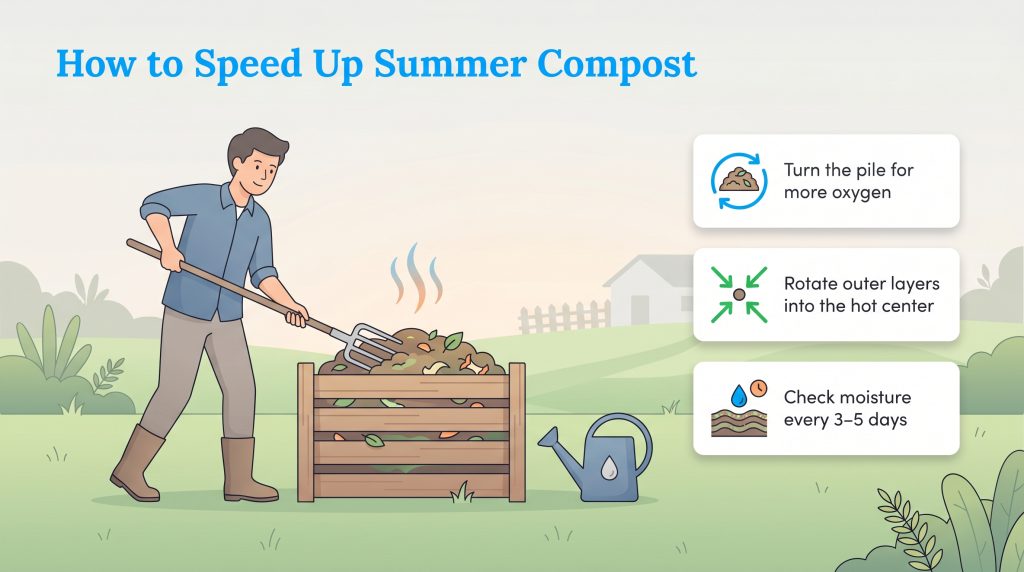
Beyond hydration, you must aerate the compost pile to regulate extreme core temperatures. We mandate turning your compost weekly with a pitchfork during the summer. Dig deep into the center where the heat is most concentrated and purposefully rotate the cooler outer layers inward. Consistent aeration introduces essential oxygen, accelerating decomposition and preventing the pile from turning anaerobic.
Troubleshooting Guide for Summer Compost Issues
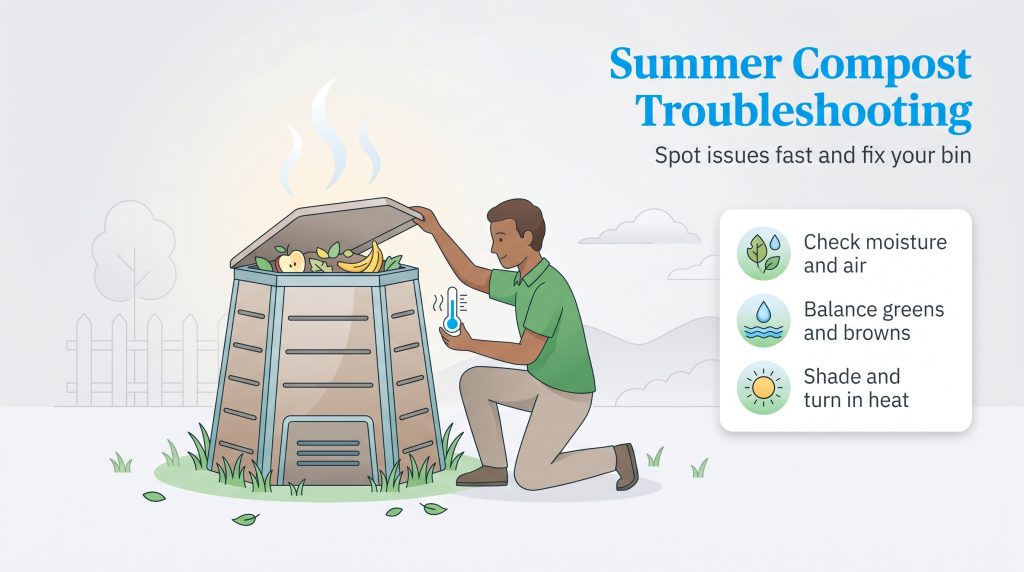
Even the most diligent gardeners run into occasional hiccups during a heatwave. If your bin starts showing signs of distress, use this comprehensive quick-reference troubleshooting table to identify the root cause and apply an immediate, actionable solution.
| Problem | Cause | Immediate Solution |
|---|---|---|
| Maggots/Fruit Flies | Exposed wet food waste | Add browns, bury scraps, and secure the lid |
| Ammonia Smell | Too much nitrogen (greens) | Mix in carbon-rich browns and turn the pile |
| Rotten Egg Smell | Too much moisture, lack of oxygen | Add dry browns and aerate the pile thoroughly |
| Pile is Dry | Excessive sun and heat | Add water slowly and relocate to partial shade |
| Slow Breakdown | Pieces too large or pile lacks nitrogen | Chop scraps smaller and mix in fresh greens |
Transitioning Your Compost for Autumn Planting
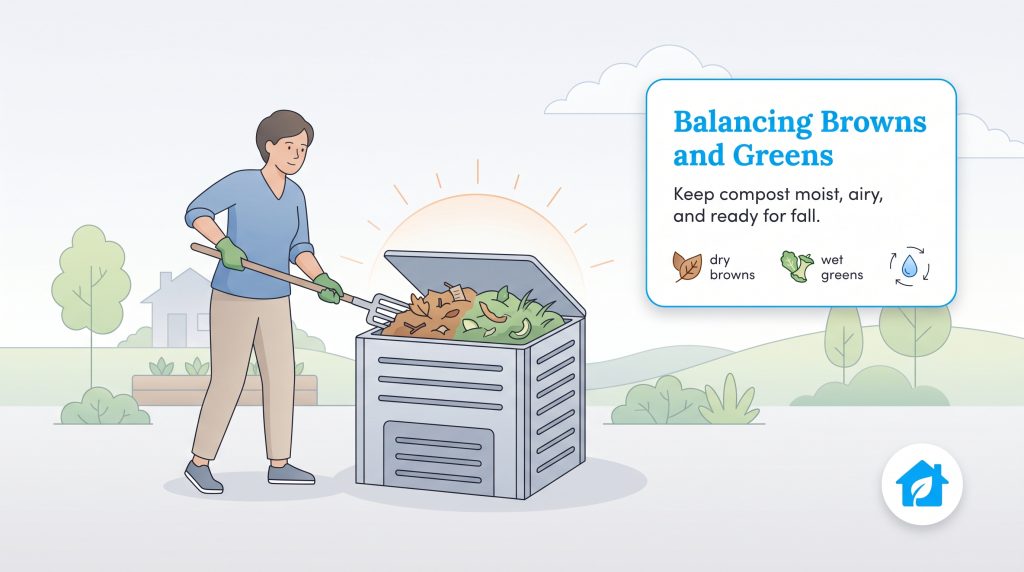
Transforming food scraps into valuable garden soil does not have to pause when the weather gets hot. By late summer, your diligent moisture management and strict aeration schedule will yield dark, crumbly, earthy-smelling humus. You can identify when your summer compost is fully cured by checking its texture and temperature. A finished pile will stop generating intense heat, and you should no longer be able to recognize original ingredients like banana peels or grass clippings.
Harvesting this nutrient-rich compost prepares you perfectly for autumn planting. First, stop adding new materials to your main pile a few weeks before you plan to harvest. Next, set up a hardware mesh screen over a wheelbarrow to sift the finished compost, separating the fine, ready-to-use soil from any large, unfinished chunks. Finally, work this screened compost directly into the top few inches of your garden beds. If you are looking to expand your home routines even further, exploring our sustainable living resources will help you build a greener, more efficient household.
Frequently Asked Questions About Summer Composting Tips
Summer composting can get messy fast, especially when heat, moisture, and kitchen scraps collide. These quick answers cover the most common questions homeowners and renters have about keeping a compost bin healthy during hot weather.
How do I stop my compost bin from smelling in the summer?
How do I prevent maggots in my compost pile?
Should I cover my compost pile in the rain and extreme sun?
How often should I aerate my compost pile in the summer?
Why does my compost smell like ammonia in hot weather?
Can I put my compost bin in direct summer sunlight?
Can a compost pile get too hot in the summer?
Are indoor composters a good alternative during heatwaves?
Can I still compost meat or dairy in the summer?
About the Author

LaLeesha has a Masters degree in English and enjoys writing whenever she has the chance. She is passionate about gardening, reducing her carbon footprint, and protecting the environment. She also recently served as President of the Board for City Sprouts (a community garden).

David has been an integral part of some of the biggest utility sites on the internet, including InMyArea.com, HighSpeedInternet.com, BroadbandNow.com, and U.S. News. He brings over 15 years of experience writing about, compiling and analyzing utility data.