

Keep Your Rainwater System Efficient and Safe During the Hottest Months of the Year
Key Takeaways
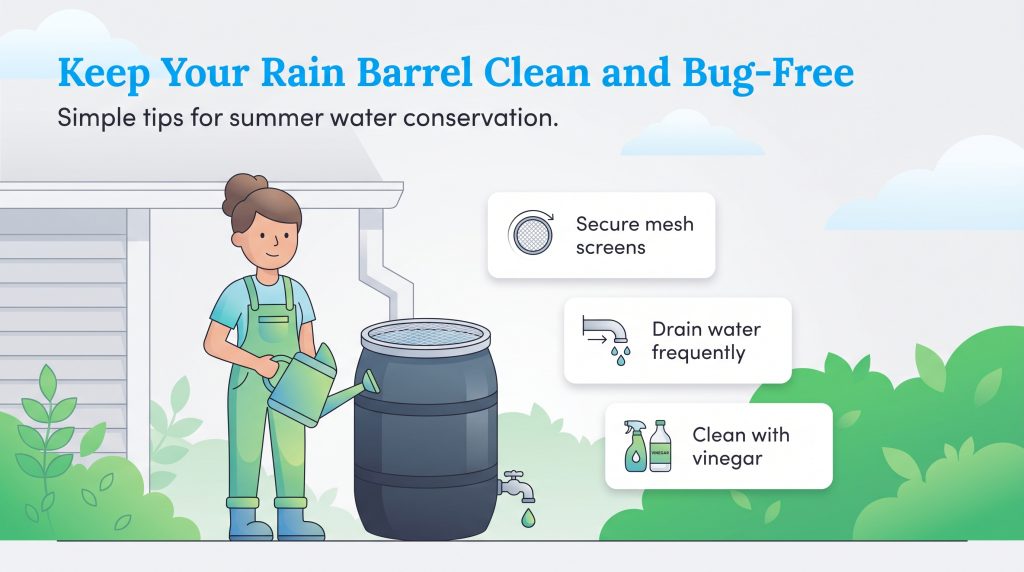
- Regular maintenance prevents algae and mosquitoes, ensuring your harvested rainwater stays cleaner and better suited for outdoor use all summer long.
- Using a simple vinegar and water solution can help loosen mineral deposits and reduce slimy buildup without introducing harsh chemicals to your garden or the local environment.
- Proper overflow management and tight-fitting screens protect your home’s foundation and stop pests from breeding during peak temperatures.
Summer heat and sudden thunderstorms create a highly volatile environment for standing water. Without proper care, sweltering temperatures can quickly turn a backyard reservoir into a breeding ground for mosquitoes, aggressive algae blooms, and foul odors. We know you want to protect your landscaping investment and reduce utility costs without resorting to harsh chemicals that harm the local ecosystem. Whether you are taking over an existing garden or looking to set up utilities in a new home, following these essential summer rain barrel tips will help you keep water moving safely, block pests, and ensure every storm counts toward a healthier yard.
Why Summer Rain Barrel Maintenance Matters
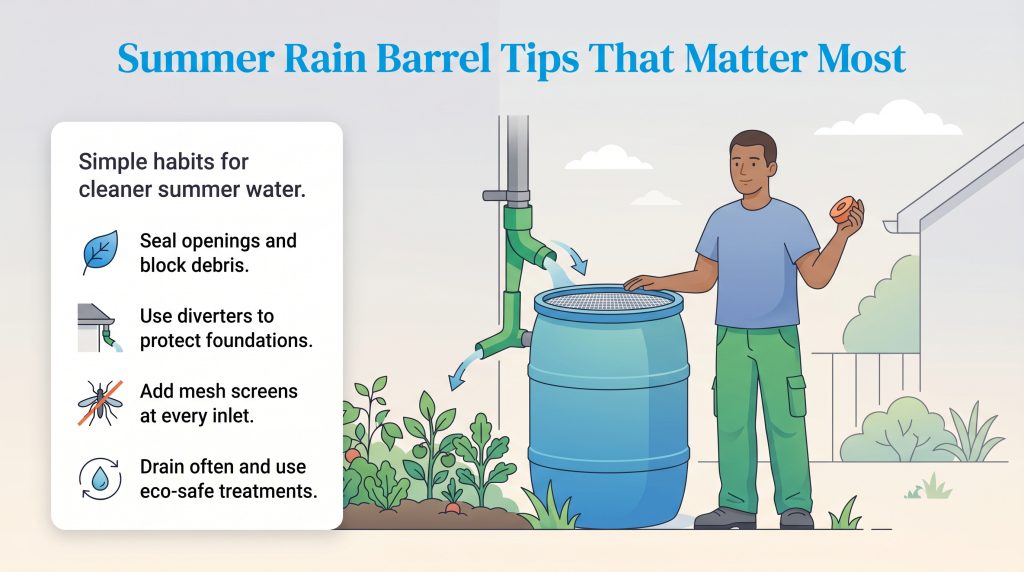
Staying on top of your rain barrel maintenance summer routine does not have to be a complicated chore. When the drought season hits, prioritizing rain barrel water conservation can drastically reduce your municipal water bills while providing your thirsty plants with chemical-free hydration. The key is to manage your system actively so it remains an asset rather than a stagnant hazard. Focus on these three core conservation benefits during peak summer weather:
- Reduces strain on local utility grids: Relying on harvested rainwater during peak drought minimizes municipal water use.
- Protects against utility rate spikes: Consistent rainwater harvesting helps offset the rising costs of outdoor watering during the hottest months.
- Provides nutrient-rich hydration: Plants naturally prefer untreated rainwater, which lacks the heavy chlorine and fluoride found in tap water.
Top Summer Rain Barrel Tips for Homeowners
By integrating a few straightforward summer sustainable yard care tips into your weekly yard work routine, you can maximize your rainwater harvesting summer potential. Here are the absolute best practices for keeping your system in perfect working order.
1. Prevent Algae Growth in Direct Sunlight
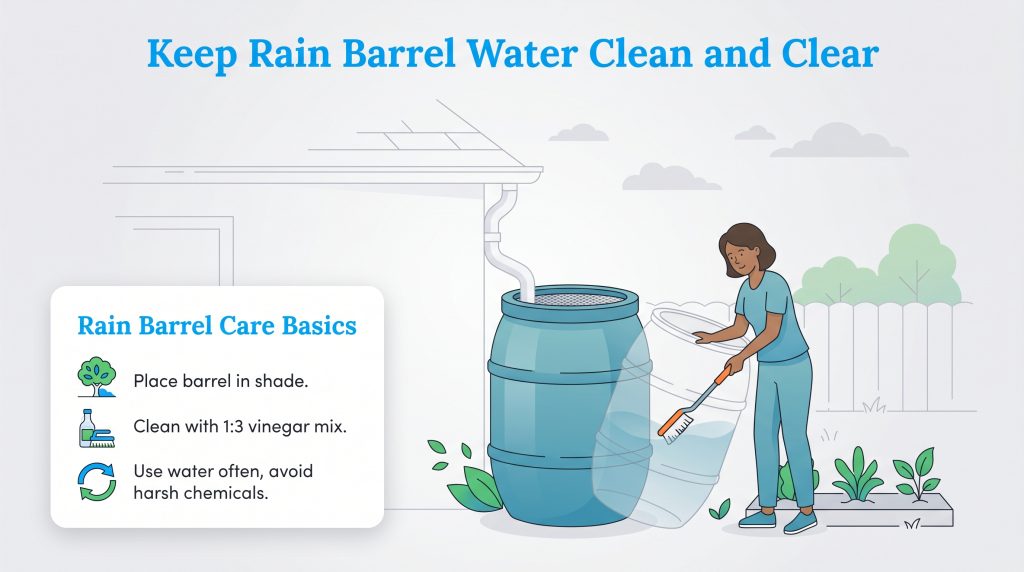
A combination of stagnant water and relentless summer sun creates the perfect environment for algae to thrive. If your storage tank sits in direct sunlight all day, the interior temperatures rise quickly, encouraging rapid bacterial blooms that turn fresh rainwater into a green, sludgy mess. To successfully prevent algae in rain barrel setups, strategic placement is your first defense. We recommend moving the barrel to a shaded spot or utilizing a dark, opaque material to effectively block the UV rays that fuel these blooms.
When the inside of your tank inevitably gets a little slimy, you need a safe way to sanitize it without hurting your plants. Mix a gentle cleaning solution using exactly one part white vinegar to three parts water. Or, if absolutely necessary, use a highly diluted mild bleach solution, provided you thoroughly rinse the container before reconnecting it to your downspout. Scrub the interior walls vigorously with a long-handled brush to neutralize odors and clear away the slime.
2. Block Mosquitoes and Pests
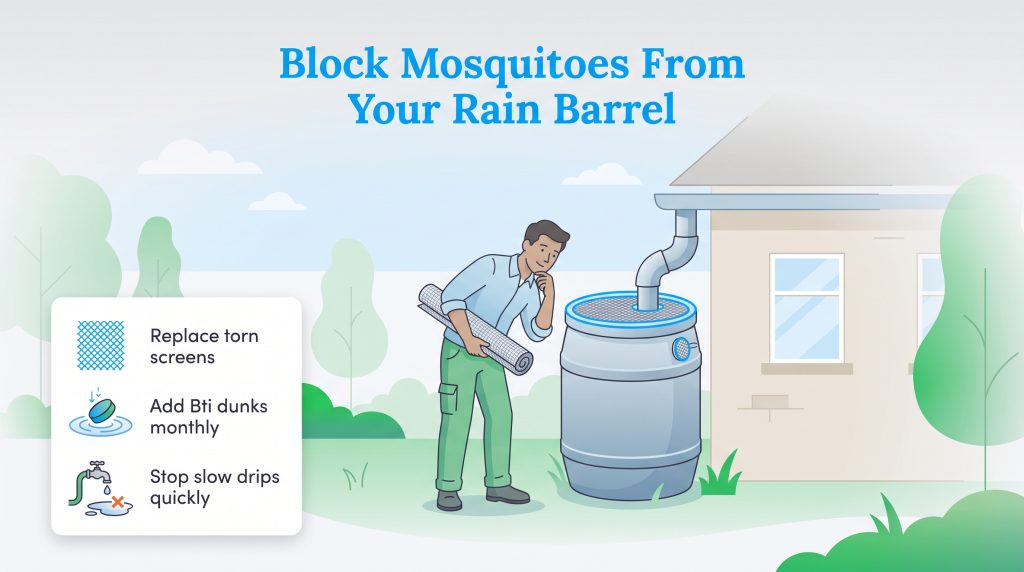
Mosquitoes breeding in stagnant water remains one of the most frustrating pain points for homeowners. Warmer temperatures accelerate the mosquito lifecycle, meaning a neglected reservoir can churn out hundreds of biting insects in just a matter of days. If you are wondering how to keep mosquitoes out of rain barrel systems, you have to layer your physical and biological defenses.
- Execute a rain barrel screen replacement: The moment you notice a tear or a sagging edge, swap it out. Upgrade to ultra-fine mesh screens that fit snugly over all intake valves and overflow ports.
- Apply biological controls: Drop BTI (Bacillus thuringiensis israelensis) mosquito dunks into the water monthly. These naturally occurring soil bacteria kill developing larvae but remain entirely safe for pets, birds, and plants when used according to the label.
- Check for structural leaks: Inspect the spigot and hose connections for slow drips that might create hidden, muddy breeding puddles underneath your setup.
3. Manage High Heat and Evaporation
Scorching temperatures can cause your harvested water to evaporate surprisingly quickly if your barrel lacks a tight seal. Extreme heat also degrades standard plastics over time. To combat this, always ensure your lid is securely fastened after every storm. You can also drape a specialized reflective cover or install a simple wooden enclosure around the tank to keep internal water temperatures down. This preserves the structural integrity of your barrel and keeps the water fresher for longer periods.
4. Prepare for Sudden Summer Storms
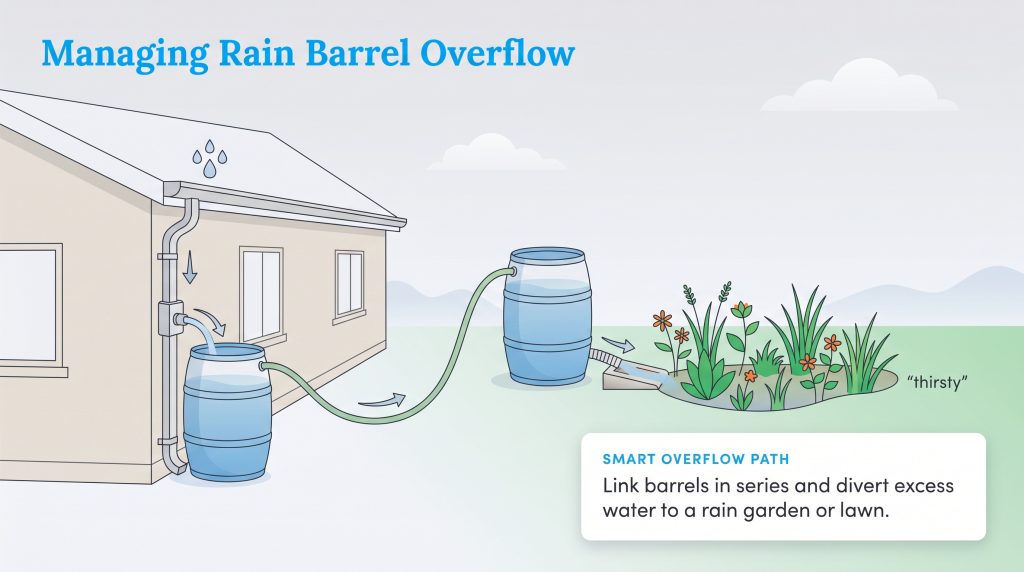
Summer thunderstorms can dump an overwhelming volume of water onto your roof in a very short window of time. To put it into perspective, a 1,000-square-foot roof can yield 600 gallons of water in just a 1-inch summer rainstorm. Without proper rain barrel overflow solutions, torrential rains will quickly top off a 50-gallon tank and flood your foundation, potentially causing severe erosion or moisture issues in your garden beds.
One of the most effective strategies is to link multiple barrels together in a series. Once the first tank fills up, a connecting hose automatically channels the overflow into the next unit. Most importantly, always direct your overflow valves and flexible downspout extensions away from your home’s foundation. Route the excess to a rain garden or a thirsty lawn to prevent pooling on sidewalks or driveways.
5. Flush and Clean the Spigot Regularly
Minerals, roof sediment, and tiny organic particles naturally settle at the bottom of your tank. Over the summer, this heavy sediment can easily clog your spigot, reducing water pressure and making it significantly harder to attach soaker hoses. Once a month, quickly open the spigot all the way for a few seconds to flush out any trapped debris and ensure smooth water flow.
Common Summer Rain Barrel Issues and Fixes
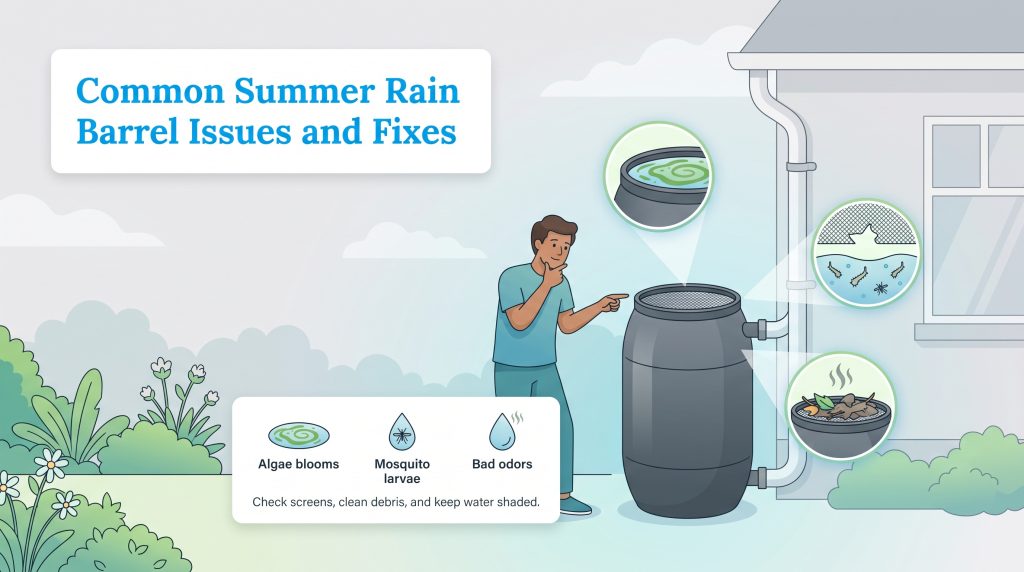
Even with a stellar maintenance routine, extreme weather can trigger unexpected headaches. Catching problems early keeps your water clean and prevents long-term damage to your equipment. Use this troubleshooting guide to address the most frequent summer issues swiftly.
| Issue | Common Cause | Actionable Solution |
|---|---|---|
| Algae Blooms | Direct sunlight and stagnant water heating the tank. | Relocate the barrel to shade, use an opaque tank material, and sanitize safely with a mild vinegar solution. |
| Mosquito Larvae | Torn mesh screens or open gaps letting adults inside. | Execute a rain barrel screen replacement immediately and drop BTI mosquito dunks into the water. |
| Bad Odors | Decaying organic debris breaking down anaerobically. | Flush the system completely, clear your roof gutters of rotting leaves, and scrub the interior. |
| Clogged Debris Screens | Heavy leaf fall, twigs, and roof sediment blocking flow. | Brush off the top intake filter weekly and trim back any overhanging tree branches above your roof. |
Maximizing Rainwater Harvesting for Summer Gardening
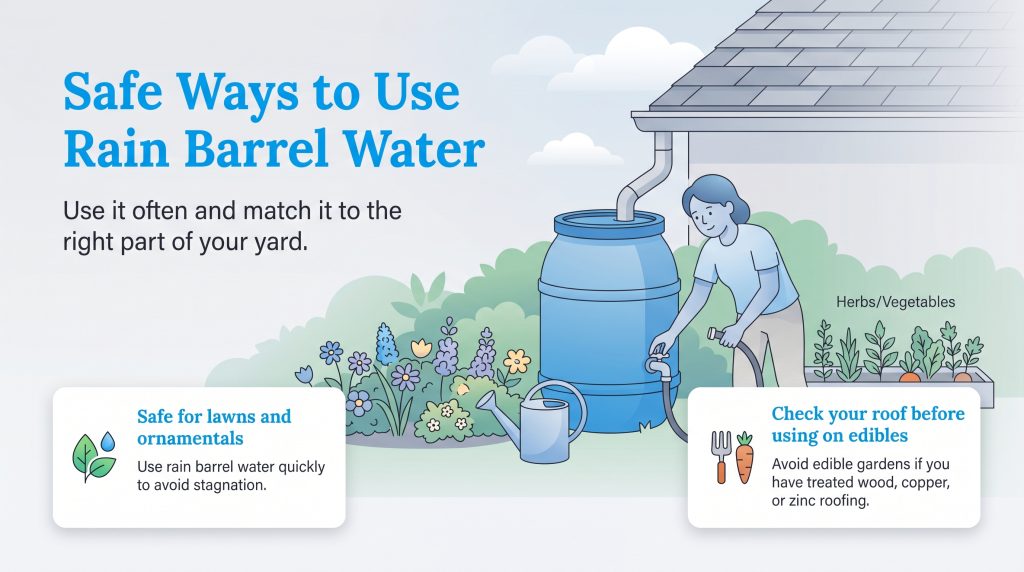
The smartest way to maintain your rainwater collection system is simply to use the water rapidly. According to the EPA, capturing water from your roof can help soak up the rain and prevent runoff pollution, saving homeowners about 1,300 gallons of water during peak summer months. Drawing down the water level frequently prevents stagnation and makes plenty of room for the next big summer storm.
Using rain barrel water for gardens is one of the most effective summer sustainable gardening tips, but it requires understanding exactly which plants benefit most. Because this water is untreated and collected directly from your roof, it picks up bird droppings, dust, and shingle debris along the way. Untreated rainwater is naturally soft and slightly acidic, making it incredibly beneficial for acid-loving summer plants like azaleas, rhododendrons, and blueberries.
| Recommended Uses | Avoid These Uses |
|---|---|
| Watering ornamental lawns and flower beds | Drinking or giving to pets |
| Washing cars, bicycles, or outdoor furniture | Cooking or food preparation |
| Pre-rinsing muddy boots or equipment | Spraying edible plant parts, especially leafy greens, herbs, or produce eaten raw |
| Rinsing off gardening tools | Topping off birdbaths, decorative fountains, pools, or hot tubs |
Preparing Your Rain Barrel for the Fall Transition
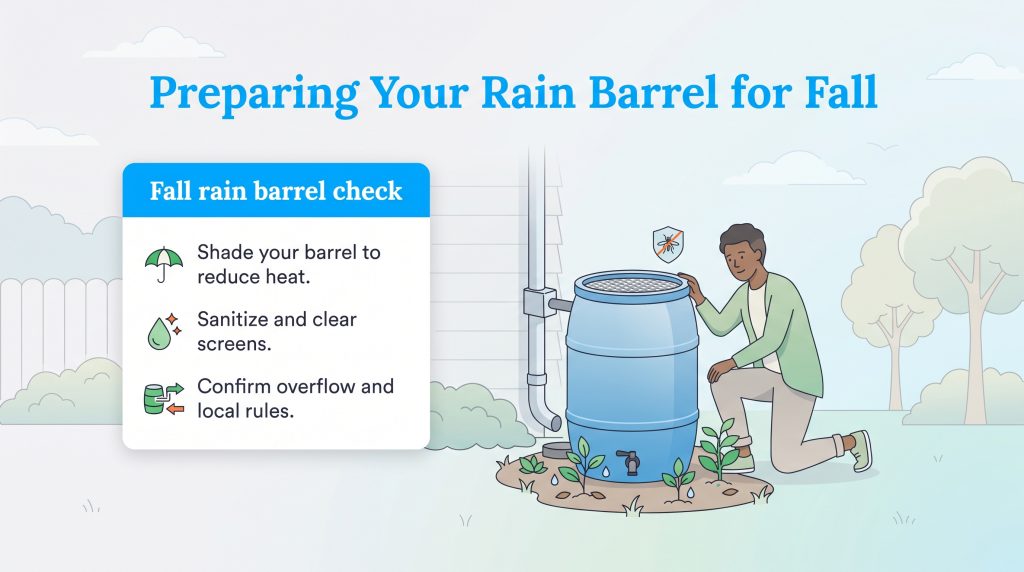
Embracing eco-conscious water harvesting is one of the most impactful sustainable living ideas and a fantastic way to navigate the driest, hottest days of the year. While summer requires active pest and heat management, establishing these routines makes the upcoming transition into autumn much easier. Before the autumn leaves start dropping and clogging your gutters, give your entire system a thorough late-summer inspection. Check your local rules or municipal stormwater programs if you plan to link multiple barrels in preparation for heavy fall rains. By sanitizing safely, utilizing effective rain barrel overflow solutions, and checking your screens, your backyard water supply will remain a reliable resource for your landscaping through the end of the year.
Frequently Asked Questions About Summer Rain Barrel Maintenance
How often should I be cleaning rain barrels in summer?
Is it safe to use water from a rain barrel that smells bad?
Will a dark rain barrel get too hot in the summer sun?
What is the best rain barrel for hot weather?
How do I replace a rain barrel screen?
Can I use bleach to keep my rain barrel water clean?
Can I use rain barrel water on vegetables?
About the Author

LaLeesha has a Masters degree in English and enjoys writing whenever she has the chance. She is passionate about gardening, reducing her carbon footprint, and protecting the environment. She also recently served as President of the Board for City Sprouts (a community garden).

David has been an integral part of some of the biggest utility sites on the internet, including InMyArea.com, HighSpeedInternet.com, BroadbandNow.com, and U.S. News. He brings over 15 years of experience writing about, compiling and analyzing utility data.