

Installing a rain barrel system is a practical way to lower your water bill and create a sustainable garden irrigation source.
Key Takeaways
- A rainwater harvesting system captures runoff from your roof, reducing stormwater pollution and providing free water for landscaping.
- Proper rain barrel installation requires a level foundation, a diverter kit to prevent overflow, and regular maintenance to ensure safety. You may also want to test water quality at home if using it for sensitive plants.
- You can choose between a DIY rain barrel made from a drum or a pre-made commercial kit depending on your budget and aesthetic preference.
Are you tired of watching your hard-earned money wash down the storm drain every time it rains? Installing a rain barrel is a straightforward weekend project that transforms how you manage your home’s water supply, potentially saving you up to 1,300 gallons of water during peak summer months. We love this sustainable upgrade because it allows you to quickly reduce your reliance on municipal resources, lower your monthly utility costs, and provide your garden with water completely free of the harsh chemical treatments often found in tap water. Whether you build a custom setup from an upcycled drum or install a sleek pre-made commercial kit, collecting rainwater from your roof is one of the most impactful utility decisions you can make for your wallet and your local environment.
Why Install A Rain Barrel?
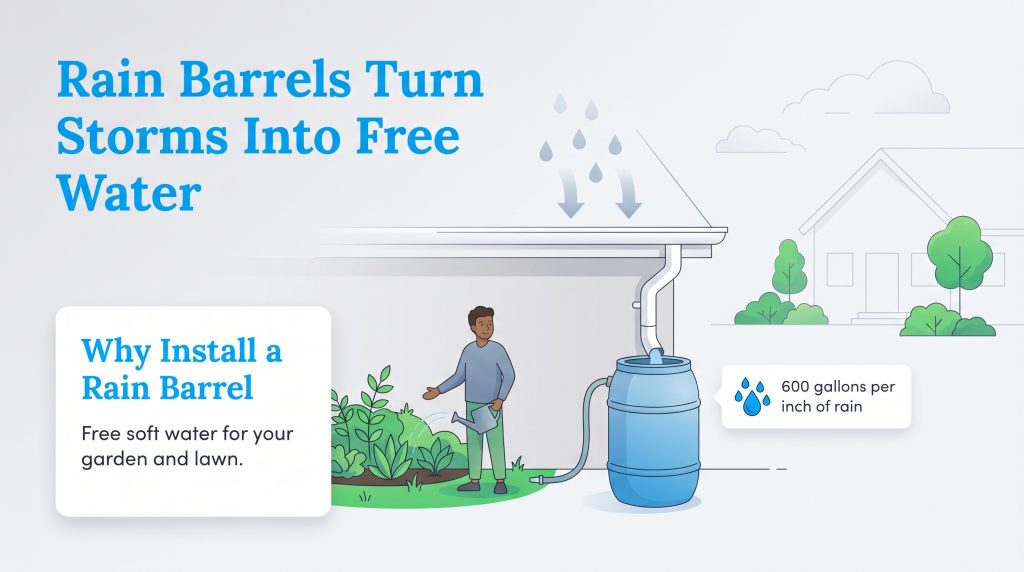
Many homeowners overlook the staggering volume of water their roof sheds during a single storm. By intercepting natural roof runoff directly from your gutter downspout, you secure a free, naturally soft water supply for your lawn while simultaneously protecting your local ecosystem from stormwater pollution. The mathematical reality of rainwater harvesting systems is highly encouraging: a 1,000-square-foot roof yields roughly 600 gallons of usable water for every inch of rain that falls. By capturing just a fraction of this rapid runoff, you drastically cut how much tap water you use outdoors.
Top Rain Barrel Benefits And Utility Savings
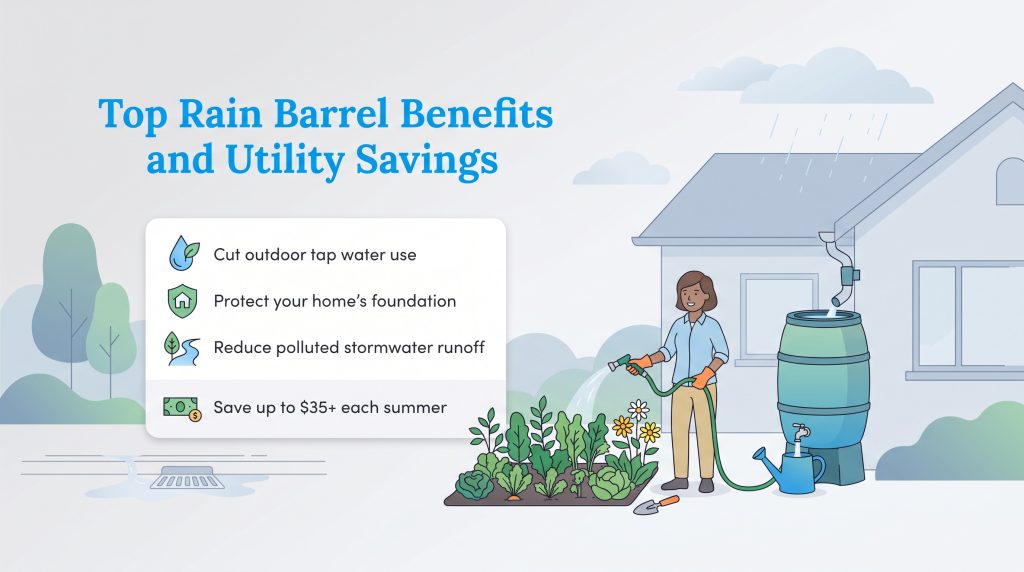
This environmentally mindful choice directly helps you save on your water bill. Replacing municipal tap water with harvested rainwater for your outdoor landscaping can result in meaningful financial savings on your municipal utility bills during prolonged summer heat waves.
| Water Source | Summer Usage (Gallons) | Estimated Cost (3 Months) |
|---|---|---|
| Municipal Tap Water | ~3,000 gallons | $15 – $35+ (varies by city) |
| Harvested Rainwater | ~3,000 gallons | $0 (100% Free) |
| Total Potential Savings | — | Up to $35+ per summer |
Rainwater Collection Laws And Municipal Rebates
Before you start visualizing a lush garden fueled entirely by free rainwater, you need to verify the local rainwater collection laws in your area. The vast majority of states actively encourage citizens to collect rainwater as a smart conservation method that alleviates stress on aging municipal water systems. However, a few western states treat rainwater as property that belongs to downstream ecosystems, enforcing specific restrictions or requiring you to pull permits detailing your maximum storage capacity.
DIY Vs. Store-Bought: Choosing The Right Rain Barrel
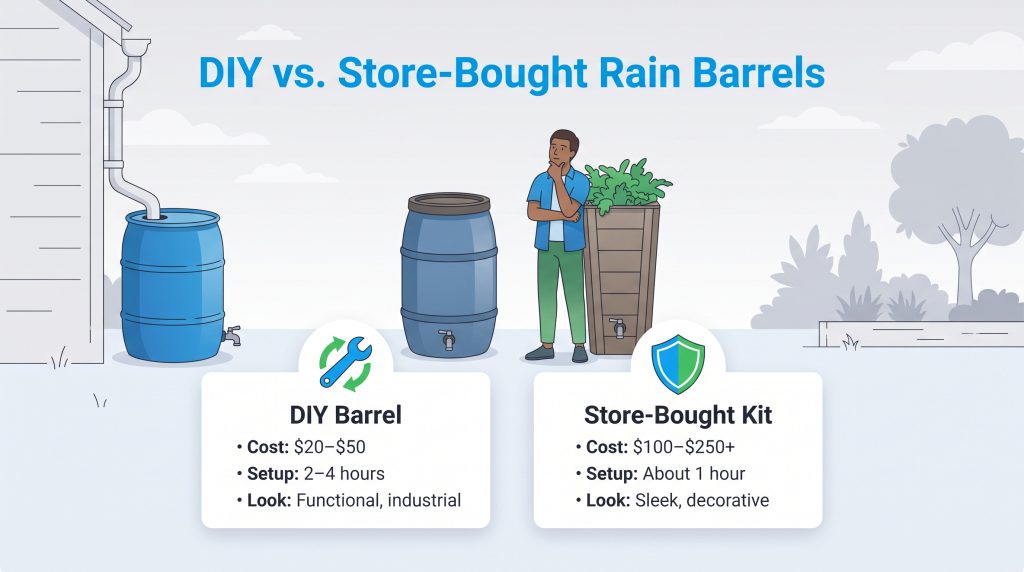
Finding the best rain barrels for downspouts ultimately comes down to balancing your budget, regional weather conditions, and personal aesthetic preferences. While building a DIY rain barrel from an upcycled food-grade drum offers a fantastic entry point for the budget-conscious homeowner, many prefer heavy-duty commercial kits that blend seamlessly into their existing landscaping. Here is a quick breakdown to help you make your purchasing decision:
| System Type | Average Cost | Durability | Aesthetics | Setup Time |
|---|---|---|---|---|
| DIY (Repurposed Food-Grade Barrels) | $20 – $50 | High (Requires a thorough interior cleaning before use) | Basic and purely functional; prominent industrial look | 2 – 4 hours |
| Store-Bought (Pre-Made Commercial Kit) | $100 – $250+ | Very High (Typically features UV-resistant high-density plastic) | Sleek and attractive; often disguised as wood, stone, or decorative planters | 1 hour |
Essential Parts Of A Rain Barrel System
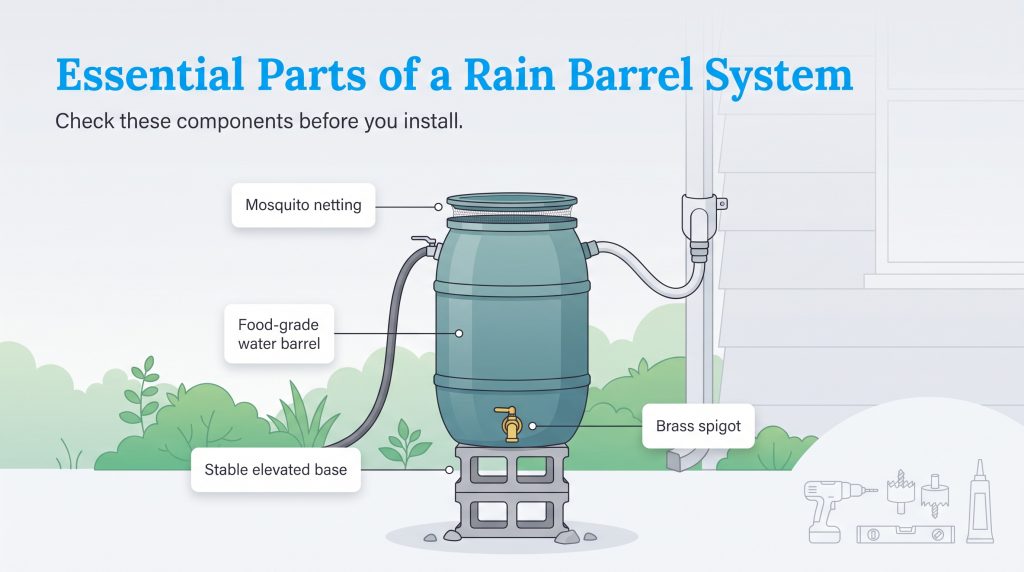
Modern rainwater harvesting systems rely on a few highly specific parts to operate safely without overwhelming your property’s foundation. Organizing your materials beforehand guarantees a smooth, leak-free DIY rain barrel installation. Verify you have the following essential items ready to go:
- Food-grade water barrel: The primary storage tank, typically holding 50 to 55 gallons. Never use a barrel that previously held harsh chemical solvents.
- Downspout diverter kit: An absolute must for modern setups. This critical internal gutter attachment automatically channels rainwater into the barrel.
- Brass spigot: The lower valve used to easily fill your watering cans or attach a soaker hose.
- Overflow valve and flexible tubing: Directs excess water safely away from your home when the container reaches maximum capacity.
- Mosquito netting: A fine mesh screen that tightly blocks debris, leaves, and adult insects from entering your water supply.
- Cinder blocks or concrete pavers: Necessary for creating a highly stable, elevated base to increase your gravity-fed water pressure. Alternatively, you can use a commercial rain barrel stand.
- Required Tools: You will need a power drill, correctly sized hole saw attachments, a pair of tin snips or a hacksaw, a trusty carpenter’s level, and waterproof silicone sealant.
Step-By-Step DIY Rain Barrel Installation
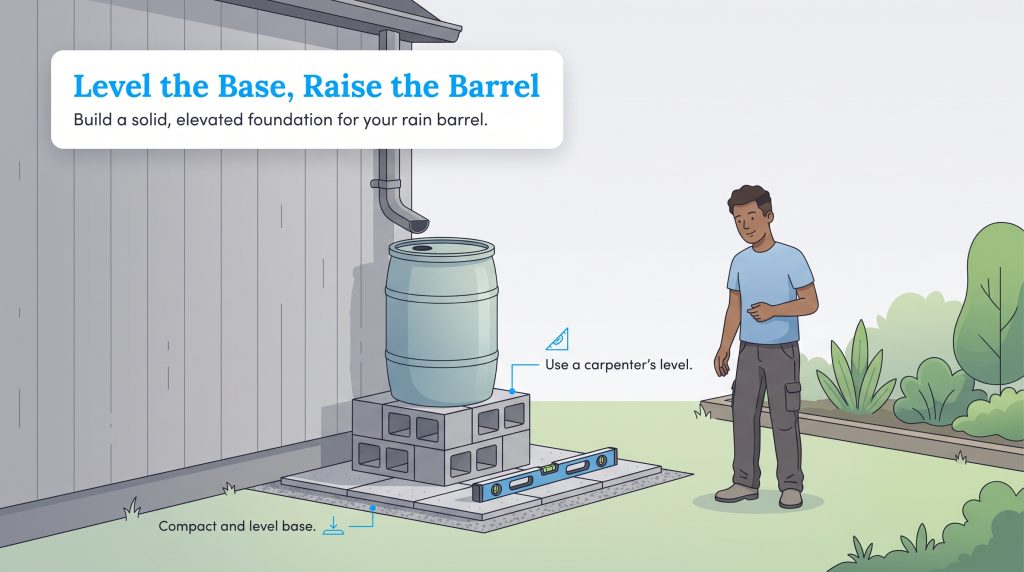
Proper installation ensures your system remains completely secure throughout changing seasons. Keep in mind that a full 55-gallon container weighs roughly 400 to 500 pounds, meaning a sturdy foundation is absolutely non-negotiable. Follow this actionable process to prioritize structural safety and maximize your setup:
- Calculate your roof runoff: Before pulling out your tools, measure the square footage of the roof area that feeds directly into your target downspout. This helps you estimate how quickly your system will fill and whether you need to link multiple barrels together.
- Level the ground: Select a location near a downspout that sits conveniently close to your garden beds. Dig out the top layer of soft topsoil and rigorously compact the earth underneath to prevent future sinking. Lay down a sturdy, even bed of crushed gravel or leveling sand.
- Build the elevated base: Place your concrete pavers and cinder blocks securely on the newly formed base. Use your carpenter’s level to verify the surface is completely flat in all directions before lifting the empty, lightweight barrel onto the platform.
- Cut the downspout and install the diverter: Hold your downspout diverter kit against the gutter to determine the ideal height. Put on safety glasses, mark your cut lines, and firmly cut the downspout using your tin snips. Insert the diverter mechanism securely into the opening.
- Attach the spigot and connect the hoses: Drill a clean hole near the bottom of your barrel using your hole saw attachment. Apply a generous bead of waterproof silicone sealant around the exterior threads of your brass spigot before tightening it into place. Finally, connect the flexible fill hose from the diverter straight into the intake port on your barrel, ensuring the tubing slopes slightly downward without any awkward kinks.
How To Route Rain Barrel Overflow
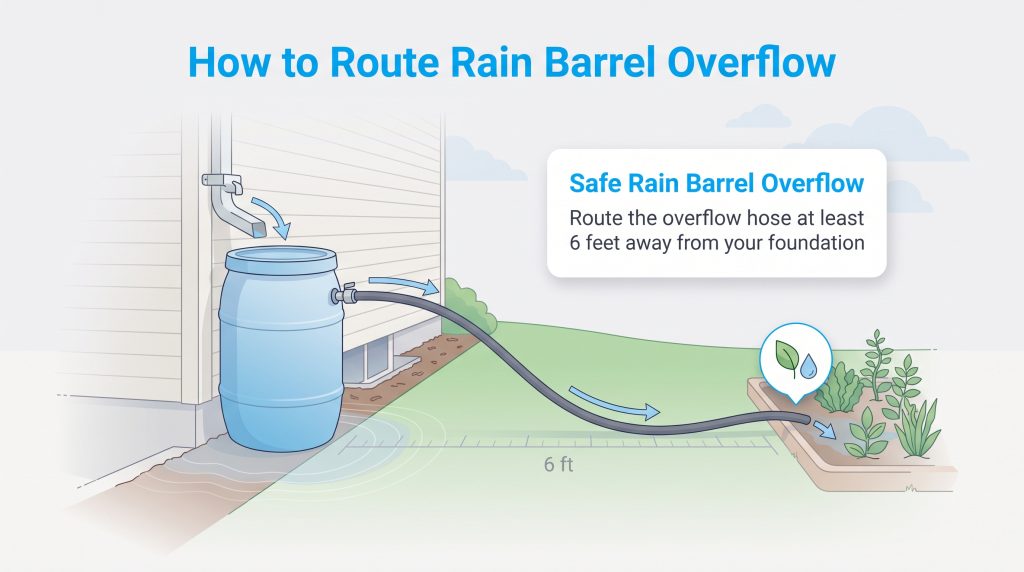
Connecting an overflow hose is one of the most critical steps in protecting your property. When your rain barrel reaches maximum capacity during a heavy thunderstorm, that excess water needs a safe, designated place to go. If left unmanaged, the cascading water will quickly pool around your home and erode the surrounding soil.
You must always attach a dedicated flexible hose to your upper overflow valve. Ensure you route the rain barrel overflow at least six feet away from your home’s foundation to prevent accidental basement flooding or foundational damage. Channelling this rapid runoff toward a naturally graded garden bed, a thirsty patch of lawn, or a dedicated concrete splash block ensures the water disperses harmlessly into the earth.
Rain Barrel Maintenance: Keeping Water Clean
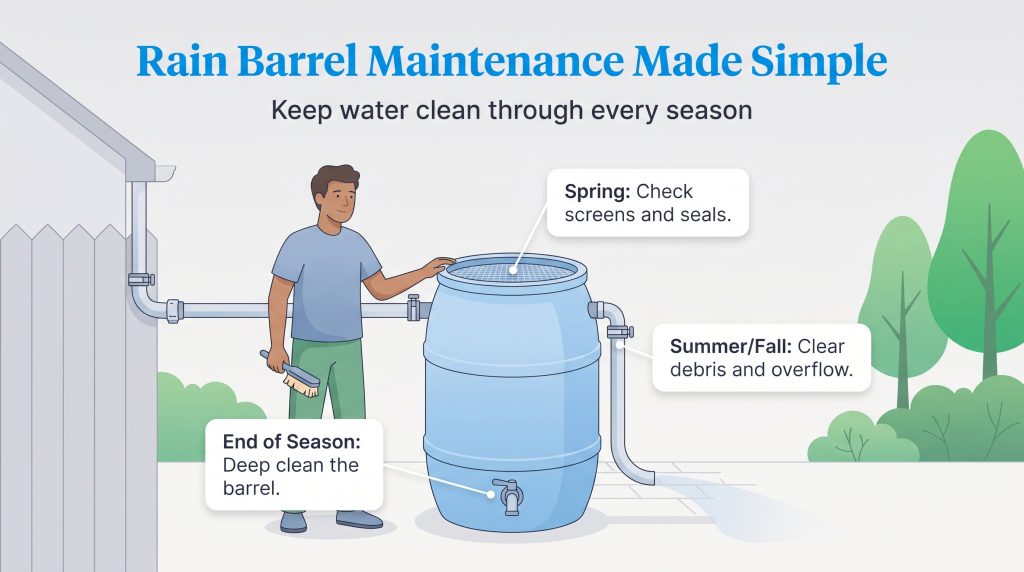
Establishing an imperative maintenance schedule keeps your harvested water clean, prevents foul odors, and guarantees your hardware survives years of heavy use. By routinely inspecting structural joints and clearing debris traps, you ensure optimal water flow throughout the season.
- Spring setup: Inspect your diverter hose connections and hand-tighten any loose clamps. Reapply silicone sealant around your spigot if you notice any slow, frustrating drips.
- Summer inspections: Check the overflow valve and diverter hose connections during heavy storms to confirm they are routing water safely away from your foundation.
- Fall clearing: Remove the top mesh screen and firmly brush away accumulated leaves, pine needles, and sediment to ensure a steady, unrestricted water flow.
- Annual deep clean: Flush the system entirely at the end of the season. Scrub the interior walls aggressively with a mild bleach or white vinegar solution to eliminate and prevent algae growth, then rinse the tank thoroughly.
How To Prevent Mosquitoes In Rain Barrels
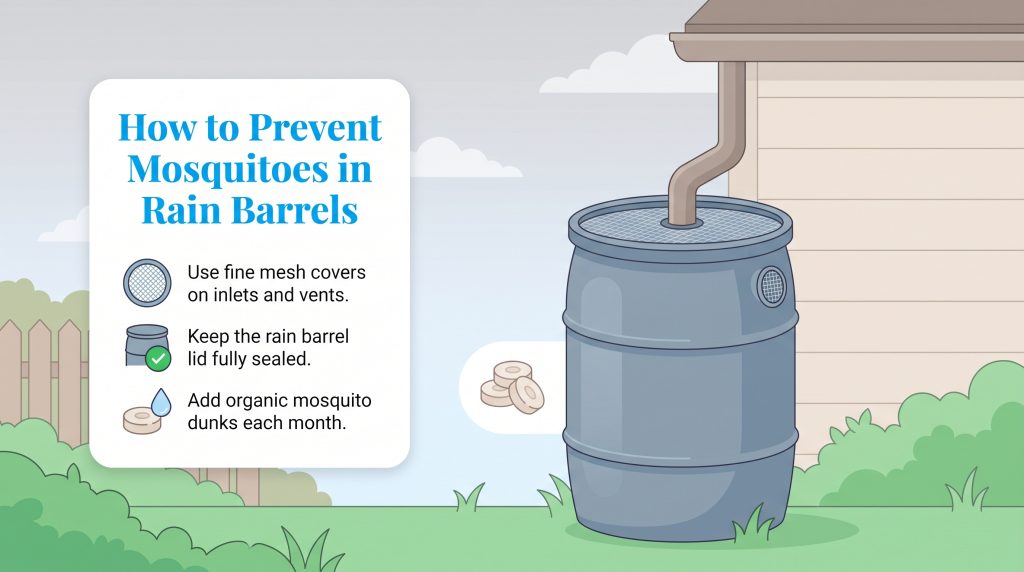
Stagnant water acts as a massive magnet for breeding insects during the summer, so proactive rain barrel mosquito prevention is absolutely vital. Ensure your lid is sealed tight and your fine mosquito netting leaves absolutely no gaps. Drop in an organic Bti mosquito dunk every month. This safe biological treatment targets and kills mosquito larvae without posing any threat to your plants, local wildlife, or household pets.
Winterizing Your Rain Barrel
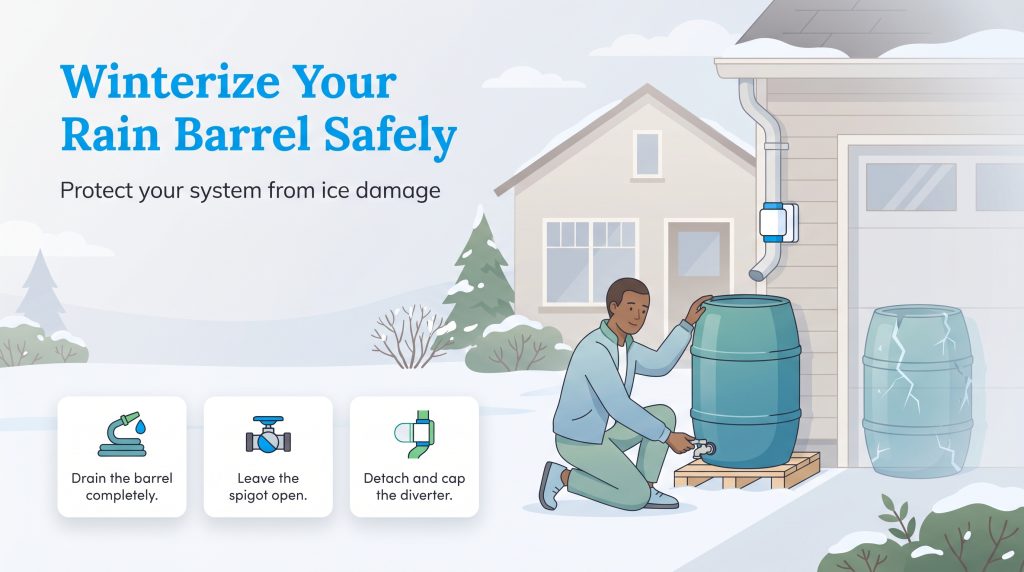
If you reside in a region where temperatures regularly dip below freezing in the late fall and winter, you must winterize your rain barrel before the first deep freeze. Water forcibly expands as it turns into ice, which will quickly shatter rigid plastic containers and split expensive brass spigots. Follow this three-step imperative guide to protect your investment:
- Drain the barrel completely: Attach a standard garden hose to your lower spigot and empty every drop of remaining water into your yard well before seasonal temperatures drop.
- Remove all hoses and the diverter kit: Detach the flexible tubing connecting your diverter to the main tank. Install a winterized cover plate over the hole in your downspout to redirect rainwater back down the standard gutter, bypassing the barrel system entirely.
- Leave the spigot open or store the barrel upside down: Turn the empty container over and store it safely in your garage, garden shed, or basement. If you must leave it outside, leaving the spigot completely open guarantees any lingering condensation escapes without freezing and cracking the valve.
Preparing Your Garden For Rainwater Harvesting
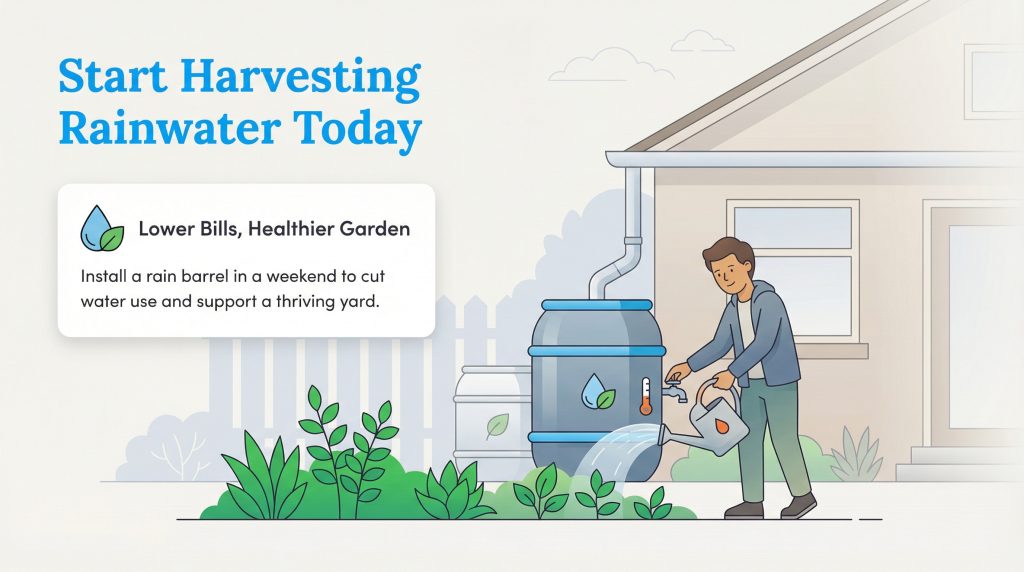
While utilizing captured roof runoff is one of the best spring yard water conservation tips for irrigating your ornamental flower beds and keeping your lawn green, a degree of caution is required if you are watering edible plants. Rainwater rapidly collects chemical residues from asphalt shingles and bacteria from animal waste as it races down your roof. If you plan to use this water in your vegetable garden, you must apply it directly to the soil at the base of the plant rather than spraying the leaves. If you are unsure of your roof’s chemical runoff, strictly reserve your harvested water for non-edibles.
Taking direct control of your home’s outdoor water management is a deeply rewarding decision that benefits both your landscape and the broader local ecosystem. Whether you opt for a sleek commercial kit or build an upcycled DIY setup tailored precisely to your gardening needs, capturing stormwater empowers you to utilize a free resource that literally falls from the sky. By dedicating some time to understanding your water bill, you will quickly spot a tangible drop in your municipal utility costs almost immediately. Setting up this energy-saving option establishes a fantastic foundation for a more resilient, self-reliant, and eco-conscious household.
Frequently Asked Questions About Rain Barrels
How much water can a rain barrel save?
How do I keep mosquitoes out of my rain barrel?
Is rain barrel water safe for vegetable gardens?
Can rain barrels overflow and damage my foundation?
Can I connect multiple rain barrels together?
Do I need a diverter kit for my rain barrel?
How do you keep rain barrel water from smelling?
Is rainwater safe to drink?
Do I need a pump for my rain barrel?
Is it legal to collect rainwater in my state?
About the Author

LaLeesha has a Masters degree in English and enjoys writing whenever she has the chance. She is passionate about gardening, reducing her carbon footprint, and protecting the environment. She also recently served as President of the Board for City Sprouts (a community garden).

David has been an integral part of some of the biggest utility sites on the internet, including InMyArea.com, HighSpeedInternet.com, BroadbandNow.com, and U.S. News. He brings over 15 years of experience writing about, compiling and analyzing utility data.