

Use smarter watering, drought-tolerant plants, and simple yard upgrades to cut summer water waste without giving up a healthy garden.
Key Takeaways
- Switching to drip irrigation targets plant roots directly, cutting water waste and saving you money on your monthly bill.
- Choosing drought-tolerant plants reduces your garden’s overall dependency on frequent summer watering.
- Harvesting rainwater provides a free, sustainable water source for your yard during the hottest months of the year.
Opening your first summer water bill as a new homeowner often brings an unwanted surprise, especially when you realize just how much a thirsty lawn drains your budget. But you don’t have to choose between a scorched yard and sky-high utility costs. By using practical Summer Tips Sustainable Garden strategies, you can protect your local watershed and keep your plants thriving all season long. We want to reassure you that maintaining a vibrant, beautiful landscape is completely possible without wasting water or your hard-earned cash. These eco-friendly habits can help you water smarter, reduce waste, and keep your yard healthy without letting outdoor utility costs run wild.
Why Sustainable Summer Gardening Matters
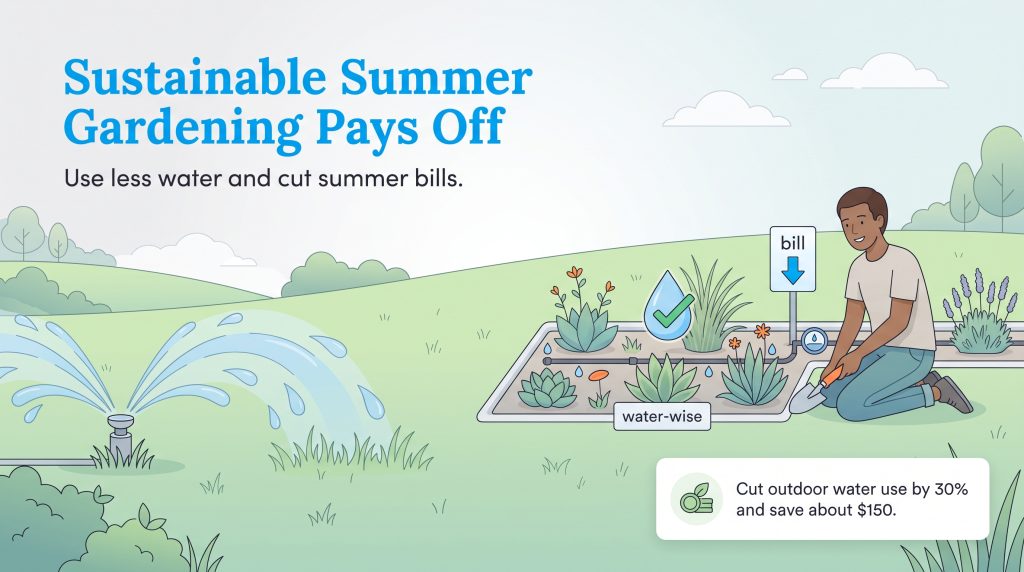
Cultivating a healthy landscape requires a surprising amount of resources when the temperature spikes. Relying on traditional sprinklers and daily hose routines can quickly become your household’s largest source of water consumption. According to environmental estimates, landscape irrigation accounts for nearly one-third of all residential water use, totaling nearly nine billion gallons per day nationwide. Choosing to design a water-efficient garden isn’t just about preserving the environment — it is a highly effective way to stabilize your budget during peak usage months. An environmentally mindful choice outdoors minimizes evaporation, prevents unnecessary runoff, and significantly decreases the strain on municipal water supplies. Ultimately, reducing your garden carbon footprint and saving water translates to immediate, tangible financial relief.
1. Implement Smart Water Conservation Tactics
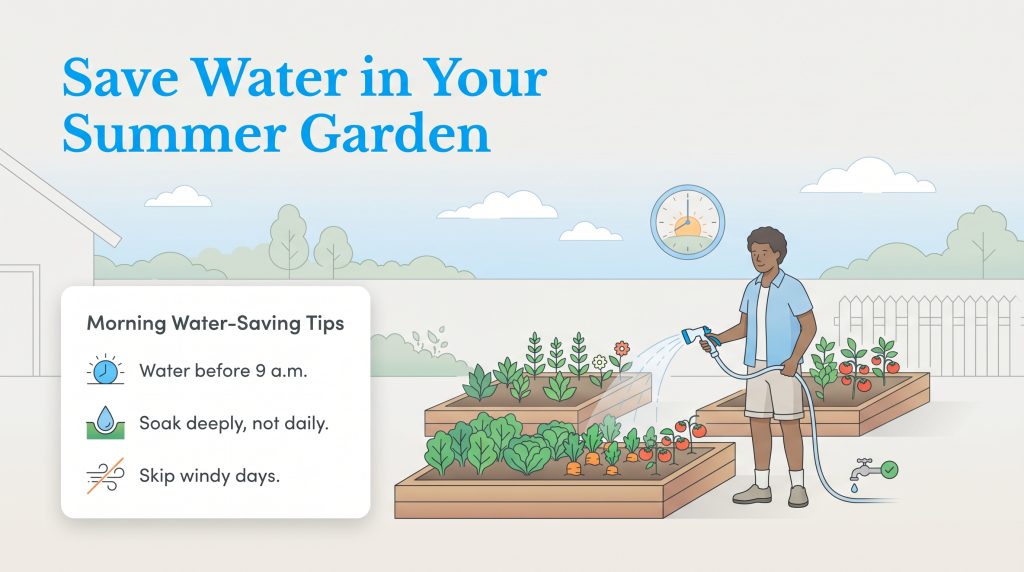
Even if you have installed an efficient irrigation setup, poor timing can sabotage your conservation efforts. Mastering water-saving gardening tips requires shifting your daily behavior to maximize every drop. The most impactful change you can make is adjusting your watering schedule to avoid the peak heat of the day. Midday watering leads to excessive evaporation, while late evening watering can invite fungal diseases by leaving plant leaves damp overnight.
- Water between 5 a.m. and 8 a.m. to ensure maximum absorption before the afternoon sun heats the soil.
- Prioritize deep, infrequent soaking over shallow, daily sprinkles to encourage roots to grow downward and withstand heatwaves.
- Inspect hoses and outdoor spigots regularly for hidden leaks that artificially inflate your utility bill.
- Avoid watering on windy days, as gusts will blow the moisture far away from your intended garden beds.
- Group your watering tasks to minimize the total time your faucet is running unnecessarily.
2. Upgrade to Drip Irrigation Systems
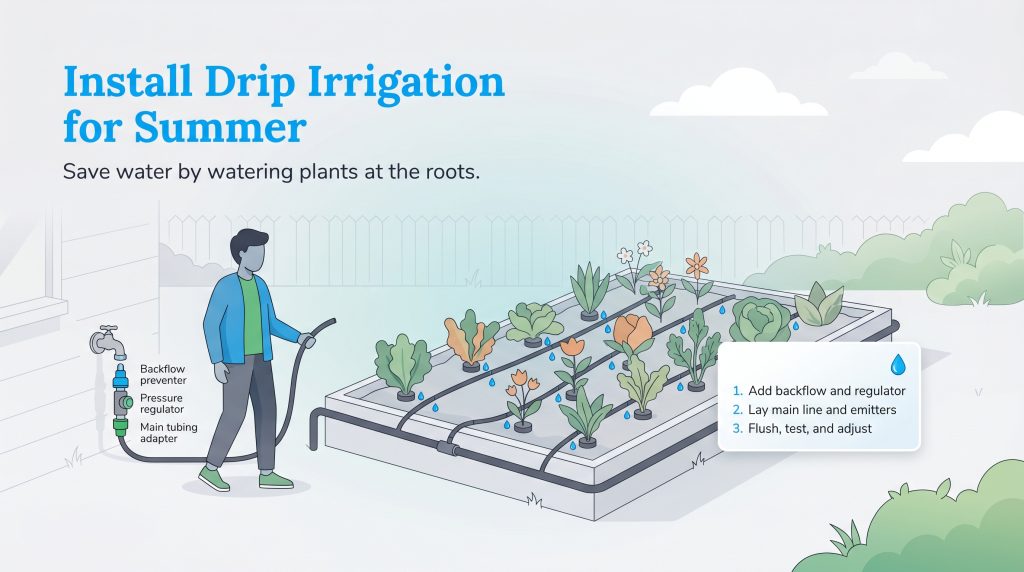
If you want to maximize every drop, upgrading to drip irrigation is one of the smartest investments you can make for your yard. Traditional sprinkler systems often spray water aimlessly into the air, where it evaporates before ever reaching the soil or drifts onto sidewalks and driveways. Drip systems bypass this problem entirely by delivering water slowly and directly to the base of your plants. This targeted approach encourages deeper, healthier root growth while dramatically lowering your overall usage. If you are exploring how to reduce your water bill, setting up a basic kit offers unbeatable drip irrigation benefits.
| Feature | Drip Irrigation | Traditional Sprinklers |
|---|---|---|
| Water Usage | Low (targets roots directly) | High (wastes water on pathways) |
| Monthly Cost | Significantly reduced utility bills | Can push households into higher rate tiers |
| Evaporation Rate | Minimal to none | High (especially during midday heat) |
- Attach a backflow preventer and a pressure regulator directly to your outdoor spigot to protect your home’s water supply and ensure steady flow, as these parts are often recommended or required by local codes.
- Connect the main tubing adapter and unroll the primary line along the perimeter of your garden beds.
- Punch small holes where needed and insert the drip emitters, placing them right next to the roots of your thirsty plants.
- Secure the lines with landscape staples, flush the line to remove debris, and turn on the spigot to test for even water distribution and check emitters for clogs.
3. Choose Drought-Resistant Native Plants
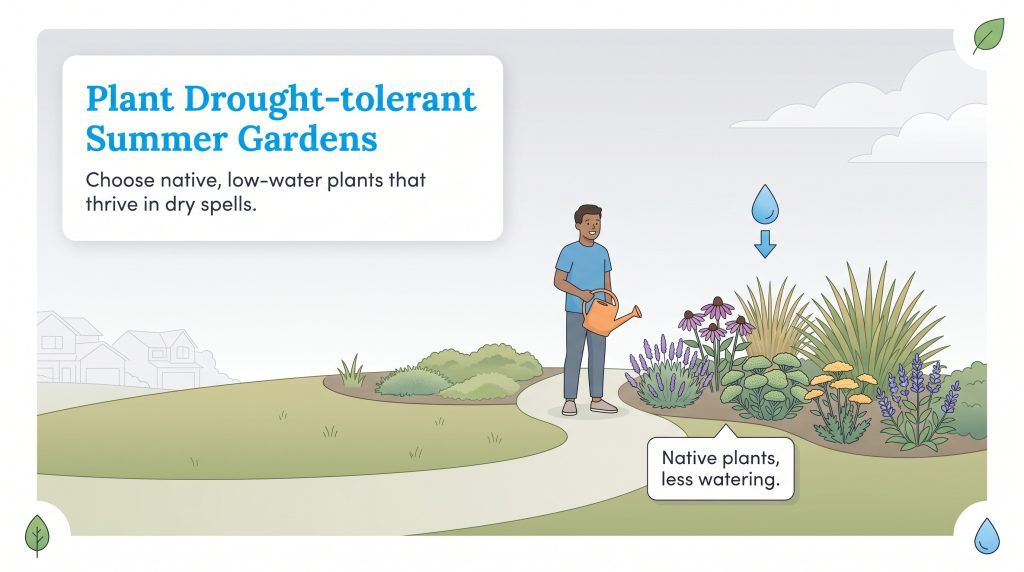
Fighting the natural climate of your region is a costly battle. Instead, embrace the principles of xeriscaping — a landscaping philosophy that prioritizes water conservation through mindful plant selection. Incorporating native summer plants minimizes your garden’s reliance on supplemental watering, allowing your landscape to thrive even during prolonged dry spells. Plants native to your specific area have naturally adapted to the local rainfall and soil conditions, meaning they require far less ongoing maintenance than many exotic ornamentals. To find the best options for your specific climate, always consult the local plant hardiness zone map.
- Lavender: A fragrant, pollinator-friendly herb that loves full sun and requires minimal watering once established.
- Coneflower (Echinacea): Known for its vibrant blooms, this rugged perennial can withstand intense heat and poor soil.
- Yarrow: A highly resilient choice that spreads easily and resists drought conditions with ease.
- Sedum: Succulent-like leaves allow this plant to store water, making it a perfect low-water choice.
- Salvia: A heat-loving perennial that attracts hummingbirds and butterflies without draining the hose.
By trading high-maintenance greenery for resilient alternatives, you build a self-sustaining ecosystem that looks fantastic and demands far less from your garden hose.
4. Master Summer Composting and Mulching
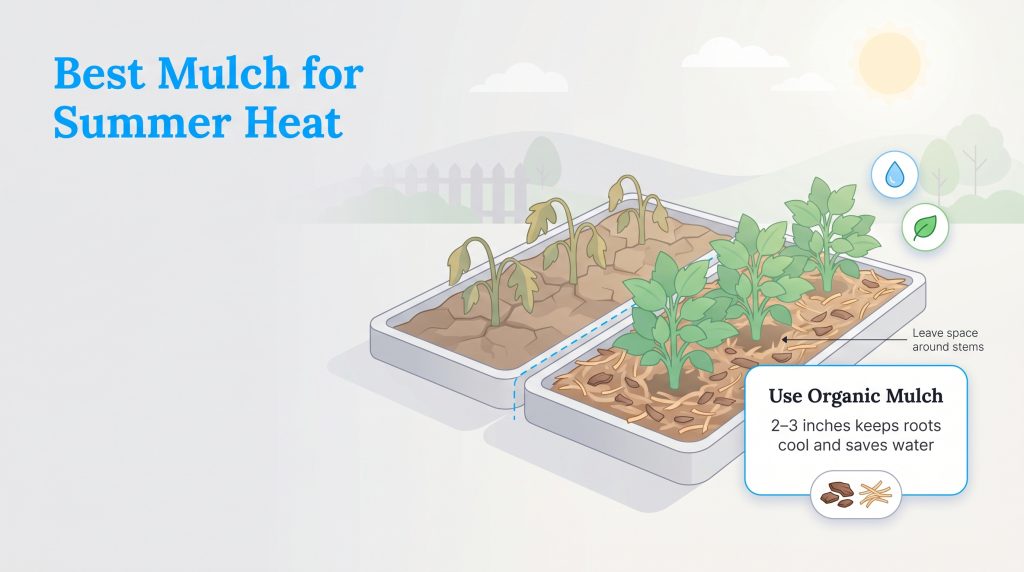
Exposed dirt bakes quickly under a relentless July sun, causing vital moisture to vanish into thin air. Adding a thick protective layer over your soil acts as a barrier, regulating temperatures and keeping the underground environment cool. We always recommend combining rich organic compost—created using proven summer composting tips—with proper mulching techniques for summer to slowly break down and enrich the soil over time. Utilizing organic compost feeds your plants naturally without the need for harsh synthetic alternatives, which can run off and harm local waterways.
Shredded bark works wonderfully in decorative front-yard beds because it locks in moisture and prevents aggressive weeds from stealing resources. For vegetable gardens, clean straw mixed with summer compost provides an affordable, energy-saving option with excellent insulation. Applying a two- to three-inch layer around the base of your plants reduces how often you need to run your irrigation system, saving you both time and utility costs. Just be sure to avoid creating “mulch volcanoes” by keeping the material a few inches away from plant stems to prevent rot.
5. Set Up a Home Rainwater Harvesting System
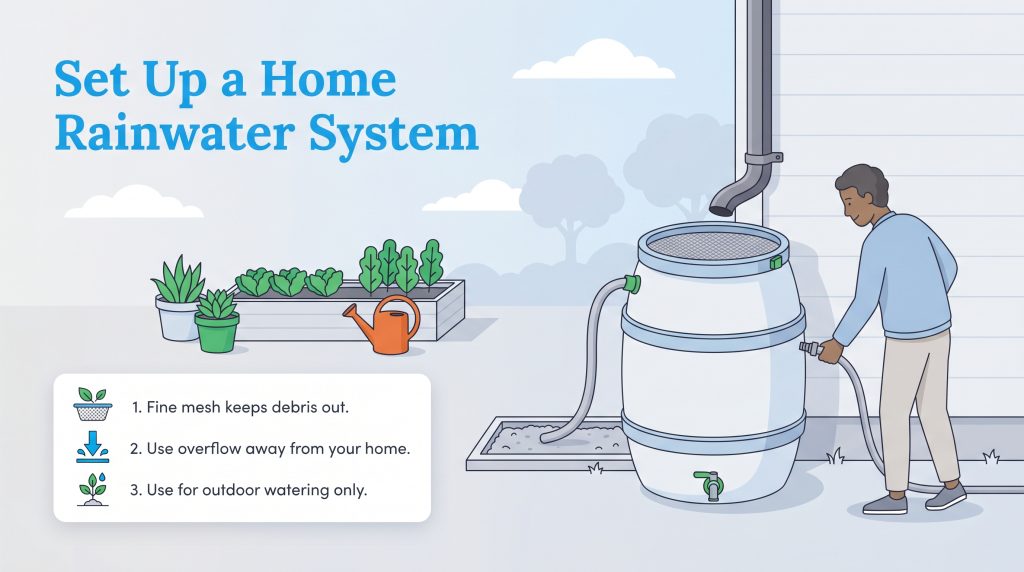
Pairing your mulched beds with harvested rainwater further reduces your reliance on municipal water lines. Summer thunderstorms often dump large amounts of water in a short window, and letting that runoff vanish into the storm drain is a missed opportunity. Building basic rainwater harvesting systems for home use allows you to capture this free, natural resource and store it for the inevitable dry weeks that follow. Place a sturdy rain barrel on a leveled surface directly beneath an active gutter downspout. Following essential summer rain barrel tips, you will want to ensure the top opening is securely fitted with a fine mesh debris screen to keep leaves out and prevent mosquitoes from getting inside to breed. Be sure to use an overflow outlet directed away from your home’s foundation, and secure barrels with lids to reduce hazards for children and pets. This method supports water-efficient landscaping because it reuses rainfall instead of relying only on treated municipal water.
6. Utilize Organic Pest Control Methods
Keeping your garden healthy means managing pests without resorting to harsh chemical sprays. When you utilize organic pest control summer strategies, you safeguard the local ecosystem and ensure no toxic runoff contaminates the local groundwater supply. These natural methods are highly effective and align perfectly with sustainable landscaping ideas.
- Neem Oil: Extracted from the seeds of the neem tree, this natural spray disrupts the life cycle of pests like aphids and mites. It biodegrades quickly, ensuring it won’t seep into your soil or groundwater.
- Companion Planting: Strategically placing plants like marigolds next to tomatoes naturally repels nematodes and hornworms. This method relies entirely on natural plant defenses, eliminating the need for synthetic treatments.
- Ladybugs: Releasing beneficial insects like ladybugs into your garden introduces a natural predator for destructive pests. They protect your plants while maintaining a balanced, chemical-free ecosystem.
Maintaining a balanced, chemical-free ecosystem guarantees your plants stay strong and capable of surviving intense summer heat without over-reliance on supplemental watering.
7. Practice Eco-Friendly Lawn Care
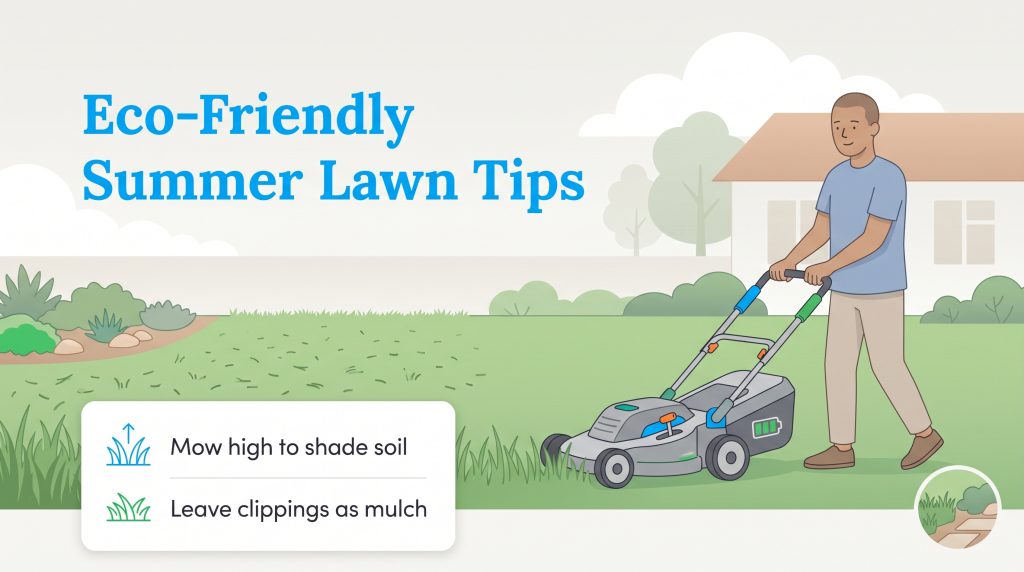
Adjusting a few simple mowing techniques can drastically reduce your yard’s thirst. Implementing eco-friendly lawn care practices starts with adjusting your lawnmower blade height. Letting your grass grow just an inch or two taller provides natural shade for the soil surface, keeping the delicate roots cooler and locking in moisture for much longer. Skip the chore of bagging your yard waste. Leaving your grass clippings right on the lawn acts as a natural, nutrient-rich mulch that returns nitrogen directly to the earth.
8. Group Plants by Water Needs
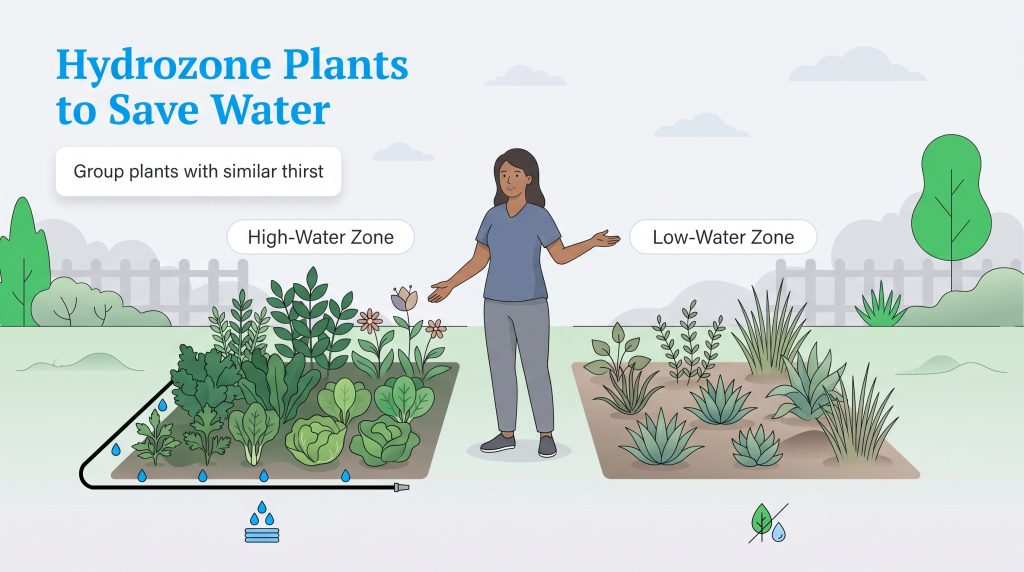
Hydrozoning is a simple landscaping concept that involves clustering your plants based on their specific hydration requirements. When you mix highly thirsty ornamentals right next to rugged, desert-native succulents, you end up overwatering the entire bed just to keep a few delicate flowers alive. By dedicating one specific “high-water zone” for your moisture-loving plants and separating them from your drought-resistant greenery, you gain precise control over your irrigation output.
9. Automate Your Utility Usage
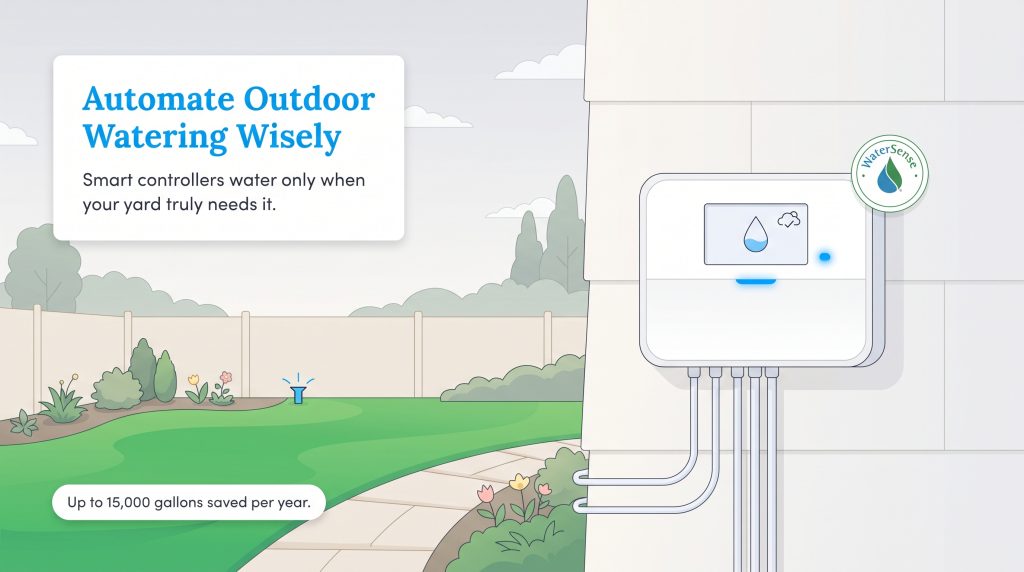
Upgrading your outdoor watering technology is a brilliant way to connect sustainable gardening directly to home utility savings. Automating your yard maintenance takes the guesswork out of watering by using smart, weather-based irrigation controllers. These intuitive systems automatically adjust watering schedules based on local weather forecasts, recent rainfall, and current soil conditions. If a sudden summer storm rolls through, the controller will delay your sprinklers from running, preventing you from wasting water on an already soaked lawn.
According to federal water efficiency data, replacing a standard clock timer with a WaterSense-labeled smart controller can save an average home up to 15,000 gallons of water annually. These impressive smart home metrics translate to significant long-term savings on your utility bills. Many local water districts and utility companies even offer rebates for installing these eco-conscious alternatives, making the initial investment highly affordable. By automating your system, you guarantee that your landscape only receives water when it truly needs it.
Harvesting the Benefits of an Eco-Friendly Yard
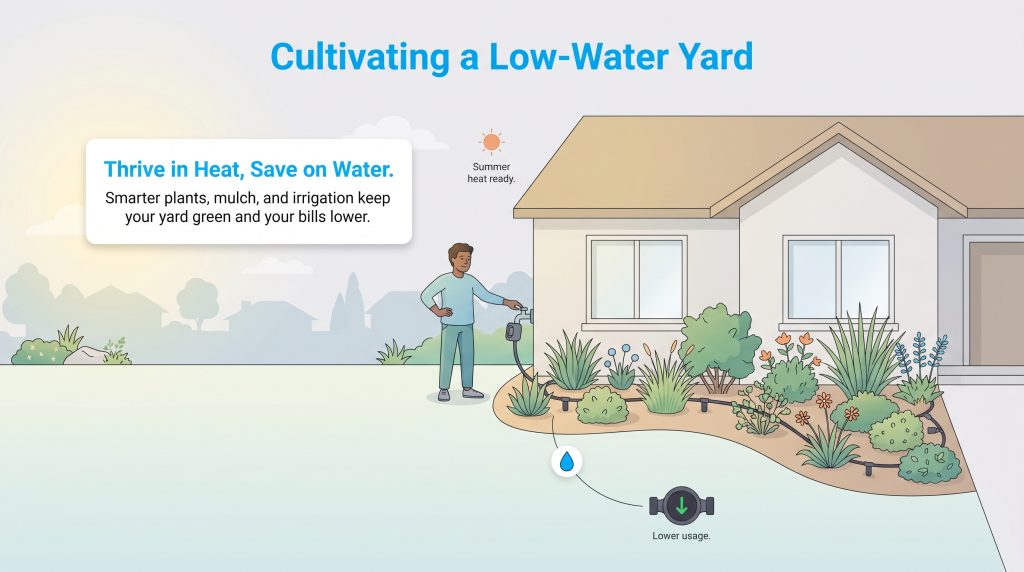
A lower-water garden does not have to look dry, bare, or high-maintenance. With targeted irrigation, better plant choices, organic mulch, and a few smart watering habits, you can keep your yard healthy while reducing the pressure on your summer utility bill. By consistently applying these eco-friendly summer gardening strategies, you can lower your outdoor water usage substantially, yielding excellent long-term utility savings. If you are ready to take your household efficiency to the next level, explore our comprehensive guide on how to save on your electric bill to maximize your sustainable home energy strategy. With these practical strategies in place, you can confidently weather the intense heat, knowing you are preserving natural resources while enjoying a beautifully resilient landscape.
Frequently Asked Questions About Summer Sustainable Gardening Tips
Summer watering decisions can get confusing fast, especially when local restrictions, plant types, and soil conditions all come into play. These quick answers cover the most common questions we hear from homeowners trying to save water without sacrificing their yard.
What are the best drought-resistant plants for a summer garden?
How can I save water in my garden during a summer heatwave?
Does mulching help reduce my summer water bill?
What is the best time of day to water my garden in the summer?
How much money can a rain barrel actually save on my water bill?
Will drought-tolerant plants survive a heatwave without any watering?
How long should I run my drip irrigation system during the summer?
Are there any restrictions on rainwater harvesting in the United States?
Do smart irrigation controllers really save water?
About the Author

LaLeesha has a Masters degree in English and enjoys writing whenever she has the chance. She is passionate about gardening, reducing her carbon footprint, and protecting the environment. She also recently served as President of the Board for City Sprouts (a community garden).

David has been an integral part of some of the biggest utility sites on the internet, including InMyArea.com, HighSpeedInternet.com, BroadbandNow.com, and U.S. News. He brings over 15 years of experience writing about, compiling and analyzing utility data.